Asymmetrical Birthstone Earrings: The “Chaos” Trend Explained
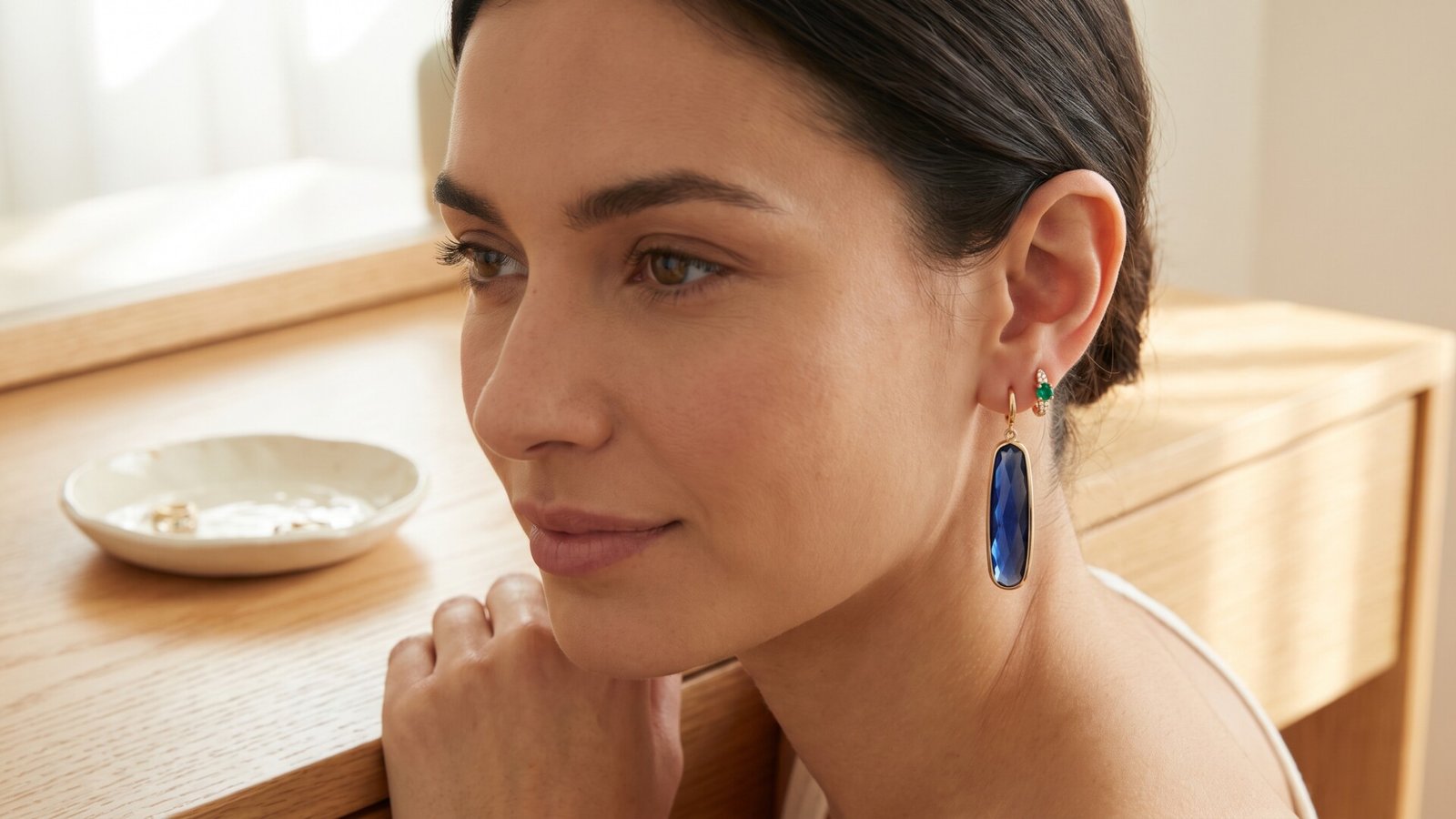
Perfectly matched earrings are no longer the only way to wear jewelry. Mismatched, or asymmetrical, earrings are deliberately different from one ear to the other: one dramatic drop and one small stud, one deep blue sapphire and one sparkling diamond. Add birthstones and the look becomes personal, because each ear can carry a different story: your stone, your child’s stone, your partner’s stone, or simply a color you love.
The idea is not brand new. Jewelry trade press was already describing mismatched earrings as a growing trend back in 2015 (JCK, “Awesome Jewelry Trend: Mismatched Earrings”), and fashion media keep returning to it. What has changed is how easy it is to build the look with birthstones, and how many online retailers now sell gemstone studs, drops and hoops that you can mix and match yourself.
This guide covers what asymmetrical birthstone earrings are, which stone pairings tend to work well, which gemstones are sensible choices for earrings (and which need extra care), seven styles to consider, how to style them, and how to look after them. We also separate gemstone facts from tradition: the symbolism attached to birthstones is cultural belief, not science, and we label it that way.
Affiliate note: some links on this site are affiliate links, which means we may earn a commission if you buy through them, at no extra cost to you. Meanings and symbolism on this page reflect traditions and beliefs, not medical, financial or professional advice.
What Are Asymmetrical Birthstone Earrings?
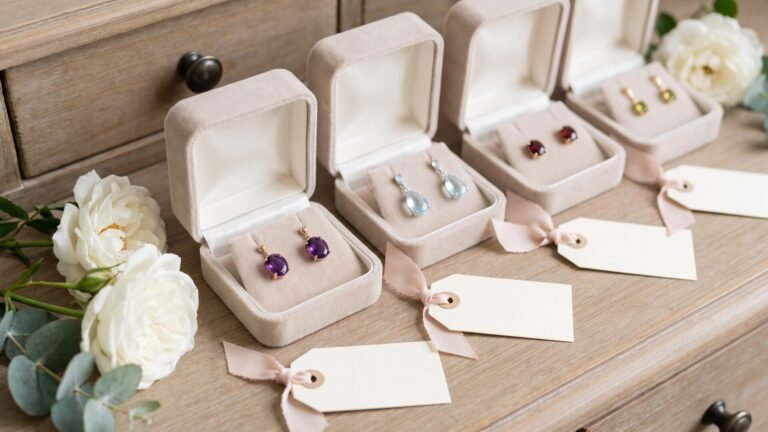
Definition. Asymmetrical earrings are intentionally mismatched. Unlike a traditional pair, which is a mirror image, they differ in gemstone, length, shape, metal or charm. You can buy them as a pre-designed set or build the look by mixing earrings you already own. Search terms you may see for the same idea include mismatched earrings, odd earrings, unpaired earrings and “chaos” earrings.
Why it is called the “chaos” trend. The nickname captures the free-spirited feel of mixing things up. In practice the chaos is controlled: the best mismatched pairs are carefully curated so they look confident rather than careless.
Random versus intentional. The key is a unifying element. The earrings can differ, but they should share something: the same metal, a complementary color palette, or a similar style of setting. A pair that shares nothing tends to look like you lost an earring; a pair with one shared thread looks designed.
Not sure which stone belongs to which month? See our Birthstones by Month hub. Note that birthstone lists differ between countries and organizations, and several months have more than one accepted stone (December and August, for example, each have three or two options), so you have real choice when building a pair.
Why Mismatched Earrings Appeal to So Many People
Social media and fashion coverage. Mismatched earrings get regular attention from fashion editors, jewelry trade publications and social platforms. We have not verified specific hashtag view counts or which designers showed asymmetric earrings on particular runways, so we do not quote them here. What is easy to see is that many mainstream jewelry brands now sell mismatched or single-earring designs.
A move away from rigid matching. Many buyers see jewelry as a way to express personality rather than follow a rule that earrings must be identical. Mismatched pairs are a low-risk way to try something different.
Layering and ear stacking. Once you wear several earrings in one ear, strict matching becomes less relevant. Mismatched earrings extend the same philosophy to the whole ear.
Personalization. Birthstones add a personal layer to any piece, much like the idea behind personalized pinky rings with birthstones. With earrings, you can put your own stone on one side and a loved one’s on the other.
For the bigger picture on birthstone jewelry, see our Guide to Birthstone Jewelry.
Why Birthstones Work Well for Asymmetrical Earrings
Built-in color palette. Birthstones span nearly every color, so contrast is easy. A red ruby or garnet beside a green emerald or peridot is high-contrast; a pale blue aquamarine beside a diamond is soft and fresh.
Symbolic storytelling (tradition, not science). Each birthstone has traditional associations. Birthstone meanings vary by culture and source: garnet is traditionally associated with protection and devotion, emerald with renewal, and sapphire with loyalty and wisdom. These are cultural beliefs and folklore; they are not gemological properties, and a stone does not do anything to your health or luck. Many people simply enjoy wearing a symbol that matters to them, and a pair of birthstone earrings for bridesmaids shows how one design can carry a shared meaning.
Customization. Because you choose any two stones, no two pairs need to look alike, and you can add a third or fourth earring later as your family or collection grows.
These are beliefs, not medical advice. Nothing on this page claims a gemstone can treat, prevent or cure any condition.
For gemstone durability and care, visit our Gemstone Hardness Guide.
Best Birthstone Pairings for Asymmetrical Earrings
Here are seven pairings that balance color, contrast and style. The third column is a practical note, because stones with different toughness wear differently even when they look good together.
| Birthstone Combination | Why It Works | Practical Note |
|---|---|---|
| Sapphire + Diamond | Cool blue against white sparkle; classic and refined | Both are very durable and suit daily wear |
| Emerald + Ruby | Bold red and green clash; maximum impact | Ruby is tougher than emerald; emerald is usually fracture-filled and needs gentler care |
| Aquamarine + Pearl | Soft pastels; serene and romantic | Pearl is very soft; keep it away from perfume and hair spray |
| Citrine + Amethyst | Warm yellow against cool purple | Both are quartz; much citrine on the market is heat-treated amethyst, and strong heat or sunlight can fade amethyst |
| Opal + Moonstone | Iridescent glow; dreamy and free-spirited | Both are delicate; best for occasional wear in protective settings |
| Garnet + Peridot | Deep red against lime green | Moderate hardness; fine for earrings, take care in everyday knocks |
| Tanzanite + Diamond | Blue-violet with white sparkle | Tanzanite is much less tough than sapphire; earrings are a better fit than rings |
Pro tip: When mixing two different stones, keep the metal consistent (both in white gold, for instance) or use the same setting style. That shared element makes the look read as intentional.
For more combination ideas, browse our Birthstones by Month hub and our Birthstone Jewelry Guide.
Which Birthstones Are Best for Earrings? A Quick Gemstone Facts Guide
Earrings generally take fewer knocks than rings, so they can suit softer stones. Even so, hardness (resistance to scratching on the Mohs scale) is not the same as toughness (resistance to chipping and breaking). A stone can be hard yet still split along a cleavage plane or crack through internal fractures. The table below summarizes the common earring stones using GIA care guides where available; ranges vary by variety and quality.
| Stone | Mohs Hardness | Toughness / Weak Points | Common Treatments | Ultrasonic / Steam |
|---|---|---|---|---|
| Diamond | 10 | Hardest natural material, but can chip on a hard knock and has cleavage | Some natural diamonds are fracture-filled or laser-drilled; lab-grown diamonds are real diamond | Usually fine, but not for fracture-filled stones |
| Sapphire and Ruby (corundum) | 9 | Very tough; excellent for daily wear | Heat is very common; fracture or glass filling in some low-grade rubies; diffusion in some sapphires | Usually safe for untreated or heat-treated stones; avoid for filled stones |
| Alexandrite | 8.5 | Excellent toughness, no cleavage (GIA) | Most alexandrite sold today is lab-created; ask for disclosure | Usually safe (GIA) |
| Emerald | 7.5 to 8 | Fair to good toughness; often included and fractured (GIA) | Oil, resin or similar filling is very common (GIA) | Avoid both (GIA) |
| Aquamarine | 7.5 to 8 | Good hardness; can have fractures | Heat treatment is common to improve blue color | Often safe for clean stones; use warm soapy water if unsure |
| Amethyst and Citrine (quartz) | 7 | Good; no cleavage | Citrine is often heat-treated amethyst; amethyst color can fade with heat and strong light | Generally safe, but warm soapy water is the cautious default |
| Garnet | About 6.5 to 7.5, depending on variety | Fair to good | Typically untreated | Often safe for clean stones; check variety |
| Peridot | 6.5 to 7 | Brittle; scratches and chips with rough wear | Typically untreated | Use warm soapy water |
| Tanzanite | 6 to 7 | Fair to poor toughness and cleavage (GIA) | Routinely heat-treated; stable (GIA) | Never recommended (GIA) |
| Moonstone | About 6 to 6.5 | Cleavage; can split on impact | Rarely treated, though lookalikes exist | Avoid; use warm soapy water |
| Opal | 5 to 6.5 (GIA) | Very poor to fair toughness; can craze or crack with heat, dryness or sudden temperature change (GIA) | Oil, wax or plastic impregnation, sugar and smoke treatments (GIA) | Warm soapy water only (GIA) |
| Pearl | 2.5 (GIA) | Very soft; damaged by acids, perfume, cosmetics and perspiration (GIA) | Bleaching, dyeing and coating are possible | Never (GIA) |
Where the table says “avoid” or “warm soapy water”, that is the cautious choice: warm water, a drop of mild dish soap and a soft brush are the safest general method when you do not know whether a stone has been treated. For a deeper explanation of the scale, see our gemstone hardness guide.
Natural, Lab-Grown and Simulant: What Is the Difference?
A natural gemstone formed in the earth. A lab-grown (also called lab-created or synthetic) gemstone has the same chemistry and crystal structure as its natural counterpart; a lab-grown sapphire is genuinely sapphire. A simulant only imitates the look of another stone, such as glass or cubic zirconia sold as a diamond or ruby. Lab-grown is therefore not the same as fake. Reputable sellers say clearly which one you are buying, and lab-grown stones are usually priced lower than natural stones of similar appearance.
Treatments and Disclosure
Many colored gemstones are treated, and treatment is not automatically a problem as long as it is disclosed. Heat is routine for sapphire, ruby, tanzanite and aquamarine. Oiling or resin filling is routine for emerald. Irradiation is used for some stones, including many blue topaz stones. Dyeing and coating appear on some pearls and low-cost stones. Treatments can affect value and care: a filled stone may be harmed by steam, heat or solvents. When you shop, ask what treatments the stone has had and whether you will receive a written disclosure or a lab report from an independent laboratory.
A Note on Origin Claims
Terms such as “Burmese ruby”, “Colombian emerald” or “Kashmir sapphire” describe where a stone was mined, and they can affect price. They should only be trusted when backed by a report from a recognized gemological laboratory. Without documentation, treat origin wording as marketing.
Top 7 Asymmetrical Birthstone Earring Styles
These seven styles cover most of what people mean by mismatched birthstone earrings. Online retailers such as Blue Nile, James Allen and Brilliant Earth sell gemstone studs, drops and hoops, and many let you choose the stone and metal; their stock and prices change often, so we describe each style in general terms and recommend checking current listings rather than naming specific products or prices.
1. Mismatched Stud Earrings
Why people choose them: This is the most subtle entry point into asymmetrical styling, ideal for the office, daily errands, or anyone new to the trend. One ear has a birthstone; the other has a different stone, a diamond, or a different shape or cut.
Best for: Everyday wear and minimalist jewelry lovers.
Stone tips: Studs are the best format for tougher stones such as sapphire, ruby, diamond, aquamarine and alexandrite. Choose secure backs (screw-backs or locking backs) for smaller stones you would hate to lose.
[Available at Blue Nile (customizable stone selection).]
2. Single Drop + Stud Combination
Why people choose it: A dangling birthstone on one ear with a simple stud or huggie on the other adds movement without overwhelming the look.
Best for: Elevated daily styling and date nights.
Stone tips: Drops swing and catch on hair and clothing, so a stone with good toughness is a safer choice than a brittle one. Retailers selling emerald drops may offer lab-grown or natural stones; ask which one it is, and ask about treatments for natural emerald.
[Available at James Allen (360° viewing + customization).]
3. Mixed Gemstone Hoop Earrings
Why people choose them: Hoops are a long-running classic, and asymmetry freshens them up. One hoop carries a birthstone charm; the other has a different stone or a different metal finish.
Best for: Trendy styling and nights out.
Buying tip: If a retailer advertises recycled metal or “ethically sourced” stones, look for the specific standard or certification behind the claim (for example, a recycled-metal or responsible-sourcing certification) rather than relying on the phrase alone. “Conflict-free” and “ethical” mean different things to different sellers.
[Available at Brilliant Earth (ethically sourced stones + recycled metals).]
4. Celestial Asymmetrical Earrings
Why people choose them: Sun, moon and star motifs are popular with astrology fans. Try a moonstone stud on one side and a star-shaped charm on the other, or use birthstones as little “planets”. Zodiac stones are a matter of tradition and vary between sources, so treat them as a personal choice rather than a rule.
Best for: Astrology-inspired styling.
Stone tips: Moonstone has cleavage and a modest hardness, so it prefers occasional wear and a protective setting. Be aware that some moonstone-look stones on the market are glass or other lookalikes; ask what the stone really is.
[Available at Blue Nile (customizable motif + stone).]
5. Long Chain + Mini Stud Pairing
Why it works: A big length contrast looks dramatic. A chandelier-style or chain drop on one ear with a tiny stud on the other draws the eye to the face and neck.
Best for: Evening wear and statement looks.
Stone tips: Alexandrite is known for changing color between daylight and incandescent light, and GIA rates it 8.5 with excellent toughness. Nearly all alexandrite in affordable jewelry is lab-created, and natural alexandrite is rare and expensive, so ask for written disclosure and a laboratory report if natural stone is claimed.
[Available at James Allen (certified stones + premium metals).]
6. Multi-Birthstone “Found Family” Earrings
Emotional meaning: Each ear represents a different loved one, such as a child on the left and a partner on the right, or a group of friends. These are designed for sentimental jewelry lovers.
Best for: Sentimental gift-giving and friendship jewelry. You can also create a set for you and your best friend.
Safety note for gifts for children: Small earrings and loose stones are a choking hazard for babies and young children, so choose designs only for age-appropriate wearers, and consider giving the child’s birthstone as a keepsake for an adult to wear instead. Check any age guidance from the seller before buying.
[Available at Brilliant Earth (expandable for future additions).]
7. Diamond Accent Asymmetrical Earrings
Why people choose them: A ruby on one ear and an emerald on the other, each with a diamond halo, or a diamond drop on one side with a birthstone stud on the other, gives a more formal take on the trend.
Best for: Dressy occasions and milestone gifts.
Stone tips: Ruby and emerald are not equally tough, so the emerald side needs more careful wear and cleaning. Halos can protect the edges of the center stone. Ask whether the diamonds are natural or lab-grown and request a grading report for any larger center stone.
[Available at Blue Nile (certified stones + premium metals).]
Comparison Table: Asymmetrical Birthstone Earring Styles
| Style | Best For | Look | Best Stones | Wear Level |
|---|---|---|---|---|
| Mismatched Studs | Everyday wear | Minimalist | Sapphire, diamond, aquamarine | Daily |
| Drop + Stud Combo | Dressed-up casual | Editorial chic | Ruby, sapphire, garnet | Daily to occasional |
| Mixed Hoops | Trendy styling | Modern fashion | Sapphire, amethyst, peridot | Daily to occasional |
| Celestial Earrings | Astrology fans | Boho | Moonstone, sapphire, diamond | Occasional for soft stones |
| Chain + Stud Pairing | Statement looks | Runway-inspired | Alexandrite, sapphire, garnet | Occasional |
| Multi-Stone Sets | Sentimental gifts | Personal | Any birthstones, matched to wear level | Depends on stones |
| Diamond Accent Sets | Milestone gifts | Formal | Ruby, emerald, diamond | Occasional to daily |
Prices vary widely by retailer, metal, stone quality and carat weight, and we have not independently verified current prices for these styles, so we do not list them. As a general rule, lab-grown and smaller stones cost less, while natural gem-quality emerald, ruby and alexandrite cost considerably more.
How to Buy Birthstone Earrings Wisely
- Decide how often you will wear them. Daily earrings suit tough stones and secure settings; occasion earrings can use softer stones such as opal or pearl.
- Ask for stone type and origin of the stone (natural or lab-grown). The listing should say plainly which it is, and what treatments the stone has received.
- Check the metal. Gold alloys (such as 14k or 18k), platinum and titanium are common choices. Nickel is a common cause of skin reactions in pierced ears, so if your ears are sensitive, ask whether the posts are nickel-free.
- Look at the setting. Prongs show off the stone but can snag; bezels surround and protect the edge, which is helpful for softer or brittle stones.
- Balance weight. Heavy earrings can stretch earlobes over time, so keep the heavier piece to occasional wear.
- Read the return policy. Mismatched pairs are personal, so a good return window matters.
- Do not buy as an investment. Jewelry is bought for enjoyment. Resale values are usually well below retail prices, and nothing here is financial advice.
Budget-Friendly Alternatives
If your favorite birthstone is expensive or fragile, you can keep the color without the cost or care worries:
- Lab-grown versions of ruby, sapphire, emerald and alexandrite have the same chemistry as natural stones for less money. Look for clear disclosure.
- Spinel is a durable, colorful gem that comes in red, pink and blue and is sometimes used as an alternative to ruby and sapphire. It is also a modern August birthstone in many lists.
- Garnet and amethyst offer rich color at accessible prices and suit most earring styles.
- Simulants such as cubic zirconia or glass can imitate color, but they are not gemstones of the stone they imitate and may scratch more easily. Choose them knowingly, not as a substitute that is passed off as natural.
How to Style Asymmetrical Earrings
Keep other jewelry balanced. When your earrings already create visual movement, resist piling on necklaces and bracelets. A simple chain or one thin cuff is enough.
Pair with layered necklaces carefully. If you love a layered stack, choose earrings that share a metal or a stone color with it. If your earrings are yellow gold with sapphire, a yellow gold necklace with a sapphire pendant ties the look together.
Hairstyles that show off earrings. Buns, high ponytails and side-swept styles show asymmetry clearly. Long loose hair can hide a mismatched look; tucking one side behind your ear creates intentional asymmetry.
Mixing metals. A yellow gold hoop with a white gold drop, or a rose gold stud with a silver chain, reads as curated. A simple guideline is to keep it to two metal tones.
Start small. If you are nervous, wear the same earring in both ears but in two different stones, then experiment with length or shape later.
For more styling ideas, see our Birthstone Jewelry Guide.
Who Should Try the “Chaos” Trend?
- Minimalists wanting a modern twist: Start with mismatched studs in the same metal but different stones, such as aquamarine and diamond.
- Fashion-forward dressers: The drop and stud combination or mixed hoops can become a signature.
- Jewelry collectors: Asymmetrical pieces add a new dimension to a collection.
- People who love personalized styling: Birthstone mismatched earrings are a natural way to say something about yourself.
- Gift givers: A pair with the recipient’s stone and a loved one’s stone is a thoughtful, personal gift.
Common Mistakes to Avoid
Making earrings look accidentally mismatched. The difference must feel intentional. A shared metal, shape or color family is essential.
Mixing too many colors at once. Stick to two contrasting or complementary hues; a third can add visual noise.
Choosing oversized pieces for daily wear. A big chandelier with a heavy hoop might look editorial but can be uncomfortable and impractical.
Ignoring balance between ears. If one earring is long and heavy, keep the other light and close to the lobe.
Combining too many themes. Celestial on one side, floral on the other, with mixed metals and mismatched stones is a lot. Pick one or two “chaotic” elements and keep the rest cohesive.
Ignoring durability. Pairing a tough sapphire with a fragile opal is fine as a look, but the opal side needs more careful wear. Choose pieces for how you will actually use them.
Caring for Birthstone Earrings
Cleaning. Warm water, a drop of mild soap and a soft brush or cloth is the safest general method for gemstone earrings. Rinse well and dry with a soft cloth. Do not assume one method suits every stone: GIA advises against ultrasonic and steam cleaners for emerald, tanzanite and pearl, and recommends warm soapy water only for opal. Hard, untreated stones such as sapphire and diamond are usually more forgiving, but filled or fractured stones are not.
Storage. Store each earring separately in soft pouches or a compartmentalized case so harder stones do not scratch softer ones. Diamonds can scratch almost anything else.
Maintenance. Have clasps and settings checked by a jeweler about once a year if you wear earrings often, and sooner if a stone looks loose.
Extra care for softer stones. Opal, pearl and moonstone are more delicate than sapphire or diamond. Choose protective bezel settings rather than prongs, and put earrings on last after perfume, hairspray and lotions. Remove them before swimming, showering, exercising or sleeping. Keep opal away from heat and sudden temperature changes.
Light and heat. Amethyst can fade with strong heat or prolonged sunlight, so do not leave it on a sunny windowsill.
Piercing hygiene. New piercings should be fitted with appropriate starter jewelry, so wait until your ears have healed before switching to fashion earrings. Any signs of irritation are worth discussing with a professional piercer or a doctor.
For more on durability and care, see our Gemstone Hardness Guide.
Frequently Asked Questions About Asymmetrical Birthstone Earrings
What are asymmetrical earrings?
Earrings designed to be deliberately mismatched: different in length, shape, gemstone, metal or charm. They are also called mismatched or unpaired earrings.
Why is the chaos jewelry trend popular?
It reflects a taste for individuality and curated imperfection. Fashion media and social platforms have given mismatched earrings plenty of attention, and jewelry trade press was already describing the idea as a trend years ago.
Can mismatched birthstone earrings still look elegant?
Yes. Mismatched studs in precious metals with high-quality gemstones, such as sapphire and diamond, look understated and sophisticated. The key is a shared element like the same metal.
Which birthstones pair best together?
Emerald and ruby for bold contrast, aquamarine and pearl for soft pastels, sapphire and diamond for a classic look, and citrine and amethyst for warm and cool balance are all popular choices.
Which birthstones are best for earrings?
Tougher stones such as sapphire, ruby, diamond, alexandrite and aquamarine suit daily wear. Softer or more fragile stones such as opal, pearl, moonstone and tanzanite are better for occasional wear in protective settings.
Can I use lab-grown stones?
Yes. Lab-grown gemstones have the same chemistry as natural ones and are usually less expensive. They are different from simulants, which only imitate the look of a stone. Ask the seller to state clearly which one you are buying.
How do you style asymmetrical jewelry?
Keep other jewelry minimal, wear your hair up to frame the earrings, and choose a unifying element such as the same metal or a similar color palette.
What is the best metal for asymmetrical earrings?
It is a matter of taste. White gold and platinum suit cool-toned stones like sapphire and aquamarine, yellow gold suits warm tones like garnet and citrine, and rose gold pairs well with opal and moonstone. Mixed metals work too; keep to two tones at most. If you have sensitive ears, ask about nickel-free posts.
Are mismatched earrings safe for children?
Small earrings and loose stones are a choking hazard for babies and young children. Choose age-appropriate designs and follow the seller’s age guidance, or give the child’s birthstone as a keepsake for an adult to wear.
Can I clean birthstone earrings in an ultrasonic cleaner?
Not for every stone. GIA advises against ultrasonic and steam cleaners for emerald, tanzanite and pearl, and recommends warm soapy water only for opal. Warm water, mild soap and a soft brush is the safest default.
Final Thoughts
Asymmetrical birthstone earrings are a simple way to wear what matters to you: two stones, two stories, one thoughtful look. Choose a shared element such as a metal or a color family, match the stone to how you will wear it, and ask every seller what a stone is, whether it has been treated, and whether it is natural or lab-grown.
Whether you start with mismatched studs from Blue Nile, a drop-and-stud pair from James Allen, or hoops from Brilliant Earth, enjoy the creative part. The only rule that really matters is that you like how it looks and can wear it comfortably.
Ready to try it? Browse our collections below.
[Shop Asymmetrical Earrings at Blue Nile]
[Shop Fashion Earrings at James Allen]
[Shop Ethical Birthstone Jewelry at Brilliant Earth]
More ideas: Explore more birthstone jewelry guides.