Birthstone Meanings & Symbolism
Every birthstone carries two kinds of story. One is geological: what the mineral is, how hard it is and how to care for it. The other is cultural: what people have believed, worn and given it for, across centuries. This hub is about the second story, kept honest by the first. Here you can explore birthstone meanings and symbolism by month, by gemstone, through spiritual and cultural traditions, and through a light look at zodiac connections.
A note on how we write about meaning: the symbolism described on this page comes from cultural traditions, folklore and modern crystal-practice beliefs. It is not scientific, medical, financial or professional advice, and no stone has been shown to treat or prevent any condition. Think of these meanings as the reason a piece feels personal, and use the facts in each stone guide when you decide what to buy and how to wear it.
Tradition vs. Fact: How to Read Birthstone Meanings
| Type of statement | Example | How to treat it |
|---|---|---|
| Gemological fact | Ruby is corundum with a Mohs hardness of 9 | Measurable and checkable; use it for buying and care decisions |
| Documented history | Birthstone lists were standardised in the early 20th century and have been updated since | Check which organisation and year a list comes from |
| Folklore and tradition | Sailors carried aquamarine for protection at sea | A story people have told; enjoy it as heritage |
| Spiritual or crystal-practice belief | Amethyst is said to support calm and clarity | A personal belief, not a proven effect |
Lists of birthstones also differ by country and organisation, so the stones named for each month below are the commonly cited ones rather than a single universal standard. For the background, see What Are Birthstones? and the history of birthstones.
Meaning and Symbolism By Month
Each month has a primary birthstone and often one or more alternatives. Knowing what a stone has traditionally represented adds depth to why you wear it or give it. Each month has its own full guide, linked below. To compare calendar lists with astrology, see the Birthstones by Month guide and Zodiac vs. Monthly Birthstones.
January
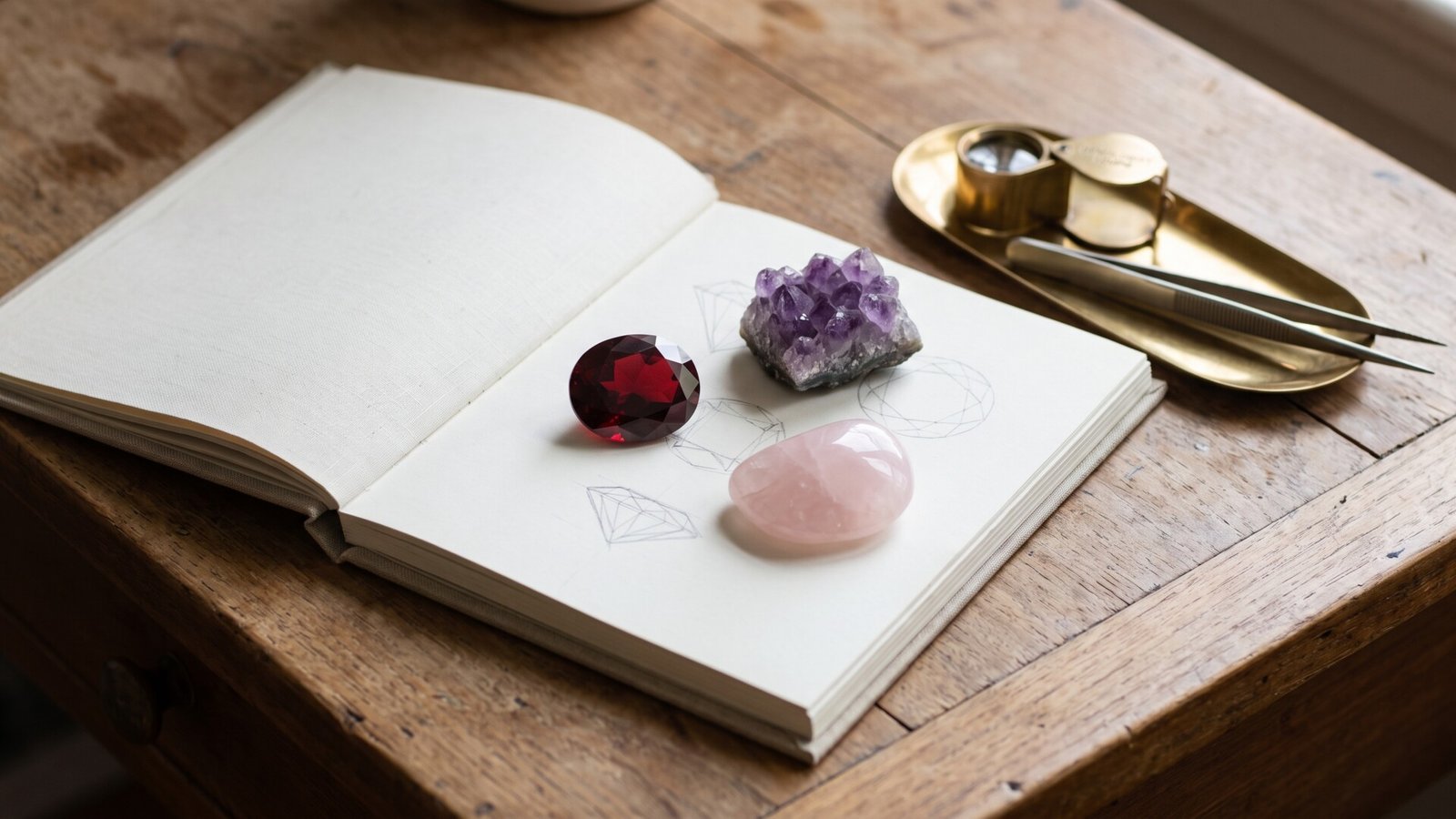
Garnet is the January birthstone, known for deep red tones. Historically it was carried by travellers as a protective talisman, and it is traditionally associated with friendship, loyalty, vitality and commitment. Read the January Birthstone guide for facts, buying advice and jewelry ideas.
Common alternative January stones include rose quartz, traditionally linked with love and compassion, and spinel, associated with renewal and resilience.
February
Amethyst, the purple quartz, was prized by royalty and clergy. Its name comes from a Greek word meaning “not intoxicated”, and ancient Greeks told stories of it guarding against drunkenness. Today it is associated with calm, clarity and wisdom. Read the February Birthstone guide for facts, buying advice and jewelry ideas.
Alternative February stones such as onyx and fluorite are traditionally linked with grounding and focus.
March
Aquamarine, the sea-blue member of the beryl family, was carried by sailors in the belief that it protected them at sea. It is traditionally associated with courage, serenity and clear communication. Read the March Birthstone guide for facts, buying advice and jewelry ideas.
Alternatives include bloodstone, linked with strength and vitality in old traditions, and moss agate, linked with growth and nature.
April
Diamond is the April birthstone and a long-standing symbol of strength, clarity and enduring love. Ancient and medieval writers credited diamonds with courage and protection. Read the April Birthstone guide for facts, buying advice and jewelry ideas.
Alternatives such as white sapphire and zircon offer a similar clear look at more accessible prices and carry associations with purity and clarity.
May
Emerald, the green beryl, has symbolised love, rebirth and prosperity in many cultures and was prized by royalty. It is traditionally linked with harmony and renewal. Read the May Birthstone guide for facts, buying advice and jewelry ideas.
Alternative May stones such as chrysoberyl and agate are associated with protection and stability.
June
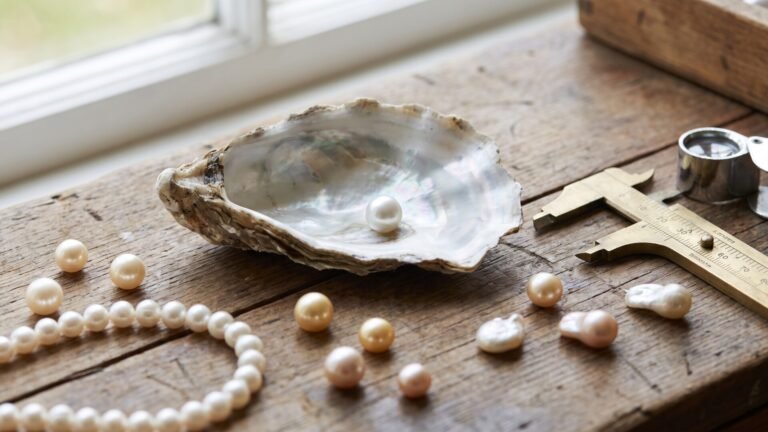
June has three modern birthstones. Pearl is linked with purity and wisdom, alexandrite, which changes colour from green to red under different light, with adaptability and transformation, and moonstone with intuition and new beginnings. Read the June Birthstone guide for facts, buying advice and jewelry ideas.
Having three options means June-born people can choose by look, budget or symbolism. See also what to buy for a June birthday.
July
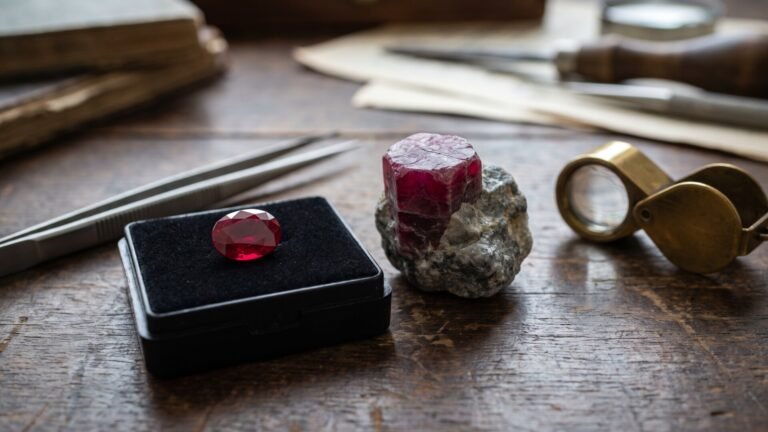
Ruby, the red corundum, has long been associated with passion, courage and vitality. Historic accounts link ruby with royalty and with protection in battle. Read the July Birthstone guide for facts, buying advice and jewelry ideas.
Carnelian and spinel are often suggested as alternatives and carry warm, energetic associations.
August
Peridot is the olive-green August birthstone, traditionally associated with protection, abundance and good fortune, and said in folklore to ward off bad dreams and evil spirits. Read the August Birthstone guide for facts, buying advice and jewelry ideas.
Alternatives include sardonyx, linked with strength and courage, and spinel, the second modern August stone.
September
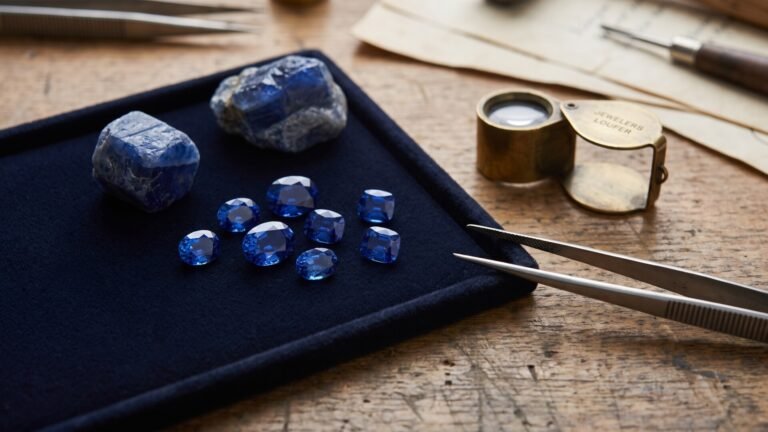
Sapphire, blue corundum, is a long-standing symbol of wisdom, loyalty and integrity, favoured by royalty and clergy. Read the September Birthstone guide for facts, buying advice and jewelry ideas.
Lapis lazuli, traditionally linked with truth and insight, is a classic alternative, and blue spinel is a lower-cost look-alike for blue sapphire.
October
Opal, with its play of colour, is traditionally associated with creativity and imagination. Tourmaline, found in nearly every colour, is associated with balance and protection in crystal-practice traditions. Read the October Birthstone guide for facts, buying advice and jewelry ideas.
Together they give October-born people a choice between a single dramatic stone and a colour range.
November
Topaz and citrine share warm, golden tones and are traditionally associated with warmth, joy and abundance. Citrine is linked in modern crystal practice with optimism and creativity. Read the November Birthstone guide for facts, buying advice and jewelry ideas.
Both are usually available at moderate prices and suit rings, pendants and statement pieces.
December
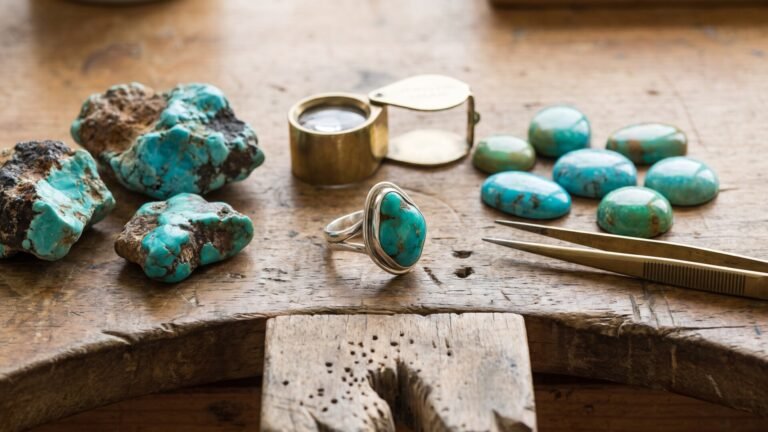
Turquoise has been used for thousands of years as a protective and luck-bringing stone in many cultures. Tanzanite, discovered in the 1960s, is associated with spiritual awareness and transformation, and zircon with wisdom and clarity. Read the December Birthstone guide for facts, buying advice and jewelry ideas.
Three very different stones make December one of the most varied months.
Quick Durability Reference for Birthstones
Meaning is one thing; daily wear is another. This table summarises typical Mohs hardness and the main caution for each stone. Hardness is scratch resistance only, and some stones with decent hardness still chip or split easily. Our gemstone hardness scale guide explains the difference.
| Stone | Typical Mohs hardness | Main caution |
|---|---|---|
| Garnet | 6.5–7.5 (varies by type) | Generally good for daily wear |
| Amethyst | 7 | Colour can fade with strong, prolonged light |
| Aquamarine | 7.5–8 | Good durability; avoid hard knocks |
| Diamond | 10 | Hardest, but can still chip along cleavage planes |
| Emerald | 7.5–8 | Often included and fracture-prone; usually clarity-enhanced |
| Pearl | 2.5–4.5 | Soft; avoid chemicals and ultrasonic cleaners |
| Alexandrite | 8.5 | Durable; natural stones are rare and costly |
| Moonstone | 6–6.5 | Cleavage and poor toughness; best in pendants and earrings |
| Ruby | 9 | Excellent toughness; fracture-filled stones need gentler care |
| Peridot | 6.5–7 | Can scratch and chip; protect in rings |
| Sapphire | 9 | Excellent durability |
| Opal | 5.5–6.5 | Can crack with heat or dryness; avoid knocks |
| Tourmaline | 7–7.5 | Good, but can be brittle |
| Topaz | 8 | Has cleavage; avoid sharp blows |
| Citrine | 7 | Much citrine is heat-treated amethyst |
| Turquoise | 5–6 | Porous and often stabilised; avoid chemicals |
| Tanzanite | 6.5–7 | Has cleavage; best in protective settings |
| Zircon | 6.5–7.5 | Can be brittle, with edges prone to chipping |
Meaning and Symbolism By Gemstone
Some people connect with a gem more than a month. Each stone below links to its dedicated meaning page for history, symbolism and modern uses, and to its properties and buying guide where one exists.
Garnet
Garnet is traditionally associated with protection, friendship and commitment, and was carried by travellers as a talisman. Read the Garnet Meaning guide for the full story, or the garnet properties and value guide for facts and buying advice.
Amethyst
Amethyst is associated with calm, clarity and spirituality, and was worn by monks and royalty. Read the Amethyst Meaning guide for the full story, or the amethyst properties and value guide for facts and buying advice.
Aquamarine
Aquamarine is linked with serenity, courage and protection at sea. Read the Aquamarine Meaning guide for the full story, or the aquamarine properties and value guide for facts and buying advice.
Diamond
Diamond symbolises strength, clarity and lasting love. Read the Diamond Meaning guide for the full story, or the diamond properties and value guide for facts and buying advice.
Emerald
Emerald has stood for love, growth and renewal, and was treasured by royalty. Read the Emerald Meaning guide for the full story, or the emerald properties and value guide for facts and buying advice.
Pearl
Pearl is associated with purity, wisdom and quiet elegance. Read the Pearl Meaning guide for the full story, or the pearl properties and value guide for facts and buying advice.
Alexandrite
Alexandrite is a colour-change gem associated with adaptability and transformation. Read the Alexandrite Meaning guide for the full story, or the alexandrite properties and value guide for facts and buying advice.
Moonstone
Moonstone is linked with intuition, new beginnings and lunar cycles. Read the Moonstone Meaning guide for the full story, or the moonstone properties and value guide for facts and buying advice.
Ruby
Ruby is associated with passion, courage and vitality. Read the Ruby Meaning guide for the full story, or the ruby properties and value guide for facts and buying advice.
Peridot
Peridot is linked with abundance, positivity and protection in folklore. Read the Peridot Meaning guide for the full story, or the peridot properties and value guide for facts and buying advice.
Sapphire
Sapphire is associated with wisdom, loyalty and integrity. Read the Sapphire Meaning guide for the full story, or the sapphire properties and value guide for facts and buying advice.
Opal
Opal is linked with creativity, imagination and emotional depth. Read the Opal Meaning guide for the full story, or the opal properties and value guide for facts and buying advice.
Tourmaline
Tourmaline is associated with balance and protection in crystal-practice traditions. Read the Tourmaline Meaning guide for the full story, or the tourmaline properties and value guide for facts and buying advice.
Topaz
Topaz is linked with joy, strength and confidence. Read the Topaz Meaning guide for the full story, or the topaz properties and value guide for facts and buying advice.
Citrine
Citrine is associated with optimism, creativity and abundance. Read the Citrine Meaning guide for the full story, or the citrine properties and value guide for facts and buying advice.
Turquoise
Turquoise has long been a protective and luck-bringing stone in many cultures. Read the Turquoise Meaning guide for the full story, or the turquoise properties and value guide for facts and buying advice.
Tanzanite
Tanzanite is associated with spiritual awareness and transformation. Read the Tanzanite Meaning guide for the full story, or the tanzanite properties and value guide for facts and buying advice.
Zircon
Zircon is linked with wisdom, clarity and stability. Read the Zircon Meaning guide for the full story, or the zircon properties and value guide for facts and buying advice.
Exploring by gemstone lets you see connections between stones that share similar symbolism, such as ruby and garnet for courage, or moonstone and pearl for intuition. For a broader look at stones beyond birthstones, visit our Gemstones hub.
Spiritual and Cultural Symbolism
People in many cultures have attributed protective or luck-bringing qualities to gemstones, and some of those practices continue in modern jewelry. This section describes the traditions; it does not claim they work.
Amulets and talismans. Warriors, travellers and royalty have carried stones such as garnet and turquoise as protective charms, and clergy and scholars have worn amethyst and sapphire as symbols of wisdom and devotion. See the symbolism of ruby in ancient India and aquamarine in mythology and history for two examples.
Cultural meanings. Emerald is linked with love and wisdom in old Egyptian accounts, ruby with passion and courage in Indian tradition, and moonstone with intuition and nature’s cycles in European folklore. These stories are part of why the stones feel meaningful, whatever their physical properties. For royal history, read the history of emerald in royal jewelry.
Chakras and crystal practice. In modern crystal practice, stones are matched with chakras, an idea drawn from Indian spiritual traditions. Red stones such as garnet and ruby are linked in this system with root energy, and blue stones such as sapphire and aquamarine with the throat and third eye. These associations are beliefs rather than science. See how birthstones are said to boost energy and how to cleanse and charge your birthstones for the practice itself, and turquoise lore for one cultural example.
Milestones. Beyond individual stones, birthstones are often used to mark births, graduations, anniversaries and other life transitions, which is why they remain popular gifts. See gift ideas by relationship.
Why the stories endure. Symbolism persists because it gives people a way to mark identity and memory. A ring that stands for a grandmother’s birth month or a pendant chosen for a child’s first birthday carries meaning that has nothing to do with chemistry, and that is a perfectly good reason to choose a stone. The key is to keep the story and the science side by side, so that a meaningful gift is also a wearable, well-cared-for one.
If you enjoy this side of gemstones, treat it as an enriching layer of meaning. If you have a health concern, talk to a qualified professional rather than relying on a stone.
Zodiac Overlaps (Light Touch)
This is not an astrology guide, but many people enjoy matching stones to their sign. Zodiac stone lists come from several traditions, including planetary rulers and element symbolism, and they vary between sources, so there is no single agreed list. Treat the matches as playful and symbolic rather than rules.
A fiery red stone such as ruby is often matched with fire signs for courage and confidence, while a calm blue such as sapphire or aquamarine is often matched with reflective signs. Many people simply choose the stone they like and add the zodiac story afterwards, and that is perfectly fine: any stone can suit anyone.
For sign-by-sign detail, visit the Zodiac Birthstones hub, which links to individual guides for every sign, including Aries, Taurus, Gemini, Cancer, Leo, Virgo, Libra, Scorpio, Sagittarius, Capricorn, Aquarius and Pisces. The article Zodiac vs. Monthly Birthstones explains how to choose between lists.
How the Modern Birthstone List Evolved
The month-by-month list most people know today is more recent than the traditions behind it. According to National Jeweler, the American National Retail Jeweler’s Association, now Jewelers of America, established the first official list in 1912. In 1952 alexandrite (June), citrine (November), tourmaline (October) and zircon (December) were added. Tanzanite joined December in 2002, and in 2016 the American Gem Trade Association and Jewelers of America announced spinel as a second August birthstone alongside peridot.
This history is why you will often see two or three stones for one month, and why older books and other countries may list different ones. Older traditions, including associations with the twelve stones of a biblical breastplate and with the zodiac, are covered in our history of birthstones article. The takeaway is simple: the symbolism is old, but the exact monthly assignments are partly a modern convention, so feel free to choose the stone that speaks to you.
Using Birthstone Meanings in Gifts
Meaning is what turns a piece of jewelry into a gift people keep. A few practical ideas help the symbolism land well.
- Pair the story with the stone. A short note about the tradition behind the stone, for example sailors and aquamarine, makes the gift feel considered. Keep it as folklore rather than a promise.
- Match the stone to the person’s routine. Someone who works with their hands or wears rings all day needs a tougher stone such as sapphire or ruby, even if their birth month stone is softer.
- Combine stones for families. Multi-stone pendants and stack rings let you gather the whole family’s birthstones in one piece. See how to build a family stack ring and multi-stone necklaces for moms.
- Think about budget and alternatives. A lab-grown or alternative stone can carry the same colour and symbolism at a lower cost. Be clear whether a stone is natural, lab-grown or a simulant.
Choosing a Meaningful Stone: Practical Tips
- Start with the person. Choose a stone that matches their month, sign or favourite colour, whichever matters most to them.
- Check the wear. Match softer stones such as pearl, opal and moonstone to pendants and earrings, and tougher stones such as sapphire and ruby to rings.
- Ask about treatment. Heat, oil, fillings and dyes are common in some stones, and sellers should disclose them. See natural vs. lab-grown birthstones.
- Mind the age. For children, choose age-appropriate designs, since small stones and beads can be a choking hazard. See children’s birthstone gifts.
- Do not buy for the return. Gemstones are bought for meaning and enjoyment, not as a guaranteed investment.
To turn meaning into jewelry, browse the Birthstone Jewelry Guide and our education and buying guides, and read about ethical gemstones if sourcing matters to you.
Wrapping It Up
Birthstones are part geology and part story. By exploring them by month, by gemstone, through cultural traditions and, lightly, through the zodiac, you can find the layer of meaning that fits you. Then use the practical facts to choose a piece you will enjoy for years.
Frequently Asked Questions About Birthstone Meanings And Symbolism
What do birthstones symbolise?
Birthstones carry traditional meanings, such as garnet for friendship and protection, amethyst for calm and clarity, and ruby for passion and courage. These meanings come from folklore and cultural tradition rather than science.
Are the spiritual properties of birthstones proven?
No. Spiritual and healing properties come from cultural traditions and modern crystal-practice beliefs. They are not scientifically proven and are not a substitute for medical advice.
Why do some months have more than one birthstone?
Birthstone lists have changed over time and differ between countries and organisations. June, for example, commonly lists pearl, alexandrite and moonstone.
Can I wear a stone that is not my birth month?
Yes. Many people choose a stone for its colour, meaning or zodiac connection. Any stone can be worn by anyone.
How do I choose a birthstone that lasts?
Check hardness and toughness, not hardness alone. Sapphire and ruby suit daily rings, while pearl, opal and moonstone are better in pendants and earrings or with protective settings.
Where can I read more about a specific stone?
Each stone has its own meaning guide and properties guide, linked from the sections above.
Meanings and symbolism on this page reflect cultural traditions and beliefs. They are not medical, financial or professional advice.