Birthstones by Month: Your Complete Guide
Welcome to Birthstones by Month, your starting point for discovering the stones that represent each month of the year. Every month has one or more gems with their own history, symbolism and practical quirks. This hub gives you a quick answer for each month, explains why some months have several stones, and points you to a dedicated guide for every month, along with tips on how to wear birthstones in jewelry.
Whether you are buying a meaningful gift, adding to your own collection, or just curious about your stone, start with the table below, then follow the link to your month. If you just want a fast lookup, try What’s My Birthstone? A Complete Guide by Month.
Birthstones by Month: Quick Reference
The table follows the commonly used current US lists. Lists differ between organizations and countries, so a stone that is official in one list may be “alternative” in another. Hardness is on the Mohs scale; it measures scratch resistance, not overall toughness.
| Month | Common birthstones | Typical hardness | Everyday ring? |
|---|---|---|---|
| January | Garnet | 6.5 to 7.5 | Yes, with care |
| February | Amethyst | 7 | Yes, with care |
| March | Aquamarine, bloodstone | Aquamarine 7.5 to 8; bloodstone 6.5 to 7 | Aquamarine yes |
| April | Diamond | 10 | Yes |
| May | Emerald | 7.5 to 8, but often fractured | Protective setting advised |
| June | Pearl, alexandrite, moonstone | Pearl 2.5 to 4.5; alexandrite 8.5; moonstone 6 to 6.5 | Alexandrite yes; pearl and moonstone occasional |
| July | Ruby | 9 | Yes |
| August | Peridot, spinel, sardonyx | Peridot 6.5 to 7; spinel 8 | Spinel yes; peridot with care |
| September | Sapphire | 9 | Yes |
| October | Opal, tourmaline | Opal 5.5 to 6.5; tourmaline 7 to 7.5 | Tourmaline yes; opal occasional |
| November | Topaz, citrine | Topaz 8; citrine 7 | Yes, with care (topaz has cleavage) |
| December | Turquoise, tanzanite, zircon | Turquoise 5 to 6; tanzanite 6.5 to 7; zircon 6.5 to 7.5 | Occasional wear or protective settings |
Why Do Some Months Have More Than One Birthstone?
The idea of linking gems to months has ancient roots, often traced to the twelve stones on Aaron’s breastplate in the biblical book of Exodus. Wearing a single stone for your birth month is a more recent custom. In the United States, an official list was issued in 1912 by the trade association now called Jewelers of America. It has been updated since: alexandrite, citrine, tourmaline and zircon were added in 1952, tanzanite became a December stone in 2002, and spinel was added for August in 2016. Britain’s National Association of Goldsmiths published its own list in 1937, and other countries and traditions have lists of their own.
Months gained extra stones for practical reasons: some gems are very rare or costly, and others are simply more affordable or durable. Different trade bodies also disagree. For example, moonstone is in the Jewelers of America and AGTA lists for June but not in the American Gem Society’s, and bloodstone appears in some lists for March but not others. So if you are shopping, any stone on a recognized list is a legitimate birthstone; pick the one you like best. To see how the lists connect to astrology, read Zodiac Birthstones: The Complete Guide, and for the meanings behind each stone, see Birthstone Meanings & Symbolism.
January Birthstone: Garnet
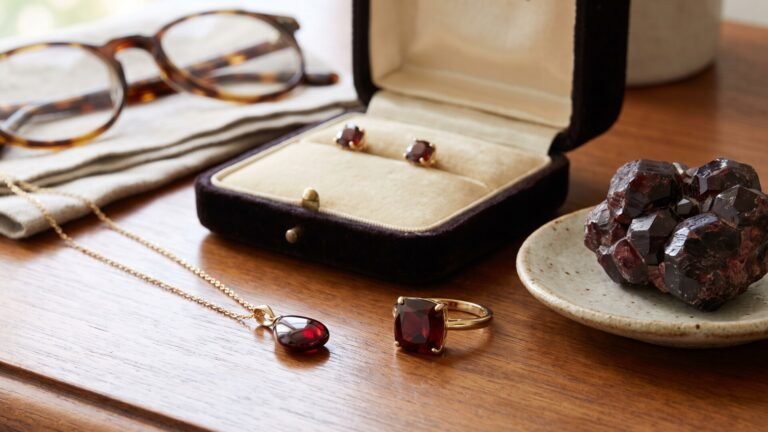
January’s birthstone is garnet, a family of minerals that comes in red, orange, pink, purple and green. It is traditionally linked with protection, commitment and vitality. Garnets were carried by travelers and warriors as protective talismans, and their rich color works for rings, necklaces and everyday bracelets alike. Start with the January birthstone guide, or read January birthstone meaning: the power of garnet.
February Birthstone: Amethyst
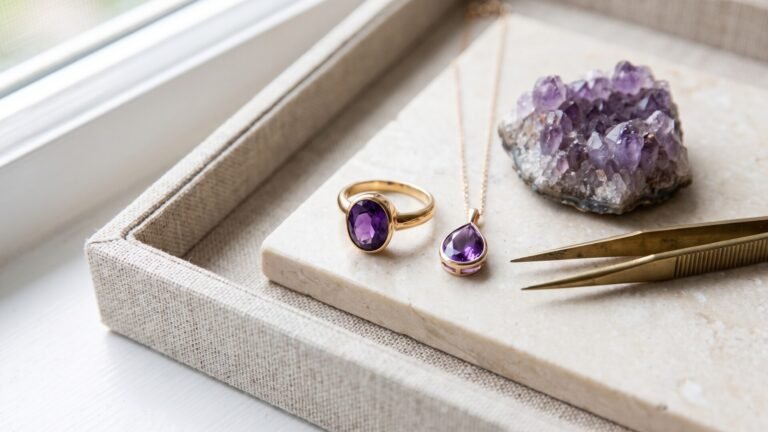
February is represented by amethyst, the purple variety of quartz, in shades from pale lavender to deep violet. It is traditionally associated with clarity, calm and spiritual awareness. Amethyst was once ranked among the most precious gems, until large deposits discovered in Brazil made it widely affordable. It suits both casual wear and statement pieces. See the February birthstone guide and February birthstone meaning, or read which celebrities wear amethyst.
March Birthstone: Aquamarine and Bloodstone
March’s main stone is aquamarine, a pale blue to blue-green variety of beryl, with bloodstone (green chalcedony with red flecks) listed as a traditional alternative in some lists. They are associated with courage, clarity and calm. Aquamarine is durable and often very clean, while bloodstone is an opaque green stone with red inclusions; if you are unsure whether you have bloodstone or similar green jasper, our bloodstone vs green jasper identification guide will help. Explore the March birthstone guide.
April Birthstone: Diamond
April’s birthstone is the diamond, the hardest natural gem and a long-standing symbol of strength, clarity and enduring love. Some traditions have used other clear stones for April, such as rock crystal (clear quartz), and white sapphire or white topaz are popular lookalike alternatives, though they are not official April stones. For an example of a clear-gem lookalike, see Herkimer diamond vs regular diamond (Herkimer diamonds are quartz, not diamond). Read the April birthstone guide.
May Birthstone: Emerald
May belongs to emerald, the green variety of beryl, long associated with renewal, love and growth. Emeralds almost always contain inclusions, which gemologists call the “jardin”, and most are treated with oils or resins to improve their appearance. That makes them more fragile than their Mohs hardness of 7.5 to 8 suggests, so a protective setting and gentle care matter. Some lists also mention chrysoprase, a green chalcedony, as a May alternative. See the May birthstone guide.
June Birthstone: Pearl, Alexandrite and Moonstone
June has three stones: pearl, alexandrite and moonstone. Pearls are associated with purity and wisdom, alexandrite is a rare color-change gem that looks green in daylight and red under incandescent light, and moonstone is known for the moving glow called adularescence. Pearl and moonstone are fairly soft, so they suit earrings and pendants best. Browse alexandrite pendants for new moms or head to the June birthstone guide. Wondering how pearl compares with another soft, popular gem? See pearl vs opal.
July Birthstone: Ruby
July’s stone is ruby, the red variety of corundum, which is colored by chromium and is second in hardness only to diamond among natural gems. It is a classic symbol of passion and courage. Some traditional lists add onyx or carnelian as alternatives for July. Fine natural rubies are valuable, and many on the market are heat-treated, so ask for disclosure. See the July birthstone guide.
August Birthstone: Peridot, Spinel and Sardonyx
August has peridot, a lime to olive green gem associated with prosperity and protection, plus spinel (added in 2016) and sardonyx, a banded chalcedony. Spinel is notable for being hard, brilliant and available in many colors. Peridot is softer and best protected from knocks. See the August birthstone guide.
September Birthstone: Sapphire
September belongs to sapphire, a corundum gem best known in blue but available in many colors. It symbolizes wisdom, loyalty and serenity. Lapis lazuli is listed as a September stone in some traditions. Sapphire is hard and durable, which makes it one of the best birthstones for rings; most blue sapphire on the market is heat-treated. See the September birthstone guide.
October Birthstone: Opal and Tourmaline
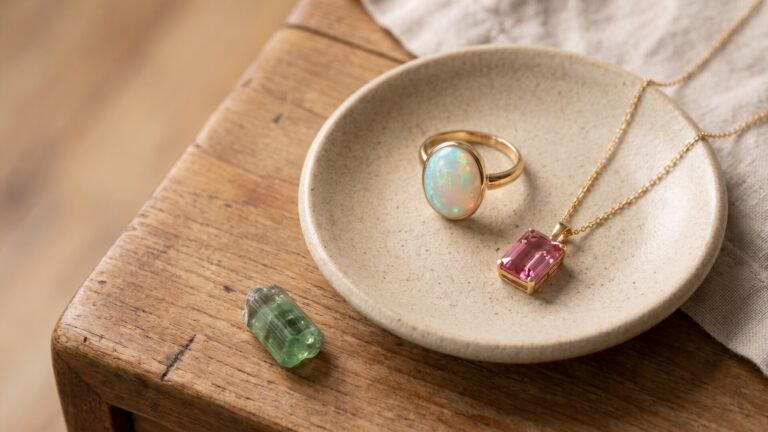
October has opal and tourmaline. Opal is famous for its play-of-color but is brittle and sensitive to heat and dryness, while tourmaline is more durable and comes in nearly every color. Both are traditionally linked to creativity and emotional expression. See the October birthstone guide.
November Birthstone: Topaz and Citrine
November’s stones are topaz and citrine, associated with warmth, joy and confidence. Natural topaz is often golden, and much of the blue topaz on sale is color-treated colorless topaz. Citrine is a yellow-to-orange quartz, and much of what is sold as citrine is heat-treated amethyst. See the November birthstone guide.
December Birthstone: Turquoise, Tanzanite and Zircon
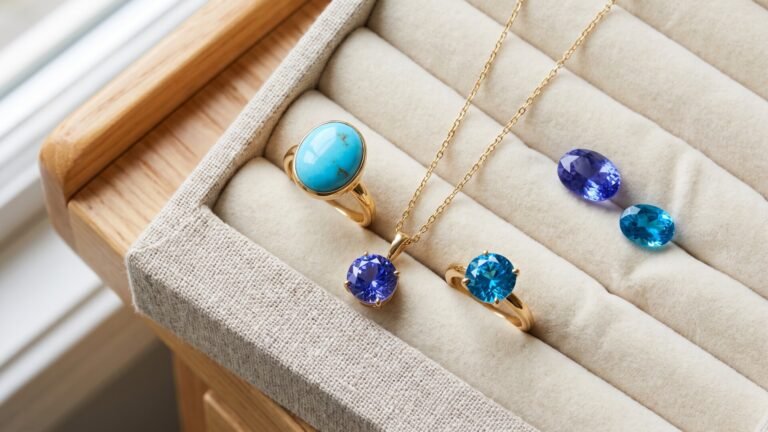
December offers turquoise, tanzanite and zircon; some retailers also use blue topaz. Turquoise has been used in jewelry for thousands of years, tanzanite is a rare blue-violet gem found in one area of Tanzania, and zircon is a natural, brilliant gem that should not be confused with synthetic cubic zirconia. Read more about tanzanite in our look at tanzanite and see the December birthstone guide.
How to Choose Your Birthstone
- Think about wear: For a daily ring, favor harder stones such as sapphire, ruby, spinel, diamond or aquamarine. Save softer stones such as pearl, opal and turquoise for earrings, pendants or occasional wear.
- Ask about treatments: Heat, irradiation, oiling and dyeing are common and affect value and care.
- Compare natural and lab-grown: Lab-grown gems share the chemistry of natural ones and cost less. See natural vs lab-grown birthstones.
- Shop ethically: Look for named standards or certification rather than vague wording. Read ethical gemstones: how to shop sustainably.
- Understand the budget: Prices span from a few dollars per carat to many thousands. Our ranking of birthstones by price per carat shows the range.
Explore More Birthstone Topics
- Birthstone Meanings & Symbolism: the stories behind each stone
- Zodiac Birthstones: astrology and gemstones
- Gemstones: Your Ultimate Guide: profiles of individual gems
- Education & Buying Guides: how to buy and care for stones
- Birthstone Jewelry Guide: rings, necklaces, earrings and bracelets
- Children’s Birthstone Gifts & Birthday Ideas (small stones can be a choking hazard for young children)
- Ethical Gemstones: sustainable shopping
- Birthstone Personality Traits for Each Month: a fun, folklore-based look at each month
Frequently Asked Questions About Birthstones By Month
What is my birthstone?
It depends on your birth month: garnet (January), amethyst (February), aquamarine (March), diamond (April), emerald (May), pearl, alexandrite or moonstone (June), ruby (July), peridot, spinel or sardonyx (August), sapphire (September), opal or tourmaline (October), topaz or citrine (November), and turquoise, tanzanite or zircon (December).
Why do some months have more than one birthstone?
Lists have been revised over time and differ between organizations and countries. Some stones were added because the original stone was rare, expensive or not very durable.
Which birthstones are best for everyday rings?
Harder, tougher stones such as diamond, ruby, sapphire, spinel and aquamarine. Softer stones like pearl, opal and turquoise are better in earrings or pendants.
What are traditional vs modern birthstones?
The modern US list dates from 1912 and has been updated several times. Traditional lists draw on older European customs and sometimes include different stones.
Can I wear a different birthstone from my birth month?
Yes. Many people choose a zodiac stone, a family member’s stone or simply a favorite gem. Any stone on a recognized list is a legitimate choice.
Are lab-grown birthstones real?
Lab-grown stones have the same chemistry and structure as natural ones, but they should be sold as lab-grown and are typically cheaper.
Start Your Month-by-Month Journey
Every month has its own stones, stories and style. Pick your month above and follow the link to its dedicated guide. If you are shopping for a gift, match the stone to the month and turn it into a piece of birthstone jewelry that suits the wearer’s lifestyle.