Amethyst Meaning: History, Symbolism, Spiritual Properties & Modern Uses
I have a confession that still surprises people who know I write about gemstones.
For years, I thought amethyst was just a pretty purple stone. February’s birthstone, nice color, affordable — nothing special. Then I started digging into its history. The ancient Greeks believed it could prevent drunkenness. Medieval bishops wore it as a symbol of piety. Victorian women treasured it for its romantic purple hue. And today, millions of people use it for meditation, spiritual protection, and emotional healing.
That’s the thing about amethyst. It’s not just a stone. It’s a story that spans 3,000 years of human history.
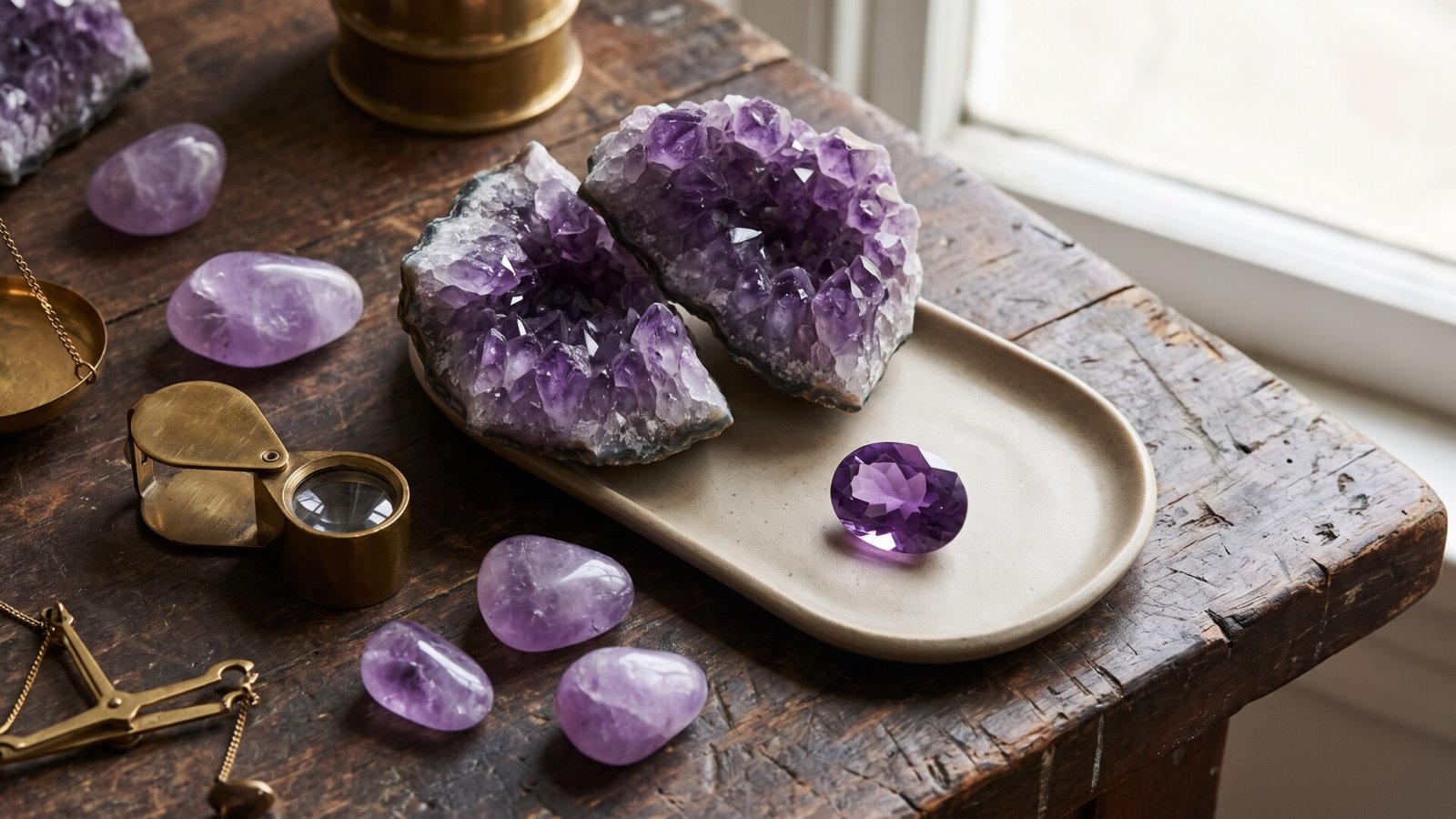
Amethyst is the purple variety of quartz, prized for thousands of years for its rich color and powerful symbolism. Its name comes from the Greek amethystos, meaning “not drunk” — a reference to the ancient belief that the stone could prevent intoxication. But its meaning has evolved far beyond that single association. Today, amethyst represents wisdom, peace, spiritual awareness, emotional balance, and protection — making it one of the most versatile and beloved gemstones in the world.
This guide covers everything you need to know about amethyst’s meaning: its ancient origins, its symbolism across cultures, its spiritual properties, its role in astrology and birthstones, and how to choose the right amethyst for your needs. Whether you’re a February baby, an Aquarius or Pisces, or simply someone drawn to the color purple, you’re about to discover why this stone has captivated humanity for millennia.
Amethyst at a Glance
Before we dive deep into its meaning, here’s a quick reference guide to amethyst’s key characteristics.
| Feature | Details |
|---|---|
| Mineral | Quartz (silicon dioxide) |
| Color | Light lavender to deep royal purple |
| Hardness | 7 (Mohs scale) |
| Birthstone Month | February |
| Zodiac Associations | Aquarius, Pisces |
| Anniversary | 6th & 17th Wedding Anniversary |
| Symbolism | Wisdom, peace, protection, clarity, sobriety, spiritual awareness |
What Does Amethyst Symbolize?
Amethyst’s symbolism is rich and layered, spanning thousands of years and dozens of cultures. At its core, the stone represents several interconnected meanings.
Wisdom and Inner Peace
Throughout history, amethyst has been associated with wisdom and clear thinking. The ancient Greeks believed it could prevent intoxication — not just from alcohol, but from anything that clouded the mind. This connection to mental clarity evolved into a broader association with wisdom, sound judgment, and inner peace. Today, amethyst is widely used in meditation and spiritual practices to quiet the mind and access deeper understanding.
Spiritual Awareness
Amethyst’s purple color has long been associated with spirituality and the divine. In many traditions, purple is the color of the crown chakra — the energy center at the top of the head that connects us to higher consciousness. Amethyst is believed to open this chakra, facilitating spiritual growth, intuition, and connection to the sacred.
Protection
For millennia, amethyst has been worn as a protective talisman. Ancient Greeks and Romans believed it could ward off intoxication and poisoning. Medieval Europeans thought it protected against witchcraft, black magic, and disease. Today, many people still wear amethyst for spiritual protection — to shield against negative energy and promote emotional safety.
Emotional Balance
Amethyst is often called a “peace stone” because of its calming effects on the mind and emotions. It’s believed to soothe anxiety, reduce stress, and promote emotional stability. For those who struggle with overthinking, worry, or emotional overwhelm, amethyst offers a gentle anchor.
Sobriety and Clarity
The most famous ancient association — amethyst’s connection to sobriety — persists in modern symbolism. While few people today believe the stone literally prevents drunkenness, its association with clarity of mind and freedom from addictive patterns remains powerful. Amethyst is often used in recovery and healing practices as a symbol of mental clarity and self-control.
Why Purple Became a Symbol of Royalty
Amethyst’s deep purple color has historically been associated with royalty and the divine. In ancient times, purple dye was extremely rare and expensive — reserved for emperors, kings, and high priests. Amethyst, with its naturally occurring purple hue, inherited this symbolism. Wearing amethyst signaled status, power, and connection to the sacred. This association continued through the Middle Ages, when bishops and cardinals wore amethyst rings as symbols of piety and religious authority.
The History of Amethyst Meaning
The meaning of amethyst has evolved dramatically over 3,000 years. Here’s how different cultures have interpreted this remarkable stone.
Ancient Greece: The Myth of Dionysus and Amethyst
The name “amethyst” comes from the ancient Greek amethystos, meaning “not drunk” or “not intoxicated”. According to Greek legend, the stone was associated with Dionysus, the god of wine, revelry, and intoxication.
One version of the myth tells of a maiden named Amethyste who was pursued by Dionysus. To protect her from the god’s advances, the goddess Diana turned her into a white quartz crystal. In remorse, Dionysus poured wine over the stone, staining it purple — and giving it the power to protect against drunkenness.
Whether or not the myth is historically accurate, the belief that amethyst could prevent intoxication was widespread in ancient Greece. Wine goblets were often carved from amethyst, and the stone was worn as a talisman to counteract the effects of alcohol. The poet Asclepiades of Samos referenced this belief as early as 320 BC.
Ancient Rome
The Romans inherited the Greek belief in amethyst’s anti-intoxicating properties. They also carved amethyst into intaglios and signet rings, valuing it for both its beauty and its protective qualities. Roman soldiers wore amethyst amulets for protection in battle, believing the stone could bring good fortune and ward off harm.
Ancient Egypt
While the Greeks and Romans emphasized amethyst’s connection to sobriety, the ancient Egyptians valued it for different reasons. Amethyst was used in jewelry and amulets, often associated with protection and status. It was also one of the stones included in the Breastplate of Aaron — the sacred garment worn by the High Priest of Israel, as described in the Book of Exodus.
Medieval Europe
During the Middle Ages, amethyst’s symbolism shifted toward piety and spiritual authority. The stone was associated with bishops and the Catholic Church. Bishops’ rings were often set with amethyst, symbolizing piety, celibacy, and spiritual wisdom.
By the 16th century, amethyst was considered a cure-all for various ailments — from drunkenness to nightmares to melancholy. Mary Queen of Scots reportedly wore an amethyst to dispel her tendency toward melancholy. The stone was also believed to protect crops from tempests and locusts, drive out evil spirits, and inspire the intellect.
Victorian Era
The Victorians, known for their love of sentimental jewelry, embraced amethyst for its romantic purple hue. It became a popular choice for mourning jewelry, engagement rings, and sentimental keepsakes. The stone’s association with royalty and spirituality continued, but it also became more accessible to the middle class as new deposits were discovered in Brazil.
Modern Symbolism
Today, amethyst’s meaning encompasses all of these historical associations — and more. It’s the stone of wisdom, peace, protection, and spiritual awareness. It’s used in meditation, crystal healing, and jewelry. Its purple color continues to symbolize royalty, spirituality, and inner strength. And its ancient connection to sobriety has evolved into a broader association with clarity of mind and freedom from addictive patterns.
How the Meaning of Amethyst Has Changed Over 2,000 Years
| Time Period | Primary Meaning |
|---|---|
| Ancient Greece | Protection against drunkenness; talisman for sobriety |
| Roman Empire | Protection in battle; signet stones for status |
| Middle Ages | Piety; bishops’ rings; cure for melancholy |
| Victorian Era | Romantic sentiment; accessible luxury |
| Modern Crystal Culture | Spiritual awareness; emotional healing; meditation; protection |
This evolution reflects broader cultural shifts. In ancient times, amethyst was valued for its physical protective properties. Today, it’s valued for its emotional and spiritual symbolism — a shift from external protection to internal transformation.
Amethyst in Different Cultures
Amethyst has been treasured across cultures and continents. Here’s how different traditions have interpreted its meaning.
Greek Traditions
As we’ve seen, the Greeks associated amethyst with Dionysus and sobriety. Wine goblets carved from amethyst were believed to prevent intoxication, and the stone was worn as a talisman against overindulgence.
Roman Beliefs
The Romans shared the Greek belief in amethyst’s anti-intoxicating properties. They also valued it as a stone of protection and status, carving it into intaglios and signet rings.
Christian Symbolism
In Christian tradition, amethyst appears in the Book of Revelation as one of the twelve foundation stones of New Jerusalem. It was also associated with the apostle Matthias and became a symbol of piety and spiritual wisdom. Bishops’ rings were often set with amethyst, representing the wearer’s commitment to celibacy and spiritual authority.
Buddhism
In some Buddhist traditions, amethyst is used in meditation and prayer beads. Its calming purple color is believed to promote mental clarity and spiritual focus. The stone is sometimes associated with the crown chakra, representing the connection between the physical and spiritual realms.
Feng Shui
In Feng Shui, amethyst is used to promote calm, clarity, and positive energy. It’s often placed in meditation spaces, bedrooms, or areas associated with relaxation and introspection. Its purple color is associated with the “wealth” and “spiritual” areas of the home.
Modern Western Crystal Practices
Today, amethyst is one of the most popular stones in Western crystal healing. It’s used for meditation, emotional balance, spiritual protection, and stress reduction. Many practitioners place amethyst under their pillow to promote restful sleep and vivid dreams.
Similarities Across Cultures
Despite their differences, most cultures share some common beliefs about amethyst:
- It promotes calm and peace.
- It offers protection against negative influences.
- It enhances spiritual awareness and intuition.
- Its purple color symbolizes royalty, spirituality, and inner strength.
Key Differences
The main difference lies in the specific application:
- Ancient Greeks focused on sobriety and physical protection.
- Medieval Christians emphasized piety and spiritual authority.
- Modern practitioners emphasize emotional healing and spiritual growth.
Spiritual Meaning of Amethyst
Note: The following information is based on cultural and spiritual beliefs, not established scientific fact. Amethyst’s spiritual properties are matters of tradition and personal experience, not medical evidence.
Amethyst’s spiritual meaning is rich and multifaceted. Here are the core spiritual associations.
Inner Peace
Amethyst is widely considered a stone of peace and tranquility. Its calming purple color and gentle energy are believed to soothe the mind, reduce stress, and promote emotional balance. For those who struggle with anxiety, overthinking, or emotional overwhelm, amethyst offers a quiet anchor.
Meditation
Amethyst is one of the most popular stones for meditation. Its energy is believed to quiet mental chatter, deepen focus, and facilitate access to higher states of consciousness. Many practitioners hold an amethyst during meditation or place it on their third eye or crown chakra.
Intuition
Amethyst is associated with intuition and psychic awareness. It’s believed to open the third eye — the energy center associated with insight, intuition, and spiritual vision. For those seeking to trust their intuition or develop their psychic abilities, amethyst is often recommended.
Emotional Healing
Amethyst is used in emotional healing to release stress, anxiety, and negative thought patterns. Its calming energy is believed to help the wearer process difficult emotions without becoming overwhelmed. It’s also associated with letting go of old patterns and embracing personal growth.
Stress Reduction
The stone’s calming properties make it a popular choice for stress reduction. Many people keep amethyst on their desk, in their pocket, or under their pillow to promote relaxation and emotional balance.
Spiritual Growth
Amethyst is considered a stone of spiritual growth and transformation. It’s believed to help the wearer connect with their higher self, access spiritual wisdom, and navigate life’s challenges with grace and clarity.
Mindfulness
Because amethyst promotes mental clarity and emotional balance, it’s often used in mindfulness practices. It helps the wearer stay present, observe their thoughts without judgment, and cultivate a sense of inner peace.
Emotional Meaning of Amethyst
Beyond its spiritual associations, amethyst carries powerful emotional meaning.
Calm During Stress
When life feels overwhelming, amethyst offers a sense of calm. Its energy is gentle but grounding, helping the wearer navigate stress without becoming consumed by it. Many people reach for amethyst during times of transition, grief, or uncertainty.
Emotional Stability
Amethyst is believed to promote emotional stability — not by suppressing feelings, but by creating space to process them. It helps the wearer distinguish between fleeting emotions and deeper truths.
Self-Reflection
The stone encourages self-reflection and introspection. Its calming energy creates space for honest self-assessment, helping the wearer understand their patterns, motivations, and desires.
Letting Go
Amethyst is associated with release — letting go of old patterns, negative thought loops, and emotional baggage. It’s a stone of transformation, helping the wearer move forward without being weighed down by the past.
Personal Growth
Because it promotes self-awareness and emotional balance, amethyst is a powerful tool for personal growth. It encourages the wearer to evolve, heal, and become the best version of themselves.
Which Type of Amethyst Best Matches Your Goals?
Not all amethysts are the same. Different varieties offer different aesthetics and, for those who believe in crystal energy, different energetic properties.
Dark Purple Amethyst (Siberian)
Siberian amethyst — regardless of its actual origin — is the highest quality amethyst available, characterized by a deep, rich purple color with flashes of red or blue.
- Best for: Luxury jewelry, investment pieces, and those seeking the most intense color.
- Symbolism: The deep purple represents royalty, spiritual authority, and deep inner wisdom.
Lavender Amethyst (Rose de France)
Rose de France amethyst is a pale, delicate lavender with a hint of pink.
- Best for: Delicate jewelry, everyday wear, and those who prefer softer colors.
- Symbolism: The soft lavender represents peace, gentleness, and emotional balance.
Chevron Amethyst
Chevron amethyst features distinctive V-shaped bands of white quartz and purple amethyst. It’s popular among crystal enthusiasts for its unique visual appeal.
- Best for: Collectors, crystal grids, and meditation.
- Symbolism: The layered bands represent the integration of different aspects of the self.
Uruguayan Amethyst
Uruguayan amethyst is known for its deep, reddish-purple color.
- Best for: Statement jewelry and those who prefer warm undertones.
- Symbolism: The reddish-purple represents passion combined with spiritual wisdom.
Brazilian Amethyst
Brazilian amethyst is the most common variety, ranging from light lavender to medium purple.
- Best for: Everyday jewelry, gifts, and budget-conscious buyers.
- Symbolism: The classic purple represents the full spectrum of amethyst’s meaning.
| Variety | Appearance | Common Symbolism | Best For |
|---|---|---|---|
| Siberian | Deep purple with red/blue flashes | Royalty, spiritual authority | Luxury jewelry, collectors |
| Rose de France | Pale lavender with pink hint | Peace, gentleness, emotional balance | Delicate jewelry, everyday wear |
| Chevron | V-shaped bands of white and purple | Integration, balance | Collectors, crystal grids |
| Uruguayan | Deep reddish-purple | Passion + spiritual wisdom | Statement jewelry |
| Brazilian | Light to medium purple | Classic amethyst meaning | Everyday wear, gifts |
Amethyst and Astrology
Amethyst is associated with two zodiac signs: Aquarius and Pisces.
Aquarius (January 20 – February 18)
Aquarius is an air sign ruled by Uranus and Saturn. Aquarians are innovative, independent, and future-focused. Amethyst’s clarity and spiritual insight support Aquarius’ visionary nature, while its calming energy helps ground their sometimes scattered energy.
Pisces (February 19 – March 20)
Pisces is a water sign ruled by Neptune and Jupiter. Pisceans are intuitive, emotional, and deeply empathetic. Amethyst’s protective and calming properties help Pisces navigate their emotional depth without becoming overwhelmed. It also supports their spiritual and creative nature.
Why Astrologers Associate Amethyst With Certain Signs
Amethyst is associated with Aquarius and Pisces primarily because it’s the February birthstone, and both signs fall in February. However, the association also reflects the stone’s symbolism: clarity and insight (Aquarius) and emotional healing and spirituality (Pisces). Additionally, amethyst is linked to Saturn, which rules both Capricorn and Aquarius.
For more details, explore our Aquarius Birthstone Guide, Pisces Birthstone Guide, and Zodiac Birthstones Hub]
Amethyst as a Birthstone
February Birthstone
Amethyst is the modern birthstone for February. It has been associated with February for centuries, thanks to its purple color (which symbolizes the winter month’s introspective energy) and its historical associations with wisdom and protection.
Anniversary Gemstone
Amethyst is the traditional gift for the 6th and 17th wedding anniversaries. Its symbolism of enduring love, wisdom, and peace makes it a meaningful choice for celebrating years of partnership.
Gift Symbolism
Giving amethyst as a gift carries deep meaning. It symbolizes:
- Wisdom: You value the recipient’s insight and judgment.
- Peace: You wish them calm and emotional balance.
- Protection: You want to shield them from negativity.
- Love: Purple has long been associated with romantic love and devotion.
Learn more in our February Birthstone Guide and [Birthstone Jewelry Guides].
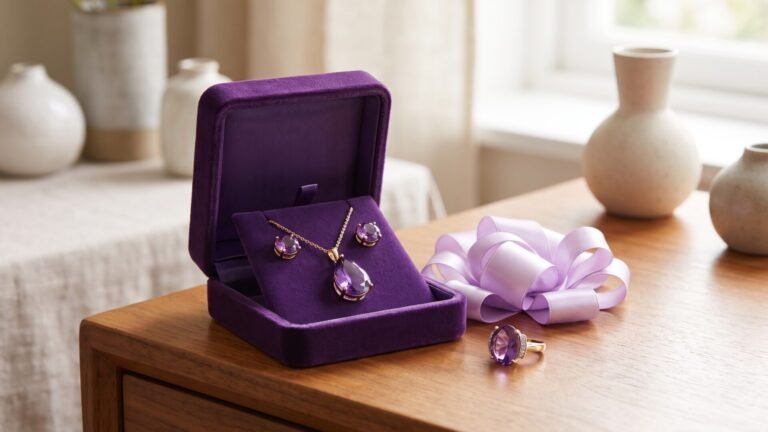
Amethyst in Jewelry
Amethyst’s durability (7 on the Mohs scale), affordability, and stunning color make it one of the most popular gemstones for jewelry.
Rings
Amethyst rings are popular for both everyday wear and special occasions. The stone’s purple color pops against yellow, white, and rose gold. Protective settings (like bezels) are recommended for rings worn daily.
Necklaces
Amethyst pendants are elegant and versatile. A single amethyst stone on a simple chain can be worn with anything — from casual to formal. Layered necklaces with amethyst charms are also trending.
Bracelets
Amethyst bead bracelets are affordable, stackable, and perfect for everyday wear. Tennis bracelets with amethyst stones offer a more elegant option.
Earrings
Amethyst studs are classic and professional. Drop earrings and chandeliers make a statement for special occasions.
Men’s Jewelry
Amethyst is increasingly popular in men’s jewelry — signet rings, cufflinks, and minimalist pendants. Its deep purple color is sophisticated without being flashy.
Everyday Wear
Amethyst’s hardness of 7 makes it durable enough for everyday wear, though it should be protected from hard knocks and harsh chemicals.
How Symbolism Influences Jewelry Choices
Many people choose amethyst jewelry specifically for its meaning. A student might wear an amethyst pendant for clarity and focus. Someone going through a difficult time might wear an amethyst bracelet for emotional balance. A February baby might wear amethyst as a celebration of their birth month.
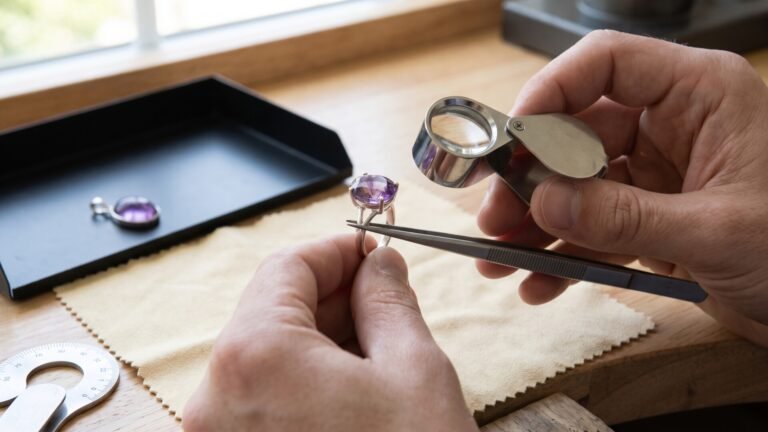
How to Choose an Amethyst
When selecting an amethyst, consider these factors.
Color
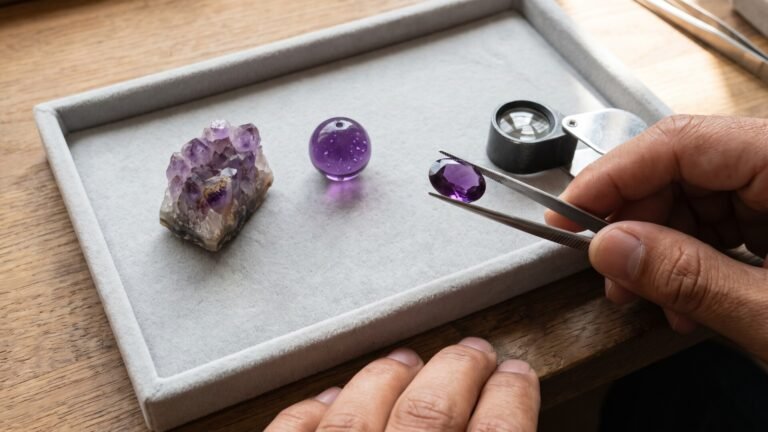
Color is the most important factor in amethyst’s value. Look for stones with even, saturated color. Deep purple (often called “Siberian”) is the most prized. Lighter lavender (“Rose de France”) is more affordable.
Clarity
Amethyst is often eye-clean, meaning no visible inclusions to the naked eye. However, some stones may have visible inclusions, which can reduce value.
Cut
A well-cut amethyst maximizes brilliance and color. Look for stones with good symmetry and even facets.
Carat Size
Larger amethysts are more valuable, but the price per carat doesn’t increase as dramatically as with rarer stones. This means you can often afford a larger amethyst than you could a diamond of similar quality.
Natural vs Lab-Grown
Natural amethyst is abundant and affordable, so lab-grown amethyst is less common. Most amethyst on the market is natural.
Caring for Amethyst Jewelry
Cleaning
Warm soapy water and a soft cloth are safe for amethyst. Avoid ultrasonic cleaners if the stone has visible inclusions or fractures. Never use harsh chemicals or abrasive cleaners.
Storage
Store amethyst separately from harder stones (diamond, sapphire, topaz) to prevent scratching. Use individual soft pouches or compartmentalized boxes.
Avoiding Heat and Sunlight
Prolonged exposure to intense heat or direct sunlight can fade amethyst’s color. Store it away from sunny windowsills and avoid wearing it in extreme heat.
Everyday Care Tips
Remove amethyst jewelry before swimming, showering, or applying lotions and perfumes. Wipe with a soft cloth after wearing to remove oils and residues.
Common Myths About Amethyst Meaning
Myth: All Ancient Cultures Believed the Same Thing
In reality, different cultures interpreted amethyst differently. Greeks focused on sobriety, Egyptians on status and protection, and medieval Christians on piety.
Myth: Darker Amethyst Always Has Greater Symbolic Power
Darker amethyst is more valuable in jewelry, but its symbolic meaning is the same regardless of color. Lighter lavender amethyst carries the same spiritual associations as deep purple.
Myth: Every Purple Quartz Is Amethyst
Not all purple quartz is amethyst. Some purple stones are dyed, heat-treated, or other minerals entirely. Genuine amethyst is a specific variety of quartz with a distinct chemical composition and crystal structure.
Myth: Ancient People Used Amethyst Exactly Like Modern Crystal Healing
Ancient cultures used amethyst primarily for physical protection — against intoxication, poisoning, and evil spirits. Modern crystal healing emphasizes emotional and spiritual benefits. The focus has shifted from external protection to internal transformation.
How to Choose the Right Amethyst Based on Its Meaning
For Peace
Choose a gentle lavender amethyst (Rose de France) in a simple pendant or bracelet. Its soft color reflects its calming energy.
For Focus
Choose a medium to dark purple amethyst in a ring or pendant. The deeper color symbolizes clarity and mental strength.
For Spiritual Practice
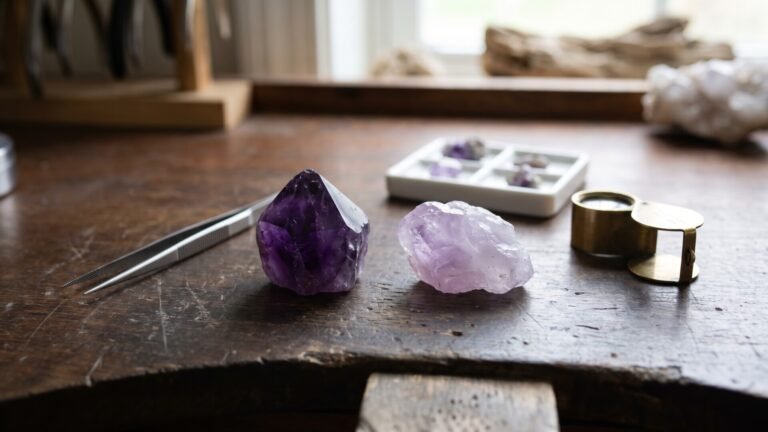
Choose a chevron amethyst or a raw crystal point for meditation. The unique formation supports spiritual connection.
For Luxury Jewelry
Choose a deep purple Siberian amethyst with excellent clarity and cut. Its royal color and brilliance make a statement.
For Gifts
Choose a classic purple amethyst in a versatile setting — stud earrings, a solitaire pendant, or a simple bracelet. Its universal meaning makes it a thoughtful gift for any occasion.
Final Thoughts: What Does Amethyst Really Mean?
Amethyst’s meaning has evolved over 3,000 years — from a talisman against drunkenness to a symbol of piety and spiritual authority to a modern tool for emotional healing and meditation. But through all these changes, one thing has remained constant: amethyst represents the pursuit of clarity, peace, and inner wisdom.
Whether you’re drawn to its rich purple color, its ancient history, or its modern spiritual associations, amethyst offers something meaningful. It’s a stone that connects us to the past — to the Greeks and Romans who treasured it, to the medieval bishops who wore it, to the Victorians who romanticized it. And it’s a stone that connects us to ourselves — to our own search for peace, clarity, and spiritual growth.
The most powerful meaning of amethyst, however, is personal. It’s the meaning you assign to it. It’s the intention you set when you wear it. It’s the reminder you give yourself to stay calm, think clearly, and trust your inner wisdom.
So whether you choose a deep Siberian amethyst for luxury, a delicate Rose de France for everyday wear, or a raw crystal point for meditation, choose the amethyst that resonates with you. Because the stone’s meaning is ultimately what you make of it.
Related Guides
- February Birthstone Guide
- Aquarius Birthstone Guide
- Pisces Birthstone Guide
- [Amethyst Jewelry Guide]
- [Natural vs. Lab-Grown Gemstones]
- [Crystal Meanings Hub] (coming soon)
Frequently Asked Questions About Amethyst Meaning
What is the spiritual meaning of amethyst?
Amethyst is associated with wisdom, inner peace, spiritual awareness, emotional balance, and protection. It’s widely used in meditation and crystal healing to calm the mind and connect with higher consciousness.
Why is amethyst associated with wisdom?
The ancient Greeks believed amethyst could prevent intoxication and clouded thinking. This association evolved into a broader connection with mental clarity, sound judgment, and wisdom.
What does amethyst symbolize in different cultures?
Greeks associated it with sobriety, Romans with protection, medieval Christians with piety and spiritual authority, and modern practitioners with emotional healing and spiritual growth.
Is amethyst a lucky stone?
Many cultures consider amethyst a protective and lucky stone. It’s believed to ward off negative energy, bring good fortune, and promote emotional stability.
Which zodiac signs are connected to amethyst?
Amethyst is associated with Aquarius and Pisces, primarily because it’s the February birthstone and both signs fall in February.
What does gifting an amethyst mean?
Giving amethyst symbolizes wisdom, peace, protection, and enduring love. It’s a thoughtful gift for anniversaries, birthdays, or any occasion where you want to express care and meaning.
Can anyone wear amethyst?
Yes! Amethyst is a universal stone. While it’s traditionally associated with February birthdays and Aquarius/Pisces, anyone can wear it for its beauty and symbolism.
Is there scientific evidence for amethyst's spiritual properties?
No. Amethyst’s spiritual and healing properties are matters of cultural tradition and personal experience, not established science. Its meaning comes from thousands of years of human belief, not from measurable physical effects.
Ready to find your amethyst? Browse our collections below.
[Shop Amethyst Jewelry at Blue Nile]
[Shop Amethyst Rings at James Allen]
[Shop Ethical Amethyst at Brilliant Earth]
[Explore More Birthstone & Crystal Guides]