Garnet Meaning: History, Symbolism, Spiritual Properties & Modern Uses
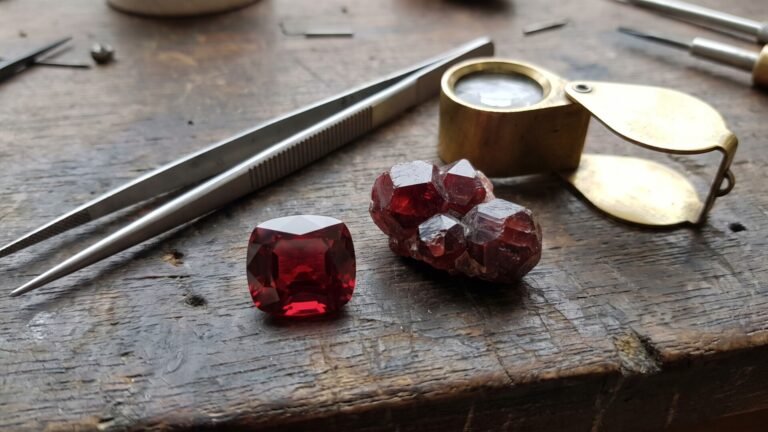
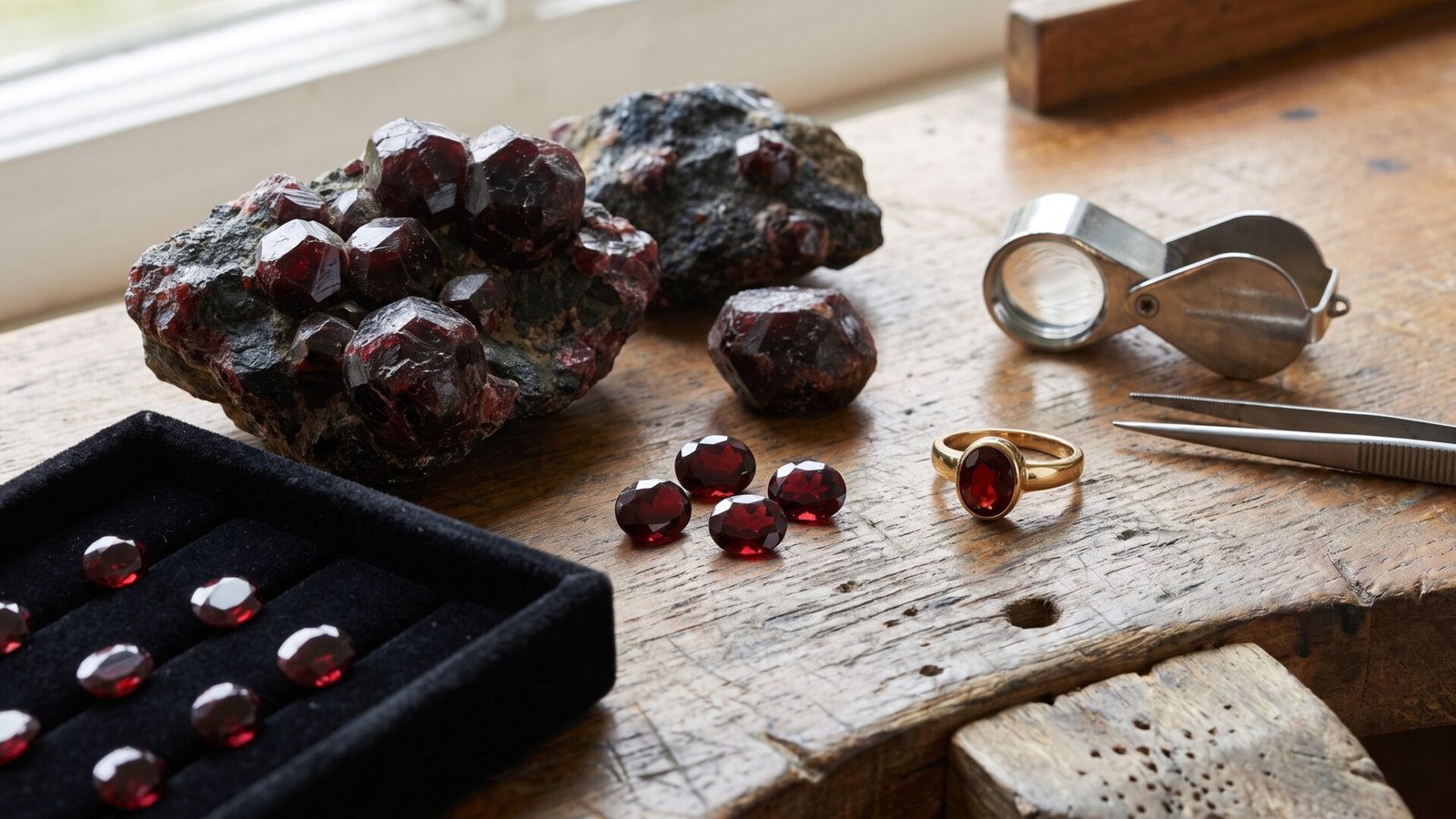
Garnet is best known as a deep red January birthstone, but it is actually a whole family of gemstones in red, green, orange, pink, purple, yellow and even rare blue. Its name comes from the Latin granatus, meaning “pomegranate,” because small red garnet crystals resemble the fruit’s seeds. People have worn garnet for thousands of years, and over that time it has collected a long list of meanings: protection, passion, loyalty and courage.
This guide covers garnet’s history, its symbolism across cultures, the spiritual and emotional meanings people attach to it today, and its place in astrology and birthstone lists. It also keeps the facts separate from the folklore: how hard garnet really is, which varieties exist, and how to choose and care for a stone. If you want the full stone profile first, start with our main garnet guide.
Garnet at a Glance
The table below separates what can be measured (gemological facts) from what is tradition.
| Feature | Details |
|---|---|
| Species / group | Garnet is a group of related silicate minerals, not a single species. The main gem species and varieties are pyrope, almandine, spessartine, grossular (including tsavorite and hessonite) and andradite (including demantoid). |
| Colors | Red, orange, yellow, green, pink, purple, brown, black; color-change and blue garnets are rare |
| Hardness (Mohs) | About 6.5–7.5, depending on the species |
| Toughness and cleavage | No cleavage, so garnet does not split along flat planes like topaz or tanzanite. Toughness is generally good, but sharp knocks can still chip a stone. Demantoid is on the softer end. |
| Common treatments | Most garnets are sold untreated. Treatment is uncommon, but always ask for disclosure, especially for rarer green and orange stones. |
| Care | Warm water, mild soap and a soft brush. Avoid harsh chemicals and sudden temperature changes. |
| Birthstone | January in the modern American birthstone list |
| Anniversary | Commonly listed as the gemstone for the 2nd wedding anniversary |
| Zodiac (astrology) | Often paired with Capricorn and Aquarius, though zodiac lists vary by source |
What Does Garnet Symbolize?
Garnet’s symbolism is rich and varied. Everything in this section is tradition and cultural association rather than science, but it explains why the stone has stayed popular for so long.
Protection
Garnet has long been described as a protective talisman. Traditional accounts say travelers carried it for safe journeys and that soldiers wore it to guard against injury. These are beliefs recorded in folklore; there is no evidence that a stone protects anyone from harm.
Love and Devotion
The deep red of many garnets links them with the heart, blood and passion. The pomegranate that gave garnet its name was also a symbol of love and abundance in the ancient Mediterranean world, and the two ideas have been tied together ever since.
Courage and Strength
Red is the color of vitality in many cultures, so garnet is traditionally associated with courage, resilience and life force.
Friendship and Loyalty
Garnet is also a traditional symbol of lasting friendship. Giving one is often meant as a gesture of trust and loyalty.
Why Garnet Became a Symbol of Enduring Relationships
Garnet’s link with commitment draws on its steady, deep color and its reputation as a hard-wearing, affordable gem. That is part of why it is a popular choice for the 2nd wedding anniversary. If you are weighing it against a similar-looking stone, see how garnet compares with ruby; ruby is harder and far more expensive.
The Meaning Behind Garnet’s Deep Red Color
Red is the color of blood and the heart, so red garnet is usually read as passion, courage and devotion. But garnet isn’t just red. The many colors of garnet — green tsavorite, orange spessartine, purple-red rhodolite — each carry their own modern symbolic associations, covered below.
The History of Garnet
Garnet is one of the oldest gemstones used in jewelry. Garnet beads and inlays appear in archaeological finds from the Bronze Age onward, including ancient Egyptian burials; the Gemological Institute of America dates the earliest Egyptian garnet jewelry to around 3100 BCE. The details of what each culture believed are often reconstructed from later writers, so treat the stories below as tradition rather than settled fact.
Ancient Egypt
Egyptians used red garnet in beads, necklaces and amulets, and garnet jewelry has been found in graves. It is commonly interpreted as a symbol of life and a protective item for the afterlife, though the exact meaning to the people who made it is not documented.
Ancient Greece and Rome
Garnets were carved into intaglios (designs cut into the stone) and used as seal rings that were pressed into wax to authenticate documents. They were also carved into cameos. The pomegranate itself held a place in Greek myth, notably in the story of Persephone, which is one reason the fruit became a symbol of life, love and the cycle of seasons.
Early Medieval Europe
Garnet was a key stone in early medieval metalwork. Thin slices of red garnet were set into gold cells (cloisonné) on Anglo-Saxon jewelry and weapon fittings, with the Sutton Hoo burial in England being the best-known example. Later medieval writers on gems associated red stones with Christ’s blood, and garnets appear in church objects, but treat claims about specific symbolic intent with caution.
Victorian Era
In the 19th century, small red pyrope garnets from Bohemia (today’s Czech Republic) were set in densely packed brooches, necklaces and hair ornaments that became a fashion staple across Europe. Garnet jewelry from this period was affordable and widely given as a token of affection.
Modern Symbolism
Today garnet is a mainstream birthstone and a favorite in crystal-practice circles, where it is connected with grounding, passion and confidence.
How the Meaning of Garnet Has Changed Over Time
| Time Period | Commonly Cited Meaning |
|---|---|
| Ancient Egypt | Life; protective use in burials |
| Ancient Greece and Rome | Seal rings and carved gems; the pomegranate as a symbol of life and love |
| Early Middle Ages | Status and craftsmanship in cloisonné jewelry; later Christian associations with blood |
| 19th century | Fashionable, affordable jewelry given as a token of affection |
| Modern crystal culture | Grounding, passion and personal strength (belief) |
Garnet in Different Cultures
Across traditions, garnet’s meaning clusters around a few themes: protection, love and commitment, courage and vitality, and a link between red stones and blood or life force. The emphasis differs from place to place.
India and Vedic Astrology
In Indian astrology the garnet most often discussed is hessonite (gomed), an orange-brown grossular garnet linked with the node Rahu. Practitioners describe it as supporting clarity and confidence. These are astrological beliefs, and recommendations vary between astrologers.
Modern Western Crystal Practice
In crystal practice, garnet is used for grounding, protection and what practitioners call root- or heart-chakra work. Followers describe it as energizing and stabilizing. This is a modern belief system, not a historical or scientific one.
Spiritual Meaning of Garnet
These are beliefs, not medical advice. The spiritual properties below come from tradition and personal experience, not from scientific evidence, and wearing garnet cannot treat or prevent any physical or mental health condition. If you are struggling with your health or mood, please speak with a qualified professional.
In crystal-healing practice, garnet is considered a stone of grounding, protection and personal power. Here is how practitioners usually describe it.
Protection
Many people who work with crystals believe garnet shields the wearer from negative influences and is a good companion for travel or big transitions.
Grounding
Garnet is described as a grounding stone that some people find helps them feel more stable and secure. Whatever effect there is comes from the meaning and ritual a wearer attaches to it.
Confidence, Motivation and Personal Power
Practitioners link garnet with self-confidence, courage to face challenges, and the drive to pursue goals. For many people a garnet ring or pendant simply works as a personal reminder of the intention they set when they put it on.
Passion and Creativity
Because of its fiery color, garnet is often called a stone of passion, desire and creative energy, and it is a popular choice for romantic gifts.
Energy and Vitality
Some crystal traditions describe garnet as an energizing stone connected to the heart and blood. For a fuller look at these claims, see our article on the healing and metaphysical properties of garnet, which treats them as beliefs rather than medical fact.
Emotional Meaning of Garnet
Beyond spiritual practice, garnet carries emotional meaning for gift-givers and wearers. These are personal and symbolic associations rather than effects of the stone.
- Commitment: its steady color and reputation for wearability make it a natural symbol of lasting love and loyalty.
- Resilience: many people choose garnet as a keepsake during a difficult stretch, as a reminder of their own strength.
- Loyalty and friendship: garnet is a traditional token of trust between friends and family.
- New beginnings: as a January birthstone, garnet is often given to mark a new year, job or chapter.
Garnet Varieties: Facts and Symbolism
Garnet varieties differ in chemistry, color, rarity and price. The symbolism listed for each is a modern association used in crystal and gift contexts, not an established property.
Pyrope Garnet
Pyrope is typically red to deep red, sometimes with a purplish tint. The name comes from the Greek pyrōpos, meaning “fiery-eyed.” Pyrope and almandine are two of the most common gem garnets. Symbolically it is linked with courage and confidence.
Almandine Garnet
Almandine ranges from deep red to brownish or violet-red and is very widely available, which keeps prices accessible. Many historical “carbuncles” were probably almandine. It is associated with endurance and stability.
Rhodolite Garnet
Rhodolite is a pyrope-almandine blend with a purplish red to raspberry color. It is often described in terms of romance and gentleness.
Spessartine Garnet
Spessartine (also spelled spessartite) ranges from yellow-orange to reddish orange. The brightest orange stones are the most prized. It is linked with creativity and optimism.
Tsavorite Garnet
Tsavorite is a vibrant green grossular garnet found mainly in East Africa (Kenya and Tanzania). Fine stones above a carat are scarce, and tsavorite typically costs far more than red garnet. It is associated with renewal and abundance.
Demantoid Garnet
Demantoid is a green to yellowish-green andradite garnet, prized for its very high dispersion (fire), which is higher than diamond’s. It is softer than most other garnets (around 6.5–7), often has characteristic “horsetail” inclusions that collectors value, and is best suited to earrings, pendants and careful ring wear.
| Variety | Color | Relative Price | Traditional / Modern Association |
|---|---|---|---|
| Pyrope | Red to deep red | Low to moderate | Courage, confidence |
| Almandine | Deep red to brownish red | Low | Endurance, stability |
| Rhodolite | Purplish red | Low to moderate | Romance, gentleness |
| Spessartine | Yellow-orange to reddish orange | Moderate to high | Creativity, optimism |
| Tsavorite | Vivid green | High | Renewal, abundance |
| Demantoid | Green to yellow-green | High | Rarity, brilliance |
Garnet and Astrology
Astrology is a belief system, and zodiac stone lists differ between traditions. Garnet is commonly paired with two signs whose dates overlap January.
Capricorn (about December 22 – January 19)
Capricorn is an earth sign ruled by Saturn and is traditionally described as ambitious and disciplined. Astrology writers pair garnet with Capricorn for its grounding, steadying symbolism.
Aquarius (about January 20 – February 18)
Aquarius is an air sign associated with Uranus and, traditionally, Saturn, and is described as innovative and independent. Garnet is sometimes suggested as a grounding counterweight to that airy temperament.
Mars and Saturn
In some astrological writing, garnet’s red color is linked to Mars (action, drive) and its steadiness to Saturn (structure, discipline). That pairing is symbolic, not a measurable influence.
For more details, explore our Capricorn Birthstone Guide, Aquarius Birthstone Guide, and Zodiac Birthstones Hub.
Garnet as a Birthstone
January Birthstone
Garnet is January’s birthstone in the modern American list, which was standardized in the early 20th century, and it appears on most traditional lists too, although birthstone lists differ by country and organization. Read more about garnet as the January birthstone.
Anniversary Gemstone
Garnet is commonly given as the gemstone for the 2nd wedding anniversary, and its warm color suits a gift about growing commitment. Anniversary gemstone lists vary slightly by source.
Gift Symbolism
Giving garnet as a gift is traditionally read as a gesture of protection, love, strength, friendship and good wishes. Our garnet jewelry gift ideas cover specific pieces.
Learn more in our January Birthstone Guide.
Garnet in Jewelry: What Suits Daily Wear?
With a hardness of roughly 6.5–7.5 and no cleavage, garnet is a practical gem for most jewelry. Hardness measures scratch resistance, not toughness, so even durable stones can chip if struck against a hard edge. Because garnet is softer than sapphire, ruby and diamond, everyday dust can eventually dull its polish.
| Jewelry Type | Suitability | Notes |
|---|---|---|
| Earrings and pendants | Excellent | Low impact; ideal for demantoid and other softer garnets |
| Bracelets | Good | Moderate risk of knocks; bead bracelets are affordable and easy to replace |
| Rings | Good with care | Pyrope, almandine and spessartine suit regular wear; choose bezel or low-profile settings. Remove for gardening, sports or heavy work |
| Engagement rings | Possible, with caveats | Softer than diamond or sapphire, so expect wear over decades. See garnet engagement rings |
Many people choose garnet jewelry for its meaning. A couple might choose garnet rings as a symbol of commitment, or a traveler might wear a garnet pendant as a personal talisman. Garnet is also popular in men’s jewelry, particularly signet rings, cufflinks and minimalist pendants.
How to Choose a Garnet
Price depends on variety first. Common red pyrope, almandine and rhodolite are generally budget-friendly, while tsavorite, demantoid and top-color spessartine are rarer and cost much more per carat. Within a variety, the usual factors apply.
Color
Color is the biggest value driver. Very dark almandine can look nearly black in low light, while lighter, more saturated reds and vivid greens command more. Look at the stone in natural and indoor light.
Clarity
Many red garnets are eye-clean. Tsavorite and demantoid, however, often show inclusions, and in demantoid certain fine “horsetail” fibers are even considered a sign of natural origin.
Cut
A good cut shows even color and lively sparkle. Garnet is also cut as cabochons and beads; very rare star garnets show a four- or six-rayed star when cut en cabochon.
Treatments, Lab-Grown and Simulants
Most gem garnets are not treated, and that is part of their appeal, but ask the seller to disclose any treatment in writing. Gem-quality lab-grown versions of the natural garnet species are not common in jewelry. The better-known synthetic “garnets” such as YAG (yttrium aluminum garnet) are man-made materials that share the garnet crystal structure but are not natural garnet species. Glass and doublets (a thin slice of garnet on glass) are the usual imitations in low-priced jewelry; a reputable seller should state clearly what you are buying.
Honest Alternatives
If you love red but want something harder, ruby and red spinel are tougher and pricier. For a green gem, tsavorite sits between peridot and emerald in cost and brightness. See our ruby vs garnet vs tourmaline color comparison and garnet vs ruby for a closer look.
For more details, explore our complete garnet guide and garnet color types guide.
Caring for Garnet Jewelry
Cleaning
Warm soapy water and a soft brush or cloth are the safe default. Avoid ultrasonic and steam cleaners if a stone has visible inclusions or fractures, and avoid harsh chemicals and abrasive cleaners.
Storage
Store garnet separately from harder stones such as diamond, sapphire and ruby, which can scratch it. Use individual soft pouches or a lined, compartmented box.
Avoiding Damage
Garnet sits between 6.5 and 7.5 on the Mohs scale. That makes it durable for most uses but more prone to scratching than ruby, sapphire or diamond. Take rings off for heavy work, and avoid sudden temperature changes.
Daily Habits
Put jewelry on after lotion, perfume and hairspray, and wipe it with a soft cloth after wearing to remove oils. Removing it before swimming and cleaning is a sensible habit for any gemstone jewelry.
Common Myths About Garnet
Myth: Garnets are always red
Red is the most familiar color, but garnets also come in green, orange, yellow, pink, purple, brown and black, and blue garnets are very rare.
Myth: All garnets mean the same thing
Symbolism is mostly color-based and modern. Traditional meanings applied to red stones in general; the variety-by-variety meanings are a more recent crystal-culture convention.
Myth: Garnet is only about romance
Love is one theme, but protection, courage, friendship and vitality are equally central to garnet’s traditional meaning.
Myth: Ancient and modern beliefs match
Older traditions were often about physical protection and status, while modern crystal practice emphasizes emotional and spiritual meaning. They are different belief systems that happen to share a stone.
Final Thoughts: What Does Garnet Really Mean?
Garnet’s meaning has shifted from ancient adornment and protective tradition to a symbol of love, loyalty and personal strength. The constant is the color: a warm, deep red that people have connected with life and the heart for millennia.
The facts are simpler and just as useful. Garnet is a tough, widely available and fairly priced gem family with plenty of color choice, and it makes a meaningful January birthstone or anniversary gift. Whatever meaning you give it is personal, and the best garnet is the one whose color and wearability suit you.
Related Guides
- Garnet: Meaning, Properties, Uses & Value
- January Birthstone Guide
- Capricorn Birthstone Guide
- Aquarius Birthstone Guide
- Garnet Color Types Explained
- How to Care for Your Garnet Jewelry
- Gemstones: Your Ultimate Guide
Frequently Asked Questions About Garnet Meaning
What is the spiritual meaning of garnet?
In crystal-healing and spiritual traditions, garnet is associated with protection, passion, strength, vitality and commitment. These are beliefs rather than proven effects, and they are not medical advice.
What does garnet symbolize?
Traditionally, garnet symbolizes protection, love, passion, courage and friendship, along with vitality and life force.
Why is garnet associated with protection?
Folklore describes garnets being worn by travelers and soldiers as protective talismans. This is tradition, not a documented effect of the stone.
Does every color of garnet have the same meaning?
Not in modern crystal practice, where pyrope is linked with courage, tsavorite with abundance and rhodolite with romance. These variety-by-variety meanings are recent conventions, while older traditions focused mostly on red garnet.
Which zodiac signs are connected to garnet?
Garnet is commonly paired with Capricorn and Aquarius, the signs that overlap January, although zodiac stone lists vary by source.
What does gifting a garnet symbolize?
Giving garnet is traditionally read as a gesture of trust, loyalty, love and good wishes. It is also commonly listed as the 2nd wedding anniversary gemstone.
Is garnet a lucky stone?
Many people regard garnet as a lucky or protective stone, but luck is a matter of belief rather than something the stone can be shown to provide.
Is garnet hard enough for everyday jewelry?
Garnet ranges from about 6.5 to 7.5 on the Mohs scale and has no cleavage, so it suits earrings, pendants and, with a protective setting, rings. It can still scratch or chip, so remove rings for heavy work.
Is there scientific evidence for garnet’s spiritual properties?
No. Garnet’s spiritual and healing associations come from cultural tradition and personal belief, not from measurable physical effects, and they should never replace medical care.
Ready to find your garnet? Browse our collections below.
[Shop Garnet Jewelry at Blue Nile]
[Shop Garnet Rings at James Allen]
[Shop Ethical Garnet at Brilliant Earth]
Explore more in our gemstone guides.