Tanzanite Meaning: History, Symbolism, Spiritual Properties & Modern Uses
For years, I assumed tanzanite was just another pretty blue stone. December’s birthstone, expensive, rare — but nothing particularly special beyond its color and price tag. Then I started learning about its story. It was discovered only in 1967 — within my parents’ lifetime. It’s found in exactly one place on Earth, a tiny patch of land near Mount Kilimanjaro. And it was named by Tiffany & Co., who recognized its potential and launched it with a marketing campaign that turned an unknown mineral into a global luxury icon.
That’s the thing about tanzanite. It’s not just a pretty blue stone. It’s a stone with a story that’s still being written — a modern gemstone that has captured the world’s imagination in less than sixty years.
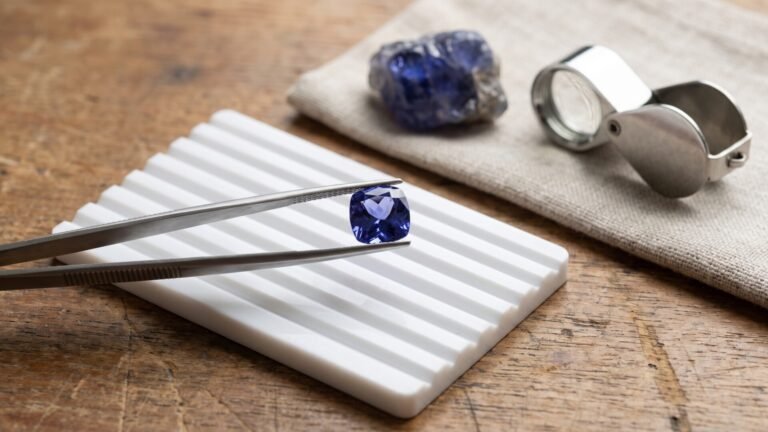
Tanzanite is the blue-to-violet variety of the mineral zoisite, prized for its extraordinary color and remarkable rarity. Its name honors its country of origin — Tanzania — where it is found in a single, small mining area near Mount Kilimanjaro. But its meaning has grown far beyond that simple definition.
This guide covers everything you need to know about tanzanite’s meaning: its remarkable discovery, its symbolism across cultures, its spiritual and emotional associations, its role in astrology and birthstones, and how to choose the right tanzanite for your needs. Whether you’re a December baby, a Sagittarius or Capricorn, or simply someone drawn to the beauty of this remarkable gem, you’re about to discover why tanzanite has become one of the most coveted gemstones in the modern world.
Tanzanite at a Glance
Before we dive deep into its meaning, here’s a quick reference guide to tanzanite’s key characteristics.
| Feature | Details |
|---|---|
| Mineral | Zoisite (variety) |
| Color | Blue, violet, indigo (pleochroic — shows different colors from different angles) |
| Hardness | 6–7 (Mohs scale) |
| Birthstone Month | December (modern alternative) |
| Zodiac Associations | Sagittarius, Capricorn |
| Discovery | 1967, Tanzania |
| Symbolism | Transformation, intuition, spiritual awakening, rarity, insight |
What Does Tanzanite Symbolize?
Tanzanite’s symbolism is one of the most fascinating of any gemstone — not because it’s ancient, but because it’s modern. Its meaning has been shaped by its extraordinary rarity, its dramatic discovery story, and its rapid rise to global prominence.
Transformation and New Beginnings
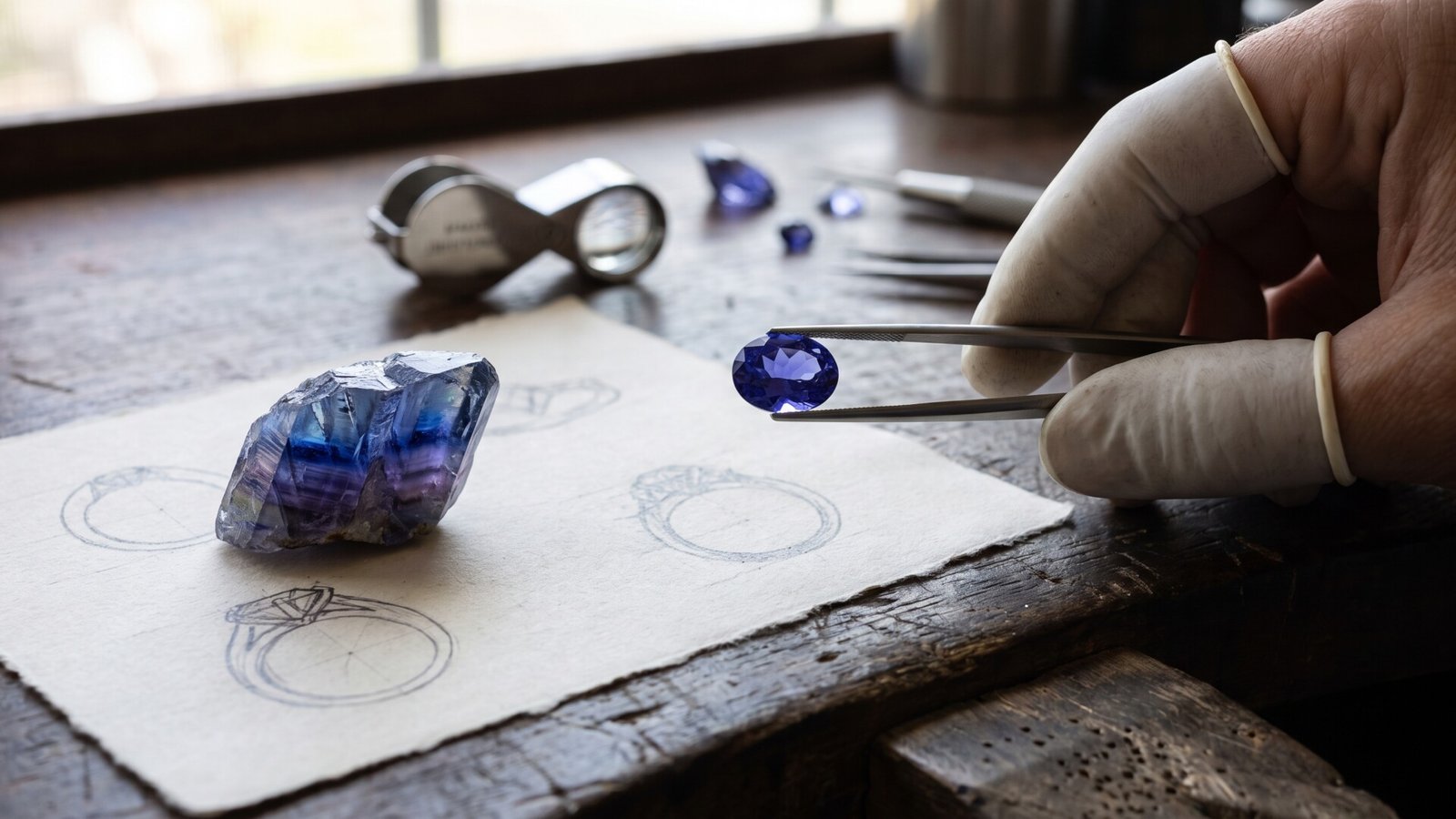
Tanzanite is widely considered a stone of transformation and new beginnings. Its journey from a dull brown pebble to a brilliant blue-violet gemstone is a powerful metaphor for personal growth and change. In its natural state, tanzanite is typically brown or greenish. Only through the application of heat does it reveal its stunning blue-violet color. This transformation has made tanzanite a symbol of personal evolution — the idea that we all have hidden potential waiting to be revealed.
Intuition and Spiritual Awareness
Tanzanite is believed to stimulate intuition and perception. It’s associated with higher consciousness, helping the wearer connect with their inner wisdom and access deeper levels of understanding. It’s a stone for those seeking to trust their instincts and develop their intuitive abilities.
Emotional Clarity and Calm
Tanzanite is said to promote calmness, mental clarity, and emotional balance. Its soothing energy helps the wearer navigate stress and find peace during challenging times. It’s a stone for those seeking clarity in decision-making and emotional stability in turbulent periods.
Rarity and Opportunity
Because tanzanite is found in only one place on Earth, it has become a symbol of rarity and exclusivity. Its limited supply makes it a stone of opportunity — a reminder that the most valuable things in life are often the rarest.
Why Tanzanite Became a “Stone of Transformation”
Tanzanite’s transformation from brown rough to blue-violet beauty is one of the most dramatic in the gemstone world. In its natural state, tanzanite is an unremarkable brown or greenish stone. Only through heating to approximately 400-500°C does it reveal the vivid blue and violet colors that have made it famous. This process has made tanzanite a powerful symbol of personal transformation — the idea that we all have hidden beauty and potential waiting to be revealed.
The Symbolism Behind Its Blue-Violet Color
Tanzanite’s color is the result of its pleochroic nature — it displays different colors when viewed from different angles. The blue represents wisdom, clarity, and calm. The violet represents spirituality, intuition, and higher consciousness. Together, they create a stone that bridges the physical and spiritual worlds.
The History of Tanzanite Meaning
Tanzanite is one of the youngest major gemstones in the world, with a well-documented history that spans less than sixty years. Its meaning has been shaped not by millennia of folklore, but by a remarkable discovery and a brilliant marketing campaign.
Discovery in Tanzania (1967)
In January 1967, a 28-year-old Tanzanian man named Jumanne Mhero Ngoma discovered tanzanite in the Merelani Hills of northern Tanzania. According to the most common version of the story, a Masai tribesman stumbled upon a cluster of highly transparent, intense violet-to-blue crystals weathering out of the earth. He alerted a local fortune hunter named Manuel d’Souza, who quickly registered mining claims.
There are competing claims about who made the initial discovery. Some accounts credit Ngoma, while others credit d’Souza and his Masai companions. What is certain is that by 1967, the world had discovered a new gemstone.
The Role of Tiffany & Co.
Tiffany & Company recognized the potential of the new gemstone and made a deal to become its main distributor. Tiffany named the gem after the country it came from — Tanzania — and promoted it with a major publicity campaign in 1968. Almost overnight, tanzanite was popular with leading jewelry designers and gem professionals.
The instant popularity of tanzanite was tied to its vivid color, high clarity, and potential for large cut stones. Tiffany’s marketing campaign positioned tanzanite as a rare and luxurious gemstone — a stone that could rival the “Big Three” of colored gemstones: ruby, sapphire, and emerald.
Modern Gemstone Market Entry
Within a short time, 90 more mining claims appeared in the same 20-square-mile area. The gemstone that would eventually be known as tanzanite was on its way to becoming one of the world’s most sought-after colored gemstones.
Today, tanzanite is found exclusively in the Merelani Hills of northern Tanzania, near Mount Kilimanjaro. No other deposits have been discovered worldwide, which contributes significantly to its rarity and value.
Cultural Position Today
Tanzanite has become one of the most commercially successful modern gemstones. It’s a December birthstone, a symbol of transformation and intuition, and a prized addition to fine jewelry collections around the world. Its single-source origin makes it a stone of exclusivity and rarity — and its finite supply ensures that it will only become more valuable over time.
How Tanzanite Meaning Was “Created” in the Modern Era
Unlike ancient gemstones with millennia of accumulated folklore, tanzanite’s symbolism has developed over the past sixty years — and it continues to evolve.
| Time Period | Meaning Formation |
|---|---|
| 1960s Discovery | Geological curiosity; unknown mineral |
| Tiffany Branding Era | Luxury gemstone; rarity; exclusivity |
| Late 20th Century | December birthstone; modern classic |
| Modern Crystal Culture | Transformation; intuition; spiritual awakening |
How marketing shaped symbolism faster than tradition. Tanzanite’s symbolism was largely created by Tiffany & Co.’s marketing campaign. By positioning tanzanite as a rare, luxurious, and desirable gemstone, Tiffany created a set of associations that have become part of the stone’s identity.
Why modern gemstones develop meaning differently than ancient ones. Ancient gemstones like ruby and sapphire accumulated meaning over millennia through folklore, mythology, and cultural traditions. Modern gemstones like tanzanite develop meaning much more quickly — through marketing, branding, and contemporary spiritual practices.
The role of rarity in symbolic value creation. Tanzanite’s single-source origin has made it a symbol of exclusivity and rarity. Its finite supply means that it will only become more valuable over time — and this scarcity has contributed to its symbolic value.
Tanzanite in Different Cultural Contexts
Tanzanite has been treasured across cultures and continents. Here’s how different traditions have interpreted its meaning.
Maasai Region Significance
In the Maasai region of Tanzania, where tanzanite is mined, the stone has become associated with new life and new beginnings. Some traditions hold that mothers are given tanzanite to represent the birth of a child and to bless the newborn with luck and prosperity. For the Maasai, tanzanite is linked to the divine and associated with meditation and spirituality.
Western Luxury Jewelry Culture
In Western luxury markets, tanzanite is prized for its rarity, beauty, and exclusivity. It’s positioned as a gemstone that rivals the “Big Three” — ruby, sapphire, and emerald. Its association with transformation and intuition appeals to modern consumers seeking meaningful jewelry.
Modern Crystal Healing Communities
In contemporary crystal healing, tanzanite is associated with higher consciousness, intuition, and perception. It’s said to facilitate deep meditation, promote spiritual growth, and help the wearer connect with their higher self. It’s also believed to assist with detoxifying the body and improving vitality.
Global Collector Market
Tanzanite is highly prized by collectors for its rarity, color, and potential for large cut stones. Its single-source origin and finite supply make it a stone of investment as well as beauty.
Shared Themes
Despite their differences, most traditions share some common beliefs about tanzanite:
- It represents transformation and new beginnings.
- It enhances intuition and perception.
- It promotes calm and clarity.
- Its rarity symbolizes exclusivity and value.
Differences Between Cultural Interpretations
The main difference lies in the emphasis:
- Maasai traditions emphasize new life and luck.
- Western luxury markets emphasize rarity and exclusivity.
- Crystal healing communities emphasize spiritual awareness and transformation.
Spiritual Meaning of Tanzanite
Note: The following information is based on cultural and spiritual beliefs, not established scientific fact. Tanzanite’s spiritual properties are matters of tradition and personal experience, not medical evidence.
Tanzanite’s spiritual meaning is deeply connected to transformation, intuition, and higher consciousness.
Transformation and Personal Evolution
Tanzanite is a stone of transformation. Its journey from brown rough to blue-violet beauty is a powerful metaphor for personal growth and change. It’s believed to help the wearer embrace change, release old patterns, and evolve into their highest potential.
Intuition and Perception
Tanzanite is the gemstone for intuition and perception. It’s believed to stimulate the third eye chakra, enhancing psychic abilities and deepening spiritual awareness. It’s said to help the wearer trust their instincts and access deeper levels of understanding.
Emotional Healing and Clarity
Tanzanite promotes emotional healing and clarity. Its soothing energy helps calm the mind, reduce stress, and bring emotional balance. It’s highly recommended for facing periods of prolonged stress and difficulty.
Higher Consciousness
Tanzanite is believed to facilitate a higher level of consciousness. It’s associated with the crown chakra, helping the wearer connect with their higher self and access spiritual wisdom. It’s a stone for those seeking to deepen their spiritual practice.
Compassion and Wisdom
Tanzanite is said to help unite the mind and heart, allowing the wearer to live a life of compassion and wisdom. It supports personal growth and self-discovery, encouraging the wearer to embrace their full potential.
Protection and Vitality
Crystal healers use tanzanite to strengthen the immune system, detoxify the blood, and improve vitality. It’s also thought to protect against the side effects of medicine or surgery.
Emotional Meaning of Tanzanite
Beyond its spiritual associations, tanzanite carries powerful emotional meaning.
Navigating Change
Tanzanite helps the wearer navigate life transitions with grace and confidence. Its association with transformation makes it a powerful ally during times of change — career shifts, relationship transitions, and personal growth.
Letting Go of the Past
Tanzanite is believed to help sweep away old patterns and release emotional baggage. It supports letting go of past hurts and embracing new beginnings.
Emotional Clarity
Tanzanite promotes emotional clarity and calm. Its soothing energy helps the wearer process difficult emotions without becoming overwhelmed.
Confidence in New Beginnings
Tanzanite supports confidence in new beginnings. Its association with transformation and new life makes it a powerful stone for those starting a new chapter.
Personal Insight and Reflection
Tanzanite encourages personal insight and reflection. It helps the wearer understand themselves more deeply and make decisions aligned with their true values.
Tanzanite vs Other Blue Gemstones
Tanzanite is often compared to other blue gemstones, but it’s important to understand how it differs from them.
Tanzanite vs Sapphire
Sapphire is a 9 on the Mohs scale, making it ideal for daily wear. Tanzanite, softer at 6-7, requires careful handling and is better suited for occasional wear. Sapphire is known for wisdom and loyalty; tanzanite is known for transformation and intuition.
Tanzanite vs Aquamarine
Aquamarine is a 7.5–8 on the Mohs scale and has a serene, subtle look. It’s more common than tanzanite and typically has a lighter, paler blue color. Tanzanite’s color is more intense, and its meaning is more focused on transformation and spiritual growth.
Tanzanite vs Blue Topaz
Blue topaz is created through treatment and is more common and affordable than tanzanite. It’s associated with communication and clarity, while tanzanite is associated with transformation and intuition.
Tanzanite vs Blue Zircon
Blue zircon has exceptional brilliance and fire, similar to tanzanite. It’s associated with wisdom and prosperity, while tanzanite is associated with transformation and spiritual awareness.
Key Differences Table
| Gemstone | Color Tone | Meaning Focus | Rarity |
|---|---|---|---|
| Tanzanite | Violet-blue | Transformation, intuition | Extremely rare (single source) |
| Sapphire | Deep blue | Wisdom, loyalty | Rare |
| Aquamarine | Light blue | Calm, clarity | Common |
| Blue Topaz | Bright blue | Communication | Treated, common |
Tanzanite and Astrology
Tanzanite is associated with two zodiac signs: Sagittarius and Capricorn.
Sagittarius (November 22 – December 21)
Sagittarius is a fire sign ruled by Jupiter. Sagittarians are adventurous, optimistic, and philosophical. Tanzanite’s association with transformation and intuition supports Sagittarius’ love of exploration and growth. Its spiritual energy aligns with Sagittarius’ philosophical nature.
Capricorn (December 22 – January 19)
Capricorn is an earth sign ruled by Saturn. Capricorns are disciplined, ambitious, and hardworking. Tanzanite’s association with transformation and clarity supports Capricorn’s long-term thinking and goal-oriented nature. Its spiritual energy helps Capricorns stay grounded while pursuing their ambitions.
Jupiter and Neptune Symbolism
Tanzanite’s association with Jupiter (Sagittarius’ ruling planet) links it to growth, wisdom, and expansion. Its connection to Neptune (which rules intuition and dreams) links it to spiritual awareness and insight.
Why Astrologers Associate Tanzanite With Insight and Expansion
Astrologers recommend tanzanite for Sagittarius to support their philosophical growth and for Capricorn to help them navigate change. Its protective and clarifying energy makes it a powerful stone for both signs.
For more details, explore our Sagittarius Birthstone Guide, Capricorn Birthstone Guide, and Zodiac Birthstones Hub.
Tanzanite as a Birthstone
December Birthstone
Tanzanite is one of the modern birthstones for December, along with turquoise and zircon. It was added to the official birthstone list in 2002, making it one of the newest additions to the birthstone calendar. Its association with transformation and spiritual healing makes it a particularly meaningful stone for those seeking calmness and clarity during the contemplative winter season.
Anniversary Gemstone
Tanzanite is sometimes associated with milestone anniversaries, particularly the 24th anniversary. Its symbolism of transformation and enduring love makes it a meaningful choice for celebrating decades of partnership.
Gift Symbolism
Giving tanzanite as a gift carries deep meaning. It symbolizes:
- Transformation: You support the recipient’s growth and evolution.
- Intuition: You trust their inner wisdom.
- Clarity: You wish them peace and understanding.
- Rarity: You recognize their unique worth.
- New beginnings: You believe in their future.
Learn more in our December Birthstone Guide and [Birthstone Jewelry Guides].
Tanzanite in Jewelry
Tanzanite’s beautiful blue-violet color, exceptional clarity, and remarkable rarity make it one of the most sought-after gemstones for fine jewelry.
Rings
Tanzanite rings are popular for their stunning color and luxury appeal. The stone’s pleochroic nature means that the color appears different from different angles, creating a dynamic and captivating effect. Tanzanite is softer than many gemstones (6–7 Mohs), so rings should be worn with protective settings and careful wear.
Necklaces
Tanzanite pendants are elegant and versatile. A single tanzanite on a simple chain can be worn with anything — from casual to formal. The stone’s color shifts in different lighting, making it a constant source of visual interest.
Earrings
Tanzanite studs are classic and subtle. Drop earrings and chandeliers make a statement for special occasions. The stone’s brilliant color catches light beautifully.
Bracelets
Tanzanite tennis bracelets and bead bracelets offer elegant everyday options. The stone’s vivid color adds sophistication to any wrist.
Luxury Statement Pieces
Tanzanite’s color and rarity make it a favorite for high-end jewelry. Large tanzanite pendants, cocktail rings, and elaborate earrings showcase the stone’s extraordinary beauty.
Why Tanzanite Is Popular in High-End Modern Jewelry
Tanzanite’s combination of beauty, rarity, and modern mystique has made it a favorite of luxury jewelry designers. Its vivid color, high clarity, and potential for large cut stones make it a compelling alternative to sapphire and other blue gemstones. Its single-source origin adds to its exclusivity and appeal.
How to Choose Tanzanite
When selecting tanzanite, consider these factors.
Color Intensity (Blue vs Violet Balance)
The most valuable tanzanites exhibit a saturated royal blue with flashes of violet. Lighter or more purplish gems are more common and generally more affordable. The balance between blue and violet is a matter of personal preference, but deeper, more saturated colors are more valuable.
Cut Quality and Light Performance
Tanzanite’s pleochroic nature means that the cut affects the color you see. A skilled cutter will orient the stone to maximize the desired color. Look for well-cut stones with good symmetry and even facets.
Clarity and Inclusions
Tanzanite is often eye-clean, meaning no visible inclusions to the naked eye. Stones with minimal inclusions are more valuable.
Carat Weight
Larger tanzanites are rarer and more valuable. The price per carat increases significantly at key weight thresholds — 1 carat, 2 carats, and 5 carats.
Heat Treatment
Almost all tanzanite on the market has been heat-treated to remove brownish tones and enhance the blue-violet color. This treatment is standard, permanent, and accepted. Natural, unheated tanzanite is rare but usually has a more subtle color.
For more details, explore our [Tanzanite Buying Guide] and Natural vs. Lab-Grown Gemstones]
Caring for Tanzanite Jewelry
Cleaning Guidelines
Warm, soapy water and a soft cloth are safe for tanzanite. Gently scrub with a soft brush to remove dirt and grime. Rinse thoroughly with clean water, as soap residue can dull the stone. Avoid ultrasonic cleaners and steam cleaners, which can damage the stone.
Avoiding Scratches
Tanzanite is softer than many gemstones (6–7 on the Mohs scale). It should be stored separately from harder stones (diamond, sapphire, ruby) to prevent scratching.
Safe Storage
Use individual soft pouches or compartmentalized boxes to protect tanzanite jewelry from impact and abrasion.
Everyday Wear Considerations
Tanzanite requires careful handling and is better suited for occasional wear. Remove tanzanite jewelry before activities that might cause impact or exposure to chemicals.
Common Myths About Tanzanite Meaning
Myth: Tanzanite Is an Ancient Gemstone
Tanzanite was discovered in 1967. It’s one of the youngest major gemstones, with less than sixty years of history. Its meaning has been shaped by modern marketing and contemporary spiritual practices, not by ancient folklore.
Myth: Tanzanite Has Traditional Cultural Symbolism
Tanzanite does not have millennia of cultural symbolism like ruby or sapphire. Its meaning has developed in the modern era through branding, marketing, and contemporary crystal healing practices.
Myth: All Tanzanite Is Naturally Deep Blue
In its natural state, tanzanite is typically brown or greenish. It’s only through heat treatment that it reveals its stunning blue-violet color. This treatment is standard and accepted, but it’s important to know that the color is enhanced.
Myth: Tanzanite Is Extremely Common
Tanzanite is found exclusively in one small area near Mount Kilimanjaro in northern Tanzania. No other deposits have been discovered worldwide, making it one of the rarest gemstones on Earth.
Why Tanzanite Is the Ultimate “Modern Myth” Gemstone
Most tanzanite meaning articles skip this section, but it’s essential to understanding why tanzanite resonates so deeply with modern buyers.
How modern gemstones gain meaning quickly
Unlike ancient gemstones with millennia of accumulated folklore, modern gemstones develop meaning much more quickly — through marketing, branding, and contemporary cultural associations. Tanzanite’s meaning has been shaped in less than sixty years.
The role of rarity + branding in symbolism
Tanzanite’s single-source origin has made it a symbol of exclusivity and rarity. Tiffany & Co.’s marketing campaign created a set of associations — transformation, intuition, and luxury — that have become part of the stone’s identity.
Tiffany & Co. and narrative creation
Tiffany & Company recognized tanzanite’s potential as an international seller and made a deal to become its main distributor. Tiffany named the gem after the country it came from and promoted it with a major publicity campaign in 1968. This campaign created the modern narrative around tanzanite.
Why consumers assign spiritual meaning to new discoveries
Consumers today are drawn to stones with personal meaning and emotional connection. Tanzanite’s transformation from brown rough to blue-violet beauty makes it a powerful symbol of personal growth and change — and this has made it a favorite of contemporary crystal healing practices.
Comparison with ancient gemstones
Ancient gemstones like ruby and sapphire accumulated meaning over millennia through folklore, mythology, and cultural traditions. Tanzanite’s meaning has been created in the modern era — but that doesn’t make it any less powerful. It’s a stone that speaks to the modern desire for transformation, intuition, and personal growth.
How to Choose the Right Tanzanite Based on Its Meaning
For Transformation
Choose a deep blue-violet tanzanite in a ring or pendant. Its association with transformation makes it a powerful symbol of personal growth and change.
For Emotional Clarity
Choose a well-cut tanzanite with even color. Its calming energy supports emotional balance and clarity.
For Spiritual Growth
Choose a tanzanite with strong violet tones. Its association with intuition and higher consciousness supports spiritual development.
For Luxury Collecting
Choose a natural, unheated tanzanite with deep, saturated color. Its rarity makes it a prized collector’s item.
For Milestone Gifts
Choose a tanzanite in a classic setting — a ring, pendant, or pair of earrings. Its symbolism of transformation and new beginnings makes it a meaningful gift for life transitions.
Final Thoughts: What Does Tanzanite Really Mean?
Tanzanite’s meaning has been created in the modern era — shaped by a remarkable discovery, a brilliant marketing campaign, and a growing appreciation for its beauty and rarity. But its meaning is no less powerful for being modern. It’s a stone of transformation, intuition, and new beginnings — a symbol of the hidden potential that lies within all of us.
Whether you’re drawn to its stunning color, its remarkable rarity, or its modern spiritual associations, tanzanite offers something meaningful. It’s a stone that connects us to the present — to the excitement of discovery, the thrill of rarity, and the promise of transformation. And it’s a stone that connects us to ourselves — to our own capacity for growth, intuition, and personal evolution.
The most powerful meaning of tanzanite, however, is personal. It’s the meaning you assign to it. It’s the intention you set when you wear it. It’s the reminder you give yourself that transformation is always possible, that intuition is a gift, and that the rarest things in life are often the most valuable.
So whether you choose a deep blue tanzanite for its royal color, a violet stone for its spiritual energy, or a lighter stone for everyday wear, choose the tanzanite that resonates with you. Because the stone’s meaning is ultimately what you make of it.
Related Guides
- December Birthstone Guide
- Sagittarius Birthstone Guide
- Capricorn Birthstone Guide
- [Tanzanite Buying Guide]
- [Blue Gemstone Comparison Guide]
- Natural vs. Lab-Grown Gemstones
- [Crystal Meanings Hub] (coming soon)
Frequently Asked Questions About Tanzanite Meaning
What is the spiritual meaning of tanzanite?
Why is tanzanite considered so rare?
Is tanzanite a real or natural gemstone?
Does tanzanite have ancient historical meaning?
No. Tanzanite was discovered in 1967, making it one of the youngest major gemstones. Its meaning has been shaped in the modern era, not by ancient folklore.
Which zodiac signs are associated with tanzanite?
Tanzanite is associated with Sagittarius and Capricorn, the two zodiac signs that fall in December.
What does gifting tanzanite symbolize?
Giving tanzanite symbolizes transformation, intuition, clarity, and new beginnings. It’s a gesture of support for the recipient’s growth and evolution.
Is tanzanite more valuable than sapphire?
Ready to find your tanzanite? Browse our collections below.
[Shop Tanzanite Jewelry at Blue Nile]
[Shop Tanzanite Rings at James Allen]
[Shop Ethical Tanzanite at Brilliant Earth]
[Explore More Birthstone & Crystal Guides]