Healing Properties of Yellow Topaz for November: Metaphysical Benefits and Jewelry Ideas
November is a month of transition. The crisp autumn air, falling leaves, and the approach of year-end make it a natural time for reflection and grounding. For people born this month, yellow topaz is one of the stones traditionally linked to November, alongside citrine. Beyond its warm golden colour, it carries a long history of symbolic and metaphysical associations.
This guide covers both sides of the stone: the gemological facts (what yellow topaz actually is, how hard and how fragile it is, which treatments are common) and the traditions and beliefs people attach to it, including calm, focus, and abundance. Those beliefs come from folklore and crystal-healing practice, not from scientific evidence, and we label them that way throughout.
A note on health claims: nothing in this article is medical advice. Gemstones do not treat, prevent, or cure any physical or mental condition. If you are struggling with stress, anxiety, or your health, please speak with a qualified professional. Meanings and properties described here reflect cultural traditions and beliefs, as explained in our site disclosure. For the wider picture, see our complete gemstone guide.
1. What Is Yellow Topaz?
Topaz is a fluorine-bearing aluminium silicate mineral. Yellow topaz is simply topaz in the yellow-to-golden-brown colour range, from pale lemon through honey and sherry tones to deep cognac. Its colour comes from tiny defects in the crystal structure rather than from a colouring element, which is why it can shift when stones are heated or exposed to strong light.
| Property | Details |
|---|---|
| Mineral | Topaz (orthorhombic crystal system) |
| Chemical composition | Al₂SiO₄(F,OH)₂ |
| Mohs hardness | 8 (resists scratching well) |
| Toughness / cleavage | Perfect cleavage in one direction: a hard knock can split the stone even though it is hard |
| Luster | Vitreous (glassy) |
| Typical yellow colours | Pale lemon, honey, golden, sherry, cognac |
| Common treatments | Heat treatment (can improve or alter yellow and brown tones); irradiation plus heat is used mainly for blue topaz; surface coatings create ‘mystic’ colours |
| Care | Mild soap, lukewarm water, soft brush; avoid sudden temperature changes and hard impacts |
Hardness and toughness are not the same thing. Topaz scores 8 on the Mohs scale, so everyday dust and most materials will not scratch it, but its perfect cleavage means a sharp blow at the wrong angle can chip or split it. That is why setting design matters for rings, as discussed below.
2. Yellow Topaz vs Citrine: Clearing Up a Common Mix-Up
November has two traditional stones, and they are often confused because both can be golden-yellow. They are completely different minerals.
| Yellow Topaz | Citrine | |
|---|---|---|
| Mineral | Topaz (aluminium silicate) | Quartz variety (silicon dioxide) |
| Mohs hardness | 8 | 7 |
| Cleavage | Perfect in one direction | None (conchoidal fracture) |
| Natural vs treated | Yellow and brown topaz may be heated; blue topaz is usually treated | Much commercial citrine is heat-treated amethyst; natural citrine is less common |
Jewelry sold as ‘citrine topaz’ or ‘golden topaz’ is sometimes actually citrine quartz. If the stone’s identity matters to you, ask the seller which mineral it is and whether it has been treated. Our November birthstone guide compares both stones in more depth.
There is also a naming wrinkle worth knowing: ‘imperial topaz’ is the trade name for the most prized natural topaz, in orange to pinkish-orange shades (historically associated with Brazil), not simply any yellow topaz. A pale-yellow stone is not imperial topaz even if a listing calls it that.
3. Historical and Cultural Associations
Yellow topaz has long been linked in folklore with abundance, prosperity, and mental clarity. The following are traditional beliefs and stories rather than documented effects:
- Ancient Egypt: Topaz is traditionally connected with the sun god Ra and with protective symbolism.
- Ancient Rome: The stone is often associated with strength and courage.
- Middle Ages: European lore described topaz as a stone that calmed anger and sharpened the mind. Medieval writers made many such claims about gems; these are cultural history, not evidence of an effect.
Some historians note that the ancient stone called ‘topazos’ may not have been the mineral we call topaz today, so treat the older stories with caution. Today yellow topaz is worn as a November birthstone. Birthstone lists vary by organisation and country: the modern American list gives November both topaz and citrine, while older traditional lists assign stones differently.
4. Core Metaphysical Properties of Yellow Topaz (Traditional Beliefs)
In crystal-healing and spiritual practice, yellow topaz is associated with the themes below. These are beliefs held by practitioners, not scientifically demonstrated effects.
A. Calmness and Emotional Balance
- Practitioners describe the golden colour as soothing and say the stone helps them feel settled during busy periods.
- Meditation traditions connect yellow stones with the solar plexus chakra, linked in that system with confidence, personal power, and emotional balance. Chakras are a spiritual framework, not an anatomical or medical one.
- Wearing a pendant can work as a mindful reminder to pause and breathe. That reminder is the practical benefit many people describe.
B. Mental Clarity and Focus
- Yellow topaz is traditionally associated with concentration and decision-making, and some people keep a stone near a desk as a focus ritual.
- Many enthusiasts hold or wear the stone while goal-setting or planning, using it as a symbolic anchor for intention.
- Any boost in focus is best understood as the psychological effect of a ritual, which can still be meaningful to the person using it.
C. Abundance and Manifestation
- The stone is linked in folklore with prosperity and success in career or creative work.
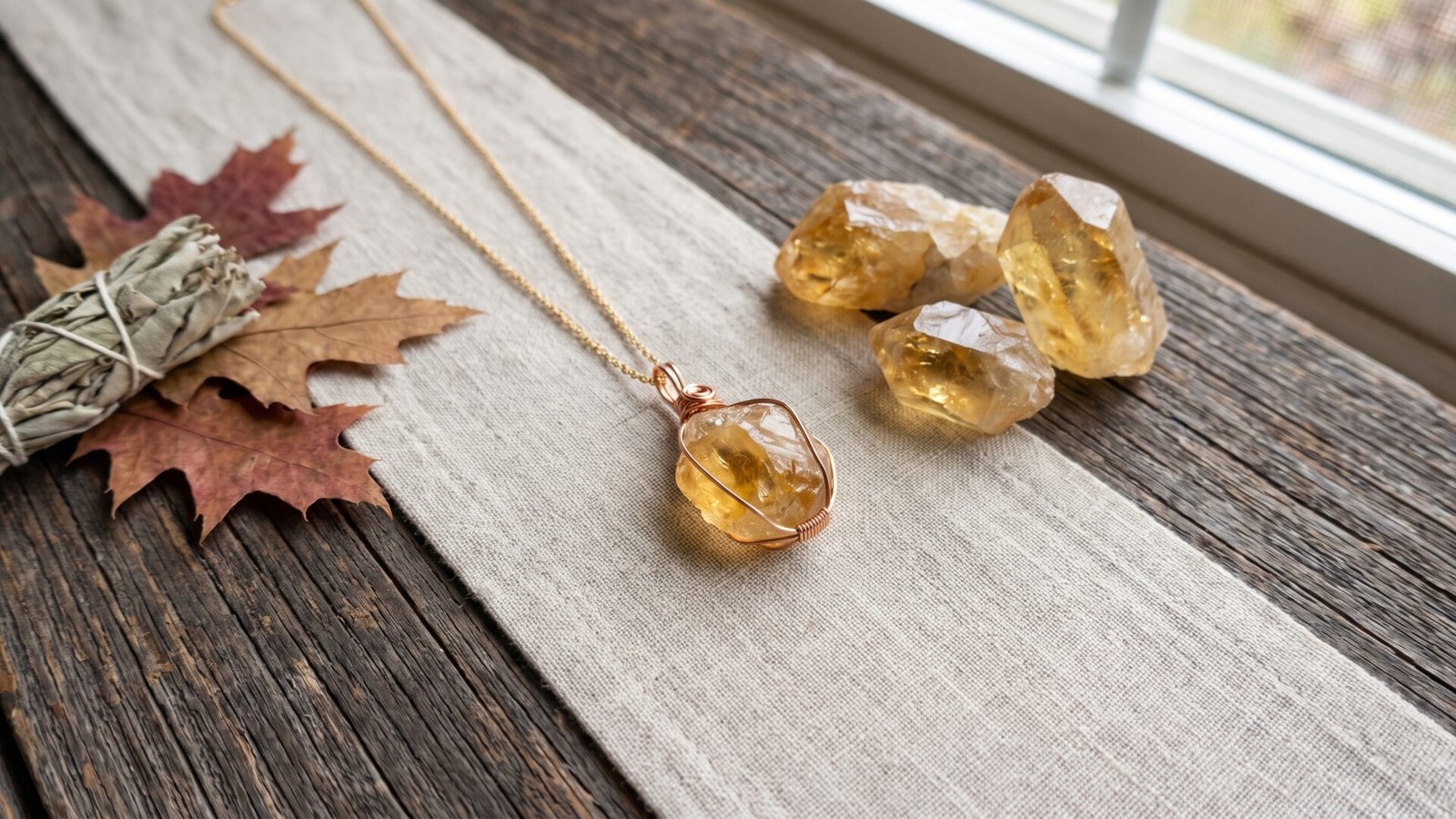
- It is common to wear it as a pendant near the heart as a symbol of one’s goals.
- It is not a financial tool, and we make no claim that any gemstone attracts money or opportunity.
D. Spiritual Growth
- Some energy-healing practitioners use yellow topaz to encourage gratitude and introspection.
- Its warm glow is associated with personal power and inner wisdom, making it a popular companion for journaling and reflection.
5. Raw, Rough, or Faceted: Which Form Should You Choose?
Within metaphysical circles, some people prefer raw or lightly polished stones because they believe a natural form carries more energy. This is a belief with no scientific support, but it is a legitimate personal preference, and raw stones do have a distinct, rustic look. From a practical standpoint, the form matters for different reasons:
- Raw or rough crystals: Interesting texture and natural character. Because of topaz’s cleavage, raw crystal points can be fragile and may chip if knocked, so they suit pendants better than rings.
- Cabochon or tumbled stones: Smooth, rounded, and more forgiving in everyday wear, with a softer glow than faceted stones.
- Faceted stones: Cut to maximise brilliance. Yellow topaz is often cut as ovals, cushions, and emerald cuts, and faceted topaz in a protective setting is the usual choice for fine jewelry.
Be wary of listings that call a stone ‘raw’ while showing a perfectly clear, vividly coloured crystal. Strong colour on a very clean stone may indicate treatment or a different mineral, and ethical sellers disclose this.
6. Yellow Topaz and Emotional Wellbeing: What Tradition Says
Crystal-healing writers describe yellow topaz as a stone of calm and emotional steadiness. People who enjoy gemstones often say a meaningful piece helps them feel grounded. The explanation that fits what we know is simple: a stone you love, worn with intention, can become a comfort object and a cue for mindful habits. It has no proven physiological effect on stress, anxiety, or mood.
For November birthdays, shorter days and seasonal change can feel unsettling for some people. A golden stone is a pleasant symbol of warmth and light at that time of year, and that symbolism is probably the most honest reason to choose it.
7. Yellow Topaz for Focus and Productivity
- Students, writers, and professionals sometimes keep a yellow stone near their workspace as a visual cue to settle in and concentrate.
- Practitioners suggest pairing the stone with concrete habits such as journaling intentions or building vision boards. The habit does the work; the stone is the reminder.
- If you struggle with attention or memory, a stone cannot replace professional support or proven strategies.
8. Yellow Topaz in Meditation
- Setting intentions: Sit comfortably, hold the pendant or rest it over the upper abdomen, and focus on slow breathing. Imagine warm golden light easing tension. This is a visualisation technique, and the stone serves as a focal object.
- Chakra work: In the chakra system, yellow stones are linked to the solar plexus, associated with confidence, self-discipline, and personal growth.
- Pairings: Practitioners may pair yellow topaz with citrine or amber. Amber is fossil resin, not a mineral, and is much softer than topaz.
9. Physical Healing Associations: Belief, Not Medicine
Traditional gemstone writing connects yellow topaz with vitality and the digestive system, usually through the solar plexus link. These are folk and holistic associations only. There is no scientific evidence that wearing topaz affects digestion, metabolism, or energy levels, and it should never replace medical care. If you have a health concern, please consult a qualified health professional.
10. Is Yellow Topaz Good for Everyday Jewelry?
Topaz is among the harder popular gemstones, but cleavage means the type of jewelry matters:
| Jewelry type | Suitability | Notes |
|---|---|---|
| Pendant / necklace | Excellent | Low impact; the most protective choice, including for rough or raw stones |
| Earrings | Very good | Low risk of knocks |
| Bracelet | Moderate | Exposed to impacts; prefer protective settings |
| Ring | Good with care | Choose a bezel or a setting that shields the stone’s corners; avoid heavy manual work |
11. Treatments, Lab-Created Stones, and Imitations
| Type | What it means | What to know |
|---|---|---|
| Natural, untreated | Rare in strong golden shades | Ask for documentation; generally commands a premium |
| Heat-treated | Common and accepted when disclosed | Ask the seller about light and heat exposure |
| Irradiated (mainly blue topaz) | Not typical for yellow, but ask | A different colour family, covered in our topaz guide |
| Surface-coated (‘mystic’) | A thin coating gives iridescent colours | Coating can scratch or wear; avoid abrasive cleaning |
| Glass or citrine sold as ‘topaz’ | Not topaz | Ask for the mineral name in writing |
A lab-created stone shares the chemistry of its natural counterpart, whereas a simulant only imitates the look. Neither should be sold as natural, and reputable sellers state which they are offering.
12. How to Care for Yellow Topaz Jewelry
- Use lukewarm water, a drop of mild soap, and a soft brush or cloth, then rinse and dry gently.
- Avoid ultrasonic and steam cleaners unless a jeweller confirms they are safe for your particular stone, because fractures, fillings, or coatings can be damaged.
- Avoid sudden temperature changes and prolonged strong sunlight or heat; some yellow-brown colours may fade under intense light over time. If your stone is valuable, ask the seller or a gemologist.
People who use crystals ritually often ‘cleanse’ them. These are spiritual traditions with no gemological function. Safe options for topaz include leaving the stone in moonlight on a windowsill, passing it through sage or palo santo smoke and then wiping off residue, or using a singing bowl or an intentional breath. Skip salt water and long sun exposure, since salt can corrode metal settings and strong sun can affect some colours.
13. How to Choose a Yellow Topaz Pendant
- Colour: Choose what you love. Deeper golden tones are often priced higher, but price reflects market demand rather than any difference in metaphysical effect.
- Clarity: Topaz is usually found with few inclusions, so visible cloudiness or cracks are worth questioning.
- Cut: A well-cut stone returns light evenly; a dull centre suggests a poor cut.
- Disclosure: Ask whether the stone is natural, treated, coated, or lab-created, and get the answer in writing.
- Metal setting: Sterling silver and gold are common. Pick a metal that suits your skin and budget.
- Budget: Prices vary widely with size, colour, and metal. We have not verified current prices for specific products, so compare several reputable jewellers before buying.
14. Using Yellow Topaz Day to Day, and Pairing It With Other Stones
- Pendant necklace: The most practical option and a popular choice for symbolism.
- Bracelet: Fine for occasional wear; knocks are more likely.
- Gifting: A pendant makes a thoughtful November birthday gift. If it is for a young child, remember that small jewelry can be a choking hazard.
In crystal practice, people combine yellow topaz with citrine (associated with abundance and positivity), amethyst (calm and spiritual clarity), clear quartz (traditionally called an ‘amplifier’) and tiger’s eye (confidence). These pairings are traditions and styling ideas, not proven synergies. Quartz-family stones (hardness 7) are slightly softer than topaz (8), so store pieces separately in soft pouches.
15. Symbolic Meaning for November Birthdays
- Emotional balance: A traditional association rather than a measurable effect.
- Creativity and focus: A symbol of drive during busy months.
- Abundance and gratitude: Fits the season of harvest and thanks.
To see how topaz fits among other stones, browse the complete gemstone guide or read our topaz meaning article.
Frequently Asked Questions About Yellow Topaz
Is yellow topaz a November birthstone?
Yes. In the modern American list November has two birthstones, topaz and citrine. Birthstone lists differ by country and organisation, so older or regional lists may vary.
Can yellow topaz heal the body?
No. Any healing claims come from folklore and crystal-healing practice and are not supported by scientific evidence. Yellow topaz should never replace medical advice or treatment.
How hard is yellow topaz?
Topaz is 8 on the Mohs scale, which is very good scratch resistance. However it has perfect cleavage in one direction, so a sharp knock can split it.
Is yellow topaz the same as citrine?
No. Topaz is an aluminium silicate; citrine is a yellow variety of quartz with a Mohs hardness of 7. They are separate November stones and are often mislabelled for each other.
Is yellow topaz natural or treated?
It can be either. Heat treatment is common for yellow and brown topaz, and some stones are surface-coated. Ask the seller to disclose any treatment.
What is imperial topaz?
Imperial topaz is the trade name for the finest orange to pinkish-orange topaz, historically associated with Brazil. A pale yellow stone is not imperial topaz.
How do I clean a yellow topaz pendant?
Wash with lukewarm water, mild soap and a soft brush, then dry. Avoid ultrasonic and steam cleaners unless a jeweller approves, and avoid sudden temperature changes.
Is yellow topaz good for an everyday ring?
It can be worn in a ring with care. Choose a protective setting such as a bezel, and avoid heavy manual work because of its cleavage.
Is it safe to give a topaz pendant to a child?
Small jewelry can be a choking hazard for young children, so choose age-appropriate pieces and supervise.
Final Thoughts
Yellow topaz is a warm, durable, and attractive gemstone for November birthdays, with a rich symbolic history around calm, clarity, and abundance. Enjoy those traditions for what they are: meaningful stories and rituals that many people find comforting. Choose a stone based on its real qualities, such as colour, cut, treatment disclosure, and a setting suited to how you will wear it.