November Birthstone: Meaning, Symbolism, and Jewelry Guide
The November Birthstone at a Glance
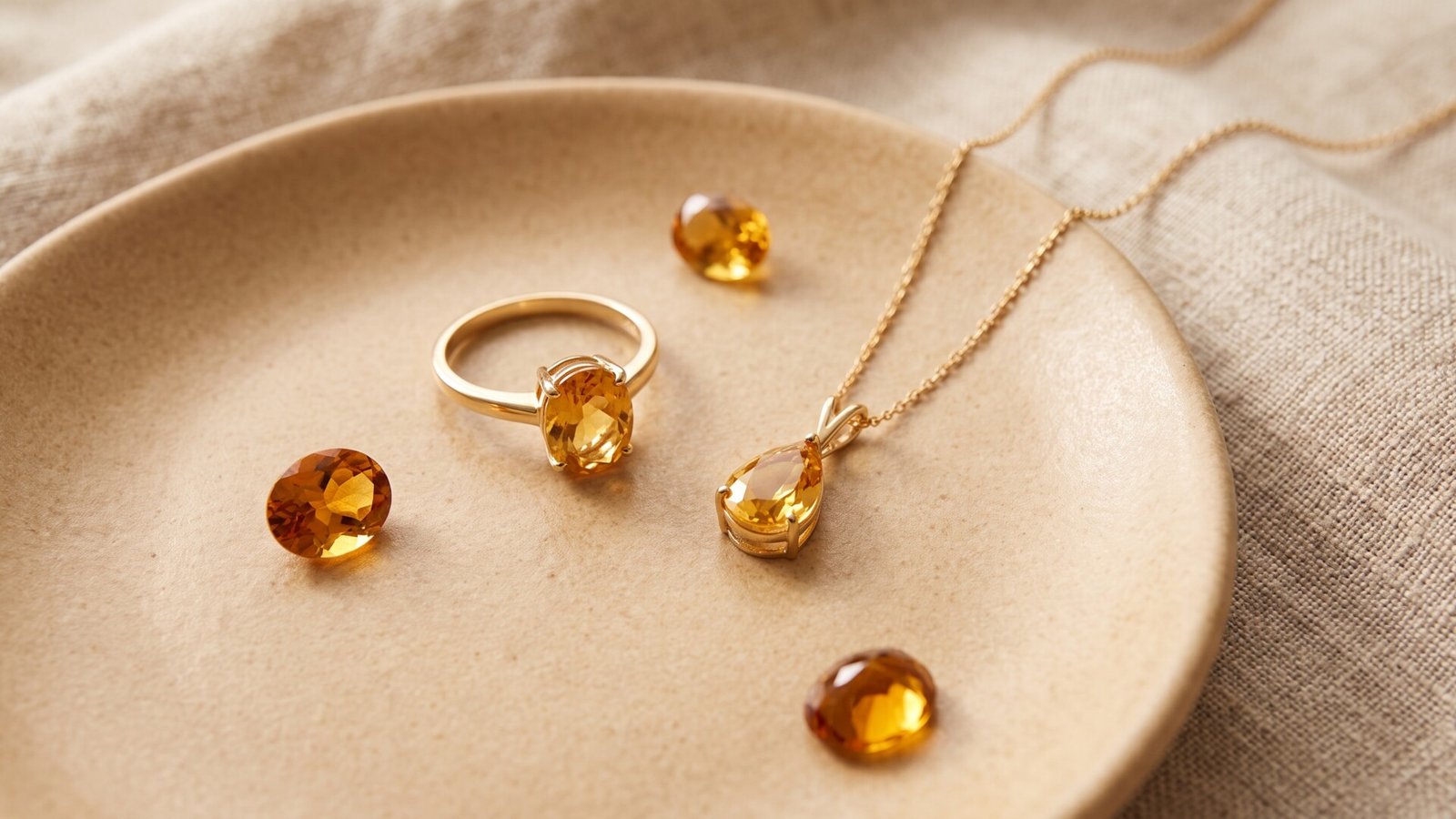
November has two birthstones: topaz and citrine. Both are most often seen in warm golden, yellow and orange shades, which suits a month associated with harvest and the turn toward winter. They are quite different gems, though: topaz is harder but can split along a cleavage plane, while citrine is a type of quartz that is a little softer on the Mohs scale but has no cleavage and is usually much cheaper.
This guide covers the November birthstones’ meaning and history, how they compare in durability and price, which jewelry suits each, how to care for them and what to ask before you buy. Where we describe meanings and symbolism, those are cultural traditions and beliefs rather than scientific or medical claims. For deeper dives, see our full topaz guide, our citrine guide, the wider Birthstone Meanings & Symbolism hub and our Birthstone Jewelry Guide.
November is one month in our Birthstones by Month guide, where you can compare all twelve.
What Are the November Birthstones?
Birthstone lists are not universal, and they have changed over time. Today, topaz and citrine are both recognized for November, including by GIA. The history is a little more nuanced:
- Topaz (the long-standing November stone): it appears on the 1912 U.S. jewelers’ list as the single November stone, and in many older traditions as well. It is best known in golden, yellow and orange shades, though it occurs in many colors.
- Citrine (the later addition): reference sources report that citrine was added to the U.S. list in 1952, giving November a second, more affordable yellow stone. It is the yellow-to-orange variety of quartz.
Because lists vary by country and organization, you may also see other stones attached to November in older or regional lists. For the story of how these lists developed, see our article on the history of birthstones and our beginner’s guide to what birthstones are. In practice, either stone is a legitimate way to celebrate a November birthday, and many people choose by budget, color and how often they will wear the piece.
November Birthstones Compared at a Glance
The table below puts the practical facts side by side. Mohs hardness measures scratch resistance only; it does not tell you whether a stone will chip or split. Our guide to the gemstone hardness scale explains the difference.
| Feature | Topaz | Citrine |
|---|---|---|
| What it is | Aluminum fluorosilicate mineral | Yellow-to-orange variety of quartz (silicon dioxide) |
| Mohs hardness | 8 | 7 |
| Cleavage | Perfect cleavage in one direction, so a hard knock can split it | No cleavage; breaks with a curved (conchoidal) fracture |
| Typical colors | Colorless, blue, yellow, orange, pink, red, brown | Pale yellow, golden, orange, brownish orange |
| Common treatments | Blue topaz is treated (typically irradiation plus heat); some stones are surface-coated | Most citrine on the market is heat-treated amethyst or smoky quartz; natural citrine is less common |
| Price level | Blue and colorless topaz are very affordable; rare pink, red and orange “imperial” stones are valuable | Generally affordable; deeply colored “Madeira” stones cost more |
| Best suited to | Pendants, earrings, rings in protective settings | Pendants, earrings, rings and bracelets for regular wear |
These points follow GIA’s topaz and citrine information and standard gemological references. Prices vary a lot by size, color, cut and seller, so treat any figure as a rough guide.
Why These Stones Represent November
The link between November and its stones is largely about color and season. Golden and amber tones echo autumn harvests and low, warm light, and the symbolism attached to each stone has built up over centuries of tradition. None of this is scientifically proven; it is the meaning people have given the stones.
Topaz: Strength and Protection
Topaz has historically been regarded in tradition as a stone of protection, associated with strength, courage and clear thinking. Its golden shades are often linked symbolically with the sun and with the warmth of the harvest season. Our topaz meaning guide traces where these associations come from. In crystal-healing circles some people believe the stone supports calm and focus; these are beliefs, not medical claims.
Citrine: Joy and Abundance
Citrine’s sunny color has made it a symbol of happiness, optimism and prosperity. It is sometimes nicknamed the “merchant’s stone” in crystal lore, based on the belief that it attracts success in business. Treat that as folklore rather than fact. If you enjoy the tradition, our article on citrine pieces associated with wealth and success and our citrine meaning guide go further.
Historical and Cultural Significance
Topaz
Topaz has been valued for a very long time, and writers in the ancient Mediterranean world used a name close to “topaz” for a golden-yellow gem. Be aware that ancient names were applied loosely, so the stone described in old texts is not always what we call topaz today. Folklore across many cultures credits topaz with protecting its wearer and bringing wisdom, and its golden color was often linked with the sun. Today, GIA notes that “imperial” topaz has no official standard; dealers use the term for orange, pink, red or purplish stones, and the finest examples are rare and valuable.
Citrine
Yellow quartz has been used in jewelry for centuries. For a long time citrine and topaz were confused, and yellow quartz was sold as “topaz quartz.” GIA still warns that brown quartz is sometimes wrongly sold as “smoky topaz,” so the name alone can mislead. Citrine became far more widely available in the twentieth century as heat treatment of amethyst turned plentiful purple quartz into golden stones, which helps explain why it is so affordable.
For wider context on how meanings developed, see our Birthstone Meanings & Symbolism hub and our explainer on the history of birthstones from ancient times to today.
Meaning and Symbolism of the November Birthstones
Together, the November stones are traditionally associated with warmth, abundance and personal empowerment. These are cultural beliefs, not measurable effects:
- Topaz: traditionally linked with strength, protection, wisdom and vitality
- Citrine: traditionally linked with joy, prosperity, optimism and confidence
Whether you take these meanings literally or simply enjoy them as a story, they can make a November birthstone a thoughtful gift. They are not a substitute for medical or professional advice.
Which November Birthstone Should You Choose?
- For daily wear on a budget: citrine is a sensible choice. At Mohs 7 it resists most everyday dust and scratches, and with no cleavage it is less likely to split when knocked. Choose a protective setting for rings all the same.
- For the highest scratch resistance: topaz rates 8 on the Mohs scale, but it has perfect cleavage, so a sharp blow can split it. It is safer in pendants and earrings, or in a bezel or halo setting for a ring.
- For a rare, collector-style stone: look at natural orange, pink or red imperial topaz, which is a specialist purchase. Ask for a gem lab report.
- For a bold, affordable statement piece: large citrine stones cost relatively little per carat and look striking in cocktail rings and pendants. As a rough guide from one retail price guide, ordinary faceted yellow-to-orange citrine runs from about $5 to $45 per carat, with richly colored Madeira stones reaching roughly $20 to $140 per carat. Finished jewelry costs more, depending on metal and craftsmanship.
- For a traditional gift: topaz has the longer history on the November list, so it suits someone who values heritage.
Comparing options? Our guides to citrine vs yellow sapphire, aquamarine vs topaz and sapphire vs blue topaz show how these stones stack up against popular alternatives.
November Birthstone Jewelry Ideas
Both stones are widely available in every kind of jewelry. When you shop, check that the listing says whether the stone is natural, treated or lab-created, and whether the color is natural or the result of treatment.
Topaz Jewelry
- Rings: good for birthdays, anniversaries or statement pieces. Because of cleavage, choose a protective setting and take the ring off for heavy work.
- Necklaces & pendants: a low-risk way to show off golden color, since pendants take fewer knocks.
- Earrings: studs and drops add warmth and are easy to wear.
- Bracelets: pretty paired with complementary stones or metals, but wrist pieces are knocked more often, so wear them with care.
Citrine Jewelry
- Rings: bright, cheerful options for casual or formal wear. A bezel or low-profile setting helps protect the edges.
- Necklaces & pendants: sunny tones for everyday elegance.
- Earrings: warm colors that complement autumn clothing.
- Bracelets: stackable or single-stone designs for versatility.
For more ideas, browse our Birthstone Jewelry Guide, our birthstone gift ideas by relationship and, for younger recipients, birthstone gifts for kids by month. Small gemstone pieces can be a choking hazard for young children, so choose age-appropriate designs. If you are weighing where to shop, see our list of online stores for authentic birthstone jewelry.
Treatments, Imitations and What to Ask When Buying
Treatments are normal in the gem trade, but they should be disclosed. A few points specific to November’s stones:
- Blue topaz is treated. The vivid blue shades sold today are generally produced by irradiating and heating colorless topaz. This is a widely accepted, stable treatment, but you should expect it. If a seller claims an untreated natural blue topaz, ask for a laboratory report.
- Coated topaz exists. GIA notes that some topaz is coated to improve color. Coated stones should only be cleaned with mild soapy water, because harsh cleaning can damage the coating.
- Most citrine is heat-treated. Much of the citrine in jewelry stores began as amethyst or smoky quartz and was heated to produce golden color. This does not make it fake; it is still real quartz. Untreated natural citrine is less common and usually paler or more subtly colored.
- Watch for confusing names. Terms such as “smoky topaz” or “topaz quartz” usually describe quartz, not topaz. Glass and cubic zirconia imitations also exist, so buy from sellers who state what the stone is.
- Lab-grown versus simulant. A lab-grown gem has the same chemistry as its natural counterpart, while a simulant only imitates how a stone looks. Our guide to natural vs lab-grown birthstones explains how to tell them apart and decide.
Color Guide: What to Expect from Topaz and Citrine
Color is the most important quality factor for both November stones, so it helps to know the vocabulary jewelers use.
- Imperial topaz: a trade term for orange, pink, red or purplish topaz. There is no official standard, so ask what a seller means by it. These stones are rare, and their per-carat price rises sharply with size.
- Yellow and golden topaz: the classic November look. It is rarer than blue topaz, so confirm whether the color is natural and whether the stone has been treated.
- Blue and colorless topaz: the most affordable and widely sold topaz. GIA notes that the price per carat of blue topaz rises little as size increases, so large stones remain accessible. Blue topaz is traditionally associated with December, but it is topaz, and some shoppers choose it for a November birthday.
- Pale yellow citrine: light, lemony stones, often the least expensive and sometimes natural.
- Golden and orange citrine: the most popular shades, usually heat-treated, with warm amber tones that suit gold settings.
- Madeira citrine: a deep reddish-orange named after the wine. It is the most valued citrine color, and it costs more per carat than paler stones.
Rough Topaz Price Ranges by Color
Topaz prices span a huge range, which is why one quoted figure can mislead. As a rough guide, one gem price guide updated in January 2026 puts loose-stone prices per carat at about $5 to $30 for colorless topaz, $6 to $50 for treated blue topaz, $8 to $150 for yellow topaz, $100 to $700 for pink topaz and $100 to $1,800 for imperial (reddish-orange) topaz. These are retail ballparks for ordinary-quality loose stones; fine, large or certified stones can sit outside them, and finished jewelry adds metal and labor. We could not verify them against a second independent source, so check live listings before you buy.
To understand why gems show these colors, our guide to the birthstone color chart is a good companion read.
How to Buy November Birthstone Jewelry with Confidence
A few habits protect you from overpaying or being misled, whichever stone you choose:
- Read the listing for the stone’s name. It should say topaz or citrine, not an ambiguous trade name. Descriptions such as “smoky topaz” or “topaz quartz” are red flags that the stone may be quartz.
- Ask about treatment and origin of color. A trustworthy seller will tell you whether the stone is natural, heat-treated, irradiated, coated or lab-created. Do not assume a stated origin without documentation.
- Judge color first, then cut. A well-cut stone with even color looks better than a larger, dull one. Cut quality affects brilliance, and our guide to gemstone shapes and cuts explains the options.
- Match the setting to your lifestyle. Bezel and halo settings protect edges, which matters most for topaz because of cleavage. Prongs show more of the stone but leave it more exposed.
- Ask for a lab report on expensive purchases. For rare imperial topaz or large high-end stones, an independent report from a recognized gem laboratory is worth requesting.
- Check the return policy. Reputable retailers let you return jewelry if it is not as described.
Gemstone prices and availability change often, so always check the current listing before you buy.
November Birthstones and Wedding Anniversaries
Both November stones also appear on traditional anniversary lists, which makes them useful for gifts beyond birthdays. According to GIA, citrine is the gem of the 13th wedding anniversary, blue topaz the gem of the 4th and imperial topaz the gem of the 23rd. If you are shopping for a couple rather than a single birthday, our birthstone gift ideas by relationship is a good next stop.
Zodiac Connections
November spans two signs: Scorpio (about October 23 to November 21) and Sagittarius (about November 22 to December 21). Exact dates shift slightly from year to year, and zodiac stone lists differ between sources, so the pairings below are one popular tradition rather than a fixed rule.
- Scorpio: in popular lists, topaz is linked with protection and emotional strength, and citrine with optimism and balance.
- Sagittarius: topaz is often linked with wisdom and focus, and citrine with optimism and energy.
To see how zodiac and monthly stones fit together, read zodiac birthstones vs monthly birthstones or browse the full zodiac birthstones guide.
Caring for November Birthstone Jewelry
When in doubt, use warm water, mild soap and a soft brush, and avoid steam and ultrasonic cleaners unless a jeweler confirms they are safe for your piece.
Topaz Care
- Clean with warm water, mild soap and a soft brush; GIA describes warm soapy water as safe.
- Protect it from hard knocks, extreme pressure and sudden temperature changes, which can cause it to split along its cleavage.
- Avoid ultrasonic and steam cleaners, especially if the stone has fractures or a coating. GIA rates topaz as having poor toughness despite its Mohs 8 hardness, so it can chip or crack, and prolonged heat or sunlight can fade some yellow-to-brown stones.
- Store it separately or wrapped in soft cloth so harder stones such as diamonds and sapphires do not scratch it.
Citrine Care
- Clean gently with mild soap, warm water and a soft brush. GIA says an ultrasonic cleaner is usually fine for citrine, but steam cleaning is risky because high heat could crack the stone; if the piece has fractures, fillings or delicate accent stones, stick to hand cleaning.
- Keep it away from prolonged strong heat and bright sunlight, which can alter the color of some heat-treated quartz.
- Avoid harsh chemicals and take it off before cleaning, swimming or heavy work.
- Store it in a soft pouch or padded jewelry box, away from harder stones.
For general stone-care basics, see our Birthstone Education & Buying Guides.
Fun Facts About November Birthstones
- Topaz comes in a wide range of colors, including colorless, blue, yellow, orange, pink and red.
- Most blue topaz on the market gets its color from treatment, not nature.
- Citrine is sometimes called the “merchant’s stone” in crystal lore.
- Much of today’s citrine began life as amethyst and was heat-treated to turn golden.
- “Imperial” topaz has no official standard, so dealers use the term differently.
Learn more about why stones look the way they do in our guide to the science behind gemstone colors.
Frequently Asked Questions About The November Birthstone
What is the November birthstone?
November has two birthstones: topaz and citrine. Topaz is the longer-standing November stone, and citrine was added to the U.S. list later, giving a more affordable yellow option.
Is topaz or citrine more valuable?
It depends on the stone. Common blue, colorless and yellow topaz and common citrine are both affordable. Rare pink, red and orange imperial topaz is valuable, while most citrine stays inexpensive, with deeply colored Madeira citrine at the higher end.
Which November birthstone is more durable?
Topaz is harder (Mohs 8) than citrine (Mohs 7), but topaz has perfect cleavage and can split if struck. Citrine has no cleavage, so many people find it more forgiving for everyday wear. Protective settings help with both.
Is citrine real if it was heat-treated?
Yes. Heat-treated citrine is real quartz; the treatment changes its color, usually from amethyst or smoky quartz to golden. It should be disclosed, and natural untreated citrine is less common.
Is blue topaz natural?
Blue topaz is a real gemstone, but the vivid blue seen in most jewelry is produced by treating colorless topaz, typically with irradiation and heat. Ask the seller for treatment details.
What is the difference between citrine and topaz?
Citrine is a type of quartz, while topaz is a separate mineral. Topaz is harder but has cleavage, and fine topaz can cost far more. Yellow quartz is sometimes mislabeled as topaz, so check what a seller means.
Can I wear a November birthstone every day?
Yes, with sensible care. Citrine is a practical option for regular wear, and topaz works well in pendants, earrings or protective ring settings. Take rings off for heavy work and clean gently.
Which November birthstone suits Scorpio and Sagittarius?
Both topaz and citrine are linked with November’s signs in popular lists, but zodiac stone lists vary. Our zodiac guides for Scorpio and Sagittarius cover the traditions in more detail.
Related Articles and Resources
- Topaz: Meaning, Properties, Uses & Value
- Citrine: Meaning, Properties, Uses & Value
- Topaz Meaning: History, Symbolism & Modern Uses
- Citrine Meaning: History, Symbolism & Modern Uses
- Birthstone Jewelry Guide
- Birthstone Meanings & Symbolism
- Birthstone Jewelry Gift Ideas by Relationship
- October Birthstone
- December Birthstone
Explore More Birthstones
To explore every month and its stones, visit our Birthstones by Month hub. Coming from the previous month? Read the October birthstone guide. Looking ahead? Continue to the December birthstone guide.
Or browse every month: January, February, March, April, May, June, July, August, September, October and December.
Final Thoughts
There is no single right November birthstone, only the right one for the person and the piece of jewelry. Choose topaz for its history, range of colors and high scratch resistance, or citrine for sunny color, everyday practicality and value. Whichever you pick, ask how the stone was treated, match the setting to how often it will be worn, and follow the care steps above. Return to the Birthstones by Month hub to explore all twelve months.