The 2026 Gemstone Price Audit: Which Birthstones Gained the Most Value?
Birthstones are usually bought as gifts, but the price tags attached to them vary enormously. A garnet pendant and a fine ruby ring can both be “July” or “January” gifts, yet the stones behind them follow completely different market logic. This audit looks at what actually drives the price of each traditional birthstone, which way the pressures have been pointing, and how to buy without overpaying.
A note on method: gemstones are not publicly traded, there is no single index for colored stones, and dealer asking prices differ widely from auction results and retail jewelry prices. For that reason this guide deliberately avoids precise ten-year percentage gains for individual stones. Where a figure is given, it is attributed. Everywhere else you will find the price drivers, the risks, and the practical buying advice, which age better than any single number.
This page is also not financial advice. Colored gemstones can be hard to resell at the price you paid, and retail markups are significant. Treat any stone as something to enjoy first.
Birthstone Lists: Which Stones This Audit Covers
The tradition of linking gems to months draws on the breastplate of Aaron described in the Book of Exodus, but the modern American list is much more recent. It was adopted in 1912 by what was then the National Association of Jewelers, now Jewelers of America, in an effort to standardize the market. Later updates added alexandrite and citrine in 1952, tanzanite for December in 2002, and spinel for August in 2016. Other countries publish their own lists, so you will see different stones depending on where you shop.
The table below follows the traditional single-stone-per-month calendar used in this audit, with the most common modern alternatives alongside.
| Month | Main stone in this audit | Common alternative(s) |
|---|---|---|
| January | Garnet | – |
| February | Amethyst | – |
| March | Aquamarine | Bloodstone (traditional) |
| April | Diamond | – |
| May | Emerald | – |
| June | Pearl | Alexandrite, moonstone |
| July | Ruby | – |
| August | Peridot | Spinel, sardonyx |
| September | Sapphire | – |
| October | Opal | Pink tourmaline |
| November | Topaz | Citrine |
| December | Turquoise | Tanzanite, zircon |
Month-by-month detail lives in our gemstones guide, and the November birthstone page explains the topaz and citrine choice. For December alternatives, our tanzanite guide covers a stone with a single known commercial source.
What Actually Drives Birthstone Prices
Across all twelve months, the same handful of forces decide whether a stone is cheap, expensive, or getting more expensive.
- Scarcity at the top end: Almost every gemstone has an abundant everyday grade and a scarce fine grade. Garnet, amethyst, and peridot are plentiful, while fine ruby, Colombian emerald, and untreated sapphire in larger sizes are not. Price gaps within a single stone type are often larger than the gaps between stones.
- Treatment: A routinely treated stone costs less than an untreated one of similar appearance. Heat treatment of ruby and sapphire is standard, oiling of emerald is standard, and blue topaz is nearly always irradiated and heated. Untreated top-quality stones carry a premium, and laboratories such as GIA report on treatments.
- Origin: Names like Burmese ruby, Colombian emerald, or Kashmir sapphire can add a substantial premium, but only when a respected laboratory report supports the origin. Origin should never be accepted from a sales description alone.
- Mine supply and politics: Output from Myanmar, Colombia, Sri Lanka, Madagascar, Mozambique, and Tanzania shifts with weather, regulation, sanctions, and mine closures, and this feeds through to colored stone supply.
- Lab-grown competition: Lab-grown rubies, sapphires, emeralds, and especially diamonds are real gemstones with the same chemistry as natural ones, sold at a fraction of the price. That has changed what buyers expect to pay, particularly for diamonds.
- Fashion: Everyday-luxury jewelry, engagement-ring trends, and royal or celebrity pieces can bring a stone into focus, though such effects are hard to measure and usually fade.
One example of the lab-grown effect: a March 2026 report distributed by Stacker, based on BriteCo insurance data and StoneAlgo pricing, put the average one-carat natural diamond near $4,200 (typical range roughly $3,000 to $6,000 or more) and the average one-carat lab-grown diamond at about $1,000 or less. Our guide on natural vs lab-grown diamonds goes deeper on that comparison.
Birthstone-by-Birthstone Price Analysis
Each section below covers what shapes the price, what a buyer should look for, and how durable the stone is when worn. Durability matters for value, because a chipped or abraded stone loses worth quickly. Our gemstone hardness scale guide explains why hardness alone does not tell the whole story.
January: Garnet
What moves the price: Garnet is a mineral group, not a single gem. Everyday red almandine and pyrope are plentiful and affordable. Prices rise sharply for rarer varieties, notably green tsavorite (first described in the 1960s from East Africa), demantoid (known for its fiery sparkle and distinctive “horsetail” inclusions), and the orange-red spessartine and mandarin varieties.
What to watch: Be clear which variety you are buying. A “garnet” with a premium price tag should be a named variety backed by a report, and size matters because fine green garnets above a few carats are uncommon. Garnet is roughly 6.5 to 7.5 on the Mohs scale depending on variety and is generally untreated.
Buyer takeaway: For a gift, red garnet is excellent value. Pay a premium only for a specific rare variety that you have verified.
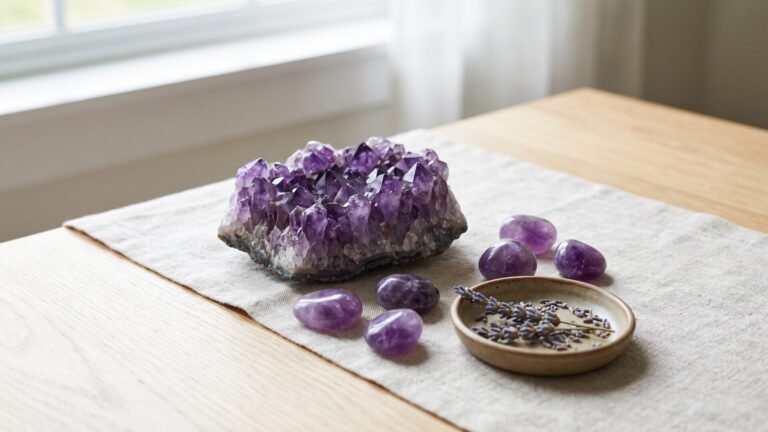
February: Amethyst
What moves the price: Amethyst is a purple quartz found in large quantities in Brazil, Uruguay, Zambia, and elsewhere, so supply is not the limiting factor. Price depends mostly on color depth and cut. The trade uses terms like “Siberian” to describe a deep purple with flashes of red or blue, and such stones command more than pale lavender material.
What to watch: Much amethyst is heat-treated or irradiated to improve color, and heating amethyst can also produce citrine. Quartz measures 7 on the Mohs scale, so it handles daily wear well, though prolonged strong light can fade some stones.
Buyer takeaway: Amethyst is a stone to buy for color and design, not for appreciation. Our tanzanite investment piece looks at a purple-blue stone with a far more limited supply if that is what you are after.
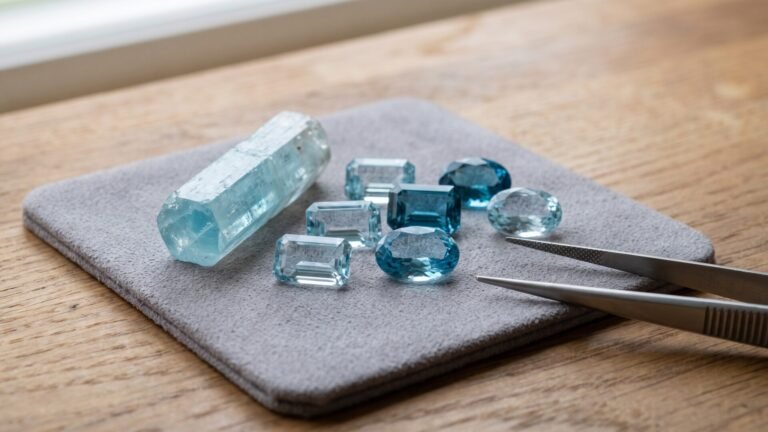
March: Aquamarine
What moves the price: Aquamarine is blue to blue-green beryl, the same mineral family as emerald. Price follows color saturation, clarity, and size. Deeper blue stones cost more, and because aquamarine crystals grow large and clean, big stones are available at far lower prices than comparable emerald or sapphire.
What to watch: Heat treatment to remove green tones and enhance blue is routine and stable, and most aquamarine on the market has been heated. It is not a drawback in itself, but it should be disclosed. Hardness is 7.5 to 8, so it suits rings, though it can chip on hard knocks.
Buyer takeaway: Aquamarine is one of the best-value large colored stones. Pay more for color saturation and cut quality rather than for “untreated” labels.
April: Diamond
What moves the price: Diamond pricing follows the 4 Cs: color, clarity, cut, and carat weight. Lab-grown diamonds have sharply reduced the price of the same-looking stone, and natural diamond prices have been under pressure since their pandemic-era peak, according to the BriteCo report cited above, which described wholesale one-carat prices as having fallen and then stabilized.
What to watch: Make sure a diamond comes with a grading report from a recognized laboratory such as GIA, and that the report states whether the stone is natural or lab-grown. Diamond is 10 on the Mohs scale, but it can still chip along its cleavage planes if struck hard.
Buyer takeaway: Choose natural for tradition or lab-grown for size per dollar. Neither should be bought on resale expectations.
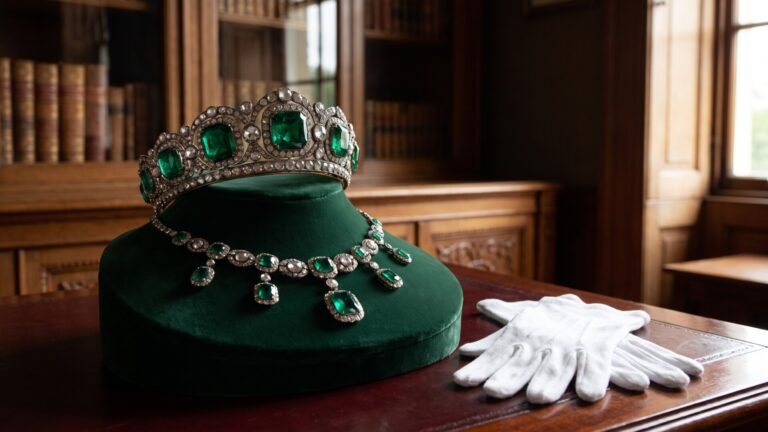
May: Emerald
What moves the price: Emerald is green beryl colored by chromium and sometimes vanadium. Fine Colombian stones are among the most valuable gems, while Zambian and Brazilian emeralds offer alternatives at lower cost. Nearly all natural emerald is clarity-enhanced, usually with oil or resin, and the degree of treatment affects both value and care.
What to watch: Emerald is 7.5 to 8 on the Mohs scale, but its inclusions (the trade calls them “jardin”) make it brittle, so it chips and cracks more easily than the hardness number implies. Ultrasonic and steam cleaning can damage filled stones. A report from a laboratory such as GIA or SSEF, indicating treatment level and origin, matters most here.
Buyer takeaway: Emerald is the birthstone where careful documentation matters most. A protective setting is wise for rings. Lab-grown emerald is a legitimate budget option when disclosed. If ethics matter to you, see our guide to ethically sourced emeralds.
June: Pearl
What moves the price: Pearl pricing separates natural pearls, which are extremely rare and mostly seen in antique or auction pieces, from cultured pearls, which dominate the market. Among cultured pearls, South Sea, Tahitian, Akoya, and freshwater types sit at very different price points based on size, luster, surface quality, shape, and nacre thickness.
What to watch: Pearls are only 2.5 to 4.5 on the Mohs scale and are damaged by acids, perfume, and abrasion. They are an organic gem with natural variation, not a hard stone.
Buyer takeaway: Buy pearls for luster and wear, with the understanding that cultured pearl jewelry is rarely an appreciating asset. Our pearl vs opal comparison helps if you are deciding between two softer stones.
July: Ruby
What moves the price: Ruby is red corundum, colored by chromium. Fine unheated rubies, especially larger ones with documented Burmese origin, sit at the top of the colored gemstone market and have set auction records. Supply from Myanmar has been affected by political conditions and sanctions, and stones from Mozambique, Madagascar, and Thailand cover much of the commercial market.
What to watch: Heat treatment is standard in ruby and accepted in the trade when disclosed. Glass-filled (lead-glass) rubies are a different category: cheap, fragile, and not suitable for expensive pricing. At 9 on the Mohs scale, ruby is excellent for rings. See how to tell if a ruby is heat-treated or natural, and note that sanctions make sourcing questions worth asking, as covered in our ranking of the most expensive birthstones.
Buyer takeaway: Ruby is the birthstone where lab reports and origin claims have the greatest impact on price. Buy untreated or fine origin stones only with a recognized lab report.
August: Peridot
What moves the price: Peridot is the gem form of olivine, known as the “evening emerald” for its lime to olive green. Sources include Arizona (San Carlos), China, Pakistan, and Myanmar. It is generally available and affordable, with higher prices for larger stones with richer, less yellow green.
What to watch: Peridot is 6.5 to 7 on the Mohs scale and is not usually treated. It scratches more easily than quartz, so it suits earrings and pendants better than daily rings. See our peridot vs emerald comparison.
Buyer takeaway: A good-value stone for gifts, with spinel as a harder modern alternative for the same month.
September: Sapphire
What moves the price: Sapphire is corundum in any color except red. Blue sapphire is the best known, with Kashmir, Burma, and Sri Lanka (Ceylon) stones carrying prestige. Famous examples such as the sapphire engagement ring first worn by Princess Diana and now worn by Catherine, Princess of Wales, keep the stone in public view. The rare pink-orange padparadscha is among the most valuable varieties.
What to watch: Most sapphires are heat-treated, and that is accepted in the trade. Untreated stones of fine color are scarce and priced accordingly. Diffusion treatment (adding color to the surface) is a lesser-value treatment that should always be disclosed. Corundum is 9 on the Mohs scale and very tough, which is why sapphire is a favorite for engagement rings.
Buyer takeaway: Sapphire offers the best durability-to-beauty ratio in the colored stone world. Lab-grown sapphire is a real, affordable alternative for jewelry.
October: Opal
What moves the price: Opal prices depend on body tone, brightness of play-of-color, pattern, and origin. Black opal from Lightning Ridge in Australia is the benchmark for top quality, while Ethiopian opal has brought bright play-of-color to a wider market. Some Ethiopian material can be prone to cracking (crazing) if it is not stable.
What to watch: Opal is 5.5 to 6.5 on the Mohs scale, contains water, and can crack with heat or dryness. Doublets and triplets (thin opal slices on a backing) are common and priced far lower than solid opal. See how to safely clean an opal ring.
Buyer takeaway: Insist on knowing whether you are buying solid opal, a doublet, a triplet, or a lab-created opal.
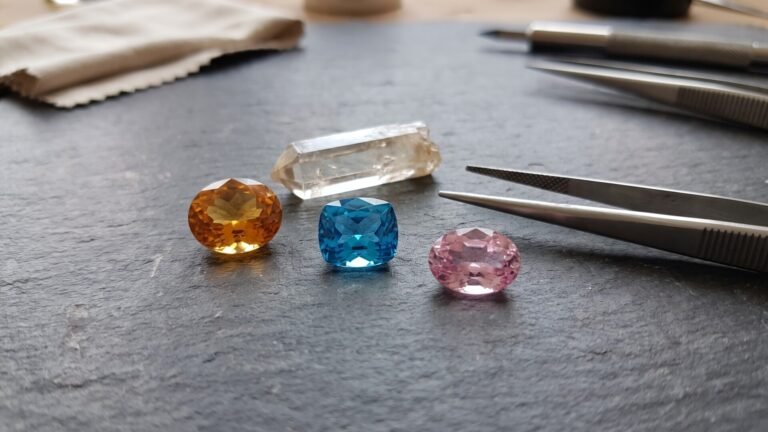
November: Topaz
What moves the price: Topaz comes in many colors. The blue topaz that dominates jewelry is nearly always colorless topaz that has been irradiated and heated, which keeps it affordable. Imperial topaz, with its golden-orange to pinkish hues and famous Brazilian sources near Ouro Preto, is much rarer and priced far higher. Natural pink topaz is also scarce.
What to watch: Topaz is 8 on the Mohs scale but has perfect cleavage, so a sharp blow can split it. Blue topaz treatment is stable in normal wear. Citrine, the other November stone, is quartz and is often heat-treated amethyst.
Buyer takeaway: Blue topaz is an inexpensive way to wear the November color. Imperial topaz is the connoisseur’s choice. See our November birthstone guide.
December: Turquoise
What moves the price: Turquoise is a copper aluminum phosphate valued for an even blue color, with limited matrix. Arizona sources such as Sleeping Beauty (reported to have stopped mining in 2012) have a collector following, which supports prices for that origin. Turquoise from China, Iran, and elsewhere makes up much of the market.
What to watch: Turquoise is only 5 to 6 on the Mohs scale and porous. Much of the market is stabilized (hardened with resin) or even dyed, and reconstituted or imitation material is common. These treatments are not always disclosed.
Buyer takeaway: Ask for the exact treatment status in writing. Tanzanite and zircon are modern December alternatives with their own price drivers.
Birthstone Price Pressure at a Glance
The table summarizes the main price drivers rather than a numerical return. It is a quick guide to which stones have a wide price range and which are largely stable and affordable.
| Birthstone | Everyday grade | Fine grade | Main price driver | Treatment to expect |
|---|---|---|---|---|
| Garnet | Affordable | Rarer varieties priced higher | Variety | Usually none |
| Amethyst | Affordable | Moderate | Color depth | Heat or irradiation common |
| Aquamarine | Moderate | Higher for deep blue | Color and size | Heat common |
| Diamond | Wide range | Very high | 4 Cs, lab-grown competition | HPHT, laser drilling in some |
| Emerald | Moderate to high | Very high | Origin and clarity treatment | Oil or resin common |
| Pearl | Affordable | High for large or rare | Luster, size, type | Bleaching, dyeing in some |
| Ruby | High | Very high | Heat status, origin, supply | Heat standard; glass filling in low grades |
| Peridot | Affordable | Moderate | Size and color | Usually none |
| Sapphire | Moderate to high | Very high | Color, origin, heat status | Heat standard; diffusion in some |
| Opal | Moderate | High for black or bright | Play-of-color, type | Doublets, triplets, stabilization |
| Topaz | Affordable | High for imperial | Variety | Irradiation and heat on blue |
| Turquoise | Affordable | High for fine natural | Color, mine source | Stabilization and dyeing common |
How to Buy Birthstones Without Overpaying
- Ask for a lab report on valuable stones. For rubies, sapphires, emeralds, and large diamonds, a report from a recognized lab should state species, treatments, and where relevant origin.
- Learn the treatment norms. A treatment that is routine for a stone, like heating ruby, is not a flaw. An undisclosed one is.
- Separate natural, lab-grown, and simulant. A lab-grown gem has the same chemistry as a natural one. A simulant, such as cubic zirconia or moissanite used in place of diamond, only imitates the look. Each should be labelled clearly.
- Match the stone to the jewelry. Softer stones like opal, pearl, and turquoise suit pendants and occasional earrings better than everyday rings.
- Compare the retail price against the stone. A jewelry price includes metal, labor, brand, and markup, and resale values for finished jewelry are generally well below what you paid.
- Be wary of urgency and investment pitches. No gemstone is guaranteed to rise in value, and pressure tactics are a red flag.
Are Birthstones an Investment?
The honest answer is that very few are. Fine unheated rubies, top-quality Colombian emeralds, and exceptional sapphires have a long auction history, but they are priced for specialist buyers and involve costs such as certification, insurance, authentication, and dealer spreads. Everyday birthstone jewelry in garnet, amethyst, peridot, blue topaz, and most cultured pearls is bought for beauty and meaning rather than financial return. Lab-grown stones, by definition, have no scarcity to support future value.
If investment is genuinely your goal, speak to an independent gemologist and a qualified financial adviser. For everyone else, the better question is which stone suits the person and how they will wear it. The best-value decision is usually to put your money into a well-made, well-documented stone you will keep using.
Conclusion
Birthstone prices are less about the month than about the grade, the treatment, the origin, and the documentation behind the stone. Abundant stones like garnet, amethyst, and peridot are friendly to every budget. Corundum, emerald, and fine opal and turquoise reward careful buying with reports. Diamonds now sit in a split market between natural tradition and lab-grown value. Whichever stone you choose, buying it for how it looks, wears, and what it means to the person who receives it is the approach that holds up over time.
Figures and facts in this guide were checked against public sources in November 2026. Gemstone prices change, so treat any example as indicative and confirm current pricing with the seller.
Frequently Asked Questions About Birthstone Prices
What factors determine the price of birthstones?
Scarcity of the fine grade, color quality, clarity, cut, carat weight, treatment status, and origin all matter, along with mine supply and demand. For diamonds, lab-grown competition has also reshaped prices.
Which birthstones are the most valuable?
Fine ruby, Colombian emerald, top-quality sapphire, and high-grade diamonds sit at the top, particularly when untreated and backed by a laboratory report. Garnet, amethyst, and peridot are typically the most affordable.
Are lab-created birthstones a good investment?
They are not usually bought for resale value. Lab-grown stones are real gemstones with the same chemistry as natural ones, which makes them excellent value for wearing, but because they can be produced in quantity they do not carry the scarcity premium that supports natural stone prices.
How can I check that a birthstone is genuine?
Buy from a reputable seller and ask for a report from a recognized laboratory such as GIA or SSEF for valuable stones. The report should say whether the stone is natural or lab-grown and list treatments. A gemologist can help verify unusual pieces.
What are common mistakes when buying birthstones?
Paying natural prices for treated or lab-grown stones, skipping documentation on expensive stones, choosing a soft stone for an everyday ring, and responding to urgency or investment sales pitches.
Will birthstone prices go up in the future?
Nobody can predict this reliably. Stones with limited supply, such as fine ruby or Colombian emerald, have strong long-term demand, while abundant stones are unlikely to carry a scarcity premium. Choose stones for beauty and wearability first.
Do birthstone lists differ by country?
Yes. The modern US list was set in 1912 and has been updated several times, adding alexandrite and citrine in 1952, tanzanite in 2002, and spinel in 2016. Other countries use different lists.
Is heat treatment bad for a gemstone?
Not necessarily. Heat treatment is standard and accepted for ruby, sapphire, and aquamarine when it is disclosed. Problems arise when treatments are hidden or when the price reflects an untreated stone.