Gemstones: Your Ultimate Guide to Nature’s Sparkle
This is the gemstone hub for My Birthstone Guide. It brings together every birthstone on this site, from January’s garnet to December’s turquoise, tanzanite and zircon, with a quick look at history, meaning, durability, treatments and practical jewelry tips for each one. Whether you’re choosing a gift, reading up on your own birthstone or building a collection, use the sections below to get oriented, then click through to the dedicated guide for any stone.
Each gemstone below is listed with the months it’s associated with, including primary and alternative birthstones. A quick note on how to read this page: statements about hardness, composition and treatments are gemological facts, while meanings, energies and protective powers come from tradition, folklore and crystal-healing practice. Those beliefs are part of why people love gemstones, and we present them as beliefs, not as proven effects or medical advice.
Birthstones by Month: Which List Are We Using?
There is no single worldwide birthstone list. The best-known modern list in the United States dates back to a standardized chart published by the National Association of Jewelers in 1912 and has been updated a few times since, for example when tanzanite was added for December and spinel for August. Traditional, Ayurvedic and regional lists differ, and many retailers add their own alternatives. This hub follows the common modern US list and mentions popular alternative stones for each month. For a month-by-month overview, see our Birthstones by Month guide.
Gemstone Quick-Reference Table
Hardness (Mohs scale) measures scratch resistance only. Toughness, meaning how well a stone resists chipping and breaking, and cleavage matter just as much for jewelry that gets worn daily. Figures below are typical ranges and vary by variety and specimen; our hardness scale explainer goes deeper.
| Stone | Month | Mohs hardness | Daily-wear verdict |
|---|---|---|---|
| Garnet | January | 6.5–7.5 (varies by species) | Good for most pieces; rings need reasonable care |
| Amethyst | February | 7 | Good; avoid prolonged strong sunlight and heat |
| Aquamarine | March | 7.5–8 | Very good for rings and everyday pieces |
| Diamond | April | 10 | Excellent scratch resistance, but can still chip along cleavage planes |
| Emerald | May | 7.5–8 | Fragile for its hardness because of inclusions; protective settings advised |
| Pearl | June | 2.5–4.5 | Soft; best for earrings and pendants, not hard-knock rings |
| Alexandrite | June | 8.5 | Excellent durability, but natural stones are rare and costly |
| Moonstone | June | 6–6.5 | Cleavage; protective settings advised |
| Ruby | July | 9 | Excellent; routinely heat treated |
| Peridot | August | 6.5–7 | Fine for earrings and pendants; rings need care |
| Sapphire | September | 9 | Excellent for everyday rings |
| Opal | October | 5.5–6.5 | Delicate; can crack with heat or dryness |
| Tourmaline | October | 7–7.5 | Good; can be brittle in some colors |
| Topaz | November | 8 | Hard but has perfect cleavage, so avoid hard knocks |
| Citrine | November | 7 | Good for everyday wear |
| Turquoise | December | 5–6 | Soft and porous; best for occasional wear |
| Tanzanite | December | 6.5–7 | Has cleavage; best in pendants and earrings or protective settings |
| Zircon | December | 6.5–7.5 | Often brittle, with edges that can chip or abrade |
Garnet
Garnet is the classic January birthstone, famous for its rich red color, though the garnet group actually comes in shades ranging from green to orange, and even rare purples. Garnet is traditionally associated with protection, commitment, and vitality, which is why it has long been a stone for travelers and warriors. Historically, garnets were worn as talismans and given as symbols of friendship, which is why they’re popular for gifts that last a lifetime.
Beyond the deep red garnet most people know, varieties like spessartite, rhodolite, and hessonite give you plenty of options. Spessartite brings warm orange tones, rhodolite offers purplish-red elegance, and hessonite shines in amber-like hues. Garnet is a group of related minerals rather than one species, so hardness ranges from roughly 6.5 to 7.5. It pairs well with gold, silver, or colorful stones and is generally durable enough for rings and bracelets with sensible care. Garnet is more than just January’s stone, with a long history of meaning and style.
- Birthstone Months: January
- Links: Garnet Sub-Hub
Amethyst
Amethyst is the signature February birthstone, a purple variety of quartz ranging from pale lavender to deep royal purple. Tradition links amethyst with calm, clarity and protection from negativity, and the ancient Greeks associated it with staying clear-headed (the name is often traced to a Greek word meaning “not intoxicated”). Today many people choose it for its connection to spiritual growth and peace of mind, though these are cultural associations rather than proven effects.
Some lists also pair February with ametrine and fluorite, offering alternative colors; ametrine is a purple-and-yellow quartz that combines amethyst and citrine in one stone. Amethyst rates about 7 on the Mohs scale, so it handles daily wear well, but strong, prolonged sunlight or heat can fade some stones. It looks great in statement rings, earrings, pendants, and layered pieces with both silver and gold, and its history gives it an extra layer of charm. If you’re comparing look-alikes, our amethyst vs purple quartz guide and amethyst color variations ranking will help.
- Birthstone Months: February
- Links: Amethyst Sub-Hub
Aquamarine
Aquamarine, the main March birthstone, is prized for its serene blue hues that echo the sea. It is a variety of beryl (the same mineral family as emerald) and rates 7.5–8 on the Mohs scale, which makes it a very wearable choice. Traditionally it is associated with courage, clarity, and communication; sailors historically carried aquamarine as a talisman for protection on long journeys, and it has long symbolized hope and fidelity. Most aquamarine on the market is gently heat treated to remove greenish tones, which is a long-accepted practice.
Alternative March stones include bloodstone and jade. Bloodstone is a green stone with red flecks, and jade is a symbol of luck and prosperity in many cultures. In jewelry, aquamarine’s light blue tone suits rings, earrings, and necklaces and pairs well with silver and white gold. Choosing between March options and wondering about durability? Our aquamarine vs topaz comparison covers durability and color in detail.
- Birthstone Months: March
- Links: Aquamarine Sub-Hub
Diamond
Diamond is the April birthstone, renowned for its brilliance and the highest hardness of any natural mineral (10 on the Mohs scale). Diamonds symbolize strength, love, and endurance, and they are a favorite in engagement rings and fine jewelry. Historically they were a symbol of status and power, gracing crowns, religious artifacts, and royal collections. Note that hardness is not the same as toughness: a diamond resists scratches superbly but can still chip if struck along a cleavage direction.
If a diamond is outside your budget, popular alternatives include white sapphire, white topaz and moissanite. White sapphire is durable and elegant; moissanite is a separate mineral (silicon carbide) with strong sparkle that is sold as a diamond alternative; lab-grown diamonds have the same chemistry as natural ones, while simulants such as cubic zirconia only imitate the look. For rings, solitaires and halo settings are classic, with a wide range of cuts and metals to suit your style.
- Birthstone Months: April
- Links: Diamond Sub-Hub
Emerald
Emerald, the May birthstone, is treasured for its lush green hue and associations with growth, renewal, and love. Historically, emeralds have been prized by royalty and spiritual leaders. Traditionally, the green color is said to bring clarity of vision, wisdom, and emotional balance. Like aquamarine, emerald is a beryl, and it rates 7.5–8 on the Mohs scale.
Alternative stones for May on some lists include chrysoprase and agate, which offer additional green options. In jewelry, emeralds suit rings, pendants, and earrings, but most natural emeralds contain fractures and inclusions (the “jardin”), and many are treated with oil or resin to improve clarity. That makes them more fragile than their hardness suggests, so protective settings and gentle care (no ultrasonic or steam cleaners) are wise. Ask for a disclosure of any treatment when buying.
- Birthstone Months: May
- Links: Emerald Sub-Hub
Pearl
Pearls are one of June’s classic birthstones, traditionally linked with purity, elegance, and wisdom. Unlike mineral gemstones, pearls are organic, formed within oysters and other mollusks. Historically, pearls were treasured across cultures, from ancient Chinese courts to European royalty, as a sign of refinement.
June also includes alexandrite and moonstone, offering alternative styles. In jewelry, pearls look lovely as classic strands, studs, or layered necklaces. They are soft (2.5–4.5 on the Mohs scale) and sensitive to perfumes, acids and rough wear, so they are best in earrings and pendants, or in rings worn occasionally. Wipe them with a soft cloth after wearing and store them separately from harder stones.
- Birthstone Months: June
- Links: Pearl Sub-Hub, Pearl vs Opal
Alexandrite
Alexandrite, a June birthstone, is a rare variety of chrysoberyl known for its color change, shifting from bluish green in daylight to reddish tones under incandescent light. It was first reported in Russia’s Ural Mountains in the 19th century, and tradition links it with luck and transformation. At 8.5 on the Mohs scale it is very durable, but fine natural alexandrite is extremely rare and expensive, and many lab-created stones (which are real alexandrite chemically) are sold at a fraction of the price. Always ask whether a stone is natural or lab-created.
Alexandrite shares June with pearl and moonstone. In jewelry, the color shift shows off best in rings, pendants, and earrings, and its durability makes it suitable for everyday settings.
- Birthstone Months: June
- Links: Alexandrite Sub-Hub
Moonstone
Moonstone is a June birthstone with a soft, shimmering glow known as adularescence. It is traditionally linked with intuition and new beginnings, and in crystal-healing circles some people associate it with emotional balance and connection to the moon, which are beliefs rather than medical claims.
Alternatives in June include pearl and alexandrite. Moonstone (a feldspar, 6–6.5 on the Mohs scale) has cleavage, so it suits pendants, earrings, and rings in protective settings. Silver or white gold highlights its glow, and it pairs well with small diamonds or labradorite.
- Birthstone Months: June
- Links: Moonstone Sub-Hub
Ruby
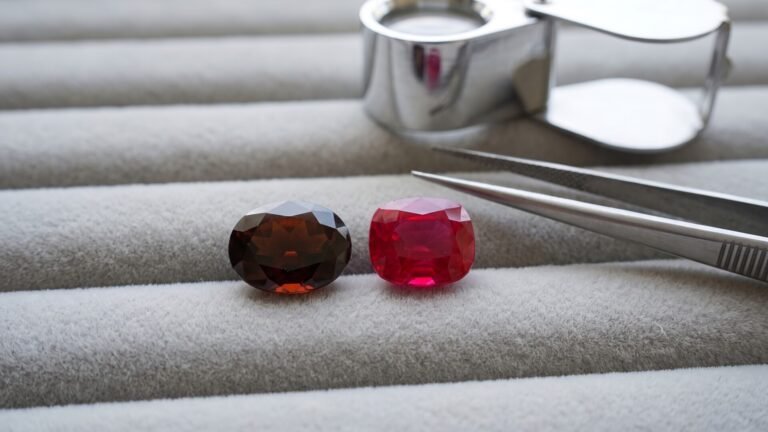
Ruby is the fiery July birthstone, with deep red hues symbolizing passion, courage, and vitality. Historically, rubies were prized by royalty and warriors and were believed to be protective. Ruby is red corundum (9 on the Mohs scale), the same mineral as sapphire, and most rubies on the market are heat treated to improve color and clarity. Curious about this? Read how to tell if a ruby is heat treated or natural.
July alternatives include carnelian. If you love red but not the price tag, red spinel is a frequent ruby look-alike (spinel is officially an August birthstone). In jewelry, rubies shine in rings, necklaces, and earrings, often paired with gold, and their durability suits everyday wear and heirloom pieces.
- Birthstone Months: July
- Links: Ruby Sub-Hub
Peridot
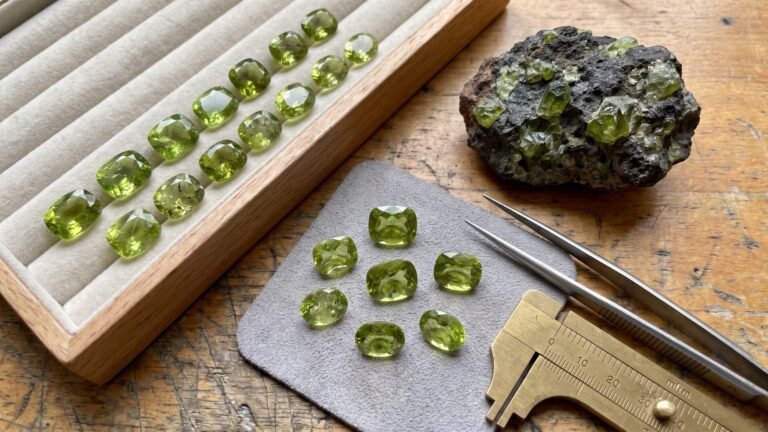
Peridot is the vibrant green August birthstone, traditionally associated with prosperity, protection, and growth. Its light, sunny green evokes warmth, and historically it was used as a protective talisman. Peridot is the gem variety of olivine and rates 6.5–7 on the Mohs scale.
Alternative August stones include spinel and sardonyx; spinel was added to the modern August list as a second birthstone, and sardonyx combines red and white bands. Peridot works beautifully in earrings, rings, and pendants, often paired with gold. Find out whether peridot is safe to wear while showering or sleeping before making it a daily piece.
- Birthstone Months: August
- Links: Peridot Sub-Hub
Sapphire
Sapphire, the deep blue September birthstone, represents wisdom, loyalty, and serenity in tradition. Its blue hues have been favored by royalty for centuries. Sapphires also come in pink, yellow, and green, though blue remains the most iconic; every color of corundum except red is called sapphire. Our sapphire color guide compares the main colors.
Alternative stones associated with September include lapis lazuli, linked in tradition to truth and insight, and blue spinel as a look-alike option at a different price point. Sapphires rate 9 on the Mohs scale and are tough, so they are excellent for everyday rings with platinum, white gold, or yellow gold. Heat treatment is common and generally accepted, but should be disclosed. If you’re weighing sapphire against a rarer blue, see tanzanite vs sapphire.
- Birthstone Months: September
- Links: Sapphire Sub-Hub
Opal
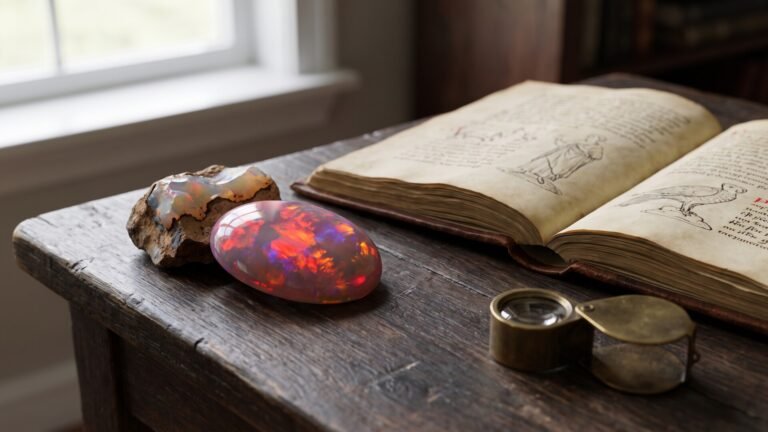
Opal, one of October’s birthstones, is famous for its play-of-color, a rainbow flash caused by the way light diffracts through tiny silica spheres. Folklore from many cultures credits opal with luck, inspiration, and protection, and it is traditionally associated with creativity and emotional depth.
Tourmaline is the other October stone, and its color range complements opal’s soft iridescence. Opal is fragile: it rates only 5.5–6.5 on the Mohs scale, contains water, and can crack with sudden temperature changes or prolonged dryness. It is best in pendants, earrings, or rings in protective settings (bezel settings are common) worn with care, and it pairs well with silver, white gold, or platinum. Avoid ultrasonic cleaners.
- Birthstone Months: October
- Links: Opal Sub-Hub
Tourmaline
Tourmaline is another October birthstone, known for an enormous range of colors, from deep greens and blues to pinks and reds. Tradition ties it to creativity and protection, and in crystal-healing practice some people link specific colors to particular qualities (for example, pink with compassion and green with growth); these are beliefs, not scientific properties. Tourmaline is a group of minerals rating roughly 7–7.5 on the Mohs scale.
Its spectrum allows mixing and matching, and it works in rings, pendants, earrings, and layered bracelets alongside white gold, silver, or mixed metals. Paraíba-type blue tourmaline and other rare colors can be costly, while pink and green stones are widely available. Opal is its partner on the October list.
- Birthstone Months: October
- Links: Tourmaline Sub-Hub
Topaz
Topaz is one of November’s birthstones, often recognized for its warm golden tones, though it also appears in blues, pinks, and rare reds. Traditionally topaz represents joy, abundance, and confidence, and historically it was believed to protect against harm. Topaz rates 8 on the Mohs scale, but it has perfect cleavage, so a sharp knock can split it. Note that most blue topaz is colorless topaz that has been irradiated and heated, which is standard and stable when done properly.
Citrine is the other November stone, with a similar sunny feel. Pair golden topaz with yellow gold for a classic look or blue topaz with silver or white gold for cool sophistication. Topaz suits rings, pendants, and earrings; for rings, choose protective settings. Blue topaz is also commonly listed as an additional December birthstone.
- Birthstone Months: November (blue topaz is also listed for December on some lists)
- Links: Topaz Sub-Hub
Citrine
Citrine, also a November birthstone, is the yellow-to-orange variety of quartz. Tradition links it with positivity, abundance, and creativity, and it earned the nickname “merchant’s stone” for its association with prosperity. A good thing to know when shopping: much of the citrine sold today is heat-treated amethyst, while natural citrine is less common. At 7 on the Mohs scale it is practical for everyday wear.
Topaz is a complementary November stone with deeper golden tones or blues. Citrine’s lighter, transparent color blends well in layered jewelry and looks great in rings, necklaces, and earrings, especially in gold or rose gold. Wondering how it compares with a similar-looking gem? See citrine vs yellow sapphire.
- Birthstone Months: November
- Links: Citrine Sub-Hub
Turquoise
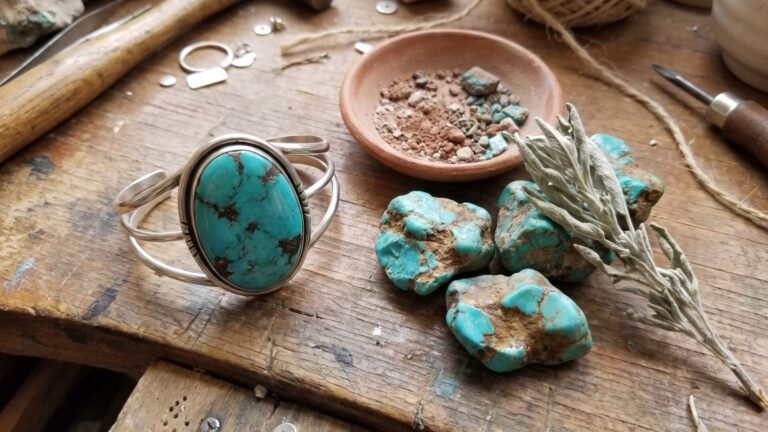
Turquoise, a classic December birthstone, has been treasured for thousands of years for its sky-blue to green shades. It has been used by Native American, Egyptian, and Persian cultures, and is traditionally associated with luck, protection, and friendship. Turquoise is a soft (5–6 on the Mohs scale), porous mineral, and much of the turquoise on the market is stabilized (treated with resin to harden it) or even dyed, so ask what you are buying.
Other December stones include tanzanite and zircon. Turquoise works beautifully in rings, bracelets, necklaces, and earrings, often set in silver, and is best kept away from lotions, perfumes and water.
- Birthstone Months: December
- Links: Turquoise Sub-Hub
Tanzanite
Tanzanite, a December birthstone, has deep blue to violet hues and is mined in only one area of Tanzania, where it was discovered in the 1960s. It is traditionally associated with intuition and spiritual awareness. Most tanzanite is heat treated to bring out its blue color, which is standard practice.
Tanzanite rates 6.5–7 and has cleavage, so it is best set in pendants, earrings, or protected ring settings, often in white gold or platinum, and kept away from knocks and ultrasonic cleaners. Zircon and turquoise are the other December options.
- Birthstone Months: December
- Links: Tanzanite Sub-Hub
Zircon
Zircon, also a December birthstone, is a natural mineral with high brilliance, and it is one of the oldest minerals found on Earth. It should not be confused with cubic zirconia, a lab-made diamond simulant. Zircon’s symbolism in tradition includes stability, wisdom, and spiritual insight.
Zircon rates 6.5–7.5 but can be brittle, and facet edges can chip or abrade, so it is better in earrings and pendants, or in rings worn with care. Colorless and blue stones are often heat treated. Turquoise and tanzanite are the other December stones.
- Birthstone Months: December
- Links: Zircon Sub-Hub
Buying Gemstone Jewelry: Treatments, Lab-Grown and Certification
Price depends on color, clarity, cut, carat weight, origin and treatment. Common treatments include heat (ruby, sapphire, aquamarine, tanzanite), oiling or resin filling (emerald), irradiation plus heat (blue topaz), and stabilization or dyeing (turquoise). Treatment is not automatically bad, but it should be disclosed, and it affects value and care. Lab-grown stones have the same chemistry as natural ones, while simulants only imitate appearance. For higher-value purchases, ask for a report from an established gemological laboratory. For more guidance, read our education and buying guides and the ethical gemstones guide. If you want to see how prices have moved, the 2026 gemstone price audit is a useful companion.
Explore More Birthstone Guides
Looking for something specific? Browse Birthstones by Month, the Birthstone Meanings & Symbolism guide, Zodiac Birthstones, the Birthstone Jewelry Guide and Children’s Birthstone Gifts & Birthday Ideas. For small children, remember that small jewelry can be a choking hazard.
Frequently Asked Questions About Gemstones
Which gemstones are the best for everyday jewelry?
Sapphire and ruby (9 on the Mohs scale), alexandrite (8.5), aquamarine (7.5–8), and diamond are the most practical choices for daily-wear rings. Softer or cleaved stones such as pearl, opal, turquoise, moonstone and tanzanite are better in earrings and pendants, or in protective settings.
Is there one official birthstone list?
No. The commonly used modern US list dates to 1912 and has been updated since, but traditional, Ayurvedic and regional lists differ, and many jewelers add alternative stones. Check which list a retailer or article is using.
Does a higher Mohs hardness mean a stone won't break?
No. Mohs hardness measures scratch resistance only. Stones such as diamond, topaz and emerald are hard but can chip or fracture because of cleavage or inclusions.
Are treated gemstones lower quality?
Not necessarily. Heat treatment of ruby, sapphire and aquamarine is widely accepted. What matters is that treatments are disclosed, because they affect value and care.
Are the healing properties of gemstones scientifically proven?
No. Meanings and healing properties come from cultural tradition and crystal-healing practice, not from scientific evidence, and gemstones are not a substitute for medical care.