Emerald Meaning: History, Symbolism, Spiritual Properties & Modern Uses
I have a confession that still surprises people who know I write about gemstones.
For years, I thought emerald was just a beautiful green stone. May’s birthstone, expensive, valuable — but nothing particularly special beyond its color and price. Then I started learning about its history. Cleopatra was so obsessed with emeralds that she claimed ownership of the Egyptian mines. The Spanish conquistadors traded gold for emeralds in South America. And today, millions of people wear it for renewal, wisdom, and the promise of spring.
That’s the thing about emerald. It’s not just a green stone. It’s a stone with a story that spans over 4,000 years and connects us to ancient queens, sacred rituals, and the deepest hopes of the human heart.
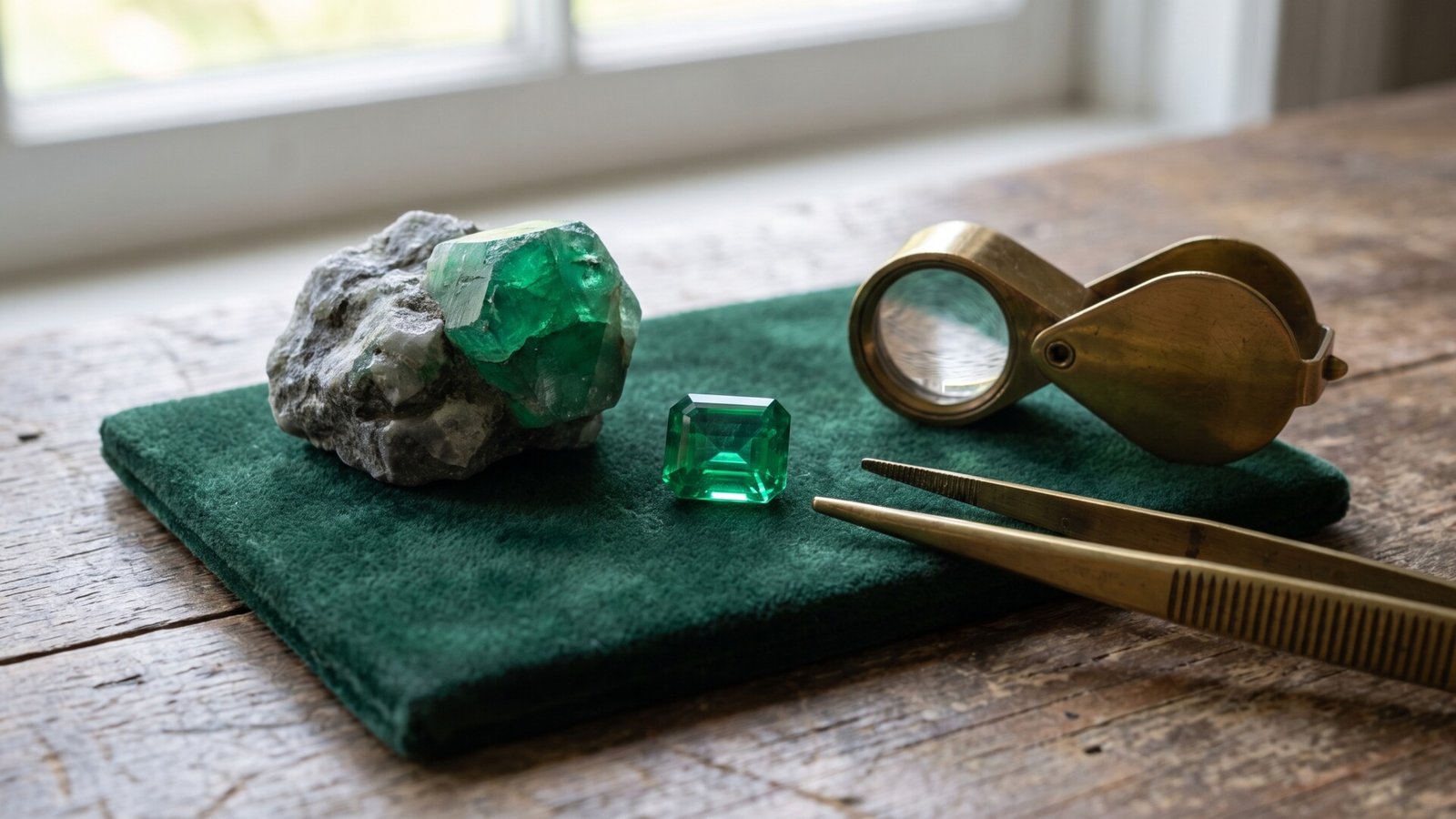
Emerald is the green variety of beryl, the same mineral family as aquamarine, morganite, and heliodor. Its name comes from the Greek smaragdos, meaning “green gem.” Its color is caused by trace amounts of chromium and vanadium. But its meaning has grown far beyond that simple definition.
This guide covers everything you need to know about emerald’s meaning: its ancient origins, its symbolism across cultures, its spiritual and emotional associations, its role in astrology and birthstones, and how to choose the right emerald for your needs. Whether you’re a May baby, a Taurus or Gemini, or simply someone drawn to the lush green of this remarkable gem, you’re about to discover why emerald has captivated humanity for millennia.
Emerald at a Glance
Before we dive deep into its meaning, here’s a quick reference guide to emerald’s key characteristics.
| Feature | Details |
|---|---|
| Mineral | Beryl (beryllium aluminum silicate) |
| Color | Light green to vivid deep green |
| Hardness | 7.5–8 (Mohs scale) |
| Birthstone Month | May |
| Zodiac Associations | Taurus, Gemini |
| Anniversary | 20th & 35th Wedding Anniversary |
| Symbolism | Renewal, wisdom, love, hope, abundance, harmony |
What Does Emerald Symbolize?
Emerald’s symbolism is one of the richest of any gemstone — deeply connected to renewal, wisdom, love, and the life-giving power of nature.
Renewal and Growth
Emerald’s lush green color represents spring, rebirth, and renewal. It symbolizes new life, fresh starts, and the endless cycle of growth. In many traditions, emerald is the stone of transformation and personal growth.
Wisdom
Emerald has long been associated with wisdom and foresight. Ancient cultures believed emerald could reveal truth and protect against deception. It’s a stone for those seeking clarity and understanding.
Love and Hope
Emerald has been linked with Venus, the goddess of love, making it a powerful symbol of romantic devotion and hope. It’s believed to support faithful partnership and unconditional love.
Prosperity and Abundance
Emerald’s rich green color naturally evokes prosperity and abundance. Its association with spring and harvest makes it a symbol of wealth and good fortune.
Harmony
Emerald is believed to promote harmony and balance in relationships and in life. It’s a stone for those seeking peace and emotional stability.
Why Emerald Became the Stone of Rebirth
Emerald’s green color is the color of spring — the season of renewal, when the earth comes back to life after winter. This connection to rebirth and growth has made emerald a powerful symbol of new beginnings, personal transformation, and the endless cycle of life.
The Symbolism Behind Emerald’s Rich Green Color
Green is the color of nature, of life, of growth. Emerald’s deep green symbolizes vitality, fertility, and abundance. It represents the heart chakra, the center of love and compassion. It’s also the color of hope and prosperity — the promise of a bountiful harvest.
The History of Emerald Meaning
Emerald is one of the oldest known gemstones, with a history stretching back over 4,000 years. Its meaning has evolved across civilizations, each adding layers to its rich symbolism.
Ancient Egypt: Cleopatra’s Love of Emeralds
The ancient Egyptians treasured emeralds above almost all other gemstones. Cleopatra, the last active ruler of the Ptolemaic Kingdom, was famously obsessed with emeralds. She claimed ownership of the Egyptian emerald mines and adorned herself with emerald jewelry. The Egyptians associated emerald with eternal youth and life. They believed emeralds held the power of rebirth and were often buried with the dead to ensure safe passage to the afterlife.
Ancient Rome: Emerald and Venus, Goddess of Love
The Romans dedicated emerald to Venus, the goddess of love and beauty. They believed emeralds could enhance fertility, protect women in childbirth, and bring harmony to relationships. The Roman scholar Pliny the Elder wrote that “nothing greens greener than emerald” and claimed that gazing at emeralds rested the eyes after strain. Roman emperors wore emerald jewelry as symbols of power and divine favor.
South American Civilizations: Sacred Emeralds of the Muzo People
The Muzo people of Colombia considered emeralds sacred, using them in rituals to honor their gods. For the Muzo, the emerald represented the heart of the earth and was a bridge between the living and the divine. The Spanish conquistadors, when they arrived in South America, were astonished by the quality and quantity of emeralds they found. They traded gold for emeralds, recognizing their value.
Medieval Europe: Wisdom, Truth, and Royal Authority
In medieval Europe, emeralds were associated with wisdom and truth. It was believed that emeralds could reveal the truth of a lover’s heart — if a relationship was false, the emerald would dull or break. Royalty wore emeralds as symbols of power and divine authority, believing they could foretell the future and guarantee health and wisdom.
Victorian Era: Romantic Symbolism and Hope
In the Victorian era, emerald’s romantic associations were emphasized. Its rich green color made it a popular choice for engagement rings and sentimental jewelry. Victorians valued emerald as a symbol of hope, renewal, and enduring love — a tradition that continues today.
Modern Symbolism
Today, emerald’s meaning encompasses all of these historical associations — and more. It’s the stone of renewal, wisdom, love, and prosperity. It’s used in meditation, crystal healing, and jewelry. And its beautiful green color makes it one of the most popular gemstones for fine jewelry.
How the Meaning of Emerald Has Changed Over Time
| Time Period | Primary Meaning |
|---|---|
| Ancient Egypt | Eternal youth; rebirth; protection in the afterlife |
| Roman Empire | Love; fertility; devotion to Venus |
| Medieval Europe | Wisdom; truth; royal authority |
| Victorian Era | Hope; renewal; romantic commitment |
| Modern Crystal Culture | Personal growth; abundance; emotional healing |
This evolution reflects broader cultural shifts. In ancient times, emerald was valued for its sacred and protective properties. Today, it’s valued for its emotional and spiritual symbolism — a shift from external protection to internal transformation.
Emerald in Different Cultures
Emerald has been treasured across cultures and continents. Here’s how different traditions have interpreted its meaning.
Egyptian Traditions
The ancient Egyptians treasured emeralds as symbols of eternal youth and life. They believed emeralds held the power of rebirth and were often buried with the dead to ensure safe passage to the afterlife. Cleopatra’s emerald mines were legendary.
Roman Beliefs
The Romans dedicated emerald to Venus, the goddess of love and beauty. They believed emeralds could enhance fertility, protect women in childbirth, and bring harmony to relationships. Roman emperors wore emerald jewelry as symbols of power.
South American Traditions
The Muzo people of Colombia considered emeralds sacred, using them in rituals to honor their gods. The emerald represented the heart of the earth and was a bridge between the living and the divine.
European Royal Symbolism
European royalty wore emeralds as symbols of power and divine authority. The British Crown Jewels contain some of the world’s most famous emeralds, and royal families across Europe treasured emeralds for their beauty and status.
Modern Western Crystal Practices
Today, emerald is widely used in meditation, crystal healing, and fine jewelry. Its association with love and healing makes it a popular choice for those seeking emotional balance and personal growth.
Common Themes Across Cultures
Despite their differences, most cultures share some common beliefs about emerald:
- It represents renewal and growth.
- It promotes love and devotion.
- It offers protection and wisdom.
- Its green color connects it to nature and abundance.
- It brings prosperity and good fortune.
Key Differences
The main difference lies in the specific application:
- Ancient cultures emphasized sacred and protective properties.
- Medieval cultures emphasized wisdom and truth.
- Modern practitioners emphasize emotional healing and personal growth.
Spiritual Meaning of Emerald
Note: The following information is based on cultural and spiritual beliefs, not established scientific fact. Emerald’s spiritual properties are matters of tradition and personal experience, not medical evidence.
Emerald’s spiritual meaning is deeply connected to renewal, compassion, and emotional healing.
Renewal and Transformation
Emerald is the stone of rebirth and renewal. It encourages personal growth, transformation, and embracing change. It’s a stone for those starting a new chapter in life.
Compassion and Emotional Healing
Emerald is believed to open the heart chakra, promoting love, compassion, and emotional healing. It’s a stone for those seeking to heal from grief, heartbreak, or emotional trauma.
Wisdom and Clarity
Emerald enhances wisdom and clarity. It’s believed to sharpen the mind, improve memory, and provide insights into complex situations. It’s a stone for students, scholars, and anyone seeking deeper understanding.
Prosperity and Abundance
Emerald attracts abundance and prosperity. Its green color represents growth, fertility, and material success. It’s a stone for those seeking wealth and good fortune.
Patience and Perseverance
Emerald encourages patience and perseverance. Its slow, steady growth reminds us that lasting success takes time. It’s a stone for those working toward long-term goals.
Spiritual Growth
Emerald supports spiritual growth and connection to higher wisdom. It’s believed to enhance meditation and facilitate access to universal truths.
Emotional Meaning of Emerald
Beyond its spiritual associations, emerald carries powerful emotional meaning.
Healthy Relationships
Emerald supports healthy, balanced relationships. It encourages honest communication, mutual respect, and shared compassion. It’s a stone for those who want to deepen their connections.
Emotional Balance
Emerald promotes emotional balance. Its calming green energy helps the wearer manage stress and maintain equilibrium during difficult times.
Forgiveness
Emerald encourages forgiveness — both giving and receiving. It helps release resentment and heal old wounds.
Personal Growth
Emerald supports personal growth and self-improvement. It helps the wearer identify their goals and pursue them with determination.
Hope During Difficult Times
Emerald is a stone of hope. Its bright green color reminds us that after winter comes spring, and after difficulty comes renewal.
Which Type of Emerald Best Matches Your Goals?
Not all emeralds are the same. Different varieties offer different aesthetics and, for those who believe in crystal energy, different energetic properties.
Colombian Emerald
Colombian emeralds are the most prized, with a pure, intense green color and exceptional clarity.
- Best for: Collectors and luxury jewelry.
- Symbolism: Royal power, divine authority, ultimate luxury.
Zambian Emerald
Zambian emeralds offer a slightly bluish green color with excellent clarity.
- Best for: Modern elegance and everyday luxury.
- Symbolism: Growth, abundance, modern success.
Brazilian Emerald
Brazilian emeralds are lighter in color and more affordable.
- Best for: Value and everyday jewelry.
- Symbolism: Accessible luxury, gentle growth.
Trapiche Emerald
Trapiche emeralds display a unique six-rayed star pattern.
- Best for: Collectors and unique symbolism.
- Symbolism: Unity, destiny, spiritual guidance.
Light Green Emerald
Light green emeralds are more subtle and affordable.
- Best for: Subtle elegance and everyday wear.
- Symbolism: Gentle renewal, soft growth.
Deep Green Emerald
Deep green emeralds are the most prized for color intensity.
- Best for: Traditional luxury and statement jewelry.
- Symbolism: Deep renewal, profound wisdom, lasting love.
| Emerald Variety | Appearance | Traditional Symbolism | Best For |
|---|---|---|---|
| Colombian | Pure, intense green | Royal power, divine authority | Collectors, luxury |
| Zambian | Slightly bluish green | Growth, abundance, modern success | Elegance, value |
| Brazilian | Lighter green | Accessible luxury, gentle growth | Everyday wear |
| Trapiche | Six-rayed star pattern | Unity, destiny, spiritual guidance | Collectors |
| Light Green | Subtle, pale green | Gentle renewal, soft growth | Subtle elegance |
| Deep Green | Intense, saturated green | Deep renewal, lasting love | Traditional luxury |
Emerald and Astrology
Emerald is associated with two zodiac signs: Taurus and Gemini.
Taurus (April 20 – May 20)
Taurus is an earth sign ruled by Venus. Tauruses are practical, sensual, and devoted. Emerald connects deeply with Taurus’s love of beauty and nature. Its green color represents growth and prosperity — things Taurus values highly. Its heart chakra energy supports Taurus’s loyal, devoted nature.
Gemini (May 21 – June 20)
Gemini is an air sign ruled by Mercury. Geminis are curious, communicative, and adaptable. Emerald’s wisdom and clarity support Gemini’s quick mind and love of learning. Its renewal symbolism resonates with Gemini’s constant evolution.
Venus and Mercury Symbolism
Emerald’s association with Venus (Taurus’ ruling planet) links it to love, beauty, and prosperity. Its connection to Mercury (Gemini’s ruling planet) links it to communication, learning, and adaptability.
Why Astrologers Associate Emerald With Growth and Communication
Emerald represents the growth of ideas (Gemini) and the growth of values (Taurus). It supports both intellectual development and emotional depth, making it a versatile stone for both signs.
For more details, explore our [Taurus Birthstone Guide], [Gemini Birthstone Guide], and [Zodiac Birthstones Hub].
Emerald as a Birthstone
May Birthstone
Emerald is the modern birthstone for May. It has been associated with May for centuries, thanks to its green color (which symbolizes the peak of spring) and its historical associations with renewal, wisdom, and love.
Anniversary Gemstone
Emerald is the traditional gift for the 20th and 35th wedding anniversaries. Its symbolism of renewal, wisdom, and enduring love makes it a meaningful choice for celebrating decades of partnership.
Gift Symbolism
Giving emerald as a gift carries deep meaning. It symbolizes:
- Renewal: You support the recipient’s growth and transformation.
- Wisdom: You value their judgment and insight.
- Love: You are devoted to them.
- Prosperity: You wish them abundance.
- Hope: You believe in their future.
Learn more in our [May Birthstone Guide] and [Birthstone Jewelry Guides].
Emerald in Jewelry
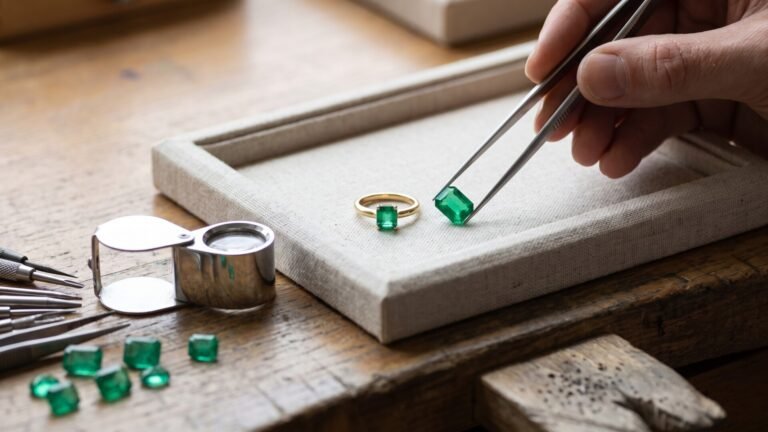
Emerald’s hardness (7.5–8 on the Mohs scale), stunning green color, and historical prestige make it one of the most popular gemstones for jewelry.
Rings
Emerald rings are popular for both everyday wear and special occasions. The stone’s green color pops against yellow gold, white gold, and platinum. Emerald is durable enough for rings but should be protected from hard knocks. Its hardness of 7.5–8 makes it suitable for daily wear with care.
Necklaces
Emerald pendants are elegant and versatile. A single emerald on a simple chain can be worn with anything — from casual to formal. When worn near the heart, emerald is believed to promote love and emotional healing.
Earrings
Emerald studs are classic and professional. Drop earrings and chandeliers make a statement for special occasions.
Bracelets
Emerald bead bracelets are affordable, stackable, and perfect for everyday wear. Tennis bracelets with emerald stones offer a more elegant option.
Men’s Jewelry
Emerald is increasingly popular in men’s jewelry — signet rings, cufflinks, and minimalist pendants. Its rich green color is sophisticated and distinguished.
Engagement Rings
Emerald engagement rings are increasingly popular for their color, durability, and symbolism of renewal and enduring love. For those who want something more unique than a diamond, emerald offers unparalleled color and meaning.
Why Emerald Has Been a Royal Favorite for Centuries
Emerald’s combination of beauty, rarity, and symbolism has made it a favorite of royalty for millennia. From Cleopatra’s mines to the British Crown Jewels, emeralds have adorned kings and queens, symbolizing power, wisdom, and divine favor.
How to Choose an Emerald
When selecting an emerald, consider these factors.
Color
Color is the most important factor in emerald’s value. The most prized emeralds have a pure, slightly bluish green with strong saturation. Look for even, vibrant color. Stones that are too light or too dark are less valuable.
Clarity
Emeralds almost always have visible inclusions, known as jardin (French for “garden”). These inclusions are expected and even celebrated as proof of natural origin. Eye-clean emeralds are rare and extremely valuable.
Cut
A well-cut emerald maximizes color and brilliance. Emerald cuts (step cuts) are popular because they showcase the stone’s color. Look for stones with good symmetry and even facets.
Carat Weight
Larger emeralds are rarer and more valuable. The price per carat increases significantly at key weight thresholds — 1 carat, 2 carats, and 5 carats.
Natural vs Lab-Grown Emeralds
Natural emeralds are rare and valuable. Lab-grown emeralds are identical in chemical composition and appearance but lack the rarity and investment value of natural stones.
Oil Treatment and Other Enhancements
Most emeralds on the market have been treated with oil or resin to conceal surface-reaching fractures. This treatment is standard and accepted. Heavily treated emeralds are less valuable.
For more details, explore our [Emerald Buying Guide] and [Natural vs. Lab-Grown Gemstones].
Caring for Emerald Jewelry
Cleaning
Warm, soapy water and a soft cloth are safe for emerald. Avoid ultrasonic cleaners, which can damage treated stones. Never use harsh chemicals or abrasive cleaners.
Safe Storage
Store emerald separately from harder stones (diamond, sapphire, ruby) to prevent scratching. Use individual soft pouches or compartmentalized boxes.
Why Emerald Requires Extra Care
Emerald’s natural inclusions make it more brittle than other gemstones. It’s also more susceptible to damage from heat and chemicals due to its oil treatment. Handle with care.
Professional Maintenance
Have emerald jewelry professionally inspected and cleaned annually. Emerald may need to be re-oiled periodically to maintain its appearance. This is normal and part of the stone’s ongoing care.
Common Myths About Emerald Meaning
Myth: Cleopatra Owned the World’s Finest Emeralds
Cleopatra loved emeralds, and the mines she controlled produced some of the finest emeralds of her time. However, many emeralds from that era were actually peridot from Zabargad Island, which were often mistaken for emeralds. The confusion reflects the ancient world’s limited gemological knowledge.
Myth: All Emeralds Symbolize Romantic Love
While emerald is associated with love, its symbolism is broader — including renewal, wisdom, prosperity, and hope. Romantic love is one aspect of emerald’s meaning, not its entire meaning.
Myth: Untreated Emeralds Have Greater Spiritual Meaning
Untreated emeralds are rarer and more valuable in the gem market, but their symbolic meaning is the same as treated stones. The symbolism comes from the stone’s color and tradition, not its treatment status.
Myth: Every Ancient Culture Viewed Emerald the Same Way
Different cultures interpreted emerald differently. Egyptians emphasized rebirth and eternal youth. Romans emphasized love and fertility. South American cultures emphasized sacred connection to the earth. European royalty emphasized power and wisdom.
Why Emerald Became the World’s Symbol of Renewal
Most emerald meaning articles skip this section, but it’s essential to understanding emerald’s enduring appeal.
Spring and the Color Green
Emerald’s color is the color of spring — the season of renewal, when the earth comes back to life after winter. This natural association has made emerald a universal symbol of rebirth and growth across cultures and centuries.
Emerald’s Connection to Fertility and Nature
In many ancient cultures, emerald was associated with fertility and the life-giving power of nature. Its green color represented the abundance of the earth — crops, forests, and the promise of harvest.
Royal Patronage Through History
Royal patronage reinforced emerald’s association with renewal. Kings and queens wore emeralds to symbolize their connection to the land and their role in ensuring the renewal of spring and the fertility of their kingdoms.
Why Emerald Became Associated With Personal Growth
Modern crystal healers have emphasized emerald’s role in personal growth and transformation. Its association with renewal has been reinterpreted as self-improvement, healing, and the courage to embrace change.
Modern Interpretations of Renewal
Today, emerald’s renewal symbolism extends to personal transformation, emotional healing, and spiritual growth. It’s a stone for those who want to let go of the past and embrace new beginnings.
How to Choose the Right Emerald Based on Its Meaning
For Love
Choose a deep green emerald in a ring or pendant. Its heart chakra energy supports love and devotion.
For Personal Growth
Choose a Colombian or Zambian emerald. Its renewal symbolism supports personal transformation and growth.
For Prosperity
Choose a deep green emerald. Its association with abundance and good fortune supports financial success.
For Wisdom
Choose a deep green emerald. Its association with wisdom and truth supports clarity and understanding.
For Luxury Jewelry
Choose a Colombian or deep green emerald in a high-end setting. These rare and fine quality stones make the ultimate statement piece.
Final Thoughts: What Does Emerald Really Mean?
Emerald’s meaning has evolved over thousands of years — from a sacred stone of eternal youth for ancient Egyptians to a symbol of love for Romans to a modern icon of renewal and personal growth. But through all these changes, one thing has remained constant: emerald represents the life-giving power of nature and the endless cycle of growth and renewal.
Whether you’re drawn to its beautiful green color, its ancient history, or its modern spiritual associations, emerald offers something meaningful. It’s a stone that connects us to the past — to Cleopatra’s mines, to the sacred rituals of the Muzo people, to the crowns of kings and queens. And it’s a stone that connects us to ourselves — to our own capacity for growth, renewal, and enduring love.
The most powerful meaning of emerald, however, is personal. It’s the meaning you assign to it. It’s the intention you set when you wear it. It’s the reminder you give yourself that every ending is a new beginning, and that growth is always possible.
So whether you choose a deep green Colombian emerald for ultimate luxury, a Zambian emerald for modern elegance, or a light green emerald for everyday wear, choose the emerald that resonates with you. Because the stone’s meaning is ultimately what you make of it.
Related Guides
- May Birthstone Guide
- Taurus Birthstone Guide
- Gemini Birthstone Guide
- [Emerald Buying Guide]
- Natural vs. Lab-Grown Gemstones
- [Crystal Meanings Hub] (coming soon)
Frequently Asked Questions About Emerald Meaning
What is the spiritual meaning of emerald?
Emerald is spiritually associated with renewal, wisdom, love, compassion, and emotional healing. It’s believed to open the heart chakra, promote personal growth, and attract abundance.
Why does emerald symbolize renewal?
Emerald’s green color is the color of spring — the season of renewal and rebirth. This natural association has made emerald a universal symbol of new beginnings and personal transformation.
Do Colombian and Zambian emeralds have different meanings?
Colombian emeralds symbolize royal power and divine authority. Zambian emeralds symbolize growth and modern success. Both share the core symbolism of renewal and love.
Which zodiac signs are associated with emerald?
Emerald is associated with Taurus and Gemini. It supports Taurus’s love of beauty and nature and Gemini’s quick mind and curiosity.
What does gifting an emerald symbolize?
Giving emerald symbolizes renewal, wisdom, love, prosperity, and hope. It’s a gesture of support for the recipient’s growth and transformation.
Is there scientific evidence for emerald's spiritual properties?
No. Emerald’s spiritual and healing properties are matters of cultural tradition and personal experience, not established science. Its meaning comes from thousands of years of human belief, not from measurable physical effects.
Can anyone wear an emerald?
Yes. Emerald is a universal stone. While it’s traditionally associated with May birthdays and Taurus/Gemini, anyone can wear it for its beauty and symbolism. Its grounding, renewing energy is beneficial for everyone.
Ready to find your emerald? Browse our collections below.
[Shop Emerald Jewelry at Blue Nile]
[Shop Emerald Rings at James Allen]
[Shop Ethical Emerald at Brilliant Earth]
[Explore More Birthstone & Crystal Guides]