Pearl: Meaning, Properties, Uses & Value
Pearls are the soft, glowing gems of the sea, and they are one of the few gems that need no cutting or polishing to look beautiful. They are also among the most easily damaged. A pearl is built of thin layers of nacre secreted by a living mollusk, and it reacts to perfume, sweat, acids, heat and dry air in ways a diamond or sapphire never would.
This guide covers what pearl is, how it forms, what it has symbolized across cultures, which types exist (Akoya, South Sea, Tahitian, freshwater and more), how pearl value and price work, how to tell real pearls from fakes, and how to care for them so an heirloom strand lasts for generations. If you are a June baby, a bride considering pearl jewelry, or a gift buyer, you will find the practical answers here. For a deeper look at history and spiritual traditions, see our dedicated guide to pearl meaning, symbolism and spiritual properties.
Quick Facts Box
Gemstone Overview
| Category | Details |
|---|---|
| Material: | Organic gem. Nacre made of microscopic aragonite (calcium carbonate) crystals bound by conchiolin, an organic protein |
| Color(s): | White, cream, pink, silver, gold, gray, blue, lavender, green, black |
| Hardness (Mohs): | 2.5 – 4.5 |
| Durability: | Low. Soft, easily scratched and etched by acids, perfume and cosmetics, and sensitive to heat and dryness. Nacre can wear thin over time |
| Structure: | Not a single crystal. Layered aragonite platelets in an organic matrix (an organic gem, not a mineral crystal) |
| Transparency: | Opaque to translucent |
| Common treatments: | Bleaching, dyeing, irradiation (to darken some freshwater and Akoya pearls), and surface coatings or polishing |
| Common uses: | Necklaces, earrings, rings, bracelets, brooches, bridal jewelry, heirloom pieces |
| Birthstone month(s): | June (traditional and modern lists; moonstone and alexandrite are also June stones). Traditional 30th wedding anniversary gem |
| Zodiac association: | Often linked in popular lists with Gemini (May 21 – June 20) and Cancer (June 21 – July 22); zodiac lists vary by source |
What Is Pearl?
Pearls are one of a small group of organic gems (alongside amber, coral and jet), and the only gem that forms inside a living animal and is finished the moment it is harvested. Unlike diamonds formed deep in the earth or sapphires crystallized in rock, pearls are the product of a biological process inside oysters, mussels and other mollusks.
How pearls form
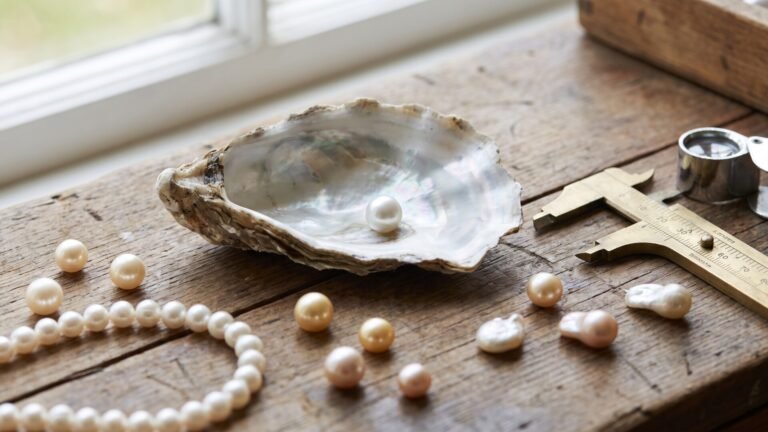
When an irritant such as a shell fragment, a parasite or a piece of tissue ends up inside a mollusk, the animal coats it with nacre (pronounced NAY-ker), the same material that lines the inside of its shell as mother-of-pearl. Nacre is made of aragonite, a form of calcium carbonate, and a small amount of conchiolin, a hornlike organic protein. It is deposited in thin concentric layers, and over months or years a pearl is built up.
The soft inner glow of a pearl comes from light interacting with these layers. Generally, thicker and more regular nacre produces a deeper, sharper luster.
Natural vs cultured pearls
Natural pearls form entirely by chance, without any human intervention. They are extraordinarily rare today and are mostly seen as antiques, in museum collections and at auction.
Cultured pearls form with human assistance. A technician places a bead and/or a piece of mantle tissue into the mollusk, which then coats it with nacre just as it would in the wild. A cultured pearl is a real pearl, made of real nacre by a living animal, but the process is started by people. Virtually all pearls sold in jewelry stores today are cultured. Natural pearls were fished heavily in the 19th and early 20th centuries, and the arrival of pearl culturing (pioneered commercially in Japan by Kokichi Mikimoto) changed the market entirely.
Freshwater vs saltwater pearls
- Freshwater pearls: Grown in mussels in lakes, rivers and ponds. China produces the large majority of the world’s freshwater cultured pearls. They are abundant, come in many shapes and pastel colors, and are generally the most affordable. Many are nucleated with tissue only, so they are solid nacre throughout.
- Saltwater pearls: Grown in oysters in seas and lagoons. The main types are Akoya (Japan and China), South Sea (Australia, Indonesia, the Philippines, Myanmar) and Tahitian (French Polynesia). They are typically bead-nucleated, often rounder, and usually cost more.
Lab-grown, imitation and simulated pearls
Unlike diamonds or sapphires, there is no true lab-grown version of a pearl, because pearls are made by animals. What exists are imitations: glass or plastic beads coated with pearlescent material, and shell-based imitations. Labels such as “faux pearl,” “simulated pearl” or “Mallorca pearl” describe imitations, not cultured pearls. Cultured pearls are real pearls, and sellers should describe them as cultured.
Pearl Meaning & Symbolism
Few gems carry as much symbolism as the pearl. The following are historical stories, cultural associations and traditions, not scientific facts. Our full guide to pearl meaning and symbolism goes deeper into each of them.
Ancient Greece: Tears of the Gods
In Greek tradition, pearls were linked to the sea and to love. A popular legend calls them the tears of the gods, and Aphrodite, goddess of love and beauty, is often connected with the sea and its treasures.
Ancient Rome: A Status Symbol
In Rome, pearls were an emblem of wealth and social standing, and the writer Pliny the Elder ranked them at the top of all valuable things. Roman authors also complained about how much was spent on them.
The Legend of Cleopatra
The best-known pearl story, recorded by Pliny, says Cleopatra wagered Mark Antony that she could host the most expensive dinner in history. She is said to have dropped a pearl earring into vinegar, let it dissolve and drunk it. Pearls (calcium carbonate) do react with acids, so the idea is chemically plausible, but historians treat the tale as legend rather than proven fact.
Medieval Christianity: Purity and the Soul
In medieval Europe, pearls symbolized purity and were associated with the Virgin Mary. A late 14th-century Middle English poem called Pearl describes a father mourning a lost daughter, who appears to him in a vision dressed in pearls. The “pearl” he mourns turns out to be his child, now among the blessed.
The East: Dragons and Wisdom
In Chinese tradition, pearls are associated with wisdom, prosperity and royalty. Dragon legends often show a dragon guarding or chasing a luminous pearl, which is read as a symbol of wisdom and spiritual power. Chinese sources are often cited as recording pearls given as tribute at a very early date, though exact dates quoted online vary.
Modern interpretations
Today, pearls are commonly associated with:
- Purity and innocence: The traditional bridal gem
- Wisdom and experience: Built up over time, like the layers of nacre
- Calmness and integrity: The serene glow is read as a sign of a serene spirit
- Femininity and grace: The soft, luminous quality has long been linked with classic elegance
For people born in June, pearl is often described as representing the turn from spring to summer, the calm of the ocean and the quiet value of patience.
Pearl Healing Properties: Belief and Tradition
Important: The following describes beliefs and traditions only. Gemstones, including pearls, are not medicine, and nothing here is medical advice or a treatment claim. If you have a health concern, please speak to a qualified professional. This is consistent with our gemstone guides and site disclosure: meanings and properties are based on cultural traditions and beliefs.
Historical beliefs
In several historical traditions, including some in India, Persia and medieval Europe, powdered pearl was used in folk remedies and believed to have a calming or restorative effect. These were historical beliefs with no support from modern medicine, and ingesting ground gemstones is not recommended.
Astrological significance
In Vedic astrology, pearl (moti) is associated with the Moon. Followers of this tradition believe the Moon influences the mind and emotions, and that pearl is its stone, linked with calmness, balance and good fortune. Astrologers differ on advice for wearing it, and this is a matter of faith, not evidence.
In astrological tradition, pearl is sometimes traditionally recommended to people who feel:
- Restless or emotionally unsettled
- In need of a sense of calm at bedtime (as a symbolic comfort, not a sleep remedy)
- Facing relationship challenges
- Seeking more self-confidence
Crystal-healing associations
In modern crystal-healing practice, some believe that pearl symbolizes:
- Emotional balance: A reminder to slow down and stay calm
- Self-worth: Often given as a symbolic gift to mark a milestone
- Purity of intention: Honesty and integrity
- Love and harmony: Used as a symbol in marriage traditions
Chakra associations
In chakra systems, pearl is commonly linked by practitioners to the sacral chakra (Svadhisthana) and the crown chakra (Sahasrara). These associations come from spiritual practice, and sources do not agree on them.
Pearl Colors & Varieties
Pearls occur in a far wider range of colors than most people realize. Color depends on the mollusk species, the water chemistry and the environment in which the pearl grows. Dyeing and other treatments also play a role in the pearl market (see the treatments section below).
- White and cream: The classic, most traditional pearl colors
- Pink and rose: Often seen as overtones on white pearls, and common in freshwater pearls
- Silver and gray: Cool, modern tones
- Gold: From pale champagne to deep golden South Sea pearls
- Blue: Blue-gray and blue overtones occur naturally, but many strongly blue pearls on the market are treated, so ask for disclosure
- Lavender and mauve: Common in freshwater pearls, where many pastel shades are enhanced or dyed
- Green: Olive to peacock
- Black: Natural-color Tahitian pearls range from light gray to deep black with green or purple overtones. Very black pearls of other origins may be dyed or irradiated
Color components
Gemological laboratories such as GIA describe three components of pearl color:
- Bodycolor: The pearl’s dominant overall color
- Overtone: One or more translucent colors that lie over the bodycolor
- Orient: A shimmer of iridescent rainbow colors on or just below the pearl’s surface
All pearls have bodycolor. Only some have overtone, orient, or both.
The major pearl types
| Type | Origin | Typical Colors | Size Range | Characteristics |
|---|---|---|---|---|
| Akoya | Japan, China | White, cream with rose or silver overtones | Roughly 2–11mm (most jewelry 6–9mm) | Classic round shape, high luster, the “traditional” strand pearl |
| South Sea | Australia, Indonesia, Philippines, Myanmar | White, silver, gold | Roughly 9–20mm | Large, satiny luster, thick nacre; the largest and usually most expensive cultured pearls |
| Tahitian | French Polynesia | Gray to black, green, peacock, aubergine | Roughly 8–18mm | Exotic dark colors, high luster; “peacock” tones are highly prized |
| Freshwater | China (main source), USA | White, pink, lavender, peach, many pastels | Roughly 2–13mm | Wide variety of shapes, affordable, often tissue-nucleated (solid nacre) |
| Keshi | Various | Varies by host mollusk | Small | Non-nucleated by-product of culturing, all nacre, high luster |
| Mabe | Various | Varies | Large | Blister pearls grown against the shell, hemispherical, used in earrings and pendants |
Rarer colors and what to watch for
- Natural golden South Sea: Deep, even natural gold is among the most valuable South Sea colors. Some golden pearls are color-treated, so ask for disclosure
- Peacock Tahitian: Green-black with purple-pink overtones, among the most prized Tahitian colors
- Natural pink: Rare and sought after, especially in high-quality saltwater pearls
Pearl Treatments: What to Ask the Seller
Treatments are routine in the pearl trade and are not a problem if they are disclosed. They matter because they affect value and sometimes durability and care.
- Bleaching: Used on many freshwater and Akoya pearls to lighten and even out color.
- Dyeing: Used to produce black, deep gold, pink or other colors. Dyed pearls can fade or rub off over time.
- Irradiation: Used to darken some freshwater and Akoya pearls into gray or blue-gray tones.
- Coatings and polishing: Oils, waxes or coatings can improve apparent luster temporarily and may wear away.
Good questions to ask: Is the pearl natural or cultured? Freshwater or saltwater? Is the color natural? Has it been dyed, bleached or irradiated? How thick is the nacre? For higher-value purchases, an independent laboratory report from a lab such as GIA is the most reliable way to confirm natural versus cultured origin and any treatment.
Is Pearl a Birthstone?
Yes. Pearl is the best-known birthstone for June and appears on both traditional and modern birthstone lists.
June birthstone
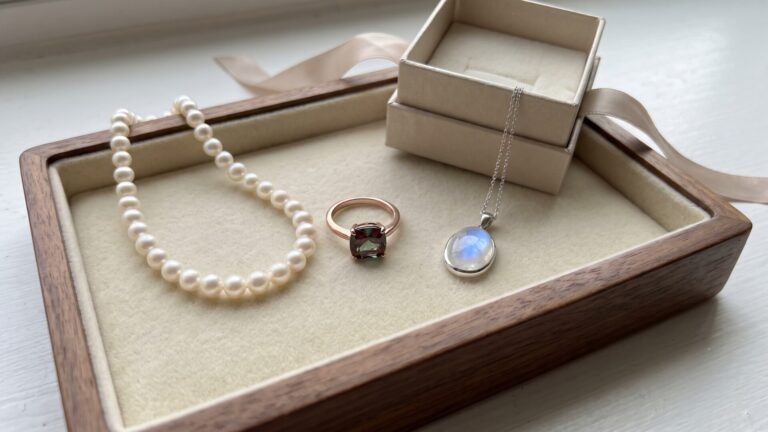
Modern US lists name pearl, moonstone and alexandrite for June (alexandrite was added later than pearl and moonstone), which makes June one of the few months with multiple birthstone options. Lists differ by country and organization, so you will see slightly different June stones depending on the source. If you want to compare, see our guides to moonstone and alexandrite.
Why is pearl linked with June?
Historical birthstone lists were shaped by trade, religious symbolism and marketing, so there is no single proven origin. A popular tradition connects pearl with the Moon, and June’s zodiac signs, Gemini and Cancer, are often linked with lunar and watery symbolism. Cancer is ruled by the Moon in Western astrology. These are traditional associations rather than facts about the gem.
Wedding anniversaries
Pearl is the traditional gift for the 30th wedding anniversary, symbolizing the layered, lasting nature of three decades together. Anniversary gem lists vary by country and tradition, so check the list your family follows.
Pearl Uses in Jewelry
Pearls have been used in jewelry for thousands of years. Their softness means the type of piece matters: necklaces and earrings are generally the best choices for regular wear, while rings and bracelets take more knocks.
Necklaces
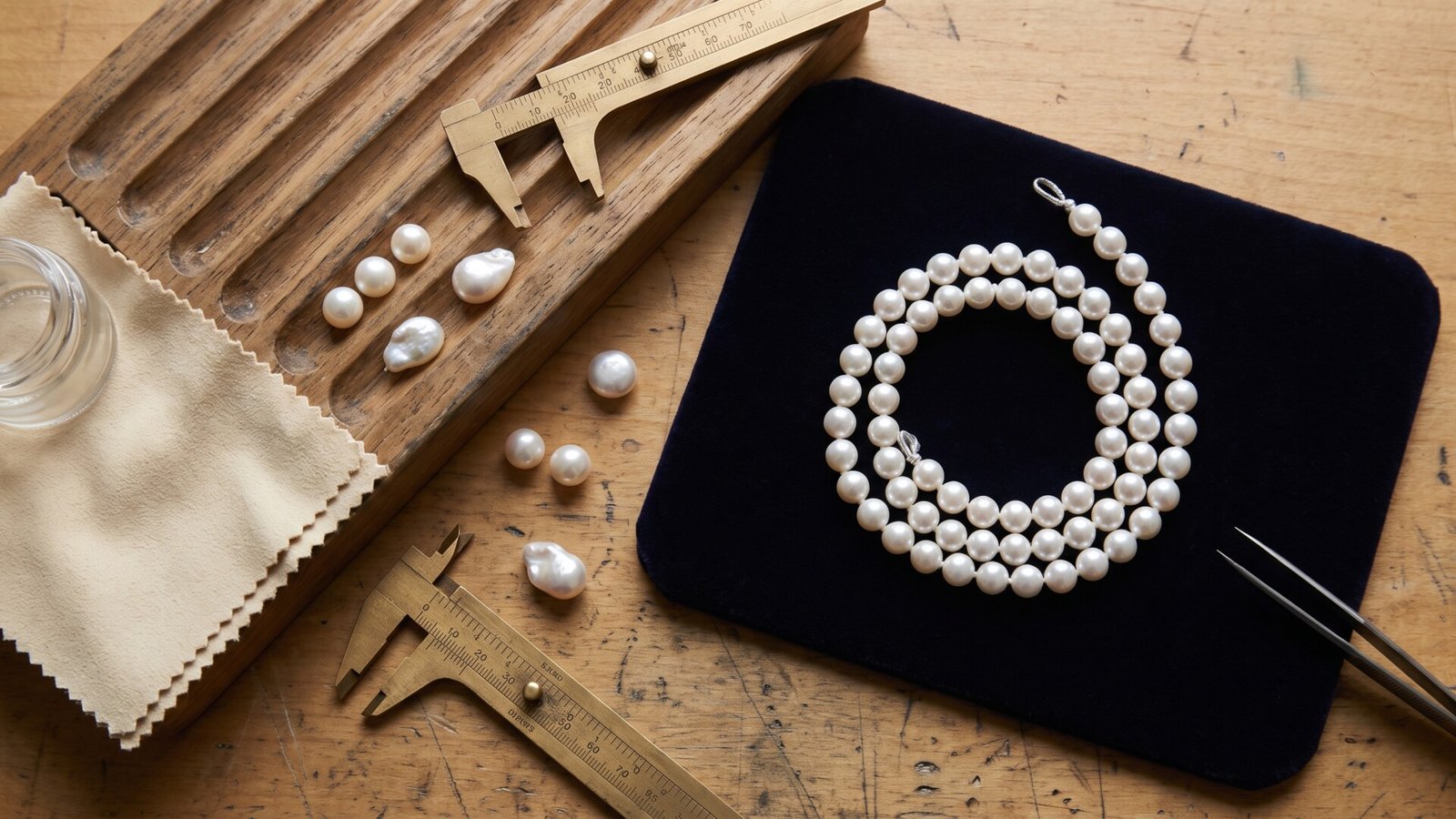
The pearl necklace is the classic, from the single-strand choker to multi-strand opera-length ropes. Akoya pearls are the traditional choice for strand necklaces, with their round shape and high luster.
- Choker: 14–16 inches, sits at the base of the neck
- Princess: 17–19 inches, falls just below the collarbone
- Matinee: 20–24 inches, versatile length for work and evening
- Opera: 28–34 inches, can be worn long or doubled
- Rope: 35+ inches, can be knotted or wrapped multiple times
Earrings
Pearl earrings are the most practical pearl jewelry, since they sit away from skin oils, hand knocks and most cosmetics. Studs are classic and timeless; drops add movement; hoops with pearl accents feel modern.
Rings
Pearl rings are beloved for their romantic look but are the least durable option for everyday wear, because the pearl is soft and exposed to knocks, soaps and hand lotions. Protective settings such as a bezel or a halo help shield the pearl. Pearls are generally a poor choice for a daily-wear engagement ring, and are better suited to cocktail rings or occasional wear.
Bracelets
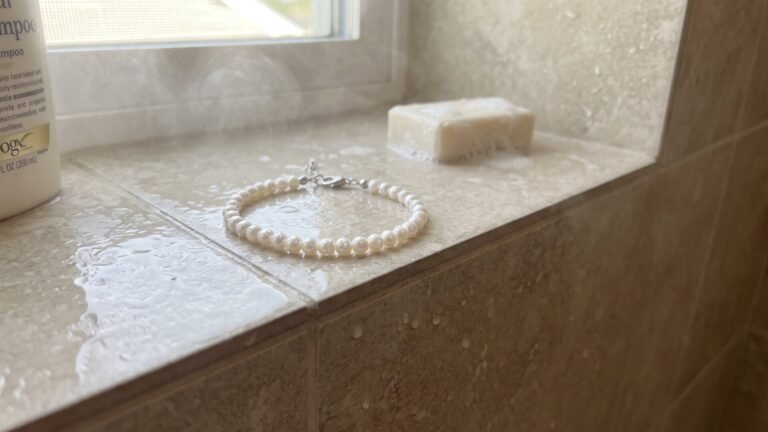
Pearl bracelets, whether single strands or multi-strand wraps, add elegance to any wrist but are exposed to abrasion and moisture. Pearls on strands should be knotted separately on silk thread so that if the strand breaks you lose only one pearl. For more on moisture, see our article can you wear a pearl birthstone bracelet in the shower.
Bridal jewelry
Pearls have been traditional bridal jewelry for centuries, symbolizing purity. The “something old, something new, something borrowed, something blue” tradition often includes pearls, for example an inherited strand as “something old,” and blue accents for the “blue” element.
Brooches and pins
Pearl brooches were very popular in the Victorian and Edwardian eras and have seen renewed interest. A single large pearl or a cluster of smaller pearls makes a statement without being exposed to much wear.
Well-Known Pearl Brands & Houses
If you are shopping for fine pearls, these are some of the best-known names in the trade. This is context, not an endorsement, and we do not claim to have tested their products.
- Mikimoto (Japan): Founded by Kokichi Mikimoto, who is credited with pioneering the commercial cultured pearl. Known for Akoya strands and high-grade South Sea pearls.
- Tasaki (Japan): A Japanese pearl jeweler known for Akoya and South Sea pearls.
- Paspaley (Australia): A major producer of Australian South Sea pearls.
- Jewelmer (Philippines): Known for golden South Sea pearls from the Philippines.
Many buyers also choose well-reviewed online pearl specialists or independent jewelers. Whatever the brand, look for a clear return policy and written disclosure of pearl type, size and treatments.
Pearl Value & Price
Pearl pricing is complex. GIA identifies seven quality factors for pearls: luster, surface quality, shape, color, size, nacre quality and matching.
1. Luster, the Most Important Factor
Luster is the sharpness and brightness of reflections on the surface. GIA grades luster from Excellent to Poor:
- Excellent: Reflections appear bright and sharp
- Very Good: Reflections appear bright and near sharp
- Good: Reflections are bright but not sharp, slightly hazy around edges
- Fair: Reflections are weak and blurred
- Poor: Reflections are dim and diffused
High luster commands the highest prices.
2. Surface Quality
Most pearls have tiny blemishes, spots, bumps or scratches. Pearls with clean surfaces are rare and valuable. Minor marks that can be hidden by a drill-hole or mounting affect value less.
3. Shape
Round is the most difficult shape to culture and, all other factors being equal, the most valuable. Symmetrical shapes (pear, oval, button) are also prized, and baroque (irregular) pearls have their own following and can be valuable if luster and color are exceptional.
4. Color
- White with rose overtones: Classic, always in demand
- Cream with rose overtones: Warm, traditional
- Golden South Sea: Deep, even natural gold commands the highest prices
- Peacock Tahitian: Green-black with purple-pink overtones, among the most prized Tahitian colors
Fashion trends and cultural traditions influence color preferences and, therefore, prices.
5. Size
When other factors are equal, larger pearls are rarer and more valuable than smaller pearls of the same type. Large South Sea pearls cost more than typical Akoya pearls partly because large, high-quality examples are rarer.
6. Nacre Quality
Nacre thickness affects both luster and durability. Pearls with thin nacre may look chalky and are more likely to wear through over time, exposing the bead beneath. Thick nacre supports deep luster and long life.
7. Matching
For strands and earrings, the pearls must match in all quality factors. Well-matched strands cost more than mismatched ones.
General price ranges (USD)
Note: These are approximate ranges for cultured pearls. Prices vary widely with quality, clasp and retailer, and we have not verified them against a current price survey, so treat them as a rough guide only.
- Freshwater pearl stud earrings: $30–$200
- Freshwater pearl strand (16–18 inches): $100–$1,000
- Akoya pearl strand (16 inches): $500–$5,000
- Tahitian pearl strand (16 inches): $2,000–$15,000+
- South Sea pearl strand (16 inches): $5,000–$50,000+
- Natural pearl strand: Often tens of thousands of dollars and far higher for exceptional antique pieces
Pearls are best bought to be worn and enjoyed, not as a financial investment, and resale values for most jewelry-grade pearls are well below retail prices.
How to Identify Real vs Fake Pearl
Imitation pearls have been made for centuries, but a few simple checks help separate them from genuine nacre. Note that these home tests cannot tell cultured from natural, or reveal treatments.
The Tooth Test
Gently rub the pearl against the edge of a front tooth. Real nacre usually feels slightly gritty, like very fine sandpaper, while glass and plastic feel smooth. Only try this on pearls you own, and note that it can leave tiny marks on a valuable strand, so use it sparingly.
Visual clues
- Surface texture: Real pearls have tiny surface irregularities. Fakes are often too smooth and uniform.
- Luster: Real pearls have deep luster; light seems to come from within. Fakes have a surface shine only.
- Drill holes: Real pearls have clean drill holes; coated fakes often show chipping or flaking paint around the hole.
- Weight and temperature: Real pearls feel cool and slightly heavy. Plastic feels light and warm; glass can feel heavy but is perfectly uniform.
Common imitations
- Glass pearls: Glass beads coated with pearlescent paint. The coating can chip.
- Plastic pearls: Lightweight, often too perfectly round.
- Shell-bead imitations: Beads carved or ground from shell and coated. These can be convincing but are not solid nacre grown by a mollusk.
Laboratory tests
Gem laboratories use magnification, X-radiography and other advanced methods to separate natural, cultured and imitation pearls and to detect many treatments. Bead-nucleated cultured pearls show the bead nucleus in X-rays, whereas natural pearls show concentric growth structures. Tissue-nucleated freshwater cultured pearls can be harder to separate from natural ones, which is why a laboratory report matters for high-value pieces.
Care & Cleaning of Pearl
Pearls need more careful handling than almost any other gemstone, because acids, alcohol, heat and abrasion can all damage nacre.
The “Last On, First Off” Rule
Put your pearls on last, after makeup, perfume, hairspray and lotions, and take them off first when you get home. Cosmetics, perfumes and hairsprays contain alcohol and other chemicals that can dull and damage nacre over time.
What to avoid
- Perfume and hairspray: Direct contact dulls pearls
- Sweat and body oils: Wipe pearls clean after wearing
- Chlorine, bleach and household cleaners: Remove pearls before swimming or cleaning
- Hot water and steam: Remove pearls before showers or hot tubs, since moisture also weakens silk thread
- Abrasive surfaces: Pearls scratch easily, so store them separately from harder gems and metal
- Ultrasonic and steam cleaners: Do not use them on pearls
- Very dry, sealed storage for long periods: Pearls contain a small amount of water, and prolonged storage in very dry, airtight conditions or near heat is best avoided
Cleaning methods
After each wear: Gently wipe the pearls with a soft, lint-free cloth (microfiber or chamois) to remove oils and residues. This simple habit does the most to maintain luster.
Occasional deeper cleaning:
- Use lukewarm water and one tiny drop of mild, pH-neutral soap
- Dampen a soft cloth with the soapy solution; do not submerge a strand
- Gently wipe each pearl, turning to clean all sides
- Use a second cloth dampened with plain water to remove any soap film
- Lay the pearls flat on a dry towel and air-dry completely; never use a hair dryer or other heat source
Storage
- Store pearls in a soft pouch (velvet or silk) away from metal chains and harder gemstones
- Lay strands flat rather than hanging them, since gravity stretches the silk thread
- Avoid sealed plastic bags or tightly sealed containers for long-term storage, and keep pearls away from heat sources and direct sunlight
Professional care
Restringing: Silk thread stretches, weakens and collects dirt over time. Regularly worn pearls are often restrung by a professional every one to three years, depending on use (more on moisture risks in our pearl bracelet and shower guide). Ask for a knot between each pearl so a break loses only one pearl.
Annual inspection: Have a jeweler check the clasp, thread and pearl condition once a year.
Pearl Alternatives and Related Gemstones
If you love the idea of a June birthstone but want something harder than pearl, moonstone offers a similar soft glow, though it is also relatively delicate, and alexandrite is far more durable but rare and costly. For other organic or soft-gem comparisons, see opal and turquoise, both of which also need gentle handling. For a very durable anniversary or everyday stone, consider diamond or sapphire.
You can explore many more stones in our Gemstones hub, including aquamarine, emerald, garnet, amethyst, ruby, peridot, topaz, tourmaline, zircon, citrine and tanzanite.
Frequently Asked Questions About Pearl
Is pearl expensive?
Pearls range from very affordable (freshwater studs for under $50) to extremely expensive (fine South Sea strands costing tens of thousands of dollars). Luster, surface, shape, color, size, nacre thickness and matching determine price.
Is pearl suitable for daily wear?
With careful habits, earrings and pendants can be worn often, but pearl is soft (2.5 to 4.5 on the Mohs scale) and sensitive to chemicals, so rings and bracelets need extra care. Follow the last on, first off rule, wipe pearls after wearing, and avoid contact with perfume, chemicals and hard surfaces.
What does pearl symbolize?
Traditionally, pearl symbolizes purity, wisdom, calmness and integrity. Historically, it has been linked with the Moon, the sea, the Virgin Mary and luxury. These are cultural associations, not scientific facts.
Are pearls organic?
Yes. Pearls are organic gems formed inside living mollusks. They are made of nacre, which consists of aragonite (calcium carbonate) and conchiolin.
What is the difference between natural and cultured pearls?
Natural pearls form without human intervention, while cultured pearls are started by people who place a bead or tissue inside the mollusk. Both are real pearls made of nacre. Nearly all pearls sold in jewelry stores today are cultured.
Is pearl a June birthstone?
Yes. Pearl is the best-known June birthstone, and moonstone and alexandrite are also June stones on modern lists. Lists vary by country and organization.
How long do pearls last?
With proper care, pearls can last for generations, and many antique pearls are centuries old. Exposure to chemicals, heat, abrasion or very dry conditions can damage them permanently, and thin nacre can wear through.
Can pearls get wet?
Avoid prolonged water exposure. Chlorine, soap and other chemicals in water can damage pearls, and moisture weakens silk thread. A quick wipe with a damp cloth is fine, but do not soak pearls or wear them swimming or showering.
What is the most valuable pearl color?
Value depends on the whole quality package, not color alone. Deep, even natural golden South Sea pearls and peacock Tahitian pearls are among the most prized colors. Ask for disclosure, because many pearl colors are produced by dyeing or other treatments.
Can damaged pearls be restored?
Some surface dullness or dirt can be improved by gentle professional cleaning or polishing, but lost nacre cannot be replaced. Prevention is the best protection.
How can I tell if a pearl is real?
A gentle tooth test, a close look at the surface and drill hole, and weight can all hint at genuine nacre. Only a gem laboratory can tell natural from cultured pearls and detect treatments with certainty.
Pearls are different from other gems: they are grown by living animals, layer by layer, over years, and they ask for gentler treatment in return. Whether you are buying your first strand, choosing a June birthday gift or planning a 30th anniversary present, understanding the type, quality and care needs of pearl will help you choose well and keep it beautiful.
Ready to find your own pearl? Browse the options below, organized by type and style.
[Shop Akoya Pearls]
[Shop South Sea Pearls]
[Shop Tahitian Pearls]
[Shop Freshwater Pearls]
[Shop Pearl Jewelry]
[Shop June Birthstone Collection]
Explore More Gemstones at Our Gemstones Hub