May Birthstone: Meaning, History, and the Stones of May
The May Birthstone at a Glance
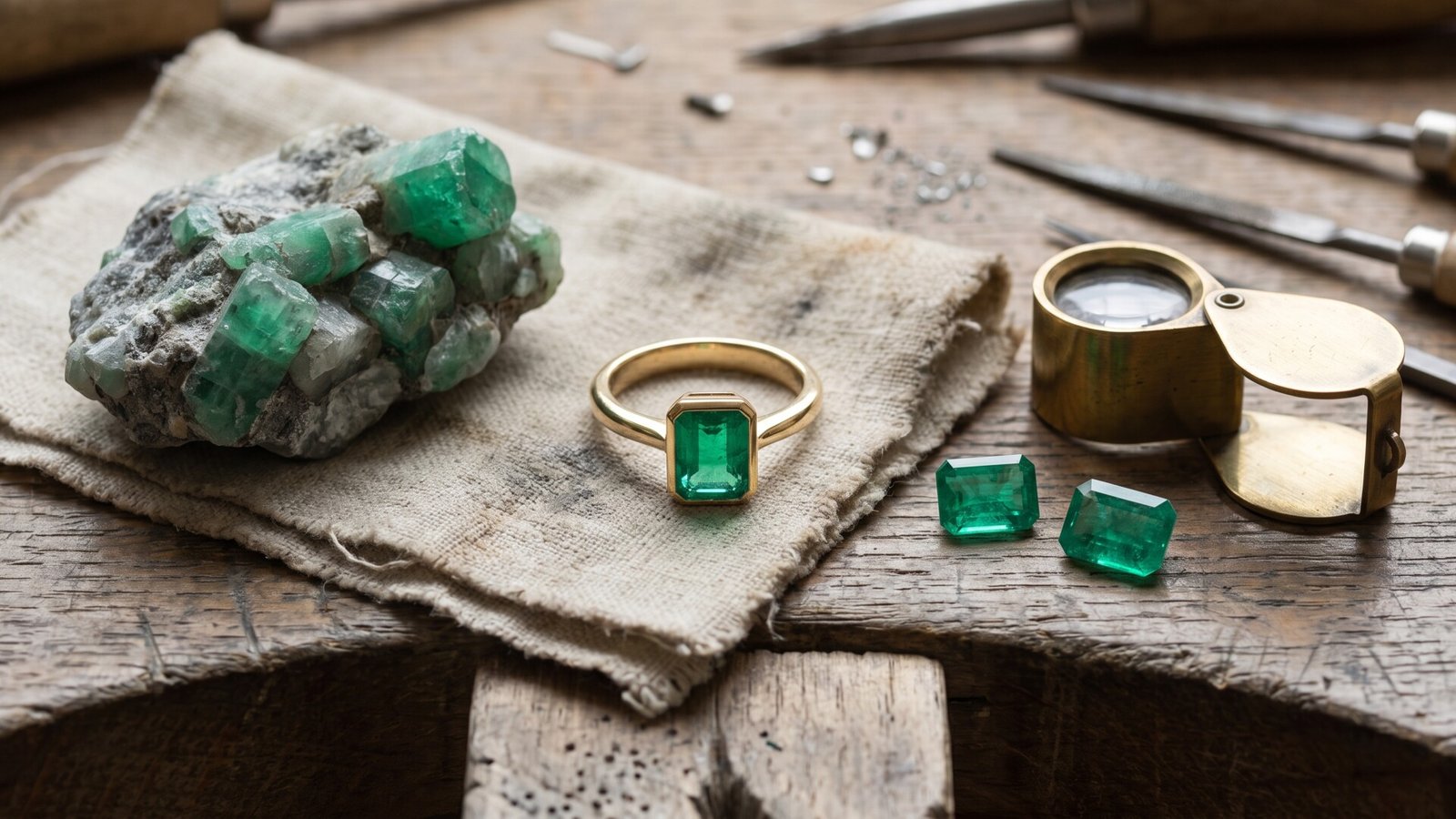
The birthstone for May is emerald, the green to bluish-green variety of the mineral beryl. It is one of the most recognizable gems in the birthstone calendar, linked in tradition with spring, renewal, love and growth. This page is your guide to the May birthstone: what it is, why it belongs to May, what it means, how to wear it, how to look after it, and what to know before you buy.
For the stone itself in more depth, see our emerald meaning guide. To compare every month, visit Birthstones by Month.
| May birthstone facts | |
|---|---|
| Main stone | Emerald |
| Mineral | Beryl (green to bluish-green variety) |
| Mohs hardness | 7.5–8 |
| Durability note | Hard but often fractured inside, so it can chip or crack on impact |
| Common treatment | Filling with oils, waxes or resins is very common; paler stones are sometimes dyed |
| Main sources | Colombia, Zambia and Brazil are well-known producers |
| Traditional alternates | Chrysoprase and green agate appear in some older lists; green tourmaline is a popular look-alike |
| Zodiac link | Taurus and Gemini (traditions vary) |
What Is the May Birthstone?
The primary birthstone for May is emerald. It is the stone given for May in the standard modern U.S. list and in most traditional lists. Birthstone lists differ by country and organization, so you may see other green stones suggested for May, such as chrysoprase or green agate in older lists. Green tourmaline is often suggested as a lookalike or a more durable alternative; our comparison of emerald vs green tourmaline for durability explains the trade-offs. Note that “green onyx” sold in jewelry is usually dyed chalcedony or agate, so check what a seller means by that name.
Emerald is traditionally associated with:
- Growth and renewal, echoing springtime abundance
- Balance and emotional harmony
- Wisdom and insight
- Love and loyalty
These are symbolic and traditional associations, not scientific effects of the stone.
Why Emerald Is the Birthstone for May
Emerald’s link to May comes from a mix of seasonal symbolism, historical tradition and later standardization by the jewelry trade. Our history of birthstones explains how month lists were formed.
Spring Growth and Renewal
May is a month of full bloom and lush greenery, and emerald’s green naturally mirrors that. Green has long stood for fertility, renewal and vitality in many cultures, which is why emerald is so often tied to spring.
Balance and Harmony
In crystal and symbolism traditions, emerald is described as a stone of emotional balance and clarity. That fits the idea of May as a calm yet energized month. Treat this as a personal or cultural meaning rather than a proven effect.
Historical and Cultural Significance
Emerald has been treasured for a very long time. GIA notes that the first known emerald mines were in Egypt, possibly worked as early as 3500 BC, and ancient Egyptians and Romans prized the stone. Cleopatra is famously associated with emerald jewelry, which reinforced the stone’s image of luxury and beauty, although some details of that reputation are legend. Over centuries, emerald became the symbolic gem for May.
Meaning and Symbolism of the May Birthstone
Wisdom and Insight
Emerald has traditionally been associated with wisdom, foresight and good judgment. Some people like to wear it as a reminder of their goals during a season of new beginnings.
Love and Loyalty
Folklore links emerald with loyalty, love and harmony, which is why it is a popular gift for May birthdays and anniversaries. Older sources also claimed it could improve eyesight or protect health; those were traditional beliefs, not medical facts, and emerald does not treat any condition.
Prosperity and Renewal
The green of emerald is tied symbolically to abundance and new growth. For more on these themes across all stones, explore our Birthstone Meanings & Symbolism hub.
What Makes an Emerald an Emerald? Key Gem Facts
Emerald is a variety of beryl, the same mineral family as aquamarine. Its green color is caused by trace elements, mainly chromium and sometimes vanadium. Gemologists do not all agree on exactly how saturated the green must be before a beryl counts as emerald rather than “green beryl”, and GIA uses graded comparison stones to decide.
- Inclusions are normal. Most emeralds contain internal features that dealers often call a jardin (French for garden). They help identify natural stones and are expected, though very heavy fracturing lowers both value and durability.
- Hardness is not toughness. Emerald scores 7.5–8 on the Mohs scale, so it resists scratching well, but its inclusions and fractures make it more vulnerable to chipping than that number suggests. See our hardness scale explainer.
- Treatments are routine. Most emeralds are treated to improve clarity, typically by filling surface-reaching fractures with oils or resins. Treatment is accepted in the trade when disclosed, but it affects value and care.
- Origins are often discussed. Colombia, Zambia and Brazil are well-known sources. Origin can affect price, but do not accept an origin claim without documentation such as a lab report.
- Lab-grown emerald exists. It has the same basic chemistry and structure as natural emerald and is not a fake, whereas simulants such as green glass or dyed quartz only imitate the look. Our guide to natural versus lab-grown birthstones explains the difference.
May Birthstone Jewelry Ideas
Emerald is available in many styles. How well each suits the stone depends on how much knocking the piece will take.
| Piece | Suitability | Notes |
|---|---|---|
| Pendants and necklaces | Excellent | Least exposure to impact; good for daily wear |
| Earrings (studs and drops) | Excellent | Low risk of knocks; a classic way to add green |
| Bracelets | Fair | More exposure to desks and doors; best for occasional wear |
| Rings | Good with care | Choose a bezel or halo setting and remove it for chores and workouts |
Rings
Emerald rings are popular for birthdays, milestones and statement pieces. Because of the stone’s brittleness, a protective setting such as a bezel or halo is wise, and the common rectangular “emerald cut” was designed partly to protect the stone’s corners. For ideas by relationship, see our birthstone jewelry gift ideas.
Necklaces and Pendants
A pendant lets the stone take center stage and is the lowest-risk way to wear emerald every day. Yellow gold tends to warm the green, while white metals give a cooler look.
Earrings
Studs and drop earrings add a pop of color and are rarely exposed to the impacts that rings face.
Bracelets
Emerald bracelets, alone or mixed with other stones, make meaningful May gifts. Treat them as dressy rather than everyday jewelry.
For curated options and settings, see our birthstone jewelry guide.
Buying a May Birthstone: What to Know
- Color first. A vivid, evenly saturated medium-to-deep green is generally the most valued. Very pale stones are often sold as green beryl or at lower prices.
- Accept visible inclusions, but avoid severe ones. A clean emerald is rare and costly. Heavily fractured stones are fragile.
- Ask about treatment. Ask the seller to state in writing whether the stone is clarity-enhanced and to what degree, and whether it is natural or lab-grown.
- Ask for a lab report on higher-priced stones when origin or treatment level matters to the price.
- Do not treat gemstones as investments. Prices vary widely and resale is not guaranteed.
Prices vary enormously with size, color, clarity, treatment and origin, and fine natural emeralds can cost far more per carat than most other May-appropriate stones. Because quoted figures differ widely between sellers, compare current listings with lab reports for the quality you want rather than relying on a single price.
Budget-Friendly and Tougher Alternatives
- Lab-grown emerald: the same material at a lower price, with better clarity; make sure it is sold as lab-grown.
- Green tourmaline: tougher for everyday rings, with its own range of greens; see tourmaline meaning.
- Chrysoprase: an opaque apple-green chalcedony that appears in some traditional lists and costs far less.
- Peridot or green sapphire: other green options if you prefer a different look, though neither is an official May stone.
Where Emeralds Come From: Colombia, Zambia, Brazil and Beyond
According to GIA, Colombia is the classic source, and its best-known mining areas each produce a slightly different look: Muzo is associated with a darker, pure green, Chivor with a lighter and slightly bluish green, and Coscuez with a slightly yellowish green. Brazil (notably Minas Gerais) and Zambia are also major producers, with Zambian stones often showing a darker, bluish green. Pakistan and Afghanistan are additional sources.
Origin is part of the story and sometimes part of the price, but color and clarity matter more to most buyers than a country name. Treat any origin claim as unproven unless a gemological laboratory report supports it.
The Word Emerald and Its Place in History
The name comes from the ancient Greek smaragdos, meaning simply “green gem”. The Roman writer Pliny the Elder described emeralds, and later centuries attached all sorts of legends to the stone. Emeralds also feature in the story of Spanish colonial South America, and GIA notes pieces such as the Crown of the Andes and the Atahualpa emerald in that context. Some of the grander tales are folklore, so enjoy them as stories rather than documented fact.
Emerald as an Engagement Ring or Gift
Emerald is a favorite for non-traditional engagement rings and for May birthday gifts, but its fragility is the main question. If you are weighing a daily-wear ring, read Is an Emerald Engagement Ring Practical? before you decide. For a gift where practicality matters, a pendant or earrings are the safer picks, and our gift ideas by relationship can help match the piece to the person.
Emerald often sits among the pricier birthstones when quality is high; our ranking of the most expensive birthstones by price per carat puts that into context.
Common Mistakes When Buying a May Birthstone
- Judging durability by hardness alone. A 7.5–8 rating does not mean emerald can take knocks.
- Not asking about dye or filler. GIA notes that some paler stones are dyed and that fracture fillers (oils, waxes or resins) vary in stability, so ask for disclosure in writing.
- Confusing green stones. Green glass, dyed quartz and green tourmaline can resemble emerald but are different materials with different values.
- Cleaning it like a diamond. Ultrasonic cleaners, hot dishwater and harsh chemicals can harm emerald or its filler.
Zodiac Connections
May spans two zodiac signs, and astrology writers differ on which stones belong to each. Emerald is commonly paired with both in modern lists:
- Taurus (April 20 – May 20): emerald is often linked with Taurus’ reputation for stability, loyalty and appreciation of beauty.
- Gemini (May 21 – June 20): emerald is sometimes linked with Gemini’s curiosity and adaptability.
These pairings are astrological traditions, not established fact, and different sources assign different stones.
How to Care for May Birthstone Jewelry
Emerald is hard, but fractures and fillers mean it needs gentle handling. A treated emerald can be harmed by heat, solvents and vibration that would not bother a diamond.
Cleaning tips:
- Use a soft cloth or very soft brush with lukewarm water and mild soap, then dry gently
- Avoid ultrasonic and steam cleaners, hot dishwater and harsh chemicals; they can damage the stone or disturb the filler in fractures
- Keep emerald away from heat and sudden pressure changes, such as those in airline cabins, as GIA advises
- Do not soak the stone for long periods or use hot water
- Have a jeweler check prongs and the stone once a year
Storage recommendations:
- Store separately so harder stones such as diamonds do not scratch it
- Keep it in a padded box or soft pouch
- Avoid extreme heat and prolonged strong sunlight
For wider care and buying advice, see our education and buying guides for birthstones.
Fun Facts About the May Birthstone
- The first known emerald mines were in Egypt, possibly worked as early as 3500 BC, according to GIA.
- Cleopatra is famously linked with emerald jewelry, though the story has grown with retelling.
- Dealers call an emerald’s internal features its jardin, or garden, and such features help distinguish natural stones from lab-grown ones and imitations.
- Emerald and aquamarine are the same mineral, beryl, colored differently by trace elements.
- The emerald cut is a step cut shaped to protect the stone’s corners.
For more gem science and history, explore our gemstones hub.
Related Articles and Resources
- Emerald Meaning Guide
- Birthstone Jewelry Guide
- Birthstone Meanings & Symbolism Hub
- Birthstone Jewelry Gift Ideas
- The History of Emerald in Royal Jewelry
Explore More Birthstones
May is part of the wider birthstone calendar. Browse every month on our Birthstones by Month hub, or jump straight to a neighbor: April and June. The full year is also available here: January, February, March, July, August, September, October, November and December.
Final Thoughts
Emerald is a rich, green, historically loved birthstone with a fragile side. Choose the piece that fits how you live (a pendant or earrings for daily wear, a protected ring for special occasions), ask about treatment and origin, and clean it gently. Wear it for its symbolism, its color or its history, and let the traditions be a bonus rather than a promise.
To continue, read about the June birthstone or return to Birthstones by Month.
Frequently Asked Questions About The May Birthstone
What is the birthstone for May?
Emerald is the May birthstone in the standard modern U.S. list. Some older lists add chrysoprase or green agate, and green tourmaline is a popular alternative.
What does the May birthstone mean?
Emerald is traditionally associated with growth, renewal, love, loyalty and wisdom. These are symbolic meanings, not proven effects.
Is emerald a good choice for an everyday ring?
It can be, with care. Emerald is 7.5–8 on the Mohs scale but often has internal fractures, so it can chip. A bezel or halo setting and removing the ring for chores help; pendants and earrings are safer for daily wear.
Are emeralds treated?
Most are. Fractures are commonly filled with oils or resins to improve clarity. This is accepted in the trade if disclosed, but it affects value and cleaning.
Can I clean emerald in an ultrasonic cleaner?
It is best avoided, because vibration and heat can damage the stone or its filler. Use a soft cloth and lukewarm soapy water instead.
Is lab-grown emerald real?
Lab-grown emerald has the same chemistry and structure as natural emerald, so it is a real emerald made in a lab, not a simulant. It should be sold clearly as lab-grown and usually costs less.
What zodiac signs are linked to the May birthstone?
Taurus (April 20 to May 20) and Gemini (May 21 to June 20) are both commonly paired with emerald, though astrology sources assign stones differently.
How much does an emerald cost?
Prices vary hugely with color, clarity, size, treatment and origin, and sellers quote very different figures. Compare current listings and ask for a lab report on higher-priced stones.