Can You Wear a Pearl Birthstone Bracelet in the Shower?
Pearls are timeless, elegant, and deeply symbolic, making them a popular choice for birthstone jewelry, especially for June birthdays. But anyone who wears a pearl bracelet regularly probably wonders: “Can I leave it on in the shower, or am I risking damage?”
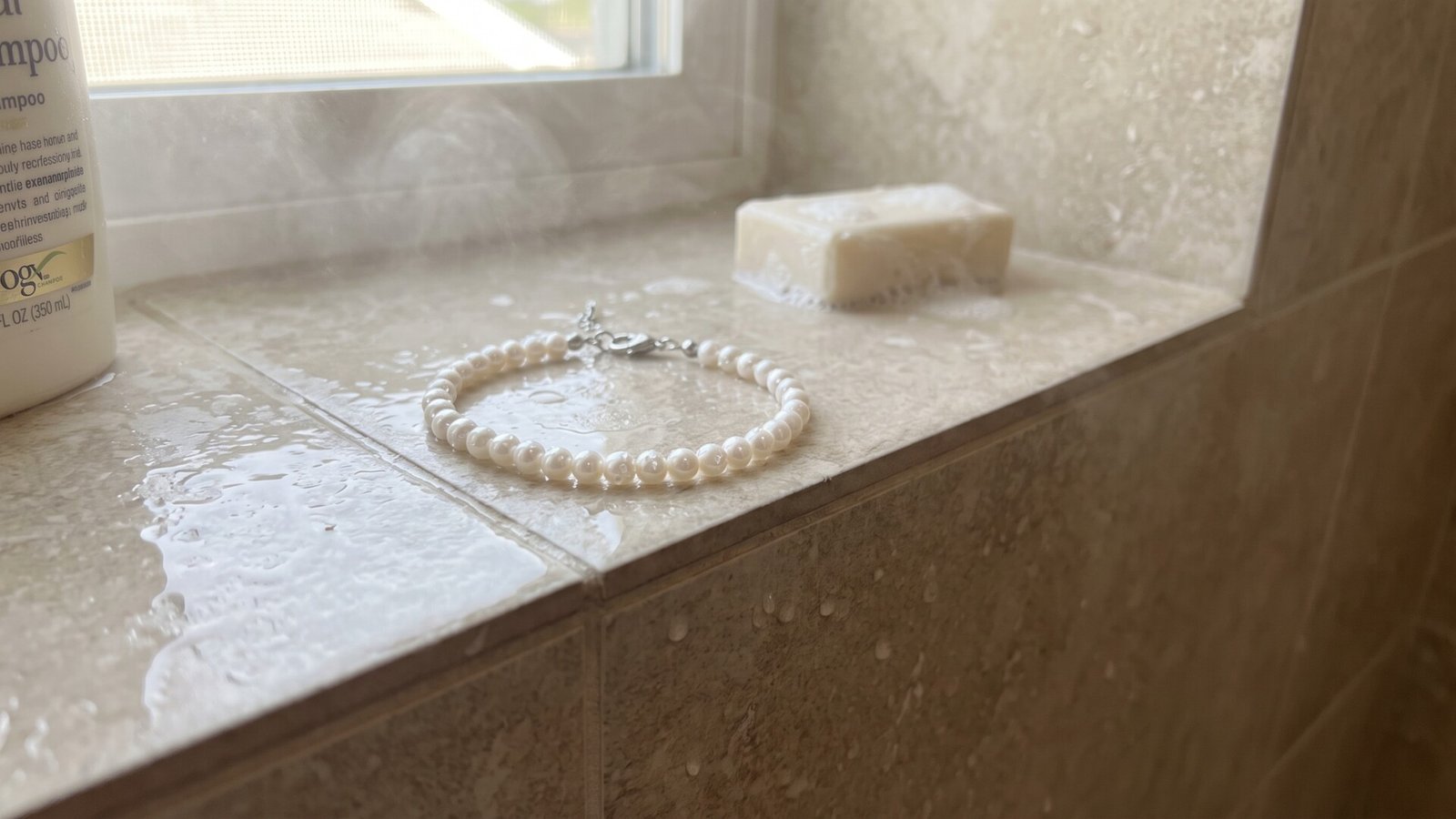
The short answer: it is best to take it off. Pearls are soft and organic, and shower water, soap, shampoo, and heat can dull the surface and weaken the string. This guide explains why pearls are sensitive, what actually happens when they get wet, and how to care for your pearl bracelet so it lasts. For a full overview of the gem itself, see our guide to pearl: meaning, properties, uses, and value.
Quick Answer: Shower, Pool, and Everyday Wear
| Situation | Safe for a pearl bracelet? | Why |
|---|---|---|
| Showering | Not recommended | Soap, shampoo, and hot water attack nacre and weaken the string |
| Swimming (pool or sea) | No | Chlorine, salt, and sunscreen are harsh on pearls and thread |
| Washing hands or dishes | No | Detergents and hot water; knocks against sinks |
| Exercise and sweating | Avoid | Perspiration is slightly acidic and can dull the surface; abrasion |
| Office, dinner, travel | Yes | Low-risk wear if applied after perfume and removed before bed |
1. Understanding Pearls: Nature’s Organic Gems
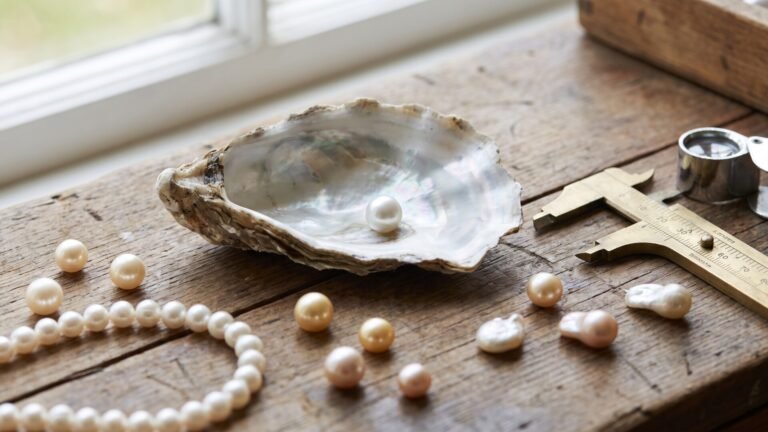
Pearls are unlike most other gemstones because they are organic. They form inside mollusks when an irritant triggers layers of nacre (crystals of aragonite, a form of calcium carbonate, bound with the organic protein conchiolin) to build up, creating a smooth, iridescent gem. Almost all pearls sold today are cultured, meaning people place the nucleus or tissue that starts the process; truly natural pearls are rare and very expensive.
Key Characteristics of Pearls
- Mohs hardness: About 2.5 to 4.5 (very soft compared with diamond, sapphire, or even quartz)
- Luster: Soft, iridescent glow rather than sparkle
- Composition: Calcium carbonate in crystalline form, bound with organic proteins
- Sensitivities: Acids, hairspray, perfume, cosmetics, perspiration, high heat, and intense light
The Gemological Institute of America (GIA) advises that pearls can be damaged by many chemicals and by all acids, including hair spray, perfume, cosmetics, and perspiration, and that they should never be cleaned with ultrasonic or steam cleaners. Those sensitivities are why shower products are such a concern.
2. How Showers Affect Pearls
Many people assume water is harmless to pearls, but showers introduce several risks at once:
A. Soap and Shampoo Residue
- Many soaps, shampoos, and body washes contain alkaline or acidic ingredients, plus oils and conditioners that leave a film.
- Residues can dull the nacre, leading to a loss of shine over time.
B. Hot Water
- Pearls are sensitive to heat and sudden temperature changes.
- Repeated exposure to hot water can contribute to discoloration or surface cracking of the nacre.
C. Moisture Absorption and Drying
- Pearls contain a small amount of natural moisture, and repeated wetting and drying cycles can stress the organic layers.
- Over time, this can contribute to peeling, pitting, or surface roughness.
D. Mechanical Impact
- Showering can expose bracelets to accidental knocks against taps, tiles, or glass doors.
- Because pearls are soft, even light collisions can scratch the surface.
3. Risks Specific to Pearl Bracelets
A pearl bracelet is more vulnerable than a pearl pendant or earrings because it sits at the wrist, where it meets water, soap, desks, and door frames all day.
- Strung pearls: Most bracelets are strung on silk or nylon thread, which weakens when wet. A wet thread can stretch, fray, or snap over time. Stretch-cord bracelets use elastic that also degrades with soaps and oils.
- Clasp and metal damage: Sterling silver can tarnish and plated metals can wear faster with soap and water. Solid gold and platinum clasps are less affected.
- Cluster or multi-strand designs: Complex designs trap water between strands, creating slow, uneven drying.
In short, wearing a pearl bracelet in the shower is generally not recommended if you want it to last.
4. Not All Pearls Are Equal: How Type Changes the Risk
All real pearls need gentle handling, but the type you own affects how forgiving it is. We have left out price figures because published bracelet prices vary widely by seller, size, luster, and metal.
| Pearl type | Typical look | Value level | Care note |
|---|---|---|---|
| Freshwater cultured | White, cream, pastel; many shapes | Generally the most affordable real pearls | Often thick nacre, so a bit more forgiving, but still not shower-safe |
| Akoya cultured | Round, bright white or cream with high luster | Mid-range to higher | Thinner nacre than some types; protect from chemicals |
| Tahitian cultured | Dark gray to black with overtones | Higher, rising with size and quality | Large and valuable; keep away from knocks |
| South Sea cultured | Large, white or golden, soft satiny luster | Typically the highest of the cultured types | Highest value; treat as occasional-wear jewelry |
| Imitation (glass, plastic, or coated beads) | Uniform, very round | Low-cost fashion jewelry | Coating can peel or flake with water and chemicals |
Origins, per GIA: Akoya mainly from Japan and China, South Sea from northern Australia through Southeast Asia, Tahitian from French Polynesia, and freshwater mostly from China.
A Note on “Synthetic” Pearls
Some sellers describe fashion pearls as “synthetic,” but most are really imitations: glass, plastic, or shell beads covered with a pearly coating. They are not the same as cultured pearls. They may tolerate a splash better than a real pearl, but the coating can peel, flake, or discolor with repeated water, heat, and chemicals, so they are not truly shower-proof either. Cultured pearls are real pearls that humans helped start; imitations are only look-alikes.
5. Exceptions: When It Might Be Less Risky
Some people wear pearls in the shower without immediately noticeable damage. Situations that reduce, but do not remove, the risk include:
- Very brief exposure to lukewarm water
- No soap or shampoo contact
- Patting the bracelet dry right away and letting the string dry fully before the next wear
- Freshwater cultured pearls on a well-made, knotted silk or nylon thread
Even in these cases, repeated exposure accelerates wear. An occasional splash is far less damaging than wearing the bracelet through every shower.
6. How to Clean Pearls Safely
Since a quick wipe is far safer than a soak, cleaning pearls gently is the habit that matters most:
Step 1: Gentle Wipe
- Use a very soft, clean microfiber cloth to wipe pearls after every wear.
- This removes body oils, sweat, and surface dirt before they build up.
Step 2: Mild Soap Solution (Occasionally)
- Mix a lukewarm solution with a few drops of mild, non-abrasive soap.
- Dip a soft cloth in the solution and gently wipe each pearl. Avoid soaking the string.
Step 3: Rinse Carefully
- Lightly dampen a cloth with clean water and wipe away soap residue.
- Avoid immersing the bracelet completely.
Step 4: Dry and Store Properly
- Lay the bracelet flat on a soft towel to air dry completely before wearing or storing it.
- Do not hang it to dry, as this can stretch the string.
- Never use ultrasonic cleaners, steam cleaners, jewelry dips, or baking soda or vinegar “hacks” on real pearls.
7. Protecting the String
The thread holding the pearls together is often the weakest link:
- Many jewelers suggest restringing a regularly worn pearl bracelet about every one to two years, or sooner if it gets wet often
- Knots between pearls prevent rubbing and protect against losing every pearl if the thread breaks, but wet knots can loosen faster
- Silk thread is especially vulnerable to moisture; nylon is slightly more water-resistant
- Ensure the string is completely dry before you put the bracelet back on
The restringing interval is a general guideline rather than a fixed rule; a jeweler can check the thread’s condition during a routine inspection.
8. Avoiding Household Chemicals
- Perfume, hairspray, lotions, and sunscreen: Apply them before putting on your bracelet and let them dry; chemicals can dull and etch the nacre
- Cleaning products: Avoid any direct contact, including chlorine bleach and acidic bathroom cleaners
- Swimming pools and hot tubs: Chlorine and salt water are harsh on both the pearls and the thread
9. Storing Pearl Jewelry
- Store separately from other jewelry to prevent scratching; diamonds, sapphires, and even gold clasps can mark soft nacre
- Use a soft cloth pouch or a jewelry box with individual compartments
- Avoid sealed plastic bags for long-term storage; they can trap moisture
- Keep them away from very dry, hot, or sunny places such as a car dashboard or sunny windowsill, since heat and strong light can dehydrate and discolor nacre
10. How to Handle Accidental Shower Exposure
If your pearl bracelet accidentally goes in the shower:
- Remove it as soon as you notice
- Wipe off soap residue with a cloth dampened with clean, lukewarm water
- Pat dry with a soft cloth
- Lay flat to air dry completely, and leave it off for at least a day so the string can dry
One accident is rarely a disaster, but frequent repeated exposure will accelerate deterioration.
11. When to Consider Professional Maintenance
- If your bracelet shows dullness, surface scratches, or fraying string
- An annual check by a jeweler helps catch thread wear before it breaks
- Ask any jeweler to avoid ultrasonic and steam cleaning for real pearls; they are not safe for them
12. Lifestyle Tips for Pearl Bracelet Wearers
- Remove for showers, swimming, and vigorous activity
- Put them on last and take them off first: Pearls should be the last thing you put on after perfume and hairspray and the first thing you take off at the end of the day
- Wear them regularly: Pearls are often said to do better when worn than when shut in a drawer, as long as they avoid chemicals
- Limit sunlight exposure: Intense light and heat can dull and dehydrate the nacre
- Avoid stacking with hard bangles or rings: They can scratch pearls on a bracelet
13. Signs Your Pearl Bracelet Needs Attention
- Loss of luster or iridescence
- Surface cracks, flaking, or small chips
- Thread fraying, discoloring, or stretching
- Pearls sliding a long way along the thread or rattling against each other
If you notice any of these, avoid further water exposure until the bracelet is inspected or restrung.
14. Looking for a Shower-Friendly Birthstone Bracelet Instead?
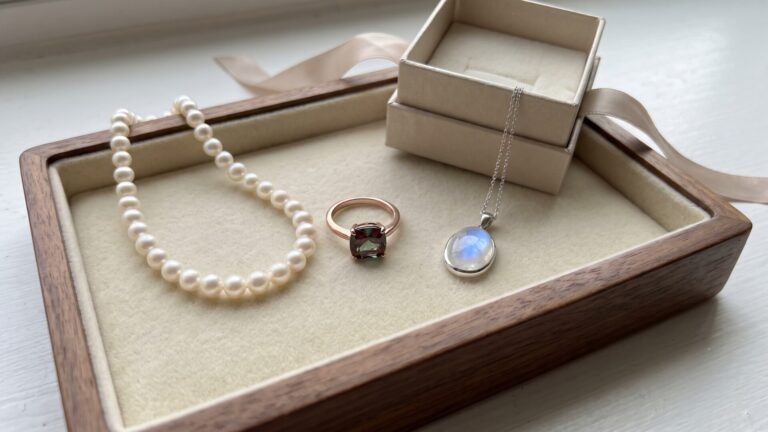
If you want a June birthstone bracelet you can wear more freely, consider the other June stones. Alexandrite and moonstone are the other traditional June birthstones, and each has its own care needs. Our comparison of pearl vs alexandrite vs moonstone for a June birthday explains the durability trade-offs, and pearl vs opal compares two other delicate favorites. For a deeper look at symbolism, see pearl meaning: history, symbolism, and modern uses.
For ideas on other bracelet styles, browse the best online shops for birthstone bracelets and personalized birthstone bracelets. You can also explore the wider gemstones guide.
15. Recommended Pearl Bracelets (Placeholder for Affiliate Links)
Here are some options to consider, perfect for gifting or personal wear. Match the style to how carefully you plan to wear it:
- Classic White Freshwater Pearl Bracelet – Single strand, ideal for careful daily wear
- Akoya Pearl Bracelet – Round, high-luster pearls for a classic look
- Baroque Pearl Bracelet – Unique, irregular shapes; store with extra padding
- South Sea Pearl Bracelet – Luxurious, soft luster; high-care requirement
- Multi-Strand Cultured Pearl Bracelet – Statement piece, needs careful cleaning
- Imitation Pearl Fashion Bracelet – Low-cost option for casual wear; the coating can wear, so avoid water
Natural, Cultured and Imitation Pearls: What You Are Actually Wearing
According to GIA, natural pearls form when a mollusk coats an irritant in nacre, while cultured pearls start with human intervention: a technician implants tissue or a mother-of-pearl bead into a host mollusk. Overharvesting depleted natural pearl beds, so cultured pearls make up most of what is sold today. If you are not sure what your bracelet is made of, a jeweler can usually tell you, and that matters because imitation coatings behave very differently from real nacre.
Pearl Bracelet vs Other Pearl Jewelry in Daily Life
If your routine means a bracelet is always getting wet or knocked, consider where else you could wear pearls. Earrings and pendants sit farther from sinks, desks and doors, so they usually suffer less abrasion than a wrist piece. The rule is the same for every piece: apply perfume, hair products and cosmetics first, put pearls on last, and wipe them with a soft, damp cloth after wearing, as GIA recommends. Browse our June birthstone guide for the full picture of pearl, alexandrite and moonstone, and the birthstone jewelry guide for other styles.
Practical Summary: Shower or Not?
- Recommendation: Remove your pearl bracelet before showering.
- Why: Hot water, soap, and chemicals can dull nacre, weaken the string, and reduce luster.
- Safe alternatives: Wipe with a soft cloth after wear, clean gently with a damp cloth, and have the string checked regularly.
Frequently Asked Questions About Wearing Pearl Bracelets
Can I wear a pearl bracelet in the shower?
It is best not to. Soap, shampoo, heat, and moisture can dull the nacre and weaken the string, so remove the bracelet before showering.
Will one shower ruin my pearl bracelet?
A single accidental shower is unlikely to ruin it. Wipe it with a damp cloth, pat it dry, lay it flat, and let the string dry fully. Repeated exposure is what causes lasting damage.
Can I swim in a pearl bracelet?
No. Chlorine, salt water, and sunscreen are harsh on pearls and on the thread that holds them.
How often should a pearl bracelet be restrung?
Many jewelers suggest every one to two years for a bracelet worn regularly, or sooner if the thread looks stretched, dirty, or frayed.
Is a freshwater pearl bracelet safe in water?
Freshwater cultured pearls often have thick nacre and can be a bit more forgiving, but they are still organic gems and the thread is still vulnerable, so they should not be worn in the shower.
Can I use an ultrasonic cleaner on pearls?
No. The Gemological Institute of America advises against ultrasonic and steam cleaners for pearls. Use a soft cloth and mild soapy water instead.
What other June birthstones can I wear more freely?
Alexandrite is harder and more durable than pearl, while moonstone needs gentle care too. See our pearl vs alexandrite vs moonstone comparison for details.
Conclusion
Pearls are soft, delicate, and stunning, but their organic nature demands care. While it may be tempting to leave a pearl birthstone bracelet on in the shower, repeated water exposure, soaps, and heat can compromise the nacre and the string.
By removing your bracelet before showers, wiping it gently, storing it carefully, and having the string checked now and then, your pearls can keep their beauty for years. Want to learn more about the gem? Continue with our complete pearl guide.
Remember, pearls thrive on careful, mindful wearing and in return provide timeless elegance and meaning for your jewelry collection.