What to Buy for a June Birthday: Pearl vs. Alexandrite vs. Moonstone
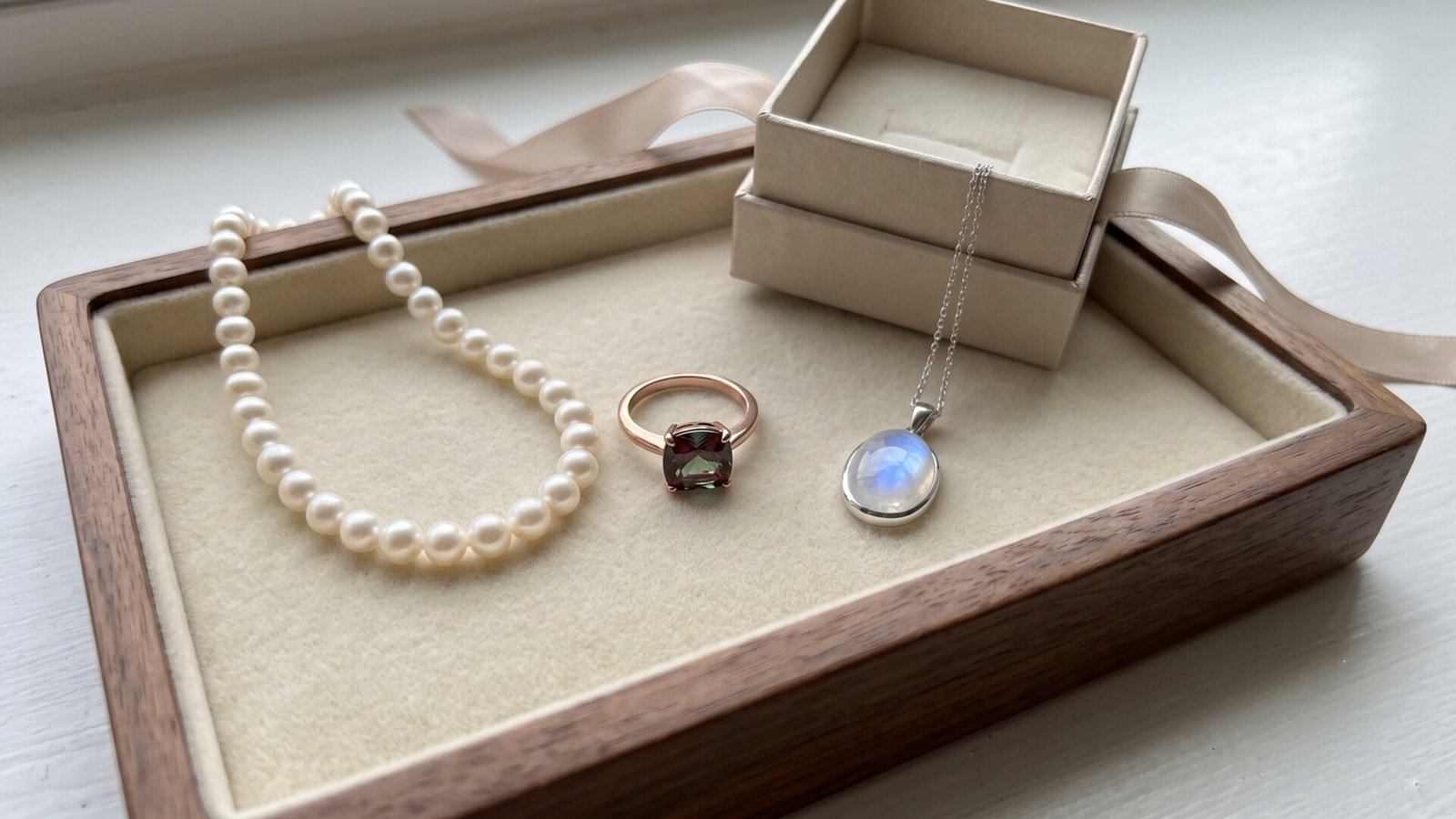
June has three birthstones on the modern US lists, and that makes gift-shopping both easier and harder. Pearl, alexandrite and moonstone are all correct, but they differ enormously in hardness, price and personality. The right choice depends on who you are buying for, how often they will wear it and what you want to spend.
This guide compares the three stones side by side: what each one is, which jewelry pieces suit it, how much typical pieces cost from retailers such as Blue Nile, James Allen and Brilliant Earth, how to care for it and which mistakes to avoid. Prices are list prices we checked on the retailers’ sites in November 2026. They change often, and sales can take a lot off. Meanings and symbolism are cultural traditions, not scientific or medical claims. For the wider picture, see our June birthstone guide.
Why June Has Three Birthstones
The first official US birthstone list was published in 1912 by the American National Retail Jewelers’ Association, now Jewelers of America. That list gave June pearl and moonstone. Alexandrite was added in 1952, according to Jewelers of America, which gave June the three stones most US jewelers use today.
Lists still differ. Moonstone is on the Jewelers of America and AGTA lists but not on every list, and other countries and organizations use their own versions. June is also not the only month with more than one stone: August, October, November and December have several on some lists. If the recipient feels strongly about “their” stone, it is worth asking which one they think of as their birthstone. Our birthstones by month guide lays out every month side by side.
June Birthstones at a Glance
| Feature | Pearl | Alexandrite | Moonstone |
|---|---|---|---|
| What it is | Organic gem formed in a living mollusk | Color-change variety of chrysoberyl | Feldspar-group mineral with adularescence |
| Mohs hardness | About 2.5 to 3 | 8.5 | 6 to 6.5 |
| Toughness | Soft; scratches and is damaged by chemicals | Excellent; no cleavage | Poor; can crack on impact or heat |
| Ultrasonic or steam | No | Usually safe, but soapy water is recommended | No |
| Daily-wear ring? | Not recommended | Yes | Possible with care and a protective setting |
| Budget | Low to mid | Lab-created is mid; fine natural is high | Low to mid |
Overview of June Birthstones
Pearl
Symbolism: Traditionally purity, wisdom, elegance and loyalty. Pearls are the best-known gem formed inside a living creature, a mollusk, which is why they are called organic gems.
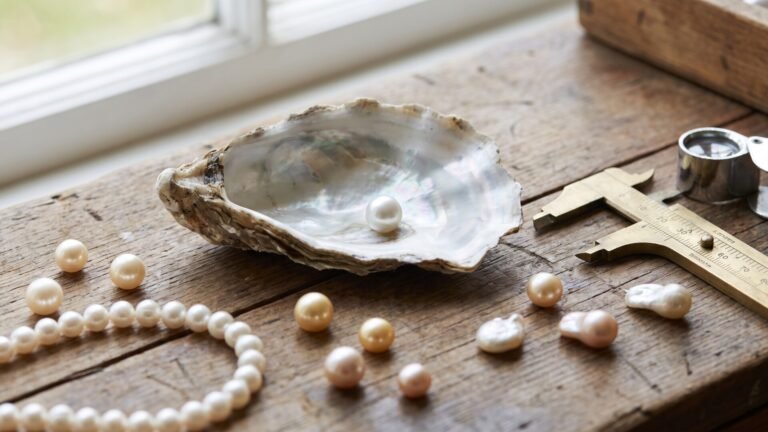
Types: Natural pearls form around an irritant with no human help and are now extremely rare because natural pearl beds were heavily depleted. Cultured pearls form the same way but with human intervention, and they make up the vast majority of pearls sold. Common cultured types are freshwater (affordable, many shapes), Akoya (classic round, high luster), South Sea (large, luxurious) and Tahitian (dark tones).
Best for: Classic, romantic or minimalist recipients, and bridal or milestone birthdays. More in our Pearl Gemstone Hub, and the traditions are covered in pearl meaning and symbolism.
Alexandrite
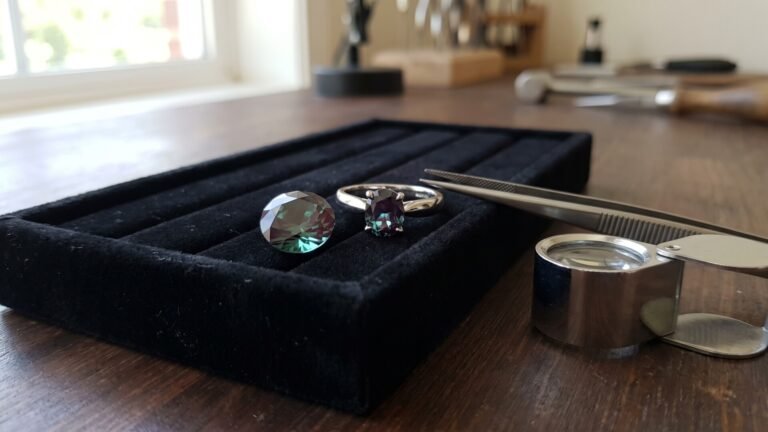
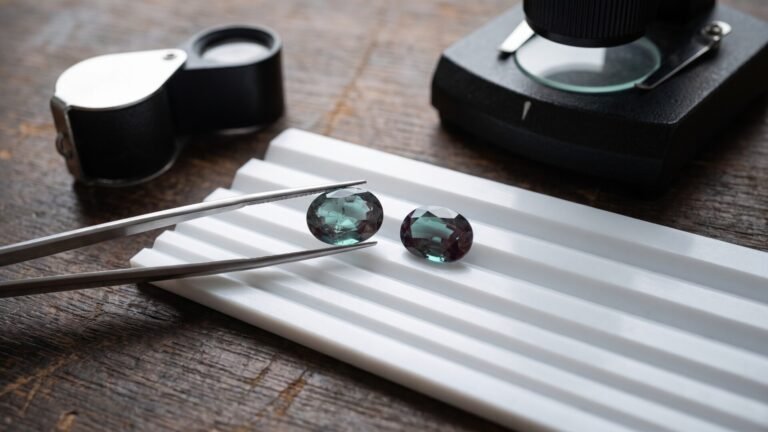
Symbolism: Traditionally transformation, balance and good fortune. Alexandrite is a rare color-change variety of chrysoberyl that looks green to bluish green in daylight or fluorescent light and red to purplish red in incandescent light. Major deposits were first found in Russia’s Ural Mountains in 1830, and the stone was named after the young heir to the throne, the future Alexander II. Its red and green also matched imperial Russian military colors.
Rarity: The Ural deposits are mined out, and most supply now comes from Brazil, Sri Lanka and East Africa. GIA notes that fine natural alexandrite is scarce, especially in larger sizes, and that it is one of the more expensive colored gems. Newer natural stones often show a less precise color change. Many alexandrite pieces sold today are lab-created, which is a legitimate and much cheaper option as long as it is disclosed, while some inexpensive stones sold as “alexandrite” are actually synthetic color-change corundum.
Best for: Adventurous or unique tastes, daily-wear rings and milestone birthdays. More in our Alexandrite Guide and alexandrite meaning, or see alexandrite vs sapphire color change.
Moonstone
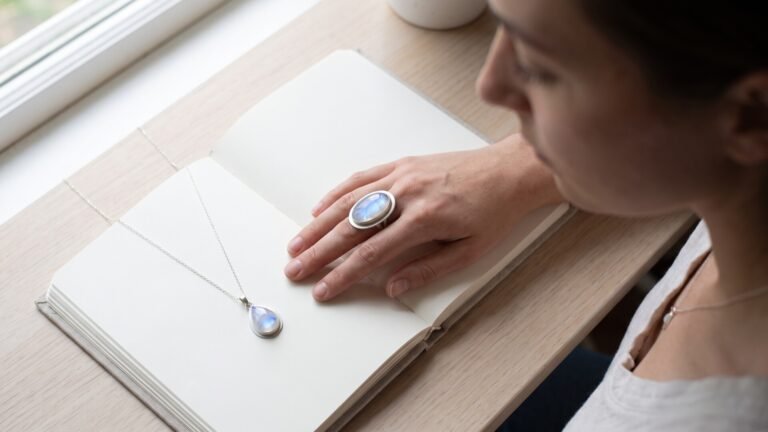
Symbolism: Traditionally intuition, new beginnings and emotional balance. Moonstone is a feldspar-group mineral known for adularescence, a billowing light effect; the finest stones show a blue sheen on a colorless background.
Sources: The most important sources are India and Sri Lanka. Others include Brazil, Madagascar, Myanmar, Tanzania and parts of the United States.
Best for: Creative, spiritual or empathetic recipients, and anyone starting a new chapter, such as a graduation or a new job. More in our Moonstone Guide and moonstone meaning.
Jewelry Types for June Birthstones
Before choosing a stone, think about the type of jewelry the recipient will actually wear.
Stud Earrings
- Best for: Everyday wear, sensitive ears, minimalists.
- Pearl: Classic white or cream studs. Timeless and low risk.
- Alexandrite: Small faceted studs; lab-created versions keep the cost reasonable.
- Moonstone: Cabochon or pear-cut studs with blue shimmer.
Necklaces & Pendants
- Best for: Versatile gifting and layering. Pendants are the safest choice for softer stones. See also birthstone pendants for new moms.
- Pearl: A single pearl on a delicate chain.
- Alexandrite: A solitaire pendant shows the color change up close.
- Moonstone: A bezel-set cabochon, soft and romantic.
Rings
- Best for: Statement gifts and anniversaries.
- Pearl: Beautiful but soft; best for occasional wear.
- Alexandrite: The most practical ring stone of the three, with hardness 8.5, excellent toughness and no cleavage. GIA says it suits daily-wear rings.
- Moonstone: Choose a bezel or protective setting and avoid hard knocks.
Bracelets
- Best for: Subtle, stackable wear, although bracelets take more knocks than other pieces.
- Pearl: Single-strand or beaded styles.
- Alexandrite: Tennis-style bracelets are rare and expensive in natural stones.
- Moonstone: Beaded stretch bracelets are affordable, but the beads can chip.
More inspiration is in our Birthstone Jewelry Guide.
Factors to Consider When Choosing a June Birthstone Gift
Personal Style of the Recipient
- Minimalist or classic: Pearl studs or a moonstone pendant.
- Bold or unique: An alexandrite ring or earrings.
- Spiritual or bohemian: A moonstone beaded bracelet or a baroque pearl necklace.
Budget
- Pearl: The most budget-friendly. Blue Nile lists freshwater cultured pearl pendants from about $120 for sterling silver styles to about $1,030 for 14k gold styles, and 6 mm freshwater pearl studs in 14k white gold at about $240.
- Moonstone: Usually modest. A pair of 14k white gold pear-shaped moonstone and diamond studs by James Allen is listed at about $515 on Blue Nile, and a matching-style pendant at about $570.
- Alexandrite: Lab-created pieces are mid-priced; Brilliant Earth lists small lab alexandrite studs in 14k gold at about $395, a lab alexandrite and diamond pendant in 14k yellow gold at about $750 and a Luxe Ballad lab alexandrite ring at about $890. Fine natural alexandrite costs considerably more, and we could not verify a reliable price range for it.
Durability for Daily Wear
- Pearl: Soft, so choose pendants and earrings rather than daily-wear rings.
- Alexandrite: Very hard (8.5) and tough, excellent for any jewelry.
- Moonstone: Moderate hardness (6 to 6.5) with poor toughness, so it suits earrings and pendants best.
Remember that hardness only measures scratch resistance. Toughness, meaning resistance to chipping and breaking, matters just as much for a ring or bracelet. Our gemstone hardness scale guide explains the difference.
Symbolism Alignment
- Pearl: For someone who values tradition, loyalty and quiet strength.
- Alexandrite: For a person going through change, such as a new career or city.
- Moonstone: For an intuitive or creative person starting a fresh chapter.
If your recipient is a Gemini or Cancer, zodiac lists sometimes point to the same stones, but they vary by source; our guide to zodiac vs monthly birthstones explains how to choose.
Pearl Jewelry for June Birthdays
1. Pearl Stud Earrings
Style: A single cultured freshwater or Akoya pearl in 14k gold or sterling silver
Example: Blue Nile’s Freshwater Cultured Pearl Stud Earrings in 14k White Gold (6 mm), listed at about $240.
Best for: Everyday elegance, a classic gift
Pearl studs are the safest June gift. Look for good luster (a bright, mirror-like surface), a clean surface with few blemishes and a secure setting. White, cream and pink overtones all look different against skin, so consider the recipient’s usual jewelry metal.
[Shop Pearl Studs at Blue Nile]
2. Pearl Pendant Necklace
Price: Blue Nile’s freshwater cultured pearl pendants range from about $120 (7 mm pearl rope pendant in sterling silver) to about $1,030 (14k yellow gold seed pearl open circle necklace by James Allen).
Best for: A sophisticated but easy gift
A single pearl on a fine chain works with almost any outfit. Silver styles with topaz accents suit smaller budgets, while 14k gold suits milestone birthdays.
[Shop Pearl Pendant at James Allen]
3. Pearl Bracelet
Style: Beaded freshwater pearl strand on elastic or with a clasp
Example: Blue Nile’s 6.5″ Freshwater Cultured Pearl Bracelet in 14k White Gold (7.0 to 7.5 mm), listed at about $455.
Best for: A subtle, everyday piece
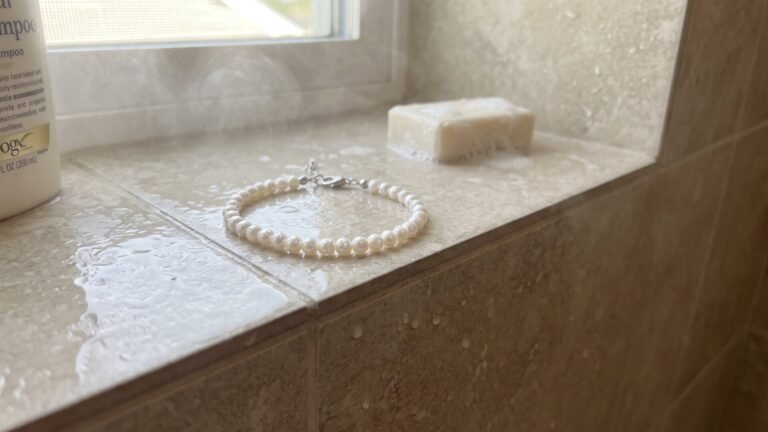
Pearl bracelets are pretty but exposed to knocks, perfume and sweat. Choose a knotted strand with a secure clasp and expect to restring it periodically.
[Shop Pearl Bracelet at Brilliant Earth]
Alexandrite Jewelry for June Birthdays
1. Lab Alexandrite Solitaire or Fashion Ring
Example: Brilliant Earth’s Luxe Ballad Lab Alexandrite Ring, listed at about $890 in 14k rose gold, a slim 1.4 mm band with 32 round lab alexandrites (about 1.2 mm each) in a scalloped pavé setting, with metal options from 14k gold to platinum. It also stacks with an engagement ring.
Best for: A color-changing statement piece
Lab-created alexandrite has the same chemistry and properties as natural alexandrite but costs far less. Because alexandrite is so tough, it is the one June stone we would recommend for an everyday ring. Ask the seller whether the stone is natural or lab-created; for natural stones of any size, ask for a gemological report.
[Shop Alexandrite Ring at Blue Nile]
2. Alexandrite Earrings
Style: Small round or pear alexandrite studs or drops in white gold or platinum
Best for: An elegant, rare gift
Brilliant Earth lists Lab Alexandrite Birthstone Stud Earrings in 14k yellow gold with two round 3 mm stones at about $395, and larger Lab Alexandrite Stud Earrings with 6 mm stones in sterling silver at about $695. Bigger stones make the color change easier to see. Cool-toned white metals can make the green-blue side of the color change stand out, while warm light brings out the red.
[Shop Alexandrite Drops at James Allen]
3. Alexandrite Pendant Necklace
Example: Brilliant Earth’s Lab Alexandrite and Diamond Birthstone Pendant Necklace in 14k yellow gold, about $750, with a pear-shaped 6 x 4 mm lab alexandrite and five small round diamonds along the bail.
Best for: A meaningful, affordable color-change gift
The color shift is most noticeable when the wearer moves between daylight and warm indoor lighting, which makes a pendant a good way to enjoy it.
[Shop Alexandrite Pendant at Brilliant Earth]
Want to know how to tell lab-created from natural? Read our guide to natural vs lab-created alexandrite.
Moonstone Jewelry for June Birthdays
1. Moonstone Beaded Bracelet
Style: 6 mm or 8 mm moonstone beads on elastic
Best for: A casual, affordable gift
Beaded bracelets show moonstone’s soft sheen at a low price. Because moonstone has poor toughness, take it off for sports and housework. Check that the sheen is natural, not a coating, and that the seller says “moonstone” rather than “opalite”.
[Shop Moonstone Bracelet at Brilliant Earth]
2. Moonstone Pendant
Example: The 14k White Gold Pear-Shaped Rainbow Moonstone Tri-Diamond Birthstone Pendant Necklace by James Allen, listed on Blue Nile at about $570, with a 7 x 5 mm moonstone (about 3/4 carat) and three small diamonds.
Best for: Everyday wearable elegance
A bezel setting protects the stone’s edges. Pendants keep moonstone away from the knocks that rings face. For more moonstone styles, see our moonstone jewelry guide.
[Shop Moonstone Pendant at James Allen]
3. Moonstone Earrings and Rings
Example: Pear Shape Rainbow Moonstone and Tri-Diamond Stud Earrings in 14k white gold by James Allen, about $515 on Blue Nile, with two 6 x 4 mm pear-cut moonstones (7/8 carat total) and six small natural diamonds.
Best for: A subtle statement gift
Moonstone rings are lovely but best for occasional wear in a bezel or halo setting.
[Shop Moonstone Ring at Blue Nile]
June Birthstone Jewelry Comparison
| Birthstone | Meaning (tradition) | Jewelry Type | Example Prices (USD) |
|---|---|---|---|
| Pearl | Purity, elegance, wisdom | Studs, pendant, bracelet | About $120 to $1,030 (silver pendant to 14k gold necklace); studs about $240; bracelet about $455 |
| Alexandrite | Transformation, balance, good fortune | Ring, earrings, pendant | About $395 to $890 for lab-created examples; natural costs more |
| Moonstone | Intuition, new beginnings, emotional balance | Studs, pendant, bracelet | About $515 to $570 for 14k gold moonstone and diamond studs or pendant |
How to Choose the Right Stone
Step 1: Assess the Recipient’s Personality and Style
- Classic, elegant, traditional → Pearl.
- Unique, bold, adventurous → Alexandrite.
- Spiritual, creative, empathetic → Moonstone.
Step 2: Consider Budget and Occasion
- Lower budget → Freshwater pearl studs or a moonstone bracelet.
- Mid budget → A pearl pendant in gold, moonstone earrings, or a lab-created alexandrite pendant.
- Higher budget → A lab-created alexandrite ring in gold, or a natural alexandrite with a lab report.
Step 3: Factor in Durability
- Daily wear (rings) → Alexandrite. Moonstone and pearl are much softer.
- Occasional wear, earrings or pendants → All three work.
Step 4: Align with Symbolism
- New graduate → Moonstone (new beginnings). More ideas in our graduation birthstone jewelry guide.
- Milestone birthday → Alexandrite (transformation) or pearl (wisdom).
- Romantic partner → Pearl (loyalty), or see our birthstone gift ideas by relationship.
Shopping for a child with a June birthday? See birthstone gifts for kids by month. Small beads and stones can be a choking hazard for young children, so check age suitability.
Styling Tips for June Birthstone Jewelry
Pair with Other Metals or Gemstones
- Pearl and yellow gold for a classic, warm look.
- Alexandrite and white gold or platinum for a cool setting that contrasts with the red phase.
- Moonstone and rose gold for a romantic, soft look.
Stacking and Layering
- Moonstone stackable rings look good with thin gold bands, but keep harder stones from rubbing against them.
- A pearl pendant can layer with a small diamond necklace if the chains do not tangle against the pearl.
- Let alexandrite be the focus piece so the color change is noticed.
Occasion-Based Choices
- Everyday: Pearl studs or an alexandrite ring.
- Work: A small pearl pendant or moonstone studs.
- Special events: Alexandrite earrings or a pearl strand.
Caring for June Birthstone Jewelry
Pearl Care
- Put them on last: Apply perfume, hair products and cosmetics before wearing pearls.
- Cleaning: Wipe with a soft, damp cloth after each wearing. Do not soak, and avoid ultrasonic and steam cleaners.
- Storage: Keep separate from other gems and metal jewelry, and never in plastic bags. Strung pearls may need restringing from time to time.
Alexandrite Care
- Hardness 8.5 with excellent toughness and no cleavage, so it suits daily wear.
- Cleaning: Warm soapy water and a soft brush are recommended. GIA says ultrasonic and steam cleaners are usually safe, but soapy water is the safer default.
- Storage: Keep away from diamond (10) and sapphire (9), which are harder and could scratch it.
Moonstone Care
- Hardness 6 to 6.5 with poor toughness: avoid hard knocks and high heat.
- Cleaning: Warm soapy water and a soft brush. No ultrasonic or steam cleaners.
- Storage: A soft pouch, away from harder stones.
Common Mistakes to Avoid
Buying look-alikes without disclosure
- Alexandrite: Lab-created alexandrite is a fair product if labeled, but some cheap stones sold as alexandrite are synthetic color-change corundum. Ask what the stone is and whether it is natural or lab-created.
- Pearl: “Faux” or imitation pearls are glass or plastic beads. Check that the listing says cultured freshwater, Akoya, South Sea or Tahitian pearl.
- Moonstone: Opalite, a glass product, is often sold as moonstone. Look for natural adularescence and a clear stone name.
This quick reference shows what each label should mean when you read a listing:
| Label | Pearl | Alexandrite | Moonstone |
|---|---|---|---|
| Natural | Formed with no human help; extremely rare and usually sold with a lab report | Mined chrysoberyl; scarce and expensive in fine quality | Mined feldspar; the normal option and usually affordable |
| Cultured or lab-created | Cultured: a real pearl grown with human help; almost all pearls sold today | Lab-created: same chemistry and properties as natural, much cheaper | Rarely marketed; most moonstone sold is natural |
| Imitation or simulant | Glass, plastic or shell-based “faux” pearls | Often synthetic color-change corundum or glass | Opalite (glass) or coated glass |
Lab-created and imitation are not the same thing. A lab-created stone is the real material grown in a lab; an imitation only looks similar. Our guide to natural vs lab-grown birthstones explains the trade-offs.
Ignoring durability for daily wear
Do not give a pearl ring to someone who works with their hands. If the recipient wants a ring they never take off, choose alexandrite.
Choosing a style that doesn’t match the recipient
A bohemian friend may not love classic pearl studs, and a minimalist may find a big alexandrite cocktail ring too much. Look at what they already wear.
Skipping return policies and disclosures
Whichever retailer you use, read the stone description, check the return policy and keep the receipt. For significant natural-stone purchases, ask for a gemological report. Retailers differ in what they offer, so compare before buying.
Frequently Asked Questions About June Birthstone Gifts
What is the best June birthstone for everyday wear?
Alexandrite is the most durable, with a Mohs hardness of 8.5, excellent toughness and no cleavage. Moonstone (6 to 6.5) and pearl (about 2.5 to 3) are softer and better suited to earrings and pendants.
Are alexandrite rings worth the investment?
Fine natural alexandrite is scarce and among the more expensive colored gems, but jewelry should be bought for enjoyment, not as an investment. Lab-created alexandrite has the same properties and costs much less. Whichever you choose, make sure the listing says whether it is natural or lab-created.
Can moonstone jewelry be stacked with other gemstones?
Yes, but moonstone is soft and can be scratched by harder stones. Keep it from rubbing against harder gems, and avoid stacking it in rings that take a lot of knocks.
How do I know if a pearl is natural or cultured?
Almost all pearls sold today are cultured, meaning formed with human intervention. Natural pearls are extremely rare. A reputable jeweler will say whether a pearl is natural or cultured, and a gemological report can confirm it for valuable pieces.
Why does June have three birthstones?
The first US birthstone list, published in 1912 by the forerunner of Jewelers of America, gave June pearl and moonstone. Alexandrite was added in 1952. Lists still differ, and moonstone does not appear on every list, but pearl, alexandrite and moonstone are the three June stones most US jewelers use.
Which June birthstone is the most affordable gift?
Freshwater cultured pearls and moonstone are usually the most affordable. At Blue Nile, a sterling silver freshwater pearl pendant is listed at about $120 and 6 mm freshwater pearl studs in 14k white gold at about $240. Lab-created alexandrite in gold starts higher, with small studs from Brilliant Earth at about $395. Prices change often, so check the current listing.
Can a child wear June birthstone jewelry?
Pearl studs or a small pendant can suit an older child, but small beads, studs and stones can be a choking hazard for young children. Check the retailer’s age guidance and choose secure settings and clasps.
Can I clean alexandrite in an ultrasonic cleaner?
GIA says ultrasonic and steam cleaners are usually safe for alexandrite, but warm soapy water and a soft brush is the recommended method. Never use ultrasonic or steam cleaners on pearls or moonstone.
Is lab-created alexandrite real?
Lab-created alexandrite is real alexandrite in chemistry and properties, grown in a lab instead of mined. It should be sold as lab-created. It is different from synthetic color-change corundum, which is a different mineral sold as an imitation.
Where can I buy June birthstone jewelry?
Blue Nile, James Allen and Brilliant Earth all sell birthstone jewelry. Brilliant Earth lists lab-created alexandrite pieces, and Blue Nile lists pearl and James Allen moonstone pieces. Check the stone description and return policy before buying.
Final Thoughts: Making a June Birthday Gift Meaningful
A birthstone gift works best when the stone fits the person. Match the stone’s tradition to their personality, then match the piece of jewelry to how they live:
- Pearl for the classic, loyal soul.
- Alexandrite for the adventurer or the person embracing change.
- Moonstone for the intuitive dreamer starting a new chapter.
Think about their style, their daily routine and your budget, then buy from a seller that discloses the stone type and offers returns.
Ready to shop? Browse our curated collections below.
[Shop Pearl Jewelry at Blue Nile]
[Shop Alexandrite Jewelry at James Allen]
[Shop Moonstone Jewelry at Brilliant Earth]
[Shop All June Birthstones]
Explore more: Birthstones by Month, Gemstones hub and June Birthstone Guide.