How to Cleanse and Charge Your Birthstones
Many people who wear or collect birthstones like to “cleanse” and “charge” them as a personal ritual. This is a spiritual and cultural practice, drawn from crystal traditions, and it is not something gemology can measure. There is no scientific evidence that stones absorb “negative energy” or can be recharged, and none of the practices below is a medical, psychological or financial treatment. If you enjoy the ritual, it can be a mindful moment. What matters most is that the method you choose does not damage the stone or the setting.
This guide separates the two ideas clearly: first, physical cleaning, which has real, stone-specific safety rules; then the symbolic cleansing and charging rituals, with notes on which ones are risky for which stones. It is part of our wider coverage of the spiritual side of gems, including How Birthstones Can Boost Your Energy, which looks at the same traditions.
Why People Cleanse and Charge Birthstones
In crystal-healing traditions, the ideas are roughly:
- Cleansing is meant to clear a stone of accumulated “stagnant” or “negative” energy, for example after a stressful period or after someone else has handled it.
- Charging is meant to “refresh” or “attune” the stone, often by setting an intention.
- Connection: For many people, the value is the ritual itself, such as pausing, focusing on an intention and feeling more connected to a meaningful piece of jewelry.
These are beliefs, not established facts. A stone that looks dull has almost always collected oils, soap film and dust, which a gentle physical cleaning fixes. For the symbolism behind individual stones, see Birthstone Meanings & Symbolism.
Before You Start: Know Your Stone
- Identify the stone and any treatments. Emerald is commonly oiled or resin-filled, pearl and opal are soft and sensitive, turquoise is porous and often stabilized, and blue topaz is typically treated. Each reacts differently to water, salt, heat and light.
- Check the setting. Glued stones, antique settings, plated metal and costume jewelry can be damaged by soaking or salt.
- Use the gentlest method first. If you are unsure, choose a dry, non-contact ritual such as sound, moonlight or meditation.
- Do not use rituals as a substitute for care. Water, salt, sun and smoke can all harm some stones.
Part 1: Physical Cleaning (the Part Gemology Supports)
1. Mild Soap and Warm Water
- Fill a bowl (not the sink) with lukewarm water and a few drops of mild dish soap.
- Gently brush the stone and setting with a soft toothbrush.
- Rinse in lukewarm water and dry with a soft, lint-free cloth.
Good for: diamond, sapphire, ruby, garnet, amethyst, aquamarine, citrine and most other hard, untreated stones.
Avoid soaking: opal, pearl, turquoise, emerald (oil or resin can be affected) and glued or dyed stones. Wipe these with a damp, soft cloth instead.
2. Ultrasonic Cleaners
Ultrasonic cleaners shake dirt loose with high-frequency vibrations. They are generally considered safe for clean, untreated diamonds and sapphires in sturdy settings, but they can damage fractured stones, fracture-filled or oiled stones (including many emeralds and some rubies), pearls, opals, turquoise, and stones with large inclusions. Tanzanite and topaz have cleavage and can be damaged by vibration and sudden temperature change. When in doubt, skip it and ask a jeweler.
3. Steam Cleaners
Steam is used by jewelers for durable stones such as diamond, but the heat and thermal shock can crack included or cleavage-prone stones. Avoid steam for topaz, tanzanite, emerald, opal, pearl, turquoise and any stone you are unsure about.
For a worked example of stone-specific care, see How to Care for Your Garnet Jewelry.
Part 2: Symbolic Cleansing Rituals
Each method below comes from crystal traditions. We note the physical risks next to each so you can choose a safe one for your stone.
| Method | Physical risks | Generally fine for | Avoid for |
|---|---|---|---|
| Running water | Can loosen glued stones; may harm porous or filled stones; drain risk | Hard, untreated stones (sapphire, garnet, quartz family) | Opal, pearl, turquoise, emerald, dyed or glued stones |
| Salt water | Salt can corrode metals, damage settings and harm porous or soft stones | Loose, hard stones such as quartz (not jewelry) | Jewelry, pearl, opal, turquoise, emerald, and any piece with plated or antique metal |
| Sunlight | Can fade some colors and heat sensitive stones | Short exposure for stable stones such as garnet | Amethyst, rose quartz, kunzite, citrine, topaz (some colors), opal, pearl |
| Moonlight | None for the stone | All stones | None |
| Smoke (sage, incense) | Soot or residue on porous stones; fire risk | Hard stones, with a clean-up wipe afterwards | Porous or soft stones in contact with smoke |
| Sound (bowl, bell, tuning fork) | None if the stone is not touched by the instrument | All stones | None |
| Burying in earth | Scratches, dirt in settings, lost items | Rough, hard, loose stones | Jewelry, soft or porous stones |
Running Water
Hold a hard, untreated stone under cool running water for a minute or two while focusing on your intention, then dry it. Close the drain first. Skip this for soft, porous or filled stones.
Salt Water
This is popular in crystal practice, but it is the riskiest method for finished jewelry. Salt water can corrode or tarnish metals and can damage porous or fractured stones. We suggest using a bowl of sea salt only for loose, hard tumbled stones (never jewelry), rinsing thoroughly, and drying completely. For jewelry, dry salt in a bowl next to (not touching) the piece is the least risky traditional alternative.
Sunlight
Some people place stones in morning sun for 15 to 30 minutes. Sunlight can fade or alter amethyst, kunzite, rose quartz and some other colored stones, and heat can harm opal and pearl. If you use this method, choose a stable stone and keep exposure short. Moonlight is a gentler substitute.
Moonlight
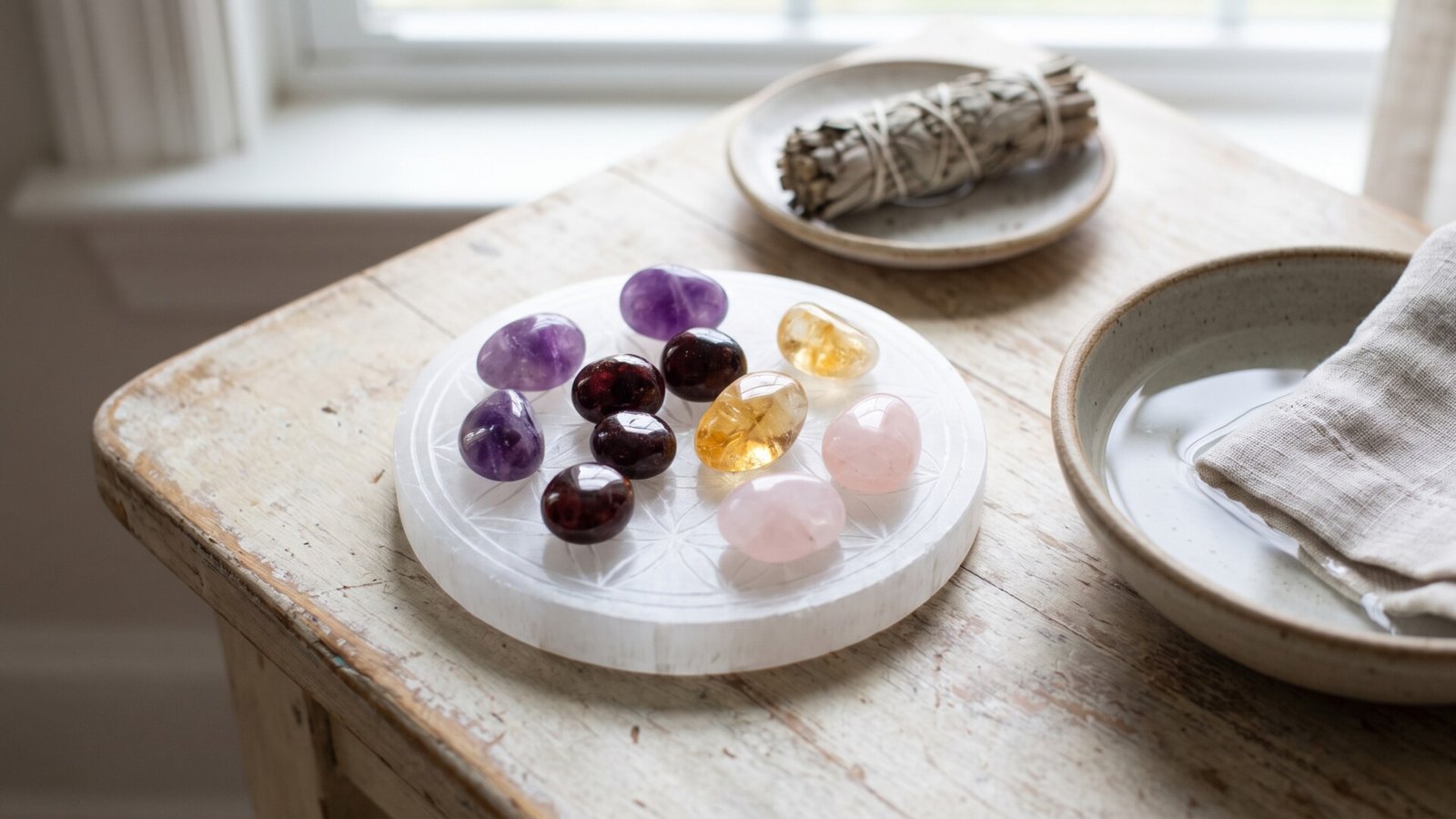
Leave the stone on a windowsill or in a safe spot overnight, traditionally under a full moon. It is physically harmless and suitable for all stones, which is why many people favor it for delicate pieces.
Smoke (Sage, Palo Santo, Incense)
Pass the stone through smoke without holding it close to the flame. Smoke can leave residue on porous stones such as opal, pearl and turquoise, so wipe the piece afterward. Be mindful that sage is sacred in some Indigenous traditions, and many people choose other herbs or incense to be respectful.
Sound
A singing bowl, bell or tuning fork held near the stone is a non-contact method and is physically safe for every gem. Do not strike the stone with the instrument.
Earth Burial
Burying stones is traditional, but not recommended for finished jewelry. Soil can scratch, stain and fill settings, and small items are easy to lose. If you want an earth element, place the stone on a dish of clean dry soil or a piece of natural rock instead.
Part 3: “Charging” Rituals
“Charging” is the idea that you can set a stone with an intention. The safest ways are the ones that involve only you:
- Intentional meditation: Hold the stone, breathe slowly and choose a word or intention for the stone to represent, such as calm, focus or gratitude. This is the same idea as a keepsake that reminds you of something.
- Moonlight: As above, overnight and physically harmless.
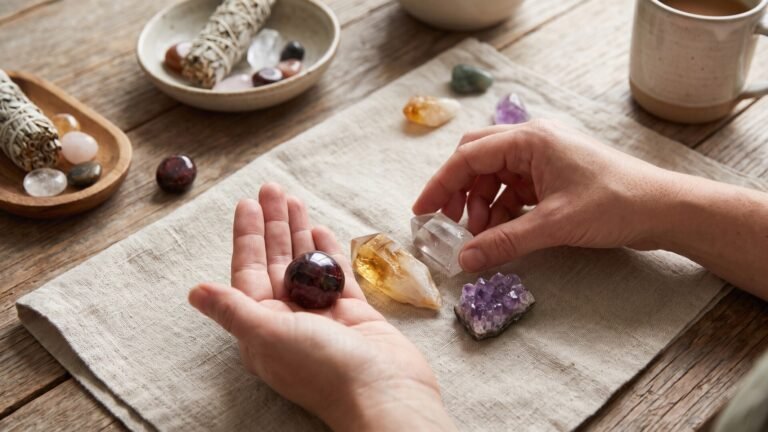
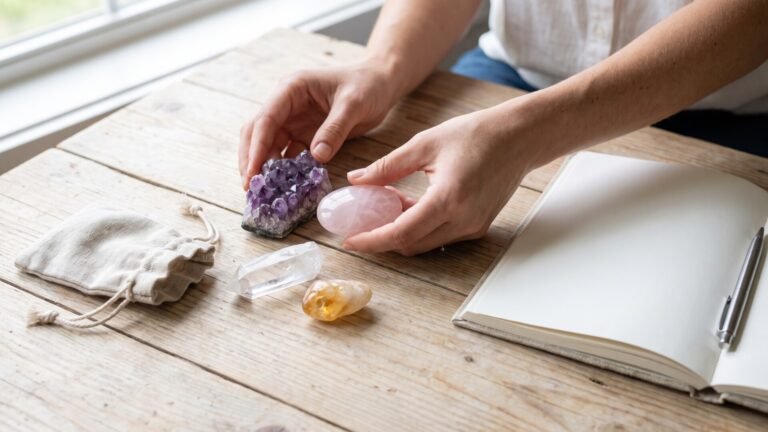
- Crystal clusters: Some people rest stones on a larger amethyst or clear quartz cluster or geode. This is physically safe as long as the cluster’s sharp points do not scratch the stone. Soft stones such as pearl and opal should sit on a cloth.
- Brief sunlight: Use cautiously, only for color-stable stones, as above.
These rituals are about meaning and mindfulness. Crystal practice is not a substitute for medical or mental health care, and a stone cannot treat or prevent any condition.
A Simple Routine by Stone
| Birthstone | Safe physical clean | Gentle ritual options |
|---|---|---|
| Garnet (January) | Soap and water | Moonlight, sound, meditation |
| Amethyst (February) | Soap and water | Moonlight, sound (limit sunlight, which can fade it) |
| Aquamarine (March) | Soap and water | Moonlight, sound |
| Diamond (April) | Soap and water; ultrasonic or steam if clean and well set | Moonlight, sound |
| Emerald (May) | Damp cloth only; no ultrasonic, steam or soaking | Moonlight, sound |
| Pearl (June) | Damp soft cloth, wiped dry | Moonlight, sound; no salt, sun or smoke contact |
| Ruby (July), sapphire (September) | Soap and water; check for fracture filling | Moonlight, sound, meditation |
| Peridot (August) | Soap and water | Moonlight, sound |
| Opal (October) | Damp soft cloth; avoid soaking | Moonlight, sound |
| Citrine and topaz (November) | Soap and water; no steam for topaz | Moonlight, sound (limit sunlight) |
| Tanzanite, turquoise, zircon, blue topaz (December) | Damp cloth or soap and water; avoid ultrasonic and steam | Moonlight, sound |
If you are not sure which birthstone applies to you, see Birthstones by Month.
Where These Traditions Come From
People have worn gemstones as amulets and symbols for thousands of years, and many cultures attached meanings and protective roles to particular stones. The specific language of “cleansing” and “charging” crystals, however, is largely a feature of modern crystal-healing and New Age practice that grew in popularity in the second half of the twentieth century and spread widely through books and social media. Methods vary from one teacher or community to another, which is one reason you will find directly conflicting advice online, such as one source saying to bathe every stone in salt water and another warning against it.
Because there is no single authority for these rituals, the sensible approach is to treat them as personal and to let the physical properties of the stone set the limits. Gemological institutes such as the GIA publish care guidance based on testing and experience, and that guidance should always take priority over a ritual if the two conflict. If you want the cultural background for particular stones, see Birthstone Meanings & Symbolism, and for a closer look at one stone’s beliefs, Garnet Meaning: History, Symbolism, Spiritual Properties & Modern Uses or The Role of Amethyst in Meditation.
Common Mistakes to Avoid
- Leaving stones in the sun on a windowsill all day: intense, prolonged light and heat can fade some colors and stress stones with inclusions. Even if you use sunlight at all, keep it short.
- Soaking pearls, opals or turquoise: pearls can lose luster and their silk threads can weaken, opals can crack, and turquoise can absorb liquid and change color.
- Using salt on silver or plated jewelry: salt accelerates tarnish and corrosion on silver and can strip plating.
- Using harsh household cleaners or baking-soda pastes: bleach, ammonia and abrasive pastes can dull stones and damage metals. Stick to mild soap and water.
- Mixing very different stones in one soaking bowl: a hard stone can scratch a softer one as they knock together.
- Leaving candles or incense unattended: smoke rituals are a fire risk, especially near fabric or paper. Use a fire-safe dish and never leave burning material alone.
Cleansing Jewelry vs. Loose Stones
A loose tumbled stone is a very different object from a ring or necklace. It has no metal to corrode, no glue to loosen and no prongs to snag, so it tolerates more of the traditional methods. A finished piece of jewelry combines the stone with metals, solder, adhesives and sometimes treatments, and each of those has its own weaknesses. This is why we repeatedly advise using moonlight, sound and meditation for jewelry and saving the more physical methods for loose, hard stones.
- Sterling silver: tarnishes with moisture, salt and sulfur compounds. Smoke from some materials can speed this up. Polish with a silver cloth after rituals.
- Gold-plated and vermeil pieces: the thin gold layer can wear away with repeated water and abrasive contact.
- Pearls and beaded necklaces: thread can weaken when wet. Wipe and lay flat to dry.
- Antique and vintage settings: older glues, foil backs and delicate prongs may fail with soaking or vibration. Ask a jeweler before any wet method.
Making Your Own Ritual
If you would like a simple, safe routine that also keeps your birthstone in good condition, here is one way to combine the two ideas. It takes about ten minutes and uses only methods that are safe for almost every stone.
- Check the stone and setting. Look for loose prongs, cracks or a cloudy surface.
- Clean it physically using the method that suits your stone from the table above.
- Dry it with a soft cloth and place it on a clean, dry surface.
- Hold the stone for a minute, breathe slowly, and think of what the piece means to you, such as a person, a memory or a goal.
- Leave it overnight in moonlight on a windowsill or near a sound source if you like, then put it away in a soft pouch.
If you are choosing a new piece to use in a practice like this, our guide to choosing a birthstone necklace and the Birthstone Jewelry Guide explain which stones hold up best to regular wear and handling.
Tips for Everyday Care
- Wipe jewelry with a soft cloth after wearing to remove oils.
- Put on perfume, lotion and hairspray before jewelry.
- Store pieces separately so harder stones do not scratch softer ones.
- Have a jeweler check prongs and clasps about once a year.
- If you have a ritual that you enjoy, keep it simple and safe.
For jewelry guidance by type, see our Birthstone Jewelry Guide and the Education & Buying Guides hub.
Tools You Might Use
- Soft brush and microfiber cloth for physical cleaning.
- A small bowl for water or a ritual space, kept away from drains.
- A singing bowl, bell or tuning fork for sound.
- A crystal cluster or geode as a resting place, with a cloth under delicate stones.
- Incense or herbs if you use smoke, with a fire-safe dish.
Kits are widely sold on marketplaces such as Etsy and Amazon. We have not tested any, so read reviews and make sure any “stone cleaner” is safe for your gem and metal. For gemstone jewelry itself, retailers such as Angara, Brilliant Earth, Blue Nile and James Allen sell birthstone pieces; check each seller’s care guidance for the specific stone.
Frequently Asked Questions About Cleansing And Charging Birthstones
Which birthstones should never get wet?
Pearl, opal and turquoise are the most sensitive, and emeralds that have been oiled or resin-filled should not be soaked. Wipe these with a slightly damp soft cloth instead.
Is it safe to leave my birthstone ring in moonlight overnight?
Yes. Moonlight does not affect the stone physically. Simply keep the ring somewhere secure so it cannot fall or be taken.
Can I clean gemstones with baking soda paste or in the dishwasher?
No. Heat, detergent and abrasive pastes can damage stones and metals. Use lukewarm water, mild soap and a soft brush for stones that tolerate it.
Do birthstones really need to be cleansed or charged?
Not from a gemological point of view. Stones need only physical cleaning to remove oils and dirt. Cleansing and charging are optional spiritual practices that some people enjoy.
What is the safest way to cleanse a birthstone?
For rituals, moonlight and sound are physically harmless for every stone. For physical cleaning, warm water, mild soap and a soft brush work for most hard stones.
Can I put my birthstone jewelry in salt water?
We do not recommend it. Salt can corrode metals and damage settings and porous or soft stones such as pearl, opal, turquoise and emerald.
Is sunlight safe for charging crystals?
Only briefly and only for stable stones. Sunlight can fade amethyst, kunzite, rose quartz and other colored stones, and heat can harm opal and pearl.
How often should I cleanse my stones?
There is no right answer, since it is a personal practice. Many people do it monthly, after a stressful period, or when they receive a new piece. Physical cleaning is recommended whenever the stone looks dull.
Is crystal cleansing a substitute for medical care?
No. Crystal practice has no proven medical effect and should not replace professional care for any physical or mental health condition.
Conclusion
If cleansing and charging your birthstones is a ritual that you value, keep it gentle and match the method to the stone: moonlight, sound and meditation are safe for nearly everything, while salt, sun, smoke, steam and burial can all cause damage. Whatever you believe about energy, regular physical cleaning is what actually keeps a gem looking its best. For more on the spiritual side of gems, read How Birthstones Can Boost Your Energy, and explore the Gemstones hub for profiles of each stone.