How to Care for Your Garnet Jewelry: A Complete Guide
Garnet is January’s birthstone and one of the most wearable colored gemstones: it is relatively hard, widely available, and comes in far more colors than the deep red most people picture. Even so, it is not indestructible. This guide covers how to clean, store, wear and maintain garnet jewelry, with notes for each garnet variety, because the right care depends on which garnet you own. For the full profile of the stone, see our Garnet: Meaning, Properties, Uses & Value guide.
Why Proper Garnet Care Matters
Garnets sit at roughly 6.5 to 7.5 on the Mohs scale, depending on the variety. That is hard enough for rings and daily jewelry, but hardness only measures scratch resistance. A garnet can still chip if it is struck on an edge, and everyday dust (which contains quartz at Mohs 7) can slowly dull softer varieties. The metal setting also needs attention: silver tarnishes, white gold may need re-plating, and prongs can loosen with wear.
Know Your Garnet: Varieties and Care Differences
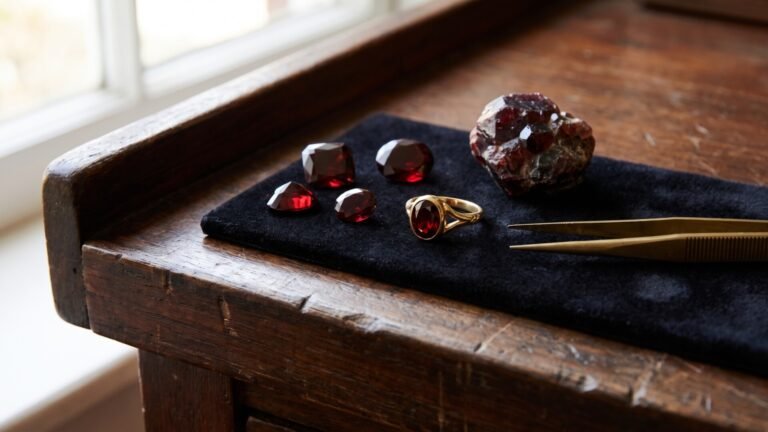
Garnet is not one mineral but a group of related species. They share a similar crystal structure and do not have cleavage planes, which is one reason garnet is generally a tough, practical jewelry stone. Most garnet on the market is not routinely treated, though you should still ask the seller. The table below summarizes the varieties you are most likely to meet.
| Variety | Typical color | Approx. Mohs hardness | Care note |
|---|---|---|---|
| Almandine | Deep red to purplish red | About 7-7.5 | The classic birthstone garnet; durable for daily wear |
| Pyrope | Red to dark red | About 7-7.5 | Durable; often sold as “Bohemian” garnet in antique jewelry |
| Rhodolite | Purplish pink to raspberry red | About 7-7.5 | A pyrope-almandine blend; durable |
| Spessartine | Orange to reddish orange | About 7-7.5 | Durable; keep out of prolonged heat |
| Grossular, including tsavorite | Green (tsavorite), orange or yellow-brown (hessonite) | About 6.5-7.5 (tsavorite at the harder end) | Tsavorite is typically clean and durable; good for rings |
| Demantoid (andradite) | Bright green | About 6.5 | Softer and more fragile; avoid ultrasonic cleaning and heat, and favor protective settings |
Values are approximate reference ranges. For help telling garnet varieties and look-alike red stones apart, see Garnet Color Types Explained, Garnet vs Ruby: How to Tell the Difference and Ruby vs Garnet vs Tourmaline.
Daily Care Tips
1. Remove Jewelry During Risky Activities
Take garnet jewelry off for activities that risk impact or chemical exposure:
- Household cleaning with bleach or strong cleaners
- Gardening and DIY
- Sports, gym sessions and climbing
- Swimming in chlorinated pools or hot tubs, which can damage metals and loosen settings
A knock on the edge of the stone or a harsh chemical on the metal is the most common cause of damage.
2. Put It On Last
- Apply perfume, lotion and hairspray before putting jewelry on.
- Wipe the piece with a soft cloth after wearing to remove oils and residue.
3. Handle Gently
- Avoid dropping jewelry or knocking it against countertops and door handles.
- Take rings off by the band, not by pulling on the stone, and fasten chains and bracelets with care.
How to Clean Garnet Jewelry
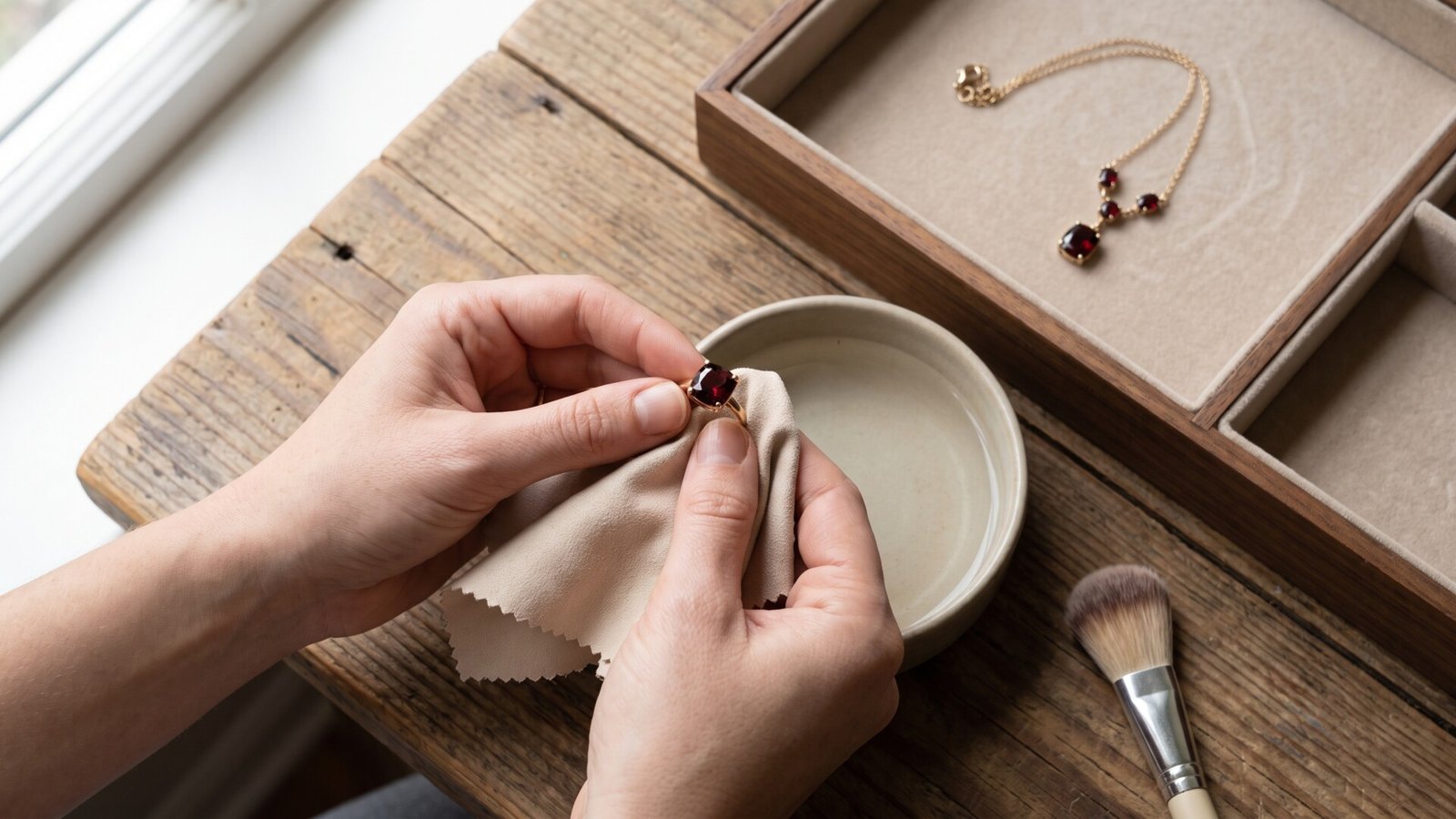
1. Mild Soap and Water (the safe default)
- Mix lukewarm water with a few drops of mild dish soap.
- Soak the piece for 10 to 15 minutes to loosen oils and dirt.
- Brush gently with a soft toothbrush, especially behind the stone and around the prongs.
- Rinse in lukewarm water and pat dry with a lint-free cloth.
Use a bowl rather than a sink so a loose stone or ring cannot go down the drain, and avoid very hot or very cold water, since sudden temperature changes can stress a stone.
2. Ultrasonic and Steam Cleaners
- Many clean, untreated garnets tolerate ultrasonic cleaning, but avoid it if the stone has visible fractures or inclusions, if it is a demantoid, or if the setting is loose, antique or has other delicate stones.
- Steam cleaning is not recommended by the Gemological Institute of America (GIA) for garnet, because heat and thermal shock can harm included stones and delicate settings. Warm soapy water is always safe.
- If you are unsure, skip both and ask a jeweler. Soap, water and a brush work well enough for routine cleaning.
3. Polishing Cloths
A soft microfiber cloth removes fingerprints and dust between washes. Use a treated silver polishing cloth only on the metal and keep it away from the stone and any plating.
What to Avoid
- Bleach, chlorine, acetone and abrasive powders or pastes
- Homemade “hacks” such as toothpaste or baking soda scrubs, which can scratch metal
- Prolonged soaking of glued or antique pieces
Storing Garnet Jewelry
- Keep garnet separate from diamonds, sapphires, rubies and other harder stones, which can scratch it. Softer pieces such as pearls and opals can be scratched by garnet in return.
- Use pouches, lined boxes or compartments, and fasten chains to prevent tangling.
- Store in a cool, dry place. Anti-tarnish strips help with silver. Garnet is not especially light-sensitive, but heat and humidity are hard on metals.
- Use a padded travel case when you take jewelry with you.
Professional Maintenance
- Prong and setting checks: Have a jeweler inspect rings and other frequently worn pieces about once a year. Tap a ring near your ear; a rattle means the stone may be loose.
- Deep cleaning: A jeweler can clean and polish the metal safely and check the stone first.
- Re-plating and repairs: White gold may need rhodium re-plating, and thin prongs can be rebuilt before a stone is lost.
- Appraisal updates: If the piece is insured, ask the appraiser how often to update it.
Antique and Vintage Garnet Jewelry
Antique garnet jewelry, such as Victorian-era Bohemian garnet pieces, often uses small stones set closely together, sometimes with foil backs or glue, and thin, worn metal settings.
- Avoid ultrasonic and steam cleaning and prolonged soaking.
- Clean by wiping gently with a damp cloth and a soft brush.
- Have a jeweler with antique experience check the settings before regular wear.
Care by Jewelry Type
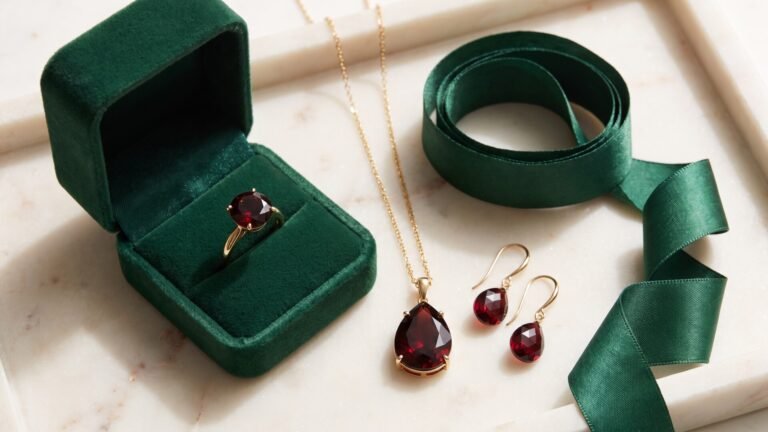
- Rings: The most exposed to knocks and chemicals. Remove them for sports and chores. For ideas on ring styles, see Garnet Engagement Rings: Symbolism and Style.
- Necklaces and pendants: Lower impact risk. Watch for tangling and clasp wear. See How to Choose the Perfect Birthstone Necklace.
- Earrings: Check the backs for a secure fit and clean around the posts.
- Bracelets: They knock against desks and doors more than you expect, so inspect clasps and stone settings regularly.
Garnet Paired With Other Stones
Garnet is often combined with diamonds, sapphires, pearls or other birthstones. Always clean to the needs of the most delicate stone in the piece. If a piece contains pearl, opal, emerald, turquoise or a fracture-filled gem, do not use ultrasonic or steam cleaning and stick to soap, water and a soft cloth.
Symbolic and Spiritual Care (Optional)
In crystal-healing traditions, some people believe garnet supports courage, commitment and protection, and they cleanse their stones with moonlight, sound or by placing them on another crystal. These are belief-based practices, not gemological requirements, and none of them have been shown to affect a stone’s physical properties or a person’s health. They are also not a substitute for medical care. If you enjoy the ritual, keep it gentle: moonlight and sound are physically safe for garnet, while burning herbs or salt water can leave residues on the metal. For more on the symbolism, see Garnet Meaning: History, Symbolism, Spiritual Properties & Modern Uses, or our general guide to cleansing and charging birthstones.
Common Garnet Jewelry Mistakes
- Wearing it for sports or chores, which risks chips and loosened prongs.
- Chemical exposure from pool water, cleaners and cosmetics, which dulls metal and stone surfaces.
- Storing garnet loose with harder stones, which can scratch it.
- Using ultrasonic cleaners on every piece without checking for fractures, loose settings or other delicate stones.
- Skipping professional checks, which is how stones get lost.
Care Products Worth Having
- Microfiber or jewelry cloths for fingerprints and dust.
- Mild dish soap and a soft toothbrush, all most garnets need.
- A lined jewelry box or travel case with separate compartments.
- Anti-tarnish strips if the piece is silver.
You can find these at general retailers and online marketplaces such as Amazon. We have not tested any specific product, so read reviews and check that a product is safe for gemstones and your metal.
Buying or Replacing Garnet Jewelry
If your piece needs replacing or you want to add to your collection, mainstream and specialist retailers such as Blue Nile, James Allen, Brilliant Earth, Angara and Etsy sellers all list garnet jewelry. Compare return policies, ask which garnet variety it is, whether it is natural or lab-grown, and whether any treatment has been applied. For gift inspiration, see 10 Gorgeous Garnet Jewelry Gift Ideas or January Birthstone Gifts for Him and Her. If you cannot decide between a red stone, compare garnet and ruby, or see an alternative green stone in Peridot vs Tsavorite Garnet.
Garnet Care Quick Facts
| Question | Short answer |
|---|---|
| Hardness | About 6.5-7.5 on the Mohs scale, depending on variety |
| Toughness | Fair to good; suitable for most jewelry styles, but avoid hard blows (per GIA) |
| Cleavage | None, though stones can still chip or fracture |
| Warm soapy water | Always safe |
| Ultrasonic cleaner | Usually safe for clean stones; avoid with fractures, inclusions, demantoid or loose settings |
| Steam cleaner | Not recommended |
| Chemicals | Stable to most household chemicals, but harsh cleaners can damage the metal setting; hydrofluoric acid can attack garnet |
| Light and heat | Stable to light; avoid sudden heat changes |
Choosing a Setting That Protects Your Garnet
Care starts at purchase. A bezel setting wraps the stone’s edge in metal and gives the best protection against knocks, which makes it a sensible choice for a daily-wear garnet ring. Prong settings show more of the stone but leave edges exposed, so check the prongs regularly. Pendants and earrings take far fewer impacts, so they suit more open designs. If you plan to wear a softer demantoid every day, a protective setting or a pendant is the safer choice. Our garnet engagement ring guide discusses ring styles in more detail.
Spotting Problems Early
- A rattle or wobble: the stone or a prong may be loose. Stop wearing the piece and see a jeweler.
- A cloudy or dull surface: usually a film of soap, lotion or skin oils rather than damage. A gentle wash often restores sparkle.
- Chips on the girdle (the stone’s edge): these need a jeweler’s assessment and sometimes re-polishing.
- Bent or worn prongs: snagging on clothing is a common sign.
- Dark or green marks on skin under silver: tarnish or metal reacting with products; clean the metal and consider a different alloy.
Insurance, Documentation and Traveling
Keep the receipt and any lab or appraisal paperwork with the piece, and photograph it from a few angles. For valuable pieces, ask your insurer whether jewelry needs to be listed separately. When traveling, carry garnet jewelry in a padded case in your hand luggage rather than checked bags, and avoid wearing delicate pieces in places where you are likely to knock them. Prices for garnet vary widely by variety, color and size, from budget-friendly almandine and pyrope pieces to costly top-quality tsavorite and demantoid, so ask a seller to identify the variety before you buy.
Explore More Garnet Guides
Browse the complete garnet guide for meaning, properties and value; read Garnet Color Types Explained to identify your stone; and see our January birthstone guide for the full month overview.
Garnet Jewelry Care Checklist
- Remove jewelry before sports, chores, swimming and chemical exposure
- Clean with soap, lukewarm water and a soft brush; dry thoroughly
- Store separately in a lined box or pouch
- Skip ultrasonic cleaning if the stone is fractured, included, a demantoid, or in a delicate setting
- Book an annual professional inspection
Frequently Asked Questions About Garnet Jewelry Care
Can I wear garnet jewelry every day?
Yes, most garnets are durable enough for daily wear, especially in protective settings. Remove rings for sports and heavy chores, and take extra care with softer demantoid garnet.
How do I clean garnet jewelry at home?
Soak it in lukewarm water with a few drops of mild dish soap, brush gently with a soft toothbrush, rinse and dry with a soft cloth.
Is garnet safe in an ultrasonic cleaner?
Often, but not always. Avoid ultrasonic cleaning for garnets with fractures or inclusions, for demantoid, for antique or loose settings, and for pieces that include delicate stones. If in doubt, ask a jeweler.
Does garnet fade in sunlight?
Garnet is not generally known for light-sensitivity, but heat can harm some stones and metal settings, so avoid leaving jewelry in direct sun or hot cars.
How often should I have my garnet ring checked?
About once a year for a ring worn regularly, or sooner if you notice a loose stone, bent prong or a rattle.
What is the difference between garnet and ruby when cleaning?
Ruby is harder, at about 9 on the Mohs scale, and is often heat-treated or fracture-filled, which affects cleaning. Garnet is softer and usually untreated. See our garnet vs ruby guides for how to tell them apart.
Do garnets have healing powers?
No scientific evidence supports healing powers. Many cultures associate garnet with courage and protection, and that symbolism is a matter of tradition and belief rather than medicine.
Conclusion
Garnet is a durable, affordable and versatile birthstone, and good care mostly comes down to a few habits: keep it away from knocks and chemicals, clean it gently, store it apart from harder stones and get the setting checked once a year. Check your variety first, since demantoid and antique pieces need more caution. For more on the stone itself, visit our garnet guide, and for other gemstones see the Gemstones hub.