How Birthstones Can Boost Your Energy
People have worn gemstones for protection, confidence and good fortune for thousands of years, and many readers today reach for their birthstone when they want to feel more focused, calmer or more motivated. This guide looks at what that tradition actually says, which stones are linked to which kinds of “energy”, and how to use them in everyday life, while being plain about what is belief and what is gemology.
A quick honest note up front: the idea that gemstones carry or transmit energy is a spiritual and cultural belief, not something science has demonstrated. We share these traditions because many readers find them meaningful, and because a stone you love and wear daily can be a pleasant ritual. Nothing here is medical advice, and nothing replaces rest, good food, sleep or professional care. See also our crystal healing basics for beginners for the wider background.
What “Birthstone Energy” Means: Belief Versus Evidence
In crystal-healing practice, “energy” usually refers to a stone’s supposed ability to influence mood, motivation or spiritual state. It is not an energy that physics can measure in a gemstone. Gemologists describe stones by their mineral species, chemistry, hardness and optical properties; those are the facts you can check. The energetic meanings come from centuries of folklore, from Hindu and Buddhist traditions, from medieval lapidaries (books about stones) and, in their current form, mostly from 20th-century New Age writing.
What research does suggest is that expectation matters. When people hold an object they believe is meaningful, they often report feeling calmer or more focused, which is a well-known placebo-type effect, and rituals such as a morning moment of quiet with a favorite ring can support routine and mindfulness. That is a real and harmless benefit, but it is a psychological one, and it does not require any special property of the mineral. Our guide to the science behind crystal colors explains what gemstone color actually is physically, and why color can still influence how we feel.
Gemstone Facts at a Glance
Before the symbolism, here is the factual layer for the stones most often linked to energy and vitality. Hardness (Mohs scale) measures scratch resistance only; toughness and cleavage decide how easily a stone chips or splits. For a deeper explanation, read our gemstone hardness scale guide.
| Stone | Month / list status | Mohs hardness | Everyday-wear notes |
|---|---|---|---|
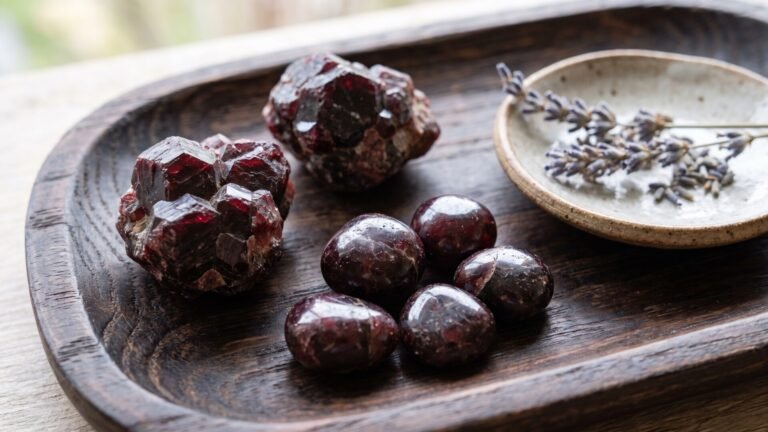
| Garnet | January (modern and traditional) | 6.5–7.5, depending on variety | Good for rings with normal care; avoid hard knocks |
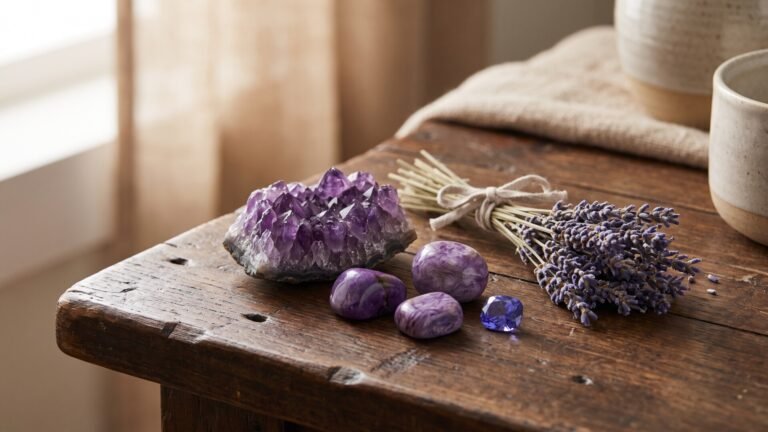
| Amethyst | February (modern and traditional) | 7 | Durable; strong sunlight or heat can fade some stones |
| Citrine | November (modern list, alongside topaz) | 7 | Durable; much citrine on the market is heat-treated amethyst |
| Moonstone | June (modern list, alongside pearl and alexandrite) | 6–6.5 | Cleavage makes it chip-prone; better in pendants and earrings than daily rings |
| Peridot | August (modern and traditional) | 6.5–7 | Can scratch and chip over time; protective settings help |
| Sapphire | September | 9 | Very durable; suitable for daily wear |
| Ruby | July | 9 | Very durable; suitable for daily wear |
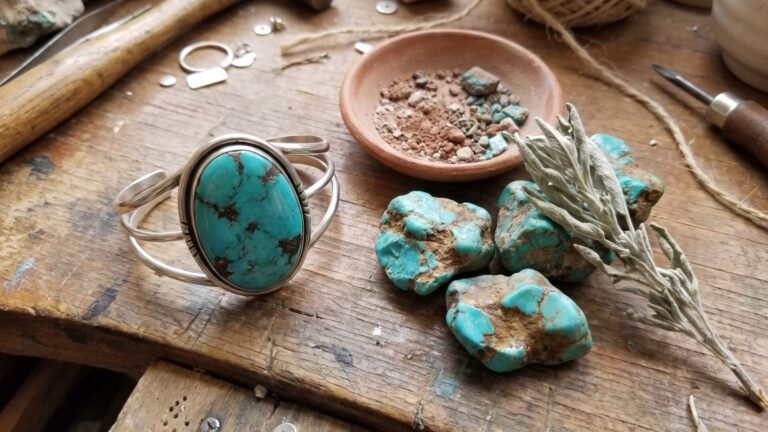
| Turquoise | December (modern list) | 5–6 | Porous and soft; often stabilized; keep away from oils and chemicals |
| Aquamarine | March | 7.5–8 | Durable; watch for cleavage-like breaks in large step cuts |
| Carnelian* | Not a standard birthstone | 6.5–7 (chalcedony) | Tough enough for daily wear; often dyed or heat-treated |
| Iolite* | Not a standard birthstone | 7–7.5 | Strong pleochroism (color shifts with angle); moderate cleavage |
*Carnelian and iolite are popular in crystal circles but do not appear on the standard modern or traditional birthstone lists, so we treat them here as “energy stones” rather than birthstones. Lists also differ by country and organization; our birthstones by month guide explains the main lists.
Traditional Associations by Kind of Energy
Emotional Balance and Calm
Amethyst is the stone most often tied to calm in crystal traditions; in ancient Greek legend its name was linked to protection from drunkenness, and it later became a symbol of sobriety and clear thinking. Moonstone is associated with intuition and emotional flow, and peridot and aquamarine with renewal and gentle composure. These are symbolic readings, not clinical effects. If you struggle with anxiety, stress or low mood, the stones are not a treatment, so please speak to a healthcare professional. Our amethyst meditation guide shows how people pair amethyst with a mindfulness practice.
Motivation and Vitality
Red and orange stones are the classic symbols of drive. Garnet has long been seen as a stone of passion, commitment and vitality, and ruby, the July stone, is called the “king of gems” in Indian tradition, where it was linked with energy and courage. Citrine is nicknamed the “merchant’s stone” and is associated with optimism and abundance. Read more in the metaphysical properties of garnet and our garnet guide.
Focus and Clarity
Sapphire has been tied to wisdom and focus since medieval times, when clergy wore it as a symbol of heavenly contemplation. Amethyst and sodalite are also commonly linked with a clear mind. People who use these stones usually describe them as a visual anchor, a small reminder to slow down and concentrate, rather than as a source of power.
Chakras and Crystals: Where the Idea Comes From
The chakra system comes from Indian spiritual traditions and describes seven energy centers along the body. Matching specific gemstones to chakras is a much more recent practice, popularized in 20th-century New Age literature, so you will see different books assign different stones to the same chakra. Common modern pairings are:
- Crown chakra: amethyst, often linked with spiritual awareness.
- Heart chakra: emerald, peridot and rose quartz, linked with compassion.
- Solar plexus chakra: citrine and tiger’s eye, linked with confidence and personal power.
- Root chakra: garnet and ruby, linked with grounding and stability.
If chakra work is part of your practice, treat these as starting points for reflection. There is no scientific evidence that chakras or crystal placement change physical energy levels.
Practical Ways to Use a Birthstone in Daily Life
1. Wear It as Jewelry
Jewelry is the simplest option, and it keeps the stone as a personal reminder through the day. Match the piece to the stone’s durability:
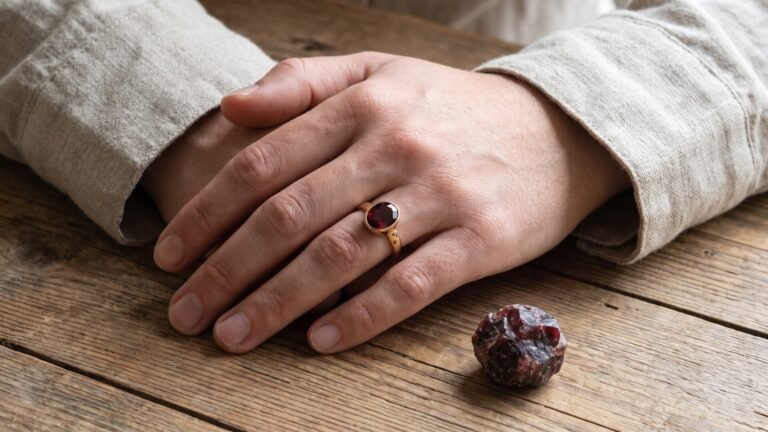
- Garnet, amethyst, citrine, sapphire, ruby: durable enough for rings and bracelets with sensible care.
- Peridot and moonstone: prefer pendants and earrings, or a ring with a protective bezel or halo setting for occasional wear.
- Turquoise and opal: best as pendants and earrings, away from lotions, perfume and harsh cleaners.
Browse our birthstone jewelry guide for ideas by piece, or our guide to choosing a birthstone necklace if a pendant suits you best.
2. Use It in Meditation or Quiet Time
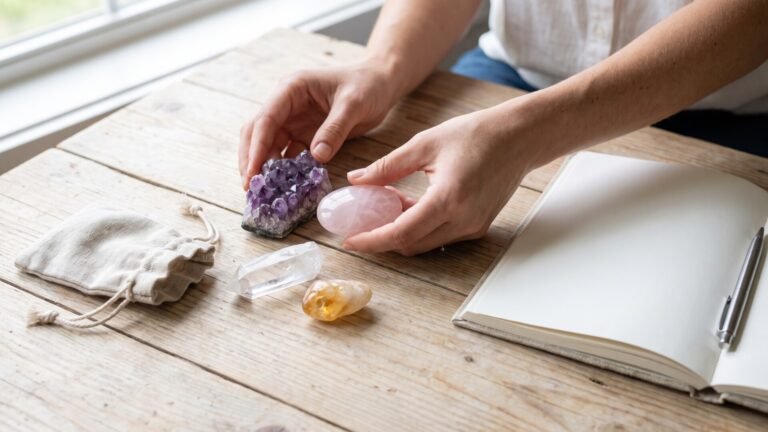
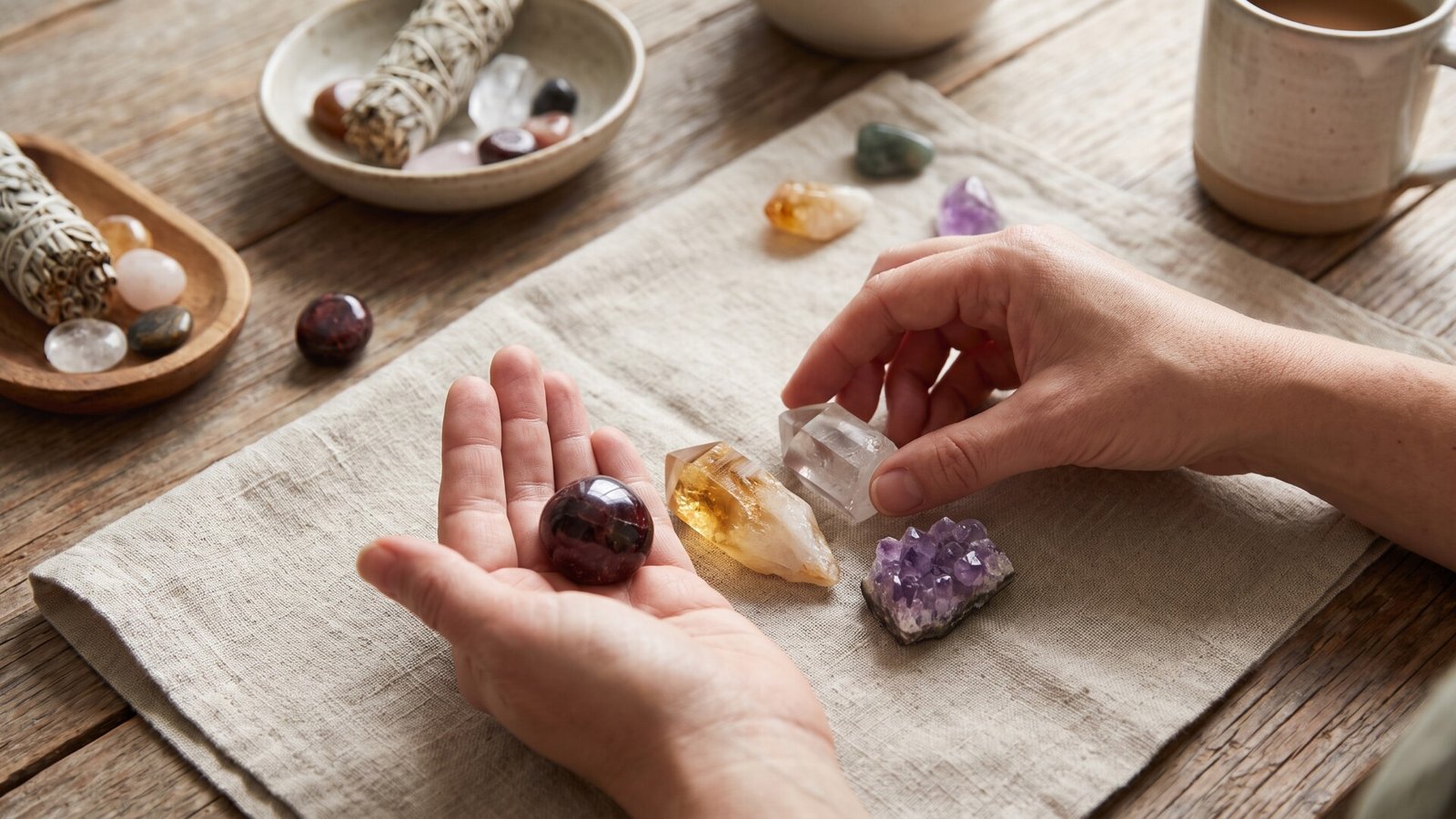
Many people hold a stone, rest it in the palm, or place it nearby while they breathe slowly or journal. Choose a smooth tumbled piece so you are not handling a fragile faceted gem, and decide in advance what you want from the moment, such as calm before bed or focus before work. The benefit here comes from the pause and the intention.
3. Keep Stones at Your Desk or in Your Home
A citrine or tiger’s eye on a desk, an amethyst cluster by a reading chair, or a peridot or jade piece in a living area can act as a visual cue. Keep amethyst and citrine out of direct, prolonged sunlight, since some stones fade over time.
4. Pair With Habits That Actually Support Energy
Sleep, daylight, movement, hydration and balanced meals have real, measurable effects on energy. If a gemstone ritual helps you stick to a morning routine, a short walk or a quiet ten minutes, that is a sensible use of it.
Choosing a Stone for Your Goal
| If you want to… | Stones traditionally linked | Note |
|---|---|---|
| Feel calmer | Amethyst, moonstone, aquamarine | Amethyst is durable; moonstone needs gentler wear |
| Feel motivated | Garnet, citrine, ruby, carnelian | Garnet is the budget-friendly January birthstone |
| Concentrate | Sapphire, amethyst, sodalite | Sapphire is the hardest and most durable option here |
| Feel creative | Carnelian, iolite, peridot | Iolite and carnelian are not standard birthstones |
| Wear your own month’s stone | See the month table above | Check which list (modern or traditional) you follow |
Your own birth month is a good default: it ties the ritual to a date that matters to you. Our complete birthstone guide by month and birthstone personality traits cover each month in more detail, and the zodiac birthstones guide shows how astrology lists differ from monthly lists.
Combining Stones
Pairing stones is a matter of taste and tradition. Some practitioners combine amethyst and rose quartz for a calm, gentle look, or citrine and garnet for a warm palette, and these combinations are symbolic rather than scientific. From a gemology standpoint, check hardness before you stack or store them together: a corundum stone (ruby or sapphire, 9) will scratch softer stones such as peridot (6.5–7) or turquoise (5–6) if they rub in the same pouch.
Caring for Your Stones
- Cleaning: warm water, mild dish soap and a soft brush are the cautious default for most stones. Avoid ultrasonic and steam cleaners for emerald, opal, turquoise, pearl and any stone with fractures or fillings.
- Light and heat: keep amethyst, citrine and other color-sensitive stones out of strong sun and heat.
- Storage: store each piece separately in a soft pouch or lined compartment so harder stones do not scratch softer ones.
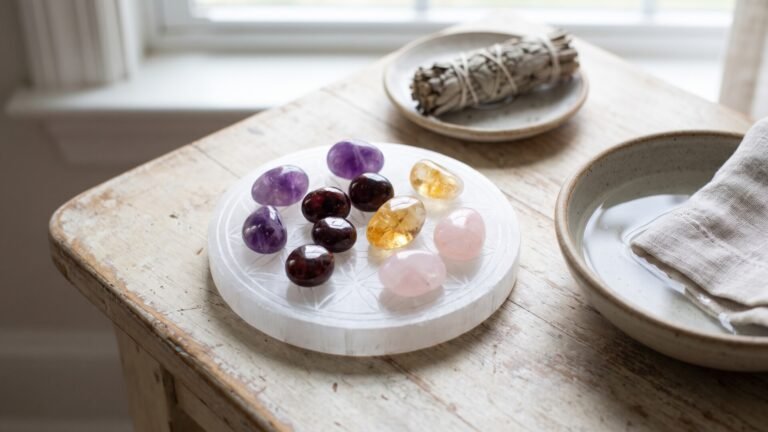
- Energetic cleansing: moonlight, sound or a quiet moment are popular rituals. Avoid soaking porous or treated stones in water or salt, and keep turquoise and moonstone away from direct sun. Our guide to cleansing and charging your birthstones lists which methods are safe for which stones.
Treatments and Lab-Grown Stones
Most colored gemstones are treated in some way, and it is worth knowing what you are buying. Rubies and sapphires are commonly heat-treated, and some rubies are also filled with glass to hide fractures, which lowers durability and value. Emeralds are routinely oiled. Turquoise is often stabilized with resin. Much of the citrine sold today is heat-treated amethyst or smoky quartz, and the blue topaz in jewelry stores is almost always irradiated and heated. None of this is a problem if it is disclosed and priced accordingly. If treatment matters to you, ask the seller in writing. For more, see natural versus lab-grown birthstones.
A lab-grown stone has the same chemistry as its natural counterpart, so a lab-grown ruby is real ruby. A simulant only imitates appearance, for example glass or dyed quartz sold as another gem. Believers in crystal energy often prefer natural stones, but that is a personal choice with no scientific basis either way.
Buying Tips
- Decide on a budget and wear pattern first: daily ring, occasional pendant or desk stone.
- Ask which birthstone list the seller follows and whether the stone is natural, treated or lab-grown.
- Be cautious with sellers that promise healing, cures or guaranteed results. A reputable seller sells jewelry, not medical outcomes.
- Look for clear return policies and photos or video of the exact piece. Check our guide to online stores for authentic birthstone jewelry for retailer comparisons.
- For ethical sourcing questions, read our guide to ethical gemstone shopping.
Cultural Background
The idea that stones carry power appears across many cultures. In the Hebrew Bible the high priest’s breastplate was set with twelve stones, and later writers such as Josephus and St. Jerome linked those stones with the months, which is often cited as an early root of the birthstone tradition. Peridot was mined on the Red Sea island of Zabargad (St. John’s Island) in antiquity, and amethyst was prized in ancient Greece. Indian texts describe nine gems (the navaratna) tied to the planets. These traditions are historically interesting and culturally important, even when they cannot be tested. Our history of birthstones gives the full timeline.
Stones in This Guide: Quick Reference
- Garnet (January): traditionally linked with vitality, commitment and grounding. See the January birthstone page.
- Amethyst (February): traditionally linked with calm and clarity. See the February birthstone page.
- Moonstone (June, modern list): traditionally linked with intuition. See the June birthstone page.
- Peridot (August): traditionally linked with renewal. See the August birthstone page.
- Citrine (November, modern list): traditionally linked with optimism and abundance. See the November birthstone page.
- Turquoise (December, modern list): traditionally linked with protection and communication. See the December birthstone page.
For more on any of these stones, see the gemstones hub or the wider birthstone meanings and symbolism section.
Frequently Asked Questions About Birthstones And Energy
Can birthstones really boost your energy?
There is no scientific evidence that gemstones emit or transmit energy that changes how you feel. Some people find that wearing a meaningful stone supports a calming or motivating routine, which is a psychological benefit. Treat the energy associations as tradition and personal ritual, not as a medical or scientific effect.
Which birthstone is best for energy and motivation?
Traditionally, red and orange stones such as garnet and ruby, and yellow citrine, are the ones linked to vitality and drive. Garnet is the January birthstone and ruby the July stone, so you can match the tradition to your own month. These are symbolic associations only.
Which stones are linked with calm?
Amethyst, moonstone and aquamarine are the stones most often associated with calm in crystal traditions. Amethyst is the more durable choice for everyday wear. If you are dealing with anxiety or stress, a gemstone is not a treatment, so please speak to a healthcare professional.
Are carnelian and iolite birthstones?
No. They are popular in crystal-healing circles but are not on the standard modern or traditional birthstone lists. They are fine to wear for their color and symbolism, but they should not be presented as official birthstones.
Do I need to cleanse my birthstone?
Energetic cleansing is a spiritual ritual, not a requirement. For the physical stone, regular cleaning with mild soap, warm water and a soft brush is enough for most stones. Avoid ultrasonic and steam cleaners with delicate or treated stones such as emerald, opal, turquoise and pearl.
Is it safe to wear softer stones like moonstone or turquoise every day?
They can be worn, but they are more vulnerable. Moonstone has cleavage and can chip, and turquoise is soft and porous. Pendants and earrings are safer than rings, and protective settings, gentle cleaning and removing the piece before exercise or cleaning help them last.
Is a lab-grown birthstone less powerful than a natural one?
From a gemological view, a lab-grown stone has the same chemistry and structure as the natural stone. Whether it carries more or less symbolic meaning is a personal belief with no scientific basis. Many buyers choose lab-grown stones for price or ethical reasons.
Conclusion
Birthstones can be a meaningful part of a daily routine: a color you like, a tradition you enjoy and a small cue to pause. What they cannot do is replace sleep, food, movement or medical care. Choose a stone you love, check how durable it is for the way you will wear it, buy from a seller who is open about treatments, and enjoy the history that comes with it.