Natural vs. Lab-Grown Diamonds: Which is the Better Long-Term Value?
I have a confession that still surprises people who know me as a jewelry writer.
For years, I told every friend and family member the same thing: “Always buy natural diamonds. Lab-grown won’t hold their value. You’re throwing money away.”
Then, last year, my own sister asked me for help choosing an engagement ring. She had a firm budget of $5,000. She wanted a stone that looked huge and sparkled like crazy. She didn’t care about resale value because she never planned to sell it.
I walked her through both options. For $5,000, a natural diamond would buy her about 0.70 carats – a nice stone, but not a showstopper. A lab-grown diamond would buy her nearly 2 carats, with better color and clarity, in a beautiful setting.
She chose lab-grown. And you know what? She’s thrilled. Every time she looks at that big, brilliant stone, she smiles. And I realized: my advice had been one‑sided for too long.
In 2026, the natural vs. lab-grown diamond debate is the biggest question in fine jewelry. Buyers are confused, bombarded with marketing from both sides, and worried about making a mistake. The real question isn’t “which is better?” – it’s “which is better for you and your long‑term goals?”
This guide is my honest, no‑spin answer. I’ll compare price, resale value, durability, emotional meaning, and long‑term value. I’ll show you exactly what you get for your money, where each option shines, and where each falls short. By the end, you’ll know exactly which path is right for your ring – and your future.
What Are Natural vs. Lab-Grown Diamonds?
Let’s start with the basics, because there’s still confusion.
Natural Diamonds
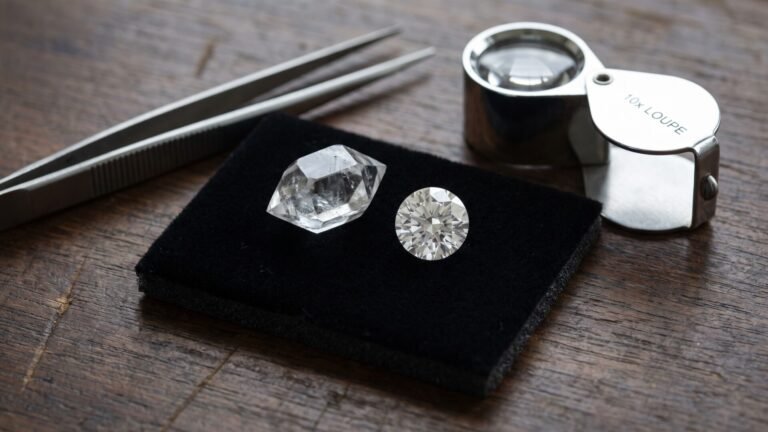
Natural diamonds formed billions of years ago, deep in the Earth’s mantle, under intense heat and pressure. They were brought to the surface by volcanic eruptions and have been treasured for centuries as symbols of rarity, luxury, and enduring love. They are finite – once mined, they’re gone forever.
Lab-Grown Diamonds
Lab-grown diamonds are created in laboratories using two primary methods: High Pressure High Temperature (HPHT) or Chemical Vapor Deposition (CVD). These processes replicate the natural diamond‑forming environment, producing crystals that are chemically, physically, and optically identical to natural diamonds. The only difference? Their origin.
The Critical Point
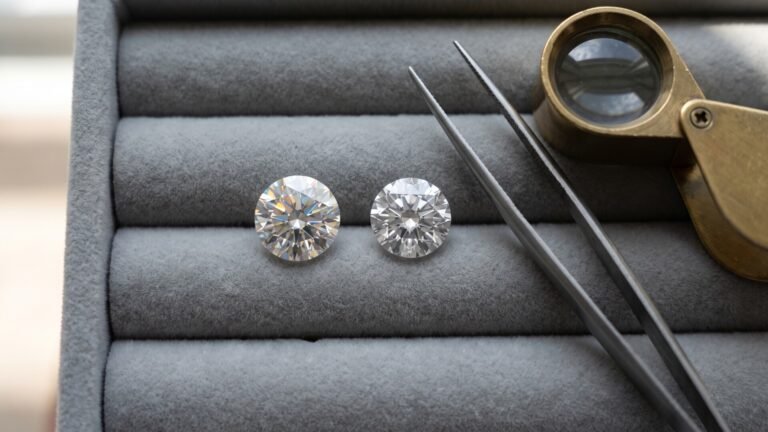
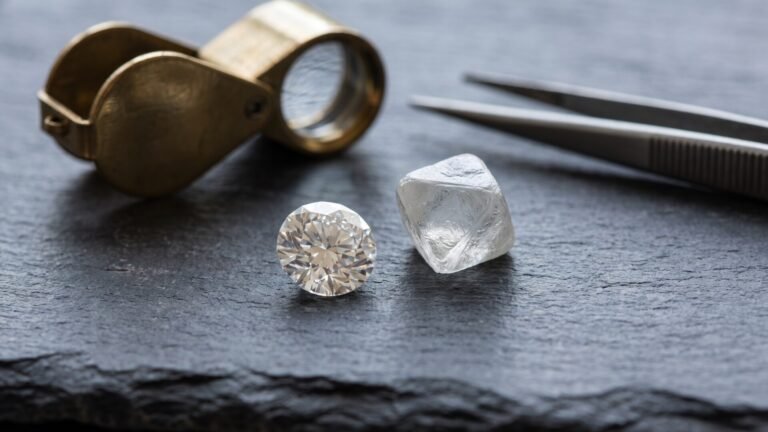
To the naked eye – and even under magnification – a lab‑grown diamond is indistinguishable from a natural one. They have the same hardness (10 on Mohs scale), same refractive index, same sparkle. The difference is entirely in origin, rarity, and market perception.
So when you’re comparing natural vs. lab, you’re not comparing quality. You’re comparing value, investment potential, and personal priorities.
Key Differences at a Glance
| Factor | Natural Diamonds | Lab-Grown Diamonds |
|---|---|---|
| Price (1ct, G–H, VS2) | $4,000 – $12,000+ | $1,000 – $3,500 |
| Rarity | Extremely rare – finite supply | Mass-producible – unlimited |
| Resale Value | Retains 20–60% of retail price | Very low (often <10%) |
| Sustainability | Improving, but mining has impact | Generally lower land/water impact |
| Perceived Value | Traditional luxury, heirloom | Modern alternative, practical |
| Best For | Investment, prestige, legacy | Budget, maximum size, low resale concern |
Price Comparison: Natural vs. Lab Diamonds
This is where most buyers start – and where the differences are most dramatic.
Natural Diamond Pricing (Round, G–H color, VS2 clarity, GIA certified)
- 0.50 carat: $1,500 – $3,000
- 1.00 carat: $4,000 – $12,000 (depending on cut quality)
- 1.50 carat: $8,000 – $18,000
- 2.00 carat: $15,000 – $35,000+
Lab-Grown Diamond Pricing (same specs, IGI/GCAL certified)
- 0.50 carat: $400 – $800
- 1.00 carat: $1,000 – $3,500
- 1.50 carat: $1,800 – $5,000
- 2.00 carat: $2,500 – $8,000
The Key Insight
Lab-grown diamonds are 60–80% cheaper than natural diamonds of comparable size and quality. That’s not a small difference – it’s the difference between a modest stone and a showstopper, between a simple setting and a designer halo, between stretching your budget and staying comfortably within it.
Want to see real-time pricing? Check our [Diamond Buying Guide] for updated comparisons.
Long-Term Value: Which One Holds Its Worth?
Here’s where the debate gets real.
Natural Diamonds
Natural diamonds have historically retained some resale value. A well‑chosen natural diamond (excellent cut, good color and clarity, GIA certified) might sell for 20–60% of its original retail price on the secondary market. This isn’t guaranteed – diamonds are not stocks – but the scarcity of natural stones supports a floor.
Lab-Grown Diamonds
Lab-grown diamonds are not investments. Their prices have been dropping year over year as production technology improves and supply increases. A lab diamond you buy today for $3,000 might cost $1,500 in two years. Resale demand is minimal – you’d be lucky to recover 10–20% of your purchase price.
The Takeaway
- Natural diamond: Better long‑term value retention. Think of it as a luxury good that won’t become worthless.
- Lab‑grown diamond: Treat as a consumption purchase – like a car or a smartphone. You’re buying beauty and joy, not future returns.
Resale Value & Investment Potential
Let me be blunt: diamonds are not great investments. Neither natural nor lab‑grown will make you rich. But if you care about recouping some value down the line – for an upgrade, a financial emergency, or an inheritance – natural diamonds are the clear winner.
Natural Diamonds
- Can resell for 20–60% of purchase price through private sales, auctions, or trade‑ins.
- Best results come from high‑quality stones (Excellent cut, G+ color, VS+ clarity, 1+ carat).
- Branded or designer settings can add value.
Lab-Grown Diamonds
- Resale value is very low – often less than 10% of original price.
- Most jewelers won’t buy them back.
- Secondary market is thin and prices continue falling.
Important Nuance
If you never plan to sell your diamond – and most engagement ring buyers don’t – resale value may not matter at all. Many people wear their rings for a lifetime and pass them down. In that case, the “investment” is emotional, not financial.
Size vs. Value Trade-Off
This is often the single biggest decision driver.
Example: $5,000 Budget
- Natural diamond: Approximately 0.90 – 1.20 carats (depending on cut, color, clarity)
- Lab‑grown diamond: Approximately 1.80 – 2.50 carats
Example: $10,000 Budget
- Natural diamond: Approximately 1.20 – 1.70 carats
- Lab‑grown diamond: Approximately 3.00 – 5.00 carats
The Visual Impact
A 2‑carat diamond looks significantly larger than a 1‑carat diamond. For many buyers, that size difference is worth the trade‑off in resale value. On a hand, across a dinner table, or in photos, the lab‑grown stone will look more impressive.
The Counterpoint
Some buyers feel that a smaller natural diamond carries more prestige. They value the story of a billion‑year‑old stone, the rarity, and the tradition. For them, size isn’t everything.
Sustainability & Ethics (2026 Buyer Concern)
Both natural and lab‑grown diamonds have improved dramatically in recent years.
Natural Diamonds
- The Kimberley Process has reduced conflict diamonds to less than 1% of the market.
- Major producers (Canada, Botswana, Russia) have invested in environmental restoration and community development.
- Brands like Brilliant Earth and James Allen offer traceable, responsibly sourced natural diamonds.
Lab-Grown Diamonds
- No mining = no land disruption, no water pollution, no community displacement.
- Energy usage varies: some facilities run on coal power; others (like Brilliant Earth’s partners) use 100% renewable energy.
- Lower carbon footprint overall, but not zero.
Which is more ethical?
It depends on your priorities. If you care most about land preservation and avoiding mining, lab‑grown wins. If you care about supporting mining communities and traditional economies, responsibly sourced natural diamonds are a strong choice.
For a deeper dive, read our Guide to Ethical Diamonds.
Durability & Wear
Both are 10 on the Mohs scale.
Natural and lab‑grown diamonds are identical in hardness, toughness, and stability. They won’t scratch, chip easily, or degrade over time. Both are suitable for daily wear in engagement rings, earrings, necklaces, and bracelets.
No difference. You can remove this concern from your decision.
Emotional & Symbolic Value
This is where logic ends and feeling begins.
Natural Diamonds
- “Real”: For many, a natural diamond feels more authentic, more traditional, more “forever.”
- Rare: The knowledge that your stone took billions of years to form and was mined from the earth carries weight.
- Heirloom: Natural diamonds have a proven track record of being passed down through generations.
Lab-Grown Diamonds
- Modern: Represents innovation, practicality, and forward‑thinking.
- Value‑oriented: The choice of someone who prioritizes budget and size over tradition.
- Less baggage: No concerns about mining ethics or environmental impact.
Which one wins?
There’s no objective answer. A natural diamond says, “I value rarity and tradition.” A lab‑grown diamond says, “I value beauty and practicality.” Both are valid. The right choice is the one that aligns with your values.
Best Natural Diamond Options
If you’ve decided that natural diamonds are right for you, here are three excellent choices from trusted jewelers.
1. Classic Natural Diamond Solitaire Ring – Blue Nile
Price: $4,000 – $10,000
Style: Timeless six‑prong setting
Best for: Traditional buyers, first‑time engagement ring shoppers
Blue Nile’s classic solitaire is the benchmark. A round brilliant natural diamond, GIA certified, set in a simple four‑ or six‑prong platinum or 18k gold band. No distractions – just the stone.
Why it’s a top pick: Blue Nile offers the largest selection of GIA certified natural diamonds online. You can filter by cut, color, clarity, carat, and budget. Their prices are consistently competitive.
[Shop Natural Diamond Solitaire at Blue Nile]
2. Natural Diamond Halo Engagement Ring – James Allen
Price: $5,000 – $15,000
Style: Center diamond surrounded by smaller diamonds
Best for: Buyers who want maximum sparkle and perceived size
The halo setting makes the center stone appear larger and adds significant brilliance. James Allen’s 360° HD viewing lets you inspect the exact diamond you’re buying – a game‑changer for natural diamond shoppers.
Why it’s a top pick: You get the resale value of a natural center stone with the visual impact of a halo. Best of both worlds.
[Shop Natural Diamond Halo at James Allen]
3. Vintage-Inspired Natural Diamond Ring – Brilliant Earth
Price: $6,000 – $18,000
Style: Filigree, milgrain, antique details
Best for: Ethical buyers who still want natural diamonds
Brilliant Earth offers traceable, conflict‑free natural diamonds in stunning vintage settings. Their rings are crafted with recycled metals, and they provide full sourcing information.
Why it’s a top pick: For buyers who want natural diamonds but don’t want to compromise on ethics.
[Shop Vintage Natural Diamond at Brilliant Earth]
Best Lab-Grown Diamond Options
If lab‑grown diamonds align with your priorities, these are the best picks.
4. Lab-Grown Diamond Solitaire Ring – Blue Nile
Price: $1,200 – $3,500
Style: Simple, elegant, affordable
Best for: Entry‑level, budget‑conscious buyers
Blue Nile’s lab‑grown solitaire is the same classic design as their natural version, but at a fraction of the price. IGI certified, with excellent cut quality.
Why it’s a top pick: The lowest entry price for a high‑quality lab diamond ring.
[Shop Lab-Grown Solitaire at Blue Nile]
5. Lab Diamond Pavé Ring – James Allen
Price: $2,000 – $6,000
Style: Pavé band + center lab diamond
Best for: Best balance of size + sparkle
With a lab‑grown center stone, you can afford a larger carat weight and a pavé diamond band. James Allen’s customization tools let you build the perfect ring.
Why it’s a top pick: For the same budget as a small natural diamond, you get a showstopping lab‑grown ring.
[Shop Lab Diamond Pavé at James Allen]
6. Lab Diamond Designer Ring – Brilliant Earth
Price: $2,500 – $8,000
Style: Premium lab‑grown designs, recycled metals
Best for: Eco‑conscious buyers who want luxury
Brilliant Earth’s lab‑grown collection includes unique settings – bezels, tension sets, nature‑inspired motifs – that you won’t find elsewhere. Their lab diamonds are grown using renewable energy.
Why it’s a top pick: The most sustainable and design‑forward lab diamond options.
[Shop Lab Designer Ring at Brilliant Earth]
Which Should You Choose?
Choose Natural Diamonds If:
- You care about resale value or potential future upgrade.
- You want the traditional, “real” diamond experience.
- You’re buying a long‑term heirloom to pass down.
- The story of a billion‑year‑old stone matters to you.
- Your budget allows for the size you want.
Choose Lab-Grown Diamonds If:
- You want the largest possible stone for your budget.
- You don’t care about resale value (you’ll never sell it).
- You prefer modern, ethical, low‑impact options.
- You’re practical and value‑driven rather than sentimental about origin.
- You’d rather spend the savings on a better setting, a honeymoon, or a down payment.
Common Mistakes to Avoid
Assuming lab diamonds are an “investment”
They are not. Prices are falling, and resale is minimal. Buy a lab diamond for beauty, not for future returns.
Overpaying for natural diamonds with poor specs
A natural diamond with a poor cut or strong fluorescence can be a bad value. Always prioritize cut quality and GIA certification.
Ignoring certification
Never buy a diamond over $1,000 without a laboratory report. GIA for natural diamonds; IGI or GCAL for lab‑grown.
Choosing size over quality
A 2‑carat natural diamond with a poor cut will look dull and lifeless. A 1‑carat natural diamond with Excellent cut will out‑sparkle it. Same applies to lab‑grown.
FAQ: Natural vs. Lab-Grown Diamonds
Are lab diamonds worth buying?
Yes – if you value size, budget, and modern ethics over resale value and tradition. They’re beautiful, durable, and identical to natural diamonds to the naked eye.
Do natural diamonds hold value?
They retain some value – typically 20–60% of retail price depending on quality and market conditions. They are not investments in the traditional sense, but they hold value far better than lab‑grown.
Can you tell the difference between lab and natural diamonds?
Not without specialized laboratory equipment. To the naked eye, they are identical. Only a gemologist with a high‑powered microscope can distinguish them.
Are lab diamonds cheaper forever?
Prices have been falling year over year as production scales up. It’s likely they will continue to become more affordable. Natural diamond prices are more stable but can fluctuate with market demand.
Which diamond is better for engagement rings?
Both are excellent. Choose natural if you value tradition and resale. Choose lab if you want maximum size and budget flexibility. There’s no wrong answer – only the right answer for you.
Closing thoughts
My sister still loves her lab‑grown diamond. She posts photos of it on Instagram, shows it off at family dinners, and has never once asked about resale value. For her, the long‑term value was never about money. It was about joy.
But I also have friends who bought natural diamonds and feel a deep satisfaction knowing their stone is a billion years old, mined from the earth, and part of a long tradition. They wouldn’t trade that feeling for a larger lab stone.
Neither is wrong.
The best long‑term value is the one that makes you happy every time you look at your hand. If that’s a 2‑carat lab‑grown sparkler, great. If that’s a 1‑carat natural heirloom, also great.
Just make the choice with open eyes – and a full heart.
Ready to find your perfect diamond? Browse our curated collections below.
[Shop Natural Diamonds at Blue Nile]
[Shop Natural Diamonds at James Allen]
[Shop Natural Diamonds at Brilliant Earth]
[Shop Lab-Grown Diamonds at Blue Nile]
[Shop Lab-Grown Diamonds at James Allen]
[Shop Lab-Grown Diamonds at Brilliant Earth]
[Explore More Diamond Guides]