Tourmaline Meaning: History, Symbolism, Spiritual Properties & Modern Uses
For years, I thought tourmaline was just a nice-looking stone that came in a few colors. Pink, green, maybe black. Nothing particularly special. Then I started learning about its history. The ancient Sri Lankans called it toramalli — “mixed gems” — because they found so many different colored stones in their gravels. Dutch traders in the 1700s brought it to Europe, where they discovered it could attract ash when heated — a property that seemed almost magical. And today, it’s the October birthstone, a symbol of protection, balance, and the incredible diversity of the natural world.
That’s the thing about tourmaline. It’s not just a colorful stone. It’s a stone with a story that spans continents and centuries, connecting us to ancient trade routes, European explorers, Chinese empresses, and modern crystal healers.
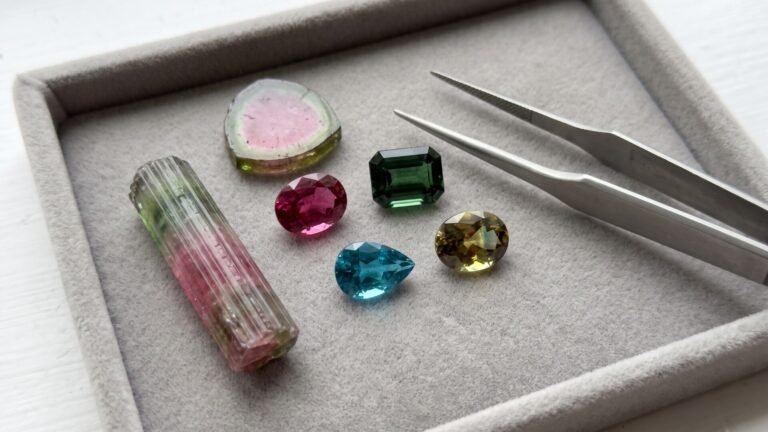
Tourmaline is a group of related minerals, prized for having one of the widest color ranges of any gemstone — from deep black to vibrant pink, emerald green to electric blue, and even multiple colors in a single crystal. Its name comes from the Sinhalese toramalli, meaning “mixed gems”. But its meaning has grown far beyond that simple definition.
This guide covers everything you need to know about tourmaline’s meaning: its ancient origins, its symbolism across cultures, its spiritual and emotional associations, its role in astrology and birthstones, and how to choose the right tourmaline for your needs. Whether you’re an October baby, a Libra or Scorpio, or simply someone drawn to the rainbow of this remarkable gem, you’re about to discover why tourmaline has captivated humanity for centuries.
Tourmaline at a Glance
Before we dive deep into its meaning, here’s a quick reference guide to tourmaline’s key characteristics.
| Feature | Details |
|---|---|
| Mineral | Tourmaline Group |
| Color | Black, pink, green, blue, red, yellow, watermelon, brown, colorless and more |
| Hardness | 7–7.5 (Mohs scale) |
| Birthstone Month | October |
| Zodiac Associations | Libra, Scorpio |
| Anniversary | 8th Wedding Anniversary |
| Symbolism | Protection, balance, creativity, confidence, emotional healing |
What Does Tourmaline Symbolize?
Tourmaline’s symbolism is one of the richest of any gemstone — deeply connected to protection, balance, creativity, and the remarkable diversity of human experience.
Protection
Tourmaline — particularly black tourmaline — is one of the most powerful protective stones. It’s believed to shield the wearer from negative energy, harmful influences, and psychic attacks. Its grounding properties help the wearer stay centered and secure, even in challenging situations.
Balance
Tourmaline is known as a stone of balance and harmony. Its ability to exist in multiple colors within a single crystal makes it a powerful symbol of integrating different aspects of the self — the light and the dark, the logical and the emotional, the practical and the creative.
Creativity
Tourmaline is believed to inspire creativity and self-expression. Its vibrant colors stimulate the imagination and encourage the wearer to embrace their unique vision. It’s a stone for artists, writers, and anyone seeking to unlock their creative potential.
Emotional Healing
Tourmaline is valued as a healing stone on all levels — physical, emotional, and spiritual. It’s believed to soothe anxiety, dispel fear, and promote emotional balance. Each color of tourmaline is thought to have its own specific healing properties.
Confidence
Tourmaline is a confidence stone. It’s believed to build self-confidence, diminish fear, and encourage the wearer to embrace their full potential.
Personal Growth
Tourmaline supports personal transformation and growth. Its protective and grounding energy creates a safe space for the wearer to evolve, heal, and become the best version of themselves.
Why Tourmaline Became Known as the Stone of Balance
Tourmaline’s ability to exist in almost every color of the rainbow — sometimes multiple colors in a single crystal — makes it a natural symbol of balance and integration. It reminds us that we can hold multiple truths at once, that light and dark can coexist, and that true wholeness comes from embracing all parts of ourselves.
The Symbolism Behind Tourmaline’s Many Colors
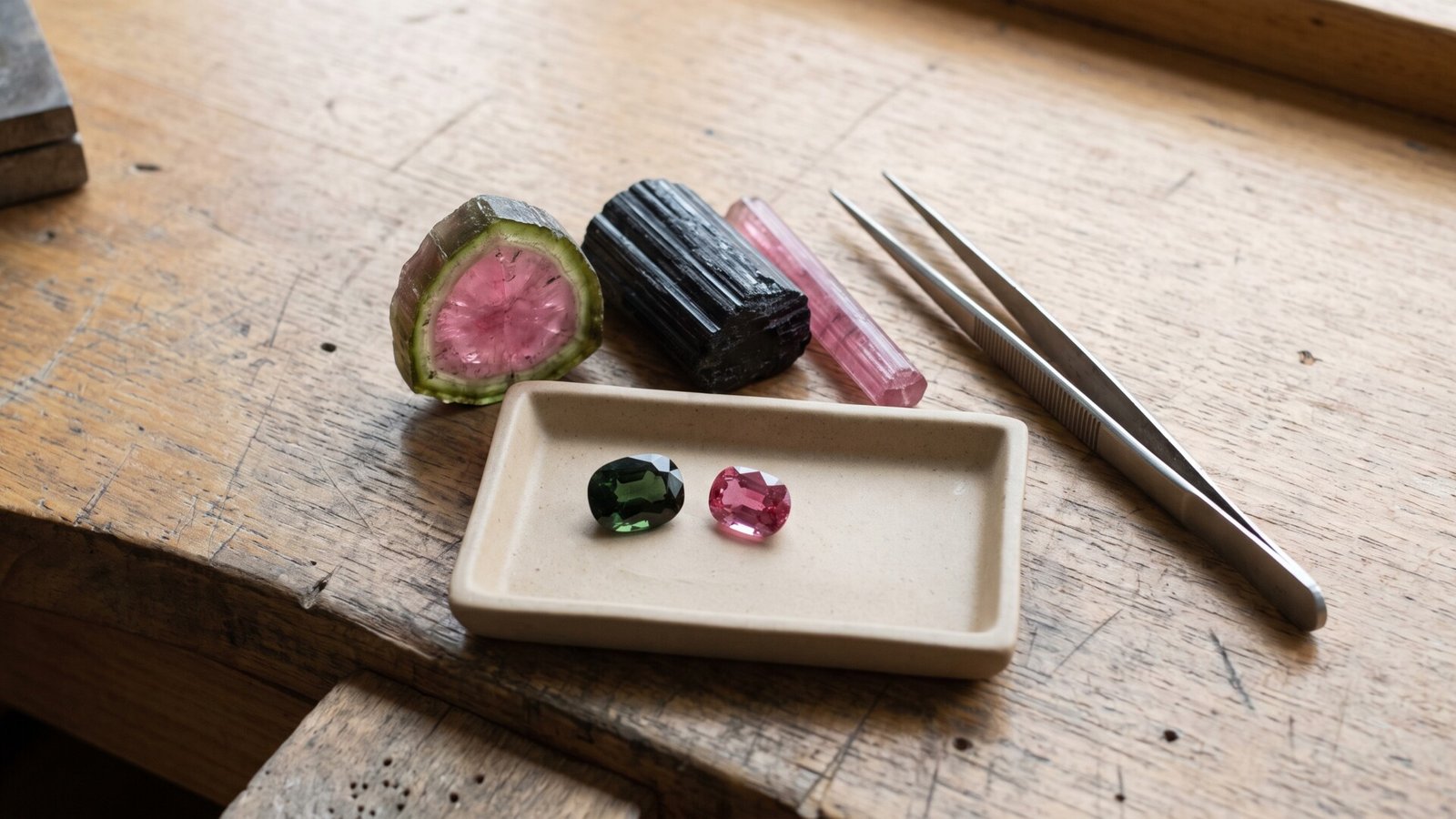
Unlike gemstones prized for a single hue, tourmaline’s meaning varies dramatically by color. Black tourmaline represents protection and grounding. Pink tourmaline embodies love and compassion. Green tourmaline symbolizes growth and prosperity. Blue tourmaline represents communication and wisdom. This color diversity means there’s a tourmaline meaning for nearly every intention.
The History of Tourmaline Meaning
Tourmaline has a relatively modern history compared to ancient gems like ruby or emerald, but its story is rich and fascinating.
Early Discoveries: Ancient Trade Routes
Tourmaline’s history begins in Sri Lanka (formerly Ceylon), where the gem was known for centuries before it reached Europe. The name comes from the Sinhalese toramalli, meaning “mixed gems” — a reference to the variety of colorful stones found in the island’s gem gravels. Ancient Sri Lankan merchants traded these stones along routes that stretched across Asia and the Middle East.
European Discovery: Dutch Traders and “Ash Pullers”
In the early 1700s, Dutch traders brought tourmaline to Europe from Ceylon. They discovered a remarkable property: when heated or rubbed, tourmaline becomes electrically charged and attracts ash and small particles. This pyroelectric and piezoelectric property gave the stone its Dutch name: Aschentrekker — “ash puller”. The phenomenon seemed almost magical to European observers, and tourmaline became a curiosity among naturalists and collectors.
The Chinese Imperial Court
In the late 1800s, tourmaline found its biggest market in China. The Empress Dowager Tz’u Hsi was especially fond of pink tourmaline, and much of the pink and red tourmaline from San Diego County in California was shipped to China. Chinese craftsmen carved the tourmaline into snuff bottles, jewelry, and decorative objects. American miners became so dependent on Chinese trade that when the Chinese government collapsed in 1912, the U.S. tourmaline trade also collapsed.
Tiffany & Co. and American Gemstones
In the late 1800s, tourmaline became known as an American gem through the efforts of Tiffany gemologist George F. Kunz. He wrote about the tourmaline deposits of Maine and California, praising the stones they produced. Kunz’s work helped establish tourmaline as a legitimate American gemstone, paving the way for its modern popularity.
Modern Symbolism
Today, tourmaline’s meaning encompasses all of these historical associations — and more. It’s the stone of protection, balance, and creativity. It’s used in meditation, crystal healing, and jewelry. And its wide range of colors makes it one of the most versatile gemstones for modern wear.
How the Meaning of Tourmaline Has Changed Over Time
| Time Period | Primary Meaning |
|---|---|
| Early Trade Routes | Mixed gems; variety and diversity |
| 18th Century Europe | Curiosity; ash attraction; “magical” properties |
| Chinese Imperial Era | Royal favor; pink tourmaline for the Empress |
| 20th Century Crystal Movement | Protection; emotional healing; balance |
| Modern Jewelry Culture | Individuality; creativity; color-specific meanings |
Unlike ancient gemstones with millennia of accumulated folklore, tourmaline’s symbolism has developed over the past few centuries — and it continues to evolve as new colors and varieties are discovered.
Tourmaline in Different Cultures
Tourmaline has been treasured across cultures and continents. Here’s how different traditions have interpreted its meaning.
Sri Lankan Traditions
In Sri Lanka, tourmaline was known as toramalli — “mixed gems” — for its extraordinary color range. The stone was valued as a gemstone of variety and diversity, representing the richness of the natural world.
European Beliefs
In 18th-century Europe, tourmaline was a curiosity due to its electrical properties. It was believed to have protective and healing powers, and it was often used in scientific experiments. The Dutch name Aschentrekker — “ash puller” — reflects this fascination with its pyroelectric properties.
Chinese Symbolism
The Empress Dowager Tz’u Hsi’s love of pink tourmaline made the stone a symbol of royalty and imperial favor in China. Pink tourmaline was associated with beauty, luxury, and the refinement of the imperial court.
Modern Western Crystal Practices
Today, tourmaline is widely used in meditation, crystal healing, and fine jewelry. Different colors are associated with different chakras and healing properties. Black tourmaline is associated with the root chakra and grounding. Pink tourmaline opens the heart chakra. Watermelon tourmaline harmonizes the heart and root chakras.
Common Themes Across Cultures
Despite their differences, most cultures share some common beliefs about tourmaline:
- It offers protection against negative energy.
- It promotes balance and harmony.
- It enhances creativity and self-expression.
- Its different colors have different meanings.
- It connects to both the physical and spiritual realms.
Key Differences
The main difference lies in the specific application:
- Sri Lankans emphasized variety and diversity.
- Europeans emphasized electrical and scientific properties.
- Chinese emphasized imperial favor and luxury.
- Modern practitioners emphasize emotional healing and personal growth.
Spiritual Meaning of Tourmaline
Note: The following information is based on cultural and spiritual beliefs, not established scientific fact. Tourmaline’s spiritual properties are matters of tradition and personal experience, not medical evidence.
Tourmaline’s spiritual meaning is deeply connected to protection, grounding, and emotional balance.
Protection
Tourmaline — especially black tourmaline — is one of the most powerful protective stones. It’s believed to shield the wearer from negative energy, harmful influences, and psychic attacks. It acts as an energetic shield, preventing unwanted energy from entering the aura. It’s often recommended for empaths, healers, and anyone who works in challenging environments.
Grounding
Tourmaline is a powerful grounding stone. It’s believed to connect the wearer to the earth’s energy, promoting feelings of stability, safety, and security. It helps the wearer stay present and centered, even during stressful or chaotic times.
Emotional Healing
Tourmaline is valued as a healing stone on all levels — physical, emotional, and spiritual. It’s believed to soothe anxiety, dispel fear, and promote emotional balance. Pink tourmaline, in particular, is associated with emotional healing and compassion.
Creativity
Tourmaline inspires creativity and self-expression. Its vibrant colors stimulate the imagination and encourage the wearer to embrace their unique vision. It’s a stone for artists, writers, and anyone seeking to unlock their creative potential.
Self-Confidence
Tourmaline builds self-confidence and diminishes fear. It helps the wearer overcome self-doubt and embrace their full potential. It’s a stone for those who need courage to pursue their goals.
Positive Energy
Tourmaline is believed to attract positive energy and repel negativity. It’s a stone for those who want to maintain a positive mindset and create a supportive, uplifting environment.
Personal Transformation
Tourmaline supports personal transformation and growth. Its protective and grounding energy creates a safe space for the wearer to evolve, heal, and become the best version of themselves.
Emotional Meaning of Tourmaline
Beyond its spiritual associations, tourmaline carries powerful emotional meaning.
Emotional Balance
Tourmaline promotes emotional balance and harmony. Its soothing energy helps the wearer navigate difficult emotions without becoming overwhelmed. It’s a stone for those who experience mood swings, anxiety, or emotional intensity.
Letting Go of Negativity
Tourmaline is believed to dispel fear, negativity, and grief. It helps the wearer release negative thought patterns and emotional baggage, creating space for more positive emotions.
Building Confidence
Tourmaline builds self-confidence and personal power. It helps the wearer trust their own abilities and pursue their goals with conviction. It’s a stone for those who struggle with self-doubt or imposter syndrome.
Self-Expression
Tourmaline encourages authentic self-expression. Its vibrant colors inspire the wearer to communicate their feelings and ideas openly and honestly.
Inner Peace
Tourmaline promotes inner peace and emotional stability. Its grounding energy helps the wearer find calm in the midst of chaos.
Which Color Tourmaline Best Matches Your Goals?
Not all tourmalines are the same. Different colors offer different aesthetics and, for those who believe in crystal energy, different symbolic meanings.
Black Tourmaline (Schorl)
Black tourmaline is the most common variety, rich in iron and opaque.
- Best for: Protection and grounding.
- Symbolism: Protection, grounding, shielding against negative energy. Associated with the root chakra.
Pink Tourmaline (Rubellite)
Pink tourmaline ranges from pale pink to deep magenta.
- Best for: Love and compassion.
- Symbolism: Love, compassion, emotional healing, and self-love. Associated with the heart chakra.
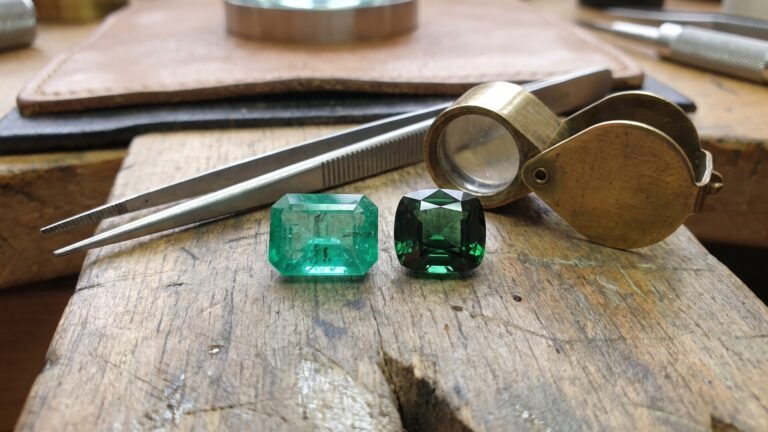
Green Tourmaline (Verdelite)
Green tourmaline ranges from light mint to deep forest green.
- Best for: Growth and prosperity.
- Symbolism: Courage, strength, stamina, and abundance. Associated with the heart chakra.
Blue Tourmaline (Indicolite)
Blue tourmaline ranges from light blue to deep blue-green.
- Best for: Communication and wisdom.
- Symbolism: Clear communication, wisdom, and spiritual insight. Associated with the throat chakra.
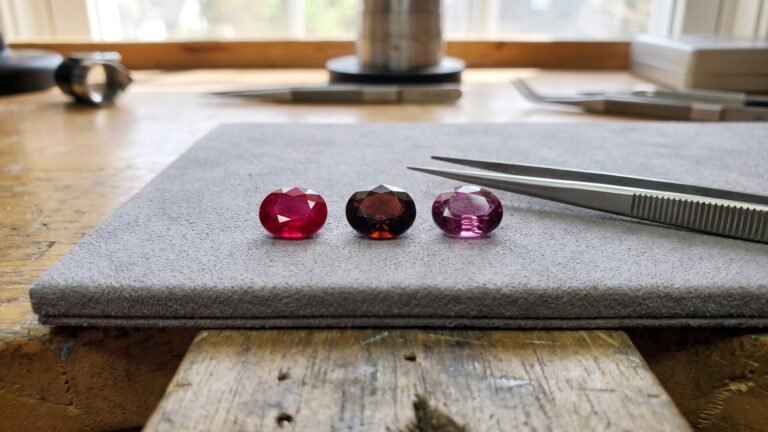
Red Tourmaline (Rubellite)
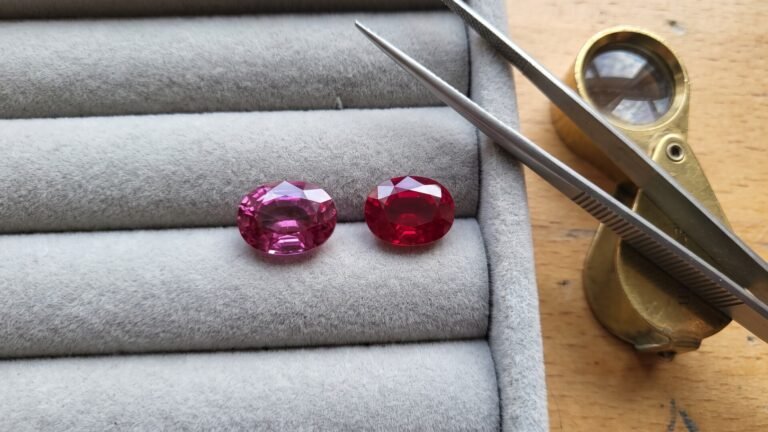
Red tourmaline is a deep red variety, sometimes mistaken for ruby.
- Best for: Passion and vitality.
- Symbolism: Passion, vitality, and emotional intensity.
Watermelon Tourmaline
Watermelon tourmaline is pink in the center and green on the outside — like a slice of watermelon.
- Best for: Emotional balance.
- Symbolism: Emotional healing, compassion, and inner balance. Harmonizes the heart and root chakras.
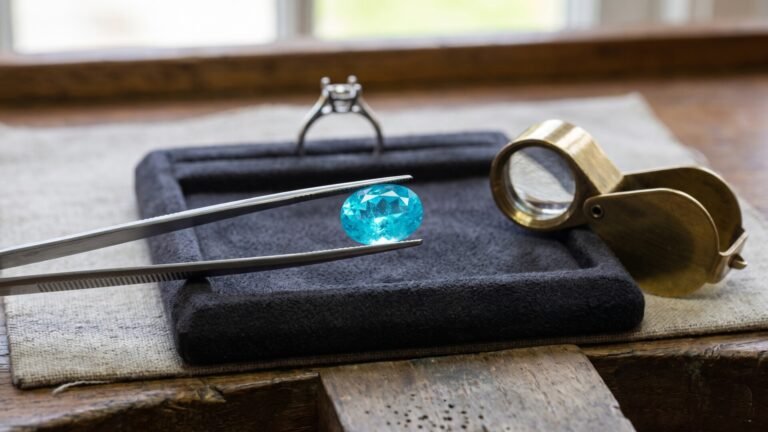
Paraiba Tourmaline
Paraiba tourmaline is a rare, intensely colored blue-green variety from Brazil.
- Best for: Inspiration and luxury.
- Symbolism: Renewal, transformation, optimism, and creativity. Associated with the heart chakra.
Yellow and Brown Tourmaline
Yellow and brown tourmalines are less common but still beautiful.
- Best for: Confidence and stability.
- Symbolism: Confidence, stability, and connection to the earth.
| Tourmaline Variety | Color | Traditional Symbolism | Best For | Relative Rarity |
|---|---|---|---|---|
| Black Tourmaline | Black, opaque | Protection, grounding, shielding | Energetic protection, grounding | Common |
| Pink Tourmaline | Pink to magenta | Love, compassion, emotional healing | Heart-centered healing | Common |
| Green Tourmaline | Green | Courage, strength, growth | Personal growth, abundance | Common |
| Blue Tourmaline | Blue to blue-green | Communication, wisdom, clarity | Throat chakra work | Rare |
| Rubellite | Deep red | Passion, vitality, intensity | Emotional expression, love | Rare |
| Watermelon Tourmaline | Pink center, green rim | Emotional balance, compassion | Heart healing, harmony | Rare |
| Paraiba Tourmaline | Neon blue-green | Renewal, transformation, optimism | Inspiration, luxury | Very rare |
| Yellow/Brown Tourmaline | Yellow to brown | Confidence, stability, grounding | Practical grounding | Rare |
Tourmaline and Astrology
Tourmaline is associated with two zodiac signs: Libra and Scorpio.
Libra (September 23 – October 22)
Libra is an air sign ruled by Venus. Libras are diplomatic, charming, and love beauty. Tourmaline’s balance and harmony support Libra’s desire for peace and equilibrium. Its creativity encourages Libra’s artistic nature.
Scorpio (October 23 – November 21)
Scorpio is a water sign ruled by Pluto and Mars. Scorpios are intense, passionate, and deeply emotional. Tourmaline’s protective and grounding energy supports Scorpio’s emotional depth. Black tourmaline, in particular, helps Scorpios navigate their intensity without becoming overwhelmed.
Venus and Pluto Symbolism
Tourmaline’s association with Venus (Libra’s ruling planet) links it to love, beauty, and harmony. Its association with Pluto (Scorpio’s ruling planet) links it to transformation, depth, and emotional power.
Why Astrologers Associate Tourmaline With Balance and Emotional Growth
Astrologers recommend tourmaline for Libra to support their need for harmony and for Scorpio to help them process intense emotions. Its protective and grounding energy makes it a powerful stone for both signs.
For more details, explore our Libra Birthstone Guide, Scorpio Birthstone Guide, and Zodiac Birthstones Hub.
Tourmaline as a Birthstone
October Birthstone
Tourmaline is one of the two modern birthstones for October, along with opal. Its extraordinary color range makes it a perfect stone for the month of transformation and autumn beauty.
Anniversary Gemstone
Tourmaline is the traditional gift for the 8th wedding anniversary. Its symbolism of deepening love, internal peace, and healing makes it a meaningful choice for celebrating nearly a decade of partnership.
Gift Symbolism
Giving tourmaline as a gift carries deep meaning. It symbolizes:
- Protection: You want to keep the recipient safe.
- Balance: You wish them harmony and peace.
- Creativity: You value their imagination and vision.
- Love: You are devoted to them.
- Healing: You support their emotional wellbeing.
Learn more in our October Birthstone Guide and [Birthstone Jewelry Guides].
Tourmaline in Jewelry
Tourmaline’s durability (7–7.5 on the Mohs scale), wide color range, and unique beauty make it one of the most popular gemstones for jewelry.
Rings
Tourmaline rings are popular in a variety of colors — from striking black to romantic pink. Black tourmaline rings are especially popular for men’s jewelry. Tourmaline is durable enough for rings but should be protected from hard knocks.
Necklaces
Tourmaline pendants are elegant and versatile. A single tourmaline on a simple chain can be worn with anything — from casual to formal. Watermelon tourmaline pendants are especially prized for their unique color pattern.
Earrings
Tourmaline studs are classic and professional. Drop earrings and chandeliers make a statement for special occasions. Pink and green tourmaline earrings are especially popular.
Bracelets
Tourmaline bead bracelets are affordable, stackable, and perfect for everyday wear. Black tourmaline bracelets are especially popular for protection.
Men’s Jewelry
Tourmaline is increasingly popular in men’s jewelry — signet rings, cufflinks, and minimalist pendants. Black tourmaline is a sophisticated choice.
Statement Pieces
Tourmaline’s unique colors make it a favorite for statement jewelry. Large tourmaline pendants, cocktail rings, and elaborate earrings showcase the stone’s extraordinary beauty.
Why Tourmaline Has Become One of the Most Popular Colored Gemstones
Tourmaline’s combination of beauty, durability, and color variety makes it one of the most versatile gemstones. Its affordability compared to rarer stones like ruby and emerald makes it accessible to a broad audience. Its association with protection and balance gives it meaning beyond its beauty.
How to Choose Tourmaline
When selecting tourmaline, consider these factors.
Choosing the Right Color
Decide which tourmaline color best matches your goals. Black for protection. Pink for love. Green for growth. Blue for communication. Watermelon for emotional balance.
Clarity
Tourmaline often has visible inclusions. Higher clarity stones are more valuable, but inclusions are expected and can add character.
Cut
A well-cut tourmaline maximizes brilliance and color. Tourmaline crystals are often long and slender, so elongated cuts are common.
Carat Weight
Larger tourmalines are available and more affordable than rarer gemstones. The price per carat increases with size, but not as dramatically as with diamonds or rubies.
Natural vs Treated Tourmaline
Most tourmaline is natural and untreated. Some stones may be heat-treated to improve color. Paraiba tourmaline is sometimes treated to enhance color, but natural stones are more valuable.
Geographic Origins
Brazil, Madagascar, Sri Lanka, Mozambique, and the United States are major sources. Each origin produces distinctive colors and qualities.
For more details, explore our Tourmaline Buying Guide, Paraiba Tourmaline Guide, and Natural vs. Lab-Grown Gemstones.
Caring for Tourmaline Jewelry
Cleaning
Warm, soapy water and a soft brush are safe for tourmaline. Ultrasonic and steam cleaners are not recommended. Never use harsh chemicals or abrasive cleaners.
Safe Storage
Store tourmaline separately from harder stones (diamond, sapphire, ruby) to prevent scratching. Use individual soft pouches or compartmentalized boxes.
Everyday Wear
Tourmaline’s hardness of 7–7.5 makes it suitable for everyday wear in earrings, necklaces, and bracelets. For rings, protective settings are recommended.
Professional Maintenance
Have tourmaline jewelry professionally inspected and cleaned annually to check settings and prongs.
Common Myths About Tourmaline Meaning
Myth: Every Tourmaline Has the Same Meaning
Different tourmaline colors carry different symbolic meanings. Black tourmaline represents protection. Pink tourmaline represents love. Green tourmaline represents growth. The meaning depends on the color.
Myth: Black Tourmaline Has Ancient Protective Powers
Black tourmaline’s protective symbolism is relatively modern compared to ancient gems. While it’s a powerful protective stone in contemporary crystal healing, it doesn’t have the same millennia of folklore as turquoise or amethyst.
Myth: Paraiba Tourmaline Has Different Spiritual Energy
Paraiba tourmaline carries similar meanings to other tourmalines — protection, balance, and creativity — but its rare neon color adds associations with inspiration and transformation.
Myth: Tourmaline Has Been Revered Since Ancient Egypt
Tourmaline was not widely known in ancient Egypt. It only gained recognition after Dutch traders brought it to Europe in the 1700s. Its history is much more recent than gems like lapis or carnelian.
Why Tourmaline Became the World’s Most Personal Gemstone
Most tourmaline meaning articles skip this section, but it’s essential to understanding tourmaline’s appeal.
The Importance of Color Variety
Tourmaline’s extraordinary color range — from black to pink to green to blue to multicolor — makes it one of the most personalized gemstones. You can choose a color that matches your personality, your intentions, or your favorite outfit.
Why Modern Buyers Choose Tourmaline for Symbolism
In a world of mass-produced jewelry, tourmaline offers individuality. Its wide color range allows buyers to choose a stone that reflects their personal values and goals. Whether you need protection (black), love (pink), or growth (green), there’s a tourmaline for you.
The Rise of Personalized Jewelry
The trend toward personalized jewelry has boosted tourmaline’s popularity. Buyers are no longer satisfied with generic stones — they want gems that tell their story. Tourmaline’s variety of colors makes it perfect for this trend.
How Paraiba Tourmaline Changed Public Perception
The discovery of Paraiba tourmaline in the 1980s transformed tourmaline’s reputation. Its neon blue-green color was unlike anything seen before, elevating tourmaline from an affordable colored stone to a luxury gem.
Scientific Diversity vs Symbolic Diversity
Tourmaline’s color diversity comes from its complex chemistry — different elements create different colors. This scientific diversity mirrors its symbolic diversity: just as the stone can be many colors, it can represent many meanings.
How to Choose the Right Tourmaline Based on Its Meaning
For Protection
Choose black tourmaline in a pendant or bracelet. Its protective energy is believed to guard against harm and negative energy.
For Love
Choose pink tourmaline in a ring or pendant. Its heart chakra energy supports love, compassion, and emotional healing.
For Creativity
Choose a colorful tourmaline — watermelon, Paraiba, or multicolor. Its vibrant energy stimulates imagination and inspiration.
For Personal Growth
Choose green tourmaline. Its association with growth, strength, and abundance supports personal development.
For Collecting
Choose Paraiba tourmaline or watermelon tourmaline. Their rare colors and distinctive patterns make them prized collector’s items.
Final Thoughts: What Does Tourmaline Really Mean?
Tourmaline’s meaning has evolved over centuries — from “mixed gems” in ancient Sri Lanka to a scientific curiosity in 18th-century Europe to a modern symbol of protection, balance, and creativity. But through all these changes, one thing has remained constant: tourmaline represents the beauty of diversity and the power of individuality.
Whether you’re drawn to its deep black for protection, its soft pink for love, or its electric blue for inspiration, tourmaline offers something meaningful. It’s a stone that connects us to the past — to Sri Lankan merchants who named it “mixed gems,” to Dutch traders who marveled at its electrical properties, to Chinese empresses who adored its pink hues. And it’s a stone that connects us to ourselves — to our own capacity for protection, love, growth, and creativity.
The most powerful meaning of tourmaline, however, is personal. It’s the meaning you assign to it. It’s the intention you set when you wear it. It’s the reminder you give yourself that you are protected, that you are capable of growth, and that your unique colors make you who you are.
So whether you choose a black tourmaline for grounding, a pink tourmaline for love, or a Paraiba tourmaline for inspiration, choose the tourmaline that resonates with you. Because the stone’s meaning is ultimately what you make of it.
Related Guides
- October Birthstone Guide
- Libra Birthstone Guide
- Scorpio Birthstone Guide
- [Tourmaline Buying Guide]
- [Paraiba Tourmaline Guide]
- [Black Tourmaline Guide]
- [Pink Tourmaline Guide]
- Natural vs. Lab-Grown Gemstones
- [Crystal Meanings Hub] (coming soon)
Frequently Asked Questions About Tourmaline Meaning
What is the spiritual meaning of tourmaline?
Tourmaline is spiritually associated with protection, balance, creativity, emotional healing, and confidence. Different colors have different specific meanings — black for protection, pink for love, green for growth.
Do different colors of tourmaline have different meanings?
Yes. Black tourmaline represents protection and grounding. Pink tourmaline represents love and compassion. Green tourmaline represents growth and prosperity. Blue tourmaline represents communication and wisdom. Watermelon tourmaline represents emotional balance.
Why is black tourmaline associated with protection?
What does watermelon tourmaline symbolize?
Watermelon tourmaline symbolizes emotional balance, compassion, and healing. Its pink center and green rim represent the harmony between the heart and root chakras.
Which zodiac signs are associated with tourmaline?
What does gifting tourmaline symbolize?
Giving tourmaline symbolizes protection, love, balance, and support for the recipient’s growth. It’s a meaningful gift for birthdays, anniversaries, or any occasion where you want to express care.
Is there scientific evidence for tourmaline's spiritual properties?
No. Tourmaline’s spiritual and healing properties are matters of cultural tradition and personal experience, not established science. Its meaning comes from centuries of human belief and the stone’s unique beauty.
Why is Paraiba tourmaline considered so special?
Paraiba tourmaline is incredibly rare, with a unique neon blue-green color caused by traces of copper. It symbolizes renewal, transformation, and optimism, and is highly prized by collectors and luxury jewelry buyers.
Ready to find your tourmaline? Browse our collections below.
[Shop Tourmaline Jewelry at Blue Nile]
[Shop Tourmaline Rings at James Allen]
[Shop Ethical Tourmaline at Brilliant Earth]
[Explore More Birthstone & Crystal Guides]