Moonstone Meaning: History, Symbolism, Spiritual Properties & Modern Uses
I have a confession that still surprises people who know I write about gemstones.
For years, I thought moonstone was just a pretty white stone. Nice shimmer, affordable. Nothing particularly special. Then I started learning about its history. Ancient Indians believed it was formed from frozen moonbeams. Romans thought it held the image of the lunar goddess Diana. Medieval Europeans believed it could reveal the future. And today, millions of people wear it for intuition, new beginnings, and emotional balance.
That’s the thing about moonstone. It’s not just a pretty stone. It’s a stone with a story that spans thousands of years and connects us to ancient mythology, lunar cycles, and the deepest currents of human emotion.
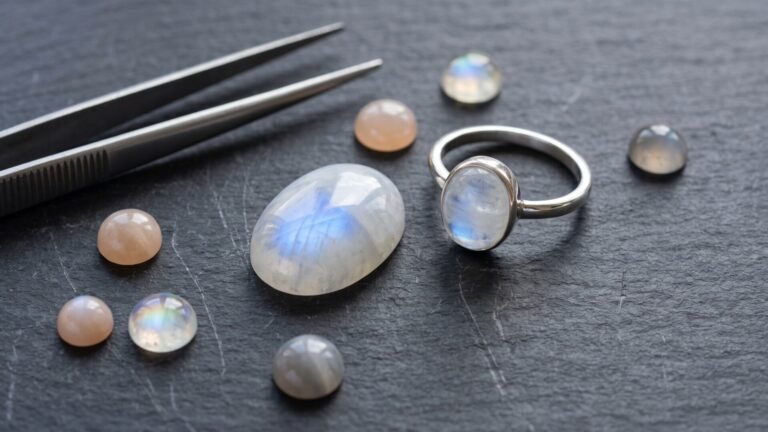
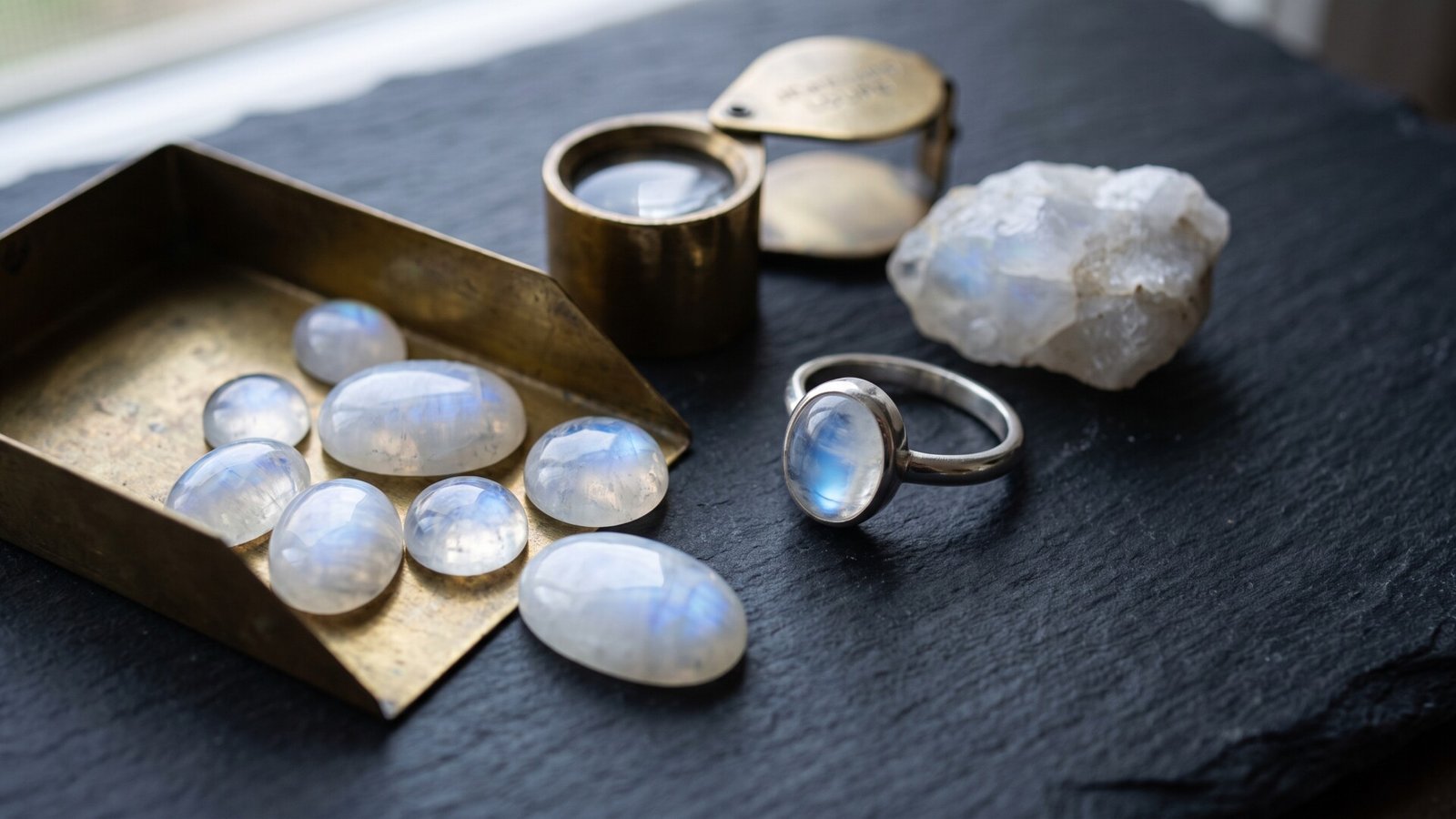
Moonstone is the most famous gemstone of the feldspar group, prized for its adularescence — a soft, floating glow that seems to move across the surface like moonlight on water. Its name reflects its most obvious association: the Moon. But its meaning has grown far beyond that simple connection.
This guide covers everything you need to know about moonstone’s meaning: its ancient origins, its symbolism across cultures, its spiritual and emotional associations, its role in astrology and birthstones, and how to choose the right moonstone for your needs. Whether you’re a June baby, a Cancer or Pisces, or simply someone drawn to the ethereal glow of this remarkable gem, you’re about to discover why moonstone has captivated humanity for millennia.
Moonstone at a Glance
Before we dive deep into its meaning, here’s a quick reference guide to moonstone’s key characteristics.
| Feature | Details |
|---|---|
| Mineral | Feldspar (orthoclase and albite) |
| Color | White, peach, gray, blue, rainbow, green |
| Hardness | 6–6.5 (Mohs scale) |
| Birthstone Month | June (modern alternative) |
| Zodiac Associations | Cancer, Pisces |
| Anniversary | 13th Wedding Anniversary (alternative) |
| Symbolism | Intuition, new beginnings, emotional balance, feminine energy, hope |
What Does Moonstone Symbolize?
Moonstone’s symbolism is one of the most poetic of any gemstone — deeply connected to the Moon, intuition, and the cycles of life.
Intuition and Inner Wisdom
Moonstone is often called the “stone of intuition.” Its soft, shifting glow is believed to enhance psychic abilities, deepen self-awareness, and help the wearer trust their inner voice. It’s a stone for those who want to access their subconscious and embrace their intuitive gifts.
New Beginnings
Moonstone is widely known as the “stone of new beginnings.” Its connection to lunar cycles makes it a powerful symbol of fresh starts, personal growth, and the cyclical nature of life. It’s ideal for anyone embarking on a new chapter — whether in love, career, or personal development.
Emotional Balance
Moonstone is believed to soothe emotional instability and calm the mind. Its gentle energy helps the wearer process feelings without becoming overwhelmed. It’s especially helpful for those who experience mood swings or emotional intensity.
Feminine Energy
Moonstone has long been associated with the divine feminine. Its connection to the Moon, which governs menstrual cycles and fertility in many traditions, makes it a symbol of feminine wisdom, nurturing, and the cyclical nature of life.
Hope and Optimism
Moonstone’s luminous glow represents hope and optimism. It reminds the wearer that every ending is also a beginning — that after darkness comes light. It’s a stone for those going through difficult transitions.
Why Moonstone Became Known as the “Stone of New Beginnings”
The Moon goes through phases — waxing, full, waning, new. Each phase represents a different stage of growth and change. Moonstone, as the stone of the Moon, carries this cyclical energy. It reminds us that change is natural, that endings are followed by new beginnings, and that transformation is part of life.
The Symbolism Behind Moonstone’s Glowing Adularescence
Moonstone’s signature glow — adularescence — is caused by light scattering between microscopic layers of two feldspar minerals. This effect creates the illusion of a soft, floating light moving across the surface of the stone. It’s often described as moonbeams trapped in stone, adding to the gemstone’s mystical allure. This phenomenon reinforces moonstone’s association with mystery, intuition, and the unseen.
The History of Moonstone Meaning
Moonstone is one of the oldest known gemstones, with a history stretching back over 2,000 years. Its meaning has evolved across civilizations, each adding layers to its rich symbolism.
Ancient India: Sacred Gem of the Moon
In India, moonstone has been considered sacred for thousands of years. Hindu mythology described moonstone as a stone of the moon gods, believed to bring good fortune and spiritual insight. It was considered a sacred gem that could bring good fortune and was often displayed on yellow cloth. According to legend, moonstone was formed from moonbeams that solidified into gemstones, carrying the ethereal energy of the moon and its cycles.
Ancient Rome: The Stone of Diana
The Romans believed that moonstone was formed from moonlight. They associated it with Diana, the goddess of the moon and the hunt. Roman mythology held that moonlight was captured within the stone, which was believed to hold the image of the goddess Diana and could influence the moon’s phases. This association made moonstone a symbol of feminine power and divine wisdom.
Medieval Europe: The Stone of Lovers
During the Middle Ages in Europe, moonstone was associated with lovers. It was believed that a man could see his beloved in his dreams if he held a moonstone under his tongue during a full moon. It was also believed that moonstone would give power of prophecy to its wearer — the ability to see the future and predict events. It was thought to help soothe the mind, balance emotions, and protect against nightmares.
Art Nouveau Period: Moonstone in Fine Jewelry
Moonstone experienced a major revival during the Art Nouveau period (1890–1910). Designers like René Lalique and Louis Comfort Tiffany were captivated by the stone’s ethereal glow and mysterious appearance. Moonstone became a favorite of the Art Nouveau movement, appearing in nature-inspired designs that rejected the traditional diamond-centric jewelry of the era. Its soft, shimmering appearance perfectly captured the movement’s artistic, mystical sensibility.
Modern Symbolism: From Mythology to Mindfulness
Today, moonstone’s meaning encompasses all of these historical associations — and more. It’s the stone of intuition, new beginnings, and emotional balance. It’s used in meditation, crystal healing, and jewelry. And its beautiful glow makes it one of the most popular gemstones for spiritual and wellness jewelry.
How the Meaning of Moonstone Has Changed Over Time
| Time Period | Primary Meaning |
|---|---|
| Ancient India | Sacred gem of the moon gods; good fortune |
| Ancient Rome | Stone of Diana; formed from moonlight |
| Medieval Europe | Stone of lovers; prophecy; protection against nightmares |
| Art Nouveau Era | Artistic inspiration; mystical beauty |
| Modern Crystal Culture | Intuition; new beginnings; emotional balance |
This evolution reflects broader cultural shifts. In ancient times, moonstone was valued for its sacred and protective properties. Today, it’s valued for its emotional and spiritual symbolism — a shift from external protection to internal transformation.
Moonstone in Different Cultures
Moonstone has been treasured across cultures and continents. Here’s how different traditions have interpreted its meaning.
Indian Traditions
In India, moonstone has been considered sacred for thousands of years. It was believed to bring good fortune and was often displayed on yellow cloth to honor its sacred status. In Hindu mythology, moonstone was formed from moonbeams and carried the ethereal energy of the moon and its cycles. It was also known as “Chandrakanta” (the moon’s beloved stone) in some Indian traditions.
Roman Beliefs
The Romans believed moonstone was formed from solidified moonlight. They associated it with Diana, the goddess of the moon, and believed the stone could influence the moon’s phases. Roman women wore moonstone as a symbol of fertility and protection.
European Folklore
In medieval Europe, moonstone was associated with lovers. It was believed that a man could see his beloved in his dreams if he held a moonstone under his tongue during a full moon. It was also used as a talisman for travelers, protecting them during night journeys.
Asian Symbolism
In many Asian cultures, moonstone is valued for its calming, meditative properties. It’s often used in spiritual practices to encourage mindfulness and self-discovery. In China, moonstone has been associated with inner peace and spiritual balance.
Modern Western Crystal Practices
Today, moonstone is one of the most popular stones in Western crystal healing. It’s used for meditation, emotional balance, and spiritual growth. Its association with the Moon and feminine energy makes it especially popular in women’s wellness practices.
Common Themes Across Cultures
Despite their differences, most cultures share some common beliefs about moonstone:
- It promotes calm and emotional balance.
- It enhances intuition and inner wisdom.
- It symbolizes new beginnings and personal growth.
- Its connection to the Moon represents cycles and transformation.
Key Differences
The main difference lies in the specific application:
- Ancient cultures emphasized sacred and protective properties.
- Medieval Europeans emphasized love and prophecy.
- Modern practitioners emphasize emotional healing and personal growth.
Spiritual Meaning of Moonstone
Note: The following information is based on cultural and spiritual beliefs, not established scientific fact. Moonstone’s spiritual properties are matters of tradition and personal experience, not medical evidence.
Moonstone’s spiritual meaning is deeply connected to intuition, new beginnings, and emotional balance.
Intuition and Inner Wisdom
Moonstone enhances intuition and inner knowing. Its gentle energy helps the wearer access the subconscious, trust their gut feelings, and embrace their intuitive gifts. It’s a stone for those who want to deepen their self-awareness and connect with their inner voice.
Emotional Healing
Moonstone soothes emotional instability and calms the mind. Its gentle energy helps the wearer process feelings without becoming overwhelmed. It’s especially helpful for those who experience mood swings, anxiety, or emotional intensity.
New Beginnings
Moonstone is the stone of new beginnings. Its connection to lunar cycles makes it a powerful symbol of fresh starts, personal growth, and transformation. It’s ideal for anyone embarking on a new chapter — in love, career, or personal development.
Self-Discovery
Moonstone encourages self-discovery and personal growth. It helps the wearer understand their emotions, identify their needs, and embrace their authentic self. It’s a stone for those on a journey of self-exploration.
Compassion
Moonstone promotes compassion and empathy. It helps the wearer connect with their own feelings and understand the feelings of others. It’s a stone of nurturing and emotional support.
Spiritual Growth
Moonstone supports spiritual growth and mindfulness. Its calming energy helps quiet the mind, deepen meditation, and connect with the divine. It’s a stone for those seeking spiritual awareness and inner peace.
Mindfulness
Moonstone encourages present-moment awareness. Its gentle energy helps the wearer stay grounded in the present, rather than worrying about the past or future.
Emotional Meaning of Moonstone
Beyond its spiritual associations, moonstone carries powerful emotional meaning.
Navigating Change
Moonstone helps the wearer navigate change with grace and ease. Its connection to cycles and transformation makes it a valuable ally during life transitions — career shifts, relationship changes, and personal growth.
Emotional Balance
Moonstone soothes emotional instability. Its gentle energy helps the wearer find balance, reducing mood swings and emotional intensity.
Building Self-Trust
Moonstone encourages self-trust. It helps the wearer trust their instincts, make decisions with confidence, and embrace their authentic self.
Encouraging Reflection
Moonstone encourages quiet reflection. Its calming energy creates space for introspection, helping the wearer understand their emotions and needs.
Finding Inner Calm
Moonstone promotes inner calm. Its gentle energy helps quiet mental chatter and cultivate a sense of peace.
Which Type of Moonstone Best Matches Your Goals?
Not all moonstones are the same. Different varieties offer different aesthetics and, for those who believe in crystal energy, different energetic properties.
Blue Moonstone
Blue moonstone is the most prized variety, with a strong blue adularescence on a translucent or colorless body.
- Best for: Collectors, luxury jewelry, and those who want the strongest glow.
- Symbolism: Intuition, clarity, and spiritual insight. The blue glow represents the light of the full moon.
Rainbow Moonstone
Rainbow moonstone is a variety of labradorite that displays a multicolored adularescence — blues, greens, golds, and sometimes pinks.
- Best for: Modern jewelry, fashion pieces, and those who love color.
- Symbolism: Joy, creativity, and transformation. The rainbow glow represents the full spectrum of emotional and spiritual experience.
White Moonstone
White moonstone is the most traditional variety, with a white or cream body and a gentle white or blue adularescence.
- Best for: Traditional symbolism, everyday wear, and those who prefer subtle elegance.
- Symbolism: Purity, new beginnings, and emotional balance.
Peach Moonstone
Peach moonstone has a warm, peachy body color with a soft white adularescence.
- Best for: Emotional warmth, romantic jewelry, and those who prefer warm tones.
- Symbolism: Love, compassion, and emotional healing.
Gray Moonstone
Gray moonstone has a cool, silvery body color with a strong blue or white adularescence.
- Best for: Subtle elegance, minimalist jewelry, and those who prefer neutral tones.
- Symbolism: Balance, protection, and emotional stability.
Green Moonstone
Green moonstone is a rare variety with a pale green body color and soft white adularescence.
- Best for: Unique collections, heart-centered jewelry, and those who love green.
- Symbolism: Growth, renewal, and emotional healing.
| Variety | Appearance | Traditional Symbolism | Best For |
|---|---|---|---|
| Blue Moonstone | Translucent body, blue glow | Intuition, clarity, insight | Collectors, luxury |
| Rainbow Moonstone | White/colorless body, multicolored glow | Joy, creativity, transformation | Modern jewelry |
| White Moonstone | White/cream body, white/blue glow | Purity, new beginnings | Everyday wear |
| Peach Moonstone | Peach body, white glow | Love, compassion, healing | Romantic jewelry |
| Gray Moonstone | Gray body, blue/white glow | Balance, protection, stability | Minimalist jewelry |
| Green Moonstone | Pale green body, white glow | Growth, renewal, healing | Unique collections |
Moonstone and Astrology
Moonstone is associated with two zodiac signs: Cancer and Pisces.
Cancer (June 21 – July 22)
Cancer is a water sign ruled by the Moon. Cancers are intuitive, nurturing, and deeply emotional. Moonstone’s connection to the Moon makes it an ideal stone for Cancer, supporting their emotional intelligence and intuitive gifts. Its calming energy helps balance their sometimes overwhelming emotions.
Pisces (February 19 – March 20)
Pisces is a water sign ruled by Neptune and Jupiter. Pisceans are compassionate, artistic, and deeply intuitive. Moonstone enhances Pisces’ natural intuition, supports their emotional depth, and helps them navigate their dreamy, imaginative nature.
Lunar Symbolism
Moonstone’s association with the Moon makes it a natural choice for anyone seeking to connect with lunar energy. The Moon governs intuition, emotions, and the subconscious. Moonstone supports these themes, making it a powerful stone for emotional and spiritual work.
Why Astrologers Associate Moonstone With Emotional Intelligence
Astrologers recommend moonstone for Cancer to support their emotional depth and for Pisces to enhance their intuition. Its calming energy and connection to the Moon make it a stone of emotional intelligence and inner wisdom.
For more details, explore our Cancer Birthstone Guide, Pisces Birthstone Guide, and Zodiac Birthstones Hub.
Moonstone as a Birthstone
June Birthstone
Moonstone is a modern alternative birthstone for June, alongside pearl and alexandrite. It has been associated with June for its connection to the summer solstice and the full moon. Its luminous, ethereal appearance captures the magic of the season.
Anniversary Gemstone
Moonstone is an alternative gift for the 13th wedding anniversary. Its symbolism of new beginnings and emotional balance makes it a meaningful choice for celebrating a decade of partnership.
Gift Symbolism
Giving moonstone as a gift carries deep meaning. It symbolizes:
- New beginnings: You support the recipient’s growth and transformation.
- Intuition: You trust their inner wisdom.
- Emotional balance: You wish them peace and stability.
- Hope: You believe in their future.
- Feminine energy: You honor their nurturing, intuitive side.
Learn more in our [June Birthstone Guide] and [Birthstone Jewelry Guides].
Moonstone in Jewelry
Moonstone’s soft, ethereal glow and wide color range make it a popular choice for jewelry.
Rings
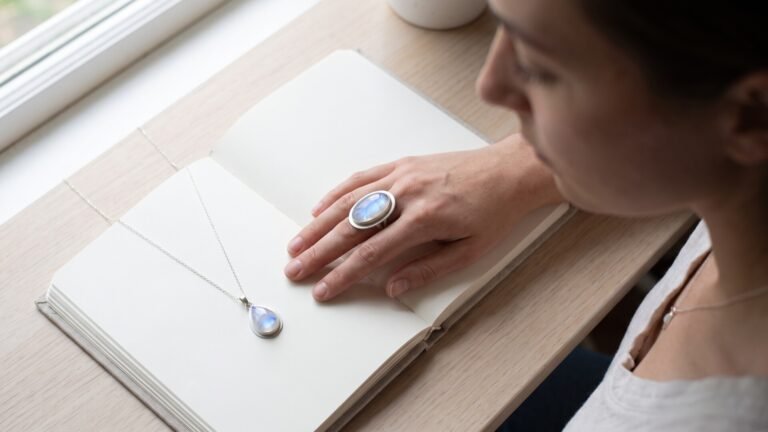
Moonstone rings are popular for their romantic, mystical appearance. The stone’s soft glow pairs beautifully with rose gold, yellow gold, and white gold. Moonstone is softer than many gemstones (6–6.5 Mohs), so rings should be worn with care and protective settings.
Necklaces
Moonstone pendants are elegant and versatile. A single moonstone on a simple chain can be worn with anything — from casual to formal. When worn close to the heart, moonstone is believed to promote emotional balance and inner peace.
Earrings
Moonstone studs are classic and subtle. Drop earrings and chandeliers make a statement. The stone’s soft glow complements both cool and warm skin tones.
Bracelets
Moonstone bead bracelets are affordable, stackable, and perfect for everyday wear. Tennis bracelets with moonstone stones offer a more elegant option.
Men’s Jewelry
Moonstone is increasingly popular in men’s jewelry — minimalist pendants, signet rings, and cufflinks. Its subtle glow is sophisticated without being flashy.
Everyday Wear
Moonstone’s softness makes it suitable for everyday wear in earrings, necklaces, and bracelets. For rings, especially those worn daily, protective settings and careful wear are recommended.
Why Moonstone Has Become a Modern Jewelry Favorite
Moonstone’s ethereal glow and connection to wellness and spirituality have made it a favorite among modern jewelry buyers. Its affordability and availability in a wide range of colors make it accessible to a broad audience. Its association with the Moon and feminine energy aligns with the growing interest in spiritual and wellness jewelry.
How to Choose a Moonstone
When selecting a moonstone, consider these factors.
Adularescence (Glow)
The glow is the most important factor in moonstone’s value. Look for stones with a strong, floating blue or white shimmer that moves as you turn the stone. The more visible and colorful the adularescence, the more valuable the stone.
Color
Body color affects value. Colorless or semi-transparent bodies with strong blue adularescence are most prized. Peach and rainbow moonstones are also valued for their unique colors.
Clarity
Moonstone naturally has some inclusions. Minor inclusions are acceptable, but large cracks or surface pits reduce value.
Cut
Moonstone is almost always cut as a cabochon (smooth, domed surface) to maximize the adularescence. Faceted moonstones are rare and less valuable.
Natural vs Treated Moonstone
Most moonstone is natural and untreated. Some stones may be stabilized or coated, but these are less valuable. Always ask about treatment.
For more details, explore our [Moonstone Buying Guide] and [Natural vs. Lab-Grown Gemstones].
Caring for Moonstone Jewelry
Cleaning
Warm, soapy water and a soft cloth are safe for moonstone. Avoid ultrasonic cleaners (vibrations can fracture the stone) and never use harsh chemicals or abrasive cleaners.
Proper Storage
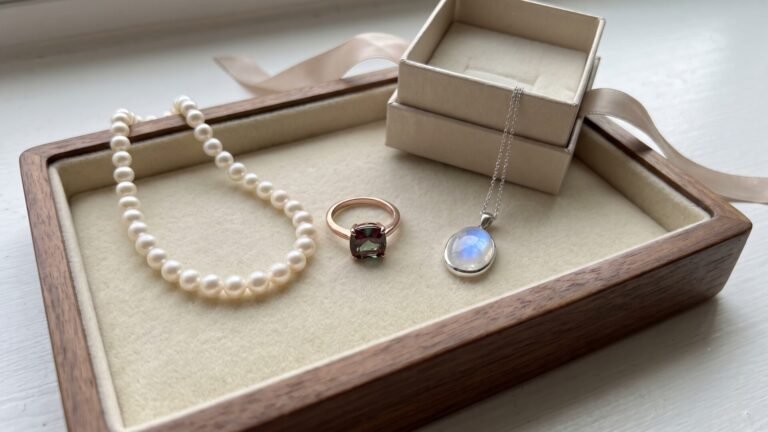
Store moonstone separately from harder stones (diamond, sapphire, topaz) to prevent scratching. Use individual soft pouches or compartmentalized boxes.
Protecting the Surface
Moonstone is 6–6.5 on the Mohs scale, making it more susceptible to scratches than harder gemstones. Avoid wearing moonstone during activities that might cause impact or abrasion.
Daily Care Tips
Remove moonstone jewelry before swimming, showering, or applying lotions and perfumes. Wipe with a soft cloth after wearing to remove oils and residues. Avoid abrupt temperature changes, which can fracture the stone.
Common Myths About Moonstone Meaning
Myth: Moonstone Is Made from Moonlight
Moonstone is a natural mineral, not solidified moonlight. Its name and symbolism derive from its appearance and cultural associations, not its composition. However, its beautiful adularescence certainly earns the poetic description.
Myth: Rainbow Moonstone Is the Same Mineral as Traditional Moonstone
Rainbow moonstone is a variety of labradorite, not orthoclase feldspar (traditional moonstone). Both are feldspars, but they have different chemical compositions and structures. Rainbow moonstone’s multicolored flash is a different phenomenon from traditional moonstone’s adularescence.
Myth: Moonstone Has the Same Meaning in Every Culture
Moonstone’s symbolism varies across cultures. Indians emphasize sacredness and good fortune. Romans emphasize Diana and moonlight. Modern practitioners emphasize intuition and emotional balance. The meaning has evolved over time.
Myth: Ancient Moonstone Beliefs Match Modern Crystal Healing
Ancient cultures used moonstone primarily for sacred, protective, and prophetic purposes. Modern crystal healing emphasizes emotional and spiritual benefits. The focus has shifted from external protection to internal transformation.
Why Moonstone Became the Ultimate Symbol of New Beginnings
Most moonstone meaning articles skip this section, but it’s essential to understanding why moonstone resonates so deeply with modern audiences.
Lunar Cycles and Human Culture
For millennia, humans have marked time by the Moon’s phases. The new moon represents the start of a new cycle — a time for setting intentions, planting seeds, and beginning anew. Moonstone, as the stone of the Moon, carries this powerful symbolism.
The Moon as a Symbol of Renewal
The Moon’s cycle is a metaphor for human experience: waxing, full, waning, new. Each phase represents a different stage of growth and change. Moonstone reminds us that endings are followed by new beginnings, that transformation is part of life.
Moonstone in Wedding and Life Transition Gifts
Moonstone is increasingly chosen as a gift for weddings, new jobs, and life transitions. Its association with new beginnings and emotional balance makes it a meaningful choice for anyone starting a new chapter.
Why Modern Wellness Culture Embraced Moonstone
The modern wellness movement emphasizes intuition, emotional balance, and personal growth — all themes moonstone represents. Its beautiful, ethereal appearance also makes it highly Instagrammable, which has contributed to its popularity.
Historical Meaning vs Modern Interpretation
While ancient cultures also valued moonstone for new beginnings, the modern emphasis is more personal and emotional. The shift reflects broader cultural changes — from external, community-oriented symbolism to internal, individual transformation.
How to Choose the Right Moonstone Based on Its Meaning
For Emotional Balance
Choose a white or blue moonstone in a pendant or bracelet. Its calming energy supports emotional balance and inner peace.
For New Beginnings
Choose a white or rainbow moonstone. Its association with new beginnings makes it ideal for life transitions — new jobs, relationships, or personal growth.
For Intuition
Choose a blue moonstone. Its strong adularescence is believed to enhance intuition and inner wisdom.
For Jewelry
Choose a rainbow or blue moonstone for a statement piece, or white moonstone for everyday wear. Consider the setting and metal based on personal style.
For Gifts
Choose a classic white or blue moonstone in a versatile setting — stud earrings, a solitaire pendant, or a simple bracelet. Its universal meaning makes it a thoughtful gift for any occasion.
Final Thoughts: What Does Moonstone Really Mean?
Moonstone’s meaning has evolved over thousands of years — from a sacred gemstone of ancient India to a symbol of Diana in Rome to a modern tool for emotional healing and personal growth. But through all these changes, one thing has remained constant: moonstone represents the magic of the Moon and its influence on human life.
Whether you’re drawn to its beautiful glow, its ancient history, or its modern spiritual associations, moonstone offers something meaningful. It’s a stone that connects us to the past — to the Indians who honored it as sacred, to the Romans who saw Diana in its depths, to the Art Nouveau artists who captured its ethereal beauty. And it’s a stone that connects us to ourselves — to our own intuition, emotional depth, and capacity for transformation.
The most powerful meaning of moonstone, however, is personal. It’s the meaning you assign to it. It’s the intention you set when you wear it. It’s the reminder you give yourself to trust your intuition, embrace new beginnings, and find balance in the cycles of life.
So whether you choose a blue moonstone for clarity, a rainbow moonstone for joy, or a white moonstone for new beginnings, choose the moonstone that resonates with you. Because the stone’s meaning is ultimately what you make of it.
Related Guides
- June Birthstone Guide
- Cancer Birthstone Guide
- Pisces Birthstone Guide
- [Moonstone Buying Guide]
- Natural vs. Lab-Grown Gemstones
- [Crystal Meanings Hub] (coming soon)
Frequently Asked Questions About Moonstone Meaning
What is the spiritual meaning of moonstone?
Moonstone is spiritually associated with intuition, new beginnings, emotional balance, and feminine energy. It’s believed to enhance intuition, promote emotional healing, and support personal transformation.
Why is moonstone associated with new beginnings?
Moonstone’s association with the Moon’s cycles makes it a natural symbol of new beginnings. Just as the Moon waxes and wanes, moonstone represents the cyclical nature of life, growth, and transformation.
What does moonstone symbolize?
Moonstone symbolizes intuition, new beginnings, emotional balance, hope, and feminine energy. Its soft, luminous glow represents mystery, inner wisdom, and the beauty of the unknown.
Is rainbow moonstone the same as traditional moonstone?
Rainbow moonstone is a variety of labradorite, not traditional moonstone (orthoclase feldspar). Both are feldspars, but they have different chemical compositions. Rainbow moonstone displays a multicolored flash, while traditional moonstone has a softer, single-colored adularescence.
Which zodiac signs are associated with moonstone?
Moonstone is associated with Cancer and Pisces, the two water signs most connected to intuition and emotion. It’s also connected to the Moon, which rules Cancer.
What does gifting a moonstone symbolize?
Giving moonstone symbolizes support for new beginnings, trust in intuition, and a wish for emotional balance and inner peace. It’s a gesture of hope and encouragement.
Is there scientific evidence for moonstone's spiritual properties?
No. Moonstone’s spiritual and healing properties are matters of cultural tradition and personal experience, not established science. Its meaning comes from thousands of years of human belief, not from measurable physical effects.
Can anyone wear moonstone?
Yes. Moonstone is a universal stone. While it’s traditionally associated with June birthdays and Cancer/Pisces, anyone can wear it for its beauty and symbolism. Its gentle, uplifting energy is beneficial for everyone.
Ready to find your moonstone? Browse our collections below.
[Shop Moonstone Jewelry at Blue Nile]
[Shop Moonstone Rings at James Allen]
[Shop Ethical Moonstone at Brilliant Earth]
[Explore More Birthstone & Crystal Guides]