Turquoise Meaning: History, Symbolism, Spiritual Properties & Modern Uses
For years, I thought turquoise was just a colorful stone you saw in Southwestern jewelry. Pretty enough, affordable — but nothing particularly special beyond its distinctive color. Then I started learning about its history. The ancient Egyptians called it mefkat — a word that also meant “joy” and “delight”. The Persians considered it the national stone, a symbol of victory and triumph. Tibetans still treasure it as a national gem that guarantees health, good fortune, and protection from evil. And for thousands of years, people across continents have worn turquoise as a protective talisman, a symbol of friendship, and a bridge between earth and sky.
That’s the thing about turquoise. It’s not just a colorful stone. It’s a stone with a story that spans over 5,000 years and connects us to pharaohs, Persian kings, Tibetan monks, Native American artisans, and the deepest human desire for protection and connection.
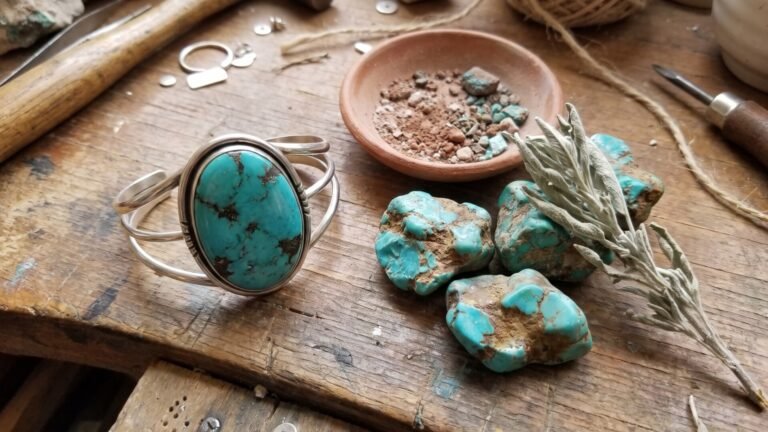
Turquoise is a hydrated phosphate of copper and aluminum, prized for its unmistakable blue-green color and often veined with dark matrix from the host rock. Its name comes from the French pierre tourques — “Turkish stone” — reflecting the fact that it first arrived in Europe through Turkish trade routes. But its meaning has grown far beyond that simple definition.
This guide covers everything you need to know about turquoise’s meaning: its ancient origins, its symbolism across cultures, its spiritual and emotional associations, its role in astrology and birthstones, and how to choose the right turquoise for your needs. Whether you’re a December baby, a Sagittarius or Capricorn, or simply someone drawn to the captivating blue of this remarkable gem, you’re about to discover why turquoise has captivated humanity for millennia.
Turquoise at a Glance
Before we dive deep into its meaning, here’s a quick reference guide to turquoise’s key characteristics.
| Feature | Details |
|---|---|
| Mineral | Hydrated copper aluminum phosphate |
| Color | Sky blue to greenish-blue |
| Hardness | 5–6 (Mohs scale) |
| Birthstone Month | December |
| Zodiac Associations | Sagittarius, Capricorn |
| Anniversary | 11th Wedding Anniversary |
| Symbolism | Protection, wisdom, healing, friendship, good fortune |
What Does Turquoise Symbolize?
Turquoise’s symbolism is one of the richest of any gemstone — deeply connected to protection, wisdom, healing, and the boundless energy of the sky and sea.
Protection
Turquoise is perhaps the world’s most famous protective stone. Throughout history, it has been worn as a talisman against harm, evil spirits, and negative energy. From the 13th century on, it was believed to protect the wearer from falling, especially from horses. It was also thought to break into pieces at the approach of disaster, warning its owner of danger.
Wisdom and Truth
Turquoise has long been associated with wisdom, truth, and clear communication. Its blue-green color is believed to connect the wearer to higher wisdom and spiritual insight. In many traditions, turquoise is thought to aid in truth-seeking and honest self-expression.
Good Fortune
Turquoise has been considered a stone of good fortune for millennia. Hindu mystics maintained that seeing a turquoise after beholding the new moon ensured fantastic wealth. The Persians believed it brought victory and triumph. And in many cultures, turquoise is still given as a symbol of good luck and prosperity.
Healing and Emotional Balance
Turquoise is believed to have healing properties that affect both mind and body. Its soothing blue-green color is thought to calm the emotions, restore a sense of wellbeing, and bring peace to the home. It’s also associated with the throat chakra, fostering clear communication and fluent thought.
Friendship
Turquoise is a symbol of friendship and affection. Giving turquoise as a gift is a gesture of trust, loyalty, and enduring connection. In European tradition, the gift of a turquoise ring means “forget me not”.
Safe Travel
Turquoise has long been considered a protective talisman for travelers. Its association with safe journeys made it a popular companion for those embarking on long voyages or hazardous expeditions.
Why Turquoise Became the World’s Most Famous Protective Stone
No other gemstone has been independently revered as a protective talisman by so many different civilizations. From ancient Egypt to Persia to Tibet to the Native American Southwest, turquoise was universally believed to guard against harm. This remarkable consistency across cultures and centuries is a testament to the stone’s powerful and enduring symbolism.
The Symbolism Behind Its Blue-Green Color
Turquoise’s color is the color of the sky and the sea. It represents infinity, ascension, and the limitless heights of spiritual connection. The blue evokes the heavens; the green represents the earth. Wearing turquoise is like carrying a piece of the sky, a reminder of the vastness of the universe and the peace that comes from knowing you are protected.
The History of Turquoise Meaning
Turquoise is one of the oldest gemstones known to humanity, with a history stretching back over 5,000 years. Its meaning has evolved across civilizations, each adding layers to its rich symbolism.
Ancient Egypt: Jewelry of the Pharaohs
The ancient Egyptians were among the first to treasure turquoise. They mined it in the Sinai Peninsula as early as 4,000 BC. They called it mefkat — a word that also meant “joy” and “delight”. Egyptian rulers adorned themselves with turquoise jewelry, and it was buried with them in their tombs. Turquoise adorns the funerary mask of King Tut, who ruled Egypt more than 3,000 years ago.
Ancient Persia: The National Stone
In Persia (modern-day Iran), turquoise was more or less the national stone. Originally called piruzeh in Persian, its name carries the meanings of victory, triumph, and prosperity. Persian turquoise from the Nishapur district has been prized for over 1,000 years for its even, intense robin’s-egg blue color. It was used extensively to decorate objects of royalty and religious significance.
Indigenous Peoples of North America: Ceremonial and Spiritual Importance
For Native American tribes in the southwestern United States, turquoise has been a ceremonial gem and a medium of exchange for thousands of years. The Apache believed that turquoise attached to a bow or firearm increased a hunter’s or warrior’s accuracy. The Pueblo believed that turquoise got its color from the sky. The Hopi thought the gem was produced by lizards scurrying over the earth. Today, turquoise remains central to Native American jewelry and spiritual traditions.
Tibet and Central Asia: Protection and Blessings
Turquoise is the national gem of Tibet and has long been considered a stone that guarantees health, good fortune, and protection from evil. It is used extensively in Tibetan and Mongolian jewelry, often alongside coral. Turquoise was also used as a medium of exchange, reflecting its immense cultural and economic value.
Modern Symbolism
Today, turquoise’s meaning encompasses all of these historical associations — and more. It’s the stone of protection, wisdom, and good fortune. It’s used in meditation, crystal healing, and jewelry. And its beautiful blue-green color makes it one of the most distinctive gemstones in the world.
How the Meaning of Turquoise Has Changed Over 5,000 Years
| Time Period | Primary Meaning |
|---|---|
| Ancient Egypt | Joy, delight, protection in the afterlife |
| Ancient Persia | Victory, triumph, national pride |
| Indigenous North America | Ceremonial power, hunting accuracy, connection to the sky |
| Tibet and Central Asia | Health, good fortune, protection from evil |
| Modern Crystal Culture | Communication, emotional healing, spiritual protection |
Turquoise’s core symbolism — protection and good fortune — has remained remarkably consistent across millennia. What has changed is the specific context: from royal tombs in Egypt to the spiritual traditions of Tibet to the modern wellness movement, turquoise has adapted to each culture’s needs while retaining its essential meaning.
Turquoise in Different Cultures
Turquoise has been treasured across cultures and continents. Here’s how different traditions have interpreted its meaning.
Egyptian Traditions
The ancient Egyptians called turquoise mefkat — a word that also meant “joy” and “delight”. They mined it in the Sinai Peninsula and used it in jewelry, amulets, and tomb treasures. Turquoise was buried with pharaohs to protect them in the afterlife.
Persian Beliefs
In Persia, turquoise was the national stone. It was called piruzeh, meaning “victory” and “triumph”. Persian turquoise from the Nishapur district is the standard by which all other turquoise is judged.
Tibetan Symbolism
Turquoise is the national gem of Tibet. It is believed to grant health, good fortune, and protection from evil. It is used extensively in Tibetan jewelry and religious objects.
Indigenous North American Traditions
For Native American tribes in the Southwest, turquoise has been a ceremonial gem for millennia. It was used in jewelry, amulets, and as a medium of exchange. The Apache believed it improved hunting and fighting accuracy. The Pueblo believed it got its color from the sky.
European Symbolism
In European tradition, the gift of a turquoise ring means “forget me not”. Turquoise was believed to protect the wearer from falling, especially from horses, and would break into pieces at the approach of disaster.
Modern Western Crystal Practices
Today, turquoise is widely used in meditation, crystal healing, and fine jewelry. Its association with protection, communication, and emotional balance makes it a popular choice for those seeking clarity and connection.
Common Themes Across Cultures
Despite their differences, most cultures share some common beliefs about turquoise:
- It offers protection against harm and negative energy.
- It brings good fortune and prosperity.
- It promotes healing and emotional balance.
- It connects the wearer to spiritual wisdom.
- Its blue-green color represents the sky and the sea.
Key Differences
The main difference lies in the specific application:
- Ancient cultures emphasized royal protection and divine favor.
- Indigenous traditions emphasized ceremonial power and connection to nature.
- Modern practitioners emphasize communication, emotional healing, and spiritual growth.
Spiritual Meaning of Turquoise
Note: The following information is based on cultural and spiritual beliefs, not established scientific fact. Turquoise’s spiritual properties are matters of tradition and personal experience, not medical evidence.
Turquoise’s spiritual meaning is deeply connected to protection, healing, and honest communication.
Protection
Turquoise is one of the most powerful protective stones. It’s believed to shield the wearer from negative energy, harmful influences, and physical danger. It’s a stone of safety — for travelers, warriors, and anyone seeking spiritual protection.
Emotional Healing
Turquoise is believed to heal emotional wounds and restore balance. Its calming energy soothes anxiety, reduces stress, and promotes inner peace. It’s a stone for those seeking emotional stability.
Wisdom
Turquoise enhances wisdom and spiritual insight. It’s believed to connect the wearer to higher truth and help them see situations with clarity and understanding.
Communication
Turquoise is strongly associated with the throat chakra, the energy center connected to communication and self-expression. It helps the wearer speak their truth clearly and from the heart.
Balance
Turquoise is believed to balance the emotions and restore equilibrium. Its blue-green color represents the balance between sky and earth, spirit and matter, thought and feeling.
Positive Energy
Turquoise is a stone of positive energy and optimism. It’s believed to attract good fortune, bring peace to the home, and help the wearer maintain a positive outlook.
Emotional Meaning of Turquoise
Beyond its spiritual associations, turquoise carries powerful emotional meaning.
Inner Calm
Turquoise’s soothing blue-green color promotes inner calm and emotional balance. Its gentle energy helps the wearer find peace in chaotic times.
Confidence
Turquoise boosts confidence and self-esteem. It helps the wearer trust their own voice and express their truth without fear.
Healthy Communication
Turquoise supports honest, clear communication. It helps the wearer express their feelings and needs with compassion and clarity.
Emotional Resilience
Turquoise encourages emotional resilience. It helps the wearer process difficult emotions without becoming overwhelmed.
Finding Balance
Turquoise helps the wearer find balance between competing demands — work and home, logic and emotion, giving and receiving.
Which Type of Turquoise Best Matches Your Goals?
Not all turquoise is the same. Different sources offer different colors, matrix patterns, and aesthetic qualities.
Sleeping Beauty Turquoise
Sleeping Beauty turquoise comes from the Sleeping Beauty Mine in Globe, Arizona. It’s renowned for its vivid, sky-blue color and minimal matrix. The mine closed in 2014, making the material in circulation even more precious.
- Best for: Classic jewelry and pure blue color.
- Symbolism: Clarity, purity, and simplicity.
Persian Turquoise
Persian turquoise from Iran (historically Persia) is considered among the finest in the world. It displays an even robin’s-egg blue color with virtually no matrix. The name “Persian turquoise” is now also used as a color grade for turquoise of this quality, regardless of origin.
- Best for: Collectors and luxury jewelry.
- Symbolism: Royalty, victory, and triumph.
Bisbee Turquoise
Bisbee turquoise comes from the Lavender Pit mine in Bisbee, Arizona. It’s prized for its deep blue color and thin black or chocolate-brown veins.
- Best for: Luxury jewelry and collectors.
- Symbolism: Depth, strength, and mystery.
Kingman Turquoise
Kingman turquoise from the Mineral Park Mine in Kingman, Arizona, is known for its diverse blue tones, from light to dark, often with a black or silver matrix.
- Best for: Everyday wear and Native American-style jewelry.
- Symbolism: Versatility, balance, and connection.
Royston Turquoise
Royston turquoise from Nevada exhibits a wide color range from deep green to rich light blue, set off by a heavy brown matrix.
- Best for: Unique color variations and statement pieces.
- Symbolism: Earth connection, grounding, and stability.
Spiderweb Turquoise
Spiderweb turquoise features distinctive dark veins that create a web-like pattern across the stone. The pattern is caused by the matrix of the surrounding rock.
- Best for: Dramatic natural patterns and collectors.
- Symbolism: Connection, unity, and the beauty of imperfection.
| Variety | Appearance | Traditional Symbolism | Best For |
|---|---|---|---|
| Persian | Even robin’s-egg blue, no matrix | Royalty, victory, triumph | Collectors, luxury |
| Sleeping Beauty | Vivid sky blue, minimal matrix | Clarity, purity, simplicity | Classic jewelry |
| Bisbee | Deep blue with black/brown veins | Depth, strength, mystery | Luxury jewelry |
| Kingman | Light to dark blue, black/silver matrix | Versatility, balance, connection | Everyday wear |
| Royston | Deep green to light blue, brown matrix | Earth connection, grounding, stability | Unique statement pieces |
| Spiderweb | Blue with dark web-like veins | Connection, unity, imperfection | Dramatic patterns, collectors |
Turquoise and Astrology
Turquoise is associated with two zodiac signs: Sagittarius and Capricorn.
Sagittarius (November 22 – December 21)
Sagittarius is a fire sign ruled by Jupiter. Sagittarians are adventurous, optimistic, and love freedom. Turquoise represents adventure, freedom, and a love for life for Sagittarius. It’s believed to offer protection, wisdom, and clarity, supporting their adventurous spirit and love of exploration.
Capricorn (December 22 – January 20)
Capricorn is an earth sign ruled by Saturn. Capricorns are disciplined, ambitious, and hardworking. Turquoise embodies strength, perseverance, and stability for Capricorn. It’s believed to offer grounding and balance.
Jupiter and Saturn Symbolism
Turquoise’s association with Jupiter (Sagittarius’ ruling planet) links it to growth, luck, and wisdom. Its association with Saturn (Capricorn’s ruling planet) links it to discipline, structure, and stability.
Why Astrologers Associate Turquoise With Protection and Wisdom
Astrologers recommend turquoise for Sagittarius to support their adventurous nature and for Capricorn to ground their ambition. Its protective energy and wisdom symbolism make it a powerful stone for both signs.
For more details, explore our Sagittarius Birthstone Guide, Capricorn Birthstone Guide, and Zodiac Birthstones Hub.
Turquoise as a Birthstone
December Birthstone
Turquoise is one of the three modern birthstones for December, along with tanzanite and zircon. It has been associated with December for centuries, thanks to its winter-sky blue color and its historical associations with protection and good fortune.
Anniversary Gemstone
Turquoise is the traditional gift for the 11th wedding anniversary. Its symbolism of protection, loyalty, and enduring friendship makes it a meaningful choice for celebrating over a decade of partnership.
Gift Symbolism
Giving turquoise as a gift carries deep meaning. It symbolizes:
- Protection: You want to keep the recipient safe.
- Friendship: You value their loyalty and trust.
- Good fortune: You wish them prosperity and success.
- Wisdom: You respect their judgment.
- Peace: You wish them calm and emotional balance.
Learn more in our December Birthstone Guide and [Birthstone Jewelry Guides].
Turquoise in Jewelry
Turquoise’s unique color, distinctive matrix patterns, and historical significance make it one of the most recognizable gemstones for jewelry.
Rings
Turquoise rings are popular in both classic and modern settings. Sterling silver is the traditional metal pairing, especially in Southwestern jewelry. The stone’s blue-green color pops against silver, gold, and platinum.
Necklaces
Turquoise pendants are elegant and versatile. A single turquoise stone on a simple chain can be worn with anything — from casual to formal. Turquoise necklaces, especially squash blossom designs, are iconic in Southwestern jewelry.
Earrings
Turquoise studs are classic and subtle. Drop earrings and chandeliers make a statement for special occasions.
Bracelets
Turquoise bead bracelets are affordable, stackable, and perfect for everyday wear. Tennis bracelets with turquoise stones offer a more elegant option.
Men’s Jewelry
Turquoise is increasingly popular in men’s jewelry — signet rings, cufflinks, and minimalist pendants. Its bold, earthy color is sophisticated and distinctive.
Southwestern Jewelry
Turquoise is the heart of Southwestern jewelry. Navajo silversmiths have been setting turquoise in silver for centuries, creating iconic designs like squash blossom necklaces, concho belts, and inlaid bracelets.
Why Turquoise Never Goes Out of Style
Turquoise’s unique color, rich history, and cultural significance have kept it in fashion for millennia. Its versatility — from casual beaded bracelets to high-end designer pieces — makes it accessible to every style and budget. And its association with protection and good fortune gives it meaning beyond its beauty.
How to Choose Turquoise
When selecting turquoise, consider these factors.
Color
The most prized turquoise color is a pure, intense sky blue or robin’s-egg blue. Greenish or pale stones are generally less valuable.
Matrix Patterns
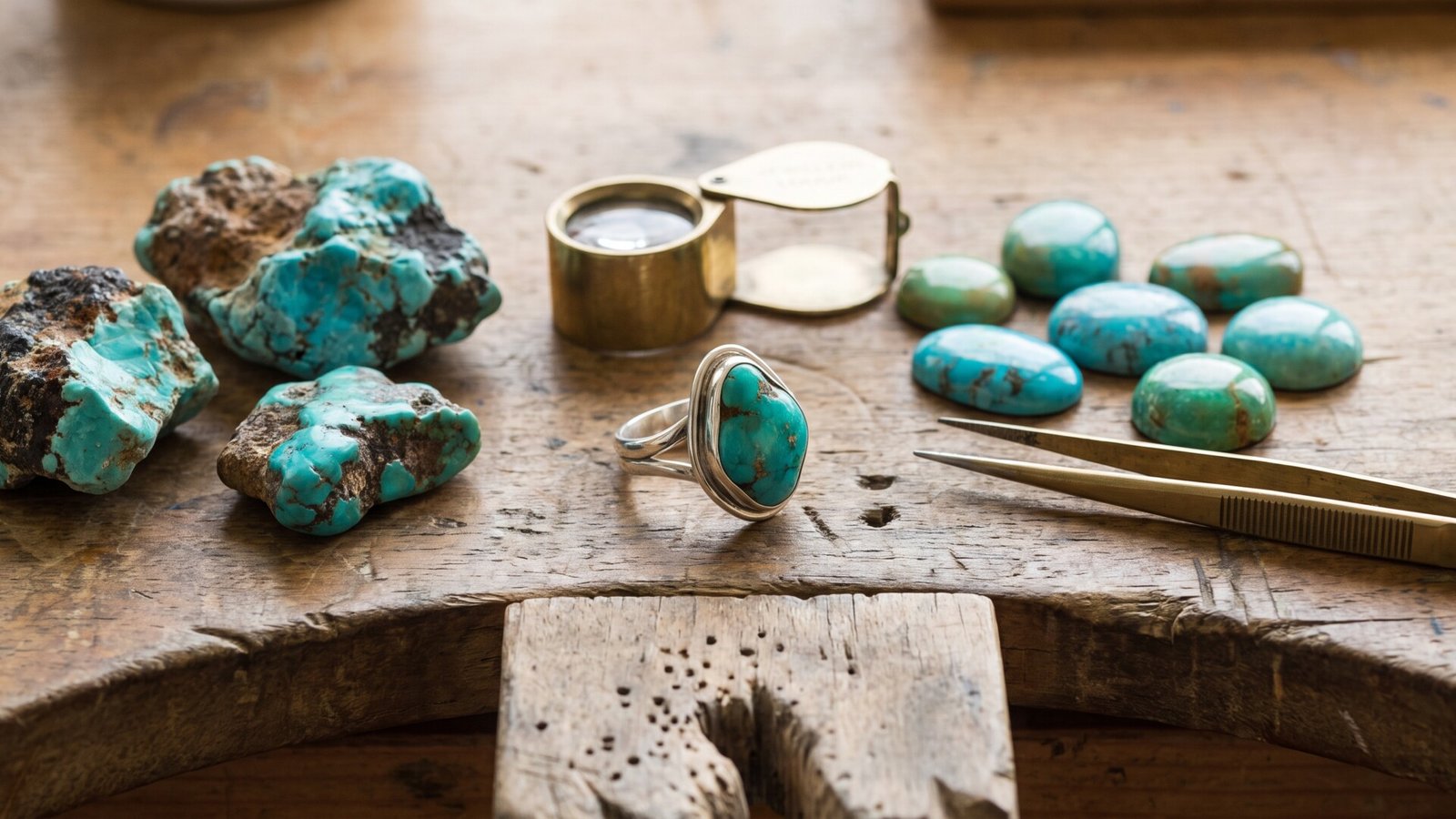
Matrix — the dark veins of host rock running through the stone — can add character and value. Some collectors prize stones with distinctive spiderweb patterns. Others prefer stones with little or no matrix.
Natural vs Stabilized Turquoise
Natural turquoise is untreated and the most valuable. Stabilized turquoise has been impregnated with epoxy to harden the stone and enhance its durability. Stabilization is common and widely accepted, especially for softer stones that would otherwise be too fragile for jewelry.
Reconstituted and Imitation Turquoise
Reconstituted turquoise is made from turquoise dust and chips bonded with resin. Imitation turquoise is made from other materials (like dyed howlite) and has no genuine turquoise content. Both are significantly less valuable than natural or stabilized turquoise.
Origin
Persian turquoise is the most historically prized, followed by American turquoise from Arizona and Nevada. Each mine produces distinctive colors and matrix patterns.
For more details, explore our [Turquoise Buying Guide] and Natural vs. Lab-Grown Gemstones.
Caring for Turquoise Jewelry
Why Turquoise Requires Gentle Care
Turquoise is a porous stone with a hardness of only 5–6 on the Mohs scale. It can absorb liquids and chemicals, which may alter its color. It can also scratch or chip if handled roughly.
Cleaning
Use warm, soapy water and a soft brush. Rinse thoroughly and dry with a soft cloth. Never use ultrasonic cleaners, steam cleaners, or harsh chemicals.
Protecting Against Chemicals
Turquoise can absorb oils, lotions, perfumes, and cleaning products. Apply these products before putting on your turquoise jewelry. Remove turquoise jewelry before swimming, showering, or using harsh chemicals.
Proper Storage
Store turquoise separately from harder stones (diamond, sapphire, ruby) to prevent scratching. Use individual soft pouches or compartmentalized boxes.
Everyday Wear Tips
Remove turquoise jewelry before activities that might cause impact or exposure to chemicals. Wipe with a soft cloth after wearing to remove oils and residues.
Common Myths About Turquoise Meaning
Myth: Turquoise Always Brings Good Luck
Turquoise is a symbol of good fortune, not a guarantee. Its power lies in its ability to shift mindset — to encourage protection, positivity, and emotional balance. It can help you notice opportunities, but it doesn’t replace effort.
Myth: Ancient Cultures Shared the Same Beliefs
Different cultures interpreted turquoise differently. Egyptians emphasized joy and protection in the afterlife. Persians emphasized victory and triumph. Indigenous North Americans emphasized ceremonial power. Tibetans emphasized health and good fortune.
Myth: Blue Turquoise Is Always More Valuable
Blue turquoise is often more prized, but green turquoise can also be valuable — especially from specific mines like Royston or certain Nevada sources. Value depends on color intensity, matrix patterns, and origin, not just color.
Myth: Stabilized Turquoise Has Different Symbolic Meaning
Stabilized turquoise carries the same symbolic meaning as natural turquoise. The stone’s meaning comes from its color, history, and cultural associations — not its treatment status.
Why Turquoise Became Humanity’s Universal Stone of Protection
Most turquoise meaning articles skip this section, but it’s essential to understanding turquoise’s enduring appeal.
One of the World’s Oldest Gemstones
Turquoise has been treasured for over 5,000 years, making it one of the oldest gemstones in continuous human use. Its longevity is a testament to its enduring appeal and powerful symbolism.
Protection for Travelers and Warriors
From Egyptian pharaohs to Persian kings to Apache warriors, turquoise was universally believed to protect its wearer from harm. This protective symbolism made it a talisman for soldiers, travelers, and anyone facing danger.
Sacred Objects Across Civilizations
Turquoise has been used in sacred objects across continents. It adorned the funerary mask of King Tut. It decorated Persian religious objects. It was central to Native American ceremonial life. It remains the national gem of Tibet.
Why Blue-Green Colors Inspire Feelings of Safety
The color of turquoise is the color of the sky and the sea. It represents infinity, peace, and protection. Wearing turquoise is like carrying a piece of the sky — a reminder that we are watched over and safe.
Historical Meaning vs Modern Interpretation
Ancient cultures valued turquoise for physical protection and divine favor. Modern practitioners emphasize emotional protection and spiritual growth. Both traditions recognize turquoise’s power to create a sense of safety and wellbeing.
How to Choose the Right Turquoise Based on Its Meaning
For Protection
Choose a turquoise with strong, even color in a pendant or bracelet. Its protective energy is believed to guard against harm.
For Communication
Choose a turquoise with good clarity and even color in a necklace, worn near the throat chakra. Its association with clear communication makes it ideal for those who need to express themselves.
For Healing
Choose a turquoise with a soothing blue color in a pendant or ring. Its calming energy supports emotional healing and balance.
For Collecting
Choose a turquoise from a specific mine with distinctive characteristics — Persian for history, Bisbee for depth, Sleeping Beauty for pure blue.
For Everyday Jewelry
Choose a stabilized turquoise in a protective setting. Its durability makes it suitable for daily wear.
Final Thoughts: What Does Turquoise Really Mean?
Turquoise’s meaning has endured for over 5,000 years — from the tombs of Egyptian pharaohs to the workshops of Navajo silversmiths to the jewelry boxes of modern collectors. Through all these changes, one thing has remained constant: turquoise represents protection, wisdom, and the connection between earth and sky.
Whether you’re drawn to its beautiful blue-green color, its ancient history, or its modern spiritual associations, turquoise offers something meaningful. It’s a stone that connects us to the past — to the Egyptians who called it “joy,” to the Persians who saw it as “victory,” to the Tibetans who treasure it as a national gem, to the Native Americans who consider it sacred. And it’s a stone that connects us to ourselves — to our own need for protection, wisdom, and emotional balance.
The most powerful meaning of turquoise, however, is personal. It’s the meaning you assign to it. It’s the intention you set when you wear it. It’s the reminder you give yourself that you are protected, that you have wisdom to offer, and that you are connected to something greater than yourself.
So whether you choose a Persian turquoise for its historical prestige, a Sleeping Beauty for its pure blue color, or a spiderweb turquoise for its dramatic pattern, choose the turquoise that resonates with you. Because the stone’s meaning is ultimately what you make of it.
Related Guides
- [December Birthstone Guide]
- [Sagittarius Birthstone Guide]
- [Capricorn Birthstone Guide]
- [Turquoise Buying Guide]
- [Natural vs. Lab-Grown Gemstones]
- [Crystal Meanings Hub] (coming soon)
FAQ: Turquoise Meaning
What is the spiritual meaning of turquoise?
Turquoise is spiritually associated with protection, wisdom, healing, honest communication, and good fortune. It’s believed to shield the wearer from negative energy, promote emotional balance, and support clear self-expression.
Why has turquoise symbolized protection for thousands of years?
Turquoise has been worn as a protective talisman across cultures for over 5,000 years. From Egyptian pharaohs to Persian kings to Apache warriors, people have believed turquoise guards against harm, evil spirits, and misfortune.
What does turquoise represent in different cultures?
Egyptians called it mefkat — “joy” and “delight”. Persians saw it as victory and triumph. Tibetans consider it a national gem that guarantees health and good fortune. Native Americans use it in ceremonial jewelry and amulets.
Do different types of turquoise have different meanings?
Different turquoise varieties have different associations based on their appearance. Persian turquoise represents royalty and victory. Sleeping Beauty represents clarity and purity. Bisbee represents depth and strength. Spiderweb turquoise represents connection and unity.
Which zodiac signs are associated with turquoise?
Turquoise is associated with Sagittarius and Capricorn. It supports Sagittarius’ adventurous spirit and Capricorn’s ambition and stability.
What does gifting turquoise symbolize?
Giving turquoise symbolizes protection, friendship, good fortune, and peace. In European tradition, a turquoise ring means “forget me not”. It’s a gesture of trust, loyalty, and enduring connection.
Is there scientific evidence for turquoise’s spiritual properties?
No. Turquoise’s spiritual and healing properties are matters of cultural tradition and personal experience, not established science. Its meaning comes from thousands of years of human belief, not from measurable physical effects.
Why is turquoise one of the oldest gemstones used in jewelry?
Turquoise has been used in jewelry for over 5,000 years. It was mined by ancient Egyptians in the Sinai Peninsula, carved by Chinese artisans more than 3,000 years ago, and treasured by civilizations across the globe.
Ready to find your turquoise? Browse our collections below.
[Shop Turquoise Jewelry at Blue Nile]
[Shop Turquoise Rings at James Allen]
[Shop Ethical Turquoise at Brilliant Earth]
[Explore More Birthstone & Crystal Guides]