Aquamarine: Meaning, Properties, Uses & Value
Aquamarine is the blue to blue-green variety of beryl and the modern birthstone for March. Its name comes from the Latin words for water and sea, and it has been linked with the ocean, sailors, and calm for centuries. Compared with many colored gems, it is relatively durable, often very clean, and much more affordable than sapphire or emerald, which is a big part of why it is so popular for rings, pendants, and anniversary gifts.
This guide explains what aquamarine is, how it gets its color, why most of it is heat treated, what the “Santa Maria” label means, how much it costs, how to tell it from look-alikes such as blue topaz, and how to wear and clean it. If you are a March baby, a gift buyer, or someone drawn to pale sea-blue stones, use the sections below to find what you need.
Aquamarine Quick Facts
| Category | Details |
|---|---|
| Mineral / variety: | Beryl (beryllium aluminum silicate), blue to blue-green variety colored by iron |
| Color(s): | Pale ice blue to deep blue; greenish-blue to pure blue |
| Hardness (Mohs): | 7.5 to 8 |
| Toughness and cleavage: | Good for a gem of its hardness, but beryl has imperfect cleavage and can chip on a hard blow |
| Crystal system: | Hexagonal |
| Transparency: | Transparent to translucent; usually very clean |
| Common treatments: | Heat treatment (routine and stable); irradiation to produce Maxixe-type color is unstable |
| Birthstone: | March (modern list; bloodstone is the traditional March stone) |
| Zodiac association: | Pisces and Aries on many lists, Scorpio on some; zodiac lists vary |
| Anniversary: | 19th wedding anniversary on some gift lists |
What Is Aquamarine?
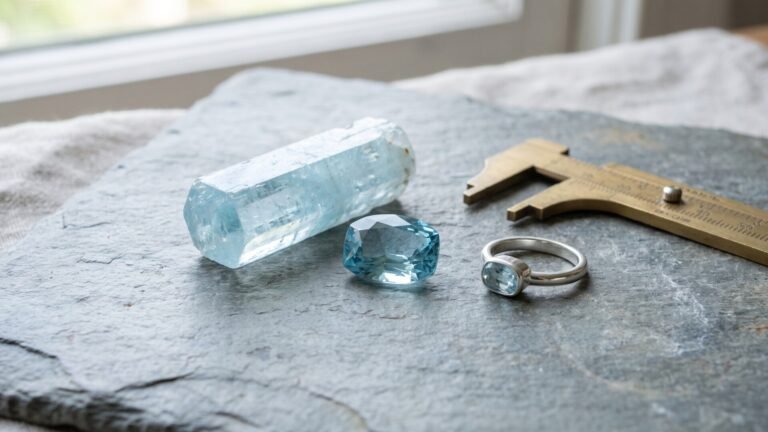
Aquamarine belongs to the beryl family, whose formula is Be₃Al₂Si₆O₁₈. Green beryl with chromium or vanadium is emerald, pink is morganite, yellow is heliodor, colorless is goshenite, and blue is aquamarine. The blue color comes from trace amounts of iron in the crystal. Fe²⁺ ions give the blue, while Fe³⁺ ions can add yellow or green tones, which is why heat treatment (below) can make stones bluer.
Where aquamarine is found
Aquamarine forms in granite pegmatites, coarse-grained rocks that crystallize slowly from water-rich melts and can produce very large crystals. Main sources include:
- Brazil: Minas Gerais has been a leading source for generations. A famous Brazilian example is the Dom Pedro aquamarine, a large carved obelisk of more than 10,000 carats, now at the Smithsonian’s National Museum of Natural History.
- Mozambique: A source of fine deep-blue material, including stones sold as “Santa Maria Africana.”
- Nigeria, Zambia, and Madagascar: Produce a range of blue shades, often with good clarity.
- Pakistan and Afghanistan: Known for crystals from mountain pegmatites.
- Other sources: India, Myanmar, Russia, Sri Lanka, and the United States.
Origin can affect collector interest, but it should be backed by documentation rather than a seller’s claim.
Heat treatment and irradiation
Most aquamarine on the market has been heat treated. Gentle heating, generally around 400 °C, reduces the yellow and green component and leaves a cleaner blue. This treatment is considered stable and is widely accepted in the trade, though it should be disclosed. Untreated stones of fine color are scarcer and may carry a premium.
Irradiation is different. It can produce a deep “Maxixe-type” blue in certain pale beryl, but that color is typically unstable and can fade in light or with gentle heating. If a stone shows a very deep, inky blue at an unusually low price, ask for disclosure and a laboratory report.
Aquamarine Meaning & Symbolism
Aquamarine’s meanings come from folklore, tradition, and its association with the sea. These are cultural beliefs, not scientific properties. For a deeper dive, see Aquamarine Meaning: History, Symbolism, Spiritual Properties & Modern Uses and Aquamarine in Mythology and History.
The sea and the sailor’s gem
The name aquamarine comes from the Latin aqua marina, “water of the sea.” Folklore holds that the stone belonged to sea deities and mermaids, and that it was a gem of the ocean itself. For that reason sailors are said to have carried aquamarine as a talisman for safe voyages and calm water. This belongs to legend and tradition, not documented effect.
Medieval beliefs
In medieval Europe, writers on gems attributed protective powers to many stones. For aquamarine these included protection against poison and a reputation as a stone of happy marriage, a belief that helps explain why it became a gift for lovers and later an anniversary stone. Both ideas are folklore.
Modern symbolism
- Calm and clarity: the still-water association
- Courage and communication: a traditional link with speaking honestly
- Faithful love: the happy-marriage tradition
- Renewal: for March births, the move from winter toward spring
Aquamarine in Crystal Practice: Beliefs, Not Medicine
The following describes beliefs from crystal-healing and spiritual traditions. It is not medical advice. Gemstones do not treat, prevent, or cure any physical or mental health condition, including anxiety or fear, and nothing here replaces care from a qualified health professional.
- Calm: In crystal practice, aquamarine is often described as a calming stone that people hold or wear during meditation or stressful moments as a focus for relaxation.
- Communication: It is linked with the throat chakra, the center associated with self-expression and speaking one’s truth.
- Protection and cleansing: Some people believe aquamarine shields or “cleanses” the aura. This is a spiritual idea and has no scientific support.
- Other chakras: Paler stones are sometimes linked with the heart chakra and deeper stones with the third eye chakra.
Aquamarine Colors & Varieties
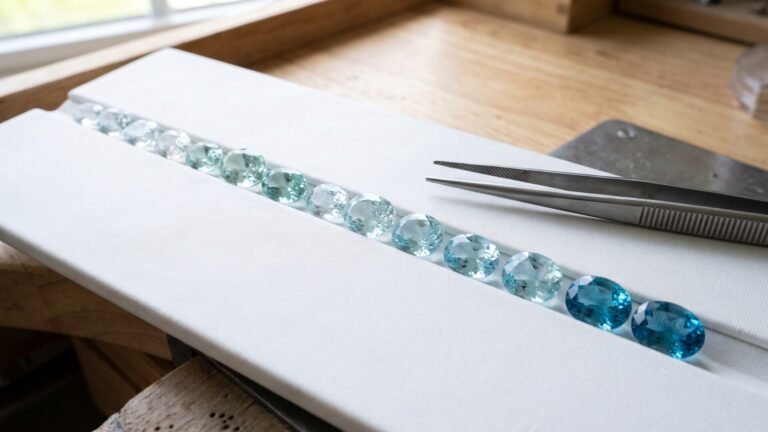
Aquamarine spans a spectrum from nearly colorless to intense blue. For a visual breakdown, see our aquamarine color chart explained.
| Type | Description | Notes |
|---|---|---|
| Ice / pale aquamarine | Very light blue | Most affordable; clean, minimalist look |
| Classic aquamarine | Seawater blue with a greenish component | The color the stone was named for |
| Santa Maria | Pure, saturated blue with little green | Named after Brazil’s Santa Maria de Itabira mine, now largely depleted |
| Santa Maria Africana | Deep blue from Mozambique | Trade term for similar color from African deposits |
| Maxixe-type blue | Very deep, inky blue | Typically irradiated; the color may fade |
Pleochroism
Aquamarine is weakly to distinctly pleochroic, showing slightly different shades of blue depending on viewing direction. A good cutter orients the crystal so the best color shows through the table.
What does “Santa Maria” mean?
“Santa Maria” began as a name for the intense blue of aquamarine from one Brazilian mine, then became a loose trade term. In 2022 the Asian Institute of Gemological Sciences (AIGS) introduced a grading report that sets a color standard for the term using master stones. That makes it easier to compare claims, but a seller’s use of the name without a report is still just a description, so ask for documentation on higher-priced stones.
Is Aquamarine a Birthstone?
March. Aquamarine is the modern birthstone for March, and bloodstone is the traditional one. Birthstone lists differ by country and organization, so you may see slightly different options elsewhere. See our March birthstone guide for context.
Zodiac. Aquamarine is commonly linked with Pisces (February 19 to March 20) and Aries (March 21 to April 19), and sometimes with Scorpio (October 23 to November 21). Zodiac stone lists are not standardized, so treat these as tradition rather than fact.
Anniversary. Some gift lists name aquamarine for the 19th wedding anniversary, which fits its long link to marriage and calm. Anniversary lists vary by country, so check the one you follow.
Aquamarine Uses in Jewelry
Durability
At 7.5 to 8 on the Mohs scale, aquamarine resists scratching well and is generally suitable for everyday jewelry. Hardness is only part of the picture: beryl has imperfect cleavage and can chip or fracture if hit hard, particularly at corners and edges. Aquamarine is typically cleaner than emerald and less fracture-prone, which makes it more practical for rings, but it still benefits from a protective setting.
| Piece | Suitability | Notes |
|---|---|---|
| Pendants and necklaces | Excellent | Low impact risk |
| Earrings | Excellent | Pale stones are especially popular |
| Bracelets | Good | Tennis bracelets work well when securely set |
| Rings | Good | Fine for regular wear with a protective setting; remove for heavy work |
Popular cuts
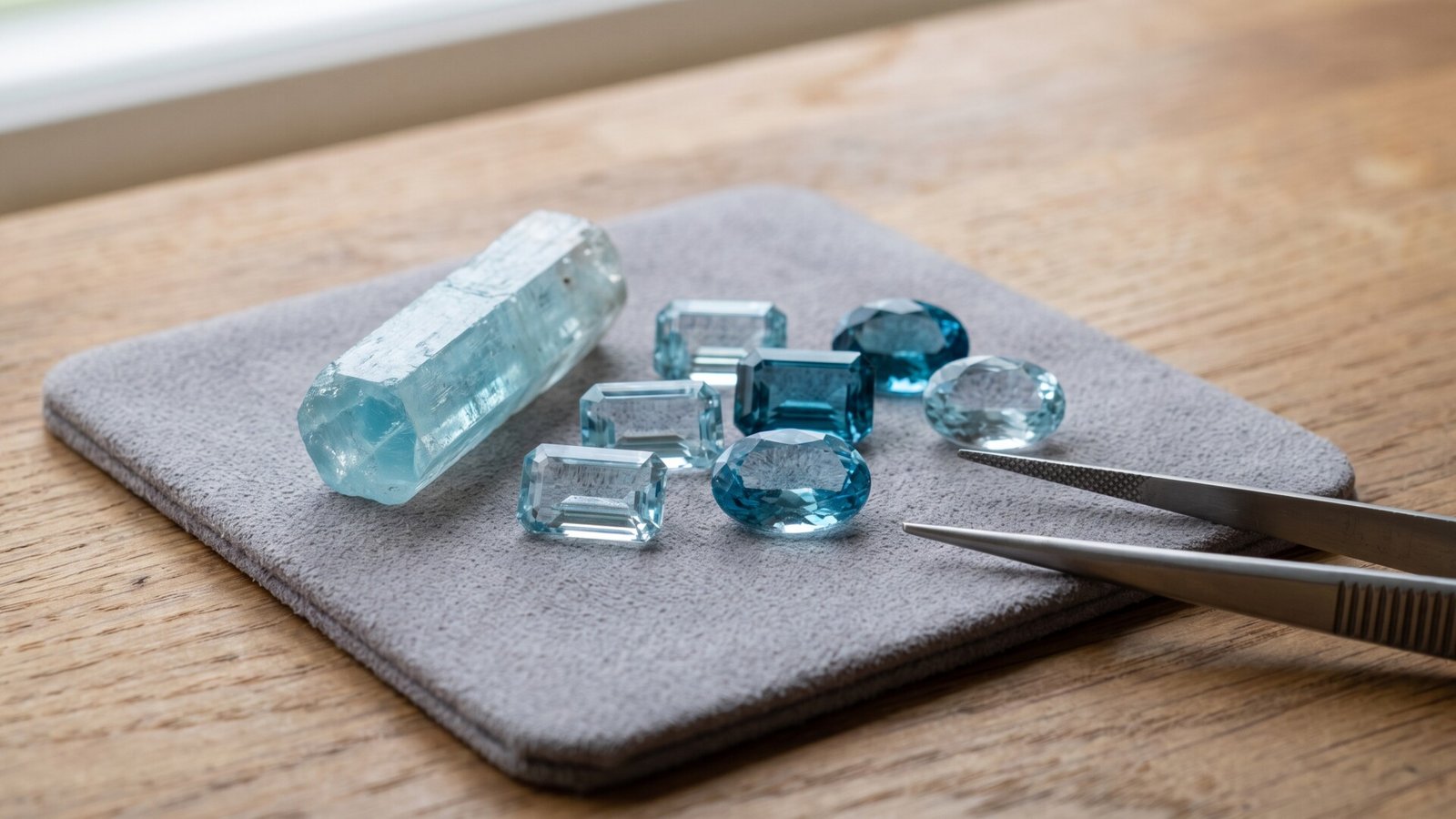
- Emerald cut: a step cut that shows off aquamarine’s clarity and color.
- Oval and cushion: brighter, softer shapes with rounded edges that resist chipping.
- Pear and Asscher: distinctive shapes; pear points and Asscher corners benefit from protective prongs.
- Cabochon: for translucent material or stones with interesting inclusions.
Engagement rings and vintage styles
Aquamarine engagement rings have grown in popularity because the stone is distinctive, relatively durable, and far less expensive than a sapphire or diamond of similar size. See our guide to aquamarine engagement rings and our look at vintage aquamarine jewelry trends.
Aquamarine Value & Price
What affects price
- Color: deep, saturated blue commands the highest prices; classic seawater blue is next, then paler stones.
- Clarity: buyers expect aquamarine to be eye-clean; visible inclusions reduce value, unlike in emerald.
- Cut: proportions affect how deep the color looks. A poorly cut stone can look paler than its body color.
- Size: deeply colored large stones are scarce, so price per carat rises with size.
- Treatment and documentation: untreated fine stones and stones with a laboratory report or Santa Maria grading report command more.
Indicative price ranges (USD)
Rough, indicative ranges per carat for loose, heat-treated stones. Real prices vary by seller, size, and market.
| Quality | Approx. USD per carat |
|---|---|
| Pale / ice aquamarine | $20 to $75 |
| Classic seawater blue, good quality | $75 to $200 |
| Fine classic blue, eye-clean | $200 to $500 |
| Santa Maria / Santa Maria Africana color | $500 to $2,000+ |
| Exceptional large stones | $2,000 and up |
Aquamarine is best bought for enjoyment, not as an investment. To see how it compares with other stones, see our ranking of the most expensive birthstones.
Natural, Lab-Grown, and Imitation Aquamarine
Natural aquamarine is the standard. Lab-grown (synthetic) aquamarine does exist but is uncommon in the market; it has the same chemistry as natural beryl and must be sold as lab-grown. A simulant is a different material that only imitates the color.
How to tell aquamarine from look-alikes
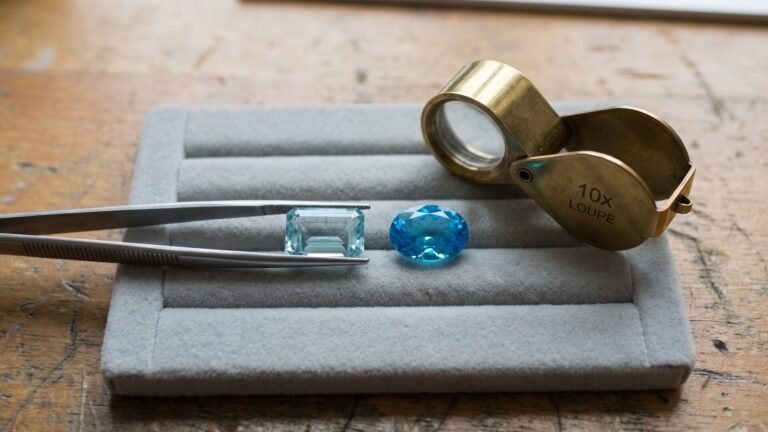
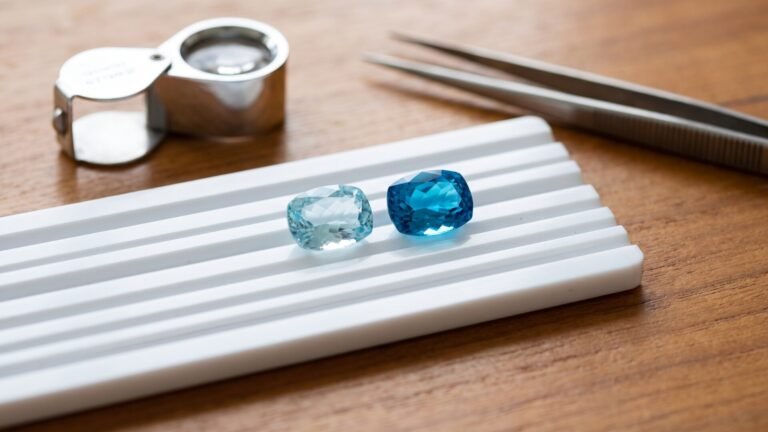
- Blue topaz: the most common look-alike. Most blue topaz gets its color from irradiation plus heat treatment, and it is often more intensely or electrically blue. See our comparison Aquamarine vs Topaz for Durability and Color.
- Glass: lacks aquamarine’s sparkle and may show bubbles under magnification.
- Synthetic spinel: can imitate aquamarine’s color but has different optical properties.
- Lab-grown aquamarine: may look unusually clean and uniform; only gemological testing can confirm it.
Home checks such as looking for slight color variation are only hints. For valuable stones, ask for a report from a reputable laboratory such as GIA, IGI, or AGS, and for budget pieces buy from sellers with clear return policies and treatment disclosure.
Aquamarine Buying Checklist
- Decide whether you prefer pale ice-blue or more saturated blue; both are valid.
- Ask whether the stone is heat treated, and whether the blue is natural or irradiated.
- Check the stone in daylight; avoid stones that look washed out due to poor cutting.
- Confirm that the stone is natural beryl rather than topaz, glass, or lab-grown, and get that in writing.
- Pick a setting that protects corners, especially for emerald-cut and pear-shaped stones.
- Keep documentation and the return policy.
Care & Cleaning of Aquamarine
For a fuller guide, see How to Care for Aquamarine Stones. In short:
Cleaning
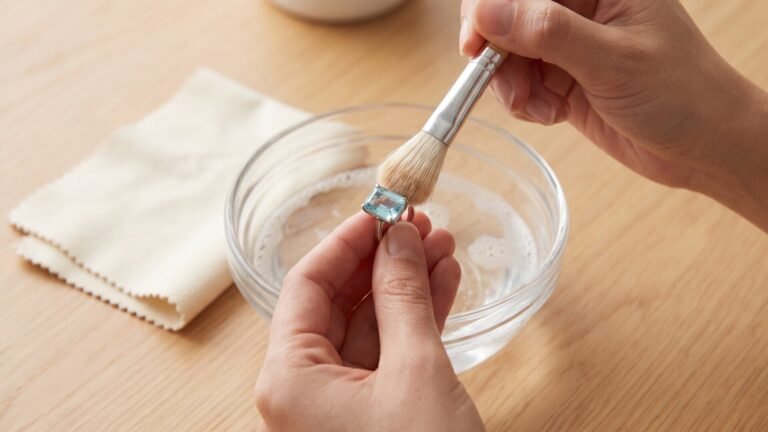
- Warm water, mild dish soap, and a soft brush are safe for most aquamarine. Rinse well and dry with a soft cloth.
- Ultrasonic cleaners are generally acceptable for clean, unfractured stones, but avoid them if the stone has visible fractures, fluid inclusions, or fillers.
- Steam cleaning is best avoided, particularly with included stones, because heat and thermal shock can damage them.
What to avoid
- Hard knocks: remove rings during sports, gardening, and heavy work.
- Sudden temperature changes: remove jewelry before saunas and hot tubs.
- Harsh chemicals: bleach, ammonia, and strong acids can damage the stone’s setting and surface.
- Prolonged strong light: standard heat-treated aquamarine is light-stable, but Maxixe-type irradiated stones may fade, so keep them out of strong sunlight.
Storage
Store aquamarine apart from harder stones such as sapphire, ruby, and diamond, which can scratch it. A soft pouch or lined box works well.
Aquamarine Compared With Other Blue Gemstones
Shoppers who like aquamarine often weigh it against other blue stones. The comparison below is a general guide; individual stones vary, and treatment and cut change the picture.
| Gemstone | Mohs hardness | Typical trade-off versus aquamarine |
|---|---|---|
| Blue topaz | 8 | Often brighter blue and inexpensive, but the color is usually produced by irradiation and heat, and topaz has perfect cleavage |
| Blue sapphire | 9 | Far more durable and with richer color, but much more expensive |
| Tanzanite | 6.5 to 7 | Violet-blue and distinctive, but softer and with cleavage, so it needs more careful wear |
| Blue tourmaline (indicolite) | 7 to 7.5 | Available in deeper, more greenish blues; less common and usually pricier at fine quality |
In short, aquamarine sits in a useful middle ground: it is harder and cleaner than most colored gems at its price, cooler and paler than sapphire, and far less costly. If you want maximum durability for a daily-wear engagement ring and your budget allows it, sapphire is tougher. If you want the lowest price for a blue stone, topaz is cheaper, but ask how its color was produced.
Aquamarine Gift Ideas and Styling
Aquamarine suits several gift occasions because it is understated, wearable, and tied to a clear tradition.
- March birthdays: A pendant or pair of stud earrings is a low-risk choice, since both can be worn daily and are protected from knocks.
- 19th anniversaries: Where aquamarine is the anniversary stone, a ring or pendant with a pale to medium blue stone is a thoughtful, affordable gesture.
- Engagement and promise rings: Choose a clean emerald, oval, or cushion cut in a bezel or halo setting for added protection.
- Layered and stacked styles: Smaller aquamarines work well in stacked bands and delicate necklaces, where their pale color pairs easily with other metals and stones.
Metal choices. White gold, platinum, and sterling silver emphasize aquamarine’s cool tone. Rose gold gives a softer, warmer contrast, and yellow gold brings out the greener shades in classic seawater-blue stones. Because a pale aquamarine can look slightly flat in a dull setting, a bright, polished mounting or a halo of small diamonds often helps the color read better.
Size and proportion. Aquamarine is available in generous sizes at modest prices, so a larger stone is often realistic for the budget. A bigger stone does not make the color deeper, however; a large pale stone stays pale, so pay attention to saturation as well as carat weight.
Explore More Aquamarine and Gemstone Guides
- Aquamarine Meaning: History, Symbolism, Spiritual Properties & Modern Uses
- Aquamarine in Mythology and History
- Aquamarine Color Chart Explained
- How to Care for Aquamarine Stones
- Aquamarine vs Topaz for Durability and Color
- 10 Most Stunning Aquamarine Engagement Rings
- Vintage Aquamarine Jewelry Trends
- Related gemstones: Emerald (also beryl), Topaz, Sapphire, Tanzanite, and Diamond
Frequently Asked Questions About Aquamarine
Is aquamarine expensive?
It depends on color and quality. Pale aquamarine is quite affordable, roughly $20 to $75 per carat, while fine Santa Maria-type blue can reach $500 to $2,000 or more per carat. Overall, aquamarine costs much less than ruby, sapphire, or emerald of comparable size and quality.
Is aquamarine suitable for daily wear?
Generally yes, with sensible care. At 7.5 to 8 hardness and with good clarity, aquamarine suits rings, pendants, and earrings. It can still chip on a hard blow, so use a protective setting and remove rings for heavy work, sports, and gardening.
What does aquamarine symbolize?
Traditionally aquamarine symbolizes calm, clarity, courage, and faithful love, and it has long been linked to the sea and to sailors. These are cultural meanings, not scientific properties.
Is aquamarine heat treated?
Most aquamarine is heat treated to reduce green and yellow tones. The treatment is considered stable and is widely accepted in the trade, but it should be disclosed. Untreated stones of fine color are scarcer.
Does aquamarine fade in sunlight?
Standard heat-treated aquamarine is light-stable under normal wear. Deep Maxixe-type blue produced by irradiation can fade, so ask a seller about any very deep, inky stone.
What is Santa Maria aquamarine?
Santa Maria refers to aquamarine with an intense, pure blue color, named after a Brazilian mine that is now largely depleted. In 2022 AIGS introduced a grading report that defines the color standard. Ask for documentation if a seller uses the term at a premium price.
Is aquamarine a birthstone?
Yes. Aquamarine is the modern birthstone for March, and bloodstone is the traditional March stone. Some gift lists also name aquamarine for the 19th wedding anniversary.
How can you tell aquamarine from blue topaz?
Aquamarine usually has a softer, more serene blue, sometimes with a hint of green, while blue topaz is often brighter and more electric. The two have different refractive properties, so a gemologist can tell them apart definitively. See our aquamarine vs topaz comparison.
What is the difference between aquamarine and emerald?
Both are beryl. Emerald is green because of chromium or vanadium and is usually heavily included and filled with oil or resin. Aquamarine is blue because of iron, is typically much cleaner, and is usually heat treated. Aquamarine is generally more practical for daily wear and costs less.
Is lab-grown aquamarine real?
Lab-grown aquamarine is real beryl with the same chemistry as natural stone, but it was made in a laboratory, and it should be sold as lab-grown. It is uncommon compared with natural aquamarine and with look-alikes such as glass or synthetic spinel.
How do I clean aquamarine?
Use warm water, mild soap, and a soft brush, then rinse and dry. Avoid steam cleaners and, for fractured or filled stones, ultrasonic cleaners.
Final Thoughts on Aquamarine
Aquamarine rewards buyers who prioritize clarity and color over size. Look for a clean stone with a color you like, confirm whether it has been heat treated, choose a setting that protects the corners, and enjoy a stone that is both traditional and practical. Browse the retailer options below.
[Shop Aquamarine Jewelry]
[Shop March Birthstone Collection]
[Shop Blue Gemstones]
Explore more gemstones at our Gemstones Hub.