March Birthstone: Meaning, Symbolism, and Jewelry Guide
The March Birthstone at a Glance
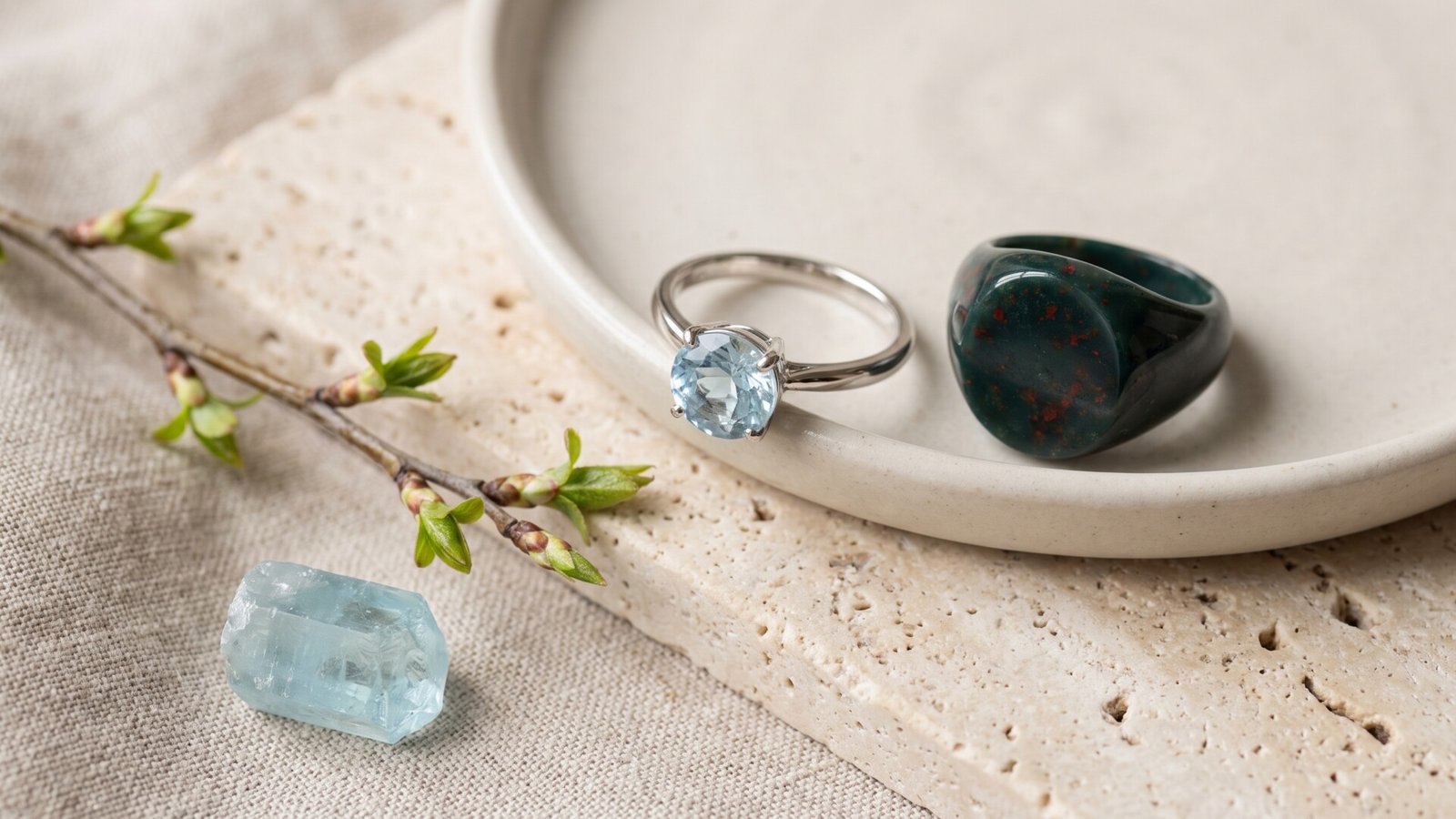
March marks a turning point in the year, when winter loosens its grip and the first signs of spring appear. Two stones represent the month: aquamarine, the modern and most widely recognized March birthstone, and bloodstone, the traditional alternative. Aquamarine is a light blue to blue-green gem, and bloodstone is a dark green stone speckled with red.
| Aquamarine | Bloodstone | |
|---|---|---|
| Role | Modern primary March birthstone | Traditional alternative March birthstone |
| What it is | Blue to blue-green variety of beryl | Dark green chalcedony (a quartz) with red iron oxide inclusions, also called heliotrope |
| Mohs hardness | 7.5 to 8 | 6.5 to 7 |
| Look | Transparent, often faceted | Opaque, usually a cabochon |
| Best for | Rings, pendants, earrings | Beads, cabochon rings, pendants |
This guide covers why March has two stones, what each is made of, what they traditionally symbolize, how they connect to the zodiac, which jewelry suits each, and how to look after them. Symbolism and spiritual meanings here are cultural traditions and beliefs, not scientific or medical claims. To see all twelve months, visit our Birthstones by Month hub.
What Is the March Birthstone?
Birthstone lists changed over time and differ by country and organization, which is why some months have more than one stone. For March, aquamarine is the stone most jewelers and gem organizations recognize today, while bloodstone is the older traditional stone that is still widely listed. Read more in our guides on what birthstones are and the history of birthstones.
Primary March Birthstone: Aquamarine
Aquamarine is a member of the beryl family, the same mineral family as emerald. Its name comes from the Latin aqua marina, meaning “water of the sea”. GIA describes its color as ranging from deep green-blue to a light, slightly greenish blue. Its hardness is 7.5 to 8 on the Mohs scale, which makes it durable enough for everyday jewelry. Typical sources include Minas Gerais in Brazil, the Karakoram foothills of Pakistan, parts of Africa, and US locations such as Colorado and California. Aquamarine is also the traditional gem for a 19th wedding anniversary.
Traditionally, aquamarine is associated with:
- Calmness and emotional clarity
- Renewal and fresh beginnings
- Courage and clear communication
Learn more in our aquamarine gemstone guide, the aquamarine meaning guide and the aquamarine color chart.
Traditional March Birthstone: Bloodstone
Bloodstone is a variety of chalcedony, a type of cryptocrystalline quartz. It is typically a dark green jasper-like stone with red inclusions of iron oxide, especially hematite. It is also called heliotrope, and it is most often cut as a cabochon. GIA gives its hardness as 6.5 to 7, so it scratches more easily than aquamarine. Most market supply comes from India, with further sources in Brazil, Australia, China and the United States. Traditionally, bloodstone has been linked with strength, vitality and protection, and today it is often treated as a lucky charm, especially among athletes.
Bloodstone can be confused with plain green jasper. Our bloodstone vs green jasper identification guide explains how to tell them apart.
Aquamarine and Bloodstone: Key Gemological Facts
Before the symbolism, here is the science. These two stones look nothing alike and are different minerals, which affects how they wear, how they are cut and how you should shop for them. The figures below follow GIA and the American Gem Society’s gem references.
| Property | Aquamarine | Bloodstone |
|---|---|---|
| Mineral family | Beryl (same family as emerald and morganite) | Chalcedony, a microcrystalline form of quartz |
| Why it has its color | Trace iron in the beryl crystal gives the blue to blue-green | Green chalcedony with red spots of iron oxide, especially hematite |
| Mohs hardness | 7.5 to 8 | 6.5 to 7 |
| Usual cut | Faceted: emerald cut, round and oval brilliants | Cabochon or carving; faceting is possible but less common |
| Common treatment | Heat treatment, which GIA describes as stable | None typically discussed; glass imitations and red-spotted look-alikes exist |
| Lab-grown | Ask the seller; a lab report states whether a stone is natural or lab-grown | No synthetic bloodstone is known, according to the Gem Society |
Hardness tells you how well a stone resists scratching, not how well it survives a knock. Aquamarine is the harder of the two, but bloodstone has no cleavage and is a tough, compact material, so both can work in jewelry when matched to the right piece. For a deeper look at the scale, see our gemstone hardness scale guide.
A Short History of the March Stones
Aquamarine’s name comes from the Latin words for seawater. According to GIA, ancient mariners believed the stone would calm waves and keep sailors safe, and it was also said to bring happiness in marriage. Brazil’s Minas Gerais has been a major source for about two centuries, and Colorado’s Mount Antero produces the aquamarine that is the state gem.
Two famous stones show how large aquamarine can grow. In 1936 Brazil presented Eleanor Roosevelt with a 1,298-carat step-cut aquamarine, now held at the Franklin D. Roosevelt Presidential Library and Museum. The Dom Pedro Aquamarine at the Smithsonian weighs 10,363 carats and is believed to be the largest faceted aquamarine; artist Berndt Munsteiner carved it into an obelisk. Read more in our guide to aquamarine in mythology and history.
Bloodstone’s other name, heliotrope, comes from Greek words meaning “to turn the sun”. GIA records an old belief that placing the stone in water could turn the sun red. The name “bloodstone” reflects a Christian tradition that the red spots represent the blood of Christ. Both stories are legend, not geology, but they help explain the stone’s long reputation. Historic bloodstone pieces include carved cameos and small decorative boxes.
Why Aquamarine and Bloodstone Represent March
March sits between winter and spring, and its two stones reflect both renewal and resilience.
Seasonal Symbolism: Transition and Renewal
Aquamarine’s cool blue tones echo melting ice, flowing water and clearer skies, which is why the stone is a natural symbol of seasonal change. Bloodstone’s deep green and red speckles have long been tied to vitality and endurance, a good match for the last stretch of winter.
Historical and Cultural Roots
GIA notes that ancient mariners linked aquamarine with calm seas and safe travel, and the stone was long carried as a sailors’ talisman. You can read more in aquamarine in mythology and history. Bloodstone has been used in jewelry and carved objects for a very long time and is associated in tradition with strength and health. Some older traditions even claimed it could stop bleeding; that is folklore and not medical fact.
Balance Between Calm and Strength
- Aquamarine: calm, clarity, emotional renewal
- Bloodstone: grounding, resilience, inner strength
Meaning and Symbolism of the March Birthstone
Aquamarine Meaning
GIA describes aquamarine’s symbolism as “purity of spirit and soul”. In popular tradition it stands for:
- Peace and emotional clarity
- Honest communication
- Courage during change
Bloodstone Meaning
Bloodstone is traditionally linked with:
- Strength and endurance
- Courage and vitality
- Protection and staying grounded during change
These are symbolic associations, not claims about physical effects. For a wider look at meanings, visit our Birthstone Meanings & Symbolism hub.
Zodiac Connections
March spans two zodiac signs. Zodiac stone lists differ between sources, so these pairings are one popular tradition and not a rule:
- Pisces (about February 19 to March 20): intuitive and empathetic; aquamarine is often paired with Pisces for its water imagery.
- Aries (about March 21 to April 19): bold and energetic; bloodstone is sometimes paired with Aries for its themes of courage and vitality.
See zodiac vs monthly birthstones for help choosing between them, or browse the full zodiac birthstones guide.
Aquamarine or Bloodstone: Which Should You Choose?
- Choose aquamarine if you want a transparent, light-colored gem for a ring, pendant or earrings, especially a piece you will wear often. Its hardness and clarity make it the more versatile jewelry stone.
- Choose bloodstone if you prefer an earthy, opaque stone with a traditional feel, such as a beaded bracelet, cabochon ring or men’s jewelry.
- Choose both for a combined gift: an aquamarine pendant with a bloodstone bracelet covers the modern and traditional lists.
If you are comparing aquamarine with other blue stones, see aquamarine vs blue topaz and aquamarine vs topaz for durability and color.
What to Know Before You Buy
- Color: for aquamarine, a clear, evenly colored blue is the typical goal. Darker, more saturated blue generally costs more than very pale stones. Our color chart shows the range.
- Treatment: ask the seller whether an aquamarine has been heat-treated or otherwise enhanced, and whether it is natural or lab-created. Disclosure should be in the listing.
- Look-alikes: pale blue topaz is often sold as an aquamarine alternative at a lower price; it is a different mineral.
- Bloodstone vs jasper: make sure a stone sold as bloodstone has the red inclusions; plain green jasper is not the same.
- Setting: aquamarine suits solitaires, halos and three-stone designs; a protective setting is wise for rings. Bloodstone is best in bezels and cabochon settings.
Reading Aquamarine Quality Claims
GIA’s buyer’s guide offers several points worth knowing before you compare listings:
- Color comes first. The most prized aquamarine is a dark blue with a slight greenish tint and moderate intensity. Greener stones cost less, so a buyer who likes that tone can get more gem for the money.
- Clarity. Most fine faceted aquamarines are eye clean. Included stones with good color are cheaper and are sometimes used as statement pieces.
- Size and saturation. Large stones are easy to find, but small stones are usually pale, and strongly saturated color is hard to find below one carat.
- Grades are seller-specific. There is no universal grading scale for aquamarine, so labels such as “AAA” come from individual sellers. GIA evaluates aquamarine but does not grade it; a GIA identification report states whether a stone is natural or lab-grown and lists detectable treatments.
- Be wary of bargains. GIA warns that a large, intensely colored aquamarine selling for under $100 is unlikely to be genuine.
- Heat treatment. It is described as stable, so a heated stone does not fade under normal wear. Fracture-filled stones should only be cleaned with warm soapy water.
- Aquamarine versus blue topaz. Blue topaz is more common and its color is produced by radiation treatment, so aquamarine generally costs much more.
Origin does not determine aquamarine value, so do not pay extra for a place name unless it is documented. We have not listed price ranges here because we could not verify current per-carat figures from a reliable published source; compare several reputable sellers and ask for a lab report on any larger purchase.
Bloodstone Look-Alikes and Imitations
The Gem Society notes that glass imitations can mimic bloodstone’s colors, and that hematite or other red-spotted stones are sometimes sold under the bloodstone name. Genuine bloodstone is green chalcedony with scattered red or dark orange spots; its value depends mostly on how many deep red spots it has and how well it is cut. Ask the seller for the exact stone name, and see our bloodstone vs green jasper identification guide for what to look for.
March Birthstone Jewelry Ideas
Aquamarine dominates modern March birthstone jewelry, while bloodstone is a meaningful alternative with a bolder, earthier style. Browse more ideas in our Birthstone Jewelry Guide.
Aquamarine Jewelry
- Rings and engagement rings: aquamarine’s hardness suits rings; see aquamarine engagement rings.
- Necklaces and pendants: elegant and low-risk for daily wear.
- Earrings: studs and drops work well with light metals.
- Vintage styles: see vintage aquamarine jewelry trends.
The light blue color pairs well with white gold, platinum and silver.
Bloodstone Jewelry
- Beaded bracelets
- Cabochon rings
- Statement pendants
- Men’s jewelry; see custom birthstone rings for men
Looking for gifts? Try birthstone gift ideas by relationship or, for younger recipients, birthstone gifts for kids by month. Small beads and stones can be a choking hazard for young children, so check age suitability.
Which March Birthstone Jewelry Suits Daily Wear?
| Piece | Aquamarine | Bloodstone |
|---|---|---|
| Everyday ring | Good choice (Mohs 7.5 to 8); a bezel or halo adds protection against chips | Workable as a cabochon in a bezel or signet style; expect more surface wear (Mohs 6.5 to 7) |
| Pendant or necklace | Low risk and popular | Low risk; a large cabochon makes a bold statement |
| Earrings | Studs and drops both work | Less common, but small cabochon studs suit it |
| Bracelet | Best as tennis-style or occasional-wear pieces | Beaded bracelets are the classic choice |
The Gem Society describes bloodstone as having no cleavage and being tougher than most gemstones, so it tolerates knocks better than its Mohs number suggests. Neither stone is a reason to skip normal precautions: take rings off for heavy work, gym sessions and cleaning with chemicals.
Gift and Anniversary Occasions
Aquamarine is the traditional gem for a 19th wedding anniversary, which makes it a thoughtful choice beyond March birthdays. For a child born in March, a small pendant is usually more practical than a ring; see our birthstone gifts for kids by month. If the recipient was born near the Pisces and Aries border, our zodiac vs monthly birthstones guide can help you decide which stone to lead with.
How to Care for March Birthstone Jewelry
Aquamarine Care
Aquamarine ranks 7.5 to 8 on the Mohs scale and suits everyday wear with sensible care. Remember that hardness measures scratch resistance only; hard knocks can still chip any gem.
- Clean with warm water, mild dish soap and a soft toothbrush
- Ultrasonic and steam cleaners are usually safe only if the stone has no fractures or liquid inclusions; when in doubt, skip them
- Avoid harsh chemicals
- Store separately to prevent scratching by harder stones
See our detailed guide on how to care for aquamarine stones.
Bloodstone Care
Bloodstone is softer than aquamarine (Mohs 6.5 to 7) and benefits from gentler handling.
- Clean with warm soapy water and a soft brush
- Avoid harsh chemicals and extreme heat
- Dry with a soft cloth and store in soft fabric or a padded jewelry box
For broader guidance, browse our Education & Buying Guides and the wider Gemstones hub.
Fun Facts About the March Birthstone
- Aquamarine belongs to the beryl family, the same family as emerald.
- Aquamarine is the traditional gem for a 19th wedding anniversary.
- Mariners once carried aquamarine as a charm for calm seas and safe travel.
- Bloodstone’s other name, heliotrope, refers to its red-speckled green appearance.
- Bloodstone is a lucky charm for some athletes today.
Learn more about gem science in the gemstone hardness scale explained and the science behind gemstone colors.
Frequently Asked Questions About The March Birthstone
What is the March birthstone?
The modern March birthstone is aquamarine. Bloodstone is the traditional alternative.
What color is the March birthstone?
Aquamarine is light blue to blue-green, and bloodstone is dark green with red speckles.
Is aquamarine durable enough for an engagement ring?
With a Mohs hardness of 7.5 to 8, aquamarine is suitable for rings, especially in a protective setting. As with any gem, it can still chip with a hard knock.
What is bloodstone made of?
Bloodstone is a dark green variety of chalcedony (cryptocrystalline quartz) with red iron oxide inclusions, such as hematite. It is also called heliotrope.
Is aquamarine related to emerald?
Yes. Both are varieties of the mineral beryl, but they get their colors from different trace elements.
Can I use an ultrasonic cleaner on aquamarine?
GIA says ultrasonic and steam cleaners are usually safe if the stone has no fractures or liquid inclusions. If you are unsure, use warm soapy water and a soft brush instead.
Which March birthstone is better for a gift?
Aquamarine is the more versatile gift for most people. Bloodstone suits those who like earthy, traditional stones or men’s jewelry.
Is aquamarine heat treated?
Heat treatment is common and GIA describes it as stable. Ask the seller to disclose any treatment, and ask for a lab report on larger stones.
Is bloodstone a real gemstone?
Yes. Bloodstone is a natural variety of chalcedony with red iron oxide spots. Be aware that glass imitations and other red-spotted stones are sometimes sold under the name.
Is aquamarine the same as blue topaz?
No. They are different minerals. Blue topaz is more common and its color is produced by radiation treatment, so aquamarine generally costs much more.
What wedding anniversary is aquamarine for?
Aquamarine is the traditional gem for a 19th wedding anniversary, according to GIA.
Does bloodstone really stop bleeding?
No. That is old folklore. Bloodstone’s symbolism is cultural tradition and is not medical advice.
Related Articles and Resources
- Aquamarine: Meaning, Properties, Uses & Value
- Bloodstone vs Green Jasper Identification Guide
- Birthstone Jewelry Guide
- February Birthstone
- April Birthstone
- Birthstones by Month
Explore More Birthstones
March is one chapter in a larger tradition. Explore the full calendar in our birthstones by month guide, or move through the year: January, February, April, May, June, July, August, September, October, November and December.
Final Thoughts
The March birthstones reflect a month of transition. Aquamarine offers clear, calm color and good durability, and bloodstone offers an earthy, traditional alternative with a long history. Whichever you choose, ask about treatment and origin, match the setting to how often you will wear it, and care for it as described above. To continue the calendar, read the April birthstone guide.