Healing Properties of Amethyst Crystals: A Complete Guide
Amethyst is one of the most popular crystals in both spiritual and jewelry circles. Known for its violet color and calming reputation, it has been treasured for centuries, and in modern crystal-healing practice it is often described as the “stone of calm”. Whether you are a crystal enthusiast, a birthstone collector or simply curious, this guide separates what tradition says about amethyst’s healing properties from what is actually known about the stone itself.
Please note: the healing properties described below come from cultural traditions and personal belief. There is no scientific evidence that amethyst treats or prevents any physical or mental condition, and crystals should never replace medical care. Our crystal healing basics for beginners guide explains how people typically use crystals as a mindful, complementary practice. For the full profile of the stone, see our main Amethyst: Meaning, Properties, Uses & Value guide, part of our gemstones guide.
Amethyst at a Glance
| What it is | The purple variety of quartz (silicon dioxide) |
| Birthstone | February |
| Mohs hardness | 7 |
| Cleavage | None; it can still chip or scratch with rough wear |
| Color | Light lilac to deep royal purple; often shows angular color zoning |
| Color cause | Iron impurities combined with natural irradiation |
| Common treatment | Heat can lighten or change amethyst, and heated amethyst is one source of citrine |
| Sensitivities | Color can fade with prolonged strong sunlight or heat |
| Main sources | Brazil, Uruguay, Bolivia, Zambia and other countries |
A Brief History of Amethyst
Amethyst has been valued for thousands of years. Ancient Egyptians carved it into amulets and ceremonial jewelry. The name is generally traced to the Greek amethystos, often translated as “not intoxicated”, and in Greece and Rome the stone was associated with sobriety and a clear mind. Ancient writers recorded the belief that wearing it, or drinking from amethyst cups, would guard against drunkenness.
During the Middle Ages amethyst became a symbol of royalty and spirituality, and European clergy wore it in rings as a sign of piety. It was once ranked among the most precious gems. That changed in the 19th century, when large deposits were discovered in Brazil and prices fell, making amethyst the accessible, popular gemstone it is today.
You can read more about the stone’s symbolism across cultures in Amethyst Meaning: History, Symbolism, Spiritual Properties & Modern Uses.
Physical Properties of Amethyst
Amethyst is a variety of quartz, known for its distinct violet to deep purple color. The color comes from trace amounts of iron plus natural irradiation, giving a range from pale lilac to rich royal purple. The finest stones are generally described as a strong reddish purple to purple with no visible color zoning. For a ranked look at the shades, see our guide to amethyst color variations ranked from best to worst.
With a Mohs hardness of 7, amethyst is hard enough for everyday jewelry, and it has no cleavage. Remember that hardness measures scratch resistance, not toughness: amethyst can still chip on a sharp blow, and dust containing quartz (also hardness 7) or harder materials can gradually dull the polish. Amethyst is typically transparent and often fairly clean, though it may show color zoning or small inclusions.
One practical caution: amethyst can fade if it sits in strong sunlight or near high heat for long periods, so keep display pieces and crystals away from sunny windowsills.
Healing Properties of Amethyst: What People Believe
In crystal-healing traditions amethyst is credited with a wide range of benefits for mind, body and spirit. The sections below describe those beliefs as practitioners present them. They are not medical claims.
1. Emotional Balance and Calm
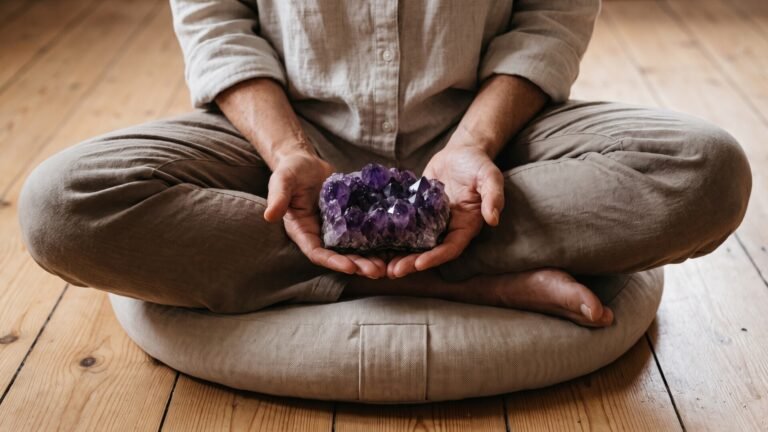
Amethyst is known as the “stone of calm”. Practitioners believe its soothing energy helps people feel steadier during stressful moments, and many use it in meditation practices, holding a crystal in the hand or placing it near the meditation space. It is worth being plain about what is happening here: a quiet ritual, a pleasant object to hold and a few minutes of focused breathing can themselves be calming, whatever one believes about the stone.
2. Mental Clarity and Intuition
Amethyst has long been associated with clear thinking and spiritual insight. Many people keep a crystal on their desk as a reminder to focus. In chakra systems, which are a spiritual framework rather than a scientific one, amethyst is linked to the third eye and crown chakras, said to relate to intuition, wisdom and higher awareness.
3. Rest and Sleep Rituals
Some people place a small amethyst on a bedside table or under the pillow as part of a wind-down routine, hoping for restful sleep and vivid dreams. Treat this as a comforting ritual only. If you have ongoing headaches, poor sleep or high stress, please speak with a doctor, and use crystals as a personal addition rather than a treatment. Keep small tumbled stones away from young children and pets, who could swallow them.
4. Spiritual Growth and Protection
Many practitioners regard amethyst as a protective stone that shields a space or person from negative influences. It is used in rituals to encourage inner growth, and in yoga or energy work it often serves as a focus point to deepen awareness.
Belief vs Evidence: What Is Actually Known
It helps to keep three layers apart when you read about amethyst:
- Gemological fact: amethyst is a purple quartz with a hardness of 7, colored by iron and natural irradiation. These details can be checked in laboratory and mineralogy references.
- History and tradition: the Greek link with sobriety, its use in clergy rings and its place as the February birthstone are documented parts of the stone’s story. See Amethyst Meaning for more.
- Belief and practice: the calming, protective and intuitive properties described in this guide belong to crystal-healing and spiritual traditions. They are personal beliefs, and there is no scientific evidence that holding or wearing amethyst treats a condition.
Many people still find real value in the routine around a crystal, such as pausing, breathing slowly and setting an intention. That can be a perfectly good reason to keep one nearby, as long as it sits alongside, not instead of, professional care when you need it.
Common Myths About Amethyst
- “Amethyst never needs care.” It is hard, but light and heat can fade it and a hard knock can chip it.
- “All yellow quartz is citrine.” Much commercial citrine is heat-treated amethyst, and the two are the same mineral with a different color.
- “Darker purple always means better.” Very dark stones can look nearly black in low light; a strong, even purple with good brightness is usually preferred. Our guides to amethyst color variations and symbolism and to color variations ranked explain the shades.
- “Any purple quartz is amethyst.” Dyed or coated quartz and glass are sold as amethyst. Read amethyst vs purple quartz for the differences.
Using Amethyst Safely
- Do not put crystals in your mouth, and keep small stones away from young children and pets.
- Do not use crystals as a substitute for medical advice, treatment or prescribed medication.
- Be cautious with “crystal water”. Raw crystals can carry other minerals, so it is safer to place the stone beside a sealed container than to steep it in drinking water.
- Check that jewelry settings are secure before wearing a stone daily, especially on rings and bracelets.
Different Forms of Amethyst Crystals
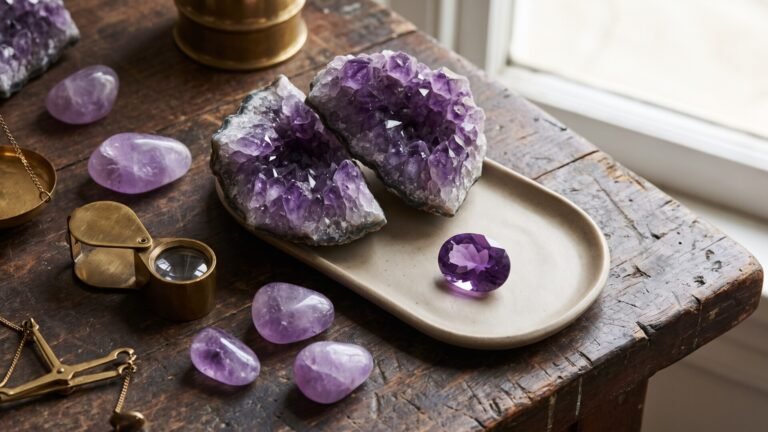
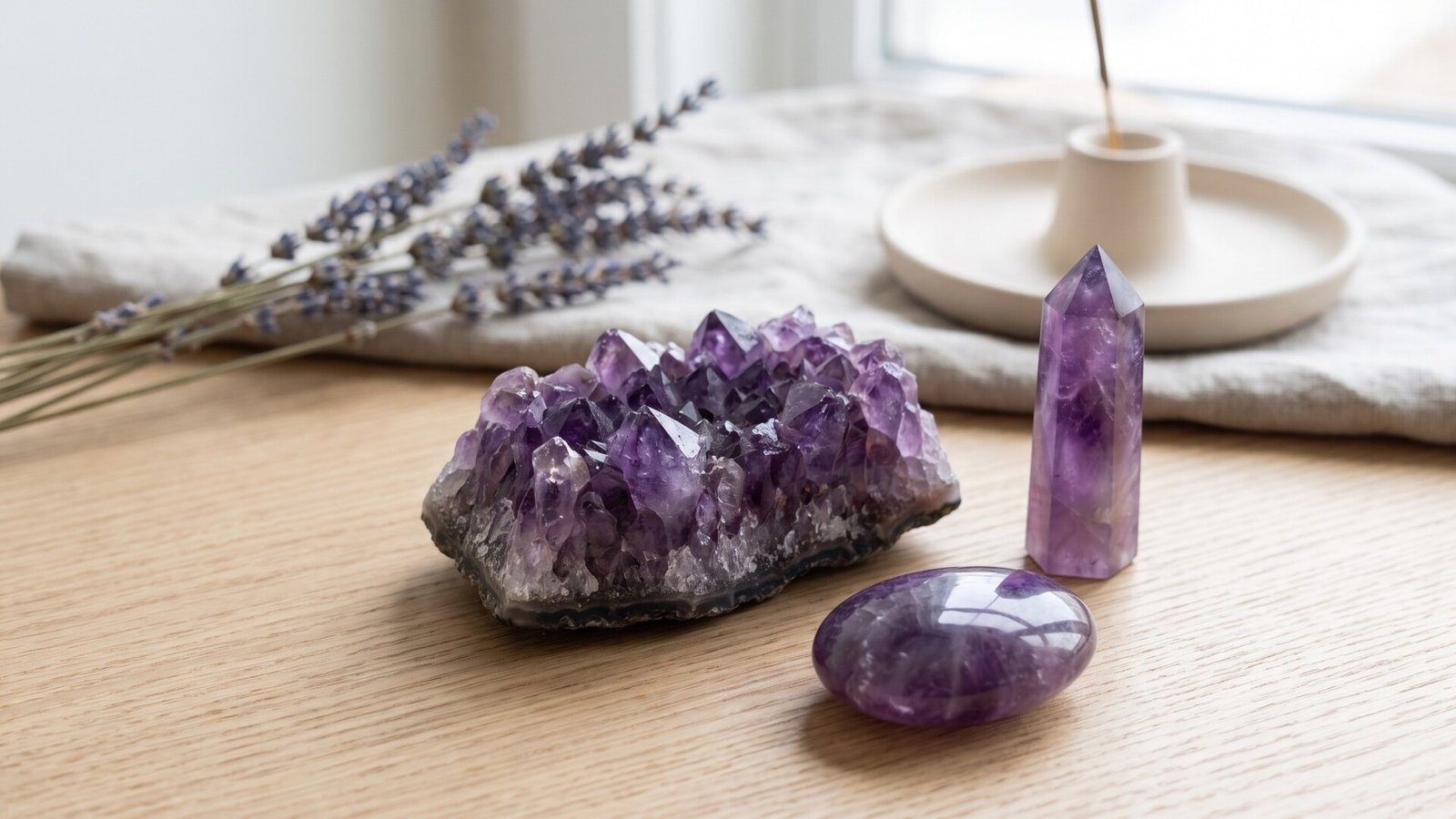
- Tumbled stones: Smooth, polished stones that are easy to carry in a pocket or use in a meditation space.
- Geodes and clusters: Natural formations with many points, often displayed as focal points in homes or offices. Brazilian and Uruguayan geodes are well known for their size.
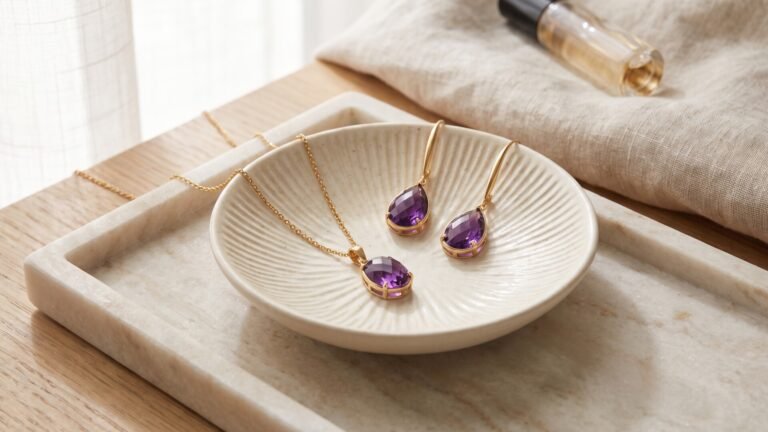
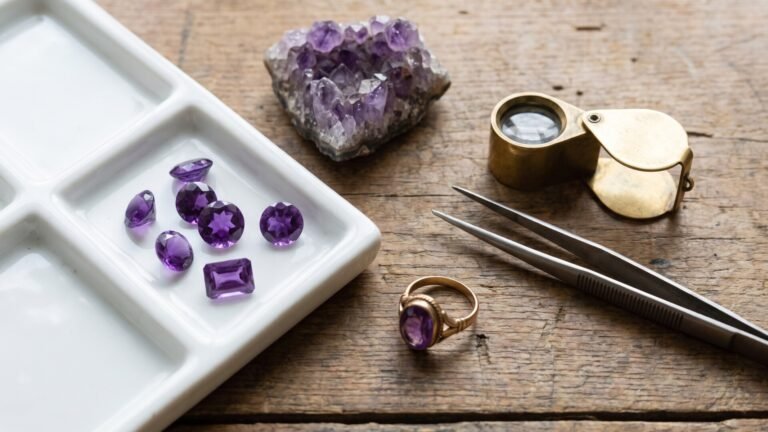
- Faceted jewelry stones: Cut stones in rings, pendants and earrings, which show off color and clarity and suit daily wear.
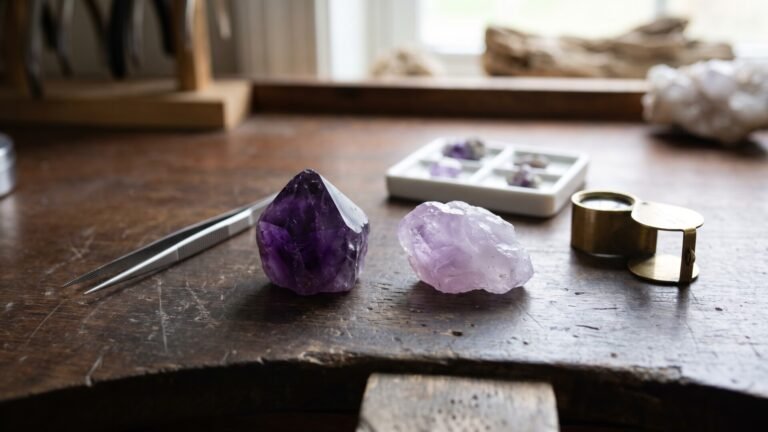
- Raw crystals: Uncut stones with natural edges, popular with collectors.
- Chevron amethyst: Banded purple-and-white material that is a favorite for beads and carvings; see what is a chevron amethyst and is it valuable.
How to Choose the Right Amethyst
- Color: Even, saturated purple is the most prized. Very pale stones are often sold as “rose de France” and cost less.
- Clarity: Look for stones without cloudiness or visible fractures; cloudy stones can look dull in jewelry.
- Form: Choose the shape that matches your use: faceted for jewelry, tumbled or clusters for meditation and decor.
- Origin: Amethyst is widely mined in Brazil, Uruguay, Bolivia and parts of Africa. Origin has less effect on price than color, and you should not assume a seller’s origin claim is certified unless it comes with documentation.
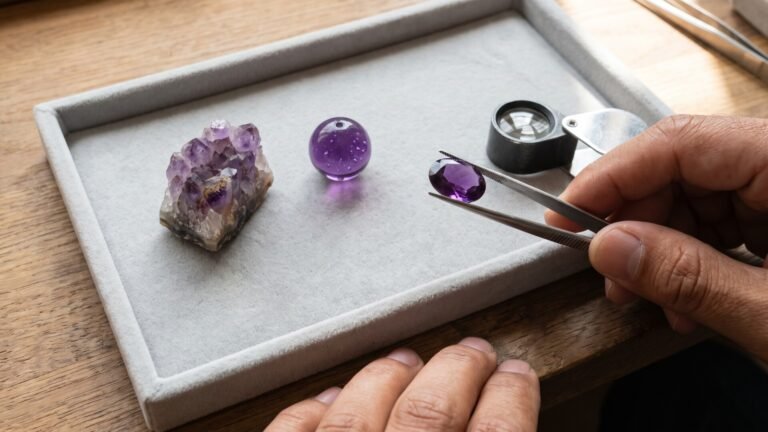
- Natural versus lab-grown: Lab-grown amethyst has the same chemistry as natural amethyst and is sold openly at lower prices. Glass and dyed quartz are imitations. Our guides on how to spot fake amethyst jewelry and how to spot fake amethyst walk through the checks.
- Beware of mislabeled citrine: Much commercial citrine is heat-treated amethyst, and some “green amethyst” is heated amethyst as well (properly called prasiolite).
When buying, choose sellers who state whether a stone is natural, treated or lab-grown, and who offer returns. Claims such as “ethically sourced” should be backed by a named standard or certification; if they are not, treat them as marketing.
Caring for Your Amethyst
Cleaning
- Mild soap, warm water and a soft brush are the safest method.
- Avoid harsh chemicals, steam cleaners and sudden temperature changes. Ultrasonic cleaners are best skipped, especially for raw stones, clusters, or any stone with fractures.
- If a polished stone has become scratched, see how to remove scratches from amethyst jewelry at home and how to safely clean amethyst without damaging the polish.
Energetic cleansing (a personal practice)
Many crystal enthusiasts “cleanse” amethyst with sound, smoke or moonlight. Moonlight is a gentle option for the stone itself. Avoid leaving amethyst in strong direct sunlight, which can fade the color, and keep water-soaking for polished stones only.
Storage
Store amethyst separately from harder stones such as diamond, ruby and sapphire, which can scratch it. Velvet pouches or lined compartments work well.
Recommended Amethyst Jewelry
- Solitaire rings: A bezel or low-set setting is best for daily wear.
- Pendants and necklaces: Low-risk for damage and a popular way to keep the stone close.
- Cluster or stud earrings: Show off sparkle with little exposure to knocks; see best amethyst earrings and necklaces.
- Raw amethyst bracelets: Casual and earthy; bracelets take more knocks, so expect more wear.
- February birthstone jewelry: Amethyst is the February birthstone, which makes it a natural birthday gift.
Pieces like these are sold by retailers including Blue Nile, Brilliant Earth, Angara, James Allen and Etsy artisan shops. If you are working to a budget, see 10 amethyst jewelry pieces for every budget.
Incorporating Amethyst Into Daily Life
- Meditation: Hold a stone or place a cluster nearby as a focus for mindfulness.
- Home decor: Display geodes or clusters out of direct sunlight to avoid fading.
- Bedtime routine: A small stone on the nightstand can become a cue to wind down.
- Work desk: A tumbled stone can serve as a reminder to pause and refocus.
Amethyst and Astrology
Astrological stone lists vary widely between traditions and there is no single agreed list. Amethyst is most commonly paired with Pisces and Aquarius, which overlap with the February birthstone period, and some sources also link it with Virgo and Capricorn. If you enjoy astrology, treat these as personal inspiration rather than fact.
Frequently Asked Questions About Healing Properties Of Amethyst
What are the healing properties of amethyst?
In crystal-healing traditions amethyst is said to promote calm, mental clarity, intuition and restful sleep. These are beliefs, not proven medical effects.
Does amethyst really heal?
There is no scientific evidence that amethyst treats any physical or mental condition. Many people enjoy it as part of a mindful routine, but it should never replace professional medical care.
What is amethyst's hardness?
Amethyst is a quartz variety with a Mohs hardness of 7, suitable for everyday jewelry with sensible care.
Can amethyst fade in the sun?
Yes. Prolonged strong sunlight or heat can fade amethyst, so avoid leaving jewelry or crystals in direct sun.
Is amethyst a birthstone?
Yes, amethyst is the February birthstone.
How do I tell if amethyst is real?
Real amethyst often shows natural color zoning and tiny imperfections, while glass tends to look flawless and bubbles may be visible. For certainty, ask for a gemological report or see our guide on spotting fake amethyst.
Final Thoughts
Amethyst is more than a purple crystal. It combines a long history, a practical hardness of 7 and a loved reputation for calm. Enjoy the traditions and rituals for what they are, choose a stone with honest disclosure, and protect it from heat and strong light. For the full profile continue to our main amethyst guide, or explore more in the gemstones hub.