The Ruby anniversary year significance and gift guide
The ruby anniversary marks 40 years of marriage. Forty years is long enough that the usual gift shortcuts stop working: the couple has probably collected plenty of things already, and what they tend to value is a gift that shows you noticed the life they built. A ruby, whether in a ring, pendant, earrings or a simple piece set in gold, is the traditional way to say that. But it is far from the only way, and a poorly chosen stone can disappoint.
This guide covers what the ruby anniversary means, where the tradition comes from, how to choose and buy a ruby without overpaying, which settings suit everyday wear, and what to give if jewelry is not the right fit. Where we describe symbolism and folklore, we say so; where we describe gemstone facts such as hardness, treatments and price, they come from gemological references. For a deeper look at the stone itself, see our complete ruby guide, and for the history of its meanings, our ruby meaning article.
Ruby Anniversary at a Glance
| Anniversary | 40th wedding anniversary (the “ruby anniversary”) |
| Traditional gift | Ruby; listed for the 40th by Jewelers of America and other jewelry organizations |
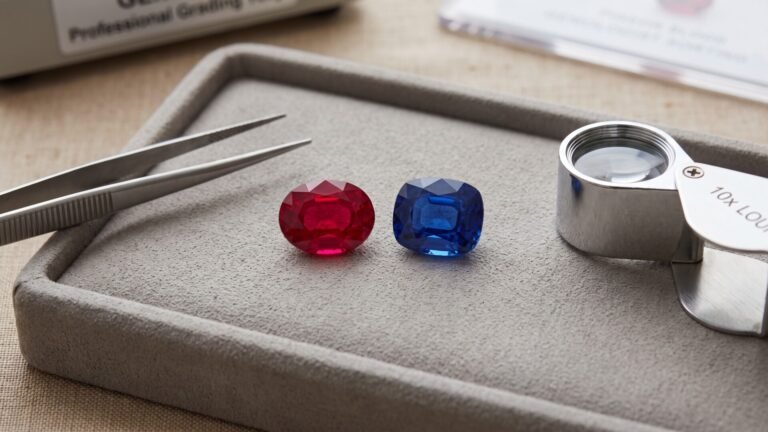
| Gemstone | Ruby is the red variety of the mineral corundum, colored mainly by chromium. Blue and other colors of corundum are sapphire |
| Hardness | 9 on the Mohs scale, with no cleavage and good toughness (GIA) |
| Common treatments | Heat treatment is very common; fracture (lead-glass) filling and lattice diffusion also exist and must be disclosed |
| Also | July birthstone (see our July birthstone guide) |
| Typical retail price | Natural rubies roughly $500 to $5,000 per carat under one carat, and $2,000 to $10,000+ per carat from one to two carats; prices vary widely with color, clarity, origin and treatment |
Understanding the Ruby Anniversary Year
The Origin of Anniversary Gifts
The habit of marking marriage milestones with specific materials is often traced to German-speaking Europe, where, according to popular accounts, a husband might give his wife a silver wreath at 25 years and a gold one at 50. Over time, the idea grew into full lists that assign a material or gemstone to many years of marriage. Today those lists are promoted by jewelry trade organizations, and they differ slightly between countries and publishers, so you may see other suggestions for the 40th in some traditions. Ruby is the one most widely given in the United States, and it is the one Jewelers of America lists for the 40th.
If you want to compare how the tradition is treated across our site, our other 40th anniversary articles go deeper on specific angles: the 40th anniversary gift guide focuses on why ruby is the traditional choice, and the 40th anniversary ruby buying guide focuses on selecting the stone.
Why Ruby for Forty Years?
Two reasons usually come up. The first is practical and factual: ruby is corundum, which rates 9 on the Mohs scale and has no cleavage, so a well-chosen ruby holds up to daily wear better than most colored gemstones. The second is symbolic. Red is the color of the heart in many cultures, and the ruby has long stood for love and passion. Pairing a durable stone with a long marriage is a natural metaphor, though it is a metaphor and not a scientific claim.
Ruby in History and Tradition
Ruby has been prized for a very long time. In Sanskrit tradition it was called ratnaraj, often translated as “king of precious stones,” and our article on the symbolism of ruby in ancient India covers that heritage in more detail. Accounts from Burma (Myanmar), historically a famous source, say warriors wore rubies in the belief that they offered protection, and medieval European writers attributed protective and love-related powers to the stone. These are traditional beliefs, not established effects, and we share them as part of the stone’s cultural story.
What the Ruby Anniversary Means
Beyond the stone, the ruby anniversary is about reaching a point where the relationship has become part of each partner’s identity. Not every marriage that reaches forty years has been easy, and the milestone does not claim otherwise. It recognizes persistence: a couple that has chosen each other repeatedly through career changes, children, loss and everyday routine. That is why the most successful gifts at this milestone tend to feel personal rather than merely expensive.
Gift Ideas for the Ruby Anniversary
Traditional Ruby Gifts
Ruby jewelry is the classic choice, and the best piece depends on how it will be worn. Because ruby is hard and tough, it works for rings, but the setting and the treatment status still matter. Here is how common jewelry types compare:
| Piece | Why it works | What to watch |
|---|---|---|
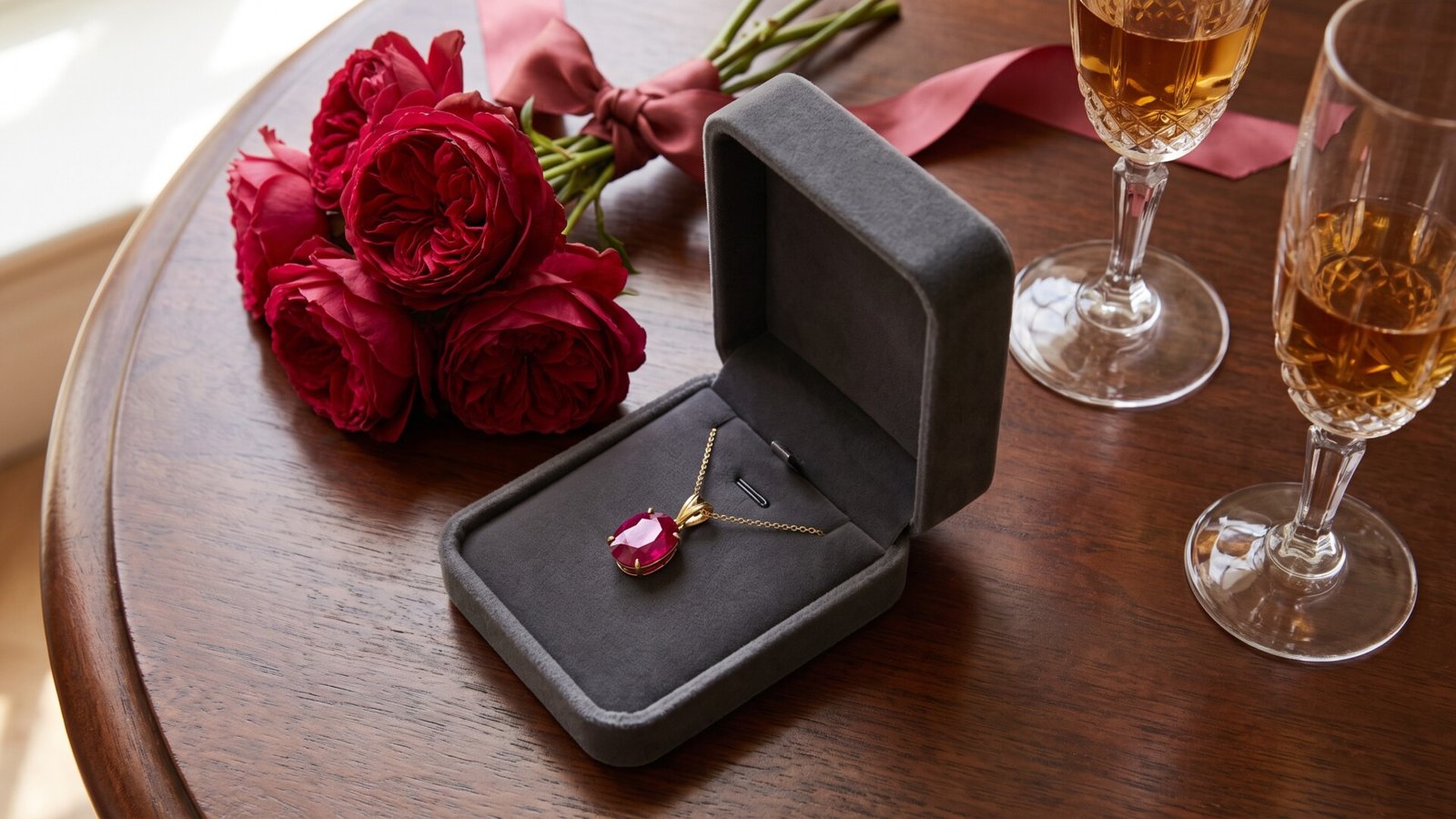
| Pendant or necklace | Low knock risk, easy to wear daily, a solitaire ruby on a gold chain is a timeless option | Check the bail and clasp are secure |
| Earrings (studs or drops) | Gentle on the stone, good for smaller, well-matched rubies | Matching color in a pair adds cost |
| Ring | Hardness of 9 suits daily wear for most stones | Prefer bezel or halo settings for extra protection; avoid fracture-filled stones for rings you will wear daily |
| Bracelet | Good for multiple small stones | Exposed to knocks and cleaning products, so check how each stone is set |
| Cufflinks, tie pin or watch accent (for him) | Subtle and practical | Confirm whether the ruby is natural, lab-created or a simulant |
For more ideas by style and piece type, browse our birthstone jewelry guide and our article on what to look for in high-end ruby jewelry.
Ruby-colored home decor, such as red art glass or a crystal vase, is another traditional route. It can be lovely, but it only works if the couple would actually display it, so it helps to pick something that suits their taste and home rather than something that merely matches the color.
Modern and Personalized Gifts
Many families now combine a small ruby item with something personal. Ideas that tend to work well include a custom portrait or illustrated print of the wedding photo, a letter box or memory book with a note for each decade, a framed map of places that mattered to the couple, or engraved jewelry with the wedding date. A wine tasting, a pomegranate-and-red-fruit tasting menu or a set of engraved glasses can also carry the ruby color theme without being literal.
Experience-Based Gifts
Experiences suit couples who already have everything. Options include a weekend in a city that matters to them, a private dinner at a favorite restaurant or vineyard, a sunrise or sunset hot air balloon flight, or tickets to a performance they have wanted to see. If you are planning a trip, note that ruby sources include Myanmar, Mozambique, Thailand and Sri Lanka; check current travel advisories before booking anything in a specific country.
When the Best Gift Is Not a Ruby
Some couples would rather not receive jewelry, and that is fine. A contribution to a dream-trip fund, a donation to a cause they care about, or a family event that gathers the people who matter can say more than a stone. A good compromise is a small ruby accessory paired with an experience, so the tradition is honored without the whole budget going into a gem.
Buying Considerations for Ruby Gifts
Color, Cut, Clarity and Carat
Color is the most important quality factor for ruby. The most valued stones show a vivid, saturated red, sometimes described with the trade term “pigeon’s blood” for the finest Burmese-type color; that term is a marketing and grading descriptor, not a guarantee, and it should come from a laboratory report rather than a sales listing. Stones that are too light look pink (and in the trade, pink corundum is generally called pink sapphire), and stones that are too dark lose brilliance.
Cut shapes how the color and light appear. A well-cut ruby shows even color and lively reflections, while a poor cut can look dull or leave dark patches. Our guide to rare gemstone cuts covers rose and old mine cuts if you prefer a vintage look. Oval, cushion and round shapes are most common for ruby.
Clarity is where many buyers get confused. Natural rubies almost always contain inclusions, and tiny silk-like needles can even be a sign of a natural origin. The goal is a stone that looks clean to the eye and whose inclusions do not threaten durability. A ruby with no inclusions at all under magnification is unusual and worth questioning, because lab-created stones often look cleaner.
Carat weight matters too, since price per carat generally rises with size for good-quality stones. For an anniversary ring or pendant, many buyers focus on a stone of about one carat or a little more, balancing size against quality and budget.
Treatments You Should Know About
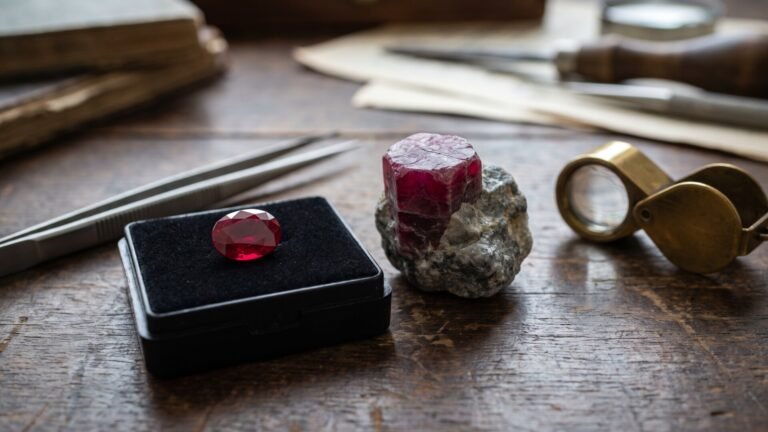
Most rubies on the market have been treated, and the treatment affects both price and care. Heat treatment is very common and widely accepted in the trade when disclosed. Fracture (lead-glass) filling is much more significant: surface-reaching cracks are filled with glass, which can improve appearance but reduces value and needs extra care. Lattice diffusion is another treatment in which color enters only a shallow layer. Our article on how to tell if a ruby is heat treated or natural explains what to ask.
| Treatment | What it does | Effect on value and care |
|---|---|---|
| None (untreated) | Natural color and clarity | Rarest and most expensive; safe with usual jewelry cleaning |
| Heat treatment | Improves color and clarity | Common and accepted when disclosed; priced below comparable untreated stones |
| Lattice diffusion | Adds color to a shallow surface layer | Color can be lost if the stone is recut or deeply scratched |
| Fracture or lead-glass filling | Fills cracks with glass | Lowest value; avoid acids, ultrasonic and steam cleaners; poor choice for a daily ring |
Natural vs. Lab-Created Rubies
A lab-created ruby has the same chemistry and crystal structure as a natural ruby; it is not “fake.” A simulant, by contrast, only imitates the look, for example red glass or red spinel sold as ruby. Lab-created rubies generally cost a fraction of comparable natural stones and tend to look cleaner, while natural rubies carry rarity and a geological story. Neither is wrong; what matters is that the seller labels the stone accurately. Read more in our guide to natural vs. lab-grown birthstones.
Price Expectations
Ruby prices vary enormously. As an approximate guide to natural stones, retail pricing from one specialist source lists roughly $500 to $5,000 per carat for stones under one carat, and roughly $2,000 to $10,000+ per carat for stones between one and two carats. Larger, fine-quality, unheated stones can cost far more. Fracture-filled rubies sell for much less, which is exactly why they need clear disclosure. Because these figures are a general market range and not a quote, always compare similar stones from several sellers. We do not give a figure for lab-created rubies here because the price varies too much by seller and quality.
Treat rubies as jewelry and not as an investment. If you want to understand how ruby compares with other high-value stones, our article on pigeon blood rubies vs. royal blue sapphires goes into grading and pricing, while our ranking of birthstones by price per carat puts it in context.
Certification and Common Mistakes
For a significant purchase, ask for a report from a recognized gemological laboratory such as GIA, AGL, SSEF or Gübelin. A report identifies the stone as ruby, describes whether it is natural, and notes treatment; some reports also give origin, but origin is an optional opinion from the lab and it affects price, so be wary of sellers who assert it without paperwork. Three mistakes come up often:
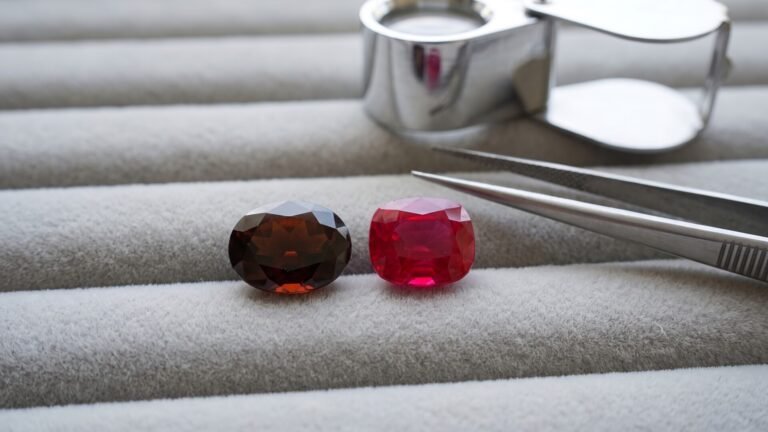
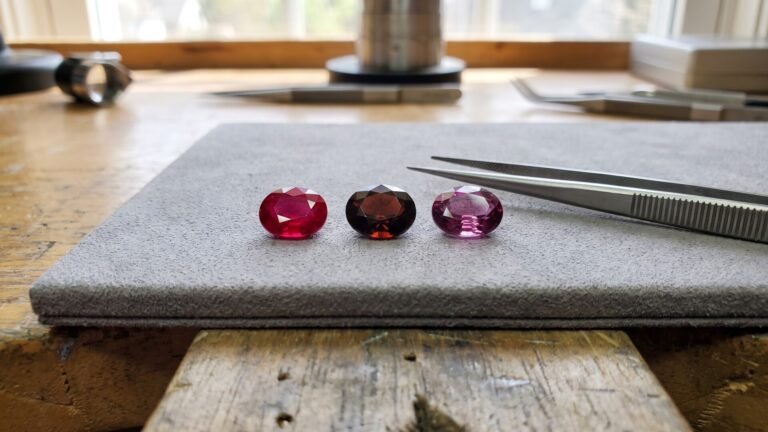
- Confusing look-alikes with ruby. Red garnet, red spinel and glass can resemble ruby. See garnet vs. ruby and our ruby, garnet and tourmaline color comparison.
- Scratch tests. Never let anyone scratch a stone to “prove” it; it can damage the gem and does not reliably identify it.
- Ignoring treatment disclosure. Ask in writing whether the ruby is heated, filled or diffused.
Ruby Alternatives and Trade-Offs
If a natural ruby is outside the budget, consider these honest alternatives: a lab-created ruby, which keeps the same material at a lower price; a smaller natural ruby set in a design where size matters less; or a different red stone. Red garnet is affordable and attractive but softer than ruby (see our garnet guide), and pink tourmaline can give a rosy look at a lower price (see pink tourmaline vs. ruby). Each has different durability, so check the hardness and the intended wear before choosing, using our gemstone hardness scale explained.
Caring for Ruby Jewelry
Warm soapy water and a soft brush are the safe default for any ruby. According to GIA, untreated, heat-treated and lattice-diffusion rubies are usually fine in ultrasonic and steam cleaners, but fracture-filled, cavity-filled and dyed stones should only be wiped with a damp cloth, and acids such as lemon juice can damage the glass in filled stones. If you do not know the treatment status, stick to the soapy-water method. Store ruby pieces separately from diamonds and other hard stones to avoid scratches on the metal and neighboring gems.
Where to Buy Ruby Gifts
Start with established jewelers or online retailers that provide clear photos, full descriptions, treatment disclosure, lab reports for significant stones and a fair return policy. [Affiliate: Check out our recommended ruby jewelry retailers] For personalized service, a local jeweler can help you choose a stone and design a custom setting.
For home decor and non-jewelry gifts, [Affiliate: Browse our selection of ruby-themed gifts] can help you find options across budgets. Remember that the thought behind the gift matters more than the price tag.
Creative Ways to Celebrate the Ruby Anniversary
Hosting a Ruby-Themed Party
Deep reds, burgundy and gold make a natural palette. Display photos from the wedding and from each decade, framed in red or gold, and consider a slideshow set to music from the couple’s wedding era. A menu featuring pomegranate, raspberries, beet or red wine, and a signature pomegranate cocktail (with a non-alcoholic version), keeps the theme fun without being heavy-handed.
Reconnecting Through Memories
Many couples prefer something quieter: revisiting the restaurant of a first date, the place of the proposal, or the wedding venue. A “memory map” of significant places, a recreated wedding cake, or a renewal of vows are all ways to turn the milestone into a shared story.
Personalized Touches
A journal of letters about favorite memories from each year, a playlist of songs from each decade, or a custom ruby piece that reuses a stone from a family heirloom are meaningful ways to personalize the day. If you commission jewelry, ask the jeweler about the stone’s treatment and whether older stones can be safely reset.
Ruby Trends and Where Gift-Giving Is Heading
Current jewelry styles include rose-cut stones, which have a flat base and a domed top and give a softer, vintage look, and mixed-gemstone designs that pair ruby with diamonds, sapphires or pearls. Buyers are also asking more questions about sourcing. If that matters to you, ask for documentation of any claims about traceability or labor practices, and see our overview of gemstone jewelry brands that give back. Terms like “ethically sourced” are not standardized, so look for a named certification or a verifiable policy rather than a general statement.
Keep Exploring
This article belongs to our gemstones hub and our ruby cluster. Related reading: ruby meaning and symbolism, the July birthstone, and birthstones by month. Note that meanings and symbolism in this article reflect cultural traditions and beliefs and are not medical, financial or professional advice.
Frequently Asked Questions About Ruby Anniversary Year
What is the significance of the ruby anniversary year?
The ruby anniversary marks 40 years of marriage. Ruby is the traditional gift, and its deep red color is associated with love and passion. Ruby is also hard (9 on the Mohs scale), which is why it is often used as a metaphor for a lasting relationship.
What are the best gifts for a ruby anniversary?
Traditional options include ruby jewelry such as a pendant, earrings or a ring. Modern options include experiences like a trip or special dinner, and personalized gifts that reflect the couple’s history. Pairing a small ruby piece with an experience works well on any budget.
How do I choose the right ruby jewelry?
Focus on color first, then cut, clarity and carat weight. Ask whether the ruby is natural or lab-created and whether it has been heated, filled or diffused. For significant purchases, ask for a report from a recognized laboratory such as GIA, AGL, SSEF or Gübelin.
Are lab-created rubies a good option for gifts?
Yes. A lab-created ruby has the same chemistry as a natural ruby and usually costs much less. It is not a fake, but it should be sold as lab-created and priced accordingly.
Is ruby durable enough for an everyday ring?
Generally yes. Ruby rates 9 on the Mohs scale and has no cleavage, according to GIA. However, fracture-filled rubies are more fragile and need extra care, so they are a poor choice for a ring worn every day.
How much does a ruby cost?
Prices vary widely. As a rough guide for natural stones, about $500 to $5,000 per carat under one carat and about $2,000 to $10,000+ per carat between one and two carats. Treatment, color, clarity and origin all affect the price.
What should I avoid when buying a ruby gift?
Avoid buying without treatment disclosure, avoid anyone offering a scratch test, and be cautious about look-alikes such as red garnet, spinel or glass that may be sold as ruby. Unusually low prices often signal heavy treatment or a different material.
How can we celebrate our ruby anniversary in a unique way?
Consider revisiting places that matter to your relationship, renewing your vows, hosting a ruby-themed party with photos from each decade, or creating a letter or photo book. A custom piece of jewelry can also incorporate a family heirloom stone.