Garnet vs Ruby – How to Tell the Difference
Garnets and rubies are two of the most popular red gemstones, and at first glance they can look alike. A closer look reveals real differences in color, durability, optical behavior, treatments and price. Knowing them helps you buy jewelry confidently, choose between January’s garnet and July’s ruby, and avoid mislabeled stones.
In this guide we explain how to tell garnet from ruby by eye and with simple gemological tests, compare their properties, and cover jewelry, care, price and symbolism. For a more personal take, see our companion article Garnet vs Ruby: What’s the Difference?, and for a three-way look at red stones, our ruby, garnet and tourmaline color comparison.
Garnet vs Ruby at a Glance
| Property | Garnet | Ruby |
|---|---|---|
| What it is | A group of silicate minerals (pyrope, almandine, rhodolite, spessartine and others) | Red variety of corundum (aluminum oxide), colored by chromium |
| Hardness (Mohs) | About 6.5–7.5 | 9 |
| Toughness | Moderate to good; no cleavage | Excellent; no cleavage |
| Refractive index | About 1.73–1.89 (varies by type) | About 1.76–1.77 |
| Optics | Singly refractive | Doubly refractive, shows dichroism |
| UV reaction | Usually none | Often fluoresces red |
| Treatments | Rarely treated | Heat treatment is very common; fracture filling and diffusion also occur |
| Birthstone | January | July |
| Typical ring price (Angara) | From about $180 | From about $290 |
Introduction to Garnet
Garnet is a group of silicate minerals that occurs in many colors, although red is the best known. Garnet has been used in jewelry since the Bronze Age, and ancient Egyptians and Romans used it in jewelry and signet rings. Learn more in our complete garnet guide and the January birthstone page.
Garnets are known for:
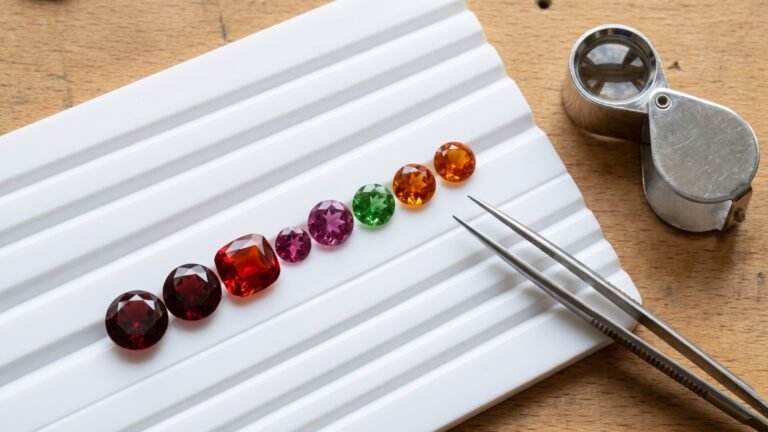
- Rich red tones ranging from cherry to deep wine, and sometimes purple-red (rhodolite) or orange
- Moderate durability. GIA says garnet suits earrings, brooches and pendants best, and rings with care
- Affordability compared with rarer red gems like ruby
- Variety, including pyrope, almandine, spessartine and rhodolite
In tradition, garnet is associated with vitality, courage and protection. These are cultural and spiritual associations; see Healing and Metaphysical Properties of Garnet and Garnet Meaning for the beliefs behind them.
Introduction to Ruby
Ruby, a variety of corundum, is one of the four traditional “precious” gemstones alongside sapphire, emerald and diamond. Its red color comes from chromium. The most prized stones are described in the trade as “pigeon’s blood” red, a term that refers to a vivid, slightly bluish red and that is tied to laboratory reports and origin claims, so ask for documentation when you see it.
- Intense red color, often with a pink or purple undertone
- Exceptional hardness: 9 on the Mohs scale, just below diamond
- High value for fine natural stones, due to rarity
- Symbolism tied to love and passion in many cultures
Rubies appear in high-end jewelry, engagement rings and heirlooms. Read more in our ruby guide, the July birthstone page and Ruby Meaning.
Visual Differences Between Garnet and Ruby
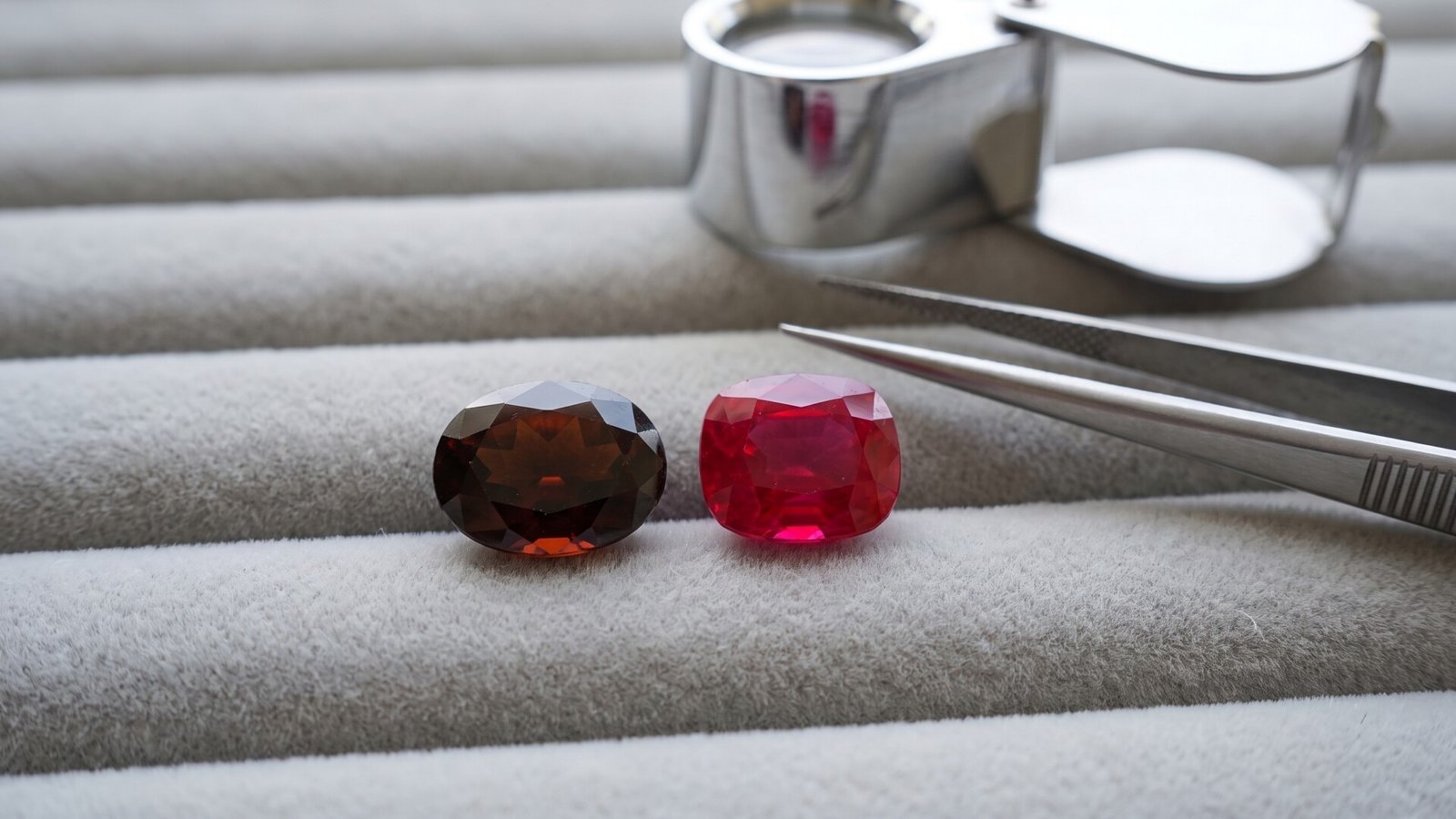
Both gems can look red, but careful observation can reveal differences. None of these is a guarantee on its own, since color varies widely, so treat them as clues.
1. Color Tone and Saturation
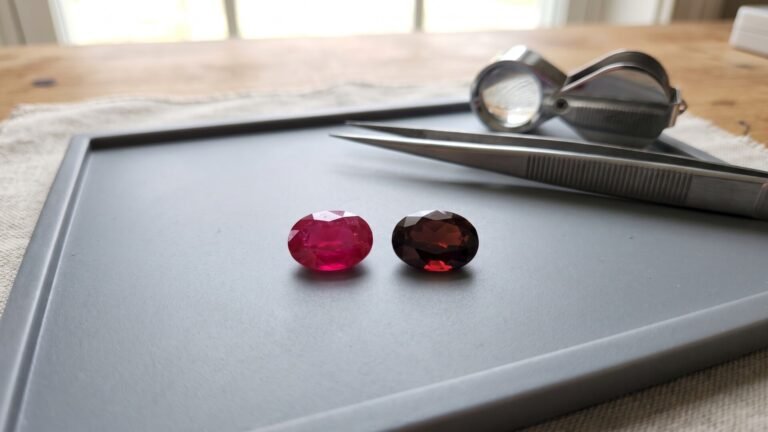
- Garnet: typically a warm red or brownish red, such as cherry or wine. Some varieties lean orange or purple.
- Ruby: often a more vivid, saturated red, pure or slightly bluish. A strong glow in dim light is a common sign of a fine ruby, because of its red fluorescence.
2. Transparency and Clarity
- Garnet: many red garnets are clean to the eye, though very dark almandine can look nearly black in thick stones.
- Ruby: natural rubies nearly always contain inclusions, including fine rutile “silk,” which gemologists use to identify natural stones and to separate them from some synthetics.
3. Light Reflection and Brilliance
- Garnet: refractive index ranges from about 1.73 to 1.89 depending on type, with a warm glow and good brilliance in a well-cut stone.
- Ruby: refractive index of about 1.76–1.77 with a strong vitreous luster. Garnet can actually have a higher RI than ruby, so you cannot tell them apart by brilliance alone.
Physical and Chemical Properties
Garnet Properties
- Composition: a group of silicates with varied chemistry (almandine, pyrope, spessartine, grossular, andradite).
- Hardness: 6.5–7.5 on the Mohs scale, so moderately durable and able to pick up scratches.
- Specific gravity: about 3.5–4.3, depending on type.
- Treatments: garnets are rarely treated.
Ruby Properties
- Composition: aluminum oxide (corundum) with trace chromium.
- Hardness: 9 on the Mohs scale. GIA rates its toughness as excellent, making it well suited to daily-wear rings.
- Specific gravity: about 3.97–4.05.
- Treatments: heat treatment is very common. Some stones are fracture-filled with lead glass or treated by diffusion. Untreated rubies of fine quality are rare and cost much more. See how to tell if a ruby is heat treated or natural.
Gemological Tests to Distinguish Garnet and Ruby
These tests are for enthusiasts and collectors. Only a qualified gemologist or laboratory can identify a stone with certainty, and you should not scratch-test a valuable gem yourself.
- Optic character
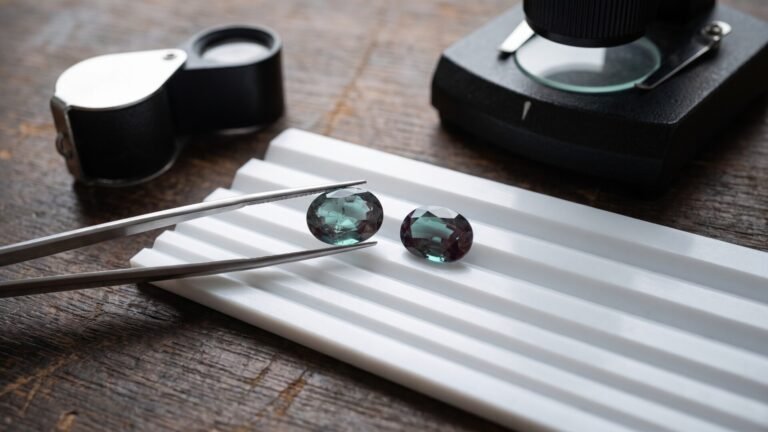
- Garnet is singly refractive (isotropic). Ruby is doubly refractive, so a polariscope shows them differently and a dichroscope shows ruby’s two reds.
- Refractive index
- A refractometer is the most direct test. Ruby reads about 1.76–1.77 with two values; garnet gives a single reading that depends on type.
- Inclusions under magnification
- Rubies often show silk, fingerprints and growth lines. Garnets can show needles or crystals of their own, so the pattern matters.
- UV light
- Ruby frequently glows red under UV light; garnet usually does not.
- Color under different light
- Garnet can show brownish or orange tones in daylight. A fine ruby tends to keep a vivid red in many lighting conditions.
A third look-alike worth knowing is red spinel, which is also often sold as a ruby alternative and is singly refractive like garnet. For expensive purchases, request a report from a recognized gemological laboratory.
Jewelry Considerations
1. Durability and Everyday Wear
- Garnet: works for pendants, earrings and bracelets, and for rings with a protective setting and careful wear.
- Ruby: extremely durable, ideal for rings and everyday jewelry.
For a deeper look at what the numbers mean, see the gemstone hardness scale explained.
2. Setting Choices
- Garnets work well in bezel, prong and halo settings, which protect edges.
- Rubies suit secure prong or bezel settings because of their value. Many designers add accent diamonds.
3. Price Comparison
- Garnet: affordable even in larger sizes. Angara lists garnet rings from about $180, and Blue Nile lists garnet rings from about $380. See 10 gorgeous garnet jewelry gift ideas for price ranges by piece.
- Ruby: Angara lists natural ruby rings from about $290 to more than $10,000. Loose natural rubies are priced by carat, with one dealer’s guide giving roughly $500–$5,000 per carat for stones of 0.5–1 carat and $2,000–$10,000 or more per carat for 1–2 carats. Untreated and top-color stones sit at the top, and lead-glass-filled stones at the bottom.
Prices for both vary by seller, so use these as ranges and compare listings. Lab-created ruby, which is real corundum, costs much less than natural; read natural vs lab-grown birthstones.
Symbolism and Spiritual Beliefs
Both stones carry symbolism that many buyers enjoy. These are traditions and beliefs, not scientific properties, and gemstones do not treat or cure medical conditions.
- Garnet: traditionally linked with vitality, courage, protection and loyalty.
- Ruby: traditionally linked with love, passion, energy and prosperity.
If symbolism matters to you, choosing between them may come down to the story you want the piece to carry.
Birthstone Significance
- Garnet (January): traditionally associated with protection, love and renewal. See January Birthstone Meaning.
- Ruby (July): associated with love, passion and energy. See the ruby anniversary guide and the 40th anniversary ruby guide.
Tips for Buying Garnet or Ruby Jewelry Online
- Ask for a laboratory report for any significant ruby. Mislabeling, undisclosed treatments and origin claims are common risks in the ruby market.
- Check the treatment disclosure. Heat treatment is normal for ruby. Fracture-filled stones need more care and are worth less.
- Confirm natural or lab-grown. Both are real, but price should reflect which one it is.
- Look at metal and setting. Sterling silver, gold and platinum affect price and durability.
- Read sourcing policies and reviews. See our ethical gemstone shopping guide and top online stores for authentic birthstone jewelry.
Online stores that carry garnet or ruby jewelry include Blue Nile, James Allen, Brilliant Earth, Angara, Etsy, Kay Jewelers and Zales. Selection varies, so check the current listings of each.
Caring for Garnet vs Ruby Jewelry
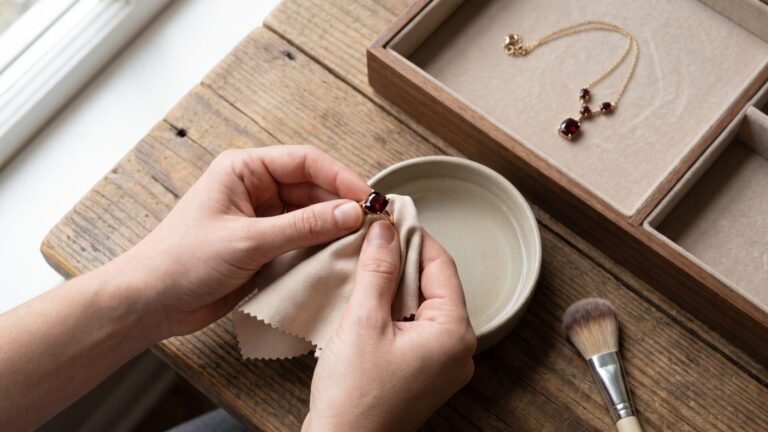
- Garnet: clean with warm soapy water and a soft brush. Ultrasonic cleaning is generally fine for clean stones but not for fractured ones, and steam cleaning is not recommended (GIA). Store apart from harder gems.
- Ruby: warm soapy water is always safe. Ultrasonic and steam cleaners are usually safe for untreated, heat-treated and diffusion-treated rubies, but fracture-filled or dyed stones should only be cleaned with a damp cloth (GIA).
See How to Care for Your Garnet Jewelry for a full routine.
How to Choose Between Garnet and Ruby
- Budget: garnet is far more accessible; fine ruby is a significant purchase.
- Color: garnet has warm wine tones, while ruby offers a more vivid red.
- Durability: ruby is better for daily rings and active lifestyles.
- Symbolism: pick the stone whose story you prefer, whether protection and vitality or passion and prestige.
- Jewelry type: pendants and earrings suit garnet well; rings and bracelets are safer with ruby, or with garnet in a protective setting.
Looking for a bridge between the two? Rhodolite garnet, red spinel and pink or red tourmaline are common alternatives; compare in our pink tourmaline vs ruby comparison, and see garnet engagement rings if you are considering a proposal ring.
Misleading Names and Common Mix-Ups
Most confusion between garnet and ruby comes from labeling rather than from the stones themselves. Knowing the common traps will help you read a listing critically.
- “Ruby” trade names for garnet: in the past, red pyrope garnets were sold under names such as “Cape ruby” and “Arizona ruby”. These are garnets, not rubies, and any name that includes the word “ruby” for a different mineral should prompt a question about what the stone actually is.
- Glass-filled or composite ruby: low-quality rubies can be filled with lead glass to hide fractures. They look attractive and cost far less than untreated stones, but they are fragile and should be cleaned with care. A seller should disclose this clearly.
- Lab-created ruby sold as “ruby”: synthetic ruby has the same chemistry as natural ruby. It is a legitimate product when labeled correctly, but it should be priced as lab-created.
- Red glass and doublets: very cheap “garnet” or “ruby” pieces can be glass, which is softer and often shows gas bubbles under magnification.
- Red spinel and tourmaline: both can be mistaken for ruby or garnet. Red spinel (Mohs 8) is a respected gem in its own right and was historically mistaken for ruby in famous crown jewels.
Which Red Stone for Which Piece?
| Jewelry type | Garnet | Ruby |
|---|---|---|
| Everyday ring | Good with a protective setting | Excellent |
| Engagement or anniversary ring | Good for a budget-friendly, distinctive choice | Excellent; a classic choice for a 40th anniversary |
| Pendant | Excellent | Excellent |
| Earrings | Excellent | Excellent |
| Bracelet | Good | Excellent |
| Gift for a child or teen | Good: affordable, easier to replace | Less practical because of cost |
What to Ask a Seller Before You Buy
- What is the exact species and variety (for example almandine garnet, rhodolite garnet, or ruby)?
- Is the stone natural or lab-created, and is it treated (heat, fracture filling, diffusion)?
- Can you see a clear photo or video of the actual stone, not a stock picture?
- Is there an independent laboratory report for valuable stones?
- What is the return period, and who pays for return shipping?
Keep Exploring the Garnet Cluster
This comparison is part of our garnet series. Start with the main Garnet: Meaning, Properties, Uses & Value page. To go deeper, read Garnet Color Types Explained for every shade from red to green, Garnet Meaning: History, Symbolism, Spiritual Properties & Modern Uses for the traditions, and 10 Gorgeous Garnet Jewelry Gift Ideas for shopping. If green garnet interests you, Peridot vs Tsavorite Garnet compares it with an August birthstone. The wider catalog of stones is in our gemstones hub.
Frequently Asked Questions About Garnet Vs Ruby
What is the main difference between garnet and ruby?
They are different minerals. Ruby is red corundum (hardness 9) and is much harder and usually far more expensive. Garnet is a group of silicate minerals (hardness about 6.5 to 7.5) that is widely available and affordable.
How can I tell if a red stone is garnet or ruby?
Color and clarity give clues, but a gemologist can separate them with a refractometer, polariscope, microscope and UV light. Ruby is doubly refractive and often fluoresces red, while garnet is singly refractive and usually does not fluoresce.
Is garnet a cheaper alternative to ruby?
Yes. Garnet gives a deep red at a fraction of the price, but it is softer and less durable, so it needs more careful wear in rings.
Is ruby always heat treated?
Heat treatment is very common, but not universal. Untreated rubies of fine quality exist and cost much more. Ask for a laboratory report.
Which is better for an engagement ring, garnet or ruby?
Ruby is the more durable choice for daily wear. Garnet can work with a protective setting and careful use.
Which birthstone is garnet and which is ruby?
Garnet is the birthstone for January and ruby is the birthstone for July in the commonly used lists.
Can garnet be mistaken for ruby in a store?
Yes, especially when a seller uses a misleading trade name or does not state the species. Always ask for the exact stone name and treatment details in writing.
Is red spinel a better ruby alternative than garnet?
Red spinel is harder than garnet (Mohs 8) and is valued in its own right, but fine spinel can cost much more than garnet. Garnet remains the more affordable option.
Does ruby scratch garnet?
Yes. Ruby is much harder than garnet, so storing them loose together can scratch the garnet. Keep pieces in separate pouches.
Conclusion
Garnets and rubies are both beautiful red gemstones with different strengths. Garnet offers affordable beauty and a wide range of red tones, while ruby offers exceptional hardness, toughness and prestige. If you can, look at both in person, check the treatment and origin disclosure, and match the stone to how you will wear it.
For more, explore our garnet color types, the gemstones hub and our birthstones by month guide.