Garnet: Meaning, Properties, Uses & Value
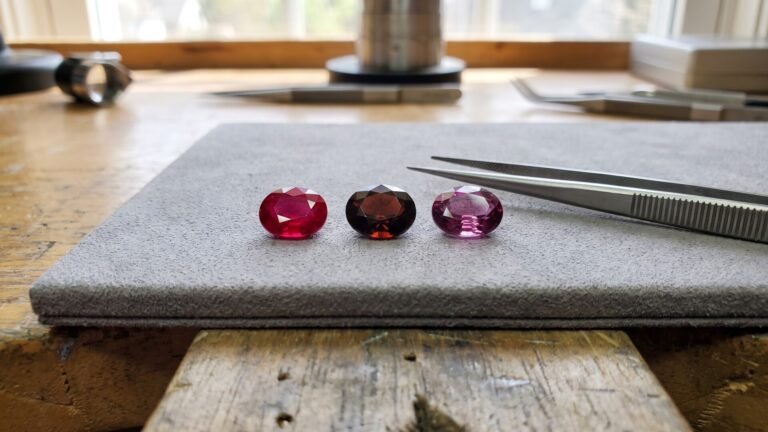
Garnet is the January birthstone, and one of the most varied gemstone families in the world. Most people picture a deep red stone, but garnets also come in vivid green, fiery orange, raspberry pink, honey brown, and rare color-changing shades. They are among the more affordable gems at the low end and among the most prized collector stones at the high end.
This guide covers what garnet is, the main species and varieties, what the stone has meant to people over thousands of years, how hard it is and how to wear it, what it costs, how to tell it from imitations, and how to care for it. It is the central page of our garnet cluster, so you will find links below to guides on garnet meaning, garnet colors, garnet care, gift ideas, and more.
Quick Facts Box
Gemstone Overview
| Category | Details |
|---|---|
| Mineral group: | Garnet group (silicates); gem species include pyrope, almandine, spessartine, grossular, andradite, uvarovite |
| Color(s): | Red, purple-red, orange, pink, green, yellow, brown, black, colorless; blue is extremely rare |
| Hardness (Mohs): | About 6.5 to 7.5, depending on species |
| Toughness / cleavage: | No true cleavage; generally good toughness, but can chip or fracture if struck hard |
| Crystal system: | Isometric (cubic) |
| Transparency: | Transparent to opaque |
| Common treatments: | Most garnets are untreated; occasional heat treatment (reported for some demantoid) and rare fracture filling, which should be disclosed |
| Common uses: | Jewelry (rings, necklaces, earrings, bracelets); industrial abrasives, water filtration, water-jet cutting |
| Birthstone month(s): | January |
| Zodiac association: | Capricorn and Aquarius in many lists; zodiac lists vary by source |
| Anniversary: | Used for the 2nd wedding anniversary in some gemstone anniversary lists |
What Is Garnet?
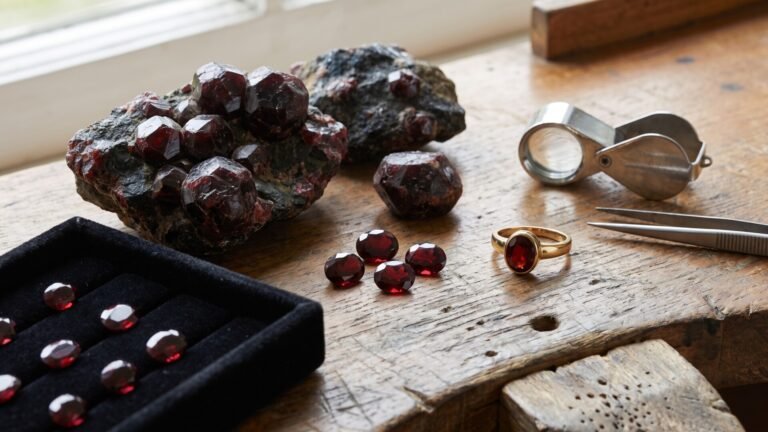
Garnet is not a single stone but a group of related minerals that share a crystal structure but differ in chemical composition. The group name is garnet; the individual members have names like pyrope, almandine, spessartine, grossular, andradite, and uvarovite.
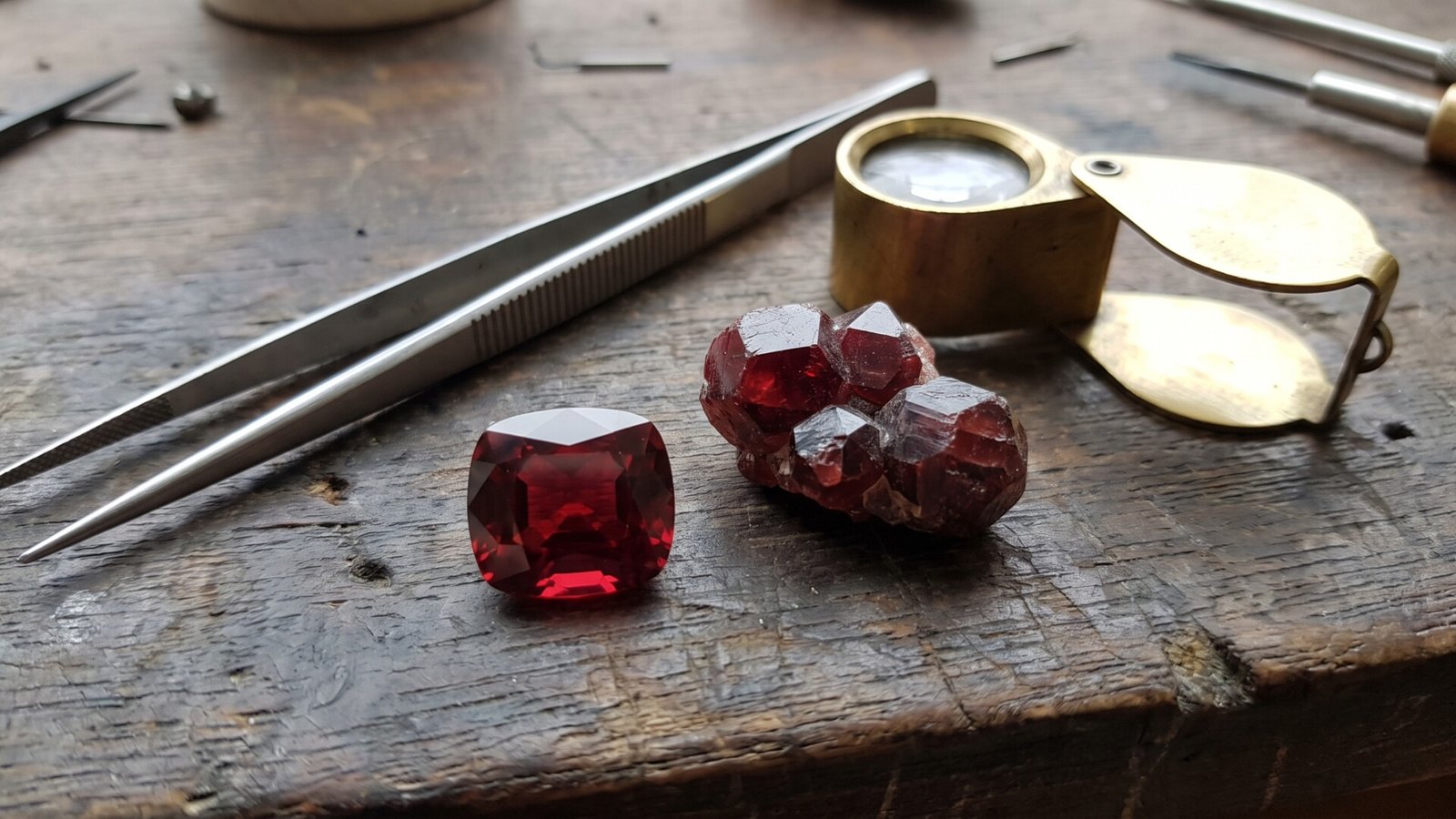
All garnets are silicates. Their varied colors come from different metal ions in the crystal structure: iron and magnesium in the reds, manganese in the oranges, and vanadium and chromium in the intense greens of tsavorite and demantoid. All garnets crystallize in the isometric system, which is why well-formed crystals often look like cubes or rounded multi-sided shapes (rhombic dodecahedrons).
How and where garnets form
Garnets form under heat and pressure, typically in metamorphic rocks such as schist and gneiss, and can also occur in some igneous rocks. Because they resist abrasion and weathering, they are often concentrated in sand and gravel deposits.
Most garnet that is mined is industrial garnet used as an abrasive. According to the U.S. Geological Survey’s 2026 summary, Australia produced roughly half of the world’s industrial garnet in 2025, followed by China, the United States, and India. Gem-quality garnet comes from a different and smaller set of sources. East Africa, including Tanzania, Kenya, and Madagascar, is known for tsavorite, malaya, and rhodolite. Namibia, Nigeria, and Mozambique are known for spessartine. Russia’s Ural Mountains are the classic source of demantoid, and Sri Lanka and India are old sources of several varieties.
Treatments
Garnets are less commonly treated than sapphires (usually heated) or emeralds (usually oiled), and most gem garnets on the market are sold untreated. Treatments do occur, though: some demantoid is heated, and fracture filling is possible in rare cases. A reputable seller should disclose any treatment. If a garnet has been fracture filled, use only warm soapy water to clean it. Synthetic garnets exist, but they are made mainly for industrial and specialty use, so a gem-quality stone sold as natural should say so on its documentation.
Garnet Meaning & Symbolism
The notes below describe history and tradition, not scientific effects. For a deeper look, see our garnet meaning guide.
Ancient and historical uses
Garnet jewelry is very old. Red garnet beads and ornaments have been found in ancient Egyptian burials, with garnet use in Egypt dated as far back as around 3100 BCE. The Romans carved garnets into intaglios and set them in signet rings used to seal documents. Garnets also appear in the jewelry of many early medieval European peoples, often as thin slices of garnet set in gold cells (cloisonné).
The word “garnet” is generally traced to the Latin granatum, meaning “pomegranate,” because small red garnet crystals resemble the fruit’s seeds. Medieval writers, including Albertus Magnus, discussed garnet under related names.
Folklore has been generous with the stone. Medieval writers described garnet as a protective talisman, and one tradition holds that Noah’s ark was lit by a garnet or similar red stone. According to accounts of the 1890s fighting in the Hunza region of what is now northern Pakistan, local fighters used garnet in place of lead bullets. These stories are best read as folklore and anecdote.
Modern interpretations
Today garnet is commonly associated with love, commitment, friendship, trust, and loyalty. For January birthdays, it is often read as a symbol of constancy and warmth in the middle of winter. These are cultural associations rather than measurable properties.
Garnet Healing Properties
These are beliefs and traditions, not medical advice. Gemstones do not diagnose, treat, or cure any condition, and they are not a substitute for professional care.
Traditional beliefs
In medieval Europe, garnet was believed by some to protect travelers and to guard against bad dreams and low spirits. Many cultures treated red stones as symbols of life, blood, and vitality.
Modern crystal-healing associations
In modern crystal-healing practice, some people describe garnet as a grounding and energizing stone, associated with courage, motivation, and warmth in relationships. Some practitioners say it relates to the root chakra (red garnet), the heart chakra (green garnets such as tsavorite), and the sacral chakra (orange spessartine). You can read more in our guide to the healing and metaphysical properties of garnet. These associations come from modern spiritual practice, not from gemology.
Garnet Colors & Varieties
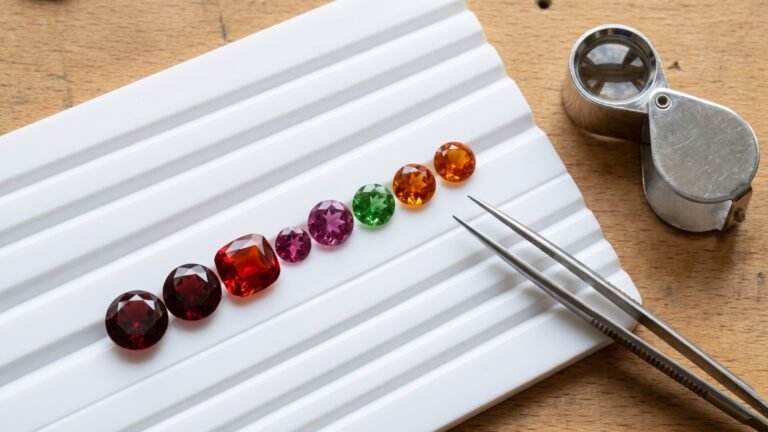
If you think garnets are just red, prepare to be surprised. Our complete guide to garnet color types goes into more depth than we can here.
The six main species
| Species | Name origin | Typical colors | Notes |
|---|---|---|---|
| Pyrope | Greek pyropos, “fire-eyed” | Deep red | The classic “garnet red” |
| Almandine | From Alabanda, in what is now Turkey | Deep red, brownish red | The most common gem garnet |
| Spessartine | From the Spessart region, Germany | Orange, yellow-orange | Includes mandarin garnet |
| Grossular | From grossularia, gooseberry | Green, brown, yellow, orange | Includes tsavorite, hessonite, and mint garnet |
| Uvarovite | After Count Uvarov of Russia | Bright green | Usually tiny crystals, often sold as druzy |
| Andradite | After the mineralogist d’Andrada | Yellow, green, brown, black | Includes demantoid |
The varieties you will actually encounter
Rhodolite: A pale pink to purplish-red mixture of pyrope and almandine, bright and raspberry-like. It is a good-value, hard-wearing choice for rings and one of the most popular colored garnets.
Tsavorite: An intense green variety of grossular colored by vanadium and chromium. It was discovered in Tanzania in 1967 by the Scottish geologist Campbell Bridges and named by Tiffany & Co. in 1974 after Tsavo National Park in Kenya. Fine tsavorite is rarer than top emerald in larger sizes, and it is typically cleaner and tougher than emerald, though fine stones over a carat command high prices.
Demantoid: A green andradite known for exceptional fire (dispersion), higher than diamond’s. Its name comes from a word for “diamond-like.” Fine demantoid with the feathery “horsetail” inclusions typical of Russian material is especially prized. Demantoid is softer than most garnets, at roughly 6.5, so it suits earrings and pendants better than hard-worn rings.
Mandarin garnet: A vivid orange spessartine, sometimes nicknamed “Fanta” garnet. Namibia is the classic source, and material has also come from Nigeria and Mozambique.
Malaya (malaia) garnet: A mix of pyrope and spessartine in pinkish-orange to peach shades, first found in East Africa’s Umba River area. Some stones show a color change.
Hessonite: A warm honey-orange to brown grossular, often with a slightly oily or swirly look from internal features.
Mint garnet: A pale green grossular first found in the Merelani Hills of Tanzania, valued for its soft, fresh color.
Color-change garnet: Garnets in the pyrope-spessartine range that shift color between daylight and incandescent light, for example from greenish or bluish tones in daylight to pink or purple under lamplight. Fine stones are scarce.
If you are comparing garnet with look-alike red stones, see our guides to garnet vs. ruby (and the shorter what’s the difference version), the ruby vs. garnet vs. tourmaline color comparison, and peridot vs. tsavorite garnet.
Is Garnet a Birthstone?
Yes. Garnet is the birthstone for January in the major birthstone lists. For people born in January, it is commonly read as a stone of constancy, friendship, and trust.
Zodiac and anniversary associations
Zodiac stone lists vary by source and tradition. Garnet appears for Capricorn (December 22 to January 19) in many of them and for Aquarius (January 20 to February 18) in others. Garnet is also used as the gemstone for the 2nd wedding anniversary in some anniversary lists.
Garnet Uses in Jewelry
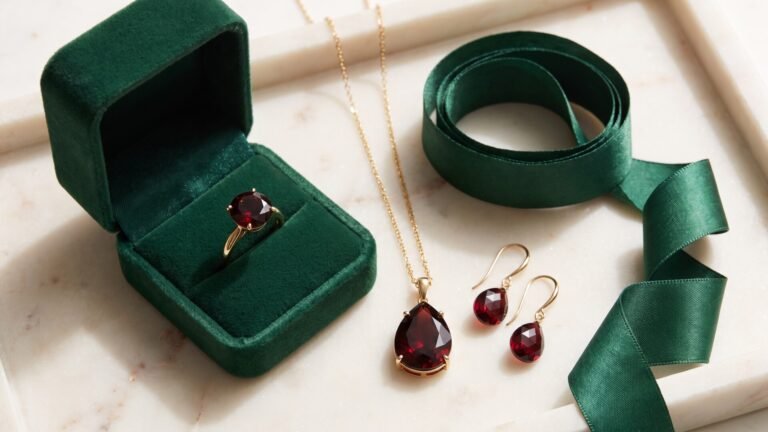
Garnet’s hardness (about 6.5 to 7.5), wide availability, and range of colors make it popular for every kind of jewelry. Because it can chip if struck sharply, protective settings are a good idea for rings. For more ideas, see our 10 garnet jewelry gift ideas.
Rings
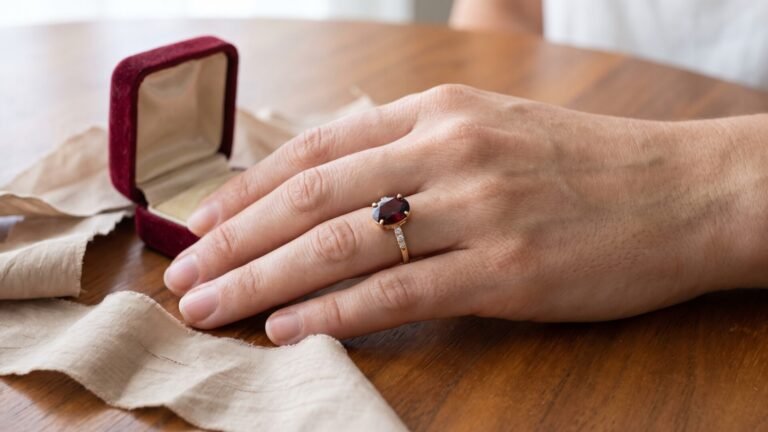
Garnet rings are popular for January birthdays and anniversaries. Harder garnets such as pyrope, almandine, and rhodolite are well suited to daily wear with sensible care. Ordinary quartz-based dust has a hardness of about 7, so over years of constant wear the softer end of the garnet range can pick up fine scratches. Remove garnet rings for heavy manual work and keep them away from harder stones like diamond, sapphire, and ruby in storage.
Common cuts include:
- Brilliant-style ovals and rounds: Many facets for maximum sparkle
- Step cuts (like an emerald cut): Larger facets that show color
- Cabochons: A smooth dome, used for darker stones and for star garnets, which are rare
If you want to understand how outline and facet pattern differ, see our guide to gemstone shapes and cuts.
Necklaces, earrings, and bracelets
Pendants and earrings face far fewer knocks than rings, so they are a good home for softer or more valuable garnets such as demantoid. Garnet tennis bracelets and bracelets with mixed garnet colors are elegant and widely available.
Engagement rings
Garnet is less traditional than diamond, sapphire, or ruby, but garnet engagement rings have a devoted following. Choose a harder variety such as pyrope, almandine, spessartine, or tsavorite, with a bezel or protective prongs. If you are shopping around, our guide to online stores for authentic birthstone jewelry is a good place to start, and our January birthstone gifts for him and her offers ideas for other pieces.
Garnet Value & Price
Garnet is one of the most affordable gemstone families at the low end, but fine examples of the rarer varieties can be expensive.
What affects price
Color is the main driver. Vivid, saturated hues with good transparency cost more. Overly dark stones are common and less valuable.
Cut quality matters because many garnets are medium to dark in tone, and a poorly cut stone can look darker still. A well-cut stone returns more light.
Clarity expectations vary by type. Some inclusions are tolerated in spessartine and are even characteristic in demantoid (horsetails), while clean stones are expected in rhodolite and tsavorite.
Size matters most in the rare varieties. Fine tsavorite, demantoid, mandarin, and color-change garnets become scarce and expensive above a carat or two.
Approximate retail price per carat (USD, faceted gem-quality stones)
Note: These are broad, rounded ranges drawn from 2026 retail price guides, which do not always agree with each other. Prices vary by color, clarity, cut, size, and seller, and top-quality stones can exceed the upper figure.
| Variety | Approximate price per carat |
|---|---|
| Common red garnet (almandine, pyrope) | $10 to $100 |
| Rhodolite | $30 to $500 |
| Spessartine and mandarin garnet | $150 to $1,500 |
| Tsavorite | $400 to $5,000 or more |
| Demantoid | $1,000 to $10,000 or more |
| Color-change garnet | $100 to $7,000 or more, depending on strength of change and origin |
How to Identify Real vs. Fake Garnet
Common imitations
Red glass, synthetic spinel, cubic zirconia, and sometimes red tourmaline or other natural stones may be sold as garnet. Doublets (a thin garnet top glued to glass) also exist. Rhodolite is sometimes confused with rubellite tourmaline or ruby.
Safe visual clues
- Look through a 10x loupe for natural inclusions. Many garnets are fairly clean, but the presence of gas bubbles, a swirled look, or a visible join line in a mounted stone are warning signs for glass or doublets.
- Look at the facet edges. Glass tends to show rounded, worn edges and conchoidal chips.
- Garnet is singly refractive, so you will not see doubling of the back facets that you would in a doubly refractive stone such as tourmaline or ruby.
We do not recommend scratch tests or boiling-water tests at home. Both can damage a stone and neither is reliable.
The best approach
Take the stone to a qualified gemologist, who can test refractive index and other properties. If you are buying a rarer variety such as tsavorite or demantoid, ask for a report from a recognized laboratory.
Care & Cleaning of Garnet
For a longer guide, see how to care for your garnet jewelry.
Cleaning
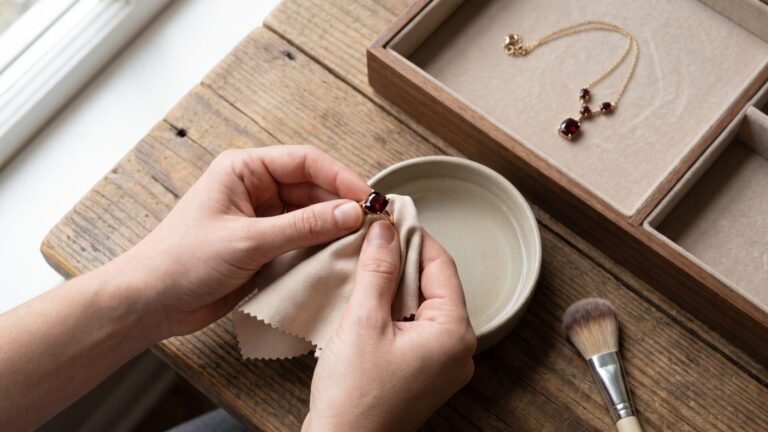
Warm soapy water and a soft brush are the safest method. Rinse well and dry with a soft cloth. Ultrasonic cleaners are usually fine for untreated garnets without fractures, but avoid them if you suspect fracture filling or if the piece contains softer gems. Steam cleaning is not recommended, because sudden heat can stress a stone with inclusions.
Storage
Store garnets separately from harder stones such as diamond, sapphire, and ruby, which can scratch them. Soft pouches or a compartmentalized box work well.
What to avoid
- Hard knocks: Garnet can chip or fracture, so remove rings for heavy work, sports, and gardening
- Harsh chemicals: Avoid household cleaners, rust removers, and anything containing hydrofluoric acid
- Sudden temperature changes and jeweler’s torches: These can damage stones with inclusions
Garnet Cluster: Go Deeper
- Garnet Meaning: History, Symbolism, Spiritual Properties & Modern Uses
- Garnet Color Types Explained: A Complete Guide
- How to Care for Your Garnet Jewelry
- 10 Gorgeous Garnet Jewelry Gift Ideas
- Garnet Engagement Rings: Symbolism and Style
- Ruby vs. Garnet vs. Tourmaline Color Comparison
- Garnet vs. Ruby: How to Tell the Difference
- Garnet vs. Ruby: What’s the Difference?
- Peridot vs. Tsavorite Garnet: Which Green Gem Suits August Better?
Frequently Asked Questions About Garnet
Is garnet expensive?
It depends on the variety. Common red garnets are affordable, often tens of dollars per carat, while fine tsavorite, demantoid, mandarin, and color-change garnets can cost hundreds to thousands of dollars per carat.
Is garnet suitable for daily wear?
Yes, with reasonable care. Garnet’s hardness of about 6.5 to 7.5 is enough for regular wear in rings, necklaces, and earrings. Harder varieties such as pyrope, almandine, spessartine, rhodolite, and tsavorite suit rings best, while softer demantoid is better in pendants and earrings. Protect rings from hard knocks.
What does garnet symbolize?
Garnet is traditionally associated with love, commitment, friendship, trust, and loyalty. Historically it was also linked with protection and vitality. These are cultural meanings, not scientific properties.
Are garnets treated?
Most gem garnets are untreated. Some demantoid is heated and fracture filling occurs rarely, so ask for disclosure and a report for valuable stones.
How can you tell garnet from ruby?
Ruby is harder (Mohs 9) and doubly refractive, while garnet is singly refractive and often looks slightly darker or more brownish. A gemologist can distinguish them reliably; see our garnet vs. ruby guides for more detail.
Do garnets scratch easily?
Garnet is fairly scratch resistant but can be scratched by harder stones such as diamond, sapphire, and ruby, and by quartz dust over time. Store garnet jewelry separately.
What colors does garnet come in?
Almost every color: red, orange, pink, purple-red, yellow, green, brown, and black, plus color-change stones. Blue garnets exist but are extremely rare.
Which garnet is best for an engagement ring?
Choose a harder variety such as pyrope, almandine, rhodolite, spessartine, or tsavorite in a protective setting such as a bezel or low-profile prongs. Avoid softer demantoid for an everyday ring.
Is garnet the only January birthstone?
Garnet is the January birthstone in the major lists. Birthstone lists can differ by country and organization, so check which one a jeweler follows.
Shop Garnet
Ready to look for your own garnet? Browse by variety below, and ask any seller to confirm the variety, whether the stone is natural, and whether it has been treated.
[Shop Red Garnet Jewelry]
[Shop Rhodolite Garnet]
[Shop Tsavorite Garnet]
[Shop Mandarin Garnet]
[Shop Garnet Rings]
[Shop Garnet Earrings]
Explore More Gemstones
Return to our Gemstones hub, or explore other gemstone guides: ruby, diamond, sapphire, emerald, amethyst, aquamarine, peridot, tourmaline, topaz, citrine, opal, pearl, moonstone, alexandrite, tanzanite, turquoise, and zircon.
Sources and further reading: U.S. Geological Survey, Mineral Commodity Summaries 2026 (garnet); 2026 retail garnet price guides from Antique Cut and Rock Chasing.