Opal Meaning: History, Symbolism, Spiritual Properties & Modern Uses
For years, I thought opal was just a pretty stone that flashed colors. Nice to look at, affordable — nothing particularly special. Then I started learning about its history. The ancient Romans called it the “queen of gemstones,” valuing it above all others. The ancient Greeks believed it could grant prophecy and divine insight. A 19th-century novel unfairly cursed it with bad luck. And today, millions of people wear it for creativity, hope, and emotional expression.
That’s the thing about opal. It’s not just a pretty stone. It’s a stone with a story that spans thousands of years and connects us to ancient beliefs, royal courts, and the deepest wellsprings of human imagination.
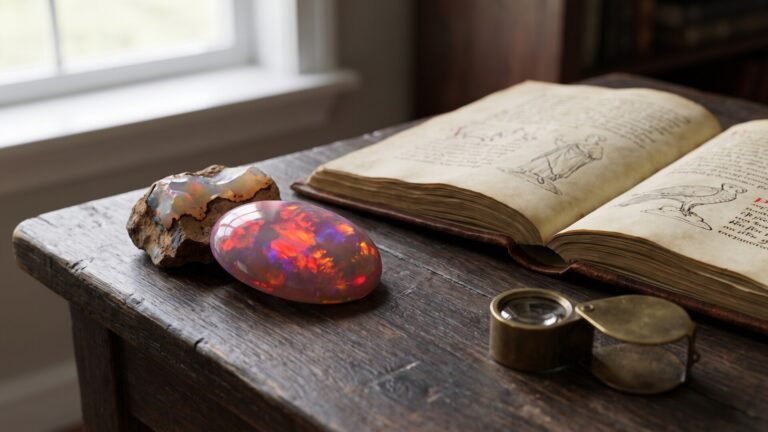
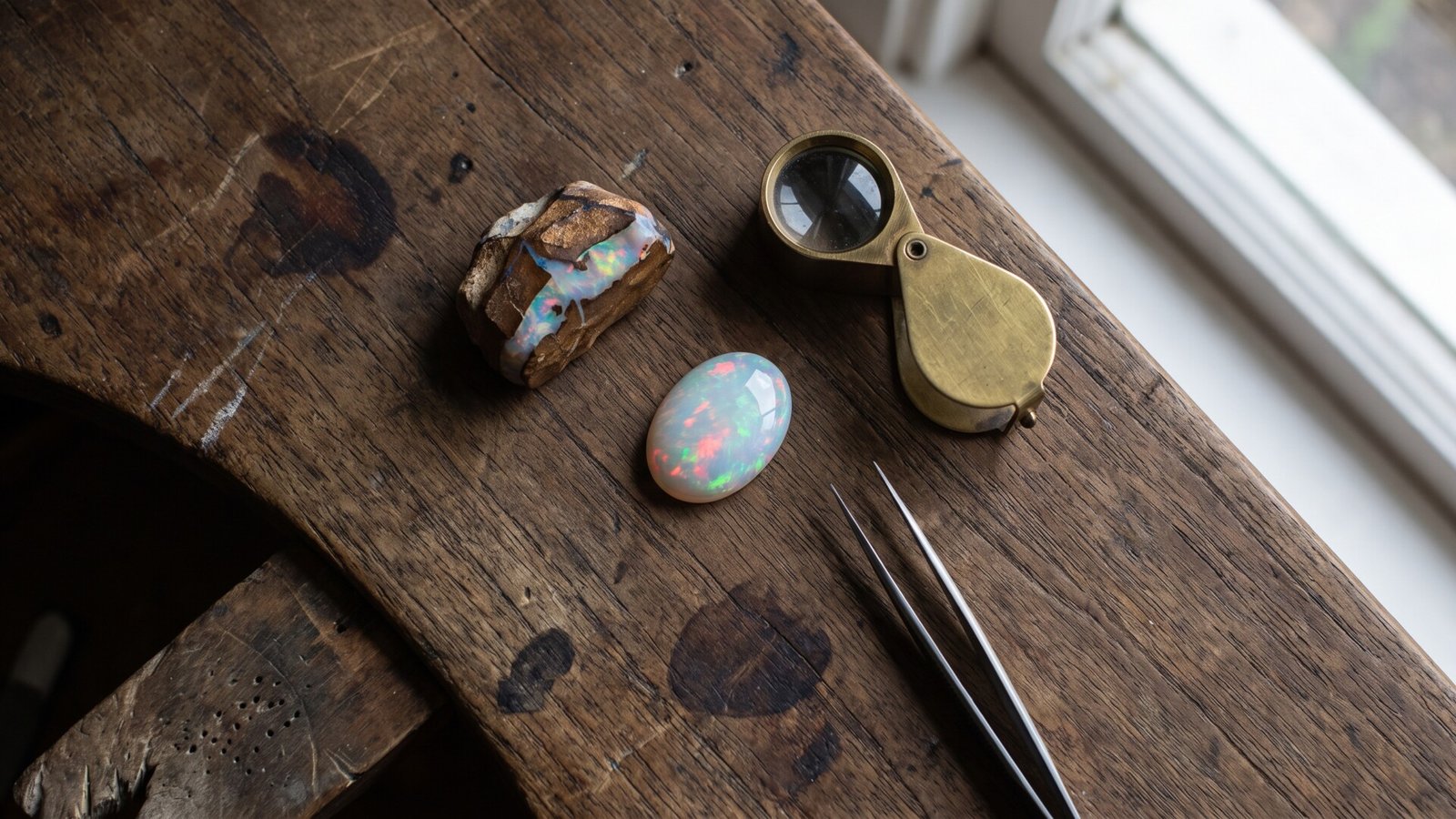
Opal is a hydrated silica gemstone prized for its mesmerizing play-of-color — a phenomenon where the stone displays a shifting rainbow of colors as it moves. Its name comes from the Sanskrit upala, meaning “precious stone,” and the Greek opallios, meaning “to see a change of color.” But its meaning has grown far beyond that simple definition.
This guide covers everything you need to know about opal’s meaning: its ancient origins, its symbolism across cultures, its spiritual and emotional associations, its role in astrology and birthstones, and how to choose the right opal for your needs. Whether you’re an October baby, a Libra or Scorpio, or simply someone drawn to the magic of this remarkable gem, you’re about to discover why opal has captivated humanity for millennia.
Opal at a Glance
Before we dive deep into its meaning, here’s a quick reference guide to opal’s key characteristics.
| Feature | Details |
|---|---|
| Mineral | Hydrated silica |
| Color | White, black, crystal, fire, boulder, pink, blue and more |
| Hardness | 5.5–6.5 (Mohs scale) |
| Birthstone Month | October |
| Zodiac Associations | Libra, Scorpio |
| Anniversary | 14th Wedding Anniversary |
| Symbolism | Hope, creativity, intuition, transformation, imagination |
What Does Opal Symbolize?
Opal’s symbolism is one of the richest of any gemstone — deeply connected to hope, creativity, intuition, and the magic of imagination.
Hope and Optimism
Opal has long been a symbol of hope. Its rainbow colors represent the promise of better things to come, the light after darkness, and the beauty that emerges from uncertainty. In many traditions, opal is a stone of optimism and positive energy.
Creativity and Inspiration
Opal is known as the “stone of inspiration.” Its ever-changing colors are believed to stimulate the imagination, unlock creative potential, and help the wearer express their unique vision. Artists, writers, and musicians have long treasured opal for its ability to spark new ideas.
Intuition and Emotional Awareness
Opal enhances intuition and emotional awareness. Its shifting colors are believed to reflect the wearer’s emotional state, helping them process feelings and trust their inner wisdom. It’s a stone for those seeking to understand themselves more deeply.
Transformation and Personal Growth
Opal represents transformation and personal growth. Its play-of-color symbolizes the journey of self-discovery — the process of revealing hidden aspects of oneself and embracing change.
Individuality and Authenticity
No two opals are alike. Each stone has a unique pattern of colors, making it a powerful symbol of individuality and self-expression. Opal encourages the wearer to embrace their authentic self and celebrate what makes them unique.
Emotional Expression
Opal is believed to help the wearer express their emotions freely and authentically. It’s a stone for those who struggle to share their feelings or who need support in communicating their inner world.
Why Opal Became Known as the Stone of Inspiration
Opal’s play-of-color has captivated humans for millennia. The shifting rainbow of colors seems to hold endless possibilities — like the imagination itself. This connection to creativity and inspiration has made opal a favorite among artists, writers, and anyone seeking to unlock their creative potential.
The Symbolism Behind Opal’s Ever-Changing Colors
Opal’s play-of-color is caused by microscopic silica spheres that diffract light, creating a shifting rainbow of colors. Symbolically, this phenomenon represents the ever-changing nature of life, the fluidity of emotions, and the infinite possibilities of the imagination. No two opals are alike — and no two moments are the same.
The History of Opal Meaning
Opal is one of the oldest known gemstones, with a history stretching back thousands of years. Its meaning has evolved dramatically, from reverence to superstition and back again.
Ancient Rome: The Queen of Gemstones
The ancient Romans revered opal above almost all other gemstones. They called it the “queen of gemstones” and believed it was the most precious of all gems. The Roman senator Nonius was exiled rather than surrender his opal to Mark Antony, who wanted it for Cleopatra. The Romans believed opal brought hope and good fortune to its owner.
Pliny the Elder, the Roman scholar, wrote that opal combined “the fire of the ruby, the brilliant purple of the amethyst, the sea-green of the emerald, and the blue of the sapphire, all glittering together in union.” He described it as “a gem that surpasses everything in the world.”
Ancient Greece: Prophecy and Divine Insight
The ancient Greeks believed opal could grant the power of prophecy and divine insight. They saw the stone’s shifting colors as a reflection of the gods’ wisdom and believed it could protect the wearer from disease. The name itself may come from the Greek opallios, meaning “to see a change of color.”
Medieval Europe: The Luckiest Gemstone
During the Middle Ages, opal was considered the luckiest gemstone. It was believed to protect its wearer from disease and evil spirits, and it was often worn as a talisman. Blonde women wore opal necklaces to protect the color of their hair. In some traditions, opal was believed to make its wearer invisible when needed — a useful property in times of danger.
The 19th Century: How Opal Unexpectedly Became Associated With Bad Luck
In 1829, Sir Walter Scott published a novel called Anne of Geierstein. In the story, a character named Lady Hermione wears an opal talisman. When holy water is sprinkled on it, the opal loses its color — and Lady Hermione dies. The story was fiction, but it had a devastating effect on opal’s reputation.
Opal sales plummeted across Europe. The stone’s reputation as unlucky persisted for decades. It took generations of education and royal endorsement to restore opal’s standing. Queen Victoria, who loved opal, helped reverse the superstition by wearing it prominently and giving it as wedding gifts.
Modern Symbolism
Today, opal’s meaning encompasses all of its historical associations — and more. It’s the stone of hope, creativity, intuition, and inspiration. The bad luck superstition has largely faded, replaced by an appreciation for opal’s unique beauty and symbolic power.
How the Meaning of Opal Changed From Lucky to “Unlucky”—and Back Again
This is one of the most remarkable stories in gemstone history.
| Time Period | Primary Meaning |
|---|---|
| Ancient Rome | Queen of gemstones; hope and good fortune |
| Middle Ages | Luckiest gemstone; protection against disease and evil |
| 19th Century | Unlucky; associated with misfortune and death |
| Modern Jewelry Culture | Beautiful; unique; collectible |
| Contemporary Crystal Community | Creativity; inspiration; emotional healing |
The “bad luck” myth is a modern invention — created by a novelist, not by ancient tradition. Sir Walter Scott’s Anne of Geierstein was fiction, but it had a real-world impact on the gemstone trade. Today, opal has reclaimed its place as one of the most beautiful and meaningful gemstones in the world.
Opal in Different Cultures
Opal has been treasured across cultures and continents. Here’s how different traditions have interpreted its meaning.
Roman Traditions
The Romans called opal the “queen of gemstones” and valued it above all others. They believed it brought hope and good fortune. The Roman senator Nonius was exiled rather than surrender his opal to Mark Antony.
Greek Beliefs
The Greeks believed opal could grant the power of prophecy and divine insight. They saw the stone’s shifting colors as a reflection of the gods’ wisdom.
Australian Indigenous Connections
Note: This section is handled respectfully and based on documented cultural traditions.
In Australian Aboriginal Dreamtime stories, the creator came down to earth on a rainbow, and where his foot touched the ground, the stones began to shimmer with all the colors of the rainbow — creating opal. Another story describes opal as the footprint of the creator as he returned to the sky, leaving behind stones that captured his rainbow colors.
European Folklore
In medieval Europe, opal was considered the luckiest gemstone. It was believed to protect against disease and evil spirits. Blonde women wore opal necklaces to protect the color of their hair.
Modern Western Crystal Practices
Today, opal is widely used in meditation, crystal healing, and fine jewelry. Its association with creativity and inspiration makes it a popular choice for artists, writers, and anyone seeking to unlock their creative potential.
Common Themes Across Cultures
Despite their differences, most cultures share some common beliefs about opal:
- It represents hope and optimism.
- It enhances creativity and imagination.
- It connects to intuition and emotional awareness.
- It symbolizes transformation and personal growth.
- It’s a stone of individuality and self-expression.
Key Differences
The main difference lies in the specific application:
- Ancient cultures emphasized prophecy and divine wisdom.
- Medieval cultures emphasized luck and protection.
- Modern practitioners emphasize creativity and emotional healing.
Spiritual Meaning of Opal
Note: The following information is based on cultural and spiritual beliefs, not established scientific fact. Opal’s spiritual properties are matters of tradition and personal experience, not medical evidence.
Opal’s spiritual meaning is deeply connected to creativity, intuition, and personal transformation.
Creativity and Imagination
Opal is known as the “stone of inspiration.” Its ever-changing colors stimulate the imagination, unlock creative potential, and help the wearer express their unique vision. It’s a stone for artists, writers, and anyone seeking to tap into their creative flow.
Intuition and Emotional Awareness
Opal enhances intuition and emotional awareness. Its shifting colors are believed to reflect the wearer’s emotional state, helping them process feelings and trust their inner wisdom. It’s a stone for those seeking to understand themselves more deeply.
Emotional Healing
Opal is believed to help release emotional blockages and promote emotional healing. Its gentle energy encourages the expression of feelings and the release of old wounds.
Personal Transformation
Opal represents transformation and personal growth. Its play-of-color symbolizes the journey of self-discovery — the process of revealing hidden aspects of oneself and embracing change.
Optimism and Hope
Opal is a stone of hope and optimism. Its rainbow colors represent the promise of better things to come, the light after darkness, and the beauty that emerges from uncertainty.
Authenticity and Self-Expression
Opal encourages the wearer to embrace their authentic self and express their true feelings. It’s a stone for those who want to live with integrity and celebrate what makes them unique.
Spiritual Awareness
Opal is believed to enhance spiritual awareness and connection to higher wisdom. It’s a stone for those seeking to deepen their spiritual practice and access their inner truth.
Emotional Meaning of Opal
Beyond its spiritual associations, opal carries powerful emotional meaning.
Embracing Change
Opal helps the wearer embrace change with optimism and grace. Its shifting colors remind us that change is natural and that transformation can be beautiful.
Self-Expression
Opal encourages authentic self-expression. It helps the wearer communicate their feelings openly and honestly, without fear of judgment.
Confidence
Opal boosts confidence and self-esteem. Its unique, individualized patterns remind the wearer that they are one of a kind and that their uniqueness is their strength.
Emotional Openness
Opal encourages emotional openness. It helps the wearer process and express their feelings, fostering deeper connections with others.
Finding Inspiration
Opal is a stone of inspiration. It helps the wearer see the world with fresh eyes, sparking new ideas and creative insights.
Which Type of Opal Best Matches Your Goals?
Not all opals are the same. Different varieties offer different aesthetics and, for those who believe in crystal energy, different energetic properties.
Black Opal
Black opal has a dark body color that makes the play-of-color appear vivid and intense. It’s the rarest and most valuable opal variety.
- Best for: Collectors, luxury jewelry, and those seeking the most dramatic color.
- Symbolism: Mystery, depth, transformation. The dark background makes the colors shine — a reminder that beauty can emerge from darkness.
White Opal
White opal has a light body color with play-of-color floating across the surface.
- Best for: Classic elegance and everyday jewelry.
- Symbolism: Purity, hope, and optimism. The light background represents clarity and new beginnings.
Crystal Opal
Crystal opal is transparent to semi-transparent, with play-of-color visible within the stone.
- Best for: Showcasing brilliant play-of-color.
- Symbolism: Transparency, authenticity, and inner beauty. The colors within the stone represent hidden depths and unexpressed potential.
Boulder Opal
Boulder opal forms in cracks and cavities in ironstone boulders, with the opal still attached to its natural brown ironstone backing.
- Best for: Unique natural patterns and statement jewelry.
- Symbolism: Strength, grounding, and connection to the earth. The natural ironstone backing represents the foundation upon which beauty is built.
Fire Opal
Fire opal is transparent to translucent opal with warm body colors — yellow, orange, red — often without play-of-color.
- Best for: Passion and confidence.
- Symbolism: Passion, vitality, and creativity. The warm colors represent the fire of life.
Pink Opal
Pink opal is a pink-to-peach variety with a soft, pastel appearance.
- Best for: Emotional comfort and gentle healing.
- Symbolism: Love, compassion, and emotional healing. The soft pink represents gentle, nurturing energy.
Ethiopian Opal
Ethiopian opal is known for its transparency and bright, vivid play-of-color.
- Best for: Vivid color play and affordability.
- Symbolism: Discovery, change, and new possibilities. The bright colors represent the excitement of new beginnings.
| Opal Variety | Appearance | Traditional Symbolism | Best For |
|---|---|---|---|
| Black Opal | Dark body, vivid colors | Mystery, depth, transformation | Collectors, luxury |
| White Opal | Light body, colors on surface | Purity, hope, optimism | Classic elegance |
| Crystal Opal | Transparent, colors within | Transparency, authenticity | Brilliant color play |
| Boulder Opal | Natural ironstone backing | Strength, grounding, foundation | Unique patterns |
| Fire Opal | Yellow, orange, red body | Passion, vitality, creativity | Bold statement |
| Pink Opal | Pink to peach body | Love, compassion, healing | Emotional comfort |
| Ethiopian Opal | Transparent, vivid colors | Discovery, change, possibility | Affordability, color |
Opal and Astrology
Opal is associated with two zodiac signs: Libra and Scorpio.
Libra (September 23 – October 22)
Libra is an air sign ruled by Venus. Libras are diplomatic, charming, and love beauty. Opal’s rainbow of colors represents the balance and harmony Libra seeks. Its creativity and inspiration support Libra’s artistic nature.
Scorpio (October 23 – November 21)
Scorpio is a water sign ruled by Pluto and Mars. Scorpios are intense, passionate, and deeply emotional. Opal’s play-of-color represents the depth and mystery of Scorpio’s inner world. Its transformative energy supports Scorpio’s journey of personal growth.
Venus and Pluto Symbolism
Opal’s association with Venus (Libra’s ruling planet) links it to love, beauty, and harmony. Its association with Pluto (Scorpio’s ruling planet) links it to transformation, depth, and emotional intensity.
Why Astrologers Associate Opal With Creativity and Emotional Awareness
Astrologers recommend opal for Libra to support their love of beauty and creativity and for Scorpio to help them navigate their intense emotions. Its shifting colors represent the complexity of human experience — something both signs understand deeply.
For more details, explore our Libra Birthstone Guide, Scorpio Birthstone Guide, and Zodiac Birthstones Hub
Opal as a Birthstone
October Birthstone
Opal is one of the two modern birthstones for October, along with tourmaline. It has been associated with October for centuries, thanks to its rainbow colors (which symbolize the autumn season’s vibrant beauty) and its historical associations with hope and creativity.
Anniversary Gemstone
Opal is the traditional gift for the 14th wedding anniversary. Its symbolism of hope, creativity, and enduring love makes it a meaningful choice for celebrating a decade of partnership.
Gift Symbolism
Giving opal as a gift carries deep meaning. It symbolizes:
- Hope: You believe in the recipient’s future.
- Creativity: You value their imagination and vision.
- Love: You are devoted to them.
- Individuality: You appreciate their unique qualities.
- Transformation: You support their growth and evolution.
Learn more in our October Birthstone Guide and [Birthstone Jewelry Guides].
Opal in Jewelry
Opal’s unique play-of-color and wide range of varieties make it one of the most distinctive gemstones for jewelry.
Rings
Opal rings are popular for their dramatic color play. Black opal rings are especially prized for their vivid colors. Opal is softer than many gemstones (5.5–6.5 Mohs), so rings should be worn with protective settings and careful wear.
Necklaces
Opal pendants are elegant and versatile. A single opal on a simple chain can be worn with anything — from casual to formal. The play-of-color is especially noticeable as the stone moves.
Earrings
Opal studs are classic and subtle. Drop earrings and chandeliers make a statement. The shifting colors catch light with every movement.
Bracelets
Opal bead bracelets are affordable, stackable, and perfect for everyday wear. Tennis bracelets with opal stones offer a more elegant option.
Men’s Jewelry
Opal is increasingly popular in men’s jewelry — signet rings, cufflinks, and minimalist pendants. Black opal and boulder opal are especially sophisticated choices.
Statement Pieces
Opal’s unique colors make it a favorite for statement jewelry. Large opal pendants, cocktail rings, and elaborate earrings showcase the stone’s extraordinary beauty.
Why Every Opal Is Completely Unique
No two opals are alike. Each stone has a unique pattern of colors, shaped by the microscopic silica spheres that diffract light. This individuality makes opal a powerful symbol of self-expression and uniqueness.
How to Choose an Opal
When selecting an opal, consider these factors.
Play-of-Color
The play-of-color is the most important factor in opal’s value. Look for stones with bright, vivid colors that shift as you move the stone. Red is the rarest and most valuable color, followed by orange, green, blue, and violet.
Body Tone
The body tone affects the visibility of the play-of-color. Black opal (dark body) makes colors appear more vivid. White opal (light body) has a softer, more subtle appearance.
Pattern
The pattern of the play-of-color affects value. Pinfire (small, distinct patches), harlequin (large, distinct patches), and flash (broad flashes) are all prized.
Origin
Australian opal is the most stable and valuable, especially black opal from Lightning Ridge. Ethiopian opal is more affordable but requires more care due to its hydrophane properties.
Natural vs Lab-Grown Opal
Natural opal is prized for its unique patterns and historical significance. Lab-grown opal replicates natural opal’s appearance at a more accessible price point.
Solid vs Doublet vs Triplet Opals
Solid opal is all opal. Doublets are a thin slice of opal glued to a dark backing. Triplets add a clear domed top for protection. Solid opals are the most valuable; doublets and triplets are more affordable.
For more details, explore our [Opal Buying Guide], [Black Opal Guide], and Natural vs. Lab-Grown Gemstones.
Caring for Opal Jewelry
Why Opal Needs Special Care
Opal is softer than many gemstones (5.5–6.5 Mohs) and contains water (3–10% of its weight). This makes it more susceptible to scratches, heat, and drying.
Cleaning
Warm, soapy water and a soft cloth are safe for opal. Avoid ultrasonic cleaners, which can fracture the stone. Never use harsh chemicals or abrasive cleaners.
Proper Storage
Store opal separately from harder stones (diamond, sapphire, ruby) to prevent scratching. Use individual soft pouches or compartmentalized boxes.
Moisture Considerations
Australian opal is stable and doesn’t need special moisture. Ethiopian opal is hydrophane (absorbs water) and can temporarily change color when wet. If your opal becomes cloudy, let it dry naturally.
Avoiding Cracks and Damage
Opal can crack if exposed to sudden temperature changes or very dry conditions. Avoid wearing opal jewelry during activities that might cause impact or extreme temperature shifts.
Common Myths About Opal Meaning
Myth: Opals Are Bad Luck
This is the most persistent myth about opal — and it’s entirely false. The superstition was created by Sir Walter Scott’s 1829 novel Anne of Geierstein, not by ancient tradition. Before that, opal was considered the luckiest gemstone.
Myth: Ancient Cultures Feared Opals
Ancient cultures revered opals. Romans called them the “queen of gemstones.” Greeks believed they could grant prophecy. Medieval Europeans considered them the luckiest gemstone. The “fear” of opals is a modern literary invention.
Myth: Every Opal Has the Same Meaning
Different opal varieties carry different symbolic meanings. Black opal represents mystery and transformation. White opal represents hope and purity. Fire opal represents passion and creativity. The meaning depends on the variety.
Myth: Fire Opals and Precious Opals Are the Same Thing
Fire opal is a specific variety with warm body colors (yellow, orange, red) and often lacks play-of-color. Precious opal displays play-of-color. They are different varieties with different appearances and meanings.
Why Every Opal Is Symbolically Unique
Most opal meaning articles skip this section, but it’s essential to understanding opal’s appeal.
No Two Opals Look Alike
Opal’s play-of-color is caused by the unique arrangement of microscopic silica spheres. No two stones have the same pattern. This individuality is a powerful symbol of personal uniqueness.
Play-of-Color and Individuality
The shifting rainbow of colors represents the infinite complexity of human identity. Just as no two opals are the same, no two people are the same. Opal encourages us to celebrate our unique qualities.
Why Opal Became a Symbol of Creativity
Opal’s endless variations have long inspired artists and writers. The stone seems to hold infinite possibilities — just like the imagination itself.
The Psychology of Color-Changing Gemstones
Color-changing gemstones have always fascinated humans. They represent the idea that reality is not fixed, that perception shifts with perspective, and that beauty reveals itself differently in different lights.
Historical Meaning vs Modern Interpretation
Ancient cultures valued opal for its beauty and supposed magical properties. Modern practitioners emphasize its role in creativity, emotional healing, and self-expression. Both traditions recognize opal’s unique power.
How to Choose the Right Opal Based on Its Meaning
For Creativity
Choose a crystal opal or Ethiopian opal with vivid play-of-color. The bright colors stimulate the imagination.
For New Beginnings
Choose a white opal or crystal opal. Its light, bright energy represents hope and fresh starts.
For Emotional Healing
Choose a pink opal or white opal. Their gentle energy supports emotional balance and healing.
For Luxury Jewelry
Choose a black opal in a high-end setting. Its rare, vivid colors make the ultimate statement piece.
For Collecting
Choose a black opal or boulder opal. Their unique patterns and value make them prized collector’s items.
Final Thoughts: What Does Opal Really Mean?
Opal’s meaning has traveled a remarkable journey — from “queen of gemstones” in ancient Rome to “unlucky” in the 19th century to its modern status as a symbol of creativity, hope, and individuality. Through all these changes, one thing has remained constant: opal represents the beauty of change and the magic of imagination.
Whether you’re drawn to its rainbow colors, its ancient history, or its modern spiritual associations, opal offers something meaningful. It’s a stone that connects us to the past — to the Romans who called it the queen of gemstones, to the Greeks who saw prophecy in its depths, to the Australians who wove it into Dreamtime stories. And it’s a stone that connects us to ourselves — to our own creativity, intuition, and unique identity.
The most powerful meaning of opal, however, is personal. It’s the meaning you assign to it. It’s the intention you set when you wear it. It’s the reminder you give yourself to embrace change, express your creativity, and celebrate what makes you unique.
So whether you choose a black opal for its dramatic beauty, a fire opal for its passion, or a pink opal for its gentle healing, choose the opal that resonates with you. Because the stone’s meaning is ultimately what you make of it.
Related Guides
- October Birthstone Guide
- Libra Birthstone Guide
- Scorpio Birthstone Guide
- [Opal Buying Guide]
- [Black Opal Guide]
- [Fire Opal Guide]
- Natural vs. Lab-Grown Gemstones
- [Crystal Meanings Hub] (coming soon)
Frequently Asked Questions About Opal Meaning
What is the spiritual meaning of opal?
Opal is spiritually associated with creativity, intuition, emotional healing, transformation, and authenticity. It’s believed to stimulate the imagination, enhance emotional awareness, and encourage self-expression.
Why was opal considered bad luck?
The bad luck superstition was created by Sir Walter Scott’s 1829 novel Anne of Geierstein. Before that, opal was considered the luckiest gemstone. The myth has largely faded in modern times.
What does opal symbolize?
Opal symbolizes hope, creativity, intuition, transformation, individuality, and emotional expression. Its play-of-color represents the infinite possibilities of the imagination.
Do different types of opal have different meanings?
Yes. Black opal represents mystery and transformation. White opal represents hope and purity. Fire opal represents passion and creativity. Pink opal represents love and healing.
Which zodiac signs are associated with opal?
Opal is associated with Libra and Scorpio. It supports Libra’s love of beauty and harmony and Scorpio’s depth and intensity.
What does gifting an opal symbolize?
Giving opal symbolizes hope, creativity, love, and appreciation for the recipient’s unique qualities. It’s a gesture of support for their growth and self-expression.
Is there scientific evidence for opal's spiritual properties?
No. Opal’s spiritual and healing properties are matters of cultural tradition and personal experience, not established science. Its meaning comes from thousands of years of human belief, not from measurable physical effects.
Why is every opal unique?
Opal’s play-of-color is caused by the unique arrangement of microscopic silica spheres. No two stones have the same pattern, making every opal completely one of a kind.
Ready to find your opal? Browse our collections below.
[Shop Opal Jewelry at Blue Nile]
[Shop Opal Rings at James Allen]
[Shop Ethical Opal at Brilliant Earth]
[Explore More Birthstone & Crystal Guides]