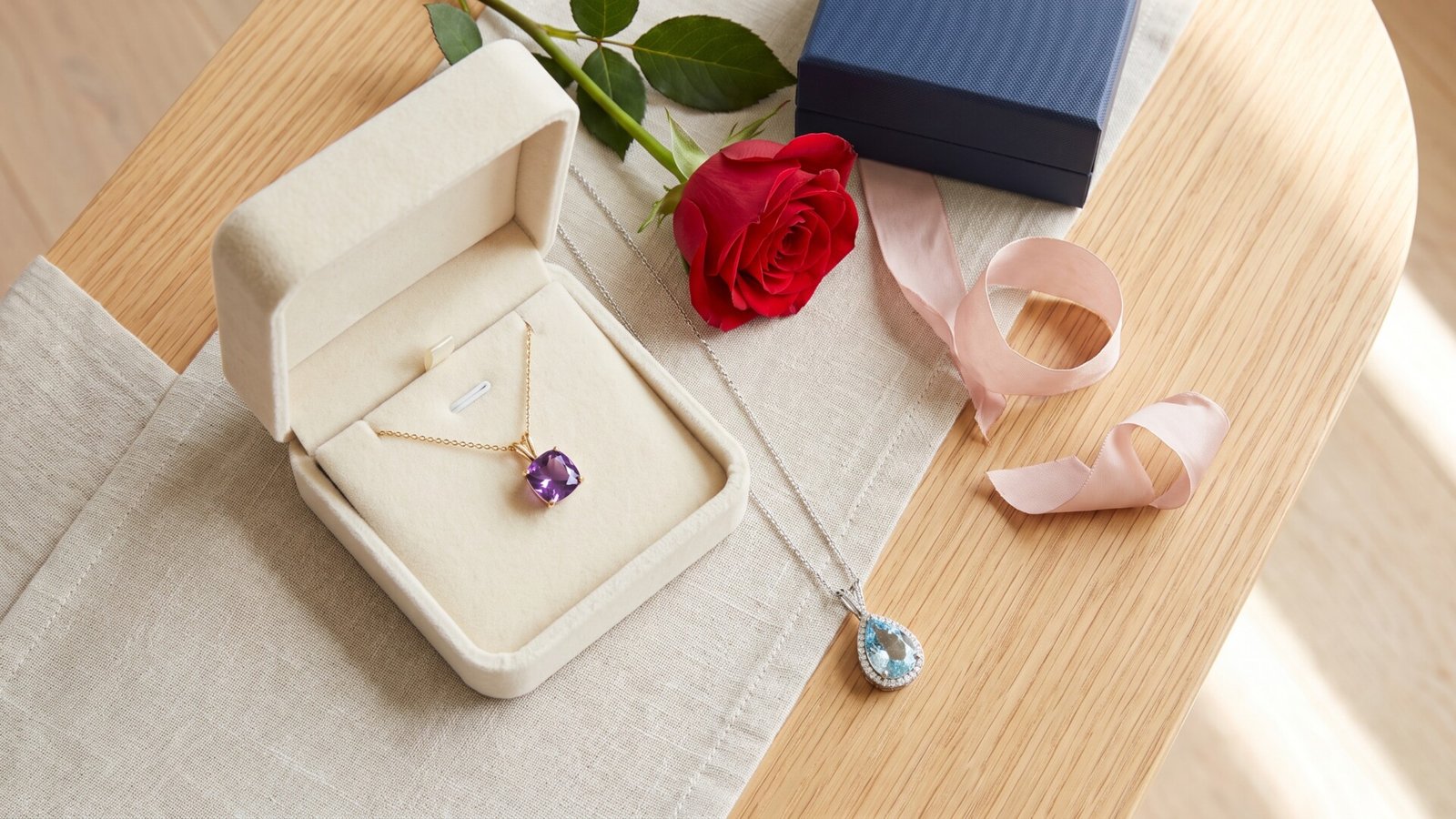
Top 5 Birthstone Necklaces for Valentine’s Day
Valentine’s Day is a natural moment for a gift that is personal as well as pretty, and a birthstone necklace fits: it ties the gift to the recipient’s birth month (or yours, or a shared date) instead of being generic. Whether you are celebrating a partner, friend or family member, this guide walks through five necklace styles, who each suits, how to choose a stone that will hold up, and where to start shopping.
We describe styles and retailers rather than specific product listings, because stock, designs and prices change constantly. Always check the current listing, the stone’s identity and the return policy before you buy.
Why a Birthstone Necklace Works for Valentine’s Day
Birthstones have a long cultural history, and each stone has traditional associations. These are beliefs and folklore, not scientific facts, but they make useful conversation pieces on a card or gift note. Some examples:
- Garnet (January): traditionally linked with passion, commitment and constancy.
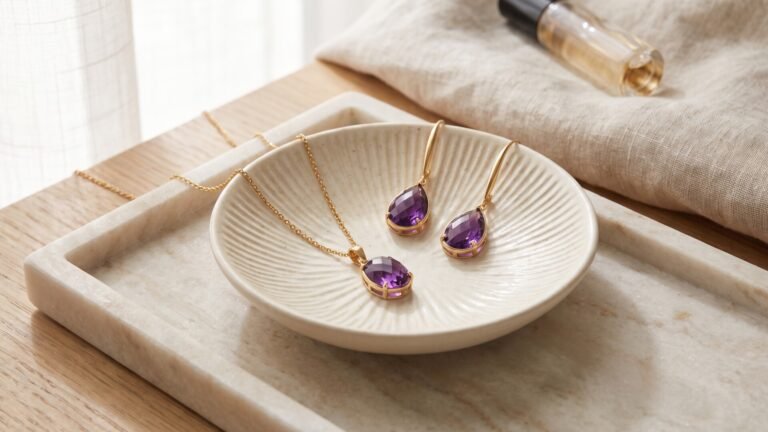
- Amethyst (February): traditionally linked with calm and clarity. It is also the birthstone of February, so a February-born partner may get a Valentine’s gift that is literally theirs.
- Ruby (July): traditionally linked with love, courage and vitality.
- Peridot (August): traditionally linked with positivity and prosperity.
- Topaz and citrine (November): traditionally linked with warmth, joy and generosity.
You do not have to use a birth month. Many people choose the stone for a first-date month, an anniversary month, or a favorite color. If you are unsure, see What Are Birthstones? and our guide to zodiac versus monthly birthstones.
Quick Comparison: The Five Styles
| Style | Best for | Watch out for |
|---|---|---|
| Classic solitaire pendant | Understated, everyday wear | Stone quality is on show; cheap stones look cheap |
| Halo necklace | Sparkle and a bigger look | Accent stones may be cubic zirconia or lab-grown diamonds; check what they are |
| Multi-stone necklace | Couples, families, milestones | Mixed stones have different hardness and care needs |
| Heart-shaped pendant | An unmistakably romantic gift | Heart tips can be fragile in softer stones |
| Custom or artisan piece | A one-of-a-kind gift | Longer lead times; check cutoff dates for Valentine’s delivery |
1. Classic Solitaire Birthstone Pendant
A single stone on a delicate chain is the most versatile choice. It is minimalist, easy to layer, and puts the stone’s color and cut front and center.
- Works with most birthstones; amethyst, garnet, aquamarine and sapphire are popular and durable.
- Usually available in sterling silver, yellow, white and rose gold.
- Look for a secure setting such as a bezel or a four-prong head, and a sturdy clasp.
Where to look: Blue Nile and James Allen both sell gemstone pendants alongside their diamond jewelry, and Angara specializes in colored gemstones. Compare stone size in millimeters, not only carats.
2. Halo Birthstone Necklace
A halo surrounds the center stone with smaller accent stones, which makes the pendant look larger and adds sparkle. It reads as dressier than a solitaire but is still practical for regular wear.
- Accent stones can be natural diamonds, lab-grown diamonds, moissanite or cubic zirconia. Ask which, because it affects price and durability. See Is Moissanite a Suitable Alternative to Diamond?
- The surrounding frame also protects the edge of the center stone, which helps with softer gems.
Where to look: Brilliant Earth and Angara both offer halo-style gemstone jewelry. Confirm exactly what the accent stones are before ordering.
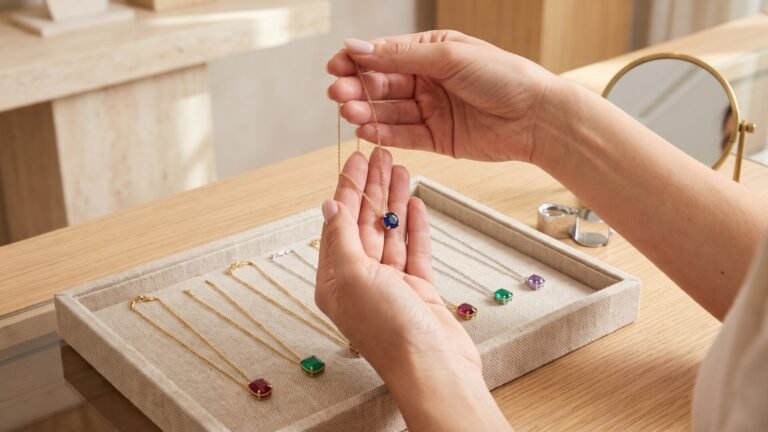
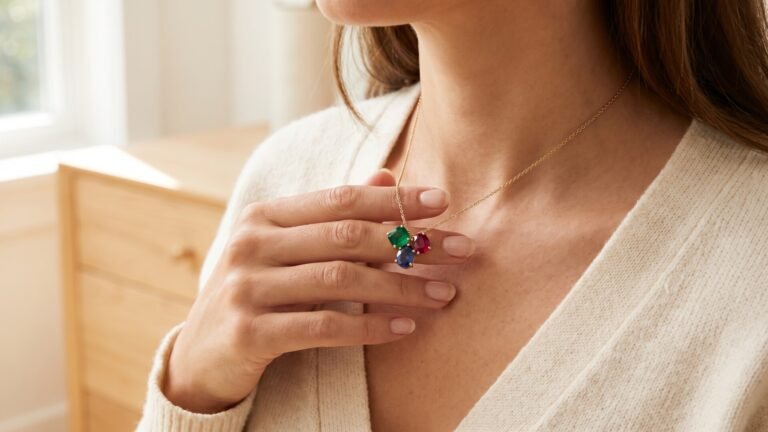
3. Multi-Stone Birthstone Necklace
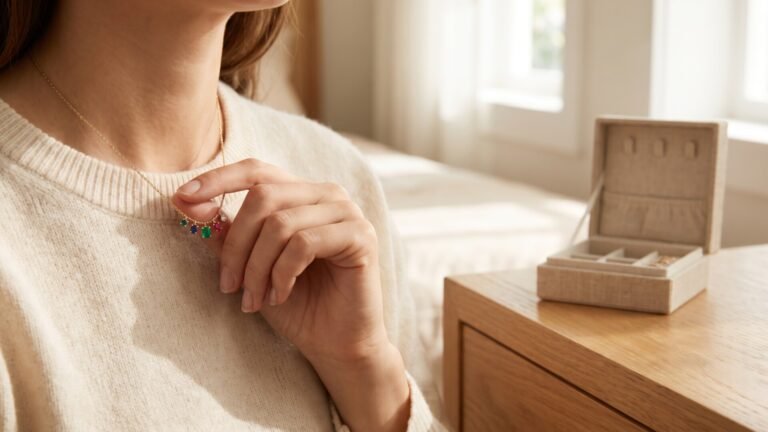
For couples, parents or blended families, multi-stone necklaces combine several birthstones in one piece. Pairing your stone with theirs makes a lovely Valentine’s gesture. If the gift is for a mother, see also personalized mother’s birthstone necklaces.
- Stones of different hardness sit side by side, so softer ones such as opal or pearl can get scratched. Keep the piece stored carefully.
- Initial charms can be combined with stones; see custom birthstone initial charms.
Where to look: Etsy sellers and Angara both offer multi-stone and personalized designs. On a marketplace, check the seller’s reviews, materials list and processing time.
4. Heart-Shaped Birthstone Necklace
The heart is the Valentine’s classic, and a heart-cut or heart-framed birthstone makes it personal. Heart-cut stones have a narrow tip that can chip, so a V-shaped prong over the tip is a good sign.
- Heart-cut stones need a larger size to look like a heart, which raises the price.
- A cheaper alternative is a round stone set in a heart-shaped frame, or a heart-shaped metal pendant with a small stone.
Where to look: Heart-shaped pendants are widely available at Blue Nile, James Allen and mainstream jewelers. Many offer engraving on the back for initials or a date.
5. Custom or Artisan Birthstone Necklace
If you want something nobody else will have, a custom or handmade necklace lets you choose the stone, metal, setting and engraving. This takes more time, so order well ahead of February 14.
- Ask whether the stone is natural, lab-grown or a simulant, and request clear photos or video.
- Check whether personalized items are returnable; many are final sale.
Where to look: Etsy for independent makers, and Brilliant Earth for made-to-order designs. Brilliant Earth describes its sourcing practices on its own site; read them directly rather than relying on a general label like “ethical.”
Which Necklace for Which Relationship?
The same necklace says different things depending on who receives it. These are practical suggestions, not rules.
- A new relationship: Keep it modest and personal. A small solitaire pendant in their birthstone shows you pay attention without feeling too heavy.
- A long-term partner or spouse: A halo or a multi-stone piece combining both birthstones (or the birthstones of your children) marks a shared history.
- A long-distance partner: Choose something they can wear every day, such as a sturdy solitaire on a secure chain with an engraved date on the back, so it works as a daily reminder.
- A friend or family member: Simple stud-style pendants or charm necklaces are low-pressure and easy to wear. Our birthstone jewelry gift ideas by relationship has more pairings.
- A mother or daughter: A multi-stone design that gathers family birthstones is the classic option; see our multi-stone necklaces for moms.
If Their Birthday Is in a Different Month
If you are buying the recipient’s own birthstone, this quick reference shows the commonly used modern stone for each month, with the other accepted stones where a month has more than one. Lists vary by country and organization, so confirm which list they follow.
| Birth month | Common stone(s) | Necklace tip |
|---|---|---|
| January | Garnet | Deep red suits a Valentine’s theme; see our garnet jewelry gift ideas |
| February | Amethyst | See amethyst jewelry gift ideas for February birthdays |
| March | Aquamarine (bloodstone traditional) | Cool blue pairs well with white metals |
| April | Diamond | A small solitaire is the classic; moissanite and lab-grown are alternatives |
| May | Emerald | Choose a protective setting; most emeralds are oiled or filled |
| June | Pearl, alexandrite, moonstone | Pearl needs gentle care; alexandrite is far tougher but costly |
| July | Ruby | The most romantic red, but expensive; garnet is a lower-cost red |
| August | Peridot, spinel, sardonyx | Spinel offers a harder, durable alternative |
| September | Sapphire | Durable and available in many colors, including pink |
| October | Opal, tourmaline | Pink tourmaline suits Valentine’s Day and is harder than opal |
| November | Citrine, topaz | Warm tones; check for heat treatment |
| December | Tanzanite, turquoise, zircon, blue topaz | Tanzanite has cleavage; protect it from knocks |
Red and Pink Stones Beyond the Birthstone List
If the recipient is not a January, February or July baby, you can still choose a romantic color rather than a birth-month stone. Several gemstones in red and pink make good Valentine’s pendants:
- Ruby: The classic red, with a Mohs hardness of 9. Ruby is routinely heat treated, and fine stones are costly.
- Garnet: A deep red that is much more affordable than ruby. See garnet vs ruby for how they compare.
- Pink sapphire: A durable option with the same hardness as ruby, since both are corundum. Heat treatment is common.
- Pink tourmaline (and rubellite): A tourmaline variety associated with October, with a hardness of about 7 to 7.5.
- Morganite: A pink to peachy beryl, in the same mineral family as emerald and aquamarine, and a hardness of about 7.5 to 8. It is not a monthly birthstone on the common lists.
See also our ruby, garnet and tourmaline color comparison if you are weighing red options.
Choosing a Stone That Will Last
A necklace is knocked less than a ring, so it suits a wider range of stones, but hardness and fragility still matter.
| Stone | Approx. Mohs hardness | Valentine’s note |
|---|---|---|
| Ruby, sapphire | 9 | Very durable; heat treatment is routine |
| Garnet | About 6.5-7.5 | Good everyday stone; durable and affordable |
| Amethyst | 7 | Durable; avoid long exposure to strong sunlight, which can fade it |
| Aquamarine | 7.5-8 | Durable, cool-toned |
| Peridot | 6.5-7 | Wear with some care |
| Topaz, citrine | 8 (topaz), 7 (citrine) | Much blue topaz is irradiated and heated; much citrine is heated amethyst |
| Opal, pearl | About 5.5-6.5, 2.5-4.5 | Beautiful in pendants but need gentle care |
See our Education & Buying Guides hub for how to read treatments, certificates and lab-grown labeling.
Metal, Length and Personalization
- Metal: Yellow or rose gold flatters warm stones like garnet, citrine and ruby; white gold, platinum or silver suits amethyst, aquamarine and sapphire. Gold plating and vermeil can wear thin over time.
- Length: 16-18 inches sits at or just below the collarbone and is the most popular range for pendants; 20-24 inches hangs lower and layers well. If you do not know the recipient’s preference, choose an adjustable chain.
- Personalization: Engraving a date or initials on the back adds meaning without changing the front design.
For more detail on each decision, read How to Choose the Perfect Birthstone Necklace.
Budget-Friendly and High-End Options
Prices vary widely by stone, size, metal and seller, so we do not quote fixed prices here. As a general guide:
- Budget-friendly: small solitaires in sterling silver, lab-grown stones, or a heart pendant with a smaller stone. Garnet, amethyst, citrine and peridot are among the more affordable birthstones.
- High-end: larger natural sapphire, ruby or emerald in 14k or 18k gold or platinum, ideally with an independent laboratory report.
Gemstones are better bought for enjoyment than as an investment, because resale values are usually well below retail. For other budgets and shops, see our list of trusted online stores for authentic birthstone jewelry.
Timing, Packaging and the Gift Note
Presentation matters on Valentine’s Day, but timing matters more. Ready-made pieces can usually ship quickly, while engraved, custom or made-to-order necklaces often take longer, so order several weeks ahead and check each seller’s stated cutoff date for delivery before February 14.
- Keep the receipt: Ask for a gift receipt so a different length or stone can be exchanged where the policy allows.
- Write a short note: Mention why you chose the stone, such as the month you met or the recipient’s birthday. A line of tradition, framed as a belief, adds charm without claiming any effect.
- Include care instructions: A short card with the stone’s care needs (for example, “put on after perfume”) helps softer stones last.
- Plan for resizing: If you chose a fixed-length chain and are unsure of the fit, confirm that the seller can shorten or extend it.
Common Mistakes When Buying a Valentine’s Necklace
- Leaving it to the last week: Stock, shipping and personalization all get tighter close to February 14.
- Choosing a fragile stone for daily wear without a protective setting: Opal, pearl, tanzanite and emerald look lovely but need careful wear.
- Assuming the stone is natural: A lab-grown stone is real, with the same chemistry as a natural one, while a simulant such as glass or cubic zirconia is only an imitation. Look for clear labeling.
- Overlooking the metal: Nickel in cheaper alloys can irritate sensitive skin, and plating can wear off, so check the metal and purity listed.
- Buying on symbolism alone: A meaning is a nice touch, but fit, quality and comfort decide whether the necklace is actually worn. These associations are cultural beliefs, not proven effects.
Caring for Birthstone Necklaces
- Cleaning: Warm water, mild soap and a soft brush for most stones. Avoid ultrasonic and steam cleaners for emerald, opal, pearl, turquoise and fracture-filled stones.
- Chemicals: Put the necklace on after perfume and hairspray, and remove it before cleaning, swimming or showering.
- Storage: Keep it separate in a soft pouch with the clasp fastened.
- Check regularly: Look for loose prongs and a worn clasp. See how to care for garnet jewelry for a worked example.
Tips for Choosing the Perfect Necklace
- Know their style. Look at what they already wear: gold or silver, delicate or bold.
- Check delivery dates. Custom orders need extra time before February 14.
- Confirm the return policy, especially for personalized items, and include a gift receipt.
- Ask what the stone is. Natural, lab-grown and simulant stones are different, and a good seller labels them.
- Add a note. A line about why you chose the stone turns a purchase into a gift.
Frequently Asked Questions About Valentine's Day Birthstone Necklaces
Which birthstone is best for Valentine's Day?
February’s birthstone is amethyst, so it is a natural fit. Garnet and ruby are also popular because of their red color and traditional links to love and passion. The best choice is usually the recipient’s own birthstone or a color they love.
Should I buy my partner's birthstone or my own?
Either works. Many people give their partner’s birthstone, and a multi-stone necklace can combine both of yours.
Is a lab-grown birthstone a good gift?
Yes, if it is labeled clearly. Lab-grown stones have the same chemistry as natural ones and often cost less, which can let you choose a larger stone within your budget.
What chain length should I choose if I do not know their size?
An adjustable chain of about 16 to 18 inches is a safe choice. It sits near the collarbone and can usually be lengthened for layering.
When should I order a custom necklace for February 14?
Order as early as you can, ideally several weeks ahead. Custom and engraved pieces take longer to make and are often final sale, so check the seller’s cutoff dates.
Do birthstone meanings have scientific support?
No. Meanings and symbolism come from cultural traditions and beliefs. They are a nice personal touch, but they are not medical or scientific claims.
What is a good birthstone necklace for a long-distance partner?
Choose a durable stone such as sapphire, aquamarine, amethyst or garnet in a simple solitaire with a secure clasp, so it can be worn daily. An engraved date or initial on the back adds a personal reminder.
Is a pink or red stone better than a birthstone for Valentine's Day?
Neither is better. A birthstone is personal, while a red or pink stone such as ruby, garnet, pink sapphire or pink tourmaline matches the romantic theme. Pick whichever the recipient is more likely to enjoy and wear.
Which stones should I avoid for an everyday Valentine's necklace?
Pearl, opal and turquoise are soft and need gentle care, and emerald and tanzanite can chip because of inclusions or cleavage. They can still work in a pendant with a protective setting, but they are not low-maintenance.
Conclusion
A birthstone necklace is a thoughtful Valentine’s gift when it fits the recipient’s style and the stone is suited to how they will wear it. Whether you choose a solitaire, a halo, a multi-stone design, a heart or a custom piece, confirm what the stone is, choose a secure setting and check the return policy. Browse the full Birthstone Jewelry Guide for more ideas, or see our children’s birthstone gifts if you are shopping for a younger loved one.