Ruby vs Garnet vs Tourmaline color comparison
I have a confession. When I first started collecting gemstones, I thought I could tell a ruby from a garnet just by looking. I was wrong.
I remember standing in a dimly lit shop in Bangkok, holding a deep red stone under a fluorescent lamp. The dealer swore it was a Burmese ruby. The price was suspiciously good. I almost bought it. But something held me back — a whisper of doubt that said, this looks too good to be true. It was a garnet. A beautiful one, yes. But not a ruby. I learned that lesson the hard way, with a lighter wallet and a bruised ego.
That’s the thing about red gemstones. They all seem to bleed into each other. Ruby, garnet, tourmaline — they share the same passionate color family, but their differences are everything. And color is the single most important factor in determining value, beauty, and meaning.
In this article, I’m going to walk you through the color characteristics of ruby, garnet, and tourmaline. I’ll share what I’ve learned from years of collecting, from mistakes I’ve made, and from conversations with gemologists who have forgotten more than I’ll ever know. By the end, you’ll be able to spot the differences, understand what drives price, and choose the stone that speaks to you — without the regret.
Let’s start with the basics.
Understanding Gemstone Color
What Defines Gemstone Color?
Color is not just a feeling. It’s a science. Gemologists break it down into three components: hue, saturation, and tone.
- Hue is the pure color — red, blue, green, yellow. A ruby’s hue is red. But red is never just red. It can lean slightly toward orange or purple. That tiny shift can change the value by thousands of dollars.
- Saturation is the intensity. Think of it as the volume knob. A vivid, pure red has high saturation. A washed-out, grayish red has low saturation. High saturation is rare and expensive.
- Tone is how light or dark the color is. A medium-dark tone is often ideal for rubies and garnets. Too dark, and the stone looks black. Too light, and it looks pink.
I learned this the hard way when I bought a “ruby” that was actually a dark garnet. The tone was almost identical, but the saturation was lower. Under candlelight, it looked beautiful. Under sunlight, it was a different story.
The Role of Color in Gemstone Selection
Color is the first thing people notice. It’s also the last thing they forget. When you buy a gemstone, you’re buying a memory. And memory is tied to color.
Cultural significance plays a role too. In many Asian cultures, red symbolizes luck and prosperity. That’s why rubies are so revered in Burma and Thailand. In Western societies, red is passion and love. Garnets, with their deep burgundy tones, often evoke a sense of ancient romance. Tourmaline, with its rainbow of possibilities, appeals to those who want something unique.
But trends shift. In the 1980s, bright pink tourmalines were all the rage. Today, Paraiba tourmalines — with their electric neon blue-green — command prices that rival diamonds. The market changes, but the principles of color grading remain constant.
Ruby: The King of Gemstones
Color Characteristics of Ruby
Let me tell you about the first time I saw a true pigeon’s blood ruby. I was at a gem show in Tucson, and a dealer pulled out a small parcel from a velvet pouch. The stone was about one carat. Under the fluorescent lights, it glowed like a coal from a dying fire — deep, rich, with a hint of blue that made it almost purple. My breath caught.
That is the ideal ruby color: a vivid red with a slight blue secondary hue. The GIA calls it “pigeon’s blood.” It’s rare, expensive, and unmistakable.
But not all rubies are that perfect. Most have a pinkish or purplish secondary hue. Some are too dark, bordering on black. Others are too light, looking more like pink sapphires. The best rubies have a medium-dark tone, high saturation, and a pure red hue.
I’ve seen rubies that look almost fluorescent under UV light. That’s a sign of high chromium content, which is what gives rubies their color. Chromium absorbs yellow and green light, reflecting red. The more chromium, the more intense the red.
Comparison of Natural vs. Treated Rubies
Here’s where it gets complicated. Most rubies on the market are heat-treated. This is an ancient practice — heating the stone to improve color and clarity. It’s accepted, but it affects value.
Natural rubies, untreated, are incredibly rare. They command prices that can be ten times higher than their treated counterparts. But here’s the thing: a treated ruby can still be beautiful. I own a heat-treated ruby from Madagascar that has a lovely pinkish-red color. It’s not a pigeon’s blood, but it’s gorgeous. And it cost a fraction of what a natural one would.
The danger is when treatments are undisclosed. I’ve seen dealers sell glass-filled rubies as “natural.” Glass filling is a treatment that adds lead glass to fill fractures. It improves appearance but drastically reduces durability. If a jeweler ever offers to “scratch test” your stone, walk out. Scratch testing can damage a ruby.
Value Factors Relating to Color
Color is the single biggest factor in ruby pricing. A one-carat pigeon’s blood ruby can cost $10,000 per carat or more. A lighter, pinkish ruby might be $1,000 per carat. The difference is all in the color.
Notable rubies illustrate this. The Sunrise Ruby, a 25.59-carat pigeon’s blood ruby, sold for over $30 million at Sotheby’s. That’s more than $1 million per carat. Why? Because the color was perfect.
But you don’t need to spend millions. A well-chosen ruby with good saturation and medium tone can be affordable. The key is to prioritize color over clarity. A ruby with minor inclusions but vivid color is often more valuable than a clean stone with washed-out color.
Garnet: The Versatile Gemstone
Color Characteristics of Garnet
I have a confession: I used to dismiss garnets. I thought they were just dark red stones that looked like cheap rubies. Then I discovered Tsavorite garnet.
Tsavorite is a vivid green garnet that rivals emerald in color. It’s rare, brilliant, and utterly stunning. That’s when I realized garnet is not one gemstone — it’s a family of many.
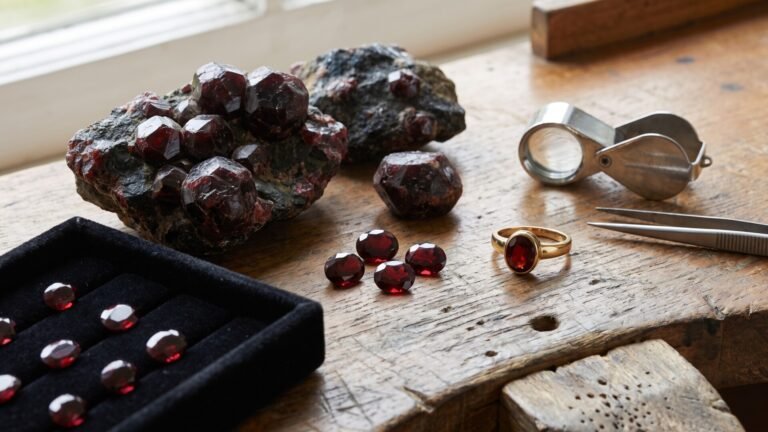
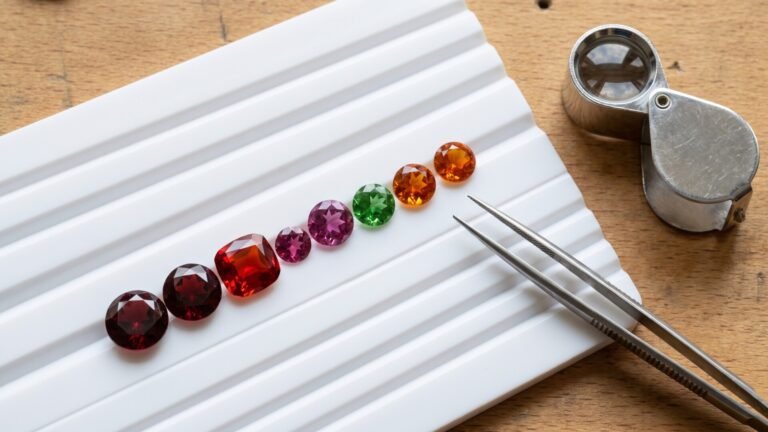
Garnets come in almost every color except blue (though some rare color-change garnets appear blue under certain light). The most common are red garnets: Almandine and Pyrope. Almandine is a deep, dark red with brownish undertones. Pyrope is a brighter, purer red. Think of Pyrope as the “true red” garnet, while Almandine is more burgundy.
Then there are the rarer types. Spessartite garnet is a bright orange, like a mandarin. Grossular garnet can be green, yellow, or even pink. And Tsavorite, a type of grossular, is a vibrant green that can be more valuable than many rubies.
Comparison of Color Variations
The color variation in garnet is remarkable. I’ve seen a single piece of rough garnet that contained zones of red, orange, and green. It was like holding a sunset.
Market demand varies by color. Red garnets are affordable and widely available. Orange and green garnets are rarer and more expensive. Tsavorite, especially in sizes over one carat, can cost $5,000 per carat or more.
But here’s the thing: garnet is often undervalued. You can get a beautiful, vivid green Tsavorite for a fraction of what a comparable emerald would cost. And the color is often more brilliant because garnet has higher dispersion — it sparkles more.
Value Factors Relating to Color
Color is the primary driver of garnet value. For red garnets, the ideal is a pure red with no brownish or orange undertones. For green garnets, the ideal is a vivid, pure green with high saturation.
I remember buying a Pyrope garnet from a dealer in India. It was a deep, rich red, almost like a ruby. Under magnification, it had small inclusions, but the color was so intense that I didn’t care. I paid $200 for a 3-carat stone. A ruby of similar color would have been $10,000.
That’s the beauty of garnet. You can get incredible color without the price tag. But be careful: some garnets are treated with heat to improve color. Natural, untreated garnets are more valuable.
Tourmaline: The Colorful Chameleon
Color Characteristics of Tourmaline
I have a confession: tourmaline is my favorite gemstone. Not because it’s the most valuable — it’s not. But because it has more colors than any other gem. It’s like the rainbow’s secret child.
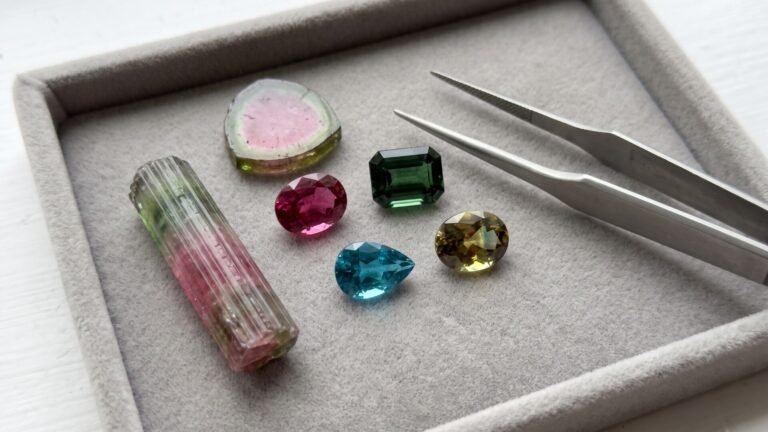
Tourmaline can be pink, green, blue, yellow, orange, red, purple, black, and even colorless. And then there are the bi-color and tri-color specimens. I own a watermelon tourmaline — pink on the inside, green on the outside — that looks like a slice of fruit. It’s one of my most treasured pieces.
The color comes from trace elements. Iron gives tourmaline green and blue colors. Manganese gives it pink and red. Lithium can produce a range from pink to green.
Comparison of Color Variations
The color range of tourmaline is staggering. Here are the most popular types:
- Pink Tourmaline: Often called rubellite, it ranges from soft pink to deep red. The most valuable is a vivid, pure pink with no brownish undertones.
- Green Tourmaline: Can be light mint to deep forest green. The most desirable is a vivid, pure green with high saturation.
- Blue Tourmaline: Indicolite is the blue variety. It’s rare and expensive, especially in vivid shades.
- Paraiba Tourmaline: This is the holy grail. It’s a neon blue-green that glows under UV light. Found only in Brazil (and recently in Africa), it can cost $50,000 per carat or more.
I remember seeing a Paraiba tourmaline at a trade show. It was less than one carat, but the color was so intense that it looked like a piece of the Caribbean Sea. The dealer asked $30,000. I didn’t buy it, but I still think about it.
Value Factors Relating to Color
Color is everything with tourmaline. The more vivid and rare the color, the higher the price. Paraiba is the king, but even within pink tourmaline, a vivid, saturated pink can be ten times more valuable than a pale, washed-out one.
Bi-color and tri-color tourmalines are also valuable, especially if the color zones are distinct and well-defined. A watermelon tourmaline with a clear pink center and green rind can command a premium.
But here’s the secret: tourmaline is often more affordable than ruby or even high-end garnet. You can get a beautiful, vivid green tourmaline for $200 per carat. A comparable Tsavorite garnet might be $1,000 per carat. A ruby would be $5,000.
Direct Color Comparison: Ruby vs Garnet vs Tourmaline
Visual Comparison of Color Charts
| Gemstone | Ideal Color | Variations | Market Demand |
|---|---|---|---|
| Ruby | Blood Red | Pink, Purple | High |
| Garnet | Red | Green, Orange | Moderate |
| Tourmaline | Green/Pink | Bi-color, Blue | High |
Summary of Color Differences and Similarities
Here’s what I’ve learned from years of comparing these stones side by side:
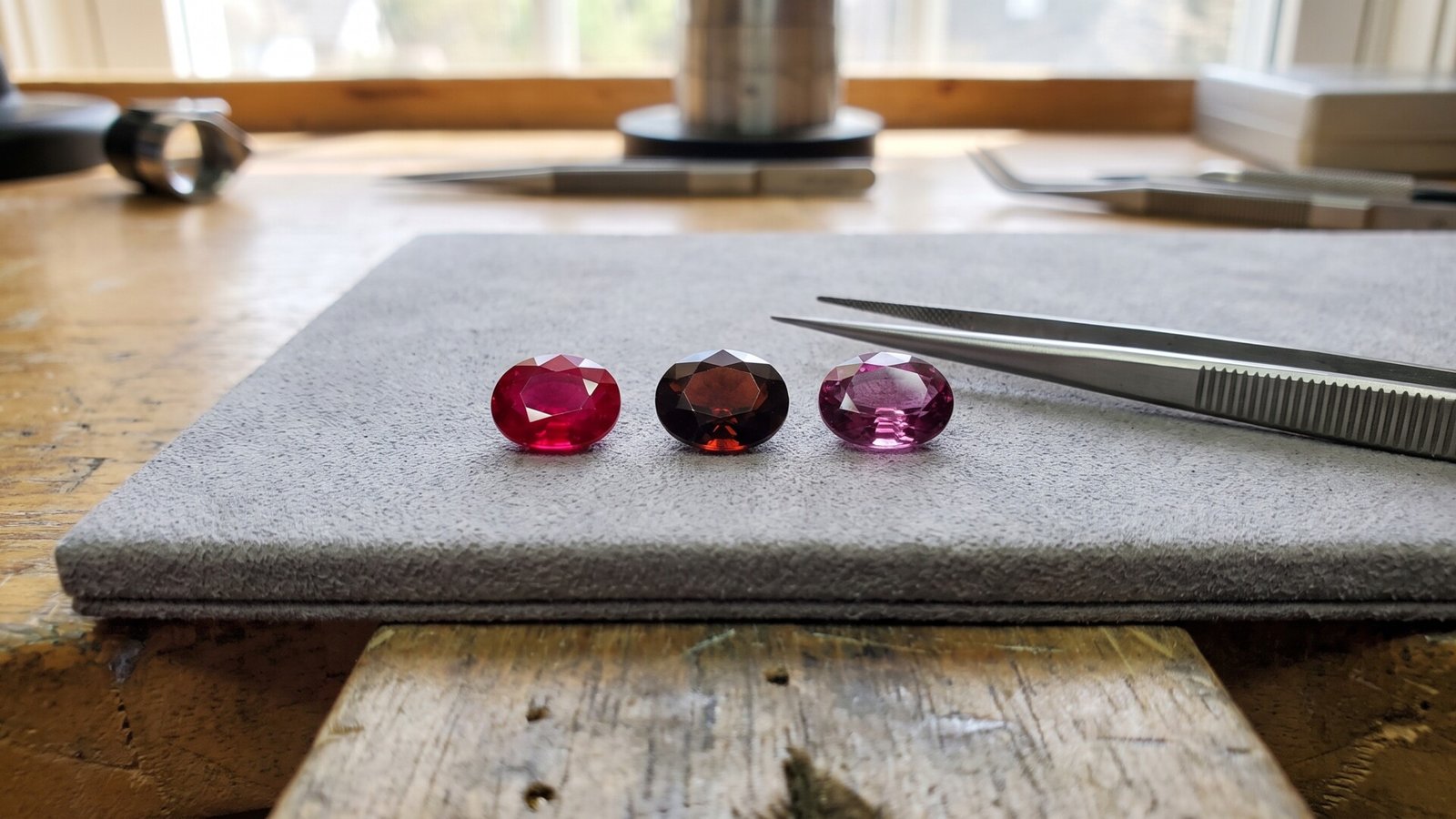
- Ruby has the most intense, saturated red. It’s unmistakable when you see it. The blue undertone gives it a depth that garnet lacks.
- Garnet is often darker and less saturated than ruby. Pyrope garnet comes closest, but it lacks the blue undertone. Tsavorite garnet is a different story — it’s as vivid as any green gem.
- Tourmaline is the most diverse. It can mimic ruby (pink tourmaline) or garnet (green tourmaline), but it has its own unique colors like Paraiba.
The key difference is saturation. Ruby has the highest saturation of any red gem. Garnet is close, but not quite there. Tourmaline can be highly saturated, but it’s more variable.
Buying Considerations for Color
What to Look for When Choosing Gemstones
When I buy a colored gemstone, I always start with color. Here’s my checklist:
- Hue: Is it pure, or does it have a secondary hue? For red stones, avoid brownish or orange undertones.
- Saturation: Is the color vivid or washed out? Hold the stone next to a white piece of paper. The more it pops, the better.
- Tone: Is it too dark or too light? A medium-dark tone is usually ideal.
- Lighting: Look at the stone under natural daylight, fluorescent light, and incandescent light. Some stones look different under each.
- Certification: Always buy from a reputable dealer who provides a grading report from a lab like GIA or AGS.
I also recommend looking at the stone in person if possible. Photos can be misleading. I’ve seen stones that looked vivid red online but were actually dark brown in person.
Common Mistakes to Avoid
I’ve made every mistake in the book. Here are the ones to avoid:
- Trusting a single light source: Always check under multiple lighting conditions.
- Ignoring treatments: Ask if the stone has been heat-treated, glass-filled, or dyed. If the dealer is evasive, walk away.
- Focusing only on carat weight: A large stone with poor color is worth less than a small stone with excellent color.
- Buying based on name alone: “Burmese ruby” sounds prestigious, but many are treated. Focus on color, not origin.
- Not getting a certification: A reputable lab report protects you from fraud.
Conclusion
I still remember that day in Bangkok. The garnet I almost bought taught me more than any book could. It taught me to look closely, to ask questions, and to trust my eyes.
Color is the soul of a gemstone. It’s what makes you fall in love. Whether you choose the passionate red of a ruby, the versatile hues of a garnet, or the rainbow of a tourmaline, the right stone will speak to you.
And here’s the truth: there is no “best” color. There’s only the color that moves you. The stone that makes you stop and stare. The one that will be passed down to someone who hasn’t been born yet.
So go ahead. Explore. Compare. Hold them in your hand. And when you find the one, you’ll know.
[Explore Ruby Jewelry at Our Ruby Collection]
[Discover Garnet Jewelry at Our Garnet Collection]
[Browse Tourmaline Jewelry at Our Tourmaline Collection]
[Learn More About Gemstone Color Grading at Our Gemstone Hub]
Frequently Asked Questions About Ruby Vs Garnet Vs Tourmaline Color
What is the most valuable color for rubies?
The ideal color is a vivid red with slight blue undertones, known as “pigeon’s blood.” This color commands the highest prices.
Are all garnets red?
No, garnets come in a variety of colors including green (Tsavorite), orange (Spessartite), and purple (Rhodolite). Red garnets are the most common.
How does the color affect the price of tourmaline?
The more vivid and rare the color, the higher the price. Paraiba tourmaline (neon blue-green) is the most expensive, followed by vivid pink and green varieties.
What treatments can affect gemstone color?
Common treatments include heat treatment (to enhance or lighten color), glass filling (to improve clarity), and dyeing (to alter color). Always ask for disclosure.
Can I find affordable options in these gemstones?
Yes. Garnets and tourmalines offer excellent value. You can find beautiful, vivid colors in garnet for under $200 per carat and in tourmaline for under $500 per carat.
How do I choose the right gemstone color for my skin tone?
Consider your undertones. Cool-toned individuals (pink/blue veins) may prefer blue, green, or pink stones. Warm-toned individuals (green/yellow veins) may favor reds, oranges, and yellows. But ultimately, wear what makes you happy.