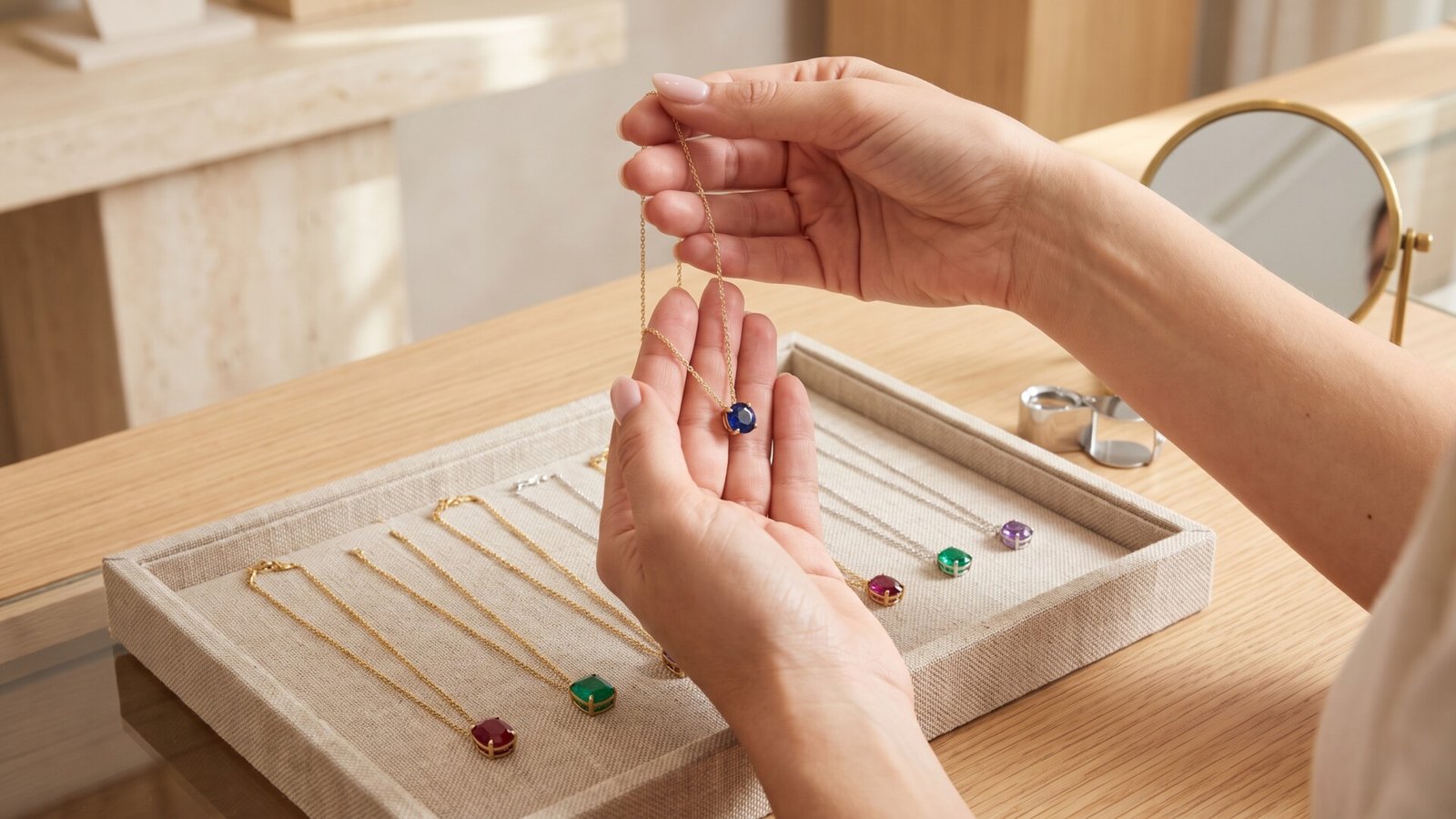
How to Choose the Perfect Birthstone Necklace
A birthstone necklace is a personal piece: it marks your birth month, works as a gift for someone else’s, and for many people carries a little symbolism too. Choosing a good one comes down to style, gemstone quality, metal, chain length and durability, plus a budget that makes sense. This guide, part of our Birthstone Jewelry Guide, walks through each decision in the order you will meet them.
Note: meanings and “energy” associations mentioned below come from cultural and spiritual traditions. They are not scientific, medical or financial claims, and a necklace is not a substitute for professional advice of any kind.
The Short Answer: How to Choose in Five Steps
- Pick the stone. Use the birth month, or the zodiac or a favorite color if the wearer prefers. Many months have two or more accepted stones, so you rarely have to settle for one that does not suit.
- Match the stone to how it will be worn. A pendant is knocked less than a ring, but daily wear still rewards a tougher stone or a protective setting.
- Choose the style and metal. Solitaire, multi-stone, charm or bar, in gold, silver or platinum.
- Set the chain length and check the hardware. Princess length is the safe default; a lobster clasp is more secure than a spring ring.
- Ask about the stone’s identity and treatments. Natural, lab-grown or simulant, and what has been done to it, should be stated by the seller in writing.
Why Birthstone Necklaces Are Special
- Personal connection: A pendant sits close to the heart and is easy to wear every day, so it becomes a quiet reminder of a person, a birthday or a milestone.
- Symbolism: Tradition links garnet with vitality and courage and amethyst with calm and clarity. These are beliefs, not proven effects, but many buyers enjoy them as part of the story.
- Gift potential: Birthstone necklaces suit birthdays, anniversaries, new babies and family gifts, and they personalize easily.
Start With the Right Birthstone
Birthstone lists differ by country and organization, and several months have more than one accepted stone. The table shows the commonly used modern stones with the traditional symbolism associated with each. For the full picture, see What Are Birthstones? and our guide to finding your birthstone by month.
| Month | Common birthstone(s) | Traditional symbolism |
|---|---|---|
| January | Garnet | Vitality, grounding, courage |
| February | Amethyst | Calm, clarity, intuition |
| March | Aquamarine (also bloodstone in the traditional list) | Peace, communication, emotional balance |
| April | Diamond | Strength, clarity, love |
| May | Emerald | Growth, wisdom, renewal |
| June | Pearl (also alexandrite and moonstone) | Purity, tranquility |
| July | Ruby | Passion, energy, confidence |
| August | Peridot (also spinel and sardonyx) | Protection, positivity |
| September | Sapphire | Focus, wisdom, loyalty |
| October | Opal (also tourmaline) | Creativity, inspiration |
| November | Citrine and topaz | Abundance, clarity, joy |
| December | Tanzanite, turquoise, zircon and blue topaz | Protection, communication, calm |
If your month’s stone is soft or pricey, remember that an alternate stone from the same month is just as legitimate. A June baby can wear alexandrite or moonstone instead of pearl, and a December birthday can choose zircon or blue topaz instead of tanzanite. Looking for stone-specific ideas? Our garnet jewelry gift ideas and amethyst jewelry pieces for every budget show how those two stones look in finished pieces.
Choosing by Who Will Wear It
The same stone can call for a different necklace depending on the wearer. These pointers are practical rules of thumb, not fixed recommendations.
- For yourself: Start with how you dress and how active you are. If you wear one necklace every day, favor a tough stone and a secure setting; if you reserve it for occasions, a softer stone such as opal or pearl is more realistic.
- For a partner: Check the metal she or he already wears and the usual chain length. When unsure, choose a princess-length chain with an extender so it fits under or over a collar.
- For a mother or grandmother: A multi-stone design that gathers the birthstones of children and grandchildren is the classic choice. Check that the stones are compatible in hardness, and remember that adding a name later is usually easier on a pendant than on a fixed multi-stone bar.
- For a child or teen: Prefer simple, sturdy designs with secure clasps and avoid fragile stones. Small pieces can be a choking hazard for young children, so they are better for older kids. Our Children’s Birthstone Gifts guide goes deeper.
Types of Birthstone Necklaces
Solitaire Pendants
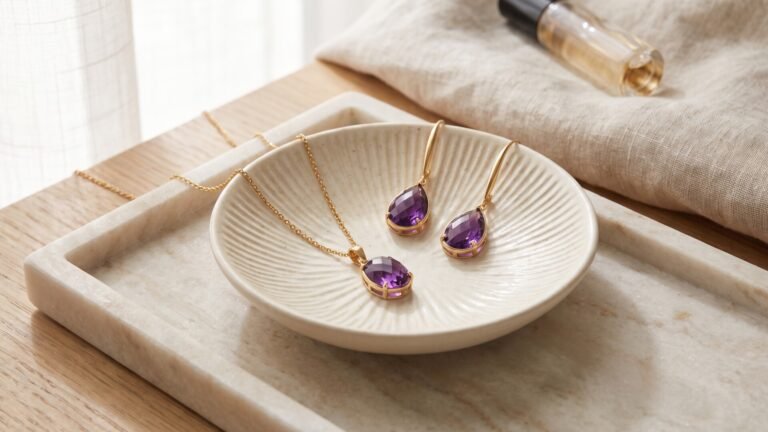
A single stone on a fine chain is the classic option.
- Pros: Minimalist, elegant, versatile for everyday wear.
- Cons: The stone is the whole design, so color and cut quality matter more.
Solitaires suit visually strong stones such as amethyst, ruby or sapphire.
Multi-Stone Necklaces
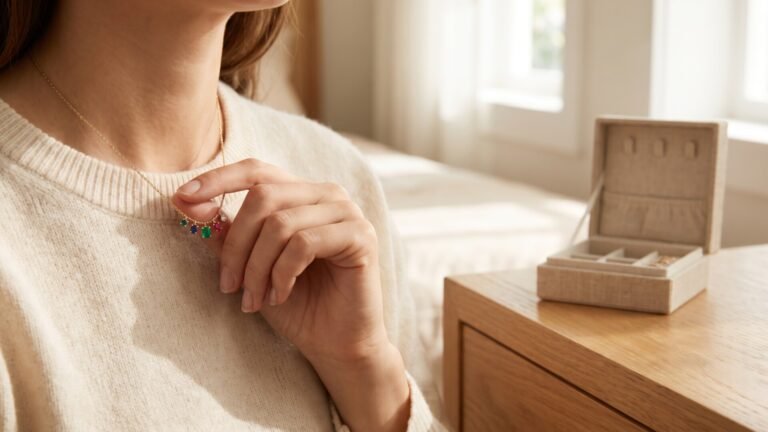
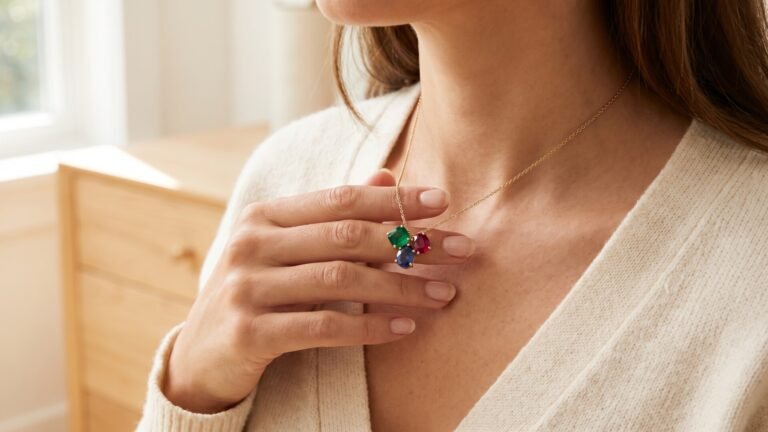
These feature several birthstones, often for children, grandchildren or loved ones.
- Pros: Personal, sentimental, ideal for gifts.
- Cons: Bulkier, and mixed stones need compatible hardness so softer ones are not scratched by harder neighbors.
See our guides to multi-stone necklaces for moms and personalized mother’s birthstone necklaces.
Charm Necklaces
Some necklaces set birthstones into charms such as stars, hearts or initials.
- Pros: Playful, personal, easy to mix metals.
- Cons: Less formal, and the stones are usually small.
Bar and Nameplate Necklaces
A birthstone is set into a bar, plate or engraved name pendant.
- Pros: Sleek, contemporary, highly customizable, and good for layering.
- Cons: Stones are small and less prominent.
Choosing Gemstone Quality
The four Cs (color, clarity, cut, carat) apply, but weigh them by gem. Our Education & Buying Guides hub has the fuller version.
1. Color
- Look for rich, even color that suits the stone. In colored gems, color is usually the biggest value driver.
- For pearl and opal, judge luster, translucency and body color instead.
2. Clarity
- Expectations vary: emerald almost always has visible inclusions, while aquamarine and topaz are usually cleaner.
- Avoid inclusions that reach the surface or sit near a prong in a pendant that will be worn daily.
3. Cut
- Round, oval and cushion cuts are popular for pendants. Faceted cuts maximize brilliance; cabochons give a soft glow and suit opal and turquoise.
- See Gemstone Shapes and Cuts Explained for how each shape looks and wears.
4. Treatments and origin
- Heat treatment is routine for sapphire and ruby. Emerald is commonly oiled or resin-filled, most blue topaz is irradiated and heated, and a lot of citrine is heated amethyst. Ask the seller what has been done.
- Lab-grown stones are real gemstones with the same chemistry as natural ones, often at a lower price. They should always be labeled as lab-grown. See natural vs. lab-grown birthstones.
- Origin names such as “Burmese” ruby or “Colombian” emerald can raise the price, but they should only be accepted when backed by a gemological laboratory report.
Durability: Which Stones Suit a Necklace
Pendants are knocked far less often than rings, so they are the best way to wear softer or more fragile stones. Hardness measures scratch resistance only; toughness and cleavage also matter.
| Stone | Approx. Mohs hardness | In a daily-wear pendant |
|---|---|---|
| Diamond, ruby, sapphire | 10, 9, 9 | Excellent |
| Alexandrite, spinel, topaz (including blue topaz) | About 8-8.5 | Good; topaz has perfect cleavage, so avoid hard knocks to the edges |
| Aquamarine, emerald | 7.5-8 | Good; emerald is often fracture-filled and benefits from a protective setting |
| Amethyst, citrine, tourmaline | 7-7.5 | Good; amethyst can fade with long exposure to strong light |
| Garnet, peridot, tanzanite, zircon | About 6.5-7.5 | Fine with care; tanzanite has cleavage and zircon can chip at the edges, so protect both from knocks |
| Moonstone | About 6-6.5 | Fine in a pendant; has cleavage and can scratch or chip |
| Opal | About 5.5-6.5 | Fine in a pendant; avoid heat and dryness |
| Turquoise | About 5-6 | Fine for occasional wear; porous, so keep away from oils, perfume and water |
| Pearl | 2.5-4.5 | Good as a pendant, but put it on after perfume and hairspray |
Values are approximate ranges. Bezel and halo settings protect the edges of more brittle stones better than slim prongs.
Pendant Settings That Protect Your Stone
The setting does as much for longevity as the stone itself. Here is how the common styles compare for a necklace.
- Prong (claw) setting: Lets the most light into the stone, so colors look brighter. Prongs can snag or wear down, so ask for sturdy ones on cleavage-prone stones such as tanzanite or topaz.
- Bezel setting: A thin metal rim surrounds the stone and shields the edges. It is a good option for emerald, opal, tanzanite and any stone that chips easily.
- Halo setting: A ring of small stones around the center adds sparkle and a little extra edge protection, at the cost of a busier look and more places for dirt to collect.
- Bail and chain connection: This small loop carries the entire weight of the pendant. Look for a solid bail rather than a thin wire one, especially with heavier stones.
Selecting the Right Metal
- Gold (yellow, white, rose): Durable and versatile. 14k is a common balance of durability and gold content; 18k is richer in color but softer. White gold is often rhodium-plated and may need re-plating over time.
- Sterling silver: Affordable and classic. It tarnishes and needs occasional polishing.
- Platinum: Dense, durable and naturally white, generally the most expensive option.
- Gold vermeil and gold-filled: Budget-friendly looks. Vermeil is gold over sterling silver, and plating can wear with time and exposure.
Cooler stones such as aquamarine and amethyst often pair well with white metals; warm stones such as garnet, citrine and ruby often look good in yellow or rose gold. If you have sensitive skin, ask about nickel content.
Necklace Length and Chain Style
- Choker (14-16 inches): Sits high on the neck.
- Princess (17-19 inches): The standard length, and the most versatile for pendants.
- Matinee (20-24 inches): Falls lower and layers well.
- Opera (28-36 inches): Long and dramatic; can be doubled for layering.
Cable and box chains are sturdy for pendants; very fine chains look delicate but can kink or break under heavier pendants. An extender or adjustable chain helps with layering and gift-giving when you do not know the recipient’s preferred length.
Personalization Options
- Engraving: Initials, names or dates on the pendant or back.
- Multiple birthstones: For family members or milestones.
- Adjustable chains: Flexible length for layering.
- Custom settings: Choice of metal, prong or bezel style.
Check whether personalized items can be returned, since many retailers treat them as final sale.
Budget: What Drives the Price
Prices for birthstone necklaces vary enormously, so rather than quote figures that go out of date, here is what actually moves the price and where you can save without losing the meaning of the gift.
- Stone type and quality: A fine natural ruby or sapphire costs far more than amethyst, garnet or peridot of similar size. Color, clarity, cut, carat weight and treatment all play a part.
- Metal: Sterling silver and vermeil sit at the budget end, gold in the middle, and platinum at the top.
- Natural or lab-grown: A lab-grown stone usually costs less than a natural stone of the same size and appearance, which makes it a way to get a bigger or cleaner stone for the same budget.
- Size and number of stones: Multi-stone designs add up quickly, as every extra stone and setting adds labor and material.
- Personalization: Engraving and made-to-order work add cost and can limit returns.
If budget is tight, choose a smaller natural stone in a well-made setting, a lab-grown stone, or a more affordable birthstone from your month’s alternates over a larger low-quality version of the premium stone.
Ethical Considerations
- Be cautious with broad claims like “conflict-free” or “ethically sourced.” Look for a named standard, such as recycled metals or membership of an industry body, and ask what it covers.
- Lab-grown stones avoid mining but are not automatically “eco-friendly”; their footprint depends on how they are made.
- Small studios and artisans may offer transparent, made-to-order work.
Read more in Ethical Gemstones: How to Shop Sustainably.
Questions to Ask Before You Buy
- Is the stone natural, lab-grown or a simulant, and is that written on the product page and receipt?
- Has it been heated, oiled, filled, irradiated or dyed, and what does that mean for care?
- What is the metal and its purity (for example 14k, 18k or 925 sterling), and is it plated?
- What are the actual stone dimensions in millimeters or carats, not just a photo?
- Is there a laboratory report for any higher-value stone?
- What are the return, resizing and repair policies, especially for personalized pieces?
Common Mistakes to Avoid
- Judging durability by hardness alone: Emerald and topaz are hard on paper but can chip because of inclusions or cleavage.
- Assuming every stone is natural and untreated: Treatments are normal for many birthstones; the issue is disclosure, not their existence.
- Confusing lab-grown with fake: A lab-grown ruby is a real ruby. A simulant, such as glass or cubic zirconia, only imitates the look.
- Ignoring the chain: A beautiful pendant on a flimsy chain is the most common reason a necklace is lost.
- Treating birthstone lists as universal: Check which list the giver and wearer follow before you buy.
Practical Tips for Choosing Your Necklace
- Consider lifestyle: Active wearers should favor durable stones and secure settings; opal and pearl need gentle wear.
- Match style: Minimalists suit solitaires, sentimental buyers suit multi-stone pieces, and trend-led buyers suit layered charms or bars.
- Set a budget first: Metal, stone size, treatment and customization all affect price. Prices vary widely, so compare several sellers.
- Check the clasp and bail: A lobster clasp is more secure than a spring ring, and the bail should be thick enough to carry the pendant.
- Read the return policy: Confirm the stone is natural or lab-grown, the metal purity, and the return window.
Caring for Your Birthstone Necklace
- Cleaning: Warm water, mild soap and a soft brush suit most stones. Avoid ultrasonic and steam cleaners for emerald, opal, pearl, turquoise and any fracture-filled stone. See how to care for garnet jewelry for an example of stone-specific care.
- Storage: Keep separately in a soft pouch, with the chain fastened to prevent tangles.
- Wear: Remove before showering, swimming or exercise, and put it on last after perfume and hairspray.
- Inspection: Once a year, check that the prongs, bail and clasp are tight, and have a jeweler repair anything loose before a stone is lost.
- Spiritual practice: If you follow crystal traditions, some people cleanse stones with moonlight or sound. This is a belief-based practice, not a gemological need; note that some stones fade in strong sun.
Popular Online Retailers for Birthstone Necklaces
These retailers are well known for gemstone jewelry. We list them for orientation, not as an endorsement of any specific product, so compare policies and pricing yourself:
- Blue Nile – Known for diamonds and fine jewelry, including gemstone pendants.
- James Allen – Online jeweler known for high-resolution stone imagery, with natural and lab-grown options.
- Brilliant Earth – Focuses on sourcing transparency, with recycled-metal options and birthstone jewelry.
- Angara – Specializes in colored gemstone jewelry in many settings and price points.
- Etsy – A marketplace of independent sellers for handmade and personalized pieces; vet each seller and read reviews.
- Kay Jewelers and Zales – Mainstream chains with online and in-store options and gift packaging.
For more shop ideas in another jewelry category, see Best Online Shops for Birthstone Bracelets.
Gift Ideas and Next Steps
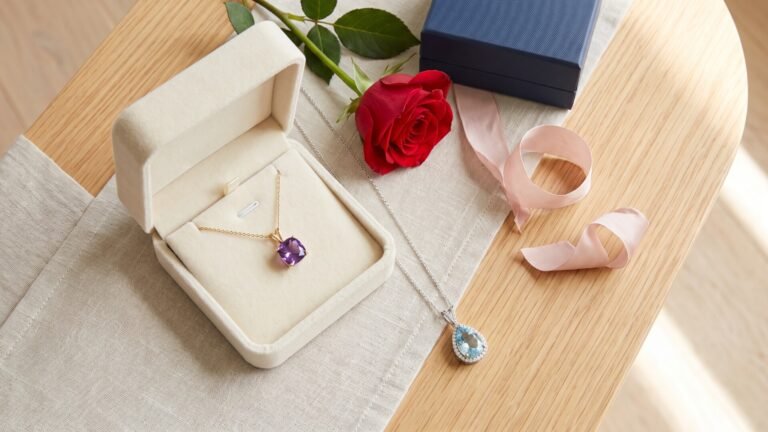
If you are buying for someone else, start with Top 5 Birthstone Necklaces for Valentine’s Day and Birthstone Jewelry Gift Ideas by Relationship. For young recipients, see Children’s Birthstone Gifts, and remember that small jewelry can be a choking hazard for young children.
Frequently Asked Questions About Choosing A Birthstone Necklace
What length birthstone necklace is best?
A princess length of about 17 to 19 inches is the most versatile for pendants. Choose a choker for a high, statement look or a matinee length for layering.
Which birthstones are best for everyday necklaces?
Diamond, ruby, sapphire, aquamarine and amethyst are durable choices. Softer stones such as opal and pearl also work in pendants, which are knocked less than rings, but they need gentler care.
Is a lab-grown birthstone necklace worth it?
Lab-grown stones have the same chemistry as natural ones and are often cheaper. They are a good option if you want a larger or cleaner stone for the money, as long as the seller labels them clearly.
Can I wear a birthstone necklace in the shower?
It is best not to. Water, soap and heat can dull stones and affect some metals, and they are especially bad for opal, pearl, emerald and plated pieces.
How do I know if my birthstone necklace is real?
Ask the seller whether the stone is natural, lab-grown or a simulant and request documentation. A gemological laboratory is the reliable way to confirm identity for a valuable stone.
Should I buy a necklace with my birth month or zodiac stone?
Either is fine; it is a personal choice. See our guide to zodiac versus monthly birthstones to decide.
Which birthstone is the most durable for a necklace?
Diamond (April), ruby (July) and sapphire (September) are the hardest and the toughest of the common birthstones, so they are the lowest-maintenance options. Pendants are gentler on stones than rings, which is why softer gems like opal and pearl are more practical here.
What metal is best for a birthstone necklace?
There is no single best option. 14k gold balances durability and gold content, sterling silver is budget-friendly but tarnishes, and platinum is the most durable and the most expensive. Choose based on budget, skin sensitivity and the color that suits the stone.
Is it safe to buy a birthstone necklace for a child?
Keep it simple: choose a sturdy chain with a secure clasp, a bezel or other protective setting and a durable stone. Small stones and parts can be a choking hazard for young children, so these pieces suit older kids and should be supervised.
Conclusion
The right birthstone necklace balances personal style, stone quality, metal, length and how it will actually be worn. Whether you prefer a personalized multi-stone design, a minimalist solitaire or an artisan piece, check the stone’s identity and treatments, choose a setting that protects it, and keep the return policy handy. Browse the full Birthstone Jewelry Guide for rings, bracelets and more.