Birthstone Jewelry Guide
Welcome to the Birthstone Jewelry Guide, our hub for wearing, gifting and styling birthstone jewelry. It covers rings, necklaces, bracelets and earrings, which stones suit which pieces, how to choose a gift, and how to care for what you buy. Each section links to a more detailed guide.
One note on approach: the facts about gemstones (hardness, treatments, care) come from gemology, while the meanings and symbolism come from cultural and spiritual traditions. We keep the two clearly separate, and none of the symbolism here is medical, financial or professional advice.
Why Birthstone Jewelry Matters
Birthstone jewelry is personal. It marks a birth month, a family, or an occasion, and it links to a long tradition of associating gems with months and meanings. A garnet ring might remind you of January, an emerald necklace is traditionally linked with renewal, and pearls are traditionally linked with purity and calm. Those meanings are cultural, but many people enjoy them as part of the story.
Birthstones also come in nearly every color, so it is easy to match a style. The choice that matters most is practical: pick a stone and a setting that suit how you will actually wear the piece. New to the concept? Start with What Are Birthstones? or find your stone in Birthstones by Month.
Birthstones by Month: A Quick Reference for Jewelry Shopping
Before you choose a piece, it helps to know which stone you are shopping for. The table below follows the modern U.S. birthstone list, which was standardized in 1912 by the then-named National Association of Jewelers and has been updated since (tanzanite was added for December in 2002, spinel for August in 2016). Other countries, and the older traditional lists, differ, so if you are buying a gift for someone from another country or family tradition, it is worth asking which list they follow.
| Month | Common modern stones | Typical jewelry fit |
|---|---|---|
| January | Garnet | Rings, pendants and earrings; a durable, widely available red |
| February | Amethyst | Everything; avoid prolonged strong sunlight, which can fade color |
| March | Aquamarine (bloodstone is the traditional alternative) | Pendants and earrings especially; fine in rings with sensible care |
| April | Diamond | The most durable choice for any piece |
| May | Emerald | Pendants and earrings; protective settings for rings |
| June | Pearl, moonstone, alexandrite | Pearl and moonstone suit pendants and earrings; alexandrite is rarer and costs more |
| July | Ruby | Excellent for rings and bracelets |
| August | Peridot, spinel, sardonyx | Peridot suits pendants and earrings; spinel is harder and works well in rings |
| September | Sapphire | Excellent for every piece |
| October | Opal, tourmaline | Opal in protected pieces; tourmaline is more versatile |
| November | Topaz, citrine | Both work well in rings, pendants and earrings |
| December | Turquoise, tanzanite, zircon, blue topaz | Blue topaz is the most durable; tanzanite and turquoise need care |
For the full story behind each month, including alternates and the history of the lists, see Birthstones by Month: Your Complete Guide, and for the cultural symbolism attached to each stone, Birthstone Meanings & Symbolism.
Which Stones Suit Which Jewelry
Hardness on the Mohs scale measures scratch resistance only. Toughness and cleavage matter as well, which is why emerald (7.5-8) needs more care than its number suggests, and tanzanite has a direction of cleavage. Use this table as a starting point; the figures are approximate.
| Birthstone | Approx. Mohs hardness | Rings | Bracelets | Necklaces and earrings |
|---|---|---|---|---|
| Diamond (April) | 10 | Excellent | Excellent | Excellent |
| Ruby (July), sapphire (September) | 9 | Excellent | Excellent | Excellent |
| Aquamarine (March) | 7.5-8 | Good | Good | Excellent |
| Garnet (January) | About 6.5-7.5 | Good | Good | Excellent |
| Amethyst (February), citrine (November) | 7 | Good | Good | Excellent |
| Peridot (August) | 6.5-7 | Fair | Fair | Good |
| Emerald (May) | 7.5-8 | Protective setting advised | Fair | Good |
| Tanzanite (December) | 6.5-7 | Occasional wear, protective setting | Fair | Good |
| Opal (October) | About 5.5-6.5 | Occasional wear | Occasional wear | Good |
| Pearl (June) | 2.5-4.5 | Occasional wear | Occasional wear | Good (put on after perfume and hairspray) |
Birthstone lists vary by country and organization, and some months have more than one stone (June has pearl, alexandrite and moonstone; December has tanzanite, turquoise, zircon and blue topaz, for example). For a deeper dive into quality, treatments and reports, see our Education & Buying Guides hub.
Rings: Everyday and Statement Wear
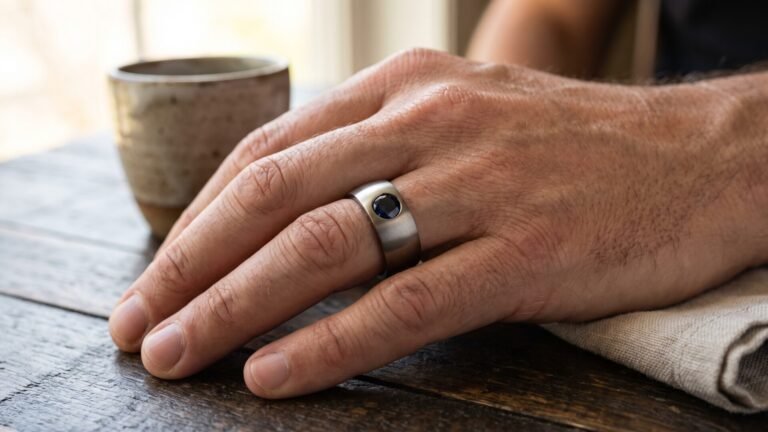
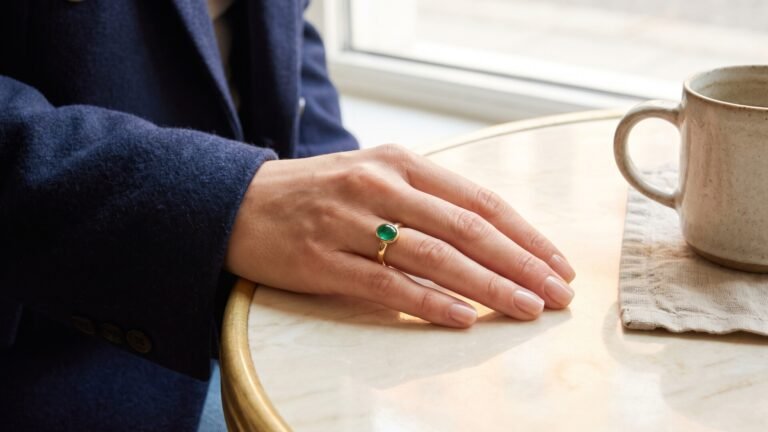
Rings are the most visible way to wear a birthstone, and the most exposed to knocks.
- Solitaire rings put the stone’s color and cut on show, for a classic or minimalist look.
- Halo and cluster rings add sparkle and surround the center stone with a protective frame.
- Stackable rings let you mix months, stones and metals. Keep softer stones away from harder neighbors that could scratch them.
Choosing for durability: For daily wear, favor diamond, sapphire, ruby, aquamarine, garnet or amethyst, set in gold, platinum or sterling silver, and use bezel or halo settings for more fragile stones. Tradition links some stones with particular fingers, such as sapphire with wisdom or ruby with passion, but these are folklore rather than fact. For a detailed look at one ring style, see Garnet Engagement Rings: Symbolism and Style.
Ring fit and everyday habits: A ring that spins or slips is more likely to be knocked, so have your finger professionally sized, ideally later in the day when fingers are at their largest and not when your hands are cold. Remove rings for the gym, gardening, cleaning with household chemicals and swimming in chlorinated pools. Even hard stones can chip along an edge if struck sharply, and chlorine and bleach can damage some metals and the finish on plated pieces. Most jewelers can resize a ring once, but eternity bands and some channel-set designs are difficult or impossible to resize, so check before you buy.
Necklaces: Personal and Statement Pieces
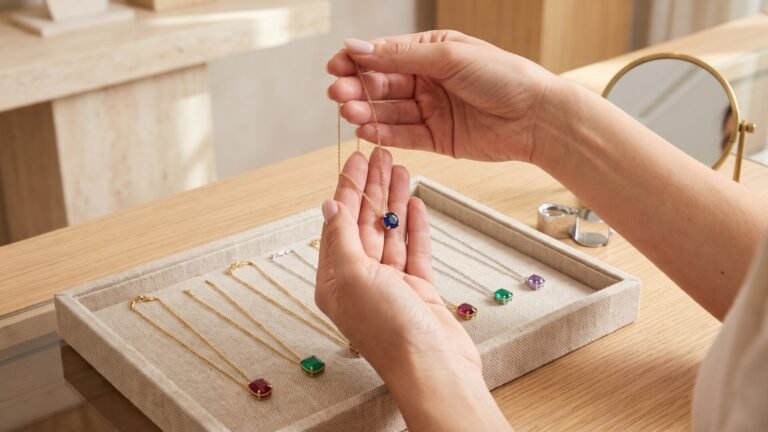
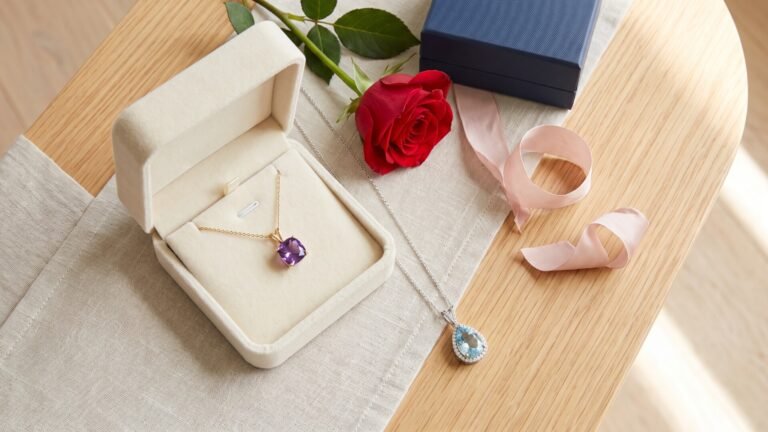
Pendants are knocked less than rings, so they suit a wider range of stones, including softer ones like opal and pearl.
- Single-stone pendants are easy, versatile everyday pieces.
- Multi-stone and layered necklaces can represent family members or milestones.
- Lockets and charm necklaces combine a stone with a photo or initial.
Read more in these guides:
- How to Choose the Perfect Birthstone Necklace
- Top 5 Birthstone Necklaces for Valentine’s Day
- Mother’s Birthstone Necklaces: Top 7 Personalized Designs
- Best Birthstone Necklaces for Moms: Top 7 Multi-Stone Designs
- Custom Birthstone Initial Charms
Bracelets and Bangles
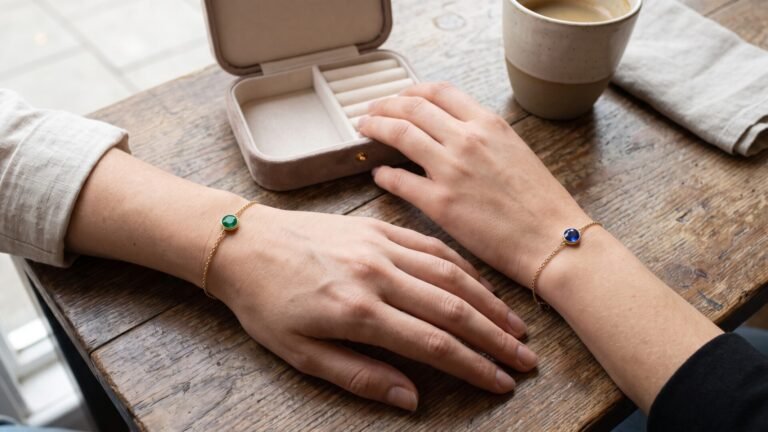
Bracelets are versatile and good for stacking, but the wrist takes more knocks than the neck, so choose durable stones or accept a bit more care.
- Charm bracelets let you add stones for different months or milestones over time.
- Tennis bracelets repeat the same stone along the length, usually in a more formal style.
- Bead, leather and cuff bracelets suit casual or bohemian looks. Natural stone beads can be dyed or stabilized, so ask about disclosure.
For shopping help and gift ideas, see Best Online Shops for Birthstone Bracelets, Best Personalized Birthstone Bracelets for Graduation Gifts and Raw & Uncut Birthstone Cuffs.
Earrings: Subtle and Statement Styles
Earrings are light and low-impact, so they are an easy way to wear softer stones such as opal or pearl.
- Studs are easy for daily wear and often the most affordable.
- Drop and dangle earrings show off a stone’s color and cut.
- Hoops with charms allow layering of multiple stones.
Check the earring backs and posts for secure fit and metal quality, especially if you have sensitive ears. For group gifts, see Best Birthstone Earrings for Bridesmaids.
Metals and Settings Explained
The metal and the setting protect the stone and shape how the piece looks and wears. A quick guide to the common options:
| Metal | What it is | Good to know |
|---|---|---|
| 10k gold | 41.7% pure gold | Harder and more affordable; a paler, less rich yellow |
| 14k gold | 58.3% pure gold | Popular balance of durability, color and cost in the U.S. |
| 18k gold | 75% pure gold | Richer color and softer; best with protective settings |
| Platinum | Usually 90-95% platinum alloys | Dense, durable and naturally white; usually costs more than gold |
| Sterling silver | 92.5% silver | Affordable and bright; tarnishes and can scratch more easily |
| Gold vermeil and gold-plated | A thin layer of gold over another metal (vermeil requires sterling silver as the base) | Lower cost, but the gold layer wears with time and contact |
- Prong settings show the most of the stone and let in the most light, but the stone sits higher and the prongs can catch or wear.
- Bezel settings wrap the stone’s edge in metal. They are the best protection for softer or more brittle stones such as emerald, opal or tanzanite.
- Halo settings surround the center stone with smaller stones, adding sparkle and a degree of edge protection.
- Channel and flush settings sit the stone low in the band, which suits active wearers.
If you have sensitive skin, look for hypoallergenic metals such as platinum or higher-karat gold, and ask sellers about nickel content in plated or white-gold pieces. Hallmarks (stamps such as 14K or 925) are a quick way to check what you are buying, though they are not a substitute for a trustworthy seller.
Choosing the Right Stone and Setting
- Know what you are buying: natural, lab-grown or simulant. Lab-grown stones are real gems with the same chemistry as natural ones. See Natural vs. Lab-Grown Birthstones.
- Ask about treatments: heat treatment of sapphire and ruby, oiling of emerald, and irradiation of blue topaz are common. A reputable seller discloses them.
- Look at the cut: it controls sparkle and durability. See Gemstone Shapes and Cuts Explained.
- Pick the metal: gold (10k, 14k, 18k), platinum and sterling silver are common. Plated and vermeil finishes can wear over time.
Styling and Trends in Birthstone Jewelry
Birthstone jewelry has moved well beyond the single stone on a chain. Popular directions include personalized charms and initials combined with a small stone (see Custom Birthstone Initial Charms), raw and uncut stones set in organic cuffs and rings (see Raw & Uncut Birthstone Cuffs), and matching sets that mark friendships, graduations or family members.
- Layering: combine two or three necklaces of different lengths, usually with a shorter chain carrying the stone and a longer one that is plainer.
- Stacking: mix a birthstone ring with plain bands in the same metal so the stone is the focus.
- Mixing months: pieces that combine the stones of several family members can look cohesive if you keep to one or two metals and similar cuts.
- Color pairing: warm stones such as garnet, citrine and topaz tend to suit yellow and rose gold, while cool stones such as aquamarine, sapphire and blue topaz often look crisp in white metals. This is a matter of taste rather than a rule.
Where to Buy Birthstone Jewelry
Our guide to the top online stores for authentic birthstone jewelry compares well-known sellers. Whichever you choose, check the return policy, the metal purity and whether the stone is natural or lab-grown. If sourcing matters to you, read Ethical Gemstones: How to Shop Sustainably and jewelry brands that give back.
Birthstone Jewelry for Gifts
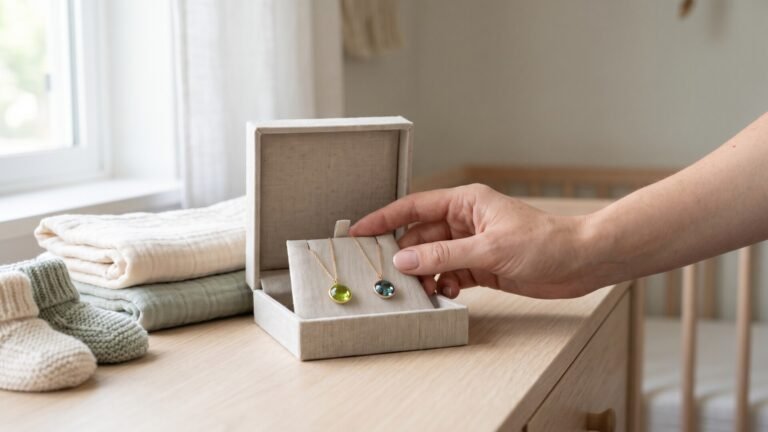
Birthstone jewelry makes a personal gift for birthdays, anniversaries, graduations and milestones. A garnet necklace for January, an emerald bracelet for May, or a June gift chosen from pearl, alexandrite or moonstone all work. Multi-stone pieces can represent family members.
- Match the stone to the recipient’s birth month, or ask which list they follow; modern and traditional lists differ in several months.
- Choose a style they already wear, and a stone that suits the jewelry type.
- Add a short note about the stone’s meaning, presented as tradition.
- Keep a gift receipt and any lab report.
More ideas: Birthstone Jewelry Gift Ideas by Relationship, Graduation Birthstone Jewelry, The Best Friend Birthstone Guide and Children’s Birthstone Gifts & Birthday Ideas. For young children, choose age-appropriate designs, because small jewelry can be a choking hazard.
Reading Labels, Certificates and Return Policies
Clear product information is the best sign of a trustworthy jewelry seller. Before you pay, look for the following:
- Stone identity and origin type: the listing should say natural, lab-grown or simulated (for example cubic zirconia or glass), not just “birthstone” or “created”.
- Treatment disclosure: heat, oil, dye, fracture filling and irradiation affect value and care. Under U.S. Federal Trade Commission jewelry guidelines, significant treatments should be disclosed.
- Carat weight and dimensions: carat measures weight, not size, and different stones of the same weight look different. Millimeter dimensions give a better picture of how the stone will look.
- Metal and karat marking: for example 14K gold, platinum or 925 sterling silver.
- Independent lab reports: for higher-value diamonds and gems, a report from a respected laboratory such as GIA adds assurance. For small, inexpensive birthstone pieces a report is rarely provided and not expected.
- Return, resizing and warranty terms: check the return window, who pays for return shipping, and whether personalized pieces can be returned at all, since many custom items are final sale.
Prices vary widely depending on the stone, size, metal and brand, from inexpensive sterling silver pieces with small lab-created or simulated stones to fine jewelry in gold or platinum with natural gems. Because retail prices change often, we recommend comparing several sellers and reading our comparison of online birthstone jewelry stores rather than relying on a single quote.
Caring for Your Birthstone Jewelry
- Hard, durable stones (diamond, sapphire, ruby) need little more than regular gentle cleaning with warm water, mild soap and a soft brush.
- Softer or porous stones (pearl, opal, turquoise) should avoid harsh chemicals, perfume and prolonged heat, and are better wiped than soaked.
- Ultrasonic and steam cleaners are not safe for every stone, including emerald, opal, pearl and any fracture-filled gem.
- Annual check-ups by a jeweler catch loose prongs and worn clasps before a stone is lost.
For a worked example, see how to care for your garnet jewelry. If you follow crystal traditions, we also cover cleansing and charging birthstones, which is a belief-based practice rather than a gemological requirement.
More From This Site
- Birthstone Meanings & Symbolism for the traditions behind each stone.
- Zodiac Birthstones for astrology and gemstones.
- Gemstones: Your Ultimate Guide to Nature’s Sparkle for individual stone profiles.
- Education & Buying Guides for quality, treatments and certificates.
- Birthstones by Month to find the stone for each month.
Frequently Asked Questions About Birthstone Jewelry
Which birthstone jewelry is best for everyday wear?
Diamond, ruby, sapphire, aquamarine, garnet and amethyst are the most practical. For rings in particular, choose harder stones and secure settings.
Which birthstones need extra care?
Pearl, opal, turquoise, emerald and tanzanite need more careful wear. They are softer, more sensitive to chemicals or heat, or more prone to damage from knocks.
Is it better to wear my birth month stone or my zodiac stone?
Either is fine; it is a matter of preference. See our zodiac guide to compare the two.
Can I buy a lab-grown birthstone piece?
Yes. Lab-grown stones are real gemstones with the same chemistry as natural ones and are often cheaper. They should be labeled clearly by the seller.
What is a good birthstone gift for a child?
Choose a durable stone and an age-appropriate design. Small jewelry can be a choking hazard for young children, so check the recommended age.
Do birthstones have special powers?
No scientific evidence supports healing or other powers. Meanings are cultural traditions and beliefs, and are not medical advice.
What metal is best for birthstone jewelry?
14k gold and platinum are popular for durability, while sterling silver is a budget-friendly option that tarnishes more easily. If you have sensitive skin, choose platinum or higher-karat gold and check for nickel.
How do I know what size birthstone ring to buy?
Have your finger measured by a jeweler, ideally later in the day, and check whether the style can be resized. For a gift, a ring in a stackable or adjustable style is often a safer choice.
Should I choose a natural or lab-grown birthstone?
Both are real gemstones. Natural stones carry rarity and origin, while lab-grown stones usually cost less. What matters is that the seller labels the stone clearly.
Final Thoughts
The best birthstone jewelry is a piece you will actually wear: a stone that suits the jewelry type, a secure setting, and a seller who is clear about what you are getting. Use this hub as a map: pick a jewelry type, check the durability table, then follow the links for buying and care guidance.