The Healing Properties of Amethyst
More Than Just a Pretty Stone
Amethyst, the deep purple variety of quartz, has been worn for thousands of years, and across cultures people have attached calming, protective and spiritual meanings to it. From ancient royalty to modern crystal enthusiasts, it has always been a stone with personality and a story.
This guide explains what people traditionally believe about amethyst’s healing properties, where those beliefs come from, and, just as important, what is and is not supported by science. You will also find practical advice on wearing, buying and caring for amethyst. Whether you believe in crystal energy or are simply curious about its legacy, you should come away with a clear picture.
Important: Everything described below as “healing” reflects cultural tradition, folklore and personal belief. There is no scientific evidence that amethyst or any other crystal treats, prevents or cures any physical or mental health condition, and it is not a substitute for medical care. If you are struggling with anxiety, sleep or pain, please speak with a qualified health professional.
Amethyst at a Glance
| Property | Details |
|---|---|
| Mineral | Quartz (silicon dioxide), purple variety |
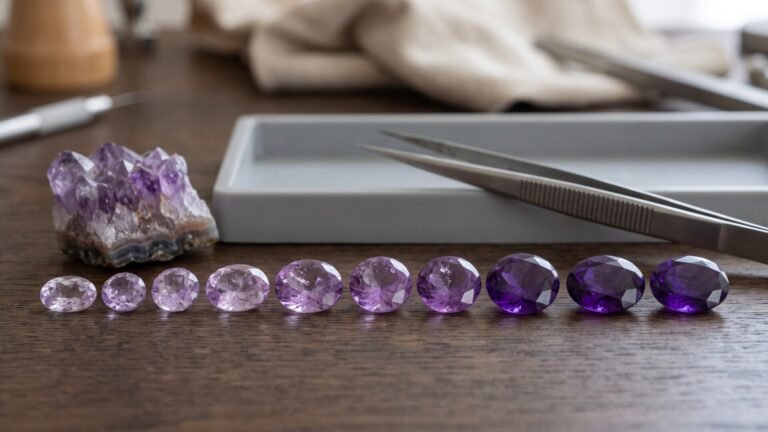
| Color | Light lilac to deep royal purple, from bluish purple to reddish purple; often shows zones of darker and lighter color |
| Mohs hardness | 7 |
| Toughness | Good, but it can fracture with a hard knock or sudden temperature change |
| Birthstone | February |
| Common sources | Brazil, Uruguay and Zambia, among others |
| Care | Warm soapy water; avoid steam, heat and prolonged strong light |
For a full factual profile, see our main Amethyst: Meaning, Properties, Uses & Value guide.
A History of Amethyst
Amethyst has a long history that stretches across civilizations:
- Ancient Egyptians: They carved amethyst into amulets and jewelry, and it was associated with protection.
- Greeks and Romans: The word “amethyst” comes from the Greek amethystos, meaning “not intoxicated.” According to tradition they believed the stone protected against drunkenness, and wine vessels were sometimes decorated with it.
- Medieval Europe: Clergy and royalty used amethyst in rings, crosses and crowns, linking its purple color to piety and spiritual authority.
Historically, amethyst was ranked among the most valuable colored gemstones, until large deposits were found in Brazil and prices fell. Today it is one of the most accessible gemstones, which is part of why it is so widely worn. For more on meaning and history, read our guide to amethyst meaning, history and symbolism.
Symbolism of Amethyst
Amethyst is rich in symbolism. Traditionally it is associated with:
- Calm and clarity: Purple has long stood for peace and wisdom, so amethyst is traditionally linked to a clear, steady mind.
- Spiritual growth: Many people associate it with intuition, meditation and a sense of higher awareness.
- Protection: It has historically been worn as a protective talisman.
- Sobriety and self-control: Greek tradition connected it with avoiding overindulgence.
Wearing a piece of amethyst can be a personal reminder of these ideas, which is where many people find its value.
Healing Properties: What People Believe
In crystal-healing practice, amethyst is described as a “mind, body and spirit” stone. The following are beliefs, not proven effects:
Mental and Emotional Beliefs
- Calm: Practitioners say holding or wearing amethyst creates a feeling of calm. Any relaxation that people experience is likely tied to ritual, mindfulness and personal expectation, rather than to a measurable property of the stone.
- Clarity and focus: It is traditionally said to “clear mental fog” and support decision-making.
- Emotional balance: Many people keep it nearby on emotionally busy days as a grounding object.
Physical Beliefs
Some crystal traditions describe amethyst as helpful for headaches, restful sleep or circulation, and it is common to place a stone under a pillow or near the head. These are folk beliefs only. There is no scientific evidence that amethyst relieves headaches, treats insomnia, improves blood flow or detoxifies the body. If you like keeping a stone by your bed as part of a calming bedtime routine, that is a personal choice, but persistent symptoms deserve proper medical advice.
Spiritual Beliefs
- Meditation aid: Amethyst is often used during meditation to support focus and intuition. See the role of amethyst in meditation for ideas.
- Chakra connection: In chakra systems it is linked to the third eye and crown chakras and the ideas of inner peace and higher awareness.
- Energy protection: Many believe that placing amethyst in a room wards off negative energy.
If you want a deeper dive into the belief side, our companion article on healing properties of amethyst crystals covers the traditions in more detail.
What Science Does and Does Not Say
Gemologically, amethyst is simply quartz colored purple. The color comes from trace iron within the crystal combined with natural irradiation, and some stones show angular zones of lighter and darker purple. These are the facts that determine how amethyst looks, how it wears and what it costs. The healing and energy claims are a separate matter of belief. Separating the two helps you buy sensibly: you are paying for color, clarity, cut and craftsmanship, not for a measurable effect on your health.
How Amethyst Forms
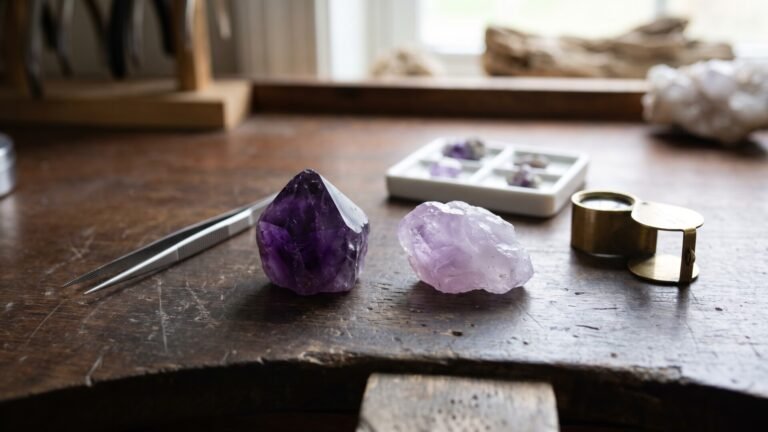
Amethyst grows as quartz crystals inside cavities in volcanic rock, which is why so much of it is sold as geodes and crystal clusters. Over time mineral-rich fluids deposit silica in these hollows, and trace iron plus natural radiation give the crystals their purple. This formation also explains why the color of one crystal can vary from tip to base, and why faceted stones are often cut to hide or showcase zoning.
Using Amethyst in Daily Life
Jewelry
- Necklaces and pendants: A good everyday option, since pendants take less knocking than rings.
- Rings: At Mohs 7 with good toughness, amethyst suits rings, though a bezel or protective setting is wise for daily wear, and rings can still pick up scratches from harder materials such as household dust (which contains quartz).
- Earrings and bracelets: Low-risk, comfortable choices for casual daily wear.
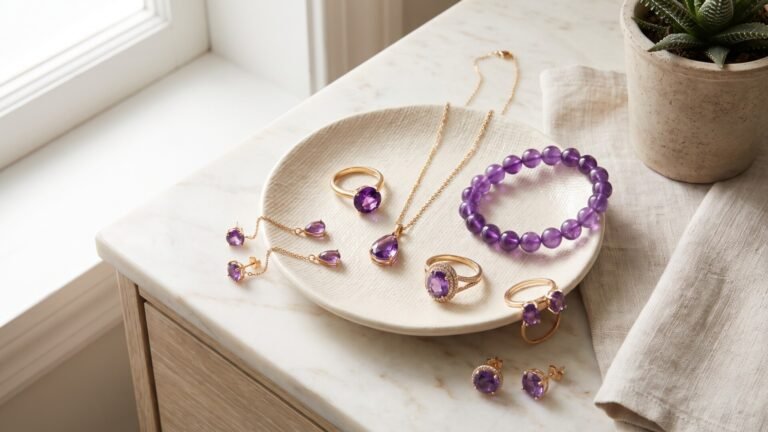
Browse 10 amethyst jewelry pieces for every budget and our picks for the best amethyst earrings and necklaces if you are shopping.
Home and Workspace
- Desk decor: A small amethyst cluster or geode makes a calm, decorative accent.
- Bedroom: Some people like a stone on the nightstand as part of a wind-down routine.
- Meditation corner: A larger crystal can serve as a focal point for practice.
Carrying Stones
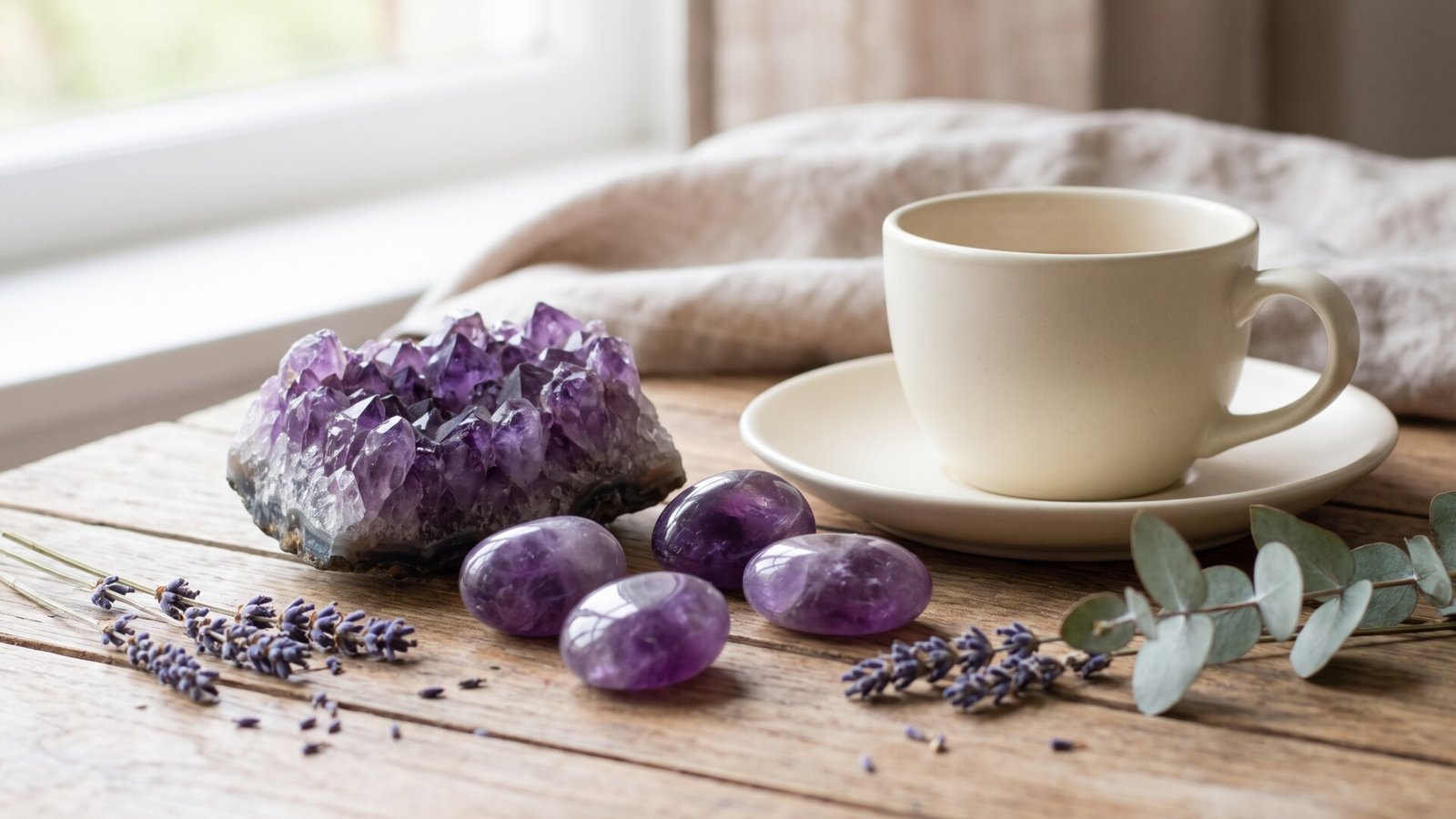
- Pocket or worry stones: A small polished amethyst can be a comforting object to hold.
- Crystal grids: Often combined with other stones such as rose quartz or citrine, which symbolize love and motivation in crystal tradition.
A Mindful Way to Use Amethyst
If you enjoy crystal practice, you do not need to make health claims to get value from it. Many people use amethyst simply as an anchor for a short mindfulness habit: hold a smooth stone while you breathe slowly for a few minutes, keep a small piece on your desk as a cue to pause between tasks, or wear a pendant as a reminder of an intention you have set. The benefit, if any, comes from the habit of pausing, not from the stone itself, and that is a perfectly good reason to enjoy it.
Amethyst in Fashion and Lifestyle
Amethyst is as much a style stone as a symbolic one. Jewelry designers use it in everything from minimalist rings to chunky statement pendants, and its purple suits silver, white gold and yellow gold alike. Because it is affordable, you can choose larger stones than you could in, say, sapphire or ruby.
Caring for Your Amethyst
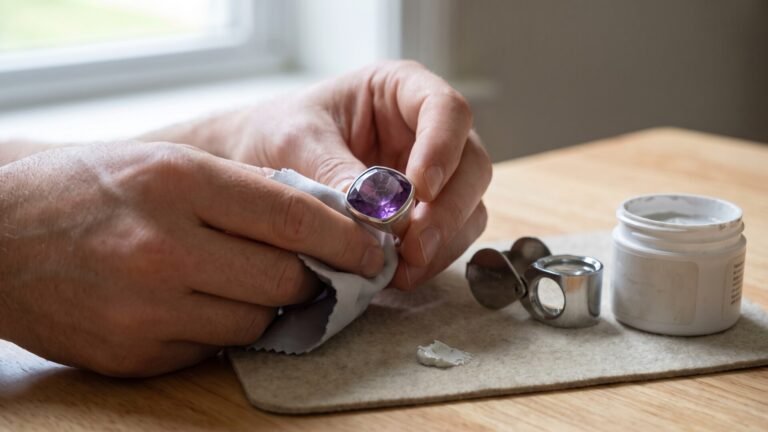
- Clean gently: Use warm water, mild soap and a soft brush. Ultrasonic cleaners are usually safe unless the stone is dyed or fracture-filled; steam cleaning is not recommended.
- Avoid heat and prolonged strong light: Sudden temperature changes can crack amethyst, and long exposure to strong light can fade some stones. Heating amethyst is also how some citrine is produced, so heat can permanently change the color.
- Avoid harsh chemicals: Strong acids and alkaline cleaners can damage the surface.
- Store separately: Keep it in a soft pouch to avoid scratches from harder gems.
Some people “recharge” amethyst in moonlight or on a selenite slab as part of a personal ritual. That is a matter of belief; physically, the stone only needs gentle cleaning. For step-by-step help, see how to safely clean amethyst without damaging the polish and how to remove scratches from amethyst jewelry.
Buying Amethyst: What to Know
- Color: The richest, evenly distributed purples are the most prized. Very pale stones are more affordable.
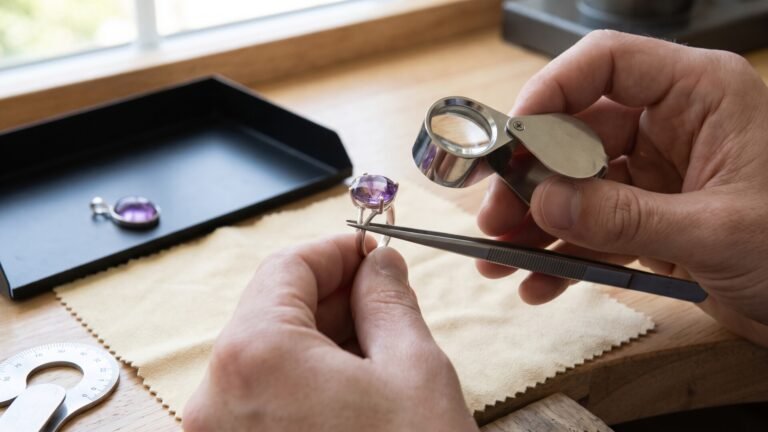
- Clarity: Good amethyst is usually eye-clean; many visible cracks lower both beauty and durability.
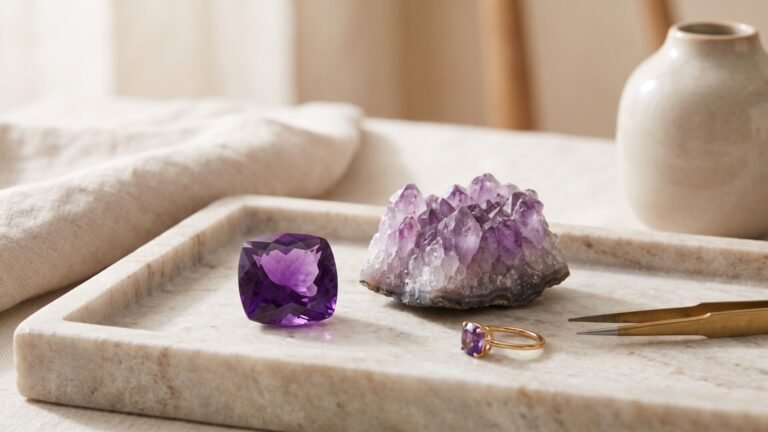
- Cut: Faceted stones suit jewelry, while raw clusters and geodes suit decor.
- Treatment and lookalikes: Amethyst can be heated to produce citrine, and synthetic (lab-grown) amethyst exists. Lab-grown amethyst has the same chemistry as natural but is not the same as a simulant such as purple glass. Ask sellers to disclose whether a stone is natural or lab-grown. See how to spot fake amethyst jewelry and amethyst vs purple quartz.
- Sourcing: Many amethysts come from Brazil, Uruguay and Zambia. If ethical sourcing matters to you, ask about the seller’s sourcing policies and avoid claims that are not backed by a named certification or standard.
Read amethyst color variations ranked from best to worst and amethyst color variations and symbolism to learn how color affects value, and what a chevron amethyst is if you see banded white-and-purple stones.
Amethyst, Citrine and Ametrine
These three are all quartz, which causes frequent confusion. Citrine is the yellow to orange variety, and much of the citrine sold in jewelry is produced by heating amethyst. Ametrine is a natural combination of amethyst and citrine in a single crystal, with its best-known source being Bolivia. Knowing this helps you spot misleading labels: a stone sold as “natural citrine” may well be heat-treated amethyst, so ask about treatment.
Common Myths About Amethyst
- Myth: Amethyst can cure insomnia, headaches or anxiety. No scientific evidence supports this. It is a folk belief.
- Myth: Deep purple is always better. Color is only one factor. A very dark stone can look nearly black in low light, so evenness and brightness matter too.
- Myth: All purple stones are amethyst. Purple glass, dyed quartz and other minerals are sometimes sold as amethyst, so check the seller’s description.
- Myth: Amethyst never fades. It is stable for everyday wear but can lose color with prolonged strong light or heat.
- Myth: Amethyst needs to be “recharged” to work. Recharging is a ritual, not a physical requirement; the stone only needs ordinary care.
Choosing Amethyst as a Gift
Amethyst is an easy, meaningful gift. It is the February birthstone, it is widely available at reasonable prices, and its meaning of calm and clarity suits graduations, new jobs and milestone birthdays. A few practical tips:
- For a birthday: A pendant or stud earrings are low-maintenance and flatter most styles.
- For someone who loves crystals: A polished palm stone or small cluster can be a thoughtful non-jewelry option.
- For daily wear: Choose a secure setting with a bezel or low prongs, and mention care basics such as avoiding strong sunlight.
- Check the return policy: Ask the seller to state whether the stone is natural or lab-grown and confirm returns in case the color looks different in person.
Questions to Ask Before You Buy
- Is the amethyst natural or lab-grown, and is that stated in writing?
- Has it been heated or otherwise treated?
- What are the carat weight, dimensions and color description?
- Is the metal and setting suitable for daily wear?
- What is the return policy if the color looks different in daylight?
Fun Facts About Amethyst
- The purple color comes from trace iron combined with natural irradiation in the quartz.
- Ancient Greeks associated it with sobriety, as its name suggests.
- It was once ranked among the most valuable colored gemstones.
- It is the birthstone for February, making it a popular birthday gift. See the Birthstones by Month hub for every month.
How to Spot Overblown Healing Claims
Because amethyst is so popular in crystal shops and online listings, you will often see claims that go well beyond tradition. A few warning signs help you separate harmless folklore from marketing:
- Medical language. Words such as “cures,” “treats,” “detoxifies” or “heals” a named condition are not supported by evidence for any crystal.
- Guaranteed results. Honest sellers describe meanings as traditions or personal beliefs, not promises.
- Vague “energy” statements presented as fact. Energy and vibration claims in crystal practice are belief-based and cannot be measured in the stone.
- No gemological detail. A seller who cannot say whether a stone is natural amethyst, lab-grown amethyst, glass or dyed quartz is not a reliable source of other claims either. Our guides to spotting fake amethyst and fake amethyst jewelry walk through the checks.
Amethyst Varieties and Trade Names You May Meet
Shopping for amethyst, you will run into a few terms. Some describe real differences in color or pattern; others are marketing labels, so treat them as descriptions of appearance rather than proof of origin.
- “Deep Russian” or “Siberian” color: A trade description for rich purple with red or blue flashes. Today it usually describes a color grade, not a guaranteed source, so ask for documentation if origin matters to the price.
- Rose de France: A name for pale, pinkish-lilac amethyst. It is lighter and usually less expensive than deep purple stones.
- Chevron (banded) amethyst: Material with white and purple zones, often cut as beads or cabochons. Our article on chevron amethyst explains how it forms and how it is valued.
- Geodes and clusters: Amethyst-lined cavities sold as decor rather than jewelry. Color is usually lighter than in faceted gems, and the crystals are not graded the same way.
For a closer look at shades and how they relate to value, see amethyst color variations and symbolism.
How to Talk About Amethyst Respectfully With Others
If you are giving amethyst to someone who values its spiritual side, you do not need to argue about science, and you do not need to make claims you cannot support. A simple note works well: say what the stone means to you or what tradition associates it with, such as calm, clarity or protection, and let the recipient decide what it means to them. If the recipient is dealing with a health concern, the most caring gift is the stone plus encouragement to see a professional, not a promise that the stone will help.
The same approach works when sharing amethyst with children: treat it as a pretty, collectible mineral with an interesting story, and keep small loose stones away from very young children, who may put them in their mouths.
Amethyst Healing Properties FAQs
Does amethyst really have healing properties?
Within crystal-healing tradition, amethyst is believed to promote calm, clarity and spiritual awareness. There is no scientific evidence that it treats or cures any condition, so it should never replace medical care.
What are the traditional beliefs about amethyst?
Traditionally, amethyst is associated with calm, protection, sobriety, intuition and spiritual growth. These meanings come from folklore, Greek tradition and modern crystal practice.
Can amethyst help with sleep or anxiety?
Some people keep amethyst by the bed or carry it as a calming object, but studies have not shown that the stone itself improves sleep or reduces anxiety. Any comfort is likely due to routine and personal meaning. Speak to a health professional about persistent problems.
Is amethyst durable enough for daily wear?
Amethyst rates 7 on the Mohs scale and has good toughness, so it suits rings, pendants and earrings. Protect it from hard knocks, sudden temperature changes and prolonged strong light.
Can amethyst fade in sunlight?
Yes. Prolonged exposure to intense light or heat can fade some amethyst, so avoid leaving it on a sunny windowsill.
Can I clean amethyst in an ultrasonic cleaner?
Usually yes, unless the stone is dyed or fracture-filled. Steam cleaning is not recommended. Warm soapy water is the safest method.
What month is amethyst the birthstone for?
Amethyst is the birthstone for February.
Wear the Calm
Amethyst is a gemstone with a long story and an easy-to-wear price. Its healing reputation belongs to the realm of tradition and personal meaning, and it is best enjoyed that way: as a beautiful, affordable stone that carries centuries of symbolism, not as a medical tool. Choose it for its color, wear it with care, and let its meaning be whatever you want it to be.
To keep exploring, visit the main Amethyst guide, read about amethyst’s history and symbolism, or browse the full Gemstones hub.