Birthstone Pendants for New Moms: Why Peridot and Alexandrite are Rising Stars
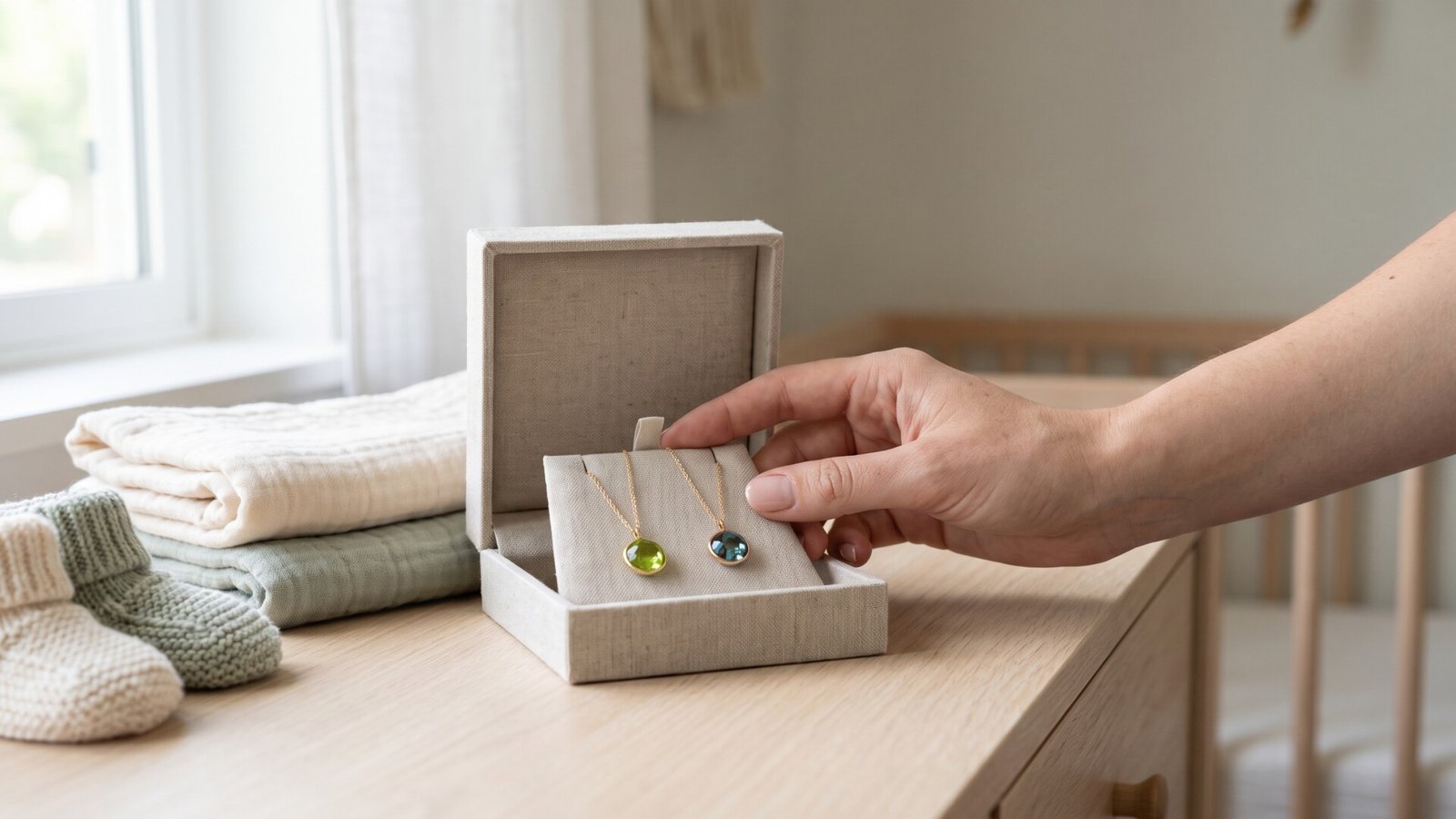
A birthstone pendant is one of the most popular gifts for a new mom: small enough to wear every day, personal enough to mark the baby’s arrival, and easy to expand if the family grows. This guide looks at two stones that draw particular attention for this purpose, peridot (the modern August birthstone) and alexandrite (a June birthstone), and shows how to choose a pendant that is both beautiful and practical with a baby in the house.
Choosing well means weighing more than color. A pendant worn by the parent of a newborn has to cope with spit-up, constant hand washing, babywearing and small grabbing hands, so the setting, the chain and the stone’s durability matter as much as the stone itself.
Below you will find the gemstone facts for both stones, a safety checklist for wearing pendants around infants, an honest explanation of natural versus lab-created alexandrite, and seven pendant style examples with realistic USD price ranges. If you want the full background first, see our guides to peridot and alexandrite.
Push presents and new mom gifts have moved well beyond generic gold chains. Many jewelers report growing interest in personalized pieces such as birthstones, initials and engravings, which tell a story rather than simply making a statement. Understated gold designs with small gemstone accents also suit the way most new parents actually live: simple, comfortable and wearable every day.
Within this trend, peridot and alexandrite are two stones worth a closer look. Peridot is bright, earthy and generally affordable. Natural alexandrite is rare and famous for its color change, and most alexandrite pieces sold at accessible prices use lab-created stones, which we explain in detail below.
This guide explains why these two stones attract so much attention, how to choose the right pendant for the new mom in your life, and which pendant styles to look for at retailers such as Blue Nile, James Allen and Brilliant Earth.
Quick answer: for an August baby, a peridot solitaire in a protective bezel is the practical, affordable choice. For a June baby, alexandrite is the more distinctive option, but only a certified natural stone is truly rare, and a lab-created alexandrite is the better value for everyday wear. Whichever you pick, choose a short, sturdy chain and take the pendant off for feeding, bathing and sleep (see the safety section below). Not sure which stone belongs to which month? Start with our June birthstone and August birthstone guides.
Why Birthstone Pendants Are the Perfect Gift for New Moms
Birthstone jewelry is one of the most popular categories in modern gifting for a simple reason: it celebrates the mother and the baby at the same time. It is more personal than a generic necklace or bracelet because it connects directly to the child she has just welcomed.
Three practical reasons explain why birthstone pendants, in particular, have become a go-to gift for new mothers:
Emotional symbolism. A pendant worn near the heart, with the baby’s birthstone, is a tangible reminder of the day her life changed forever. Every time she reaches up to touch it — during a late-night feeding, a stressful work call, a quiet moment of exhaustion — she’s reminded of why she does it all.
Everyday wearability. New moms don’t need more stuff. They need something small, dainty, and easy to wear through every season of life — nursing, sleep deprivation, and all. A delicate birthstone necklace goes on, stays on, and becomes part of who she is.
The expandable jewelry concept. Many modern designs allow for future children’s birthstones to be added later. A vertical name necklace with modular pendants can grow as the family grows — making it the ultimate “future-proof” gift.
Need a refresher on birthstones by month? Visit our Birthstones by Month Hub, or browse the wider gemstones guide.
Why Peridot Is Becoming a Favorite for New Moms
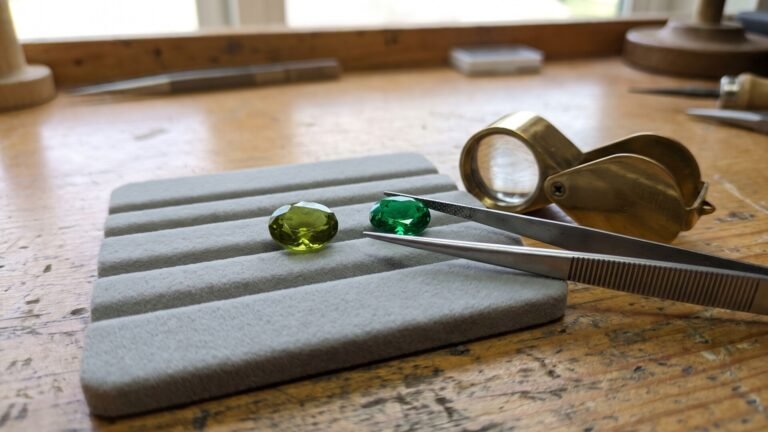
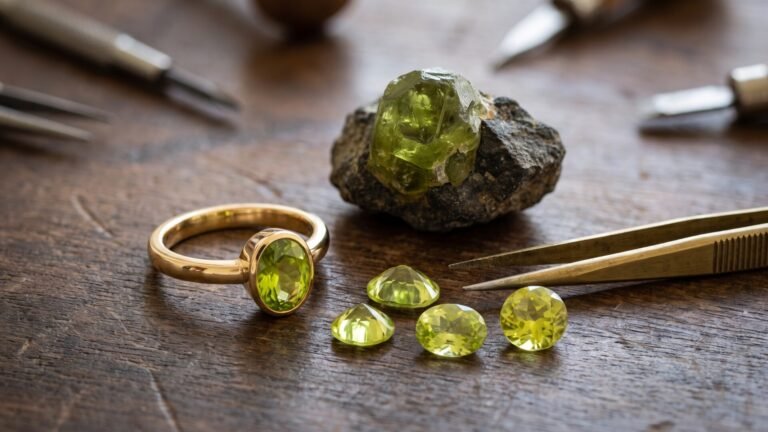
A well-cut peridot in daylight has a fresh, yellowish-green glow that is hard to mistake for any other gemstone. Tradition holds that ancient Egyptians called it the “gem of the sun,” and the stone has been mined for thousands of years, including on the island of Zabargad in the Red Sea. Today most peridot comes from sources such as Arizona, Pakistan, Myanmar and China.
Beyond the color, many gift-givers are drawn to peridot’s traditional symbolism. Please note that the beliefs below are folklore and modern tradition, not gemological or medical fact.
Symbolism of peridot (tradition, not fact). In popular gem lore, peridot is linked with renewal, joy and good fortune, and its fresh green is often read as a sign of new beginnings. Historical accounts describe it being worn as a protective talisman, sometimes set in gold. These are cultural associations that make the stone a meaningful, sentimental choice; they are not proven effects, and a pendant should be bought for how it looks and what it means to the giver. For more on the lore, see our peridot meaning guide.
Peridot is also the modern August birthstone, which makes it the natural choice for a baby born in August, and it is the traditional gift stone for a 16th wedding anniversary. If the baby was born in another month, our birthstones by month hub shows the matching stone, and you can still choose peridot simply for its color.
Why the green color stands out. Peridot’s light, fresh green is prized for its cheerful, vibrant appearance — not for being deep or dark. It pairs beautifully with sterling silver or white gold for a crisp, modern look, or with yellow gold for warm contrast. Its natural, organic feel suits the current taste for earthy gemstones and understated gold designs. Peridot is sometimes nicknamed the “evening emerald” because its green holds up well under artificial light, although it is a different mineral (olivine) from emerald (beryl) and a very different price.
Durability & wearability. Peridot ranks 6.5–7 on the Mohs scale, which measures scratch resistance only. That is softer than quartz-based household dust (about 7), so a peridot can slowly pick up fine scratches and a dull surface over years of daily wear. Mohs is not the same as toughness: peridot can chip if knocked on a hard edge. A pendant is a good format for it because, unlike a ring, it rarely takes direct knocks, and a bezel setting protects the edges. Peridot is also sensitive to heat, strong acids and some cleaning chemicals, and should not go in an ultrasonic or steam cleaner because inclusions can cause damage. It is generally sold untreated, but ask the seller to confirm any treatment in writing. Our guide to wearing peridot in the shower or while sleeping covers daily-wear habits in more detail.
Best metal pairings. Peridot’s bright green pops against white gold or platinum for a modern, crisp look. Yellow gold adds a warm, rich contrast that feels classic and luxurious.
Why Alexandrite Appeals to Luxury Buyers
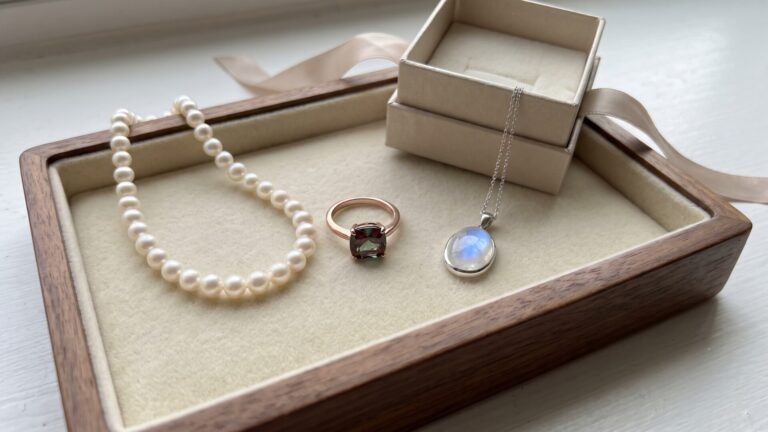
If peridot is the accessible, cheerful choice, alexandrite is the rarer gem that captures the imagination of luxury buyers. It is one of the three modern June birthstones, alongside pearl and moonstone, so it suits a June baby especially well (see our June birthstone guide).
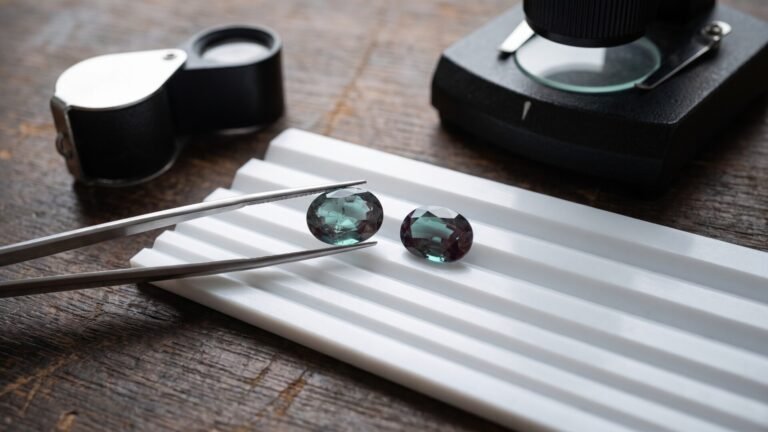
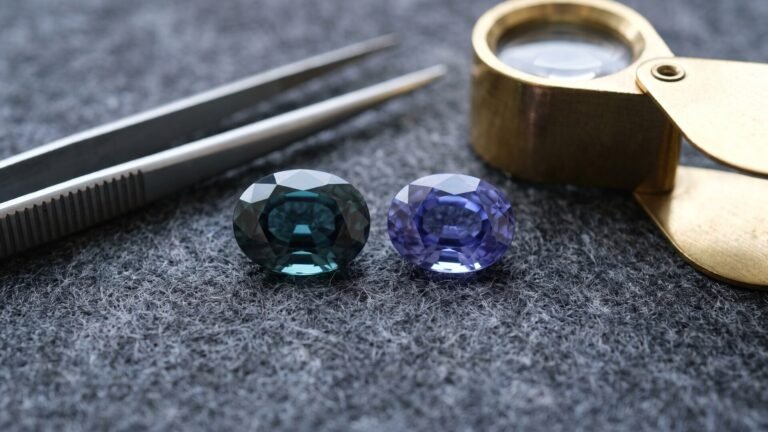
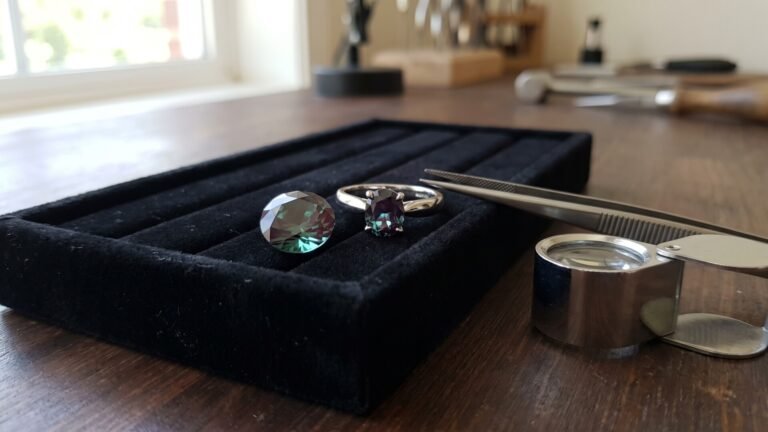
The rare color-changing effect. Alexandrite is a variety of the mineral chrysoberyl, renowned for its color change: bluish-green to green in daylight or fluorescent light, and purplish-red to red in incandescent light or candlelight. It is often described as “emerald by day, ruby by night.” The cause is trace chromium, which absorbs light so that the stone transmits both green and red, and which color dominates depends on the light source. The strength of the change varies widely, and fine, strong color change is what drives price.
Symbolism for new mothers (tradition, not fact). In modern gem lore and metaphysical writing, alexandrite is associated with transformation, balance and new beginnings. A stone that visibly changes color makes an obvious metaphor for the change of becoming a parent, which is why some gift-givers choose it. These are symbolic associations, not scientific or medical claims, and the stone has no proven effect on mood, health or recovery. Russian tradition also links the stone to the era of Tsar Alexander II, and it is said to have been named for him; see our alexandrite guide for the history.
Why luxury buyers love alexandrite. Natural alexandrite is genuinely rare. It needs both beryllium and chromium, elements that rarely occur together in the same rocks. The original Ural Mountain deposits in Russia were largely depleted within a few decades of discovery, and later finds in Sri Lanka, Brazil, India, East Africa and elsewhere have kept the stone scarce, especially in sizes above one carat with a strong color change. Good natural stones are priced accordingly, often thousands of dollars per carat and far more for fine material.
That scarcity is exactly why you must read the fine print. Natural alexandrite is a collector’s stone, and it should not be treated as a guaranteed investment: prices depend on size, color change and origin documentation, and resale is difficult. Most alexandrite pendants priced in the hundreds of dollars contain lab-created alexandrite, which is a perfectly legitimate and lovely choice when it is described honestly. A lab-created stone has the same chemistry and crystal structure as the natural mineral; it simply formed in a laboratory.
Best metal pairings. The metal does not change how the stone changes color; that depends on the light and on the stone itself. White gold and platinum give a cool, crisp frame that makes the green daylight color look clean, while yellow gold adds warmth that can flatter the redder tones seen in evening light. Alexandrite is rated 8.5 on the Mohs scale and has good toughness, so it is among the more durable colored gemstones for everyday wear.
For more on this rare gemstone, read our Alexandrite Guide.
Peridot vs Alexandrite: Key Facts at a Glance
| Feature | Peridot | Alexandrite |
|---|---|---|
| Birth month | August | June (with pearl and moonstone) |
| Mineral | Olivine (forsterite) | Chrysoberyl |
| Mohs hardness | 6.5–7 | 8.5 |
| Toughness | Fair to good; can chip and scratch | Good |
| Color | Yellowish to olive green | Green in daylight, purplish-red in incandescent light |
| Usual treatment | Generally untreated | Natural stones may be oiled or filled; lab-created stones are untreated but man-made |
| Cleaning cautions | No ultrasonic or steam; avoid heat and acids | Warm soapy water; ask a jeweler before using ultrasonic |
| Typical pendant cost (USD) | About $250–900 in 14k gold | About $350+ lab-created; natural quality stones in the thousands |
Remember that Mohs hardness only describes resistance to scratching. A stone can be hard yet brittle, or softer yet tough, so the setting and your daily habits matter at least as much as the number.
Natural vs Lab-Created Alexandrite: What You Are Really Buying
This is the most important buying point on this page. There are three different things sold under the word “alexandrite,” and the price gap between them is enormous.
- Natural alexandrite. Mined chrysoberyl with a color change. Rare, expensive, and best bought with a report from a recognized gemological laboratory that confirms the species and the color change.
- Lab-created (synthetic) alexandrite. Real chrysoberyl with the same chemistry and crystal structure as the natural mineral, grown in a laboratory. It shows a genuine color change and costs a fraction of natural stone. This is what most affordable alexandrite jewelry contains. For example, James Allen lists a 14k gold lab-grown alexandrite birthstone charm at around $355 at the time of writing.
- Simulants. Imitations, usually synthetic color-change corundum or glass, that mimic the look but are a different material. These are not alexandrite at all. A very cheap “alexandrite” sold at a few dollars per carat or on a marketplace without a clear description is almost always a simulant.
Lab-created alexandrite is an honest, durable choice for a pendant that will see daily use, provided the seller labels it clearly. Be cautious of any listing that calls a stone “natural” without a laboratory report. To learn the visual differences, read our guide to natural vs lab-created alexandrite, and see how the stone compares with another color-changing gem in alexandrite vs sapphire color change. If the baby was born in June, our comparison of pearl vs alexandrite vs moonstone can help you decide between the three June stones.
Wearing a Pendant Safely Around a Baby
A beautiful pendant is only a good gift if it is safe for the person wearing it and the baby she is holding. Infants grab at anything near their faces, and a chain or small stone can become a hazard. These are general safety precautions rather than medical advice; talk with your pediatrician if you have specific concerns.
- Grab and strangulation risk. Babies instinctively grab and pull on necklaces during feeding and cuddling. A long chain can wrap around a small hand or neck, so keep chains short and consider a safety or breakaway clasp that releases under force.
- Choking risk. A baby can put a pendant, a loose bead or a dislodged gemstone in the mouth. Choose smooth, low-profile pendants in secure bezel settings, avoid small prong-set stones that can work loose, and have a jeweler tighten settings before the first wear.
- Nursing and bottle-feeding. Many new mothers simply take the pendant off for feeds, because a dangling piece swings directly into the baby’s face and hands. Some choose a pendant tucked under clothing, or wear it only outside feeding times.
- Babywearing and skin contact. Hard stones and metal edges can press against a baby in a carrier or against the baby’s face. Flat, smooth designs are more comfortable than dangling shapes.
- Sleep. Do not sleep with a necklace on, especially when sharing a room or bed-sharing is a concern. Remove it before bed.
- Allergies and sensitive skin. Newborn and postpartum skin can be reactive. Solid 14k gold or platinum is less likely to irritate than plated or nickel-containing alloys.
- Not a toy or teether. Never give a baby fine jewelry to hold or chew, even “just for a moment.” Fine jewelry is not designed or tested as a children’s product.
If daily wear around a newborn is a concern, an excellent alternative is to give the pendant as a keepsake to be worn for outings and special occasions, and to store it safely in between.
How to Choose the Perfect Birthstone Pendant for a New Mom
Before you browse designs, make a few key decisions. This will save you time and ensure the final piece feels made for her.
Step 1: Choose the stone. Peridot (August; traditionally linked with renewal and good fortune) or alexandrite (June; traditionally linked with transformation) — or the baby’s actual birth month stone if neither August nor June. Some parents also choose the mother’s own birthstone, or a color she loves.
Step 2: Decide on pendant style.
- Solitaire pendants — Minimalist elegance. One stone, one chain. Perfect for everyday wear.
- Halo pendants — Diamond-enhanced sparkle. A halo of small diamonds around the birthstone adds brilliance and perceived value.
- Initial + birthstone designs — Personalization trend. Combine the baby’s initial with their birthstone in one pendant.
- Family birthstone pendants — Expandable future-proof design. A single necklace that can hold multiple birthstones for future children.
Step 3: Pick the right chain length. 16-inch chains sit at the base of the neck (choker style); 18-inch is the most popular and versatile, falling just below the collarbone; 20-inch chains offer layered styling options. With a baby in the house, shorter is generally safer: a pendant that hangs low swings into a baby’s reach while she is held or fed.
Step 4: Choose the right metal. Yellow gold (warm, classic, traditional); white gold (modern, cool, versatile); rose gold (soft, feminine, romantic); platinum (premium durability, heirloom quality).
Top 7 Birthstone Pendants for New Moms
These seven pendant styles are examples of designs that suit new mothers, chosen for wearability, safety around infants and sentimental value. Where we name a retailer, we have confirmed that it sells that general kind of piece, but stock, stone quality and prices change often, so always check the current listing, the stone’s treatment and origin (natural or lab-created), and the return policy before buying.
1. Minimalist Peridot Solitaire Pendant
Why it’s trending: Subtle luxury with a calming green tone. A single faceted peridot in a bezel or prong setting allows the stone’s natural beauty to speak for itself.
Best for: Everyday wear, minimalist moms, first-time birthstone gift.
Recommended piece: Blue Nile lists peridot solitaire pendants in 14k gold, for example a 7mm round peridot in a four-prong setting that we saw on sale for about $385 (regular price about $550). If you have an infant at home, a bezel setting is generally the more secure and smoother option than prongs.
Price: $250–900
[Available at Blue Nile (stone certification + metal options)]
2. Alexandrite Halo Pendant
Luxury appeal: A color-changing alexandrite center stone surrounded by a halo of small diamonds. The contrast between the stone’s shifting green and red hues and the diamonds’ white sparkle is breathtaking.
Best for: Push presents, milestone gifts, luxury-seeking buyers.
Recommended piece: James Allen sells lab-grown alexandrite birthstone charms in 14k gold (we saw an emerald-cut bezel-set example at around $355, sold without a chain), and a diamond halo is a common way to dress up the same idea. Treat this as a style example rather than a specific product. A halo with a certified natural alexandrite sits at the top of the price range, so ask for a gemological laboratory report and confirm the listing says natural or lab-grown.
Price: $350–3,500+
[Available at James Allen (360° viewing + certification)]
3. Family Birthstone Pendant Necklace
Emotional meaning: A single pendant that holds 2–5 birthstones in a row or circle. Represent mother + children, or all of the family members.
Best for: Growing families, moms with multiple children, as a gift that can expand.
Recommended piece: Style example: multi-stone pendants with one birthstone per child are a popular family jewelry format. Brilliant Earth sells single-stone birthstone pendants in 14k gold (their peridot and diamond birthstone pendant started at about $750 when we checked), and we have not verified a specific multi-stone family pendant there, so check the current catalog and any custom options. Ask each retailer about its sourcing and recycled-metal claims directly.
Price: $700–2,800
[Available at Brilliant Earth (expandable for future children)]
4. Peridot & Diamond Layered Pendant
Styling idea: Layering remains a popular jewelry look. A layered set includes two or three chains of different lengths, for example one short chain with a peridot charm and one longer chain with a small diamond. With a baby, multiple chains tangle easily and give small hands more to pull, so keep layers short and few, or save this look for outings.
Best for: Fashion-forward moms, those who love curated looks.
Recommended piece: Blue Nile lists peridot pendant necklaces with diamond accents in 14k gold, which can be combined with a second chain for this look. Initial and custom options vary, so check the current listing.
Price: $600–2,200
[Available at Blue Nile (mix-and-match chain styles)]
5. Alexandrite Initial Charm Necklace
Personalized luxury trend: A small gold disc or bar with the baby’s initial on one side and an alexandrite set on the other — or a charm with an alexandrite dangling below an initial.
Best for: Sentimental gifting, first Mother’s Day, “just because” gifts.
Recommended piece: Style example: pair an engraved initial disc with a lab-grown alexandrite charm. James Allen sells lab-grown alexandrite birthstone charms, but we have not verified a combined initial-and-alexandrite pendant, so check what customization is currently offered. The color change adds a small bit of interest as the light changes through the day.
Price: $400–3,000
[Available at James Allen (custom engraving + stone selection)]
6. Floating Birthstone Pendant
Why it’s popular: The “floating” design — a gemstone suspended on an almost invisible bar or tiny bezel — is a clean, modern look. The stone appears to hover on the chain, with no visible metal surrounding it.
Best for: Understated elegance, minimalist moms, younger new moms.
Recommended piece: Style example: a single faceted peridot in a very slim bezel or tube setting on a fine chain. Brilliant Earth sells peridot birthstone pendants in 14k gold, but we have not verified a pendant sold specifically as “floating,” so look for the design by name or by description. Very thin settings protect the stone less, so choose a bezel that fully covers the stone’s edges if you want everyday durability.
Price: $500–1,800
[Available at Brilliant Earth (ethically sourced stones + recycled gold)]
7. Diamond Accent Family Necklace
Heirloom potential: A multi-stone pendant with alternating birthstones and small diamonds. The diamonds add sparkle and elevate the piece from everyday jewelry to heirloom status.
Best for: Anniversaries, luxury push presents, milestone gifts for a second or third child.
Recommended piece: Style example: a multi-stone pendant or bar necklace with alternating birthstones and small diamonds, in 14k gold or platinum. Blue Nile sells peridot and diamond pendants, but we have not verified a specific multi-birthstone family necklace, so use this as a guide to what to ask a jeweler about. Pieces with several small stones need regular prong and setting checks, and are best worn when the baby is not reaching for them.
Price: $1,500–7,500
[Available at Blue Nile (certified stones + premium metals)]
Best Birthstone Pendants for New Moms
| Pendant Style | Best For | Price Range (USD) | Style Type | Retailer to Browse |
|---|---|---|---|---|
| Minimalist Peridot Solitaire | Everyday wear, minimalist moms | $250–900 | Minimalist | Blue Nile |
| Alexandrite Halo Pendant | Luxury gifting, push presents | $350–3,500+ | Elegant, sparkly | James Allen |
| Family Birthstone Pendant | Multiple children, expanding families | $700–2,800 | Sentimental, expandable | Brilliant Earth |
| Peridot & Diamond Layered | Fashion-forward moms, trendy styling | $600–2,200 | Layered, dimensional | Blue Nile |
| Alexandrite Initial Charm | Personalized gifts, sentimental | $400–3,000 | Modern luxe, intimate | James Allen |
| Floating Birthstone Pendant | Minimal elegance, younger moms | $500–1,800 | Clean, architectural | Brilliant Earth |
| Diamond Accent Family Necklace | Heirloom gifting, milestone gifts | $1,500–7,500 | Premium, heirloom | Blue Nile |
Best Pendant Styles by Mom Personality
The Minimalist Mom: Solitaire peridot pendant or floating birthstone design. White gold or platinum. Clean lines, one stone, no diamonds — just quiet elegance.
The Luxury Mom: Alexandrite halo pendant or diamond-accent family necklace. Platinum or white gold. She wants the best, and she wants it to be seen.
The Trendy Mom: Layered necklace set with peridot charm and diamond accent. Mix metals — yellow gold, white gold, and rose gold all in one look.
The Sentimental Mom: Family birthstone pendant or alexandrite initial charm necklace. Rose gold. She wants a piece that tells her family’s story.
Why Peridot and Alexandrite Are Gaining Attention
Visual appeal is part of the story, and we do not have hard sales data to quantify the trend. Unique colors photograph beautifully online, and both peridot’s vibrant lime-green and alexandrite’s dramatic color change are irresistible in flat lays and “what’s on my necklace” reels.
There’s also a cultural shift toward unique gemstones. Buyers no longer want the same diamond pendant as everyone else. They want stones that reflect their personality — and peridot and alexandrite offer fresh, distinctive alternatives to sapphire, ruby, and emerald.
Storytelling also matters. Peridot’s traditional association with renewal and alexandrite’s association with transformation give gift-givers a simple, heartfelt message to attach to the present. These are symbolic ideas, not claims about health or recovery, and they work best as a personal note on a card rather than as a promise about what the stone will do.
And both offer luxury without feeling traditional. They’re modern alternatives to the standard birthstone lineup, perfect for the mom who wants something different.
Common Mistakes to Avoid
Choosing oversized pendants for daily wear. A large, heavy pendant can be uncomfortable for a new mom who is already carrying a baby, a diaper bag, and exhaustion. Stick with delicate, lightweight designs.
Ignoring chain durability and safety. A beautiful pendant on a flimsy chain is likely to break when a baby or toddler yanks it, and a strong chain that does not release can be a hazard. Look for chains around 1mm thick with a secure lobster clasp, and consider a breakaway or safety clasp while the baby is young.
Confusing natural, lab-created and simulant stones. For natural alexandrite, insist on a gemological laboratory report. For lab-created alexandrite, choose a seller that says so clearly. Be wary of very cheap “alexandrite,” which is usually color-change synthetic corundum or glass. For peridot, ask the seller to confirm it is genuine peridot and not green glass or a dyed stone, and to disclose any treatment.
Choosing trendy styles without timeless appeal. A neon leather cord might be fashionable today, but a solid gold pendant is forever. Prioritize classic metals and simple silhouettes.
Overcrowding family pendants with too many stones. More than five small stones on a single pendant can look cluttered. For larger families, choose a circle design or a longer bar that spreads stones out.
Caring for Birthstone Pendants
Cleaning. A soft brush, mild dish soap and lukewarm water are the safest method for both stones. Rinse well and dry with a soft cloth. Do not use ultrasonic or steam cleaners on peridot, and ask a jeweler before using them on alexandrite, especially natural stones that may have been treated. Avoid household cleaners, chlorine, hot water and acids, and do not soak the piece for long periods. Read more in is peridot safe to wear while showering or sleeping.
Storage. Store each necklace separately to avoid scratching. Use original boxes or a compartmentalized jewelry case with soft lining.
Maintenance. Have clasps and gemstone settings inspected annually by a jeweler. Peridot (Mohs 6.5–7) can scratch and chip; alexandrite (Mohs 8.5) is harder and tougher but still benefits from annual checks. Put the pendant on after lotion, sunscreen, hair spray and perfume, and take it off for exercise, swimming, cooking and bathing the baby.
Special care for alexandrite. Keep the pendant away from harsh chemicals, store it in a soft pouch, and clean it gently. Lab-created alexandrite is untreated and robust, but any stone can chip if struck, so remove the piece during rough activities. To confirm your stone is what the seller said, a gemological laboratory can test it.
Frequently Asked Questions About Birthstone Pendants For New Moms
Why are peridot and alexandrite popular for new moms?
Peridot is the August birthstone, with a fresh green color and an approachable price. Alexandrite is a June birthstone known for its color change from green to purplish-red. Both are distinctive, photograph well, and carry traditional symbolism of renewal and transformation, which are cultural associations rather than proven effects.
What is the best birthstone pendant for a new mom?
A short, simple solitaire in a bezel setting is the most practical choice for daily wear with a baby. Initial charm necklaces add personalization, family birthstone pendants suit moms with several children, and halo pendants work well as special-occasion push presents.
Are alexandrite necklaces worth the price?
It depends on what you are buying. Natural alexandrite is rare and expensive, and should be bought with a gemological laboratory report. Lab-grown alexandrite has the same chemistry and a genuine color change at a fraction of the price, so it is good value for a keepsake, as long as it is labeled as lab-grown. Cheap stones sold as alexandrite without disclosure are often simulants. No gemstone should be bought as a guaranteed investment.
Can you add more birthstones later?
Yes — if you choose an expandable design. Vertical bar necklaces with modular components or circle pendants with removable tags allow for future children. Solid multi-stone pendants cannot be modified.
What chain length is best for everyday wear?
18 inches is the most popular and versatile. It falls just below the collarbone, works with most necklines, and is comfortable for daily wear.
Is peridot durable enough for daily jewelry?
A peridot pendant is a reasonable choice for regular wear because it takes fewer knocks than a ring, but peridot is only 6.5–7 on the Mohs scale and can scratch or chip. Choose a bezel setting, avoid heat, acids and ultrasonic cleaners, and take it off for rough activity.
What is the best push present necklace?
A dainty necklace with the baby’s birthstone is a very common choice because it is personal, light and easy to wear. Pick a secure setting and a short chain.
Is it safe to wear a pendant while holding or nursing a baby?
Many mothers remove the pendant for feeding and holding because babies grab at necklaces and a chain or small stone can be a strangulation or choking hazard. If you do wear one, choose a short chain, a smooth bezel-set stone and a breakaway clasp, keep it tucked under clothing, and never let a baby hold or chew fine jewelry. Do not sleep in it.
How can I tell if an alexandrite pendant is natural, lab-created or a simulant?
Price and paperwork are the best clues. Natural alexandrite is rare and costs far more, and should come with a gemological laboratory report. Lab-created alexandrite is real chrysoberyl grown in a lab and should be labeled lab-grown. Simulants such as color-change synthetic corundum or glass imitate the look at a very low price. A gemological laboratory can confirm which one you have.
Which month are peridot and alexandrite birthstones for?
Peridot is the modern birthstone for August, and alexandrite is one of the three modern June birthstones, alongside pearl and moonstone.
Final Thoughts
A birthstone pendant is a small, lasting way to mark a big change. Choose the stone that fits the baby’s month or her taste, pick a secure setting and a short sturdy chain, and be honest with yourself about how it will be worn around the baby.
Peridot and alexandrite both fit the current taste for personalized, symbolic and understated jewelry. Peridot is the accessible, cheerful option; alexandrite is the rarer, more distinctive one, and in most affordable pendants it is lab-created. Explore our peridot and alexandrite guides, or browse the full gemstones hub for more ideas.
Whether you start with a peridot solitaire at Blue Nile, a lab-grown alexandrite piece at James Allen, or a birthstone pendant at Brilliant Earth, you are giving more than jewelry: a keepsake that recognizes what she has just done.
Prices are approximate USD ranges and change often. Gemstone information is educational; beliefs about a stone’s meaning are traditions and not medical claims. Natural alexandrite and fine gemstones are not guaranteed investments.