Diamond Meaning: History, Symbolism, Spiritual Properties & Modern Uses
For years, I thought diamonds were just sparkly stones that cost a lot of money. Engagement rings, April birthdays, expensive — but nothing particularly special beyond their price tag and marketing. Then I started learning about their history. The ancient Hindus placed diamonds in the eyes of statues, believing they were created when lightning struck rocks. The Greeks called them adamas — “invincible”. Medieval Europeans believed they could protect against the plague and poison. And today, they are the universal symbol of eternal love.
That’s the thing about diamonds. They’re not just sparkly stones. They’re stones with a story that spans over 2,500 years and connects us to ancient beliefs, royal courts, and the deepest commitments of the human heart.
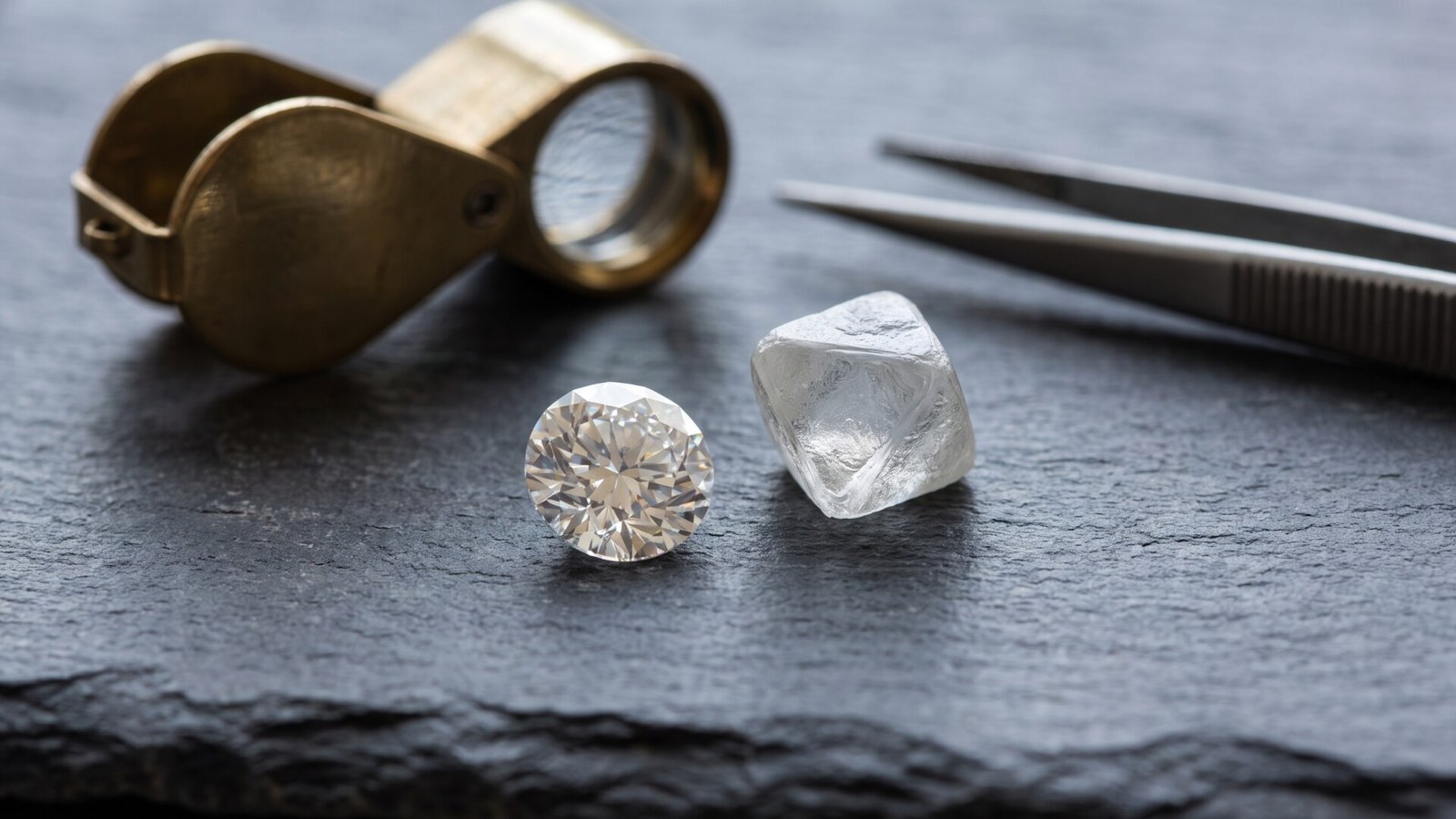
Diamond is pure carbon, crystallized under extreme heat and pressure deep within the Earth. Its name comes from the Greek adamas, meaning “unconquerable” or “invincible”. Its hardness — 10 on the Mohs scale — makes it the hardest natural substance on Earth. But its meaning has grown far beyond that simple definition.
This guide covers everything you need to know about diamond’s meaning: its ancient origins, its symbolism across cultures, its spiritual and emotional associations, its role in astrology and birthstones, and how to choose the right diamond for your needs. Whether you’re an April baby, an Aries or Taurus, or simply someone drawn to the brilliance of this remarkable gem, you’re about to discover why diamond has captivated humanity for millennia.
Diamond at a Glance
Before we dive deep into its meaning, here’s a quick reference guide to diamond’s key characteristics.
| Feature | Details |
|---|---|
| Mineral | Carbon |
| Color | Colorless, yellow, pink, blue, green, black, brown, red, and more |
| Hardness | 10 (Mohs scale) |
| Birthstone Month | April |
| Zodiac Associations | Aries, Taurus |
| Anniversary | 10th & 60th Wedding Anniversary |
| Symbolism | Strength, purity, love, eternity, resilience |
What Does Diamond Symbolize?
Diamond’s symbolism is one of the richest of any gemstone — deeply connected to strength, purity, love, and the unbreakable bonds of human connection.
Eternal Love
Diamonds have become the universal symbol of eternal love and commitment. Their indestructible nature represents a bond that cannot be broken, a love that endures through all challenges. When given as a gift, a diamond expresses commitment, faithfulness, and trust.
Strength and Invincibility
The name “diamond” comes from the Greek adamas, meaning “invincible” or “unconquerable”. This association with strength has persisted for millennia. In Ancient Rome, diamonds stood for courage, strength, and invincibility. The diamond’s exceptional hardness — it can only be scratched by another diamond — symbolizes resilience, endurance, and the ability to withstand any challenge.
Purity and Clarity
Diamonds have long been associated with purity and innocence. Their clarity represents truth, transparency, and the radiant beauty of love. Early Christians believed diamonds embodied purity of the soul, drawing from their clarity and indestructible nature.
Success and Achievement
Diamonds have also symbolized wealth, status, and success. Throughout history, kings and leaders wanted to appropriate the virtues of the diamond — power, invincibility, and peerless quality. Today, diamonds still represent achievement and the pinnacle of quality.
Protection
Over the centuries, diamond was thought to be an antidote to poison, a protection against the plague, and a boon for longevity, strength, beauty, and happiness. Some believed carrying a diamond would provide strength, beauty, and happiness.
Why Diamonds Became the Ultimate Symbol of Forever
Diamond’s association with eternity stems from its physical properties. It is the hardest natural substance on Earth — resistant to scratching, breaking, or changing over time. This indestructibility made it a natural symbol of eternal love and commitment.
The Symbolism Behind Diamond’s Exceptional Hardness
Diamond’s hardness is its most defining physical characteristic. Symbolically, this hardness represents resilience, strength, and the ability to endure any challenge. It’s a stone that doesn’t break under pressure — instead, it emerges even more brilliant.
The History of Diamond Meaning
Diamond is one of the oldest known gemstones, with a history stretching back over 2,500 years. Its meaning has evolved dramatically across civilizations.
Ancient India: The First Known Diamonds
In India as early as 500 BCE, diamonds were already prized. The Hindus, who were known to use diamonds in the eyes of their statues, believed that diamonds were created when bolts of lightning struck rocks. Ancient Indian texts contain references to diamonds as symbols of purity, strength, and immortality.
Diamonds were so precious that they were fit only for kings and great devotees. They represented the sun, symbolizing power, courage, and truth.
Ancient Greece and Rome: The “Tears of the Gods”
The Greeks called diamonds adamas — “invincible”. They believed diamonds were tears of the gods or fragments of stars that fell to Earth, associating them with love, purity, and invincibility. The Romans also revered diamonds. They stood for courage, strength, and invincibility. The Roman writer Pliny the Elder said that diamonds were the most valuable of all gems. The earliest diamond ring we have from Europe was found with a teenage girl buried just south of Rome in about AD 160.
Medieval Europe: Royal Power and Religious Symbolism
In medieval Europe, diamonds were associated with royal power and divine protection. Over the centuries, diamond was thought to be an antidote to poison and to provide protection against the plague. Early Christians believed diamonds embodied purity of the soul. The diamond’s indestructible nature made it a symbol of faithfulness and commitment.
The Modern Era: The Rise of the Diamond Engagement Ring
The tradition of the diamond engagement ring began in 1477, when Archduke Maximillian of Austria proposed to Mary of Burgundy with a diamond ring set with point-cut diamonds in the shape of an “M”. This sparked a trend among European aristocracy.
In 1886, Charles Tiffany introduced the engagement ring as we know it today. The diamond engagement ring became a near-universal symbol of love and marriage.
How Marketing Reinforced Diamond Symbolism
In the 20th century, the diamond industry’s marketing campaigns cemented the diamond’s association with eternal love. The famous slogan “A Diamond Is Forever” created an unbreakable link between diamonds and lasting commitment. Today, the diamond engagement ring has become a near-universal symbol of love and marriage.
How the Meaning of Diamonds Has Changed Over 2,000 Years
| Time Period | Primary Meaning |
|---|---|
| Ancient India | Divine protection; power; courage; truth |
| Ancient Greece | Invincibility; love; purity; star fragments |
| Ancient Rome | Courage; strength; invincibility |
| Medieval Europe | Royal power; protection against poison and plague; purity of the soul |
| 20th Century | Eternal love; commitment; engagement tradition |
| Modern Jewelry Culture | Love; strength; purity; success; achievement |
This evolution reflects broader cultural shifts. In ancient times, diamonds were valued for their physical and protective properties. Today, they’re valued for their emotional and relational symbolism — a shift from external protection to internal commitment.
Diamonds in Different Cultures
Diamonds have been treasured across cultures and continents. Here’s how different traditions have interpreted their meaning.
Indian Traditions
In India, diamonds were used in the eyes of statues and believed to be created when lightning struck rocks. Ancient Indian texts described diamonds as symbols of purity, strength, and immortality. They were fit only for kings and great devotees.
Greek and Roman Beliefs
The Greeks called diamonds adamas — “invincible”. They believed diamonds were tears of the gods or fragments of stars. The Romans believed diamonds stood for courage, strength, and invincibility.
European Royal Symbolism
In medieval Europe, diamonds were associated with royal power and divine protection. They were believed to protect against poison and the plague. Early Christians believed diamonds embodied purity of the soul.
Eastern Traditions
In many Eastern cultures, diamonds are associated with strength, purity, and spiritual enlightenment. They are often used in meditation and spiritual practices.
Modern Western Interpretations
Today, diamonds are widely used in engagement rings, fine jewelry, and spiritual practices. Their association with eternal love, strength, and purity makes them the most popular gemstone for commitment jewelry.
Common Themes Across Cultures
Despite their differences, most cultures share some common beliefs about diamonds:
- They represent strength and invincibility.
- They symbolize purity and clarity.
- They offer protection against negative energy.
- They are associated with love and commitment.
- Their hardness represents enduring resilience.
Key Differences
The main difference lies in the specific application:
- Ancient cultures emphasized divine protection and spiritual power.
- Medieval cultures emphasized royal authority and physical protection.
- Modern cultures emphasize romantic love and commitment.
Spiritual Meaning of Diamonds
Note: The following information is based on cultural and spiritual beliefs, not established scientific fact. Diamond’s spiritual properties are matters of tradition and personal experience, not medical evidence.
Diamond’s spiritual meaning is deeply connected to strength, clarity, and personal transformation.
Strength and Resilience
Diamond is the ultimate symbol of strength and resilience. Its indestructible nature encourages the wearer to face challenges with courage and determination. It’s a stone for those who need to overcome obstacles and emerge stronger.
Mental Clarity
Diamonds are believed to enhance mental clarity and focus. They help cut through confusion, doubt, and illusion, revealing the truth. Clear diamonds encourage a sense of balance, inner peace, and purity.
Confidence and Self-Esteem
Diamonds encourage self-confidence and independence. They help the wearer recognize their own worth and embrace their full potential. A diamond’s brilliance represents the inner light that shines from within.
Spiritual Purity
Diamonds illuminate divine love, purifying us and leading our consciousness to enlightenment. They are associated with the crown chakra, enhancing the connection between mind and body while detaching the mind from unwanted patterns.
Protection
Throughout history, diamonds were believed to ward off the evil eye, sickness, poverty, and death. They were thought to be an antidote to poison and a protection against the plague.
Inner Resilience
Diamonds are believed to improve faith, inspiration, endurance, and concentration. They help the wearer stay focused on their goals and maintain their resolve through difficult times.
Personal Achievement
Diamond’s association with success and achievement makes it a powerful stone for those pursuing ambitious goals. It represents the pinnacle of quality and the rewards of hard work.
Emotional Meaning of Diamonds
Beyond its spiritual associations, diamond carries powerful emotional meaning.
Commitment
Diamond is the ultimate symbol of commitment. Its indestructible nature represents a promise that cannot be broken. When given as a gift, it expresses commitment, faithfulness, and trust.
Trust
Diamonds represent trust and faithfulness. Their clarity symbolizes honesty and transparency in relationships.
Emotional Strength
Diamond encourages emotional strength and resilience. It helps the wearer process difficult emotions without becoming overwhelmed.
Long-Term Relationships
Diamonds symbolize long-term relationships and enduring love. Their indestructible nature represents a bond that can withstand the test of time.
Personal Confidence
Diamonds boost personal confidence and self-esteem. They help the wearer recognize their own worth and embrace their full potential.
Which Diamond Color Best Matches Your Goals?
Not all diamonds are the same. Different colors offer different aesthetics and, for those who believe in crystal energy, different symbolic meanings.
White Diamonds
White diamonds are the most traditional and widely recognized. They symbolize purity, commitment, and eternal love.
- Best for: Engagement rings, traditional jewelry, and expressions of commitment.
- Symbolism: Purity, clarity, innocence, and eternal love.
Yellow Diamonds
Yellow diamonds range from pale champagne to vivid canary yellow. They symbolize joy, energy, and optimism.
- Best for: Bold statement pieces and those who love sunny colors.
- Symbolism: Joy, optimism, energy, and abundance.
Pink Diamonds
Pink diamonds are among the rarest and most valuable. They symbolize romance, love, and tenderness.
- Best for: Romantic gifts and unique engagement rings.
- Symbolism: Romance, love, harmony, and femininity.
Blue Diamonds
Blue diamonds are rare and mysterious. They symbolize peace, calm, and freedom.
- Best for: Collectors and those seeking serenity.
- Symbolism: Peace, calm, serenity, and wisdom.
Green Diamonds
Green diamonds are formed through natural radiation exposure. They symbolize youthful strength, nature, abundance, and prosperity.
- Best for: Unique statements and nature lovers.
- Symbolism: Growth, renewal, abundance, and prosperity.
Black Diamonds
Black diamonds are opaque and striking. They symbolize strength, power, and individuality.
- Best for: Modern, edgy jewelry and men’s accessories.
- Symbolism: Strength, individuality, and mystery.
Champagne and Cognac Diamonds
Champagne and cognac diamonds have warm, earthy tones. They symbolize warmth, sophistication, and understated elegance.
- Best for: Everyday luxury and unique engagement rings.
- Symbolism: Warmth, sophistication, and natural beauty.
| Diamond Color | Traditional Symbolism | Best For | Relative Rarity |
|---|---|---|---|
| White | Purity, commitment, eternal love | Engagement rings, traditional jewelry | Common |
| Yellow | Joy, optimism, abundance | Statement pieces, sunny styles | Rare |
| Pink | Romance, love, tenderness | Romantic gifts, unique rings | Very rare |
| Blue | Peace, calm, serenity | Collectors, serene styles | Very rare |
| Green | Growth, renewal, abundance | Unique statements | Very rare |
| Black | Strength, individuality, mystery | Modern, edgy jewelry | Rare |
| Champagne | Warmth, sophistication | Everyday luxury | Rare |
Diamond and Astrology
Diamond is associated with two zodiac signs: Aries and Taurus.
Aries (March 21 – April 19)
Aries is a fire sign ruled by Mars. Arians are bold, energetic, and courageous. Diamond’s strength and invincibility support Aries’ natural leadership and courage. Its clarity helps Aries make decisions with confidence and focus.
Taurus (April 20 – May 20)
Taurus is an earth sign ruled by Venus. Tauruses are practical, sensual, and devoted. Diamond’s durability and timeless beauty appeal to Taurus’ love of quality and permanence. Its symbolism of commitment resonates with Taurus’ loyal nature.
Venus and Mars Symbolism
Diamond’s association with Venus (Taurus’ ruling planet) links it to love, beauty, and devotion. Its association with Mars (Aries’ ruling planet) links it to courage, strength, and invincibility.
Why Astrologers Associate Diamonds With Leadership and Endurance
Astrologers recommend diamonds for Aries to support their bold, courageous nature and for Taurus to strengthen their commitment and endurance. The diamond’s indestructible nature makes it a powerful stone for both leadership and lasting relationships.
For more details, explore our Aries Birthstone Guide, Taurus Birthstone Guide, and Zodiac Birthstones Hub.
Diamond as a Birthstone
April Birthstone
Diamond is the modern birthstone for April. It has been associated with April for centuries, thanks to its brilliance and durability. Its connection to strength, purity, and eternal love makes it a meaningful choice for those born in the month of spring.
Anniversary Gemstone
Diamond is the traditional gift for the 10th, 60th, and 75th wedding anniversaries. Its symbolism of enduring love and commitment makes it a profound choice for celebrating decades of partnership.
Gift Symbolism
Giving a diamond as a gift carries deep meaning. It symbolizes:
- Eternal love: You are committed forever.
- Strength: You believe in the recipient’s resilience.
- Purity: You value honesty and transparency.
- Success: You wish them achievement and prosperity.
- Protection: You want to keep them safe from harm.
Learn more in our [April Birthstone Guide] and [Birthstone Jewelry Guides].
Diamonds in Jewelry
Diamond’s hardness (10 on the Mohs scale), brilliance, and timeless beauty make it the most popular gemstone for jewelry.
Engagement Rings
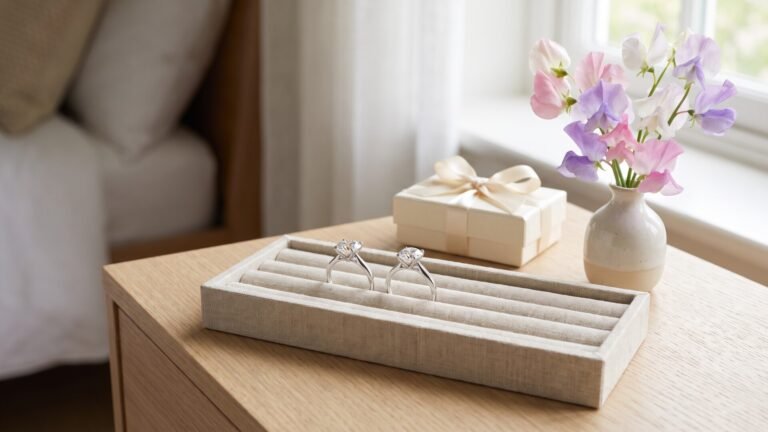
Diamond engagement rings are the most iconic use of the gemstone. The tradition dates back to 1477, when Archduke Maximillian of Austria proposed to Mary of Burgundy with a diamond ring. Today, the diamond engagement ring has become a near-universal symbol of love and marriage.
Wedding Bands
Diamond wedding bands symbolize the eternal nature of marriage. Their indestructible nature represents a bond that can never be broken.
Necklaces
Diamond pendants are elegant and versatile. A single diamond on a simple chain can be worn with anything — from casual to formal.
Earrings
Diamond studs are classic and professional. Drop earrings and chandeliers make a statement for special occasions.
Bracelets
Diamond tennis bracelets are elegant and timeless. Beaded diamond bracelets offer a more casual option.
Men’s Jewelry
Diamonds are increasingly popular in men’s jewelry — signet rings, cufflinks, and minimalist pendants. Black and champagne diamonds are especially sophisticated choices.
Why Diamonds Remain the World’s Most Popular Gemstone
Diamond’s combination of beauty, durability, and symbolism has made it the most popular gemstone in the world. Its hardness makes it suitable for everyday wear. Its brilliance and fire make it captivating. And its association with eternal love and commitment gives it meaning beyond its beauty.
How to Choose a Diamond
When selecting a diamond, consider these factors.
The Four Cs
- Cut: The most important factor in diamond’s brilliance. A well-cut diamond maximizes light return and sparkle.
- Color: For white diamonds, less color is better. The GIA color scale ranges from D (colorless) to Z (light yellow).
- Clarity: Fewer inclusions and blemishes mean higher clarity. Flawless diamonds are extremely rare.
- Carat Weight: Larger diamonds are rarer and more valuable. The price per carat increases significantly at key weight thresholds.
Natural vs Lab-Grown Diamonds
Natural diamonds are formed deep within the Earth over billions of years. Lab-grown diamonds are created in laboratories using advanced technology. Both are chemically and physically identical. Natural diamonds have historical significance and investment value. Lab-grown diamonds offer affordability and ethical peace of mind.
Fancy Color Diamonds
Fancy color diamonds (pink, blue, yellow, green) are rare and valuable. They are graded on a different scale than white diamonds, with intensity of color being the most important factor.
Certification
Always buy diamonds with certification from a reputable laboratory (GIA, AGS, IGI). Certification confirms the diamond’s characteristics and protects your investment.
Ethical Sourcing
Consider the ethical implications of your purchase. Look for diamonds from conflict-free sources and brands with transparent supply chains.
For more details, explore our [Diamond Buying Guide] and Natural vs. Lab-Grown Gemstones]
Caring for Diamond Jewelry
Cleaning
Warm, soapy water and a soft brush are safe for diamonds. Ultrasonic cleaners are generally safe but should be used with caution for stones with visible inclusions. Never use harsh chemicals or abrasive cleaners.
Professional Inspections
Have diamond jewelry professionally inspected and cleaned annually to check settings and prongs. A loose diamond can be lost forever.
Safe Storage
Store diamonds separately from other gemstones to prevent scratching. Use individual soft pouches or compartmentalized boxes.
Everyday Care Tips
Remove diamond jewelry before swimming, showering, or applying lotions and perfumes. Wipe with a soft cloth after wearing to remove oils and residues.
Common Myths About Diamond Meaning
Myth: Diamonds Have Always Symbolized Romantic Love
Diamond’s association with romantic love is a relatively modern development. For most of history, diamonds were symbols of power, strength, and protection. The romantic association became dominant in the 20th century, driven by marketing campaigns.
Myth: White Diamonds Are More Meaningful Than Colored Diamonds
All diamonds carry meaning, regardless of color. White diamonds symbolize purity and commitment. Colored diamonds carry their own symbolism — pink for love, yellow for joy, blue for peace, green for growth. The meaning comes from the color and the intention, not the absence of color.
Myth: Natural Diamonds Have Greater Symbolic Value Than Lab-Grown Diamonds
Lab-grown diamonds carry the same symbolic meaning as natural diamonds. The stone’s meaning comes from its brilliance, hardness, and cultural associations — not its origin. Both natural and lab-grown diamonds represent strength, purity, and eternal love.
Myth: Diamonds Are Indestructible
Diamonds are the hardest natural substance, but they are not indestructible. They can chip or cleave if struck at the right angle. While they resist scratching, they are not immune to damage from impact.
How Diamonds Became the Universal Symbol of Love
Most diamond meaning articles skip this section, but it’s essential to understanding why diamonds dominate the engagement ring market.
Early Royal Engagement Rings
The tradition of the diamond engagement ring began in 1477, when Archduke Maximillian of Austria proposed to Mary of Burgundy with a diamond ring. This sparked a trend among European aristocracy.
Victorian Romance
In the Victorian era, diamonds became associated with romantic love and sentimentality. Queen Victoria’s love of jewelry and her marriage to Prince Albert popularized diamond jewelry as a symbol of devotion.
The Influence of 20th-Century Advertising
In the 20th century, the diamond industry’s marketing campaigns — particularly the slogan “A Diamond Is Forever” — cemented the diamond’s association with eternal love. The campaign created an unbreakable link between diamonds and lasting commitment.
Why Diamonds Dominated the Engagement Ring Market
Diamonds became the engagement ring standard for several reasons: their hardness (representing enduring love), their brilliance (representing the beauty of love), and their rarity (representing the uniqueness of the relationship). Marketing reinforced these associations.
History vs Modern Tradition
While diamonds have been valued for millennia, their association with romantic love is a relatively recent development. The shift from power and protection to love and commitment reflects broader cultural changes — the rise of romantic love as the basis for marriage, the growth of consumer culture, and the power of marketing.
How to Choose the Right Diamond Based on Its Meaning
For Love
Choose a white diamond in an engagement ring or pendant. Its association with commitment and purity makes it the ultimate symbol of love.
For Strength
Choose a white or black diamond. Its hardness and invincibility support resilience and courage.
For Success
Choose a white or yellow diamond. Its association with achievement and abundance supports career goals and prosperity.
For New Beginnings
Choose a white diamond. Its clarity and purity represent fresh starts and new possibilities.
For Luxury Jewelry
Choose a fancy color diamond — pink, blue, or yellow — in a high-end setting. These rare and beautiful stones make the ultimate statement piece.
Final Thoughts: What Does Diamond Really Mean?
Diamond’s meaning has evolved over thousands of years — from a divine talisman in ancient India to a symbol of royal power in medieval Europe to a universal emblem of eternal love today. But through all these changes, one thing has remained constant: diamond represents the highest ideals — strength, purity, and enduring commitment.
Whether you’re drawn to its brilliant sparkle, its ancient history, or its modern spiritual associations, diamond offers something meaningful. It’s a stone that connects us to the past — to the Hindus who saw lightning in its depths, to the Greeks who called it invincible, to the kings who wore it as a symbol of power. And it’s a stone that connects us to ourselves — to our own capacity for strength, clarity, and lasting commitment.
The most powerful meaning of diamond, however, is personal. It’s the meaning you assign to it. It’s the intention you set when you wear it. It’s the reminder you give yourself to be strong, speak your truth, and honor your commitments.
So whether you choose a white diamond for purity, a pink diamond for romance, or a yellow diamond for joy, choose the diamond that resonates with you. Because the stone’s meaning is ultimately what you make of it.
Related Guides
- April Birthstone Guide
- Aries Birthstone Guide
- Taurus Birthstone Guide
- [Diamond Buying Guide]
- Natural vs. Lab-Grown Gemstones
- [Fancy Colored Diamonds Guide]
- [Engagement Ring Guides]
- [Crystal Meanings Hub] (coming soon)
Frequently Asked Questions About Diamond Meaning
What is the spiritual meaning of diamonds?
Diamonds are spiritually associated with strength, mental clarity, confidence, spiritual purity, protection, inner resilience, and personal achievement. They’re believed to enhance clarity, encourage self-confidence, and illuminate divine love.
Why do diamonds symbolize eternal love?
Diamonds symbolize eternal love because of their indestructible nature. Their hardness represents a bond that cannot be broken, and their brilliance represents the beauty of lasting commitment. The association was reinforced by modern marketing campaigns.
Do colored diamonds have different meanings?
Yes. White diamonds symbolize purity and commitment. Yellow diamonds symbolize joy and optimism. Pink diamonds symbolize romance and love. Blue diamonds symbolize peace and serenity. Green diamonds symbolize growth and renewal. Black diamonds symbolize strength and individuality.
Is a lab-grown diamond symbolically different from a natural diamond?
No. Lab-grown diamonds carry the same symbolic meaning as natural diamonds. The stone’s meaning comes from its brilliance, hardness, and cultural associations — not its origin. Both natural and lab-grown diamonds represent strength, purity, and eternal love.
Which zodiac signs are associated with diamonds?
Diamonds are associated with Aries and Taurus. They support Aries’ bold, courageous nature and Taurus’ commitment and endurance.
What does gifting a diamond symbolize?
Giving a diamond symbolizes eternal love, strength, purity, success, and protection. It’s a gesture of deep commitment and belief in the recipient’s worth.
Is there scientific evidence for diamond's spiritual properties?
No. Diamond’s spiritual and healing properties are matters of cultural tradition and personal experience, not established science. Its meaning comes from thousands of years of human belief, not from measurable physical effects.
Why are diamonds associated with engagement rings?
The diamond engagement ring tradition began in 1477 when Archduke Maximillian of Austria proposed to Mary of Burgundy with a diamond ring. It became a near-universal symbol of love and marriage.
Ready to find your diamond? Browse our collections below.
[Shop Diamond Jewelry at Blue Nile]
[Shop Diamond Rings at James Allen]
[Shop Ethical Diamonds at Brilliant Earth]
[Explore More Birthstone & Crystal Guides]