Garnet Color Types Explained: A Complete Guide
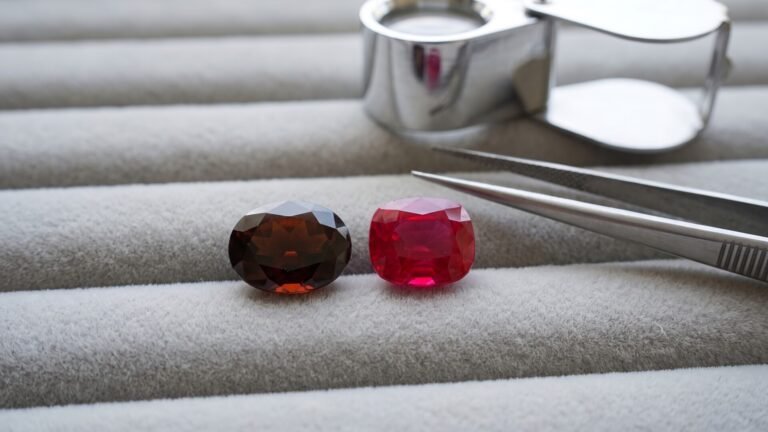
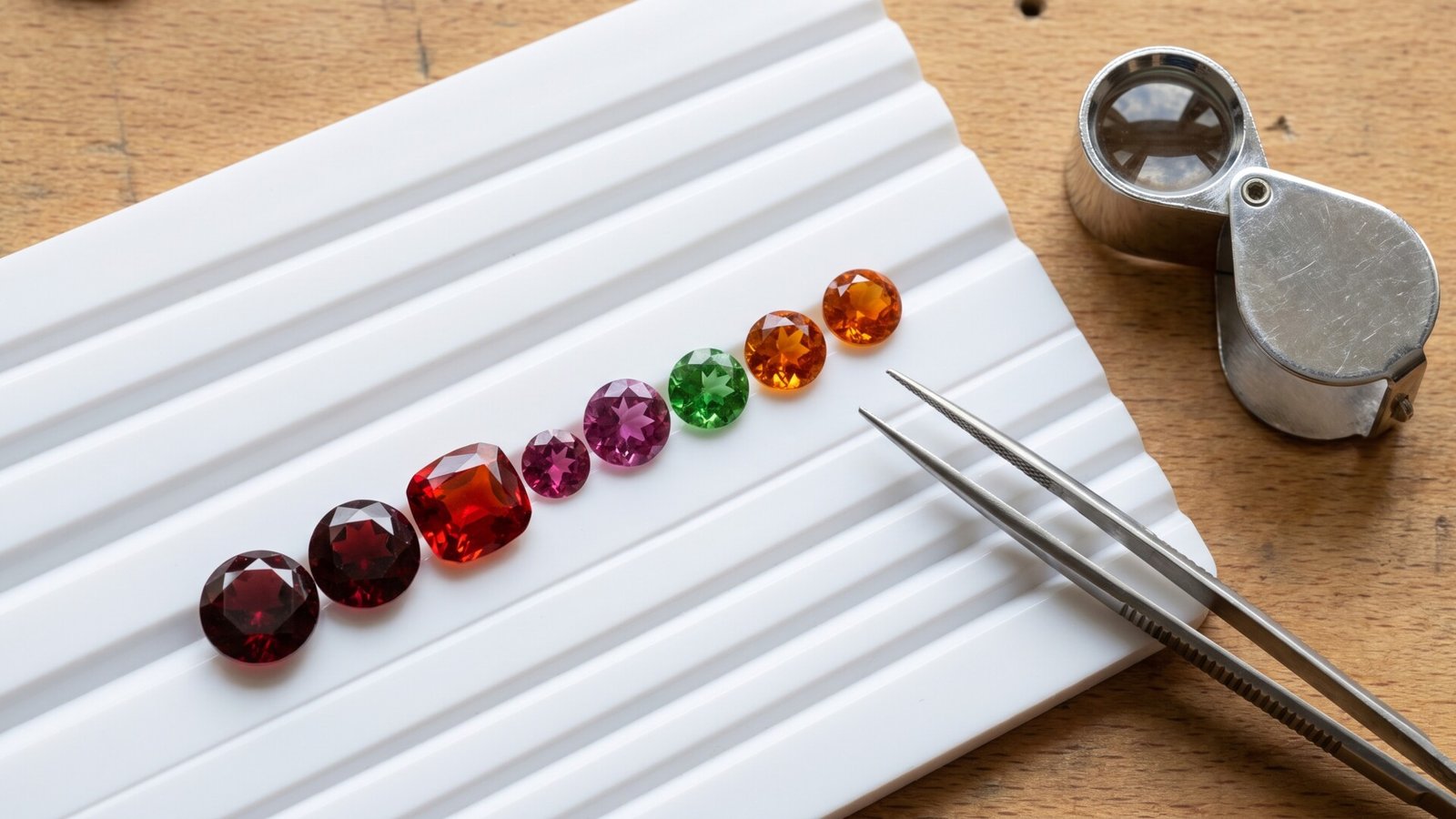
Garnet is January’s birthstone and one of the most varied gemstones in jewelry. Most people picture deep red, but the garnet family also includes orange, pink, purple-red, vivid green, honey-brown and even a rare color-change blue. Traditionally it has been linked with passion, protection, and loyalty, and for buyers the color you choose decides almost everything else: price, durability, which settings work, and how easy the stone is to find.
This guide walks through the main garnet colors and types, what causes each color, how hard each one is, what they typically cost, and which jewelry suits which stone. It is the color companion to our main guide, Garnet: Meaning, Properties, Uses & Value, and part of the wider Gemstones hub.
Garnet Colors at a Glance
Use this table to see the whole family before the detailed sections. Hardness figures are approximate Mohs ranges and vary a little between sources.
| Type | Species | Typical color | Approx. Mohs | Best jewelry use |
|---|---|---|---|---|
| Almandine | Almandine | Deep red, brownish red | 7–7.5 | Rings, pendants, bracelets |
| Pyrope | Pyrope | Vivid red to purplish red | 7–7.5 | Rings, solitaires, pendants |
| Rhodolite | Pyrope–almandine mix | Rose to purplish red | 7–7.5 | Rings, earrings, necklaces |
| Malaya (malaia) | Pyrope–spessartine mix | Pinkish orange to orange-red | About 7 | Statement rings, necklaces |
| Spessartite (spessartine) | Spessartine | Bright orange | 7–7.5 | Cocktail rings, earrings |
| Tsavorite | Grossular | Vivid green | 7–7.5 | Rings, pendants, earrings |
| Hessonite | Grossular | Cinnamon to golden brown | About 7 | Beads, casual rings, earrings |
| Demantoid | Andradite | Yellow-green to deep green | 6.5–7 | Earrings, pendants; protective settings for rings |
| Color-change garnet | Pyrope–spessartine mix | Shifts between daylight and incandescent light | 7–7.5 | Pendants, protected rings, collector pieces |
Why Garnet Comes in So Many Colors
Garnet is a group of related silicate minerals rather than a single stone. All members share the same cubic crystal structure, but different metals sit inside it, and that chemistry sets the color. The main end members are pyrope (magnesium-aluminum), almandine (iron-aluminum), spessartine (manganese-aluminum), grossular (calcium-aluminum), andradite (calcium-iron) and uvarovite (calcium-chromium). Many gem garnets are blends of two or three of these, which is why trade names such as rhodolite and malaya exist.
The color of a garnet affects:
- Appearance: It determines which metals, settings and styles flatter the stone.
- Value: Rare colors such as vivid green and fine orange cost far more than common reds.
- Symbolism: Different colors are traditionally linked with different meanings (see the symbolism section below, where we note these are traditions rather than science).
Red Garnets: The Classic Choice
Almandine Garnet
- Color: Deep red, often with brown or violet undertones
- Composition: Iron aluminum silicate
- Typical use: Rings, pendants, earrings and bracelets
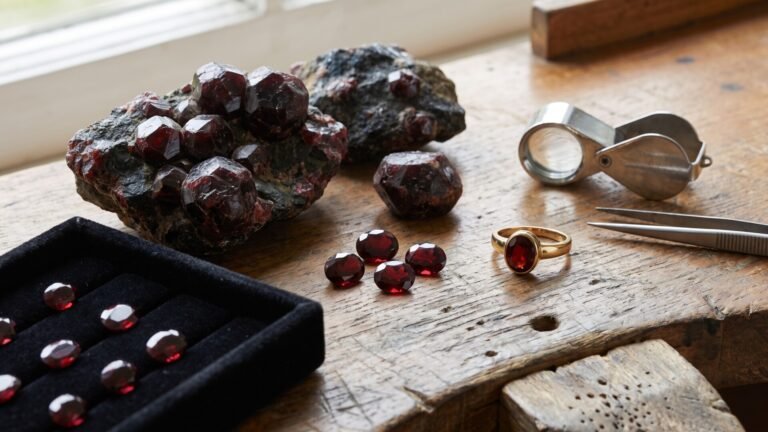
- Why it’s popular: It is widely available and affordable, so it is the usual stone in budget January birthstone jewelry.
Almandine is among the harder garnets (about 7–7.5 on the Mohs scale) and is also used industrially as an abrasive. That hardness makes it a sensible choice for everyday pieces, though hardness measures scratch resistance, not toughness: a hard knock can still chip any gemstone. Very dark almandine can look nearly black in small, thick cuts, so look for a shallow, well-proportioned cut that lets light back out.
Pyrope Garnet
- Color: Vivid red, sometimes with a purplish tint
- Composition: Magnesium aluminum silicate
- Typical use: Solitaire rings, halo rings and pendants
- Special note: The name comes from a Greek word meaning “fiery-eyed.” Pure pyrope is rare; most pyrope on the market is mixed with almandine.
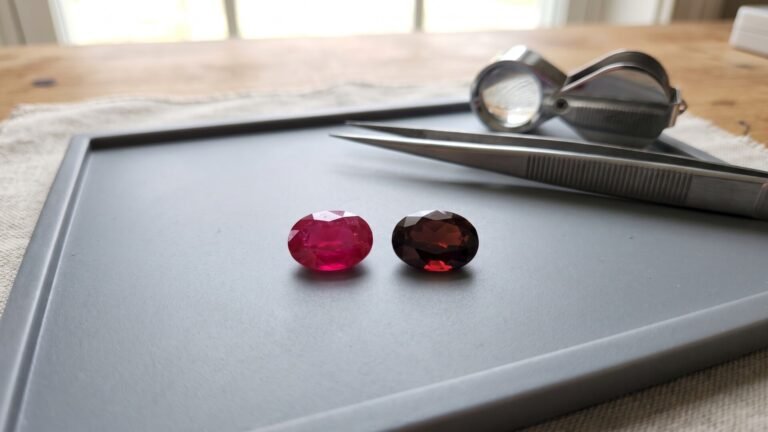
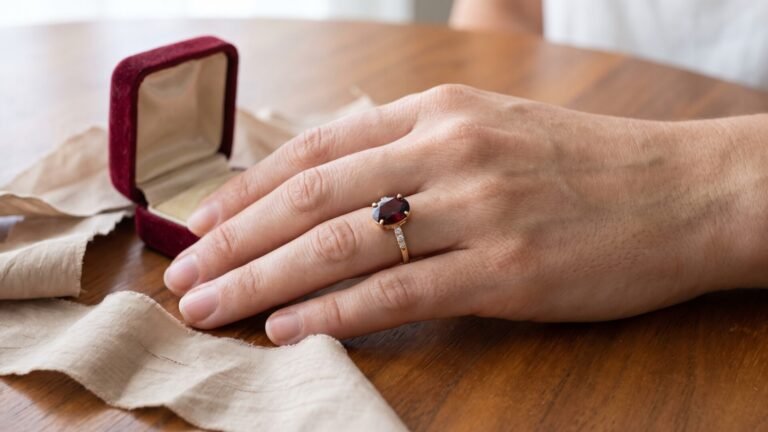
Pyrope’s bright red is why it is often chosen for romantic jewelry and garnet engagement rings. Bohemian pyrope was the signature stone of Victorian garnet jewelry. If you are unsure whether you are looking at garnet or a ruby, our guides to telling garnet from ruby and the full garnet vs ruby comparison explain the differences in color, hardness and price.
Pink and Purple Garnets
Rhodolite Garnet
- Color: Rose-red to purplish red
- Composition: A mix of pyrope and almandine, roughly two parts pyrope to one part almandine
- Typical use: Rings, earrings and necklaces, often in vintage-inspired designs
- Traditional symbolism: Often associated with love, happiness and emotional balance.
Rhodolite’s name comes from a Greek word for “rose.” Its raspberry or violet tone separates it from standard red garnets and makes it a popular alternative for people who find classic garnet red too dark. It is generally much less expensive than tsavorite or spessartite, which makes it one of the best-value colored stones for earrings and pendants.
Malaya Garnet
- Color: Pinkish orange to orange-red
- Composition: A blend in the pyrope–spessartine range, with some almandine and grossular
- Typical use: Statement rings and designer necklaces
- Rarity: Less common than ordinary red garnet; fine, clean stones are mostly sought by collectors.
“Malaya” (also spelled malaia) garnet is associated with the Umba River valley of Tanzania and Kenya. Its soft peach-pink tones work well with rose and yellow gold.
Orange Garnets
Spessartite (Spessartine) Garnet
- Color: Bright orange, sometimes orange-red or brownish orange
- Composition: Manganese aluminum silicate
- Typical use: Earrings, bracelets and cocktail rings
- Why it’s striking: Its saturated orange is unlike any other common gemstone.
Mineralogists call the species “spessartine,” while the gem trade often says “spessartite”; both refer to the same garnet. The most vivid stones are sold as “mandarin” or “Fanta” garnet, and fine examples can be expensive. Orange spessartite pairs well with yellow or rose gold, which echo its warm tones.
Green Garnets
Tsavorite Garnet
- Color: Vivid, slightly bluish to yellowish green
- Composition: Calcium aluminum silicate (a green variety of grossular)
- Hardness: About 7–7.5
- Typical use: Rings, pendants and earrings
- Treatment: Tsavorite is generally sold untreated.
Tsavorite’s green comes from trace vanadium and chromium, the same coloring elements found in emerald. Compared with emerald it is usually cleaner to the eye, more brilliant and less fragile, which is why it is often suggested as a durable alternative. It comes mainly from Kenya and Tanzania. Because supply is limited, larger stones are scarce: one trade source citing wholesale price guides reports top-grade tsavorite of 1–3 carats at roughly $1,500–$2,300 per carat, rising to several thousand dollars per carat for stones above 3 carats. Retail jewelry prices are higher.
Green garnet is traditionally associated with renewal and prosperity. If you are choosing a green stone for August, our comparison of peridot vs tsavorite garnet covers the trade-offs.
Demantoid Garnet
- Color: Yellow-green to deep emerald green
- Composition: Calcium iron silicate (a green variety of andradite; chromium is the trace element that colors it)
- Hardness: About 6.5–7, lower than most other garnets
- Unique feature: Exceptional fire. Its dispersion (about 0.057) is higher than diamond’s
- Typical use: Earrings, pendants and collector rings in protective settings
Demantoid is famous for “horsetail” inclusions, golden wavy fibers that some buyers prize as a sign of the classic Russian (Ural) material. They are not proof of origin on their own, though, since similar inclusions can occur in other andradite. Heating can improve demantoid color and is considered stable, so ask the seller whether a stone has been treated. Because of its lower hardness, demantoid suits earrings and pendants best, and a bezel or other protective setting is wise for a ring. It is among the most expensive garnets and sold mostly through specialist dealers.
Yellow and Brown Garnets
Hessonite Garnet
- Color: Cinnamon to golden brown or orange-brown
- Composition: Calcium aluminum silicate (grossular)
- Typical use: Beaded necklaces and bracelets, casual rings and earrings
- Symbolism: Some astrological traditions associate hessonite with protection, and modern crystal practice links it with creativity. These are beliefs, not proven effects.
Hessonite often has a slightly oily or swirled look from tiny internal inclusions. Warm, honey-toned stones with good transparency are the most sought after. Its earthy tone makes it an easy choice for casual and bohemian styles.
Mali Garnet
- Color: Olive to brownish or yellowish green
- Named for: Its source in Mali, West Africa
- Typical use: Occasional designer pieces and collector stones
Mali garnet is seen far less often than tsavorite or demantoid and is mostly of interest to collectors. Ask a specialist dealer for the species identification and any lab report before paying a premium.
Blue and Color-Change Garnets
Blue garnets are the rarest of all. They were first reported in the late 1990s from a deposit near Bekily in Madagascar and belong to the pyrope–spessartine series. According to the Gemological Institute of America’s Gems & Gemology journal, these stones show an “alexandrite-like” change, appearing blue-green in daylight and purple under incandescent light. The effect is attributed mainly to a relatively high vanadium content.
- Color: Blue-green in daylight, purple in incandescent light; other color-change garnets shift from green, brown or gray tones to reddish or purplish pink
- Composition: Pyrope–spessartine blends
- Typical use: Collector stones and custom or high-end rings and pendants
- Rarity: Rarest garnet type; fine stones are priced by the strength of the color change, and prices vary widely
One common mix-up: not every “blue” stone sold as garnet is a true color-change garnet, so insist on a lab report from a recognized gemological laboratory when buying anything in this category.
What Controls Garnet Color?
Garnet’s color depends mainly on which elements fill its crystal structure:
- Iron: Gives the deep reds of almandine.
- Manganese: Gives the orange of spessartine.
- Chromium and vanadium: Produce the vivid greens of tsavorite and the color-change effect in pyrope–spessartine blends.
- Mixed pyrope and almandine: Produces the pink to purplish tones of rhodolite.
- Iron in andradite with trace chromium: Produces the green of demantoid.
Origin matters for availability more than for color: tsavorite is found mainly in Kenya and Tanzania, and malaya is associated with the Umba valley. Ask for documentation instead of assuming a stone’s origin from its look.
Garnet Hardness, Durability and Daily Wear
Most gem garnets fall between roughly 6.5 and 7.5 on the Mohs scale, which is good but well below sapphire and ruby (9). Hardness is scratch resistance, not toughness: garnet has no cleavage, which helps, but it can still chip if struck.
- Everyday rings: Almandine, pyrope, rhodolite, spessartite and tsavorite are reasonable choices, ideally in bezel or low, protective settings.
- Occasional rings: Demantoid and large, thin or pointed cuts of any garnet.
- Earrings and pendants: Any garnet, including demantoid and hessonite, since these pieces take far less impact.
Choosing Garnet Jewelry Based on Color
- Classic red garnets: Traditional rings, studs and birthstone jewelry.
- Pink and purple garnets: Romantic earrings, pendants and rings.
- Orange garnets: Bold cocktail rings and warm-toned earrings.
- Green garnets: Distinctive gifts and collector pieces, with tsavorite as the more wearable option.
- Brown or yellow garnets: Casual, earthy everyday jewelry.
For concrete ideas, browse our garnet jewelry gift ideas, and if you are thinking about a ring for a proposal, read about garnet engagement rings.
Matching Colors to Metals and Styles
- Red garnets: Yellow gold, white gold or silver; classic studs and halo pendants.
- Rhodolite: Rose gold and delicate chains.
- Spessartite: Yellow or rose gold cocktail rings.
- Tsavorite: White gold or platinum, which keep the green looking crisp.
- Hessonite: Beaded bracelets and simple pendants.
Garnet is sold by large online jewelers, independent designers and specialist gem dealers alike. Whichever seller you choose, check the return policy and ask for the specific garnet variety, treatment disclosure and, for expensive stones, a lab report.
Which Garnet Color Should You Choose? A Quick Decision Guide
If the table and profiles above leave you with too many options, start from how you plan to use the stone rather than from the color you like best. Colors that look similar in a photo can behave very differently on the hand.
- You want a January birthstone on a budget: choose a red almandine or pyrope. Both are widely available, and the most important thing to check is that the color is not so dark that it looks black indoors.
- You want something softer than classic red: rhodolite gives a raspberry or rose tone and usually costs far less than rarer colors.
- You want a bold, unusual stone: spessartite orange or malaya peach-orange stand out, but expect to pay more for clean, vivid examples.
- You love green but worry about fragility: tsavorite is the more wearable green garnet, while demantoid is better kept for earrings, pendants or protected settings.
- You collect rare stones: color-change garnets and top-quality demantoid are the pieces where a lab report really matters.
How Lighting Changes Garnet Color
Garnet color can look noticeably different from one light source to another. Deep red almandine can seem almost black in dim rooms and show its red in strong, direct light, while pink and orange stones usually look livelier under daylight-balanced lighting than under warm, yellow bulbs. Color-change garnets are the extreme case, since their appearance shifts between daylight and incandescent light by design.
When buying online, ask for photos or video in more than one lighting condition, and if possible view the stone in person or arrange a return window so you can judge the color at home, in sunlight and under indoor light.
Garnet Compared With Look-Alike Stones
Several gems overlap with garnet in color, which is why shoppers often compare them:
- Red garnet vs ruby: ruby is corundum (Mohs 9) and much more expensive; garnet is a softer, more affordable red. Our guides to telling garnet from ruby and the full garnet vs ruby comparison go into detail.
- Pink and red garnet vs tourmaline: both come in a wide color range, but they are different minerals with different durability. The ruby, garnet and tourmaline color comparison shows them side by side.
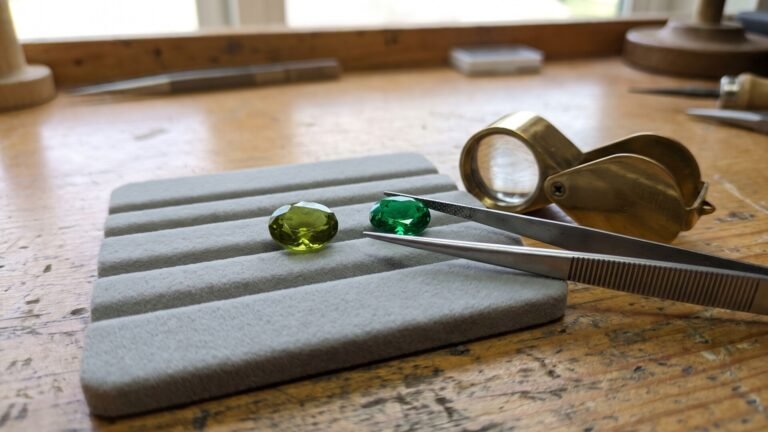
- Green garnet vs peridot or emerald: tsavorite is a clean, hard-wearing green alternative; read the peridot vs tsavorite comparison if you are choosing between green stones.
Common Mistakes When Buying Colored Garnet
- Paying for a trade name without proof. Names such as “mandarin” or “malaya” are trade terms. Ask what species or blend the seller believes the stone is and whether a laboratory has confirmed it.
- Judging color from a single photo. Screens and lighting change how garnets look, so check return terms.
- Picking the softest garnet for a daily ring. Demantoid is beautiful but better as earrings or a pendant unless the ring will be worn gently.
- Assuming origin from color. Do not accept an origin claim without documentation, since it can affect price.
Is the Garnet Real? Quick Notes on Buying
- Ask for the variety. “Garnet” alone is not enough for a high-priced stone; the species and trade name (for example tsavorite or demantoid) drive the price.
- Ask about treatment. Most garnets are untreated, but demantoid may be heated and color-change or unusual colors should come with a lab report.
- Beware of imitations. Glass and cubic zirconia are sometimes sold as garnet. A magnet test is not conclusive on its own: many garnets show weak attraction to a strong neodymium magnet, but the response varies by composition, and gemologists use it only as one clue alongside refractive index and other tests.
- Compare like with like. Prices are per carat and rise steeply with size and color intensity.
Approximate Price Guide by Color
Garnet prices are wide. These ranges are rough guides for good-quality loose stones and vary by size, cut and seller; treat them as a starting point, not a quote.
| Type | Price outlook (USD per carat) |
|---|---|
| Almandine and pyrope (jewelry quality) | Generally the most affordable garnets; prices vary widely with color, clarity and size |
| Rhodolite | Moderate; fine, clean stones cost more than ordinary red garnet |
| Tsavorite | About $1,500–$2,300 for top-grade 1–3 carat stones at wholesale; more above 3 carats |
| Spessartite / mandarin | Moderate to high, rising with color intensity and size |
| Demantoid | High; among the most expensive garnets |
| Color-change / blue garnet | High and variable; depends on the strength of the color change |
Caring for Garnet Jewelry
Garnet is durable but not indestructible. For stone-specific advice see our full garnet jewelry care guide.
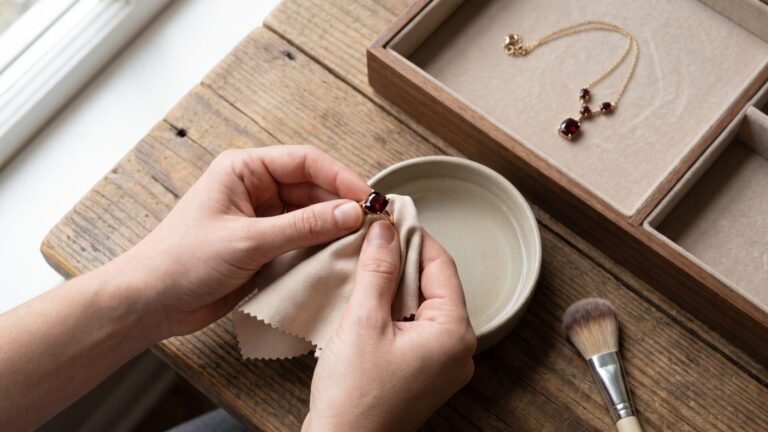
- Cleaning: Use mild soap, lukewarm water and a soft brush. Ultrasonic cleaners are usually safe only for stones with no fractures or fillings; steam cleaners are best avoided.
- Storage: Keep separate from harder stones such as diamonds and sapphires, which can scratch it.
- Handling: Remove rings before heavy manual work, sports or exposure to harsh chemicals.
- Checkups: Have prongs and settings inspected periodically.
Garnet Symbolism by Color
The following meanings come from folklore, tradition and modern crystal practice. They are beliefs, not scientific or medical claims, and a stone cannot treat or cure any condition. For deeper background see our guide to garnet meaning and symbolism.
- Red garnet: Traditionally passion, love, protection and energy.
- Pink and purple garnet: Associated with romance and emotional warmth.
- Orange garnet: Linked in modern crystal practice with creativity and enthusiasm.
- Green garnet: Associated with renewal, growth and prosperity.
- Brown or yellow garnet: Linked with stability and grounding.
Garnet as a Gift or Collectible
Garnet suits birthdays, anniversaries (it is the gemstone commonly listed for a 2nd wedding anniversary) and personal milestones. Because it is the stone for January, it is also a natural choice for anyone born that month; see our January birthstone guide and the Birthstones by Month hub for the full list.
- Classic gifts: Red garnet pendants, studs or rings.
- Romantic gifts: Rhodolite earrings or necklaces.
- Statement pieces: Spessartite or tsavorite rings.
- Collector pieces: Demantoid or color-change garnets, ideally with a lab report.
If you are comparing garnet with other red stones, our ruby vs garnet vs tourmaline color comparison is a useful next read.
Garnet Color FAQs
How many colors does garnet come in?
Garnet occurs in nearly every color: red, orange, pink, purple, green, yellow, brown, black and a very rare blue or color-change type. The color depends on which species or blend of species the stone is.
What is the most valuable garnet color?
The rarest and usually most expensive are fine tsavorite and demantoid greens, vivid spessartite orange and color-change garnets. Common dark red almandine and pyrope are the most affordable.
What colors make garnet?
Chemistry decides it. Iron gives deep red, manganese gives orange, and chromium or vanadium give vivid green and color-change effects. Blends of pyrope and almandine give pink to purplish rhodolite.
Are garnets magnetic?
Many garnets show weak attraction to a strong neodymium magnet, and the strength varies with composition. Gemologists treat it as one clue only, so it is not a reliable way to confirm a stone is genuine.
Is there a true blue garnet?
Yes, but it is very rare. Blue color-change garnets from Madagascar were first reported in the late 1990s. They look blue-green in daylight and purple in incandescent light.
Which garnet is best for everyday rings?
Almandine, pyrope, rhodolite, spessartite and tsavorite are the usual choices, preferably in a protective setting. Demantoid is softer and better suited to earrings and pendants.
Is garnet always treated?
No. Most garnets are sold untreated. Demantoid may be heated to improve color, so it is worth asking the seller about treatment for any higher-priced stone.
Conclusion
Garnet’s range of colors is its biggest strength. A deep red almandine is an affordable, hard-wearing everyday stone, rhodolite adds a softer raspberry tone, spessartite brings bold orange, and tsavorite and demantoid offer rare greens for those willing to pay for them. Match the color to how and where the jewelry will be worn, check the hardness for the piece you have in mind, and ask about treatment and certification for expensive stones.
To keep reading, head to the main Garnet guide for meaning, history and value, compare shades in the ruby, garnet and tourmaline color comparison, or explore the full Gemstones hub.