January Birthstone: Meaning, Symbolism, and Jewelry Guide
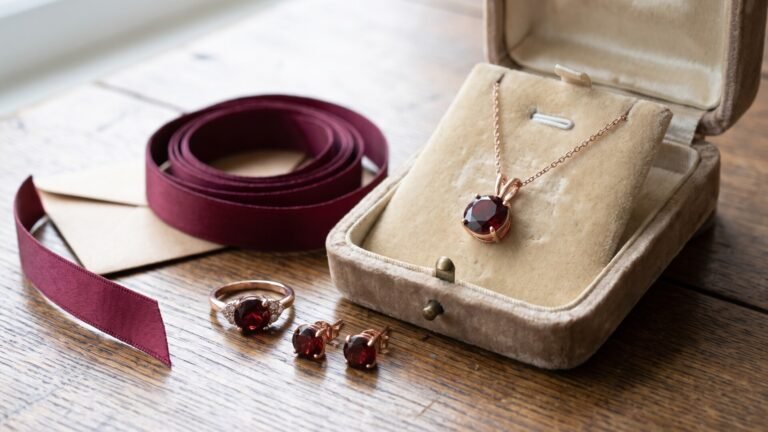
January is the first month of the year, a time of new beginnings and fresh starts. The birthstone for January is garnet, a gemstone known for its deep red color, long history and rich symbolism. Garnet has been used in jewelry since the Bronze Age, and it remains one of the most affordable and widely available birthstones.
This guide covers everything you need to know about the January birthstone: what garnet is, why it is linked to January, its meaning and symbolism, how durable it is, how much garnet jewelry costs, and how to care for it. Whether you are shopping for a January birthday gift or are simply curious, you will find practical answers here. For a deeper look at the stone itself, read our complete garnet guide.
Discover all the gemstones of the year in our Birthstones By Month hub, which covers each month’s birthstone, its meaning and symbolism, including January’s garnet.
January Birthstone Quick Facts
| Fact | Details |
|---|---|
| Birthstone | Garnet (the standard January stone in both traditional and modern lists) |
| Mineral | A group of silicate minerals, including pyrope, almandine, spessartine, grossular and andradite |
| Colors | Red is the classic January color, but garnet also comes in orange, pink, purple, yellow and green |
| Hardness | About 6.5–7.5 on the Mohs scale |
| Best for | Earrings, pendants and brooches; rings are fine with a protective setting and sensible wear (GIA) |
| Treatments | Most garnets are not treated |
| Jewelry price | Roughly $50 for simple silver pieces up to several thousand dollars for diamond-set designs |
| Zodiac link | Often paired with Capricorn and sometimes Aquarius in astrology traditions |
Note: birthstone lists differ by country and organization. Garnet is the standard January stone in the commonly used American lists, but you may see variations in other traditions.
What is the January Birthstone?
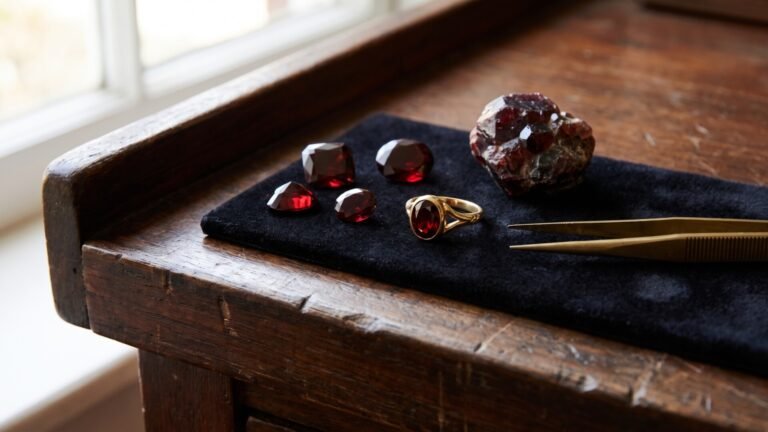
The primary birthstone for January is garnet. Although most people picture a dark red stone, garnet is actually a group of related minerals with a wide spectrum of colors, from red and orange to green and purple. GIA lists five garnet species as important gems: pyrope, almandine, spessartine, andradite and grossular. The name comes from medieval Latin granatus, meaning “pomegranate,” after the resemblance to the fruit’s red seeds.
Garnet has been used since the Bronze Age. Ancient Egyptian pharaohs wore garnet necklaces, and Roman signet rings often carried garnet engravings. Traditionally garnet symbolizes love, friendship and protection. These are cultural associations, and not scientific properties of the stone.
Some jewelers and online lists suggest other stones for January to give buyers more color choices. These are marketing or personal choices and not part of the standard birthstone lists, so garnet remains the stone to focus on when buying a January birthstone gift.
- Learn about garnet’s varieties and properties: Garnet: Meaning, Properties, Uses & Value
- See every garnet color explained: Garnet Color Types Explained
Why Garnet Is the Birthstone for January
Garnet’s association with January comes from seasonal symbolism and long tradition. Birthstone lists took shape over many centuries, and the modern American list was standardized in the early 20th century. Our guides on the history of birthstones and birthstones through the ages explain how the lists evolved.
Winter Symbolism: Warmth and Vitality
January is one of the coldest, darkest months in much of the northern hemisphere. The deep red of garnet has long been associated with warmth, inner fire and life energy, evoking embers and the hearth. For January births, garnet came to represent endurance and vitality.
Historical Tradition and Early Use
Garnet appears in ancient Egyptian, Roman and medieval European jewelry. Medieval clergy and nobility favored red garnets. Because it was widely available and long associated with protection, garnet became a natural match for January.
Protection During Travel
Traditionally, garnet was carried as a talisman by travelers, who believed it would guard them against danger. That protective folklore is part of why garnet is still linked with courage and resilience today.
The New Year: Renewal and Grounding
January also marks new beginnings. In symbolic terms, garnet is associated with steady progress, commitment and inner strength, which suits the start of the year.
Meaning and Symbolism of Garnet
Garnet’s symbolism stretches across centuries and cultures. According to tradition, ancient Egyptians carved garnet into amulets and placed them in tombs, and Roman warriors are said to have carried garnet talismans for courage. In the Middle Ages garnets were believed to protect travelers. Today, the stone still stands for love, friendship, trust and loyalty. People who enjoy symbolism often describe garnet as energizing or confidence-boosting; read how birthstones are said to boost energy. These are beliefs and personal experiences, not proven effects. For more, see January Birthstone Meaning: The Power of Garnet.
Zodiac and Astrological Significance
In astrology, garnet is commonly linked with Capricorn (December 22 – January 19), a sign associated with discipline and persistence. Some traditions also assign garnet to Aquarius (January 20 – February 18). Zodiac stone lists vary between sources, so treat them as tradition and not as a fixed rule. To compare approaches, read zodiac vs monthly birthstones and our zodiac birthstones guide.
Spiritual and Healing Beliefs
In crystal-healing and spiritual practice, garnet is traditionally associated with:
- Confidence and emotional strength
- Stability in relationships
- Motivation and ambition
- Protection during travel or stressful times
These ideas come from folklore and modern spiritual practice. Gemstones do not treat or cure any physical or mental health condition, and they are not a substitute for medical advice. If the spiritual side interests you, see Healing and Metaphysical Properties of Garnet and the spiritual meaning of wearing garnet on the right hand.
Garnet Types and Colors
January’s “garnet” can look very different depending on the species:
- Almandine and pyrope: the classic deep red to purplish red stones most associated with January.
- Rhodolite: a raspberry or rose-red variety that sits between pyrope and almandine.
- Spessartine: orange to yellow-orange.
- Grossular (including tsavorite): from colorless to yellow, orange-red and vivid green.
- Andradite (including demantoid): mostly yellow to green, with demantoid prized for its green color and strong sparkle.
Tsavorite and demantoid are much rarer and more expensive than red garnets, so if your budget is modest, stay with red almandine, pyrope or rhodolite. Compare reds in our guide to ruby, garnet and tourmaline, and read garnet vs ruby and how to tell them apart. For green garnet versus peridot, see Peridot vs Tsavorite Garnet.
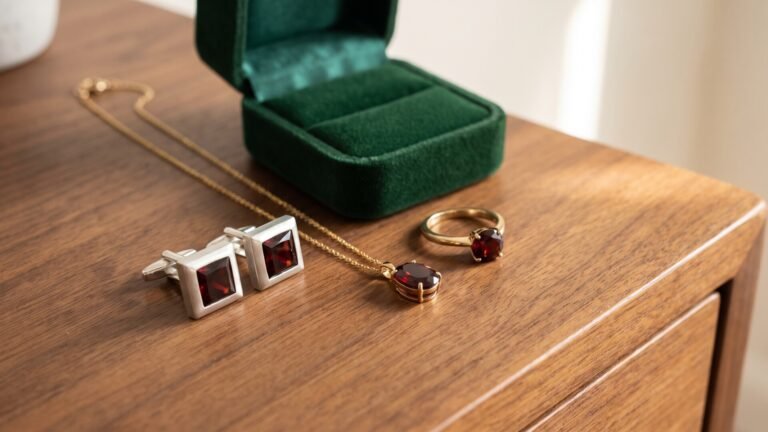
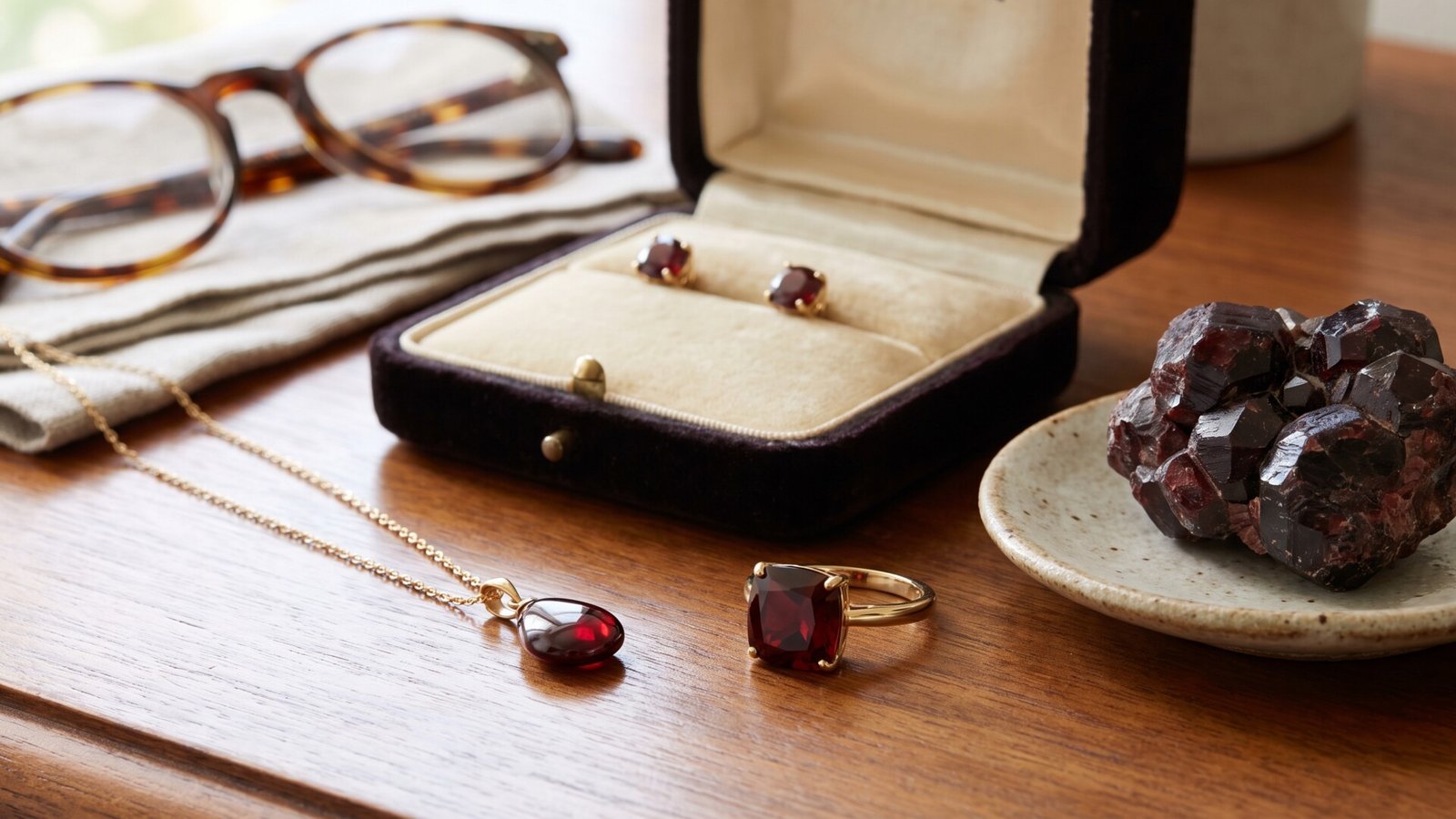
January Birthstone Jewelry Ideas
Garnet’s rich red suits a wide range of styles, metals and skin tones. Here are the most popular choices, with approximate US dollar prices based on listings from retailers such as Angara and Blue Nile. Angara lists garnet rings from about $180 to $7,700, and Blue Nile lists garnet rings from about $380 to $4,200. Prices change, so use these as ranges and not guarantees.
Rings
Garnet rings can be used for engagement rings, anniversary gifts or personal milestones. Because garnet is softer than sapphire or diamond, choose a bezel or halo setting for frequent wear. Typical choices include:
- Solitaire garnet rings for a classic look
- Halo garnet rings surrounded by diamonds for extra sparkle
- Multi-gem designs featuring garnet and complementary stones
Necklaces and Pendants
A garnet pendant is one of the best everyday choices because it rarely takes knocks. Styles include minimalist solitaires, multi-stone necklaces and personalized pendants engraved with initials. Prices commonly run from about $60 to $600. See how to choose the perfect birthstone necklace.
Earrings
Garnet earrings are a stylish way to wear the birthstone daily. Options include studs (roughly $50 to $500), drop or chandelier earrings for formal occasions and mixed-gem earrings with diamonds.
Bracelets
Bracelets with garnet beads or gemstones are ideal for stacking. Angara lists garnet bracelets from about $330, while beaded styles are usually far cheaper. See best online shops for birthstone bracelets.
For specific picks, browse these January guides:
- 10 Gorgeous Garnet Jewelry Gift Ideas
- Garnet Jewelry Gift Ideas for January Birthdays
- January Birthstone Gifts for Him and Her
- Birthstone Jewelry Gift Ideas by Relationship
Is Garnet Durable Enough for Everyday Wear?
Garnet’s Mohs hardness of about 6.5–7.5 is lower than ruby, sapphire (9) and diamond (10), so it is a little more vulnerable to scratches and wear than those stones. GIA rates garnet’s toughness as fair to good and says it suits all jewelry styles with proper care, but earrings, brooches and pendants face fewer knocks than rings. It has no cleavage, so it resists splitting, and it can still chip on a hard knock. Everyday dust contains quartz (around 7), which can slowly dull the polish of softer garnets. Choose protective settings for rings and take rings off for heavy work. For more on scratch resistance, see the gemstone hardness scale explained.
How to Care for Garnet Jewelry
Cleaning
- Warm soapy water and a soft brush are always safe
- Ultrasonic cleaners are generally fine for clean stones, but avoid them for stones with fractures; steam cleaning is not recommended (GIA)
- Rinse thoroughly and dry with a soft, lint-free cloth
Storage and Wearing Tips
- Store garnet separately in a soft pouch to prevent scratches from harder stones
- Remove jewelry before heavy labor, exercise, gardening or swimming
- Avoid harsh chemicals such as bleach and strong cleaners
- Have a jeweler check prongs and settings once a year
For a complete routine, read How to Care for Your Garnet Jewelry.
Garnet vs Other Red Stones for a January Gift
Shoppers often compare garnet with other red stones. The table below shows the main trade-offs; approximate Mohs hardness comes from standard gemological references.
| Stone | Approx. hardness | Look | Typical budget |
|---|---|---|---|
| Garnet | 6.5-7.5 | Deep red, wine and raspberry shades; also orange and green varieties | Most affordable of the group |
| Ruby (July) | 9 | Vivid red; often heat-treated | Much higher |
| Red spinel | 8 | Bright red, sometimes mistaken for ruby | Moderate to high |
| Red tourmaline (rubellite) | 7-7.5 | Pinkish to vivid red | Moderate |
These are alternatives for variety only; garnet remains the January birthstone. See garnet vs ruby and the July birthstone for the ruby side.
Choosing a January Birthstone Gift by Recipient
- For a partner: a garnet pendant or ring with a protective setting; see garnet engagement rings and gifts for him and her.
- For a friend or colleague: garnet studs or a simple beaded bracelet at a modest price.
- For a child or teen: a simple pendant, with attention to age-appropriateness; small stones and beads can be a choking hazard for young children. See children’s birthstone gifts.
- For someone who enjoys crystals: a raw or tumbled garnet with a note on its traditional meanings, framed as tradition rather than fact.
How to Buy Garnet Jewelry Wisely
- Check that it is real garnet. Some inexpensive red “garnet” jewelry uses glass or synthetic stones, which are simulants.
- Choose color first. Very dark stones can look nearly black indoors, so look at photos in different light.
- Match the piece to the lifestyle. Pendants and studs for daily wear; rings with bezel or halo settings.
- Compare sellers. See top online stores to buy authentic birthstone jewelry.
- Consider ethics and sourcing. Read our ethical gemstone shopping guide and ask retailers for documentation.
Fun Facts About Garnet and January Birthstones
- Garnet is a group of minerals with five main gem species: pyrope, almandine, spessartine, grossular and andradite.
- The word “garnet” comes from medieval Latin granatus, meaning “pomegranate,” after the fruit’s red seeds.
- Garnet has been used in jewelry since the Bronze Age.
- In traditional folklore garnet was carried as a protective talisman by travelers.
- Garnet is rarely treated, which makes it a good choice for buyers who prefer untreated stones.
Learn more about the science behind gemstone color in the science behind gemstone colors and see all birthstone colors in the birthstone color chart.
Frequently Asked Questions About The January Birthstone
What is the birthstone for January?
Garnet is the birthstone for January in the commonly used traditional and modern lists. It is best known in deep red, but garnet comes in many colors.
What does garnet symbolize?
Garnet is traditionally associated with love, friendship, loyalty and protection. These meanings come from folklore and cultural tradition and not from science.
Is garnet a valuable stone?
Common red garnets are affordable. Rare varieties such as green tsavorite and demantoid cost much more. Value depends on color, clarity, cut and size.
Can I wear garnet every day?
Yes in pendants and earrings. Garnet is about 6.5 to 7.5 on the Mohs scale, so rings need a protective setting and some care.
How do I clean garnet jewelry?
Use warm soapy water and a soft brush. Avoid steam cleaning, and avoid ultrasonic cleaners if the stone has fractures.
Is garnet the zodiac stone for Capricorn?
Garnet is commonly linked with Capricorn and sometimes with Aquarius, but zodiac stone lists vary by source.
What is a good January birthday gift?
A garnet pendant or stud earrings are practical and affordable. For a special occasion, consider a garnet ring with a protective setting or a custom piece.
Related Articles and Resources
- Garnet: Meaning, Properties, Uses & Value – full details about garnet’s types, colors and history
- Garnet Meaning – history, symbolism and modern uses
- 10 Gorgeous Garnet Jewelry Gift Ideas – rings, necklaces, earrings and more
- January Birthstone Gifts for Him and Her – gift ideas for friends and family
- Healing and Metaphysical Properties of Garnet – the spiritual side of garnet
Explore Other Birthstone Months
January is part of a larger birthstone tradition. Continue with February, March, April, May, June, July, August, September, October, November or December. To see the whole calendar and the stones linked to each month, visit our full guide to birthstones by month. You can also see all gemstones in the gemstones hub.