January Birthstone Meaning: The Power of Garnet
For anyone born in January, garnet is the birthstone, and it is far more varied than most people expect. Garnet is not a single gem but a family of related minerals that come in red, orange, pink, purple and even vivid green. It has been worn since the Bronze Age, and it carries a long list of traditional meanings: protection, passion, loyalty and vitality.
This guide covers the January birthstone meaning, the history behind it, the main garnet varieties, how durable the stone really is, which jewelry suits it, what you can expect to pay in USD, and how to look after it. It is part of our birthstones by month guide; for the broader overview of the month, see January Birthstone: Meaning, Symbolism, and Jewelry Guide.
Garnet at a Glance
| Mineral group | Garnet group (a family of silicate minerals, not one species) |
| Birthstone for | January (on both the traditional and modern US lists) |
| Mohs hardness | About 6.5 to 7.5, depending on variety |
| Toughness | Fair to good; no cleavage, but it can chip with hard knocks |
| Luster | Vitreous (glass-like) |
| Colors | Red, orange, pink, purple, yellow, brown, green; rare color-change stones |
| Typical treatments | Most garnets are not routinely treated; ask for disclosure on rare, high-priced varieties |
| Cleaning | Warm soapy water and a soft brush; ultrasonic usually fine for clean stones; avoid steam |
Hardness figures and care guidance here follow the Gemological Institute of America (GIA), which describes garnet as durable enough for all jewelry styles with sensible care, while recommending that it be protected from hard blows.
The History of Garnet
The name is usually traced to the Latin granatus, meaning “seed-like”, a reference to the resemblance between small red garnets and pomegranate seeds. Garnet beads and ornaments turn up in very old archaeological finds, and the stone appears in several ancient and medieval cultures:
- Ancient Egypt: Garnet was used in signet rings, necklaces and inlays, and its deep red is often linked to life and vitality.
- Greek and Roman times: Garnet was carved into signet stones. Tradition holds that travelers and soldiers carried it as a protective talisman against danger.
- Middle Ages: Garnets decorated the jewelry of clergy and nobility, and the stone was associated with faith, truth and commitment.
- Victorian era: Garnet jewelry, especially clusters of small red stones, became fashionable and was often exchanged as a token of affection.
These associations are cultural traditions rather than scientific facts, but they explain why garnet has been so closely tied to protection, loyalty and passion, and why it remains a natural fit for January birthdays.
January Birthstone Meaning and Symbolism
Below are the meanings most often attached to garnet. They come from folklore and cultural tradition, and are presented here as beliefs rather than proven effects:
- Protection: Traditionally worn as a talisman to safeguard travelers and keep harm away.
- Passion and love: Red garnets are associated with love, commitment and vitality, which is why they appear so often in romantic gifts.
- Energy and balance: In crystal-healing practice, some people believe garnet energizes and grounds the wearer. This is a belief, not a medical claim.
- Friendship and loyalty: Garnet is a traditional symbol of faithfulness and trust, which suits it to close friendships as well as romance.
If you want the spiritual side in more depth, read our guides to the healing and metaphysical properties of garnet and the spiritual meaning of wearing garnet on the right hand. As our affiliate disclosure explains, symbolism and metaphysical properties reflect cultural traditions and personal belief, and are not medical, financial or professional advice.
Physical Properties of Garnet
Understanding what garnet is made of helps you judge a piece of jewelry:
- Mohs hardness: 6.5 to 7.5. Almandine, pyrope, spessartine and tsavorite sit at the harder end, while demantoid is slightly softer.
- Cleavage: Garnet has no cleavage planes, so it does not split along a weak direction the way topaz or tanzanite can. Hardness is only scratch resistance, though; a sharp knock can still chip any gem.
- Luster: Vitreous, giving a bright, glassy shine.
- Transparency: Ranges from transparent to opaque. Gem-quality stones are usually transparent; opaque material is often cut as cabochons or beads.
- Chemical stability: Garnet is stable to light and ordinary household chemicals, but hydrofluoric acid can attack it.
Taken together, these traits make garnet a sensible choice for rings, pendants, bracelets, earrings and men’s jewelry alike, provided the setting protects the stone.
Types of Garnet and Their Colors
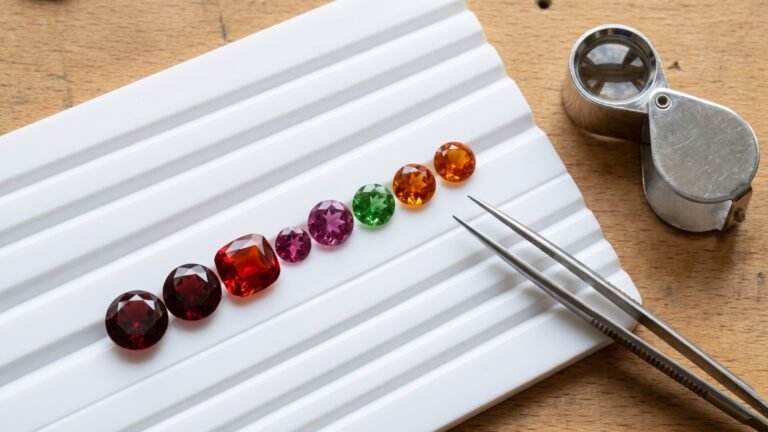
When people say “garnet” they usually picture a deep red stone, but the group is much wider. The main varieties are:
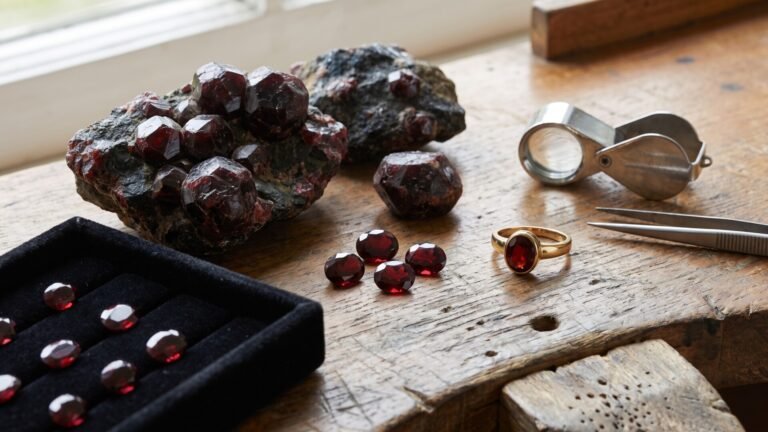
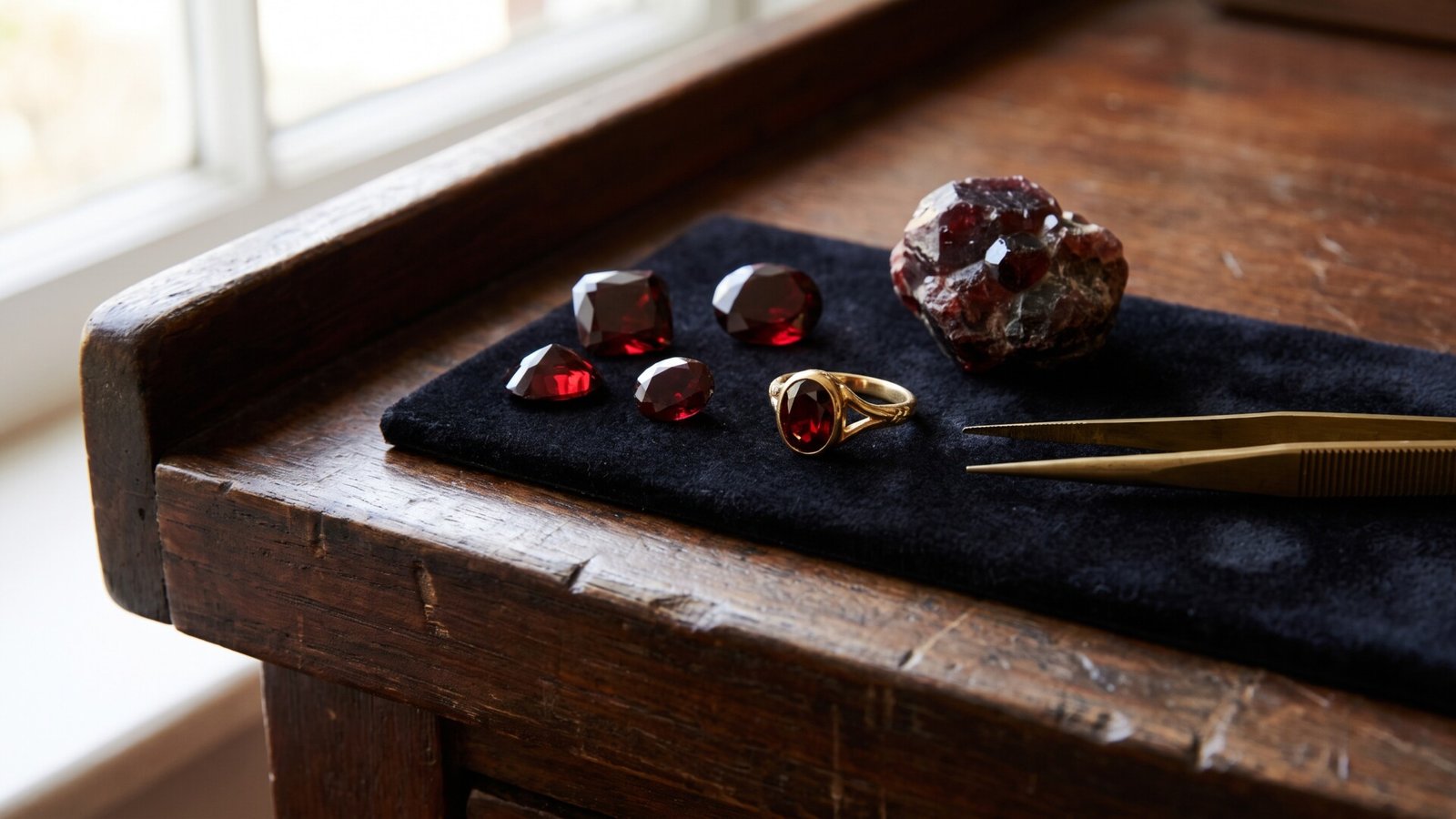
- Almandine: Deep red, sometimes with brownish or purplish undertones. It is the most common jewelry garnet, durable and affordable, and a good choice for rings and daily wear.
- Pyrope: Rich, vivid red. Classic in vintage jewelry, including Bohemian garnet pieces, and valued for its clean red color.
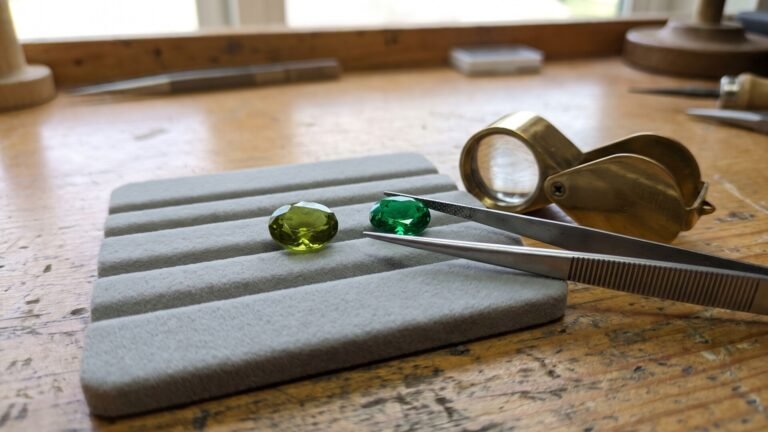
- Rhodolite: A pyrope-almandine blend in raspberry pink to purplish red. It is popular for rings, pendants and earrings, and is usually priced moderately.
- Spessartine (spessartite): Bright orange to reddish orange. Fine “mandarin” stones are collector favorites and cost noticeably more than red garnet.
- Tsavorite: Vivid green grossular garnet, sometimes compared with emerald. It is far less common than red garnet and priced accordingly, so it tends to appear in statement pieces.
- Demantoid: A rare green andradite garnet with exceptional fire, prized by collectors. It is slightly softer than other garnets, so it suits earrings and pendants better than everyday rings.
- Malaya (Malaia) and color-change garnets: Peachy orange to pink-orange stones, and rarer varieties that shift color between daylight and incandescent light. These are specialist purchases.
Knowing the variety helps you match a stone to the wearer’s style, and it also tells you what to expect on price and durability.
How Much Does Garnet Cost?
Garnet prices vary enormously by variety, which surprises many first-time buyers. The ranges below are rough per-carat figures for loose, good-quality stones in USD, drawn from published market guides; retail jewelry will cost more once metal, labor and markup are included.
| Variety | Rough price range (USD per carat) | Best for |
|---|---|---|
| Almandine, pyrope | Roughly $1 to $40 | Everyday rings, budget gifts |
| Rhodolite | Roughly $15 to $150 | Rings, pendants, earrings |
| Spessartine | Roughly $60 to $1,500 | Statement pieces |
| Tsavorite | Roughly $400 to $4,000 | Special-occasion jewelry |
| Demantoid | Roughly $200 to $18,000 | Collector pieces, earrings, pendants |
Price depends on color saturation, clarity, cut and size, and prices shift with supply, so treat these as a guide to scale rather than a quote.
Garnet Jewelry Styles
Garnet’s range of colors and sizes suits almost every kind of design:
1. Garnet Rings
- Solitaire rings show off the stone’s color and clarity.
- Halo settings with diamonds add sparkle and also shield the edges of the garnet.
- Multi-stone designs give a modern twist for anyone wanting a statement piece.
2. Garnet Necklaces
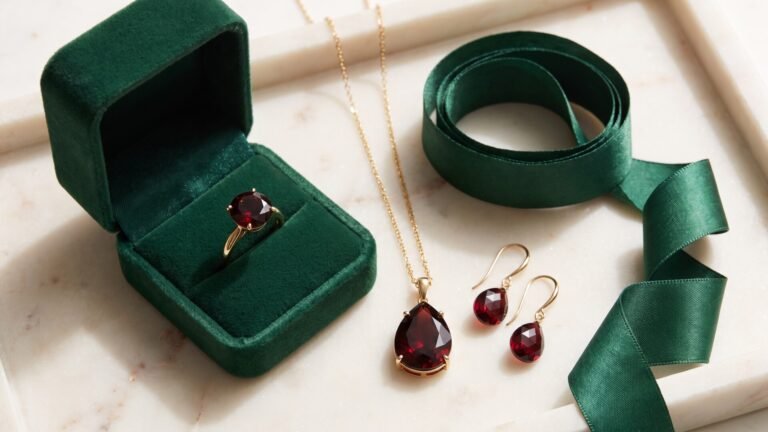
- A single-garnet pendant is classic and understated.
- Multi-stone necklaces can represent family members, anniversaries or milestones.
- Heart-shaped or custom artisan designs add a romantic note for Valentine’s Day or anniversaries.
3. Garnet Bracelets
- Tennis bracelets with garnets alternating with diamonds or other stones.
- Beaded garnet bracelets for a casual, everyday look.
- Adjustable designs that stack well with other bracelets. Bracelets knock against surfaces constantly, so check the settings are secure.
4. Garnet Earrings
- Studs show off the stone’s brilliance and are very low-risk for damage.
- Drop or chandelier earrings add movement and reflect more light.
- Mixed-gemstone designs pair garnet with complementary stones.
Retailers such as Blue Nile, James Allen, Brilliant Earth and Etsy offer a wide variety of garnet jewelry, though you will find the widest selection of colored-garnet designs from independent sellers.
Is Garnet Good for Everyday Wear?
Yes, with sensible expectations. A hardness of roughly 6.5 to 7.5 means garnet resists most scratches from everyday dust, although quartz-bearing dust (hardness 7) can slowly dull softer varieties. Because garnet has no cleavage, it is tougher in practice than some stones with similar hardness. Still, toughness is only fair to good, so a hard knock on a door frame can chip an exposed edge.
- Rings worn daily: Choose almandine, pyrope or rhodolite in a bezel, halo or low-set prong setting.
- Occasional rings: Demantoid and large, high-set tsavorite are better saved for special occasions.
- Pendants and earrings: Almost any garnet variety is a safe pick because these pieces take much less abuse.
Natural, Lab-Grown and Imitation Garnet
Natural garnet is plentiful and inexpensive enough that there is little commercial pressure to treat or imitate it, so most red garnet on the market is natural and untreated. Glass imitations do exist, as do garnet-topped doublets, where a thin slice of garnet is cemented over glass. A reputable seller should disclose a doublet, and it will often be visible as a flat layer line when the stone is viewed from the side.
Be aware that “synthetic garnet” in the trade can refer to materials such as YAG (yttrium aluminum garnet) that share the garnet crystal structure but are different compounds from the natural minerals. If a listing uses the word synthetic or lab-created, ask exactly what the stone is. For high-priced stones such as tsavorite or demantoid, a gemological report from a recognized laboratory is the best protection.
Choosing Garnet Jewelry as a Gift
When selecting garnet jewelry for a January birthday, consider:
- Style preference: Minimalist, classic or statement.
- Metal choice: Garnet works with yellow gold, rose gold and silver; rose gold flatters pinker rhodolite, while yellow gold deepens the warmth of red stones.
- Stone type: Pick a variety that fits the wearer’s color preference and the meaning you want the gift to carry.
- Occasion: Rings or pendants for daily wear; statement pieces for special events.
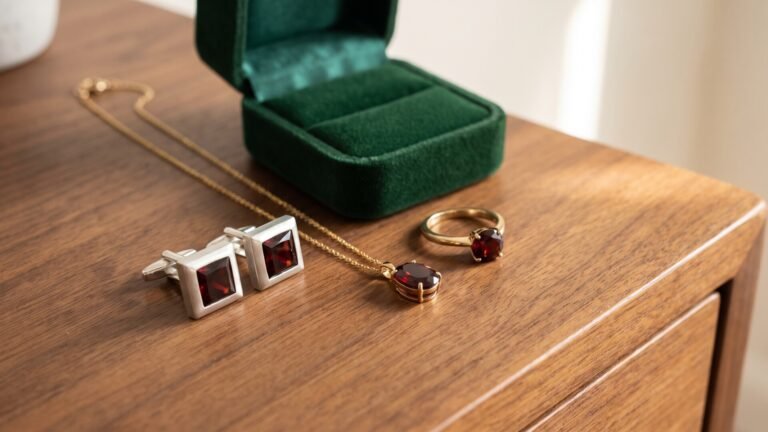
For specific ideas, see our garnet jewelry gift ideas for January birthdays and the guide to January birthstone gifts for him and her.
Shopping for Garnet Jewelry
- Color first: Look for even, saturated color. Very dark almandine can look nearly black indoors, so view it under different lighting if you can.
- Clarity: Most red garnets are eye-clean. Green and orange varieties may show small inclusions, which are normal; horsetail-like fibers in demantoid are in fact a recognized feature.
- Setting security: Check that prongs and clasps are sturdy.
- Metal compatibility: Gold, silver and platinum each show garnet’s color differently.
- Disclosure and returns: Buy from sellers who state the variety, any treatment, and their return policy. For tsavorite, demantoid or other expensive varieties, ask for a lab report.
- Personalization: Engravings or multi-stone arrangements, such as a family birthstone pendant, add sentimental value.
Garnet Jewelry for Every Budget
Budget-Friendly Options
- Sterling silver or gold-plated garnet jewelry
- Simple studs or solitaire pendants
- Beaded bracelets featuring smaller garnets
Mid-Range Options
- Solid gold rings or necklaces with good-quality almandine, pyrope or rhodolite
- Multi-stone designs or halo settings
- Customizable pieces from reputable retailers
Luxury Options
- Fine spessartine, tsavorite or demantoid with diamond accents
- Designer or artisan jewelry featuring rare varieties
- Antique or vintage garnet pieces with historical value
Garnet jewelry spans a wide range of prices, so a meaningful gift is possible at almost any budget.
Garnet Alternatives for January Birthdays
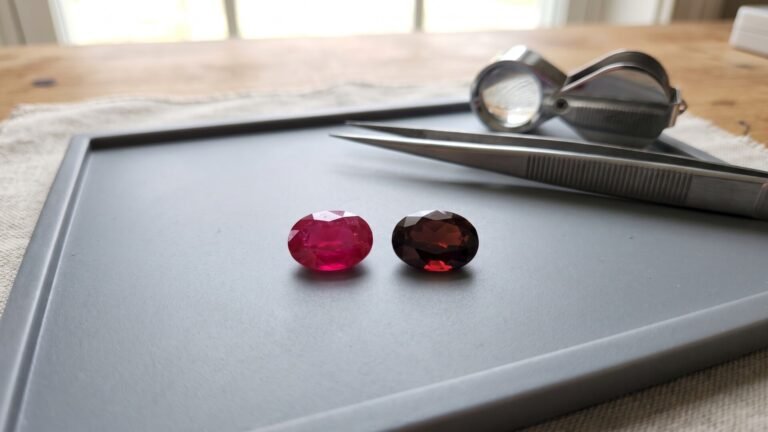
If garnet is not quite the right fit, the closest alternatives each have a trade-off. Ruby offers a similar red but at a much higher price. Red spinel is a durable and brilliant substitute, though good stones are not cheap. Rhodolite is itself a garnet and is the easy budget pick for a pinker look. Rose quartz is cheaper and gentler in color but lacks garnet’s sparkle and depth. If you are comparing options, our birthstones by month hub lists every month’s options.
Care and Maintenance of Garnet Jewelry
Garnet is durable but benefits from proper care. Here is a short version:
1. Daily Handling
- Remove jewelry before cleaning, exercising or gardening.
- Keep perfume, hairspray and harsh chemicals away from the setting.
2. Cleaning Methods
- Warm water, mild soap and a soft brush are always safe.
- Dry with a soft, lint-free cloth.
- Ultrasonic cleaners are usually safe for garnet, but not for stones with fractures or heavy inclusions. GIA does not recommend steam cleaning.
3. Storage Tips
- Keep garnet pieces apart from harder stones such as diamond, sapphire and ruby, which can scratch them.
- Use lined boxes or soft pouches.
- Store somewhere cool and dry.
Garnet in Culture and Tradition
- Healing traditions: Some folk and crystal-healing traditions link garnet with energy, courage and emotional balance. These are beliefs, not medical advice, and garnet should never replace professional care.
- Decorative art: Garnets have been set into crowns, ceremonial objects and religious jewelry.
- Romantic significance: Garnet is often chosen for Valentine’s gifts and anniversary presents, symbolizing passion and loyalty.
Garnet as an Heirloom
Because garnet is reasonably hard, widely available and has no cleavage, vintage garnet pieces often survive in good condition, which makes them popular heirlooms. Older pieces may have worn settings, so have prongs checked before regular wear. Inherited jewelry can carry strong sentimental meaning, and a simple garnet pendant is an easy first piece to pass down.
Garnet Care Checklist
- Remove jewelry before impact or chemical exposure
- Clean regularly with mild soap, warm water and a soft cloth
- Store separately in pouches or lined boxes
- Have settings inspected by a jeweler about once a year
- Avoid steam cleaners and sudden temperature extremes
Frequently Asked Questions About The January Birthstone
What is the January birthstone?
Garnet is the birthstone for January. It is a family of minerals most often seen in deep red, though garnet also occurs in orange, pink, purple and green.
What does garnet symbolize?
Traditionally garnet is linked with protection, passion, loyalty and vitality. These meanings come from folklore and cultural tradition rather than science.
Is garnet a durable gemstone?
Garnet has a Mohs hardness of about 6.5 to 7.5 and no cleavage, so it holds up well in most jewelry. It can still chip under a hard knock, so protective settings are wise for rings.
Is garnet expensive?
It depends on the variety. Common red garnets such as almandine and pyrope are among the most affordable colored gemstones, while rare green tsavorite and demantoid can cost hundreds to thousands of dollars per carat.
How do I clean garnet jewelry?
Use warm soapy water and a soft brush, then dry with a soft cloth. Ultrasonic cleaning is usually safe for clean stones but not for fractured ones, and GIA does not recommend steam cleaning.
Is garnet only red?
No. Garnet also occurs in orange spessartine, pink to purple rhodolite, and green tsavorite and demantoid.
Conclusion
Garnet is a symbol of protection, passion and loyalty, and a practical gemstone to wear. It is available in a far wider range of colors and prices than its reputation suggests, and with simple care it can last for generations.
Explore the full January birthstone guide, browse every month in Birthstones by Month, and read our garnet care guide before you buy.