Herkimer Diamond vs regular Diamond (full comparison)
I have a confession to make. When I first started collecting gemstones over a decade ago, I thought Herkimer Diamonds were just cleverly marketed quartz crystals. I remember holding one at a mineral show in Tucson, turning it over in my palm, and wondering why anyone would pay a premium for what looked like a chunky piece of clear rock. I was wrong. Embarrassingly wrong. And it took a seasoned collector named Margaret, who had been digging in Herkimer County since the 1970s, to set me straight.
“Dear,” she said, pulling a flawless Herkimer from her velvet pouch, “this isn’t just quartz. This is a piece of earth’s history that took nearly 500 million years to form. And it’s rarer than you think.”
That conversation changed how I see gemstones entirely. It also taught me that comparing Herkimer Diamonds to regular diamonds isn’t as straightforward as you might assume. These two stones occupy completely different worlds—one born in the intense pressure of ancient volcanic activity, the other in the carbon-rich depths of the earth’s mantle. Yet they share a name, a certain sparkle, and a place in the hearts of jewelry lovers.
In this article, I’ll walk you through everything I’ve learned about these two fascinating stones. We’ll compare their appearance, durability, investment potential, and emotional meaning. By the end, you’ll know exactly which one speaks to your soul—and your budget.
Understanding Herkimer Diamonds
Definition and Origin
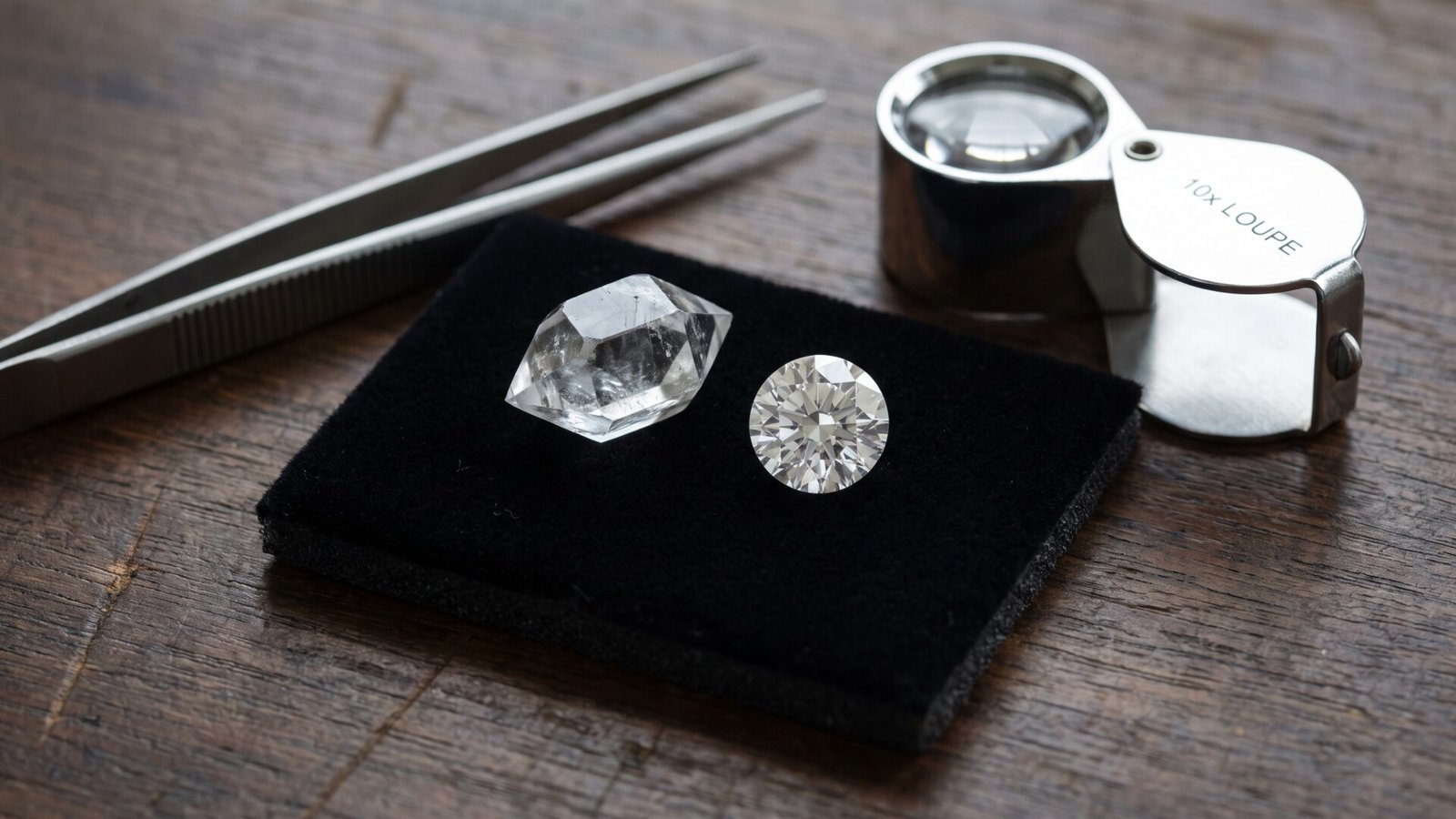
Let me start with what a Herkimer Diamond actually is. Despite its name, a Herkimer Diamond is not a diamond. It’s a double-terminated quartz crystal—meaning it has natural points on both ends—discovered primarily in Herkimer County, New York. The name “diamond” was given by early miners who were struck by its clarity and brilliance, not by its chemical composition.
According to the Gemological Institute of America, Herkimer Diamonds are a variety of rock crystal quartz. What makes them special is their natural formation. Unlike most quartz crystals that grow attached to a matrix, Herkimers form in cavities within dolomite rock, allowing them to develop those distinctive double points. The result is a crystal that’s naturally faceted and often remarkably clear.
The history of Herkimer Diamonds goes back to the 18th century, but their popularity exploded in the mid-20th century when collectors and jewelry designers discovered their unique beauty. Today, the original mining area in New York remains the primary source, though similar crystals have been found in other locations worldwide.
Physical Characteristics
Herkimer Diamonds are known for their exceptional clarity. Many specimens are completely transparent, with few inclusions. The crystals typically range from tiny—barely visible to the naked eye—to about 3 inches in length. Most jewelry-grade stones fall between 3 and 15 carats.
Color is another distinguishing feature. While most Herkimer Diamonds are colorless, they can also exhibit smoky, citrine, or even phantom inclusions—internal growth patterns that create ghost-like layers. These variations add to their collectibility.
The natural facets of a Herkimer Diamond are not cut by human hands. They’re formed by the crystal’s natural growth pattern. This gives each stone a unique, organic appearance that’s quite different from the precision-cut facets of a regular diamond.
Value Factors
Here’s where things get interesting. Herkimer Diamonds are priced based on clarity, size, and color. A small, clear Herkimer might cost $20 to $50 per carat. Larger, flawless specimens can command $100 to $300 per carat. Compare that to regular diamonds, where even a modest 1-carat stone can cost several thousand dollars.
Rarity is a major factor. While Herkimer Diamonds are not as rare as high-quality regular diamonds, the finest specimens—those with perfect clarity, exceptional size, and that signature double termination—are genuinely scarce. The mining process is also labor-intensive, with most crystals recovered through hand-digging and careful extraction.
Market demand for Herkimer Diamonds has grown steadily over the past decade. They appeal to collectors, crystal enthusiasts, and jewelry lovers seeking something unique. However, they don’t have the same global market infrastructure as regular diamonds, which affects their liquidity and resale value.
Understanding Regular Diamonds
Definition and Origin
Regular diamonds need little introduction. They’re composed of pure carbon, formed under extreme heat and pressure deep within the earth’s mantle over billions of years. The first diamonds were discovered in India around 4,000 years ago, and they’ve been symbols of wealth, power, and love ever since.
The historical significance of diamonds is immense. In ancient Rome, they were believed to be splinters from fallen stars. During the Middle Ages, they were thought to possess healing properties. And in the 20th century, De Beers’ marketing campaign made them the universal symbol of engagement.
Today, diamonds are mined in over 30 countries, with Russia, Botswana, and Canada being the largest producers. The diamond industry is a multi-billion dollar enterprise, with a well-established grading system and global market.
Physical Characteristics
The 4 Cs—carat, cut, color, and clarity—are the foundation of diamond grading. Carat weight measures size, cut determines brilliance, color grades from D (colorless) to Z (light yellow), and clarity assesses inclusions.
A well-cut diamond is designed to maximize light return. The precision facets are calculated to create that famous sparkle. The most popular cuts—round brilliant, princess, and cushion—are all human-engineered to achieve specific optical effects.
Colorless diamonds (D-F) are the most valuable, though fancy-colored diamonds like pink, blue, and yellow have their own premium markets. Clarity ranges from Flawless (no inclusions visible under 10x magnification) to Included (inclusions visible to the naked eye).
Value Factors
Diamond pricing is complex. A 1-carat, D-color, internally flawless round brilliant can cost $20,000 or more. The same size stone with lower grades might be $2,000. Market trends fluctuate based on supply, demand, and economic conditions.
Natural diamonds are finite resources. Major mines are aging, and few new discoveries have been made. This has driven prices up over the long term, though lab-grown diamonds have introduced a new dynamic.
Lab-grown diamonds are chemically identical to natural diamonds but cost 30-50% less. They’ve disrupted the market, particularly for lower-end stones. However, natural diamonds still command premium prices for investment-grade stones.
Appearance Comparison
Clarity and Brilliance
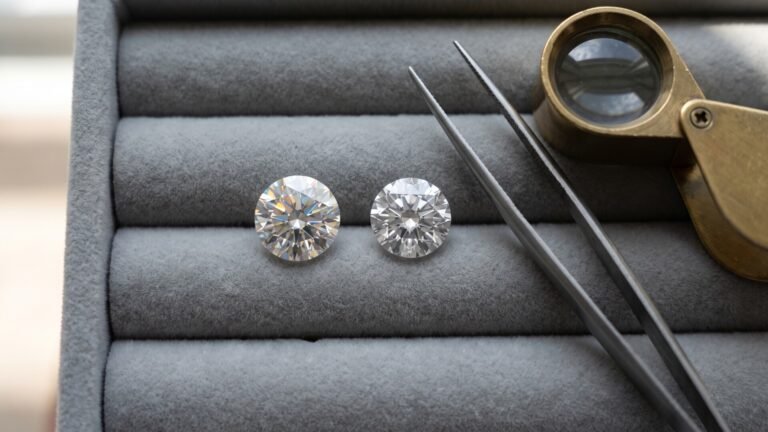
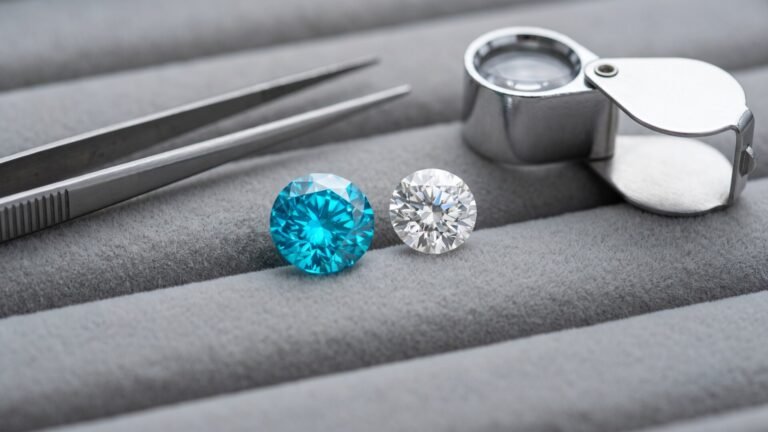
I’ll never forget the first time I held a Herkimer Diamond next to a regular diamond under a jeweler’s loupe. The difference was immediate. The regular diamond had that sharp, crystalline brilliance—almost like looking through perfectly clear ice. The Herkimer was softer, with a warm, internal glow that seemed to come from deep within.
Regular diamonds achieve their brilliance through precision cutting. Every facet is angled to reflect light back to the viewer’s eye. The result is that famous sparkle—what gemologists call “fire” and “scintillation.”
Herkimer Diamonds, being natural crystals, don’t have that same precision. Their brilliance comes from their natural clarity and the way light passes through their double-terminated structure. It’s a different kind of beauty—more organic, less manufactured.
Cut and Shape
Regular diamonds are available in virtually any cut you can imagine. Round brilliant is the most popular, followed by princess, oval, cushion, and emerald cuts. Each cut has its own personality and light performance characteristics.
Herkimer Diamonds are typically left in their natural form. Some are polished or lightly shaped, but most jewelry uses them as they were found. This gives each piece a one-of-a-kind quality. You’ll often see Herkimers in raw crystal form, set in silver or gold wire wraps.
Overall Aesthetic Appeal
This is subjective, but I’ve found that Herkimer Diamonds appeal to people who appreciate natural, organic beauty. They look like tiny pieces of ice frozen in time. Regular diamonds appeal to those who value precision, tradition, and that classic sparkle.
In jewelry settings, Herkimer Diamonds pair beautifully with bohemian and minimalist styles. Regular diamonds are the go-to for classic, luxury, and formal pieces. Both have their place.
Durability Comparison
Hardness and Scratch Resistance
Here’s where regular diamonds have a clear advantage. Diamonds are the hardest natural material on earth, scoring a perfect 10 on the Mohs scale. They can scratch almost anything and are extremely resistant to damage from daily wear.
Herkimer Diamonds score 7 on the Mohs scale. That’s the same as regular quartz. They’re hard enough for everyday jewelry but can be scratched by harder materials like topaz, corundum (sapphire and ruby), and diamonds themselves.
This doesn’t mean Herkimer jewelry is fragile. With proper care, it can last a lifetime. But if you’re looking for a stone that can withstand heavy wear—like an engagement ring worn daily—a regular diamond is the safer choice.
Care Requirements
Both stones require regular cleaning, but the methods differ. For regular diamonds, a gentle scrub with mild soap and water, or an ultrasonic cleaner, works well. Avoid harsh chemicals.
Herkimer Diamonds are more sensitive. Avoid ultrasonic cleaners, which can damage natural fractures. Stick to warm water, mild soap, and a soft brush. Store them separately to prevent scratching.
Investment Potential
Market Trends
I’ve watched the Herkimer Diamond market for years, and it’s been steadily growing. Collectors are paying premium prices for top-quality specimens. However, it’s still a niche market compared to diamonds.
Regular diamonds have a long history of stable value. The market is well-established, with clear pricing standards and global demand. However, the rise of lab-grown diamonds has created uncertainty, particularly for lower-grade stones.
Rarity and Demand
High-quality Herkimer Diamonds are genuinely rare. The finest specimens—those with perfect clarity, large size, and that signature double termination—are becoming harder to find. This scarcity supports their value.
Regular diamonds vary widely in rarity. Flawless, colorless stones are extremely rare and command premium prices. Lower-grade diamonds are more common and have less investment potential.
Liquidity and Resale Value
This is where regular diamonds excel. There’s a global market for diamonds, with established channels for buying and selling. You can sell a diamond relatively quickly if you need to.
Herkimer Diamonds have a smaller market. Selling one might take longer, and you’ll likely get less than you paid unless you have a top-quality specimen. They’re better viewed as collectibles than investments.
Symbolism and Meaning
Cultural Significance
Diamonds have been symbols of eternal love, strength, and purity for centuries. They’re the traditional birthstone for April and the stone for 60th wedding anniversaries.
Herkimer Diamonds are associated with clarity, vision, and spiritual growth. Many believe they enhance intuition and dream recall. They’re often used in meditation and energy work.
Emotional Value
The emotional value of a gemstone often outweighs its monetary worth. A diamond engagement ring carries the weight of a promise. A Herkimer Diamond pendant might represent a personal journey or a connection to nature.
I’ve seen both stones bring tears of joy to people’s eyes. That’s the power of gemstones—they’re not just objects. They’re vessels for our most profound emotions.
Buying Considerations
What to Look for Before Buying
For Herkimer Diamonds, focus on clarity, size, and natural termination. Avoid stones with visible cracks or heavy inclusions. Look for that signature double point.
For regular diamonds, learn the 4 Cs. Buy from a reputable jeweler who provides a GIA or AGS grading report. Consider lab-grown options if budget is a concern.
Common Mistakes to Avoid
Don’t confuse Herkimer Diamonds with real diamonds. They’re different stones with different properties. Don’t overpay for a Herkimer thinking it’s a diamond alternative.
For regular diamonds, avoid buying without a grading report. Don’t focus solely on carat weight—cut quality matters more for brilliance. And never buy from a seller who offers a “scratch test” to prove authenticity.
Price Expectations
Herkimer Diamond jewelry typically ranges from $50 to $500 for most pieces. High-end specimens can cost more.
Regular diamond jewelry starts around $500 for a simple piece and can exceed $50,000 for engagement rings with fine stones.
Top Jewelry Options
Popular Jewelry Styles for Herkimer Diamonds
Herkimer Diamonds shine in bohemian and minimalist settings. Wire-wrapped pendants, raw crystal earrings, and simple silver rings are popular. They also look stunning in nature-inspired designs.
Popular Jewelry Styles for Regular Diamonds
Regular diamonds dominate classic and luxury jewelry. Solitaire engagement rings, diamond stud earrings, tennis bracelets, and halo settings are timeless choices.
Comparison Table of Top Jewelry Options
| Feature | Herkimer Diamond Jewelry | Regular Diamond Jewelry |
|---|---|---|
| Price Range | $50 – $500 | $500 – $50,000 |
| Popular Styles | Bohemian, Minimalist | Classic, Luxury |
| Durability | Moderate | High |
| Care Requirements | Low maintenance | Regular cleaning |
| Resale Value | Limited | Strong |
| Symbolism | Spiritual, Natural | Love, Purity |
Conclusion
So which one should you choose? I’ve wrestled with this question myself, and the answer depends on what you value most.
If you’re drawn to natural beauty, uniqueness, and a connection to the earth’s ancient history, a Herkimer Diamond might be your perfect match. It’s affordable, meaningful, and undeniably charming.
If you prioritize durability, investment potential, and that classic diamond sparkle, a regular diamond is the way to go. It’s a timeless choice that holds its value.
But here’s what I’ve learned: the best gemstone is the one that speaks to your heart. Whether it’s a raw Herkimer crystal or a perfectly cut diamond, the emotional connection matters more than any technical specification.
That first Herkimer I held in Tucson? I bought it from Margaret. It sits on my desk today, catching the morning light. Every time I look at it, I remember her words: “This isn’t just quartz. This is a piece of earth’s history.”
That’s the power of gemstones. They’re not just jewelry. They’re memories.
Frequently Asked Questions About Herkimer Diamond Vs Regular Diamond
What are the main differences between Herkimer Diamonds and regular Diamonds?
Herkimer Diamonds are double-terminated quartz crystals from New York. Regular diamonds are pure carbon formed deep in the earth. Herkimers are softer (7 vs 10 on Mohs), more affordable, and have a natural, organic appearance.
Are Herkimer Diamonds cheaper than regular Diamonds?
Yes, significantly. Herkimer Diamond jewelry typically costs $50-$500, while regular diamond jewelry starts at $500 and can exceed $50,000.
How do I care for my Herkimer Diamond jewelry?
Clean with warm water, mild soap, and a soft brush. Avoid ultrasonic cleaners and harsh chemicals. Store separately from harder stones.
Can Herkimer Diamonds be used in engagement rings?
Yes, but with caution. They’re softer than diamonds and more prone to scratching. They work best in protective settings for occasional wear. For daily-wear engagement rings, a regular diamond is more practical.
What is the resale value of Herkimer Diamonds compared to regular Diamonds?
Regular diamonds have stronger resale value and better liquidity. Herkimer Diamonds have a smaller market, making them harder to sell. They’re better viewed as collectibles than investments.
Are Herkimer Diamonds real Diamonds?
No. Despite the name, Herkimer Diamonds are quartz crystals, not diamonds. The name comes from their diamond-like clarity and brilliance, not their chemical composition. [Internal: Explore more gemstone comparisons at our Gemstones Hub] [Affiliate: Shop Herkimer Diamond jewelry at Etsy] [Affiliate: Shop regular diamond jewelry at Blue Nile] [Internal: Read our complete diamond buying guide]