The Healing Properties of Amethyst
Amethyst has been cherished for centuries, not only for its stunning purple color but also for the healing properties and spiritual significance that tradition has attached to it. This gemstone is part of the quartz family and has been valued across cultures for its reputation as a stone that calms the mind, encourages emotional balance, and supports spiritual awareness.
Important note: The healing properties described here come from folklore and modern crystal-healing practice. There is no scientific evidence that amethyst treats, prevents, or cures any physical or mental health condition, and it should never replace medical care or professional mental-health support. We include these beliefs because many readers value them and because they are part of amethyst’s cultural story, consistent with the disclosure that appears across this site.
In this guide, we explore the traditional healing beliefs about amethyst, what science does and does not say, its metaphysical uses, the different types and color variations, how to incorporate it into jewelry and daily life, and how to select and care for a quality stone. For the full picture of the gem, see our main amethyst guide; for a companion look at the same topic, see healing properties of amethyst crystals: a complete guide.
What is Amethyst?
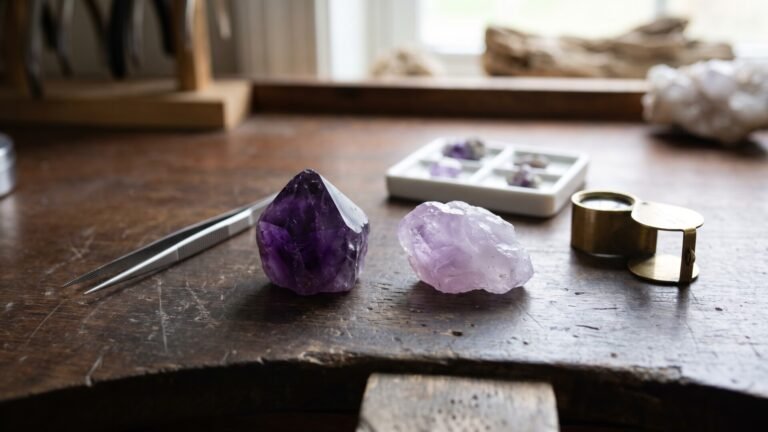
Amethyst is a purple variety of quartz. Its color comes from trace amounts of iron combined with natural radiation over time. Its name originates from the Greek word amethystos, meaning “not intoxicated,” reflecting an ancient belief that the stone could protect against drunkenness. It is also the birthstone for February; see our February birthstone guide.
| Property | Amethyst |
|---|---|
| Chemical composition | SiO₂ (silicon dioxide) with trace iron |
| Mohs hardness | 7 |
| Luster | Vitreous (glass-like) |
| Transparency | Transparent to translucent |
| Cleavage | None, but it can chip or fracture |
| Light and heat | Strong light can fade color; heat can lighten it or turn it yellow or orange |
| Typical sources | Brazil, Uruguay, Zambia, Bolivia |
| Typical price | Roughly $5–$100 per carat for faceted gem-quality stones; raw crystals and tumbled stones cost far less |
Amethyst is prized for its aesthetic beauty and its reputed spiritual properties, making it a favorite in jewelry, meditation practices, and crystal-healing circles.
Historical Significance of Amethyst
Amethyst has a rich history spanning multiple cultures:
- Ancient Greece and Rome: Worn as amulets to prevent intoxication and promote clarity. The wine-like color also linked the stone to Dionysus, the Greek god of wine.
- Christian symbolism: Associated with piety, humility, and spiritual wisdom, and traditionally worn by bishops in their rings
- Eastern traditions: Used in meditation and spiritual practice in a number of traditions
- Royal connections: Deep purple amethyst has long been set in royal and religious jewelry
This historical context contributes to amethyst’s reputation as a protective and spiritually supportive gemstone. Learn more in our guide to amethyst meaning, history, symbolism, and modern uses.
What Does Science Say About Crystal Healing?
Researchers have not found evidence that crystals heal. In one often-cited experiment presented at a British Psychological Society conference in 2001, led by psychologist Christopher French, 80 volunteers meditated while holding either a real quartz crystal or a fake one they believed was real. People holding fake crystals reported the same sensations, such as tingling or warmth, as those holding genuine ones, and people who believed in crystals were more likely to report effects. The study measured perceived effects, not actual healing.
What this suggests is that expectation and ritual can make a calm moment feel more meaningful. That is a real, human effect, and it is one reason many people enjoy keeping amethyst nearby. It does not mean the stone itself has medical properties. If you are struggling with anxiety, insomnia, pain, or any health issue, please speak with a qualified health professional.
The Traditional Healing Beliefs About Amethyst
In crystal-healing traditions, amethyst is described in terms of emotional, mental, physical, and spiritual qualities. These are based on tradition and metaphysical beliefs, and many people find personal value and comfort in them.
1. Emotional Balance
Amethyst is known in crystal practice as a stone of calm and emotional steadiness.
- Traditionally linked to stress relief and a sense of tranquility
- Associated with emotional clarity, as a reminder to pause and process difficult feelings
- Used as a focus object for self-reflection and personal growth
People often reach for amethyst during overwhelm or transition periods. It can serve as a calming ritual, but it is not a treatment for anxiety or any mental-health condition.
2. Mental Clarity and Focus
Amethyst is traditionally said to support clear thinking and decision-making:
- Associated with focus and concentration
- Linked to clarity of thought and problem-solving
- Used to symbolize reducing mental clutter and encouraging mindfulness and presence
Students, professionals, and others sometimes keep amethyst on a desk or hold it during meditation, study, or work sessions as a cue to settle in.
3. Spiritual and Metaphysical Beliefs
Amethyst is strongly associated with spiritual awareness and higher consciousness in many crystal traditions:
- In chakra systems it is linked to the third-eye and crown chakras, which are associated with intuition and spiritual insight; the chakra system is a spiritual framework, not an anatomical one
- Used in meditation as a focus for calming the mind
- Associated with self-reflection and inner wisdom
Practitioners often place amethyst in sacred spaces or meditation areas to support spiritual practice.
4. Sleep and Dreams
Amethyst is a traditional bedtime companion in crystal practice:
- Some people place a small stone on a bedside table as part of a calming evening ritual
- Folklore says it can ward off nightmares
- The ritual itself, not the mineral, may encourage calm before bedtime
There is no evidence that amethyst improves sleep or treats insomnia. If you have persistent trouble sleeping, talk to a doctor. If you like the idea, a smooth stone or a loose tumbled stone on a nightstand is safer than sleeping in jewelry, which can snag, break, or scratch.
5. Physical Wellness (Traditional Claims)
Crystal-healing traditions make a range of physical claims for amethyst. These are not medically proven, and we list them only so readers know what they are:
- Practitioners say it supports general wellbeing and “energy balance”
- Folklore links it to relief of headaches and tension; it should not be used in place of medical advice for headaches or migraines
- Some traditions claim it aids “detoxification” and circulation, claims for which there is no scientific support
Even though these ideas are anecdotal, many people find comfort and mindfulness in making amethyst part of a wellness routine, alongside real medical care when it is needed.
Amethyst Healing Claims at a Glance: Belief vs. Evidence
If you are skimming, this table separates what tradition says from what is actually known. The right-hand column is what gemology and research can support today.
| Common claim | Where it comes from | What can be said |
|---|---|---|
| Prevents drunkenness | Greek amethystos, “not intoxicated”; ancient amulets and wine cups | Folklore only; the name is the documented fact |
| Calms the mind | Meditation and crystal-healing practice | Calm may come from ritual and expectation; no evidence the mineral causes it |
| Helps sleep or ward off nightmares | Folklore and modern bedtime rituals | No evidence; see a doctor for persistent sleep problems |
| Heals headaches, “detoxifies” the body | Crystal-healing claims | No scientific support |
| Opens the third-eye and crown chakras | Chakra system (a spiritual framework) | A belief system, not anatomy |
| Purple color, hardness 7, SiO₂ | Gemology | Verifiable, and the reason amethyst is a durable, affordable gem |
Color Variations and Their Meanings
Amethyst occurs in a range of purple hues, and crystal tradition links each to slightly different symbolic meanings. For a ranking by value, see amethyst color variations ranked from best to worst.
Deep Violet
- Symbolism: Spirituality, intuition, and protection
- Usage: Meditation, statement jewelry, and ritual use
- Traditional feel: Strong, grounding, and stabilizing. It is also the most valued color in gem trade, and the most expensive.
Medium Purple
- Symbolism: Balance, calm, and clarity
- Usage: Everyday wear, emotional support, and reflective practices
- Traditional feel: Harmonizing and nurturing
Light Lavender
- Symbolism: Serenity, gentle energy, and peace
- Usage: Fashion jewelry, soft meditation, and relaxation
- Traditional feel: Soothing, gentle, and uplifting. Pale lilac stones are sometimes sold as Rose de France and are usually the most affordable.
Chevron or Banded Amethyst
- Symbolism: Harmony, duality, and creativity
- Usage: Unique jewelry, artistic pieces, or crystal collections
- Traditional feel: Stimulating insight and spiritual alignment. It is natural purple and white quartz in V-shaped bands; learn more in what is a chevron amethyst and is it valuable?
Understanding these variations can help you choose an amethyst that matches your personal goals or aesthetic preferences.
Incorporating Amethyst into Daily Life
If you enjoy amethyst for its symbolism, here are some ways people include it in their routines:
Jewelry
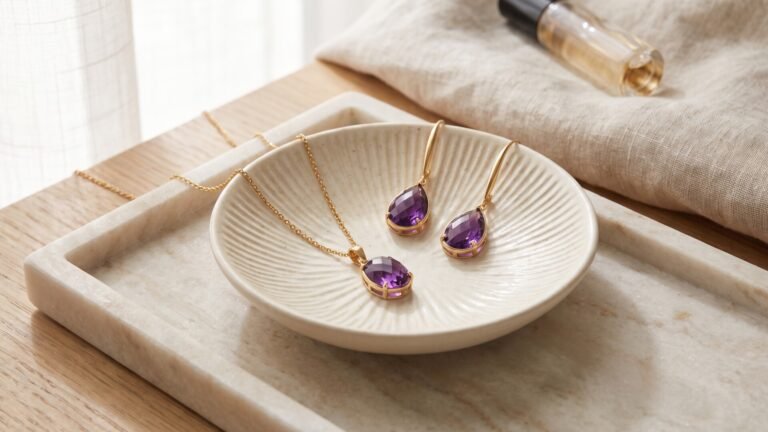
- Rings, necklaces, bracelets, and earrings keep a meaningful symbol close throughout the day. Browse 10 amethyst jewelry pieces for every budget and the best amethyst earrings and necklaces.
- Multi-stone pieces combining amethyst with rose quartz or clear quartz are popular for their colors and combined symbolism
- For daily wear, choose a protective setting; amethyst is hardness 7, which resists most scratches but can chip on knocks
Meditation and Mindfulness
- Holding amethyst during meditation can give the mind a simple point of focus
- Some practitioners place it on the third-eye or crown chakra as part of a visualization
Home and Work Spaces
- Amethyst clusters or geodes add color and a calming visual cue to living or working areas
- Amethyst spheres or points are popular as decorative pieces
Bedtime Rituals
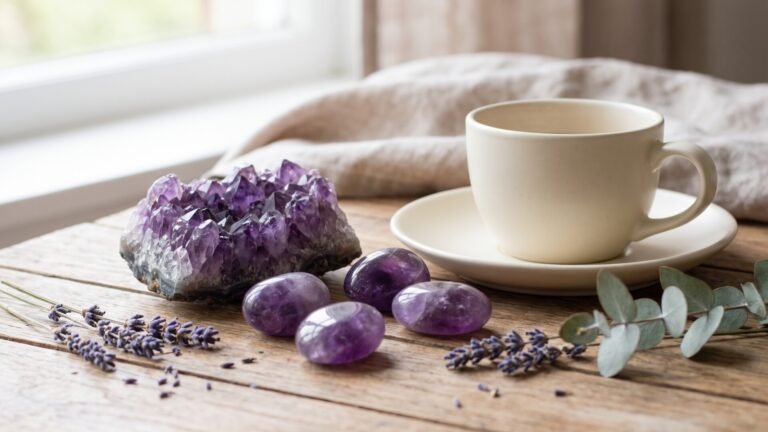
- A small tumbled stone on a nightstand is a common wind-down ritual
- Take off rings and bracelets at night; sleeping in jewelry can bend prongs and snag settings
Using Amethyst Safely: Elixirs, Dyes, and Everyday Wear
Crystal-healing communities sometimes suggest soaking stones in drinking water to make a “crystal elixir.” Amethyst is quartz and does not dissolve in water, but raw and tumbled stones can be dyed, coated, or contain other minerals, and polished stones can carry polishing residue. Because there is no benefit to drinking water that a stone has sat in, the safest approach is not to ingest anything a crystal has touched. If you enjoy the idea, place a sealed glass bottle of water next to the stone rather than putting the stone in the water.
For jewelry, amethyst is a good everyday stone, with a few caveats. At hardness 7 it can be scratched by dust and by harder gems such as sapphire or diamond stored loose in the same pouch, so keep pieces separate. It has no cleavage, but a hard knock can still chip an edge, so rings benefit from bezel or low-profile settings, while pendants and earrings are very low-risk. Avoid long exposure to bright sunlight, hot car dashboards, and sauna or steam rooms, since heat and light can fade or alter the color.
Which Amethyst Piece Fits Which Purpose?
Readers often come to a healing guide wondering which form of amethyst to actually buy. There is no “medicinal” form, so the better question is which form suits how you plan to use it:
- A keepsake you carry daily: a faceted pendant or a small tumbled pocket stone. Pendants are the lowest-risk jewelry type for a softer-than-diamond stone.
- A meditation focus: a smooth palm stone or small point you can hold. See the role of amethyst in meditation.
- Decor for a desk or bedside table: a cluster, geode half, or sphere. Natural color varies, so look at photos of the exact piece.
- A birthday or February gift: fine jewelry with a clearly described stone and a return policy. Our budget-by-budget amethyst jewelry list is a good starting point.
If you are comparing this guide with our other write-ups on the same subject, you can also read the original healing properties of amethyst article, which covers some of the same beliefs from a slightly different angle.
Selecting High-Quality Amethyst
When choosing amethyst for jewelry or your collection, consider these factors:
- Color: Deep, vivid purple is most valued, followed by medium and light tones
- Clarity: Quality stones are transparent and free of major inclusions
- Cut: Faceted stones enhance sparkle; cabochons highlight color depth
- Origin: Brazil, Uruguay, Zambia, and Bolivia are well-known sources, but origin has limited effect on price and cannot be judged by eye
- Authenticity: Glass, dyed quartz, and heat-treated imitations are common. Read how to spot fake amethyst jewelry and its shorter companion how to spot fake amethyst before you buy.
Amethyst is sold by jewelers, gem dealers, and online marketplaces alike. Whoever you buy from, check the seller’s current return policy and ask in writing whether the stone is natural, lab-grown, heat-treated, or dyed, because all four exist in the amethyst market and affect value and care.
Amethyst in Combination with Other Crystals
Amethyst is often paired with other stones in crystal practice for complementary symbolism:
- Rose quartz: Love and compassion
- Clear quartz: Said to amplify intention
- Citrine: Associated with abundance and personal power; much citrine is heat-treated amethyst. See our citrine guide.
- Black tourmaline: Protection and grounding
These combinations are popular in jewelry, crystal grids, and meditation layouts.
Care and Maintenance
Amethyst is relatively durable, but proper care keeps it looking its best:
- Cleaning: Use mild soap, warm water, and a soft brush. Avoid steam cleaners; ultrasonic cleaners are usually fine for untreated stones but not for dyed or fracture-filled ones. Full steps are in how to safely clean amethyst without damaging the polish.
- Avoid harsh chemicals: Bleach and strong cleaners can damage the stone and settings
- Sunlight and heat: Prolonged direct sunlight can fade the purple. Some crystal traditions recommend “charging” stones in sunlight; for amethyst, moonlight or a shaded windowsill is a safer choice for the color.
- Storage: Store separately so harder stones do not scratch it; see how to remove scratches from amethyst jewelry for minor marks
Gift-Giving with Amethyst
Amethyst makes a thoughtful gift thanks to its beauty and symbolism:
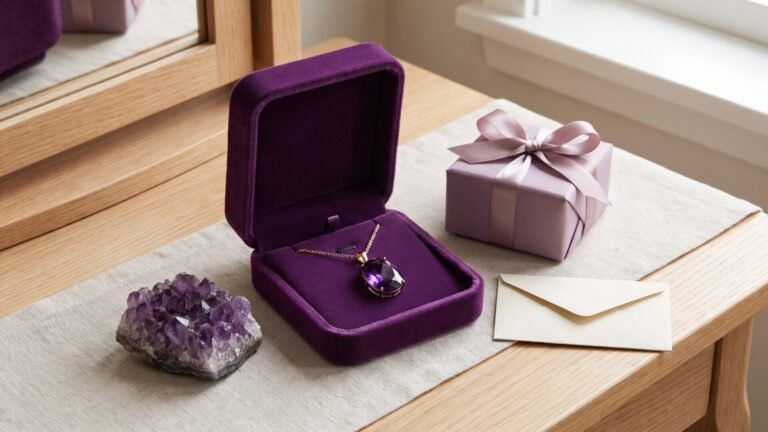
- Birthstone gifts: February-born individuals will particularly appreciate amethyst. See February birthstone meaning: the tranquility of amethyst and amethyst jewelry gift ideas for February birthdays.
- Comfort gifts: A small stone or pendant can serve as a gentle keepsake for someone going through a hard time, offered as a symbol of care rather than a cure
- Spiritual gifts: A meditation set featuring amethyst suits readers who enjoy mindfulness
- Decorative gifts: Clusters, spheres, or geodes make striking home accents
Frequently Asked Questions About The Healing Properties Of Amethyst
Does amethyst really have healing properties?
There is no scientific evidence that amethyst heals physical or mental conditions. Its healing properties come from tradition and crystal-healing beliefs, and any calming effect is most likely due to expectation and ritual.
What do people believe amethyst does?
In crystal practice, amethyst is associated with calm, clarity, protection, intuition, and spiritual awareness. These are symbolic and spiritual beliefs, not medical claims.
Can amethyst help with anxiety or sleep?
No studies show that it can. Many people use amethyst as part of a calming routine, but it is not a treatment. If anxiety or sleep problems are affecting your life, speak with a doctor or mental-health professional.
Is it safe to sleep with amethyst?
A small tumbled stone on a nightstand is fine. Sleeping in amethyst jewelry is not recommended because it can snag, bend, or scratch.
Which chakras is amethyst linked to?
Crystal tradition links amethyst to the third-eye and crown chakras. The chakra system is a spiritual framework, not a medical or anatomical one.
Does amethyst fade in the sun?
Prolonged direct sunlight can fade amethyst’s color, so store and display it out of strong light.
How can I tell if my amethyst is real?
Natural amethyst usually has slight color zoning and tiny inclusions, while glass imitations may show round bubbles. A jeweler or gem lab can confirm. See our guide on spotting fake amethyst.
How much does amethyst cost?
Faceted gem-quality amethyst is roughly $5 to $100 per carat depending on color, size, and cut. Tumbled stones and raw crystals typically cost much less.
Conclusion
Amethyst is a versatile gemstone with a rich history, beautiful color variations, and a long tradition of symbolic meaning. Its calming reputation, spiritual significance, and emotional symbolism make it a meaningful addition to jewelry, meditation practice, and personal rituals, even though science does not support the healing claims.
From deep violet statement pieces to light lavender pendants, amethyst offers something for everyone, whether you seek spiritual reflection, a calming ritual, or simply aesthetic pleasure. Explore more in the gemstones guide or return to the amethyst hub.
By understanding its traditional meanings, color variations, and care needs, you can select the amethyst that best suits your personal goals and lifestyle. For any health concern, please rely on qualified professionals.