Peridot vs Emerald: A Comprehensive Comparison of Color and Price
Peridot and emerald are both green, but they are very different gemstones. They belong to different mineral families, get their color from different elements, sit at opposite ends of the price scale, and ask for very different levels of care. Peridot is the traditional August birthstone and one of the few gems that comes in only one color family; emerald is the May birthstone and one of the most valuable colored gemstones in the world.
This guide compares the two side by side: color, price, durability, treatments, symbolism and buying advice. It is part of our wider gemstone guide, and if you are leaning toward emerald, our full emerald guide goes deeper on meaning, properties and value. Prices below are broad, approximate USD ranges meant to show the gap between the two stones, not quotes; always compare against a current, documented offer from a seller.
Peridot vs Emerald at a Glance
| Property | Peridot | Emerald |
|---|---|---|
| Mineral | Olivine family (gem variety of forsterite-fayalite series) | Beryl (chromium and/or vanadium-bearing) |
| Birthstone | August (modern list) | May (modern and traditional lists) |
| Color | Yellow-green to olive green | Green to slightly bluish green |
| Cause of color | Iron | Chromium and vanadium |
| Mohs hardness | 6.5 to 7 | 7.5 to 8 |
| Toughness | Fair; can chip and has cleavage | Poor to fair; fractures easily because of inclusions |
| Typical clarity | Usually eye-clean in small to medium sizes | Inclusions expected (“jardin”) |
| Common treatment | Usually untreated | Almost always clarity-enhanced with oil or resin |
| Typical price range | Tens to low hundreds of USD per carat | Hundreds to many thousands of USD per carat |
| Best for | Affordable, larger green stones; earrings and pendants | Heirloom-style pieces, protective settings, occasional wear |
Understanding the Basics of Peridot and Emerald
Definition and Origin of Peridot
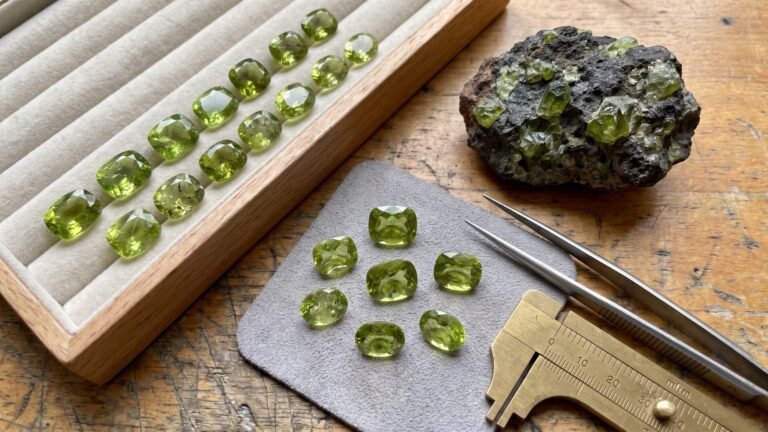
Peridot is the gem-quality form of the mineral olivine. It is unusual because it forms deep in the Earth’s mantle and is carried to the surface in volcanic rock, and because small amounts of it have also been found in certain meteorites known as pallasites. That unusual origin is a big part of why peridot is so often described as a gem “born of fire.”
Peridot has a long history of use. Ancient sources associate it with the island of Zabargad (St. John’s Island) in the Red Sea, and it was traditionally called the “gem of the sun.” According to tradition, it was worn to protect against nightmares and evil spirits. Some writers say the Romans nicknamed it the “evening emerald” because its green stays lively under artificial light; treat the nickname as a traditional story rather than a documented fact.
Today, peridot is mined in several places. Arizona’s San Carlos Apache Reservation is a major source of lighter, yellowish-green stones. Pakistan (the Kohistan region in the Kashmir area) is known for some of the richest, most saturated greens, and Myanmar, China and Vietnam are also commercial sources. Small-scale and artisanal mining is common in the more remote deposits, so if sourcing matters to you, ask a seller what they can document rather than assuming.
Definition and Origin of Emerald
Emerald is the green variety of beryl, the same mineral family that includes aquamarine and morganite. Its color comes from trace amounts of chromium and, in some stones, vanadium. Emeralds typically crystallize where hot, mineral-rich fluids move through rock, which is also why most of them grow with fractures and mineral inclusions.
Emerald has been prized for thousands of years. Tradition links Cleopatra to Egyptian emerald mines, and Mughal-era jewelry famously used large engraved emeralds; our article on emerald in royal jewelry covers that history in detail.
The best-known sources are Colombia, Zambia and Brazil. Colombian emeralds, from areas such as Muzo and Chivor, are known for a pure green that can lean slightly bluish. Zambian emeralds are often a cooler, bluer green and are frequently cleaner than stones from other localities. Brazilian emeralds can be lighter and sometimes more yellowish-green, though fine stones exist. Origin affects price, but it should only be stated for a specific stone when a laboratory report documents it.
One fact every emerald buyer should know: the great majority of emeralds on the market have been clarity-enhanced with oils, resins or similar fillers to make surface-reaching fractures less visible. This is accepted trade practice when disclosed, but it affects value and care. Our guide to ethically sourced emerald brands is a useful next step if provenance matters to you.
Color Comparison
Color Characteristics of Peridot
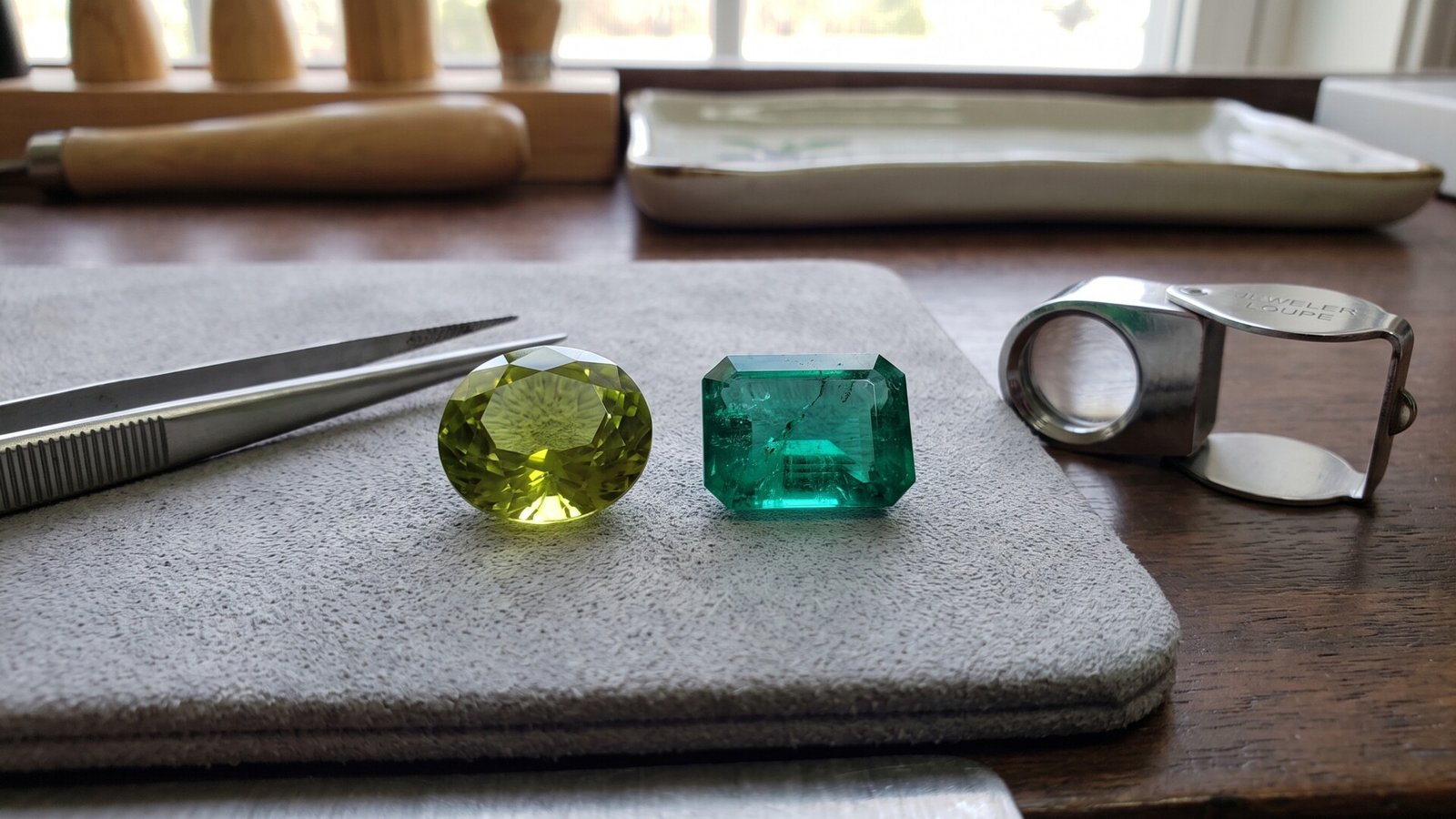
The simplest way to tell the two greens apart is the undertone. Peridot has a yellow-green base, ranging from pale lime to deep olive. Emerald’s base leans blue-green. The most valued peridot is a medium to medium-dark, vivid green with as little brown or yellow as possible, though most stones show at least some yellow, which gives them their warm, sunny look.
Peridot’s color is caused by iron that is part of its basic chemistry, so there is only a narrow range of hues available; you will not find a blue or pink peridot. More iron generally gives a darker, more olive stone, while less iron gives a brighter, lighter green.
Peridot also tends to look pleasant in warm indoor lighting, which is part of its appeal for evening jewelry. Always judge color in more than one kind of light before you buy.
Color Characteristics of Emerald
The finest emeralds show a vivid, saturated green, often with a slight bluish undertone. Chromium and vanadium both contribute to that color. Stones that are too pale are usually priced much lower and may be sold as green beryl rather than emerald, depending on the laboratory’s or seller’s color threshold, while very dark stones can lose brightness.
Emerald color is often uneven, and color zoning is common. A stone whose color looks even and saturated face-up is worth more than one with pale patches.
Inclusions are the other defining feature. The trade calls the web of fractures and mineral crystals inside emerald the “jardin,” French for garden. A completely clean emerald is extremely rare, so a flawless-looking, inexpensive green stone is more likely to be a synthetic, a simulant or a different material than a bargain emerald.
Color Grading and Value
Gemological laboratories such as GIA describe colored-stone color using three components: hue, tone (lightness or darkness) and saturation (intensity). For both peridot and emerald, the strongest value comes from a pleasing hue, a medium to medium-dark tone, and vivid saturation. Brownish or grayish modifiers lower value in either stone.
Color is the biggest driver of price for both, but the scale is completely different. As a rough guide, fine peridot is priced in the tens to low hundreds of dollars per carat, while fine emerald is priced in the thousands per carat and up. Our price-per-carat ranking shows where emerald sits among other birthstones.
Pricing Comparison
Pricing Factors for Peridot
Peridot is priced mainly on color, then size, then clarity and cut. A pale or olive-brown stone is at the budget end; a vivid, medium-dark green in a good cut commands more. Because large, clean peridots are available, price per carat does not rise as steeply with size as it does for emerald, although stones above roughly five to ten carats in top color are noticeably scarcer and cost more per carat than smaller ones.
Most peridot is eye-clean, so visible inclusions are a real reason to pay less. Cut quality matters too: peridot has strong double refraction, which can make the back facets appear doubled when viewed through the top, and a skilled cutter orients the stone to minimize this.
Pricing Factors for Emerald
Emerald is priced on color first, then clarity and transparency, then cut and size, with origin and treatment as important modifiers. Prices rise steeply with size because large, fine emeralds are scarce. Stones with minor, well-filled fractures and strong color sit at the accessible end of fine emerald; stones with unusually clean, vivid color and a laboratory report that documents a classic origin sit far above that.
Treatment disclosure matters. Laboratories typically report the degree of clarity enhancement (none, minor, moderate or significant), and stones with no or minor enhancement trade at a premium. Untreated emerald of good quality is rare and priced accordingly.
Comparative Price Analysis
The table below gives rough retail ranges in USD per carat for natural stones of about one to five carats. Real prices vary widely by seller, market and exact stone, so treat them as orientation only.
| Quality level | Peridot (approx. USD per carat) | Emerald (approx. USD per carat) |
|---|---|---|
| Entry (light or olive color, visible inclusions) | $15 – $50 | $100 – $800 |
| Good (pleasing color, minor inclusions) | $50 – $120 | $800 – $3,000 |
| Fine (vivid color, clean for the type) | $120 – $300 | $3,000 – $10,000 |
| Exceptional (top color, large, documented) | Varies; rare | $10,000 and up |
In practice, a few hundred dollars can buy a handsome, well-cut peridot of several carats, while the same budget buys a small, modest-quality emerald. Neither stone should be bought as a financial investment: colored-stone prices depend on rarity, taste and the seller’s markup, and resale values are often well below retail.
Durability and Care
Durability of Peridot
Peridot has a Mohs hardness of 6.5 to 7, so it can be scratched by everyday grit, which contains quartz dust at hardness 7. It is also brittle and has cleavage, meaning a hard knock can chip it. That makes it a better fit for earrings and pendants than for a ring worn every day; if you want a peridot ring, choose a protective setting and take it off for rough tasks. Our article on wearing peridot in the shower or while sleeping covers everyday habits in more detail.
Clean peridot with warm water, mild soap and a soft brush. Avoid ultrasonic and steam cleaners, strong acids and harsh household chemicals, and avoid sudden temperature changes.
Durability of Emerald
Emerald is harder than peridot at 7.5 to 8 on the Mohs scale, but hardness is not toughness. Because emeralds almost always contain fractures, they can chip or split from a knock that a cleaner stone would survive. That is why jewelers describe emerald as a gem that needs care despite its hardness.
Oil- or resin-filled emeralds should not go in ultrasonic or steam cleaners, and should not be soaked in hot water or solvents, because these can disturb the filler and make fractures more visible. Wipe gently with a soft cloth or clean briefly with lukewarm, mildly soapy water.
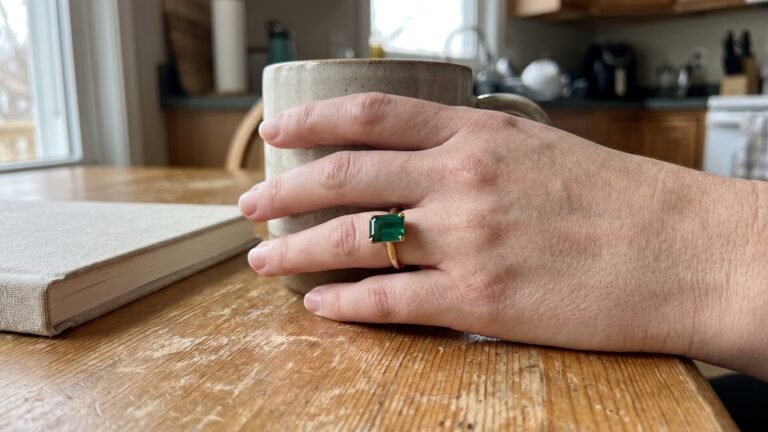
If you want an emerald ring for regular wear, choose a protective setting such as a bezel or halo and remove it before dishes, gardening or the gym. Our guide Is an Emerald Engagement Ring Practical? goes deeper, and emerald vs green tourmaline compares it with a tougher green alternative.
Which Is Better for Everyday Jewelry?
Neither stone is ideal for rough daily wear in a ring. Peridot suits earrings, pendants and occasional rings; emerald suits the same pieces in protective settings and is best saved for special occasions if it is in a ring. If you want a green stone for a daily-wear ring, green tourmaline, green sapphire or tsavorite garnet are tougher options, each with its own price level and trade-offs.
Symbolism and Cultural Significance
The meanings below come from tradition, folklore and modern crystal practice. They are beliefs and cultural associations, not scientific or medical facts, and nothing here is health advice.
Symbolism of Peridot
Peridot is traditionally associated with light, optimism and protection. Old traditions say it was worn against nightmares and evil spirits, and medieval writers linked it to cheerfulness. As the August birthstone it is often linked with renewal and strength, and it is the traditional stone for a 16th wedding anniversary. In modern crystal practice it is connected with the heart chakra and emotional balance, a belief rather than an established effect.
Symbolism of Emerald
Emerald has long stood for love, rebirth and abundance. In Roman tradition it was linked to Venus, and various cultures associated it with fertility and wisdom. As the May birthstone it represents hope and growth, and it is the gem traditionally given for 20th and 55th wedding anniversaries. Our emerald meaning guide explores these traditions in depth.
Buying Considerations
What to Look for When Buying Peridot
Prioritize color first: look for a vivid green without a strong brown or gray cast. Then check the cut for liveliness and for how visible the doubled back facets are, and finally size. Do not chase carat weight at the expense of color, since a smaller, vivid stone usually looks better than a larger, dull one.
Ask whether the stone is natural, since lab-grown peridot exists, and ask for a return policy. For a ring, ask about setting protection. See our peridot guide for more about the stone itself.
What to Look for When Buying Emerald
Start with color and transparency, then judge how visible the inclusions are and whether any fractures reach the surface. Ask the seller for written disclosure of treatment and whether the stone is natural, lab-grown or a simulant. Lab-grown emerald has the same chemistry as natural emerald, while a simulant only imitates its look.
For significant purchases, ask for an independent laboratory report from a recognized gemological lab such as GIA, AGL or a comparable lab, which can document identity, treatment level and, if requested, origin. Be wary of any seller who claims an origin or “untreated” status without paperwork. Our article on ethically sourced emeralds lists brands to consider, and emerald vs jade helps if you are comparing other green stones.
Common Mistakes to Avoid
The most frequent errors are treating peridot as a cheap substitute for emerald when it is a different stone with its own appeal, buying emerald without treatment disclosure, assuming a high Mohs number means a stone is tough, and putting either stone in an ultrasonic cleaner. A good rule: buy peridot for its bright color and value, buy emerald for its character and rarity, and match the setting to how you will actually wear the piece.
Conclusion
Peridot and emerald are different stones for different purposes. If you want a bright, affordable green in a larger size for earrings, pendants or occasional rings, peridot offers excellent value. If you want the history and rarity of emerald, accept that it is more expensive, usually treated, and needs a protective setting and gentle care. Both make meaningful birthstone gifts, and the right choice comes down to your budget, your lifestyle and the story you want the piece to tell.
Frequently Asked Questions About Peridot Vs Emerald
What is the main difference in color between peridot and emerald?
Peridot is yellow-green to olive green, with a warm undertone, because its color comes from iron. Emerald is a purer green that often leans slightly blue, because its color comes from chromium and vanadium.
How does the price of peridot compare to emerald?
Peridot is far more affordable. Typical retail prices run from roughly $15 to a few hundred dollars per carat, while emerald typically starts in the hundreds of dollars per carat and reaches thousands or more for fine stones. Exact prices vary by seller and quality.
Is peridot or emerald a better investment?
Neither should be bought as a financial investment. Colored-stone prices depend on rarity, taste and retail markup, and resale values are often lower than retail. Buy for beauty and meaning.
How do I care for peridot versus emerald jewelry?
Clean both with lukewarm water, mild soap and a soft brush or cloth, and avoid ultrasonic and steam cleaners. Peridot can chip and scratch, while emeralds usually contain oil or resin fillers and fractures, so they need extra caution with heat, solvents and impacts.
Can peridot be found in larger sizes than emerald?
Yes. Large, clean peridots are widely available and affordable, while large emeralds with good color and transparency are rare and expensive.
Which is better for an everyday ring, peridot or emerald?
Neither is ideal for hard daily wear. Peridot is softer (Mohs 6.5 to 7) and can chip; emerald is harder (7.5 to 8) but fracture-prone. Choose a protective setting and remove the ring for rough tasks, or consider a tougher green stone such as green tourmaline or tsavorite garnet.
Are emeralds usually treated?
Yes. Most emeralds are clarity-enhanced with oil or resin, which is accepted if disclosed. Ask for written disclosure, and ask for a laboratory report on significant purchases.
Which is the birthstone for which month?
Peridot is the modern birthstone for August, and emerald is the birthstone for May. Lists can vary by country and organization.