What is a Chevron Amethyst and is it valuable?
I have a confession. The first time I saw a Chevron Amethyst, I thought it was fake.
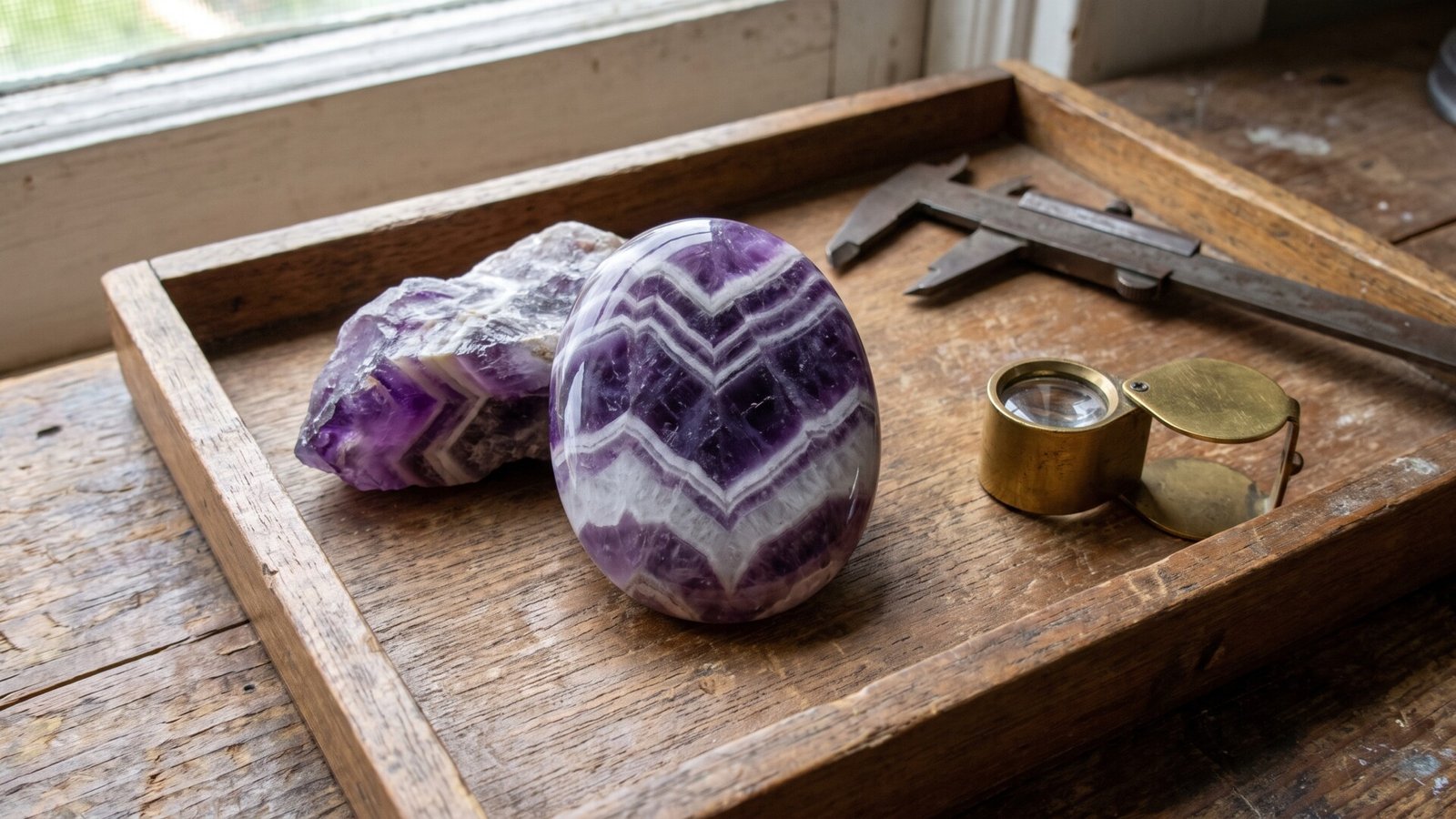
I was at a gem show in Tucson, years ago, wandering past tables piled high with amethyst geodes from Brazil. Every single one was that familiar, uniform purple. Then I stopped dead in front of a dealer’s case. Inside was a cabochon unlike anything I’d ever seen. Deep, regal purple bands alternated with stark, milky white stripes. It looked like a piece of a zebra had been dipped in wine. My first thought was, “That’s dyed. Or treated. Or a clever composite.”
The dealer, a crusty old miner from Namibia, saw my skepticism. He just laughed, picked up the stone, and handed it to me. “Here,” he said. “Look through it.”
I held it up to the light. The purple was pure, natural amethyst color. The white was pure, natural quartz. The boundary between them was sharp, almost crisp. There was no bleeding, no artifice. It was entirely natural. I felt my jaw drop. And in that moment, I knew I had to understand this stone.
That’s the power of Chevron Amethyst. It looks like a contradiction — a gemstone that is both one thing and another. And as it turns out, that duality is exactly what makes it so valuable, both spiritually and financially.
In this article, I’m going to walk you through everything I’ve learned about Chevron Amethyst over the years. We’ll cover what it is, why it’s suddenly everywhere, how to judge its quality, and — most importantly — whether it’s worth your money. Whether you’re a collector, a jewelry lover, or someone just curious about a stone that looks like a dream, you’re in the right place.
Let’s start with the basics.
Understanding Chevron Amethyst
Definition and Characteristics
Here’s the simplest way to think about Chevron Amethyst: it’s a natural combination of amethyst and white quartz, growing together in a distinctive banded pattern.
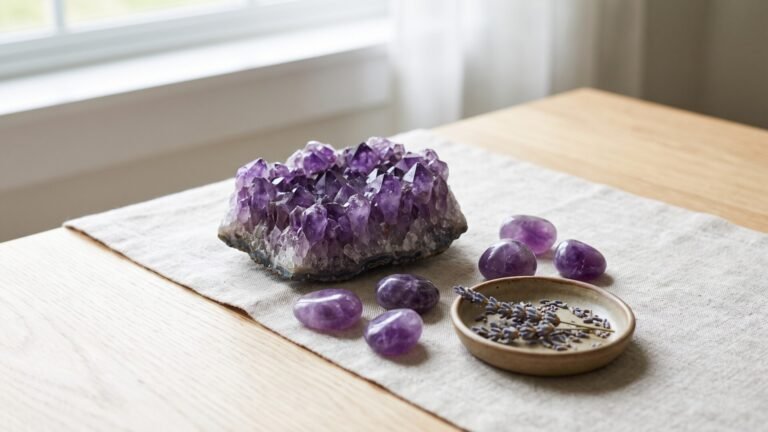
The purple bands are amethyst — the same stone you know from birthstone jewelry for February. The white bands are milky quartz, sometimes called “white quartz” or “rock crystal.” But here’s the thing: they don’t just mix randomly. They form in alternating layers, creating a V-shaped or chevron pattern. That’s where the name comes from.
I’ve seen Chevron Amethyst that looks like a stormy sky, with jagged purple bolts against a white background. I’ve seen pieces that resemble a fingerprint, with delicate, repeating bands. And I’ve seen rough specimens that look like a slice of a geode, where the purple and white layers are thick and dramatic.
The key characteristic is contrast. The more distinct the purple and white bands, the more desirable the stone. When the bands are blurry or the colors bleed into each other, the value drops significantly.
Geological Formation
This is where it gets fascinating. Chevron Amethyst forms in the same volcanic and hydrothermal environments as regular amethyst. But something goes slightly differently.
In a typical amethyst geode, silica-rich water fills a cavity in volcanic rock. As the water cools and evaporates, quartz crystals grow inward. Trace amounts of iron, combined with natural radiation from the surrounding rock, create the purple color. The result is a uniform amethyst.
But in Chevron Amethyst, the conditions change during growth. The silica solution might become temporarily depleted in iron, causing a layer of white quartz to form. Then, as fresh iron-rich water seeps in, the purple returns. This cycle repeats, creating those alternating bands.
According to the Gemological Institute of America, this process is relatively rare. Most amethyst deposits produce uniform color. Chevron Amethyst requires a very specific, oscillating chemistry. That’s why it’s less common than regular amethyst.
The most famous sources are in Brazil, particularly the state of Rio Grande do Sul. But I’ve also seen beautiful material from Uruguay, Zambia, and even some small deposits in the United States. Each location produces slightly different patterns. Brazilian Chevron Amethyst tends to have bold, wide bands. African material often has finer, more intricate lines.
Historical Context
Origins of Chevron Amethyst
Let me tell you about the first time I encountered the historical lore of Chevron Amethyst. I was at a small shop in Sedona, Arizona, and the owner — a woman in her seventies with silver hair and a knowing smile — handed me a pendant. “This is a dream stone,” she said. “The ancient Greeks believed it protected you from drunkenness. But this one? This one protects you from confusion.”
She wasn’t wrong about the ancient Greeks. The word “amethyst” comes from the Greek amethystos, meaning “not intoxicated.” They wore it to prevent drunkenness and to keep a clear head. But Chevron Amethyst has its own separate lore.
In many Native American traditions, the chevron pattern is seen as a symbol of the sacred mountain or the path between worlds. The white bands represent the physical world; the purple bands represent the spiritual. Together, they’re a bridge.
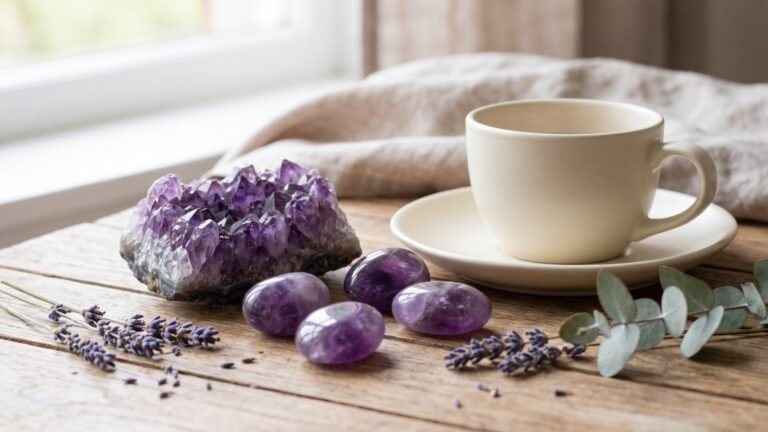
In metaphysical circles — and I’ll admit, I’m a skeptic by nature — Chevron Amethyst is often called the “stone of spiritual awakening.” Practitioners believe it combines the calming, intuitive energy of amethyst with the cleansing, amplifying energy of white quartz. I’ve met people who swear it helps them meditate more deeply. I’ve also met people who just think it’s beautiful.
What I can tell you, from a historical perspective, is that Chevron Amethyst was not widely traded in the ancient world. The major sources in Brazil weren’t discovered until the 19th century. So while amethyst itself has a 4,000-year history, Chevron Amethyst is a relative newcomer to the global market. That doesn’t make it less valuable — just less historically documented.
Physical Properties
Color and Clarity
The color of Chevron Amethyst is its most defining feature. The purple should be a medium to deep violet — not too pale, not so dark that it looks black. The white should be bright and clean, not gray or yellowish.
Here’s a mistake I made early on: I assumed that the most valuable Chevron Amethyst had the darkest purple. That’s true for regular amethyst, where deep “Siberian” color commands a premium. But for Chevron Amethyst, contrast is king. A stone with medium purple and crisp white bands can be more valuable than one with very dark purple and muddy white bands.
Clarity is also important. Both the amethyst and the white quartz should be eye-clean — free from visible inclusions. But here’s the nuance: some Chevron Amethyst contains natural “jardin” (French for “garden”), which are tiny inclusions that look like little landscapes. In regular amethyst, these lower the value. In Chevron Amethyst, some collectors actually prefer them, because they add character to the bands.
Hardness and Durability
On the Mohs hardness scale, Chevron Amethyst ranks at 7 — exactly the same as regular quartz. That’s good news for jewelry wearers. A hardness of 7 means it’s durable enough for everyday wear, including rings and bracelets, as long as you’re careful.
But here’s the catch: the banding creates natural planes of weakness. If you drop a Chevron Amethyst ring on a hard floor, it can fracture along those bands. I learned this the hard way when I dropped a cabochon I was setting. It split cleanly along a white quartz layer. The stone was ruined.
So while the hardness is good, the structure requires care. I recommend Chevron Amethyst for earrings, pendants, and rings that are worn occasionally. For daily-wear rings, consider a protective setting like a bezel.
Value Factors of Chevron Amethyst
Rarity and Availability
This is the question everyone asks: is Chevron Amethyst rare?
The answer is complicated.
Regular amethyst is one of the most abundant gemstones on Earth. It’s found on every continent. That abundance keeps prices low — a good quality regular amethyst might cost $20 to $50 per carat.
Chevron Amethyst is less common. It requires those specific, oscillating conditions I described earlier. According to the International Gem Society, Chevron Amethyst represents only a small fraction of total amethyst production. Most amethyst deposits produce uniform color. The banded variety is a geological anomaly.
But “rare” doesn’t always mean “valuable.” The market for Chevron Amethyst is smaller than for regular amethyst. There are fewer buyers. So while supply is limited, demand is also limited. That keeps prices moderate — typically $30 to $100 per carat for good quality, and up to $200 per carat for exceptional pieces.
For comparison, a fine natural amethyst might sell for $50 per carat. A fine Chevron Amethyst might sell for $80 per carat. The premium is real, but it’s not astronomical.
Quality Assessment
When I evaluate a Chevron Amethyst, I use four criteria:
Color Saturation: The purple should be vivid, not washed out. I look for a medium to medium-dark violet. Avoid stones that are too light or too dark.
Band Contrast: This is the most important factor. The purple and white bands should be clearly defined, with sharp boundaries. Blurry or muddy bands reduce value significantly.
Pattern Appeal: The chevron pattern should be visually interesting. Symmetrical V-shapes are desirable, but I’ve also seen beautiful asymmetrical patterns. The key is that the pattern draws the eye.
Clarity: Both the amethyst and white quartz should be transparent, with minimal inclusions. However, as I mentioned, some inclusions are acceptable and even desirable in certain pieces.
I’ve created a simple table to help you compare:
| Factor | Excellent | Good | Poor |
|---|---|---|---|
| Color Saturation | Deep violet, vivid | Medium violet, moderately vivid | Pale or very dark, dull |
| Band Contrast | Sharp, distinct boundaries | Mostly distinct, slight blurring | Blurry, colors bleed together |
| Pattern Appeal | Symmetrical, eye-catching | Moderate interest | Boring or chaotic |
| Clarity | Eye-clean | Minor inclusions visible under magnification | Heavy inclusions visible to naked eye |
Certification and Appraisal
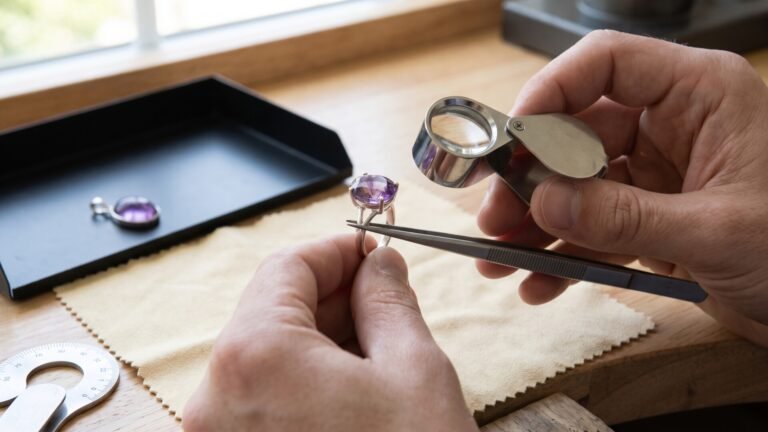
I cannot stress this enough: always buy certified Chevron Amethyst.
The gemstone market is filled with treated stones. Some dealers heat-treat amethyst to improve color. Others dye white quartz to mimic the chevron pattern. I’ve even seen synthetic Chevron Amethyst that was grown in a lab.
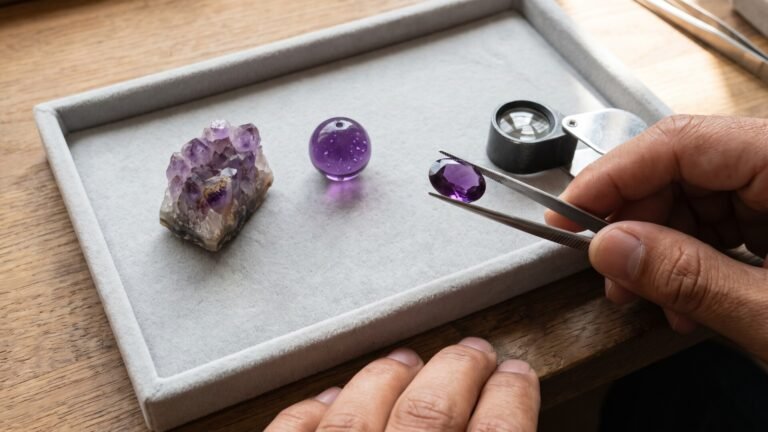
A certificate from a reputable lab — like the Gemological Institute of America (GIA), the American Gemological Laboratories (AGL), or the International Gemological Institute (IGI) — will tell you if the stone is natural, if it has been treated, and if the color is natural.
Don’t trust a jeweler who says, “I can tell just by looking.” I’ve been fooled myself. A certificate protects you.
Investment Potential
Market Trends
I’ll be honest with you: Chevron Amethyst is not a high-growth investment like a rare diamond or a fine emerald. It’s not going to appreciate 20% year over year.
But it has shown steady growth over the last decade. The rise of “crystal healing” and metaphysical jewelry has driven demand. Instagram and Pinterest have made unique gemstones more visible. Chevron Amethyst, with its striking pattern, photographs beautifully.
I’ve seen prices increase roughly 5-10% per year for top-quality material. That’s modest, but it’s real.
Long-term Outlook
The long-term outlook depends on supply. The major deposits in Brazil are finite. As they are depleted, prices should rise. But new deposits could be discovered, which would increase supply and stabilize prices.
I believe that high-quality Chevron Amethyst — with excellent color, contrast, and pattern — will hold its value and appreciate slowly over time. It’s a good addition to a diversified gemstone portfolio, but not a cornerstone.
Risks and Considerations
Here are the risks:
Liquidity: Chevron Amethyst is not as liquid as gold or diamonds. If you need to sell quickly, you may have to accept a lower price.
Market Fads: The metaphysical market can be fickle. If interest in crystal healing wanes, prices could drop.
Treatment Disclosure: Unscrupulous sellers may sell treated or synthetic stones as natural. Always buy certified.
Fracture Risk: The banding makes the stone more prone to fracture. Handle with care.
Jewelry Applications
Popular Jewelry Designs
Chevron Amethyst is a favorite among artisan jewelers. The natural banding makes each piece unique. I’ve seen it in:
Cabochon Rings: The most common setting. A smooth, domed cabochon shows off the pattern beautifully.
Faceted Stones: Less common, but striking. Faceting can emphasize the bands and create a shimmering effect.
Pendants and Necklaces: The stone’s size and weight make it ideal for statement pieces.
Earrings: Smaller cabochons or faceted stones work well.
Bracelets: Beaded Chevron Amethyst bracelets are popular in the metaphysical market.
I personally own a Chevron Amethyst pendant that I bought from a small artisan in Oregon. It’s set in sterling silver, with a simple bezel. Every time I wear it, someone asks about it. That’s the power of a unique gemstone.
Care and Maintenance
Chevron Amethyst is relatively easy to care for, but it requires some attention.
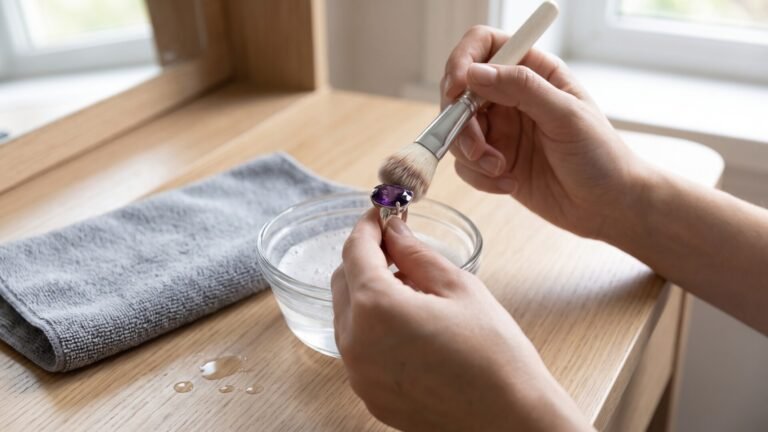
Cleaning: Use warm water, mild soap, and a soft brush. Avoid ultrasonic cleaners and steam cleaners, which can damage the stone.
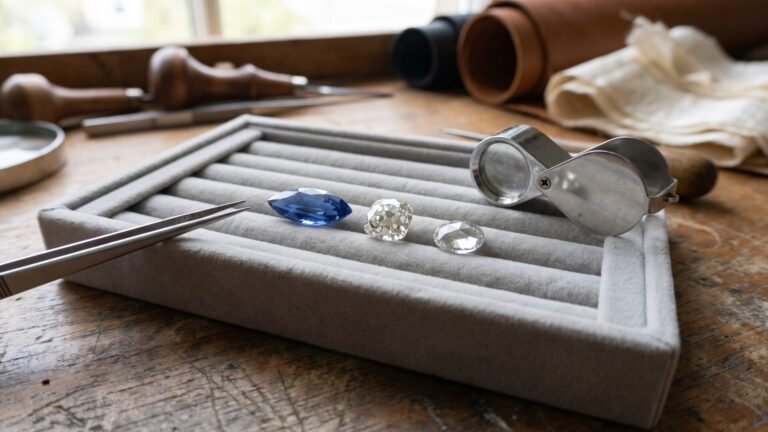
Storage: Store separately from harder stones (like diamonds and sapphires) to prevent scratching. A soft pouch or a separate compartment in a jewelry box is ideal.
Avoid: Harsh chemicals, extreme temperature changes, and hard impacts.
I clean my Chevron Amethyst pendant once a month. It takes two minutes. That’s all it needs.
Buying Guide for Chevron Amethyst
What to Look for Before Buying
Here’s my checklist for buying Chevron Amethyst:
Natural Origin: Confirm the stone is natural, not synthetic or treated.
Color and Contrast: Look for vivid purple and bright white bands with sharp boundaries.
Pattern: Choose a pattern that appeals to you. There’s no “wrong” pattern, but symmetrical V-shapes are generally more valuable.
Clarity: Eye-clean is best, but minor inclusions are acceptable.
Cut: Cabochon cuts are most common. Make sure the cut is well-proportioned and shows the pattern to its best advantage.
Certification: Always buy certified stones from reputable labs.
Price: Compare prices across multiple sellers. Don’t pay a premium without justification.
Common Mistakes to Avoid
I’ve made all of these mistakes. Learn from me.
Buying Without Certification: I once bought a “Chevron Amethyst” pendant that turned out to be dyed quartz. I lost $200.
Ignoring Contrast: A stone with beautiful purple but muddy white bands is not valuable. Don’t be swayed by color alone.
Overpaying for Size: Larger stones are rarer, but only if they have good quality. A large, low-quality stone is worth less than a small, high-quality stone.
Assuming All Chevron Amethyst is the Same: Stones from different locations have different characteristics. Learn the differences.
Price Expectations
Here’s a rough price guide based on my experience:
| Quality | Price per Carat (Cabochon) | Price per Carat (Faceted) |
|---|---|---|
| Low (pale color, blurry bands) | $10 – $20 | $15 – $30 |
| Medium (good color, moderate contrast) | $30 – $60 | $40 – $80 |
| High (vivid color, sharp contrast, eye-clean) | $80 – $150 | $100 – $200 |
| Exceptional (deep color, perfect pattern, flawless) | $150 – $250 | $200 – $300+ |
Remember, these are retail prices. Wholesale prices are typically 30-50% lower.
Where to Buy
I recommend the following:
Reputable Online Retailers: [Affiliate: Shop Chevron Amethyst Jewelry at James Allen] and [Affiliate: Browse Chevron Amethyst at Blue Nile] both offer certified stones with clear photos.
Gem Shows: If you can attend a gem show, you can see the stones in person and negotiate prices.
Artisan Jewelers: Small, independent jewelers often have unique pieces. Look for those who specialize in gemstone jewelry.
Avoid: eBay and Etsy without careful vetting. There are reputable sellers on both platforms, but there are also many who sell treated or synthetic stones.
Frequently Asked Questions About Chevron Amethyst
What is the difference between Chevron Amethyst and regular Amethyst?
Chevron Amethyst is a natural combination of amethyst and white quartz, forming alternating banded patterns. Regular amethyst is uniform in color, without bands. Chevron Amethyst is rarer due to its specific formation conditions.
Is Chevron Amethyst considered a precious stone?
No. Precious stones are typically diamonds, rubies, sapphires, and emeralds. Chevron Amethyst is a semi-precious stone. However, high-quality pieces can be valuable.
How do you care for Chevron Amethyst?
Clean with warm water, mild soap, and a soft brush. Avoid ultrasonic cleaners and steam cleaners. Store separately from harder stones. Avoid harsh chemicals and extreme temperature changes.
Can Chevron Amethyst be worn every day?
Yes, but with care. The Mohs hardness of 7 makes it durable, but the banding creates planes of weakness. I recommend occasional wear for rings, and daily wear for earrings and pendants.
What is the spiritual significance of Chevron Amethyst?
In metaphysical circles, Chevron Amethyst is believed to combine the calming energy of amethyst with the amplifying energy of white quartz. It is often used for meditation and spiritual awakening. These are beliefs, not scientifically proven facts.
How can I tell if my Chevron Amethyst is genuine?
Look for natural banding that is consistent throughout the stone. Dyed stones will have color that concentrates in cracks or appears unnatural. A certificate from a reputable lab like GIA or AGL is the best guarantee. If a jeweler offers to “scratch test” your stone, walk out.