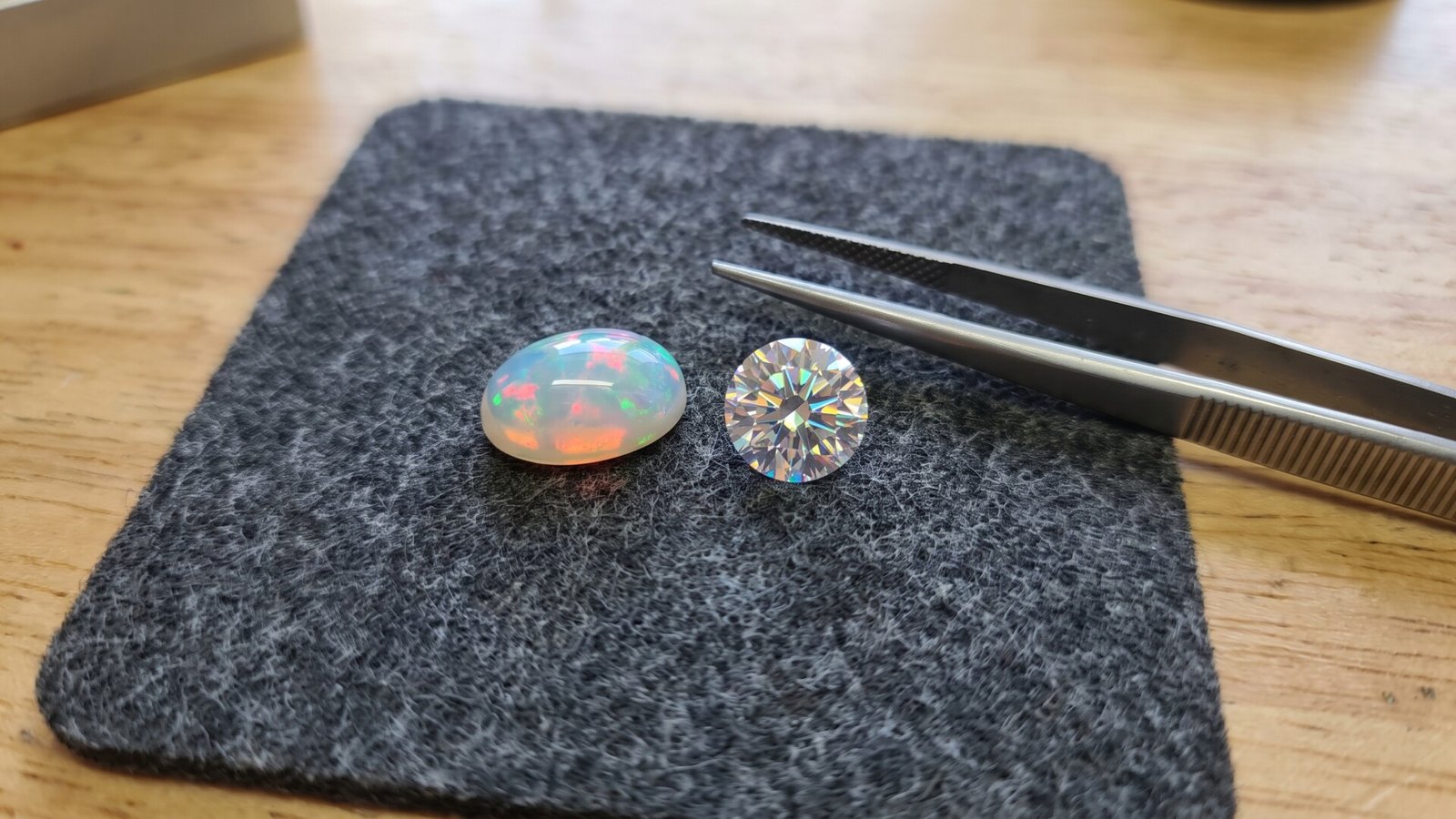
Opal vs Moissanite for fire and shine
Opal and moissanite can both make a person stop and look, but they do it in opposite ways. Opal glows with patches of shifting color that seem to move inside the stone. Moissanite throws sharp flashes of white light and rainbow colors, often with more fire than a diamond. One is a natural, fragile, one-of-a-kind gem; the other is a durable, nearly always lab-grown stone that people use as a diamond alternative. This guide compares them on fire and shine, hardness and everyday wear, price factors, buying checks, care and ethics, so you can choose the one that fits your life.
For the full profile of each stone, see our complete opal guide and, for diamond alternatives, moissanite vs. white topaz vs. diamond. This article is part of our gemstones hub.
Opal vs Moissanite at a Glance
| Feature | Opal | Moissanite |
|---|---|---|
| Material | Hydrated silica, non-crystalline (amorphous) | Silicon carbide, its own mineral species |
| Source of the effect | Play-of-color from light diffracting through a grid of tiny silica spheres | Very high brilliance and dispersion (fire) |
| Mohs hardness | About 5.5 to 6.5 | 9.25 |
| Natural or lab-grown? | Natural (lab-created opal exists and should be labeled) | Natural moissanite is extremely rare; nearly all jewelry moissanite is lab-grown |
| Birthstone | October | Not a birthstone; often chosen as a diamond alternative (April) |
| Best for | Pendants, earrings, occasional rings | Everyday rings, engagement rings |
Understanding Opal and Moissanite
Opal: Play-of-Color
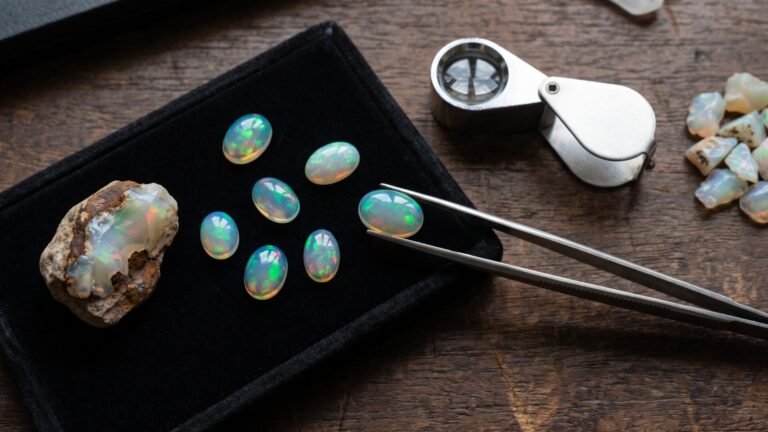
According to GIA, opal forms when silica-rich water seeps into rock and leaves deposits as it evaporates. In precious opal, sub-microscopic silica spheres are stacked in a grid-like pattern, and light diffracting between them produces play-of-color; the size of the spheres sets which colors appear. Common opal lacks that effect. Because the internal structure is not crystalline, opal behaves very differently from most gems.
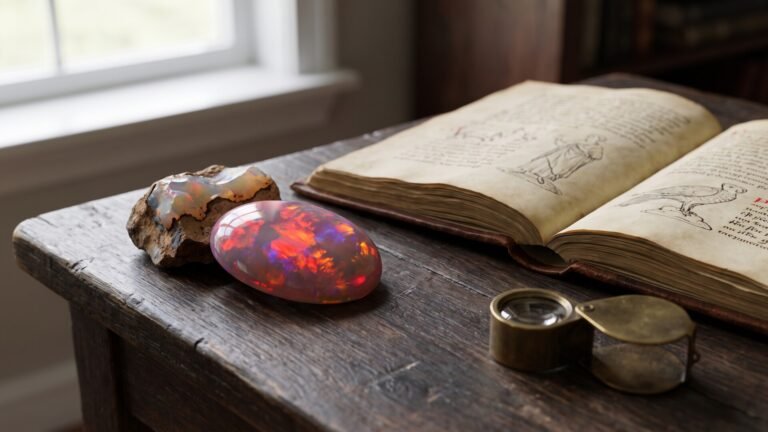
GIA lists the main types as white or light opal, black opal, fire opal (also called Mexican opal), boulder opal and crystal or water opal. Black opals have a dark body tone that makes the colors stand out and are considered the rarest, while white opals are more common. Fire opal is prized for warm orange to red body color and may not show play-of-color. GIA also notes that roughly 90% of the world’s opal comes from Australia. Read the folklore in the fire of opal: myths and legends and the symbolism in opal meaning.
Moissanite: Brilliance and Fire
Moissanite is silicon carbide. It was first found by Henri Moissan in 1893 in material from a meteorite crater in Arizona, and natural moissanite is so rare that essentially all moissanite in jewelry is grown in a laboratory. A lab-grown moissanite is a real moissanite, not a fake, but it is not a diamond either: it is a different mineral used as a diamond alternative (a simulant of diamond). Standard gemological values put its refractive index around 2.65 to 2.69 (diamond is about 2.42) and its dispersion, which creates the rainbow flashes called fire, around 0.104 (diamond is about 0.044). In practice, a well-cut moissanite shows more colorful flashes than a diamond, which some people love and others find too bright. Our diamond alternatives: moissanite vs. white sapphire guide covers other options.
Moissanite is graded much like diamond by color, clarity, cut and size. Most jewelry stones are sold in near-colorless grades, often labeled D to F or G to I, and are sized by diameter in millimeters, so a “1-carat equivalent” matches the diameter of a 1-carat diamond even though the weight differs. Moissanite is also less dense than diamond, so a stone of equal diameter weighs less than the diamond it imitates.
Fire and Shine: What the Terms Mean
Fire in a transparent gem is dispersion, the splitting of white light into rainbow colors. Brilliance (shine) is the white light returned to your eye. Moissanite excels at both when it is well cut. Opal’s effect is a different phenomenon altogether: play-of-color is diffraction, which creates broad patches of color that change as you move the stone. Opal does not produce the pinpoint sparkle of a faceted gem, and its body is translucent or opaque in most types (crystal opal is more transparent). Think of opal as glowing and moissanite as sparkling.
Lighting changes how each stone reads. Opal’s play-of-color is best seen in diffused or natural light, and the same opal can look more subdued under dim indoor light. Moissanite’s fire is strongest under direct, bright light and spot lighting. View either stone in daylight and indoors before buying, and ask for video, not just photos.
Opal vs Moissanite: Detailed Comparison
Color and Appearance
Opal offers an extremely wide range of colors, and every stone is different. Patterns have names: GIA lists pinfire, harlequin, flame and peacock among the common ones, and connoisseurs prefer large, closely set patches over scattered dots. Moissanite is mostly sold colorless or near-colorless, with some stones showing a faint yellow, green or gray tint, and it goes with almost anything.
Durability: The Biggest Difference
Opal is soft, around 5.5 to 6.5 on the Mohs scale (see our gemstone hardness scale explained), and it also contains water, so it can crack, craze or change if it dries out or is exposed to sudden heat or cold. Some opals, particularly certain Ethiopian stones, absorb water and are more prone to crazing. Moissanite is far tougher at 9.25, second only to diamond among common jewelry stones, and it resists scratching, heat and household chemicals.
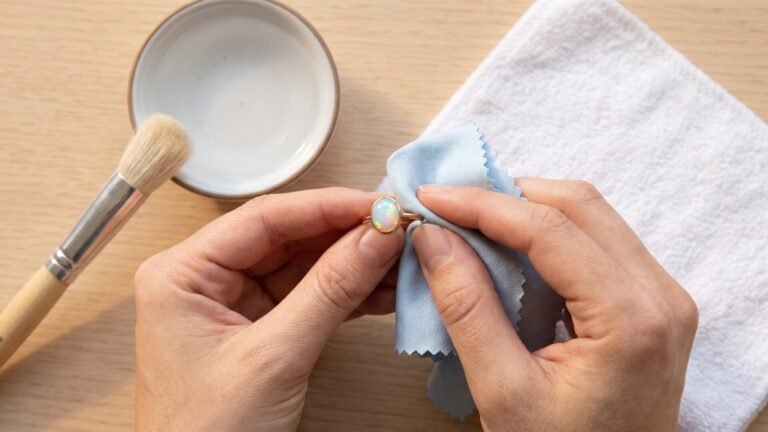
The practical rule: moissanite suits an everyday or engagement ring. Opal is best in earrings, pendants and rings worn occasionally, ideally in a protective bezel setting, and removed for gardening, exercise, cleaning and bathing. For opal-specific care, see the safest way to clean an opal ring with crazing risk.
Jewelry Suitability by Piece
| Piece | Opal | Moissanite |
|---|---|---|
| Engagement or daily ring | Risky; needs bezel and careful wear | Excellent |
| Pendant | Very good | Very good |
| Earrings | Very good | Very good |
| Bracelet | Occasional wear only | Good |
Price: What Drives It
We do not quote price-per-carat figures for either stone because we could not verify consistent current numbers, and prices vary widely by seller. What we can say with confidence is how value works in each case.
Opal value depends on three things, according to GIA: color, pattern and clarity. Bright, wide-ranging play-of-color ranks above faint play-of-color, dead spots (areas with no color) reduce value, and cracks, pits and a cloudy background lower it. Black opal is generally rarer and more valuable than white. Crazed opal sells for less, and assembled opals (doublets and triplets) sell for a fraction of the price of solid boulder or natural opal. Prices therefore range from very modest to very high.
Moissanite is generally a fraction of the cost of a comparable diamond, and prices rise with size, better color grades and quality of cut, with some branded lines charging more for specific cutting or grading. Moissanite is typically sold by diameter, so compare millimeter size, color grade and cut quality, not just carat weight. For context on what other stones cost, see our ranking of birthstones by price per carat.
Buying Guide
Buying Opal
- Know the type. Ask whether the stone is black, white, boulder, crystal, fire or Ethiopian opal, and where it came from.
- Insist on solid vs. assembled disclosure. GIA describes a doublet as a thin layer of opal cemented to a backing, and a triplet as a thin layer between a domed clear top and a dark backing. They can be attractive but are worth far less than solid opal and should not be soaked in water.
- View in different lights. Check the play-of-color in daylight and indoor light.
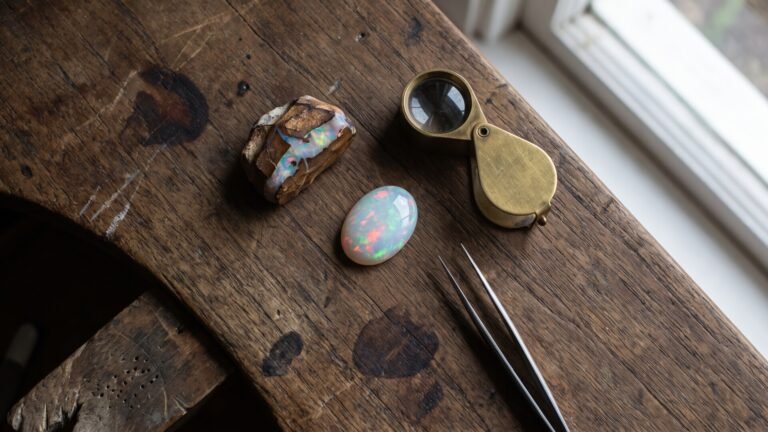
- Check for cracks and crazing. Use a loupe and ask about the return policy.
- Ask about treatments. Smoke, sugar or resin treatments exist and should be disclosed.
Buying Moissanite
- Check color grade. Look for near-colorless stones if you want a diamond-like look, and compare in person if you can.
- Cut matters most. Excellent symmetry and polish affect both fire and brilliance.
- Compare diameter, not weight. Because moissanite is less dense than diamond, a 1-carat equivalent is measured by size.
- Ignore brand terms as grades. Names like “Forever One” are brand lines, not universal quality grades, so compare the actual color, clarity and cut details.
- Expect double refraction. Under magnification, facet edges can look doubled; this is normal for moissanite and is one way it differs from diamond.
Birthstone and Gift Context
Opal is an October birthstone (see our October birthstone guide), so it is a natural choice for October birthdays, and the choice between it and pearl for a softer-stone look is discussed in pearl vs. opal. Moissanite is not a birthstone, but many buyers choose it as an alternative to the April birthstone, diamond; read moissanite vs. lab diamond for April birthdays and the April birthstone guide. For symbolic and traditional meanings of opal, see the opal meaning article above; those are cultural beliefs, not scientific properties.
Popular Jewelry Styles
Opal is commonly seen in bezel-set pendants, drop earrings, vintage-inspired designs and mixed-gem pieces paired with diamonds or sapphires. Moissanite is common in solitaire, halo and three-stone engagement rings and in vintage-style settings with milgrain or filigree. Known moissanite makers include Charles & Colvard, which began selling gem-quality moissanite in the late 1990s, and [Affiliate: MoissaniteCo]. See the birthstone jewelry guide for more styles.
Environmental and Ethical Considerations
Opal is mined, and the impact depends on the operation. Much Australian opal comes from small-scale mining, but any mining disturbs land, and mining in other regions raises its own concerns. If sourcing matters to you, ask the seller for origin and for any sourcing standard or certification they follow; general words like “ethical” are not a standard. Lab-grown moissanite involves no mining, so it avoids mining’s direct land and community impacts, but its production uses energy, and “conflict-free” or “eco-friendly” claims are only as good as the evidence behind them. Our natural vs. lab-grown birthstones guide goes deeper.
Which Should You Choose?
Choose moissanite if you want a durable everyday stone, a diamond-like sparkle for less, and a stone you can wear without worrying. Choose opal if you value a natural, one-of-a-kind stone with shifting color and are willing to wear it with care in a protective setting. If you want both, many people wear moissanite daily and keep opal for pendants, earrings and special occasions. Whichever you pick, ask the seller to state in writing whether the stone is natural or lab-grown, solid or assembled, and treated or untreated.
Related reading: diamond, birthstones by month and the opal guide. The cultural and symbolic notes in this article reflect tradition and belief and are not medical, financial or professional advice.
Frequently Asked Questions About Opal Vs Moissanite
What is the main difference between opal and moissanite in terms of fire?
Opal’s effect, called play-of-color, comes from diffraction of light by tiny silica spheres and appears as shifting patches of color. Moissanite’s fire comes from dispersion and appears as sharp rainbow flashes in a faceted stone.
How do durability and maintenance differ between opal and moissanite?
Opal is soft (about 5.5 to 6.5 on the Mohs scale) and contains water, so it needs gentle care and protection from heat, dryness and chemicals. Moissanite is 9.25 on the Mohs scale and resists scratches, heat and common cleaners.
Is opal a good choice for everyday jewelry?
It can be, in earrings and pendants. For rings, opal needs a protective setting and careful wear, so it is better for occasional use than daily wear.
How does the price of opal compare to moissanite?
Opal prices vary enormously with color, pattern, clarity and whether the stone is solid or assembled. Moissanite is generally a fraction of the price of a similar diamond and more predictable. Compare sellers and ask for full descriptions rather than relying on a single price figure.
What should I consider when choosing opal or moissanite for an engagement ring?
Durability is the main factor. Moissanite handles daily wear far better. If you choose opal, use a protective setting such as a bezel and plan to remove the ring for activities that could damage it.
Is moissanite a diamond?
No. Moissanite is silicon carbide, a different mineral. It is used as a diamond alternative and shows more fire, but it is not a diamond.
Is moissanite real or fake?
Lab-grown moissanite is real moissanite. It is not a natural gem because natural moissanite is extremely rare, and it is not a diamond.
Are there any ethical concerns related to opal and moissanite?
Opal is mined, so buyers should ask about origin and sourcing standards. Moissanite is lab-grown, so it avoids mining impacts, though production uses energy. Be cautious about unsupported labels like ethical or eco-friendly.