Can You Wear Amethyst Every Day? Durability, Scratches and Care
Yes, you can wear amethyst every day, and GIA itself describes it as appropriate for everyday wear. The catch is in the rest of GIA’s sentence: at 7 on the Mohs scale, amethyst “will show wear over the years.” Hardness and toughness are different things, and a ring that survives a year on a careful wearer’s hand can lose a corner in a month on someone who works with their hands.
So here is the honest version. Amethyst is durable enough for regular use in earrings, pendants, and well-protected ring settings. But it is not scratch-proof, not chip-proof, and not indifferent to heat or chemicals. The stone is fine. The design and your routine decide the rest.
| Property | Amethyst | What it means for daily wear |
|---|---|---|
| Species | Quartz (silicon dioxide) | Same hardness as common dust |
| Hardness (Mohs) | 7 | Resists most scratches; polish dulls slowly |
| Toughness | Good | Can chip at edges and points if struck hard |
| Cleavage | None | No built-in splitting direction |
| Sensitivities | Sudden heat changes, prolonged strong light | Avoid thermal shock and sunny windowsills |
| Common treatment | Heating (stable) | Does not change durability in normal wear |
Is Amethyst Durable Enough for Everyday Wear?
The Mohs hardness scale measures how well one mineral resists being scratched by another. It runs from 1 (talc) to 10 (diamond), and each step represents a real jump in scratch resistance, not a tidy multiple. Amethyst is quartz, and quartz sits at 7. That puts it above glass, below sapphire and ruby at 9, and well below diamond at 10.
A 7 is genuinely good. It means your amethyst will not scratch from a fingernail, a wooden counter, or most everyday contact. It also means a diamond ring worn beside it can leave a mark. Hardness protects against scratching. It does nothing for chipping, cracking, or a bent prong.
Those are separate failure modes, and it helps to keep them apart:
- Scratches are surface abrasions that dull the polish over time.
- Chips are small losses of material at an edge or corner, usually from impact.
- Fractures are cracks that can spread, often starting from an existing inclusion.
- Loose settings let the stone move, rattle, or fall out entirely.
Rings take the most punishment of any jewelry type. A ring meets door frames, countertops, car keys, gym equipment, and the inside of a pocket. A pendant hangs in relative peace. That difference matters more than anything the stone itself does.
Natural and lab-created amethyst behave the same in daily wear. Lab-created quartz has the same chemistry and the same hardness. The setting and your habits decide whether a piece lasts, not where the crystal grew.
Why Amethyst Rings Slowly Lose Their Shine
Here is the detail most daily-wear guides skip. Ordinary household and outdoor dust contains fine particles of quartz, the same mineral as amethyst and therefore the same hardness. Every time a ring is wiped on a sleeve, brushed against a dusty surface or polished with a cloth that has picked up grit, quartz is rubbing on quartz. Nothing dramatic happens on any one day. Over a few years, the facet edges soften and the table develops a faint haze.
That is exactly the wear GIA means, and it is why stones of 8 and above keep their crisp look longer in rings. It is also fixable: a jeweler can re-polish a worn amethyst, usually without removing much material. Our guide to removing scratches from amethyst jewelry at home explains what is realistic yourself and what needs a professional.
A Mohs rating is not a durability score. A 7 simply tells you which materials can scratch it and which cannot. What it does not tell you is how the stone handles a knock against a granite counter, or whether a thin edge will survive being caught in a drawer. Those depend on the cut, the inclusions, the setting, and the angle of impact. For the broader picture of what amethyst is and how it is valued, the main guide to amethyst’s meaning, properties, and value covers the ground this article assumes.
Which Amethyst Jewelry Is Safest to Wear Every Day?
| Jewelry type | Everyday suitability | Main risk | What to look for |
|---|---|---|---|
| Pendant | Excellent | Impact against surfaces | Protective bezel or secure prongs |
| Earrings | Excellent | Loss, snagging, cosmetics | Secure backs and protected settings |
| Necklace | Very good | Clasp failure, perfume and lotion | Reliable clasp and durable chain |
| Bracelet | Moderate | Repeated impacts and abrasion | Low-profile setting and strong links |
| Ring, protected setting | Good | Gradual polish wear | Bezel, halo, or protective shoulders |
| Ring, tall prongs or cocktail style | Limited | Chips, knocks, loose prongs | Reserve for occasional wear |
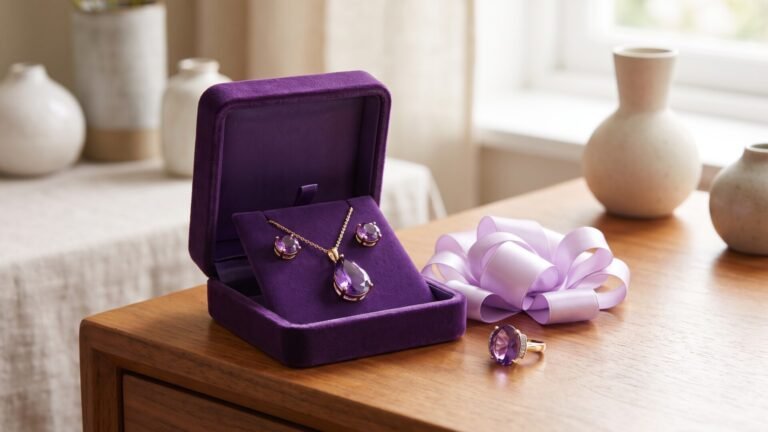
Pendants and earrings are the easy answer for anyone who wants low-maintenance amethyst. They sit away from the surfaces that damage rings. Neither takes the daily beating a ring does.
The bezel setting is the one to know. It wraps a metal rim around the edge of the stone, holding it in place and shielding the vulnerable girdle, the thin outer edge where the top and bottom of a cut stone meet. A bezel generally protects better than exposed prongs because there is no open edge for a knock to catch.
Prong settings are not the villain. They let far more light into the stone, which is why so many amethyst rings use them. But prongs leave corners and edges exposed, and in a ring worn daily, those are exactly the parts that take hits. A prong-set amethyst in a pendant is fine. A prong-set amethyst standing high off the finger is a different proposition.
Size and depth change the risk too. A large, shallow stone with a lot of surface sitting above the setting is more exposed than a smaller, deeper stone held low. Two rings can both be amethyst and carry very different everyday risk.
Should Your Everyday Purple Ring Be Amethyst?
If you want purple and plan to wear the ring daily for decades, it is worth comparing amethyst with the other purple stones jewelers offer before you choose.
| Stone | Mohs hardness | Daily ring verdict | Price vs amethyst |
|---|---|---|---|
| Amethyst | 7 | Good with a protective setting; re-polish every few years | Baseline |
| Purple sapphire | 9 | Excellent; keeps its polish | Much higher |
| Purple spinel | 8 | Very good; no cleavage | Higher |
| Rhodolite garnet | 7-7.5 | Similar to amethyst; redder purple | Similar to higher |
| Tanzanite | 6-7 | Poor for daily rings; perfect cleavage | Much higher |
The decision rule: choose amethyst if you want a large, saturated purple stone on a modest budget and accept a re-polish now and then. Choose purple sapphire or spinel if the ring is an engagement ring or will be worn constantly for decades without maintenance. Choose rhodolite garnet for a warmer purple at a similar price. Keep tanzanite for pendants and earrings.
What Most Buyers Get Wrong About Daily-Wear Amethyst
The most common mistake is treating color as the durability question. It is not. A vivid, deep purple stone is no more fragile than a pale one. What matters is the cut, the setting, and how the piece will be worn. A saturated amethyst in a bezel pendant is a sensible everyday choice. A pale stone in a tall prong setting on an active hand is the riskier buy.
The second mistake is assuming bigger is safer or better. A larger stone presents more surface area for impact and often sits higher, which makes it easier to strike. If you want a large amethyst for daily wear, the design has to work harder to protect it.
The third is the word “natural.” Natural does not mean indestructible. Untreated amethyst is not automatically safer than heat-treated material, and treated amethyst is not automatically inferior. What matters is that the seller tells you what you are buying. Be wary of any claim that a piece is “scratch-proof,” “maintenance-free,” or “perfect for all-day wear” without an explanation of the setting and the care required.
One more source of confusion: sellers sometimes use “purple quartz” loosely. If a listing is vague about what the stone actually is, the difference between amethyst and purple quartz is worth understanding before you buy.
How Cut and Setting Change Real-World Durability
Sharp corners, points, thin girdles, and facets that stick out are more vulnerable to impact than rounded shapes held close to the metal. A cushion or oval cut set low will generally outlast a pointed, high-set fancy cut such as a marquise or princess in the same routine.
Before you commit, handle the piece. Does the stone move when you press it gently? Do the prongs catch on fabric or a strand of hair? Does the gemstone sit high enough that it would strike a table when you rest your hand down? Those three checks catch most of the problems that show up later.
A halo, a ring of small stones around the center gem, can protect edges and add sparkle. It also creates more places for dirt to collect and more small settings that may need repair. That is a fair trade if you like the look, as long as you know it is a trade.
Situations When You Should Remove Amethyst Jewelry
Take amethyst off before weightlifting, gardening, home repairs, moving furniture, and contact sports. Anything with repeated impact or abrasive grit belongs on the list. Garden soil and sand are full of quartz, so gardening and beach days wear the polish faster than almost anything else.
Remove rings before showering, swimming, bathing, and using household cleaners. Not because water harms quartz, but because soap residue, heat, chlorine, and the odd knock against a tile floor all add up; can amethyst get wet covers each type of water in detail.
Apply perfume, hairspray, sunscreen, lotion, and makeup before you put the jewelry on. This cuts down on residue and on how often you need to clean the piece.
Your work matters. If you use tools, machinery, chemicals, or construction materials, or you spend the day against rough surfaces, a daily amethyst ring is probably impractical no matter how hard the stone is. An amethyst pendant or a pair of studs lets you keep the stone close without asking it to survive your job.
Heat, Light, Water, and Chemicals: What Can Damage Amethyst?
Heat is the real concern. GIA warns that sudden temperature changes can fracture amethyst, and very high heat, such as a jeweler’s torch during a resize, can change its color. Ask for the stone to be protected or removed before any soldering.
Light matters only over the long term. Some amethyst fades with prolonged strong light, so a ring left on a sunny windowsill for months is at more risk than one worn outdoors every day; does amethyst fade in sunlight explains which stones are most sensitive.
Keep bleach, strong household cleaners, acids, abrasive powders, and unknown jewelry dips away from it. GIA lists alkaline solutions among the chemicals that can damage amethyst, and harsh products also attack metal, polish, and any dye or filling.
| Exposure | Everyday recommendation | Reason |
|---|---|---|
| Clean, room-temperature water | Fine briefly | Low risk; dry jewelry afterward |
| Hot water and steam | Avoid | Thermal shock can crack the stone |
| Pool and hot tub water | Remove jewelry | Chlorine, heat, and impact combined |
| Perfume and cosmetics | Apply before jewelry | Reduces residue and cleaning |
| Household chemicals | Remove jewelry | May damage metal, polish, or treatments |
| Direct sunlight for long periods | Limit prolonged exposure | Some amethyst fades with sustained strong light |
How to Care for Amethyst You Wear Every Day
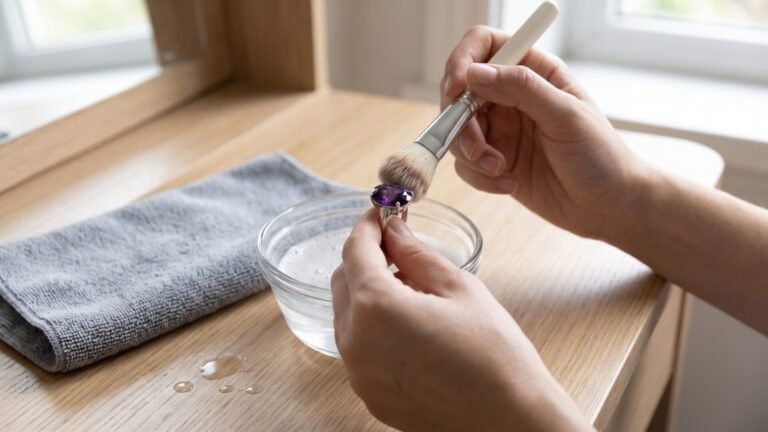
The routine is short. Wipe the piece with a soft, clean, lint-free cloth after wear; a dusty cloth is how quartz-on-quartz scratching happens. Clean it occasionally with lukewarm water, a drop of mild soap, and a very soft brush, working over a folded towel or a closed drain.
Store amethyst separately from harder stones like diamond, sapphire, and ruby. A soft pouch or a divided jewelry box keeps them from grinding against each other in a drawer. This one habit prevents a surprising amount of surface wear.
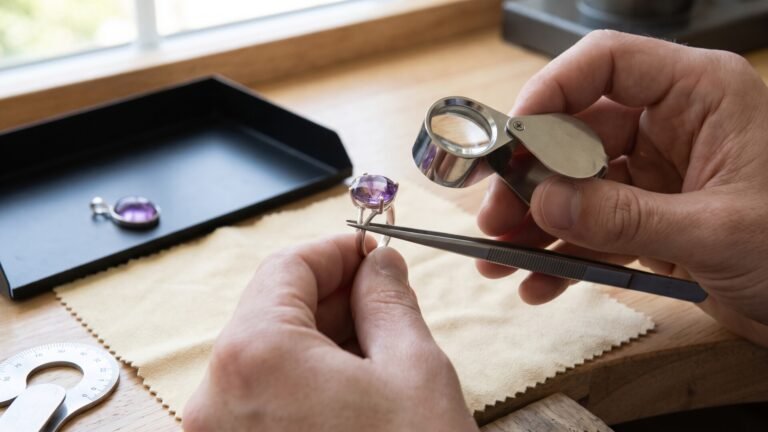
Inspect the piece periodically. Look for loose prongs, a stone that shifts, a worn clasp, bent metal, or new scratches near vulnerable edges. Have a professional look at anything that worries you rather than testing it yourself. When the cleaning job is bigger than a quick soak, the step-by-step guidance on safely cleaning amethyst without damaging the polish is the place to go next.
Cleaning Methods to Avoid
Put away the toothpaste, the baking soda scrub, and the rough polishing cloth. They are abrasive, and on a stone you wear every day, they slowly dull the very polish you are trying to protect. Skip bleach and any commercial dip you have not verified for your stone and setting.
GIA advises against steam cleaning amethyst. Ultrasonic cleaners are generally safe for solid, untreated amethyst, but not for dyed or fracture-filled stones or for pieces with glued accents or fragile settings. If you do not know how a piece was made, stick to soapy water.
The Best Everyday Amethyst Buying Strategy
Choose the jewelry form first, then the setting, then the stone’s color and size. That order feels backward to most buyers, who fall for a beautiful loose stone and then decide how to wear it. It is the right order, because the form and setting decide whether the stone survives.
For rings, prioritize a low-profile design, a protective bezel or halo, substantial shoulders, and a stone that does not tower above the finger. For pendants and earrings, prioritize secure clasps, comfortable weight, protected edges, and a design that will not snag on clothing or hair.
Certification is not essential for a modest amethyst purchase. Treatment disclosure, accurate material descriptions, fair return terms, and a seller who answers questions plainly are. For a higher-value or unusual stone, ask for independent gemological documentation and read exactly what the report identifies.
Color deserves its own thought. The guide to amethyst color variations and symbolism helps you judge color on your own terms rather than by a darkest-purple-wins rule.
Suggested Everyday Options by Budget
Budget: small amethyst stud earrings, a simple pendant, or a modest bezel-set ring. Favor secure construction and clear disclosure over maximum carat weight. At this level, a well-made silver piece beats a poorly made gold one.
Mid-range: a well-made sterling silver or gold pendant, secure drop earrings, or a low-profile gold ring with a protected center stone. This is where setting quality starts to show in how the piece feels after a year.
Premium: a finely cut, well-saturated natural amethyst in a high-quality gold or platinum setting. Buy it for craftsmanship and long-term wear, not for investment claims. When you are ready to compare specific pieces, amethyst jewelry for every budget lays out the categories side by side, and the best amethyst earrings and necklaces focuses on the lowest-maintenance formats.
Is Daily-Wear Amethyst a Good Long-Term Purchase?
Amethyst is usually a strong value choice for personal jewelry. It offers real color at a fraction of what sapphire or ruby costs, and a well-made piece can be worn for decades. What it is not is a guaranteed investment. Ordinary amethyst should be bought for beauty and meaning, not for a hoped-for return.
Watch the hidden costs of poor construction. Replacing worn prongs, repairing a weak clasp, repolishing scratches, or resetting a damaged stone can add up to more than you saved on a cheaply made piece. The bargain ring often becomes the expensive one after two repairs.
The value that lasts is emotional. Amethyst is the February birthstone, the traditional sixth-anniversary gem, and a stone people attach memory to. Heirloom potential depends on sound construction, a secure setting, an adaptable design, treatment disclosure, and maintenance records, not on phrases like “rare purple.”
What to Check Before Buying
Confirm whether the seller identifies the stone as natural amethyst, lab-created material, or another purple quartz variety. Ask whether it has been heated, dyed, coated, fracture-filled, or otherwise treated, and get that in writing for any significant purchase.
Check the return policy, the warranty, resizing limits, and whether the seller can handle future repairs and re-polishing. A jeweler who will service the piece in five years is worth more than a small discount today.
Do not confuse color intensity with rarity or value. For jewelry-specific authenticity checks, spotting fake amethyst jewelry covers the tells that matter when you are evaluating a finished piece.
When Daily Wear Is a Bad Idea
Some people should not wear amethyst daily, and it is better to say so plainly. If your work or hobbies involve frequent impacts, abrasive dust, chemicals, heat, or heavy manual activity, an everyday amethyst ring is the wrong tool. Choose a pendant or earrings instead.
An exposed amethyst cocktail ring can be a wonderful occasional piece. It is a poor choice as a sleep, shower, work, and exercise ring. If you want amethyst with you every day but cannot reliably remove a ring during risky activity, put the stone on a chain or in your ears.
Authenticity is its own concern. Unusually cheap, perfectly uniform, or aggressively marketed purple stones deserve a closer look. The guide to spotting fake amethyst walks through what to examine before you spend.
Frequently Asked Questions About Wearing Amethyst Every Day
Is amethyst good for an engagement ring?
It can be. GIA calls amethyst appropriate for everyday wear but notes it will show wear over the years, so expect a professional re-polish from time to time. A bezel or halo setting helps. If you want a purple stone that stays crisp for decades with no upkeep, purple sapphire or spinel is the harder option.
Should amethyst be removed before sleeping?
Removing it is the safer habit. Sleep can put pressure on the stone, bend prongs, stress a chain, or snag the jewelry on bedding. Studs and small pendants are lower risk, but rings and statement pieces are best left on a tray overnight.
Can a worn amethyst be re-polished?
Yes. Because the wear is usually a light haze on the table and rounded facet edges, a jeweler or lapidary can re-polish the stone, often without resetting it. Deep chips may need recutting, which removes some weight. See our guide to removing scratches from amethyst.
Is sterling silver a good setting for a daily amethyst ring?
It works, but silver is soft, so prongs and bezels wear and bend faster than in gold or platinum, and silver tarnishes. For a ring worn every day, 14k gold is a sturdier choice. For pendants and earrings, sterling silver holds up well.
Can sunlight fade amethyst I wear every day?
Normal daily wear outdoors is very unlikely to fade amethyst. The risk comes from long, continuous exposure, such as months on a sunny windowsill or under strong display lights. Store it in a closed box when you take it off.
How often should an everyday amethyst ring be inspected?
Check it yourself every few months for movement or snagged prongs, and have a jeweler look at it once a year if you wear it constantly. Catching a loose setting early is cheap. Replacing a lost stone is not.
Amethyst is suitable for everyday wear when the design matches your routine and the stone is protected from impact, heat, chemicals, and abrasive contact. Pendants and earrings are the lowest-maintenance choices. A bezel-set or otherwise protected ring works for regular wear with an occasional re-polish. An exposed, high-profile ring belongs in the occasional-wear drawer.
Buy the pendant or the studs if you want something you never have to think about. Buy the protected ring if you are willing to check it now and then. For other February birthstone questions, the complete gemstones guide and the main amethyst guide bring properties, value and buying advice together.