How to Care for Aquamarine Stones: A Gentle Guide from the Sea
Aquamarine is one of the more forgiving gemstones to own. It is hard, it is usually clean and free of heavy fractures, and it needs nothing more complicated than lukewarm water and mild soap. But “durable” is not the same as “indestructible”, and the difference decides whether an aquamarine stays bright for decades or slowly dulls and chips. This guide covers how to clean, wear, store and protect aquamarine, a quick check for whether your stone can go in an ultrasonic cleaner, how to care for the metal around it, and what to do if something goes wrong.
If you are new to the stone, our aquamarine guide covers its properties, value and history, and the March birthstone page explains its place on the birthstone lists.
Aquamarine Care at a Glance
| Question | Short answer |
|---|---|
| What is it? | The blue to blue-green variety of beryl, the same mineral species as emerald and morganite |
| Mohs hardness | 7.5 to 8 |
| Toughness and cleavage | Good overall, but it has imperfect (indistinct) cleavage and can chip or split from a sharp knock, especially in large or included stones |
| Common treatment | Gentle heat treatment to remove green tones and leave a purer blue; stable and widely accepted |
| Safest cleaning | Lukewarm water, mild soap, soft brush, soft cloth |
| Ultrasonic or steam | GIA: usually safe, except for stones with fractures or liquid inclusions (and filled stones) |
| Chemicals to avoid | Hydrofluoric acid (found in some rust removers), plus bleach, ammonia, harsh cleaners and silver dips, which mainly harm settings |
| Light and heat | GIA: color is stable under light; heat exposure is not recommended |
| Best for daily rings? | Yes, with a protective setting and sensible habits |
Understanding What You Are Caring For
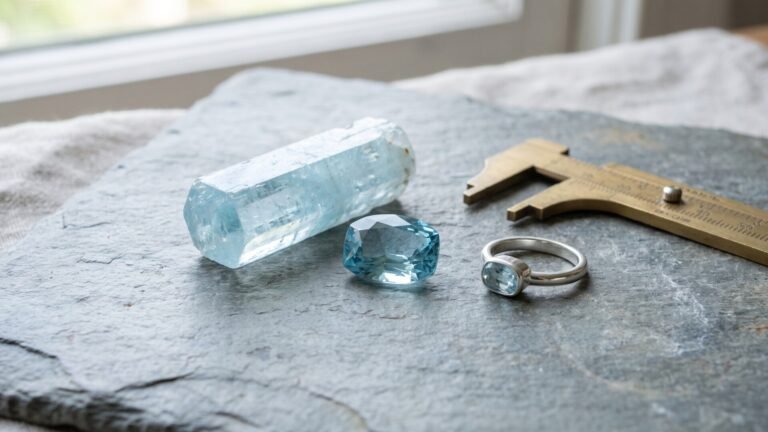
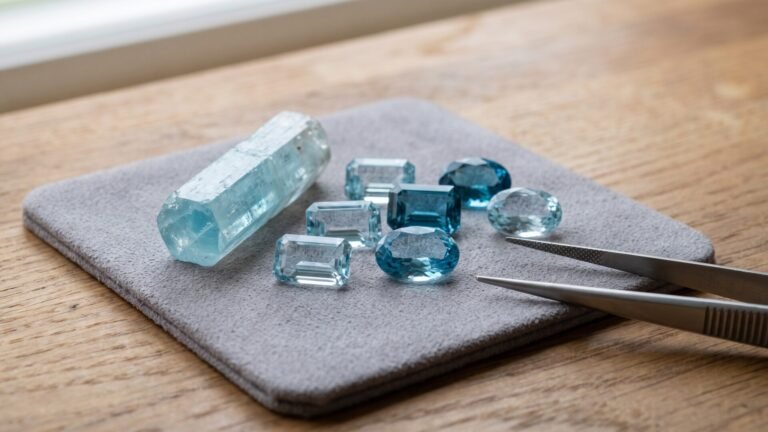
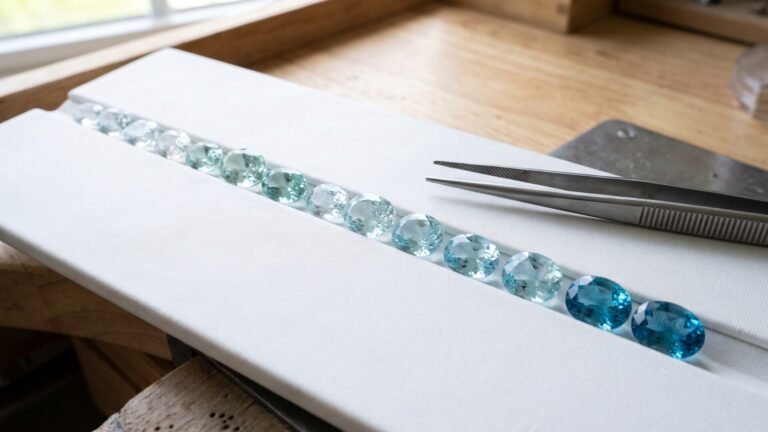
Aquamarine is a member of the beryl family, cousin to emerald and morganite. Its name comes from the Latin aqua (water) and marina (of the sea). The color comes from trace iron, and most aquamarine sold today has been gently heat-treated to give a cleaner blue. This treatment is stable and standard in the trade. Unlike emerald, which is frequently oiled or resin-filled to hide fractures, aquamarine is usually clean enough to need no filling, although filled stones do exist.
Hardness, on the Mohs scale, describes scratch resistance. At 7.5 to 8, aquamarine resists scratching from everyday dust (which contains quartz at hardness 7) far better than softer gems such as opal or pearl. Diamond, sapphire, ruby and topaz can scratch it, though. Hardness is not the same as toughness. Aquamarine can chip or split if struck at a bad angle, so a hard knock matters more than daily wear. For more on how hardness compares across stones, see the Mohs scale explained and our comparison aquamarine vs. topaz for durability and color.
Five Daily Habits That Matter Most
1. Put jewelry on last and take it off first. Perfume, lotion, hairspray and cosmetics leave films on the stone and underside that dull its brilliance. Apply products first and put the aquamarine on afterward. Over time, residue is the most common reason a clean stone looks hazy.
2. Remove it before swimming and bathing. Chlorine and salt are not usually listed as damaging to the aquamarine itself, but pool chemicals and salt water can corrode or tarnish metal settings, and soap and lotion build up around the stone. Remove it before a pool, hot tub or sea swim.
3. Take it off for sports, gardening and cleaning. Impact is the main risk. Weight lifting, rock climbing, gardening, DIY and heavy housework all put a ring at risk of a hard knock. This matters most for large, step-cut stones with sharp corners.
4. Avoid heat and sudden temperature change. GIA does not recommend heat exposure for aquamarine. Moving between extreme cold and heat can stress a stone with internal flaws, and direct torch heat can discolor it. Avoid saunas and hot tubs while wearing it, and always have stones removed before a jeweler solders nearby.
5. Store it on its own. Diamonds, sapphires and rubies will scratch aquamarine if they rub together in a crowded box, and aquamarine will scratch softer stones such as opal, pearl and turquoise. Use individual soft pouches or a lined, compartmentalized box.
How to Clean Aquamarine at Home
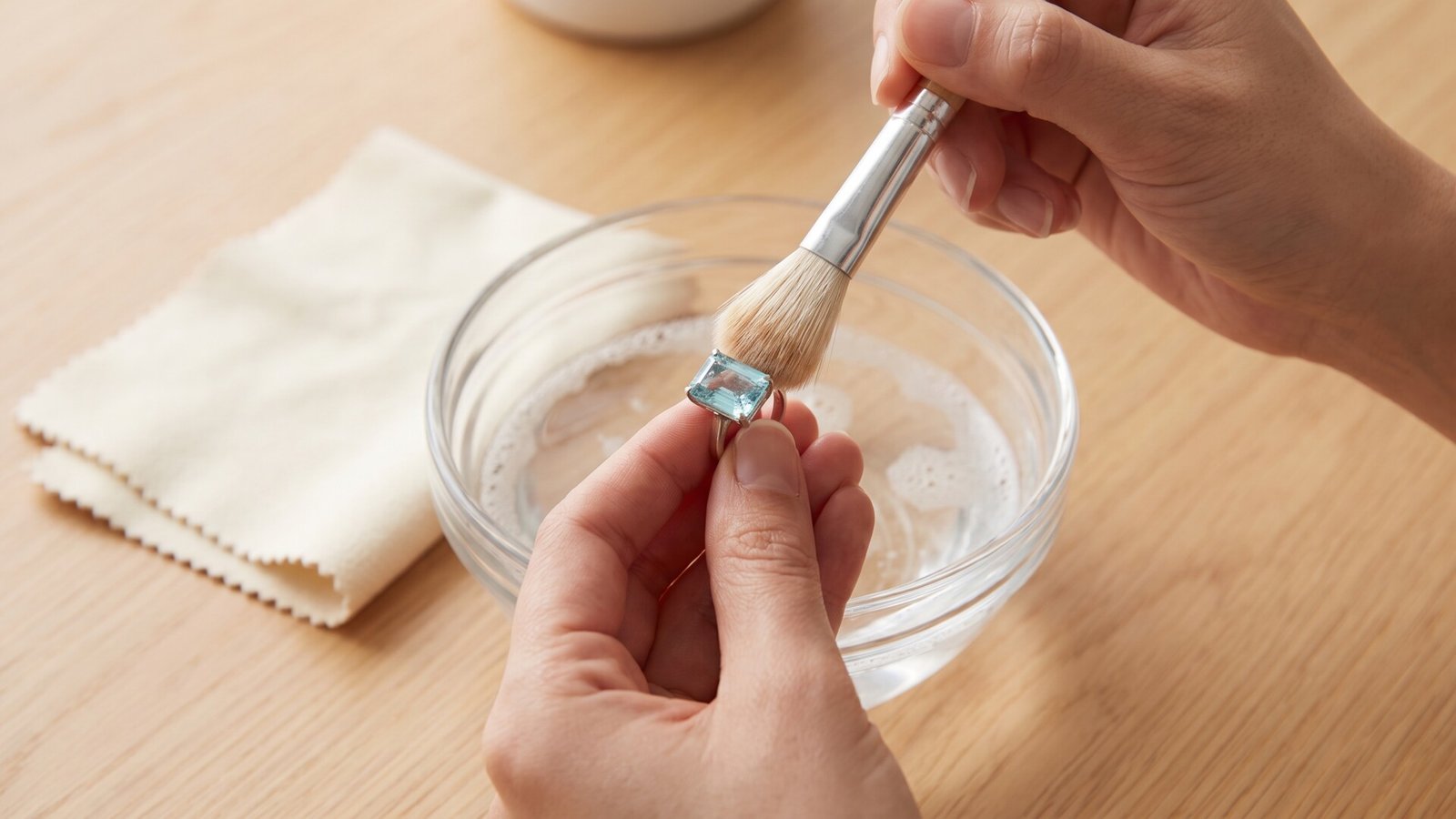
- Fill a small bowl with lukewarm water. Avoid hot water, since temperature extremes carry risk.
- Add a few drops of mild dish soap. Avoid anything with bleach, citrus or heavy degreasers.
- Soak the piece for five to ten minutes to loosen skin oils and lotion residue.
- Gently scrub with a soft-bristled brush, such as a baby toothbrush. Pay attention to the back of the stone and the setting, where grime collects.
- Rinse thoroughly under lukewarm running water. Soap residue dulls a stone as much as dirt does. Close the drain first.
- Dry with a soft, lint-free cloth by patting, not rubbing hard.
If you wear a piece daily, a weekly clean is reasonable. For occasional pieces, cleaning when the stone looks cloudy or before you put it away is enough. Our related guide on safely cleaning amethyst uses a similar approach for quartz gems.
Cleaning Methods Compared
| Method | Verdict for aquamarine | Notes |
|---|---|---|
| Warm soapy water and soft brush | Safe | Best default for all stones, including treated or filled ones |
| Ultrasonic cleaner | Usually safe, with exceptions | GIA rates it usually safe, but not for stones with fractures, liquid inclusions or filling. Use the check below first |
| Steam cleaner | Usually safe, with exceptions | Same exceptions as ultrasonic; heat shock can crack a flawed stone |
| Household chemicals, bleach, ammonia | Avoid | Can damage settings and may harm filled stones |
| Rust removers and acid products | Avoid completely | Hydrofluoric acid can attack beryl |
| Abrasive cloths, toothpaste, baking soda, polishing powders | Avoid | Can leave fine scratches on soft metals and wear down facet edges over time |
Can Your Aquamarine Go in an Ultrasonic? A Three-Question Check
Most care guides either say “ultrasonic is fine” or “never use it”. GIA’s position sits in between: usually safe, except for stones with fractures or liquid inclusions. That only helps if you know which kind of stone you have. Answer these three questions before you use a machine. If any answer is “yes” or “I don’t know”, stay with soap and water.
- Does the paperwork mention filling or clarity enhancement? Check the receipt, appraisal or lab report. A filled stone should only ever get warm soapy water. No paperwork counts as “I don’t know”.
- Can you see flaws that reach the surface? Look through the stone under a bright light, ideally with a 10x loupe. Thread-like lines, flat “feathers” that catch the light, or tiny cavities that look wet suggest fractures or liquid inclusions. Eye-clean aquamarine is common, so a visibly included stone is the exception, and that is exactly the one to protect.
- Is the setting the weak point? Vibration can loosen stones in worn prongs, and vintage pieces may hold glued components, pearls or other soft stones alongside the aquamarine. If the piece is older, has several types of stone, or has not been checked by a jeweler in the past year, skip the machine.
A clean, unfilled stone in a sound modern setting can go through a home ultrasonic cycle if you want the extra sparkle. Even then, a jeweler’s professional clean once a year is the better option, because they check the prongs at the same time.
Why Your Aquamarine Looks Cloudy
| What you see | Likely cause | What to do |
|---|---|---|
| Hazy, greasy look that improves after a wipe | Film of skin oil, lotion or soap on the back of the stone | Soak and brush the underside as described above |
| Fine scratches or a dull facet surface | Contact with harder stones or abrasive cleaning | A jeweler or lapidary can repolish the surface |
| Rounded or nicked facet edges | Years of knocks, often on older rings | Repolishing or recutting; consider a more protective setting |
| Cloudiness inside the stone that never changes | Natural inclusions | Nothing to fix; avoid ultrasonic and steam cleaning |
| Color looks paler than before | Usually dirt or lighting; rarely a fading Maxixe-type beryl | Clean it and compare in daylight; ask a gemologist if it persists |
Sunlight, Fading and Maxixe-Type Beryl
GIA describes aquamarine’s color as stable under light, and that applies to standard and heat-treated stones. The exception is a rare, deep-blue beryl called Maxixe, whose color comes from natural or artificial irradiation and is known to fade with light exposure. Most jewelry stones are not Maxixe, and reputable sellers disclose it, but it is hard to tell by eye. If an unusually deep blue stone was sold cheaply, keep it out of strong sunlight and have it checked. You can read more about color and its causes in our aquamarine color chart and The Science Behind Gemstone Colors.
Caring for the Metal Around the Stone
Aquamarine itself rarely needs more than soap and water. The metal around it is often the part that looks tired, and the products sold to fix metal are where stones get hurt.
- Sterling silver: a lot of affordable aquamarine jewelry is set in silver, which tarnishes. Do not put the piece in a liquid silver dip. These dips are typically acidic (one classic formula combined thiourea with sulfuric acid) and can damage softer stones, fillers and nearby pearls. Use a silver polishing cloth on the metal only, working around the stone.
- White gold: usually rhodium-plated. When it starts to look yellowish, a jeweler can re-plate it. Ask them to protect or remove the stone if the process involves heat.
- Yellow and rose gold, platinum: a soft jewelry cloth and the soap-and-water routine are enough. Deeper scratches can be polished out by a jeweler.
- Gold-plated and vermeil: skip polishing cloths that contain abrasive compounds, which remove the gold layer faster. Wipe with a plain soft cloth after wearing.
Aquamarine, Emerald and Morganite: Care Compared
All three are beryl with the same 7.5 to 8 Mohs hardness, so it is tempting to clean them the same way. Their care differs because of clarity and treatment, not chemistry. If you own more than one, this is the table to keep in mind. Our emerald guide covers that stone in depth.
| Beryl | Typical clarity | Common treatment | Ultrasonic and steam |
|---|---|---|---|
| Aquamarine | Often eye-clean | Heating (stable) | Usually safe, except fractured, liquid-included or filled stones |
| Morganite | Often eye-clean | Heating (stable) | Same as aquamarine, per GIA |
| Emerald | Usually included | Oil or resin filling is routine | Avoid; machines can remove filler and widen fractures |
What to Avoid Completely
- Hydrofluoric acid found in some rust removers and industrial cleaners.
- Bleach, ammonia and household cleaning products. Simply remove the ring first.
- Abrasives: hard-bristle brushes, nail files, scouring pads and paper towels.
- Extreme temperatures: sudden hot-to-cold changes and direct heat, including repair torches.
- Soaking in salt water: salt can corrode metal settings and leave residue on the stone.
If Your Aquamarine Is Fracture-Filled or Heavily Included
GIA describes fracture filling in aquamarine as rare, but it does happen. A filled stone should only be cleaned with warm soapy water. Skip ultrasonic and steam cleaning, and avoid solvents that might dissolve or cloud the filler. If you inherited a piece, bought it secondhand, or are unsure, ask a jeweler or gemologist to check it under magnification. Sellers should disclose any fracture filling at purchase. For background on how treatments and origin change value, see our natural vs. lab-grown birthstones guide.
Choosing a Setting That Protects the Stone
Care starts at purchase. For a ring you plan to wear often, look for a design that shields the stone’s vulnerable parts:
- Bezel settings surround the stone with metal and are the most protective choice.
- Halo settings add a ring of smaller stones that takes some knocks.
- Prongs should cover the corners of step-cut and emerald-cut stones, which are the most exposed points.
- Earrings and pendants are naturally lower-risk than rings and suit large aquamarines well.
Our guide to aquamarine engagement rings shows settings that work well for daily wear, and Gemstone Shapes and Cuts Explained helps you pick a cut that suits your lifestyle.
Beliefs and Rituals Around Aquamarine
Some owners follow ritual practices alongside physical care. One common tradition is to rest the stone in moonlight on a windowsill after cleaning, believing the soft light “recharges” its calming qualities. Another is to hold the stone under running water while visualizing worries washing away. These are personal and cultural practices rather than anything science has demonstrated, and they are not a substitute for medical care. They are harmless if the stone is simply kept out of harsh conditions. Do not soak aquamarine in salt water as part of a ritual, since salt can damage settings. If you are curious about the meanings associated with aquamarine, see Aquamarine Meaning: History, Symbolism, Spiritual Properties & Modern Uses and Aquamarine in Mythology and History.
Professional Care and Storage
Even with good home care, have your jewelry checked by a jeweler once a year, or every six months if you wear it daily. A check should cover prongs and settings (loose or worn prongs are the main cause of lost stones), clasps and shanks, and the condition of the stone. Professional cleaning reaches places a brush cannot, and some jewelers offer free checks for pieces bought from them.
- Individual soft pouches are inexpensive and protect against scratches.
- Lined, compartmentalized boxes keep pieces separate and stop chains tangling.
- Cool, dry places are best; avoid attics, bathrooms, sunny windowsills and heating vents.
- Do not store several rings in one compartment or hang necklaces where they swing into other pieces.
Traveling With Aquamarine
Before a trip, check that settings are secure. Pack pieces in a soft pouch or jewelry roll with a microfiber cloth, and carry them in your hand luggage rather than checked bags. If you clean on the road, use mild soap and a soft toothbrush. In a hotel safe, wrap the piece in a soft cloth so it does not rub against metal.
When Accidents Happen
- Stay calm. Aquamarine is reasonably tough, and many knocks leave no lasting damage.
- Find the stone if it has come loose, checking drains, floors and lint traps.
- Do not use glue or DIY repairs. Superglue and epoxy can harm the stone and complicate professional repair.
- See a jeweler promptly. A bent or loose prong can often be fixed quickly.
A chipped aquamarine can often be recut by a skilled lapidary, which removes the damage at the cost of some weight. Whether recutting is worthwhile depends on the stone’s size and value, so ask for a quote before deciding.
Caring for Vintage and Inherited Aquamarine
Older aquamarine jewelry often has softer metal, worn prongs and unknown repair history. Have it inspected before wearing it regularly, avoid aggressive polishing, and be cautious about resizing without an experienced jeweler. If you are collecting or restoring older pieces, our article on vintage aquamarine jewelry trends shows what to look for. Over decades, the biggest threats are not the stone but worn settings, poor repairs and loss, so regular checks are the best long-term protection.
Frequently Asked Questions About Caring For Aquamarine
Can I clean aquamarine with toothpaste or baking soda?
It is better not to. Both are mild abrasives. They will not scratch the aquamarine itself much, but they scratch gold, silver and plating, and over time they can dull facet edges and leave residue in the setting. Mild dish soap and a soft brush clean just as well without the wear.
Is vinegar or lemon juice safe for aquamarine?
Weak household acids are not known to harm untreated aquamarine, but they offer no advantage over soap and water, can affect filled stones, and may tarnish silver or plated metal. Keep acids for other jobs and use the soap-and-water routine.
Does hand sanitizer damage aquamarine?
Occasional contact is unlikely to harm the stone, but frequent sanitizer use leaves a film that makes aquamarine look dull and can dry out or discolor some settings. If you sanitize often, take rings off first or give them a quick soap-and-water clean at the end of the day.
Can I sleep in my aquamarine ring?
You can, but it is not ideal. Rings catch on bedding, take knocks against headboards, and put strain on prongs. Taking jewelry off at night is also a good moment to check the setting and store it safely away from harder stones.
Does aquamarine have healing properties?
There is no scientific evidence that aquamarine treats any physical or mental condition. Meanings such as calm, courage and protection are cultural and spiritual traditions, not medical advice.
For more on this stone, explore our aquamarine guide and the wider gemstones hub.