How to Clean Gemstone Jewelry at Home Without Professional Equipment
It is nine o’clock on a Saturday and a woman is standing at my counter holding a diamond ring in a paper towel, and she is crying a little. She soaked it overnight in a mug of white vinegar because a video told her it would make the stone "pop." The stone is fine. Diamonds are hard to hurt. What is not fine is the white gold setting, which has gone dull and pitted, and the tiny accent stones, one of which is now somewhere in her kitchen drain. The repair is going to cost her more than a year of professional cleanings would have.
I tell you this not to scare you off cleaning your own jewelry. I have cleaned thousands of pieces at a sink and there is nothing wrong with doing it yourself. The problem is that almost every cleaning disaster starts the same way: someone applies a universal method to a stone that was never universal.
Most durable gemstone jewelry can be cleaned at home with lukewarm water, a small amount of mild dish soap, a soft brush, and a lint-free cloth. That method is genuinely unsafe for a long list of stones, and the list is longer than most people expect. Opal, pearl, turquoise, emerald, and any stone with an unknown treatment history need a different approach. So does any piece that is antique, visibly fractured, glued, or set in a way you have not inspected.
Here is the rule I give people before they leave the store. If you cannot name the stone and you cannot see that every prong is tight, do not soak it. Use a barely damp cloth, dry it immediately, and let a jeweler look at it before you try anything stronger. Everything below builds from that.
The safest basic method for most durable gemstone jewelry
For a stone you know is durable and untreated, and a setting you have checked, this is the whole process. It takes about five minutes and costs nothing.
- Set up over a towel, not a sink. Put a folded towel on the counter and a shallow bowl on top of it. If you insist on working near the sink, close the drain and put a mesh strainer in it. I have fished a client’s sapphire out of a P-trap with a coat hanger. It is not an experience I recommend.
- Mix lukewarm water with a drop of mild, dye-free dish soap. Lukewarm means what you would wash a baby’s bottle in. Not hot. Hot water plus a cold stone is thermal shock, and thermal shock cracks things.
- Soak briefly, not overnight. Five to fifteen minutes loosens the film of skin oil, soap residue, and hand lotion that dulls a stone. Longer than that gains nothing and gives water more time to find its way behind the setting.
- Brush the underside. Use a very soft toothbrush or a soft cosmetic brush and light pressure. The dirt is almost never on top of the stone. It is underneath, in the gallery and around the prongs, where soap and skin oils collect and then dry into a gray crust. That crust is what makes a diamond look tired.
- Rinse in a second container of clean lukewarm water. Rinsing under a running tap is how stones go down the drain. A second bowl does the same job with no risk.
- Blot, then air-dry. Pat with a lint-free cloth. Do not rub. Set the piece on a clean towel and let it finish drying on its own before you put it away.
Why the fuss about each step? Because the failures are cumulative and quiet. A rough brush catches a prong and bends it a fraction of a millimeter. That prong no longer holds. Six months later the stone is loose and you think it happened overnight. It did not.
Do not use toothpaste, baking soda, powdered cleansers, bleach, chlorine, ammonia-based products, alcohol wipes, or undiluted household detergent. Toothpaste is abrasive and leaves a residue in settings that is harder to remove than the dirt was. Chlorine attacks the alloys in white gold and can pit it permanently. Ammonia is fine for some diamonds and disastrous for plenty of other stones, which is why the old "ammonia and water" advice needs a caveat attached to it.
Stop cleaning and take the piece to a jeweler if you notice any of these:
- The stone moves when you press it gently.
- A prong looks bent, worn thin, or snagged.
- You see a crack or chip you had not seen before.
- The stone looks cloudy after it dries.
- Color transfers onto your cloth.
- Plating is peeling or flaking.
- The stone feels loose in any direction.
None of those are cleaning problems. They are repair problems, and cleaning will make them worse.
Match the cleaning method to the gemstone
This is the part the internet skips. Hardness gets all the attention, but hardness only tells you how a stone resists scratching. It says nothing about whether the stone will survive water, heat, or a brush.
Here is how the common stones actually behave.
| Gemstone or material | Safest home method | Soaking | Main risk | Go to a professional when |
|---|---|---|---|---|
| Diamond, sapphire, ruby, spinel | Lukewarm water, mild soap, soft brush | Brief, 5-15 min | Loose prongs, dirt behind the stone | Setting feels loose or stone is chipped |
| Amethyst, citrine, other quartz | Lukewarm water, mild soap, soft brush | Brief | Heat and prolonged sun exposure fade color | Stone is fractured or heavily included |
| Garnet (most types) | Lukewarm water, mild soap, soft brush | Brief | Chipping at facet edges on thin cuts | You see a crack or the stone is treated |
| Aquamarine, topaz | Lukewarm water, mild soap, soft brush | Brief | Thermal shock; fractures and inclusions | Stone has visible inclusions or fractures |
| Peridot | Lukewarm water, mild soap, soft brush | Brief | Harsh chemicals, heat, prolonged soaking | Any treatment history is unknown |
| Emerald | Damp soft cloth only, unless treatment is known | No | Fracture filling, oiling, and treatment damage | Always, if the piece is valuable |
| Opal | Damp cloth, dry immediately | No | Crazing, heat, rapid temperature change | Any sign of fine surface cracks |
| Pearl, mother-of-pearl | Wipe with soft dry cloth after wearing | Never | Acid, perfume, cosmetics, moisture | Restringing is due or nacre looks worn |
| Turquoise | Dry soft cloth, minimal moisture | No | Porous material absorbs oils and discolors | Stone is stabilized or treated and you are unsure |
| Moonstone, glued or antique pieces | Barely damp cloth, no pressure | No | Adhesive failure, fragile settings | Before any wet cleaning at all |
A few of those deserve a sentence of their own.
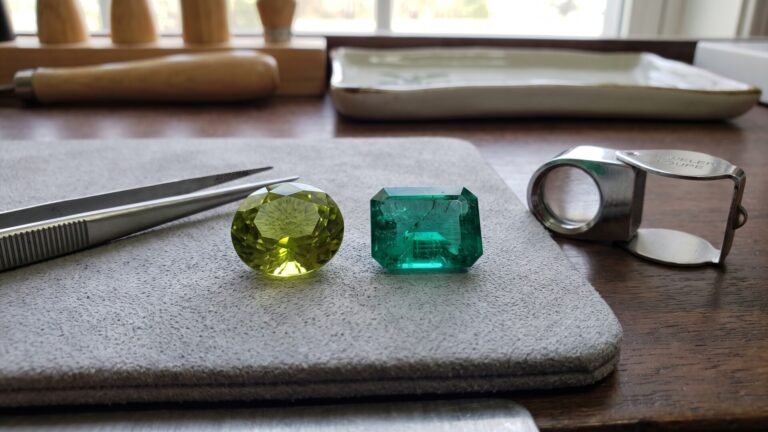
Emerald is the one that trips up careful people. It is a hard stone, so it looks like it belongs in the durable column. But a large share of emeralds on the market are fracture-filled with resin or oiled to improve clarity, and those treatments are sensitive to heat, solvents, and ultrasonic vibration. A gentle soak will not destroy a treated emerald, but repeated soaking can pull filler out of surface-reaching fractures and change how the stone looks. Until you know the treatment, use a damp cloth.
Opal is the other one. Opal contains water in its structure, and some opals are prone to crazing – a network of fine cracks that develops at the surface. Heat, rapid temperature change, and prolonged soaking all make crazing more likely. There is a whole separate approach for a vulnerable opal, and I would read the safest way to clean an opal ring with crazing risk before touching one.
Pearl and turquoise are porous in different ways. Pearls are damaged by acid, which includes perfume, hairspray, and your skin’s own oils. Turquoise can absorb oils and lotions and discolor permanently. Neither belongs in a bowl of water. Wipe both with a dry soft cloth after wearing and leave it at that.
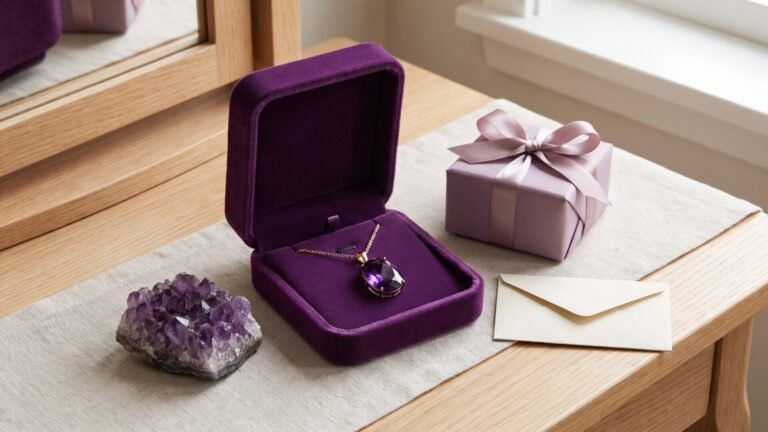
For amethyst specifically, there is more nuance than a table cell can hold – polish, heat sensitivity, and sun exposure all matter – and how to clean amethyst without damaging the polish covers it properly. If you want the broader picture of what each stone is and how it behaves, the full gemstone guide is the place to start, and which birthstones should never be exposed to water is a fast reference for the sensitive ones.
What most buyers get wrong about cleaning gemstones
The single most common mistake is believing that hardness is the same as durability. It is not, and that confusion causes more damage than any cleaning product.
Three different properties are at work:
Hardness is resistance to scratching. It is measured on the Mohs scale, where diamond is a 10 and talc is a 1. A hard stone resists being scratched by a softer one.
Toughness is resistance to breaking, chipping, or cleaving. This is a separate property entirely. Jade is softer than quartz on the Mohs scale but far tougher – it resists breaking in ways quartz never will.
Stability is resistance to heat, light, chemicals, and sudden temperature change. This is the one that matters most for cleaning, and it is the one nobody talks about.
A stone can score high on hardness and still be a terrible candidate for an ultrasonic cleaner or steam. Emerald is the classic example. So is tanzanite, which is relatively soft and has prominent cleavage – it does not like sudden temperature changes at all. Meanwhile a softer stone like pearl survives beautifully if you simply wipe it and keep it away from acid.
The practical upshot: never decide how to clean a stone based on its Mohs number alone. If you want to understand what the scale actually measures and where it stops being useful, the gemstone hardness scale explained walks through it.
The second thing buyers get wrong is impatience. A stone that has gone dull over two years does not need a stronger method. It needs the gentle method done twice, with a proper rinse in between. Aggressive cleaning is how a routine task becomes a repair bill. I have never once seen a piece damaged by cleaning it gently and often. I have seen plenty damaged by cleaning it hard and once.
How to clean gemstone rings, earrings, necklaces, and bracelets
The shape of the piece changes the process more than people expect, because dirt hides in different places and moisture gets trapped in different ways.
Rings collect the most grime and need the most attention underneath. The gallery – the open structure beneath the stone – is where soap, skin oil, and lotion accumulate. Brush there specifically, at an angle, with light pressure. Check the inside of the shank too; that is where sizing seams can open up.
Earrings need inspection before any moisture goes near them. Look at the posts, the backs, the hinges, and any friction components. A friction back that has lost its grip will let an earring fall, and a wet earring is easier to drop. Clean the front and the setting, dry thoroughly, and do not submerge the entire piece if it has a hinged or glued component you have not checked.
Necklaces and bracelets are mostly about the clasp and the links. Residue collects in the crevices between links and around the clasp mechanism. Clean along the chain with the brush, but never pull a wet chain taut – wet metal is more prone to kinking and stretching, and a stretched chain is a permanent problem. Lay it flat to dry.
Set up a proper workstation before you start:
- A shallow bowl, a soft towel underneath, a soft brush, a lint-free cloth, and a small second container for rinsing.
- Photograph the piece before you clean it. This sounds fussy. It is not. If a small accent stone goes missing, the photo tells you whether it was already gone or whether you lost it. That distinction matters when you are deciding whether to blame yourself.
- Clean one piece at a time. Never put several pieces in the same bowl. Stones strike each other, and a diamond will scratch almost anything it touches, including another diamond.
Drying deserves its own warning. Blot, do not rub. Lay pieces flat on a clean towel and let them air-dry completely before storage. Do not use a hair dryer, a radiator, direct sunlight, or compressed air. Heat and forced air push moisture into places it should not be and can stress stones and adhesives.
The ownership rule that saves the most money: clean often with the mild method instead of waiting until residue requires force. A ring cleaned every two weeks never needs anything stronger than soap.
Homemade cleaning solutions: what is safe and what is not
The safest mixture for an appropriate stone is also the dullest: lukewarm water with a small amount of mild dish soap, fully diluted, rinsed away completely. That is it. There is no secret ingredient, and the recipes circulating online are mostly ways to damage jewelry you like.
"Natural" does not mean safe. This is worth saying plainly because the internet has convinced a lot of people otherwise.
- Lemon juice and vinegar are acids. They etch some stones, attack plated finishes, and degrade adhesives. The vinegar soak in my opening story is a real and common mistake.
- Baking soda is abrasive. It scours softer stones and leaves a residue that collects in settings.
- Essential oils leave residue and can stain or discolor porous materials.
- Hydrogen peroxide and household disinfectants are not jewelry cleaners. They can damage coatings, platings, and treatments.
Commercially sold jewelry dips are not automatically better. Their ingredients vary enormously, and a dip that is fine for one stone may be wrong for a treated emerald, a pearl, an opal, a piece of turquoise, plated jewelry, or anything glued. Read the compatibility list on the bottle and compare it against what you actually know about your stone. If the bottle says "safe for all gemstones," treat that as marketing rather than fact, because no cleaner is safe for every stone.
This is where treatment disclosure stops being a value question and becomes a safety question. Before you choose a cleaning method, you want to know whether a stone is fracture-filled, dyed, coated, impregnated, assembled from two materials, or secured with adhesive. Any of those changes the answer. A jeweler can usually tell you, and a reputable seller should disclose it.
A simple framework for deciding:
- Known durable and untreated stone: gentle soap-and-water cleaning is appropriate.
- Known treated or porous stone: use a damp cloth unless the treatment instructions say otherwise.
- Unknown stone or unknown treatment: do not soak. Get it identified first.
That third category is where most readers actually live, and it is why the default advice on this site is caution rather than confidence.
When home cleaning can make damage worse
Some pieces should never be cleaned at home, and the list is shorter than you might fear but firmer than you might like.
Take it to a jeweler if you have loose prongs, a rattling stone, a cracked or chipped gemstone, visible fractures, missing accent stones, or a damaged clasp. Those are structural problems, and cleaning around them is like mopping under a leaking sink.
Take it to a jeweler if the piece is antique, vintage, heirloom, or hand-assembled with fragile settings. Older pieces often use construction methods and adhesives that modern cleaning advice does not account for.
Take it to a jeweler if the stone is emerald, opal, pearl, turquoise, coral, amber, or another porous or treated material and you do not know the treatment history.
The hidden risks are what catch people, because they do not show up immediately. Water enters behind a fracture or around a filled stone and sits there. Oil or moisture changes the appearance of porous material over days, not seconds. Brush bristles catch on prongs and loosen them gradually. Repeated exposure to chemicals degrades plating, adhesives, and surface coatings in ways you only notice months later, when the damage is done.
Do not use an ultrasonic or steam cleaner at home unless you have confirmed the stone and treatment are suitable. These machines are genuinely useful in professional hands, and genuinely destructive in the wrong ones. Ultrasonic vibration can propagate existing fractures and shake loose stones that were already marginal. Steam drives heat and moisture into places a cloth never reaches. Which stones tolerate them is a stone-by-stone question, and which gemstones are safe to clean with an ultrasonic cleaner covers it properly.
Professional cleaning is cheaper than most people assume, and the real value is not the cleaning. It is the inspection that comes with it. A jeweler tightens a prong for a modest fee. Replacing a stone that fell out because the prong was loose costs many times that. The cleaning is almost a bonus.
A maintenance routine that reduces the need for deep cleaning
Most deep cleaning is a consequence of poor prevention. If you get the habits right, the cleaning gets easier and the jewelry lasts longer.
The biggest one: put jewelry on last and take it off first. Cosmetics, perfume, hairspray, sunscreen, and lotion should all be dry before the piece goes on. Those products are the main source of the dulling film you are trying to remove, and they are also the main cause of long-term damage to sensitive stones. Pearls and opals in particular should never meet perfume directly. There is more on that in how perfume, lotion and hairspray damage gemstones.
Remove jewelry before swimming, bathing, cleaning the house, gardening, exercising, or sleeping, at least for pieces that are vulnerable to impact or moisture. Chlorine in pools is hard on plated metals and some stones. Household cleaners are worse. A ring lost in a garden bed is usually lost for good.
Wipe jewelry with a soft cloth after wearing, especially pearls, opals, turquoise, and other sensitive materials. Thirty seconds of wiping prevents most of the buildup that later requires a bowl and a brush.
Storage matters as much as cleaning. Store pieces separately in soft-lined compartments or pouches. Keep delicate stones away from diamonds and other hard materials, because a diamond in a shared drawer will scratch everything it touches. Avoid humid bathrooms and direct sunlight for stones whose color or stability is affected by light and moisture.
Set a practical inspection schedule:
- Every time you wear it: a quick visual check of the setting and the stone.
- When residue appears: clean with the gentle method.
- Periodically, for valuable, frequently worn, antique, or heirloom pieces: professional inspection.
If you own garnet jewelry specifically, how to care for garnet jewelry has a fuller routine that goes beyond cleaning.
The most sensible home-cleaning kit
You do not need much, and you certainly do not need a machine. Here is what is actually worth owning.
- A shallow glass or plastic bowl – for soaking and for rinsing, ideally two.
- Mild, dye-free dish soap – the plainest one you can find.
- A very soft toothbrush or a soft cosmetic brush – soft enough that you would use it on your gums.
- Several lint-free microfiber or jewelry-polishing cloths.
- A soft towel for the work surface and for drying.
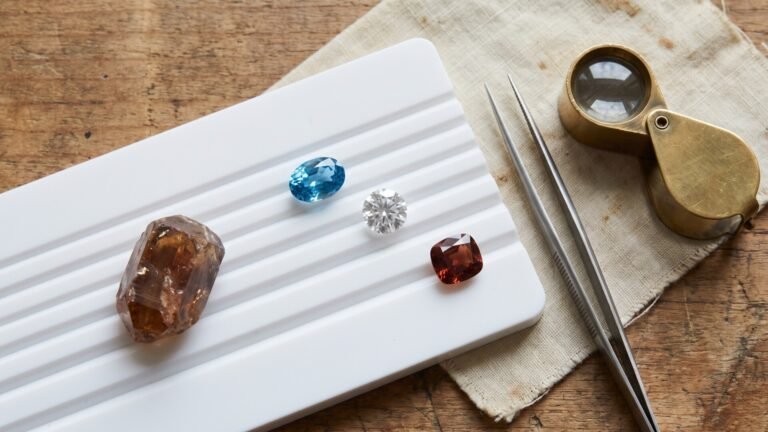
- A small loupe for inspecting settings – useful, but it does not replace a jeweler’s evaluation.
- A drain stopper or mesh sink strainer, if you are going to work near a sink at all.
What is worth buying and what is not: a soft brush and good lighting will do more for most owners than an ultrasonic cleaner ever will. A loupe helps you spot a loose prong before it becomes a lost stone, which is genuinely valuable. Generic polishing cloths are fine for solid gold and platinum but should stay away from plated, coated, pearl, opal, or intentionally textured surfaces unless the manufacturer approves them – the polishing compound in some cloths is mildly abrasive.
If you want to assemble a proper kit, [Affiliate: a basic jewelry cleaning set with a soft brush and microfiber cloths] covers the essentials for less than the cost of one professional cleaning. Add [Affiliate: a small jeweler’s loupe] if you want to inspect prongs yourself, and [Affiliate: a mesh sink strainer] if you are going to keep working near a drain. For storage, [Affiliate: soft jewelry pouches] and a [Affiliate: compartment jewelry box] are the items that prevent the scratches and residue buildup that cleaning then has to fix.
One buyer-protection note. Product descriptions like "safe for all gemstones," "professional-strength," and "chemical-free" are not reliable substitutes for stone-specific care instructions. "Chemical-free" is meaningless on its face – water is a chemical. "Professional-strength" usually means stronger than you need. Buy supplies after you know what stone you have and how it is treated, not before.
Frequently Asked Questions About Cleaning Gemstone Jewelry At Home
Can I clean gemstone jewelry with dish soap?
For many durable, securely set, untreated gemstones, a small amount of mild dish soap diluted in lukewarm water is an appropriate home method. It is not automatically safe for pearls, opals, turquoise, fragile emeralds, glued jewelry, or stones with unknown treatments. Use the plainest dye-free soap you have and rinse it away completely.
Is warm water safe for gemstone jewelry?
Lukewarm water is generally safer than hot water, because sudden or extreme temperature changes can stress some stones, treatments, settings, and adhesives. Avoid very hot water and thermal shock, especially with opal, emerald, treated stones, and antique jewelry. If the water is uncomfortable on your hands, it is too hot for the jewelry.
Can I use a toothbrush to clean a gemstone ring?
Only a very soft toothbrush or cosmetic brush, and only with light pressure. Do not scrub aggressively around prongs, fracture-filled stones, plated surfaces, or delicate settings, because the bristles can catch or loosen components. Brush the underside of the stone gently and let the soap do the work.
How do I clean gemstone jewelry if I do not know what the stone is?
Avoid soaking, chemicals, steam, and ultrasonic cleaning. Wipe the piece with a barely damp soft cloth, dry it immediately, and have the stone identified before using a stronger method. A jeweler can usually tell you what you have in a few minutes, and that knowledge changes the entire cleaning decision.
Why does my gemstone look cloudy after cleaning?
Cloudiness may be residue from soap or hard water, moisture trapped behind the stone, a damaged coating, a treatment issue, surface wear, or an existing fracture. Do not keep scrubbing. Dry the piece thoroughly and have a qualified jeweler examine it if the appearance does not clear.
Can I use jewelry cleaner on every gemstone?
No. Commercial cleaners vary in ingredients and may damage porous, treated, coated, soft, or glued materials. Check the cleaner’s specific compatibility list and compare it against the stone’s treatment and setting before use. “Safe for all gemstones” is a marketing claim, not a guarantee.
How often should gemstone jewelry be professionally cleaned?
Professional cleaning is most valuable for expensive, frequently worn, antique, heirloom, or structurally delicate jewelry. A jeweler can clean the piece while checking prongs, clasps, fractures, and loose stones – issues a home routine may miss. For everyday durable pieces, an annual check is usually enough.
Can I clean gemstone jewelry in the shower?
That depends entirely on the stone, and for many it is a bad idea. Pearls, opals, turquoise, and glued or antique pieces should not be worn in the shower at all. Whether a given stone tolerates regular water exposure is a separate question from whether it tolerates a five-minute cleaning, and [Internal:4711: whether you can shower with gemstone jewelry] is worth reading before you make it a habit.
Gentle and specific beats powerful and universal
For a known, durable gemstone in a sound setting, lukewarm water, mild soap, a soft brush, and careful drying are usually all you need. That is the whole method, and it has cleaned more jewelry than every machine ever sold.
For anything unknown – a stone you cannot name, a treatment you cannot confirm, an antique piece, a fracture, a glued component – use minimal moisture and get it looked at. The caution costs you one trip to a jeweler. The alternative can cost you the stone.
The reason any of this matters beyond the next cleaning is that these pieces are meant to outlast us. A ring cleaned gently and inspected once a year will still be wearable when someone not yet born inherits it. A ring cleaned hard and often may not survive its first owner. The difference is not the soap. It is the specificity.
Now that you know how to clean it, the next question is usually what to do about the stone you have been avoiding because you are not sure it can take water at all. That answer depends on the stone, and the place to start is the stone-by-stone guide to showering with gemstone jewelry, which covers the pieces this article deliberately told you to keep dry.