Montana Sapphire vs Ceylon Sapphire: Color, Origin and Value
I once sold a pale Ceylon sapphire to a man who had come in for an engagement ring and left with a story about a mine in Sri Lanka. He had asked me three times whether it was "real Ceylon," and I said yes each time, because it was. What I did not say, because the store did not encourage me to, was that the stone was heated, lightly windowed, and about as ordinary as a blue sapphire gets. The origin was true. The romance around it was doing the selling.
That is the problem with this comparison. Montana sapphire versus Ceylon sapphire is not really a contest between two qualities. It is a contest between two color personalities, and the origin label is the least reliable thing on the tag. Montana sapphire is usually the better choice if you want distinctive teal, green-blue, or muted steel color. Ceylon sapphire is usually the better choice if you want bright, classic blue with broad market recognition. Neither origin makes a stone valuable by itself.
The comparison matters because origin changes the color range you will see, the price premium attached, the treatment expectations, and the story a seller will tell you. It does not replace looking at the individual stone under neutral light and confirming treatment and origin with a reputable laboratory. A mediocre sapphire from a celebrated origin is still a mediocre sapphire.
What Montana sapphire and Ceylon sapphire actually mean
Montana sapphire means sapphire mined in Montana. That is the whole of it. The label covers material from the Yogo Gulch area, which historically produced small, hard, distinctly blue stones, and from the alluvial gravels of the Missouri River region and other Montana deposits, which produce a much wider color range. It is a geographic origin, not a color grade and not a quality guarantee.
Ceylon sapphire means sapphire from Sri Lanka. "Ceylon" is the older colonial name for the island and remains a widely used trade term for Sri Lankan gemstones. Sri Lanka produces a broad range of sapphire colors and qualities, from pale commercial material to some of the finest blue stones in the world. The word "Ceylon" tells you where the rough came from. It tells you nothing about how good the stone is.
Both are corundum, the mineral species that gives us ruby and sapphire. Sapphire is gem-quality corundum that is not ruby-red. Both have a Mohs hardness of 9, which is the second-hardest mineral after diamond and is why sapphire works in rings that get worn every day. If you want the foundational properties laid out properly, the main sapphire guide covers hardness, crystal structure, and value context in more depth than this comparison needs.
Here is the warning that matters most. "Montana" and "Ceylon" are used as marketing shorthand, and sellers know it. A reliable origin claim should be supported by a report from a respected laboratory such as GIA, which offers origin opinions on sapphire when the evidence supports them. Sellers should disclose clearly whether the stone is natural, heated, diffusion-treated, fracture-filled, or laboratory-grown. If they will not put it in writing, the label is decoration.
Color comparison: Montana’s character versus Ceylon’s brightness
Montana sapphire color range
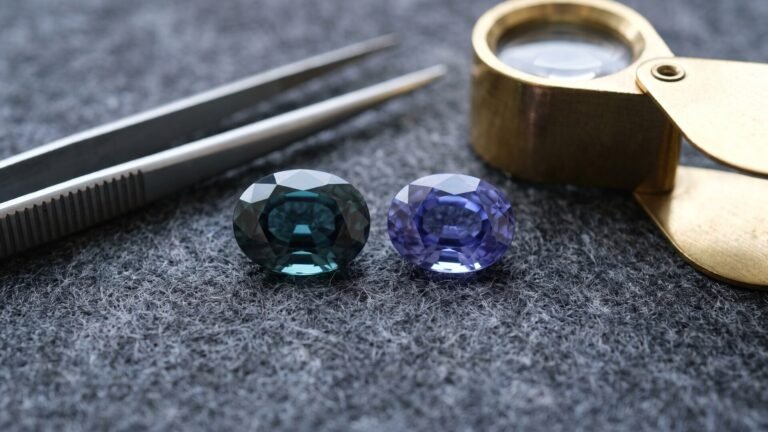
Montana’s best-known colors are steel blue, denim blue, blue-green, teal, green, and yellow. Many stones carry gray or muted undertones that soften the blue rather than sharpen it. This is why Montana sapphires often look distinctive rather than conventionally vivid. The appeal comes from complex secondary colors and a palette that reads as natural and slightly unusual.
That is also the risk. A Montana sapphire with too much gray can look flat and lifeless in a ring, and a stone described as teal online can arrive looking muddy green in person. Montana color varies significantly by deposit and even by individual crystal, so do not assume every Montana sapphire will be teal, and do not assume it will be untreated. Some of the most attractive Montana material is heated, and some is not, and the difference is in the report, not the label.
Ceylon sapphire color range
Sri Lankan sapphires are known for a broad palette: vivid blue, lighter cornflower blue, violet-blue, pastel colors, pink, yellow, padparadscha-like hues, and colorless material. The classic Ceylon look is a bright, transparent blue that shows more brilliance and life than the darker, more saturated appearance associated with some other sapphire markets. Whether that lighter look is desirable is a matter of taste, not quality.
"Ceylon blue" is not a laboratory grade or a guaranteed color standard. It is a trade phrase. The exact hue, tone, saturation, clarity, and cut still decide what the stone looks like and what it is worth. If you want to understand how those three variables interact across the whole sapphire range, the sapphire color guide breaks down hue, tone, and saturation, and the sapphire color spectrum explained covers the teal, blue-green, violet-blue, and pastel secondary colors that show up in both origins.
Direct color comparison
| Buying factor | Montana sapphire | Ceylon sapphire | What it means for the buyer |
|---|---|---|---|
| Typical blue appearance | Steel blue, denim, teal, blue-green, or muted blue | Light to vivid blue, often bright or cornflower-like | Choose Montana for complexity; Ceylon for classic blue brightness |
| Color diversity | Blue, green-blue, teal, green, yellow, gray-influenced | Blue, pink, yellow, pastel, violet-blue, and more | Ceylon offers a broader established color market |
| Saturation | Often moderate or softened, stronger examples exist | Ranges from pastel to vivid and highly saturated | Compare the individual stone, not the origin label |
| Common visual appeal | Unusual, earthy, modern, distinctive | Bright, elegant, traditional, widely recognized | Style preference may matter more than origin prestige |
| Main color risk | Gray or overly dark appearance | Weak or washed-out color in poorly chosen stones | Inspect under several lighting conditions |
How origin, treatment, and certification affect value
Geographic origin is one value factor among several. GIA and other respected laboratories evaluate color, clarity, cut, and treatment, and they will state a geographic origin when requested and when the stone’s inclusions allow a supportable opinion. That report is the only origin claim worth paying for.
Heat treatment is the issue buyers most often misunderstand. Heated sapphire is common in the market and can still be attractive, durable, and entirely legitimate. Heating is used to improve color, and a well-heated stone with strong color is often a better purchase than a weakly colored unheated one. But an unheated stone with strong color and clarity may command a meaningful premium, because fine unheated material is scarcer. The trap is treating "unheated" as automatically superior. It is not. A dull unheated stone is still a dull stone.
Montana sapphires are sometimes marketed as untreated or minimally treated, and some genuinely are. Buyers must verify the claim rather than trusting words like "natural," "earth-mined," or "responsibly sourced," none of which are regulated terms with fixed definitions. Ceylon sapphires can also be untreated or heated, and some Sri Lankan material receives treatment to improve color or clarity. The report should state the treatment status plainly.
A buyer-protection checklist worth carrying into any conversation:
- Confirm the report identifies the stone as natural sapphire.
- Check whether treatment is stated as "no indications of heating," heated, or another disclosed category.
- Request an origin opinion when origin is central to the price you are being asked to pay.
- Treat "unheated" without independent documentation as an unverified sales claim.
- Be cautious of vague "rare Montana teal" or "premium Ceylon" language with no measurable supporting detail.
If you are unsure whether a stone is natural or synthetic, how to spot real versus synthetic sapphire walks through what laboratories look for and what you can reasonably check yourself.
Durability, clarity, and cutting: the practical differences buyers miss
Both materials are corundum and both work well in engagement rings, earrings, pendants, and bracelets. Sapphire’s hardness of 9 does not make it indestructible. Abrasive wear, significant inclusions, poor settings, and sharp exposed corners can all create problems over years of daily wear. If you are weighing sapphire against a softer blue stone, the tanzanite versus sapphire comparison lays out the durability gap honestly.
Montana rough presents cutting challenges. Color zoning, inclusions, and the cutter’s need to retain weight can influence the finished shape, and a cutter working around a color band may produce a stone with uneven color across the face. A well-cut Montana sapphire is worth more to you than a larger but duller one, and the difference is visible the moment you turn the stone in daylight.
Ceylon sapphires range from heavily included to exceptionally clean. Sri Lankan material can offer attractive transparency and brightness, but a pale stone with excessive windowing can look less valuable than its origin suggests. Windowing is a see-through area caused by poor facet alignment that lets light pass straight through the stone instead of returning it to your eye. It makes a sapphire look glassy and washed out, and it is one of the most common flaws in commercial sapphires of both origins. A windowed stone is a cutting problem, not an origin problem, and no certificate fixes it.
Settings matter as much as the stone. For daily rings, favor secure prongs or a bezel and avoid exposed sharp corners. For unusually included stones, consider a protective setting and have it inspected professionally. For an heirloom purchase, prioritize cut quality, durability, treatment disclosure, and a report over origin storytelling. A beautiful stone in a fragile setting is a repair bill waiting to happen.
What most buyers get wrong about Montana and Ceylon sapphires
The first mistake is assuming Ceylon means rare, premium, or investment-grade. Sri Lanka produces important sapphires, but quality varies enormously and many Ceylon stones on the market are commercially ordinary. The word describes a source, not a standard.
The second mistake is assuming Montana means ethically superior or untreated. Regional origin may carry real meaning for a buyer who wants a North American stone, and that is a legitimate preference. But the seller still owes you accurate treatment and sourcing information, and "Montana" is not a substitute for it.
The third mistake is believing darker or more saturated is always more valuable. Excessive darkness can kill brilliance, and a lighter stone with life and good cut can be the more attractive purchase. In Ceylon sapphires especially, a bright medium blue often outperforms a dark stone in a ring.
The fourth is expecting an origin report to certify beauty or guarantee resale. A laboratory may support geographic origin. It does not tell you the stone is beautiful, and it does not promise anyone will pay you more for it later. You still have to assess color, transparency, proportions, setting, and price yourself.
Value and pricing: which origin is usually more expensive?
Main value drivers
The hierarchy runs roughly like this: beauty and color first, then clarity and transparency, cut quality, carat weight, treatment status, origin documentation, rarity of the specific color, and seller reputation. Origin sits below color and cut for good reason. It is a tie-breaker, not a foundation.
Comparable prices require comparable stones. A direct comparison between a pale heated Montana stone and a vivid unheated Ceylon stone is meaningless. You have to match color strength, clarity, cut, carat weight, treatment, and certification before the price gap tells you anything.
Unusual Montana teal and blue-green colors can attract premiums when the color is attractive, well balanced, and supported by strong cutting and disclosure. Fine Ceylon sapphires with vivid blue, exceptional clarity, rare color, or strong unheated status can command substantial premiums, while ordinary commercial stones may be far more affordable. Both markets reward quality and punish the label-only buyer.
Approximate buying tiers
| Budget level | Montana sapphire expectations | Ceylon sapphire expectations | Best buying strategy |
|---|---|---|---|
| Under $1,000 | Smaller stones, lighter or gray-influenced color, commercial clarity, modest certification | Smaller stones, lighter blue or commercial material, commonly heated | Prioritize cut and beauty over origin |
| $1,000-$3,000 | Attractive small-to-medium teal, blue-green, or blue stones | Better-cut blue stones, some attractive heated or lightly included material | Compare several stones side by side |
| $3,000-$10,000 | Stronger color, larger sizes, unusual teal, documented untreated material | More vivid color, better transparency, larger stones, stronger documentation | Require clear treatment disclosure and consider a lab report |
| Above $10,000 | Exceptional color, size, clarity, rarity, or documented origin | Fine vivid blue, rare color, unheated status, strong clarity, size, origin | Use an independent gemologist and auction-quality documentation |
These are planning ranges, not fixed market prices. Retail pricing varies by cut, seller, report, treatment, and current supply. Origin premiums are easiest to justify when the stone has a strong visual reason to command them and credible documentation behind the claim.
Which sapphire makes more sense in three years?
Build the decision around four buyer profiles.
Choose Montana if you value a distinctive teal or blue-green stone, care about regional provenance, and want an engagement ring that does not look like everyone else’s. The color is the point. If you do not love the teal, the origin premium is wasted money.
Choose Ceylon if you want a recognizable blue sapphire, a brighter face-up appearance, broad availability, and stronger consumer familiarity. A well-chosen Ceylon blue is the safer choice for a traditional ring and the easier one to replace if it is lost.
Choose either origin only with a report if the purchase is expensive, intended as an heirloom, or described as untreated or investment quality. Documentation is what separates a claim from a fact.
Avoid paying a major origin premium when the stone has weak color, poor cut, visible windowing, or unclear treatment. No origin rescues a bad stone.
Long term, both origins remain durable for generations. The setting, the care, and the quality of the original cut usually matter more than the mine name. A well-cut Ceylon stone in a secure bezel will outlast a poorly cut Montana stone in a fragile setting, and vice versa. Resale and investment deserve honesty. Fine sapphires can attract collector and auction interest, but most retail sapphires are not liquid investments. Origin can help marketability. It does not guarantee an easy sale or a profit. If investment-grade marketing language is part of the pitch, the comparison of investment grades for royal blue sapphires and pigeon blood rubies explains how rarity, documentation, and liquidity actually work.
The decision rule is simple. Buy the most attractive, well-cut, properly documented stone within your budget. Use origin as a tie-breaker unless the origin itself is central to the collection or the provenance story you are deliberately buying.
Buying checklist and final recommendations
Before you commit, do these things:
- View the sapphire in daylight, indoor lighting, and diffused neutral light.
- Look for even color, lively brilliance, and minimal windowing.
- Ask whether the stone is natural, lab-grown, heated, diffusion-treated, or otherwise treated.
- Verify any origin claim with a report from a respected laboratory.
- Confirm the return policy, resizing terms, and whether the report accompanies the jewelry.
Red flags worth walking away from:
- A seller treats "Ceylon" as proof of premium quality.
- A Montana stone is called rare solely because it comes from Montana.
- The listing uses "investment grade" without discussing liquidity or providing documentation.
- The price rests on an unverified no-heat or origin claim.
- The seller avoids showing the stone in multiple lighting conditions.
If you want practical authenticity checks you can do before an independent inspection, the guide to telling if your sapphire is real covers what you can and cannot confirm at home. Use them as a first filter, not a substitute for a laboratory.
The recommendations, plainly:
Best for distinctive color: Montana sapphire, especially an attractive teal or blue-green stone with strong cut quality.
Best for classic blue appeal: Ceylon sapphire, particularly a lively blue with good transparency and documented treatment.
Best value discipline: whichever stone has the better combination of beauty, cut, treatment disclosure, and price, rather than whichever has the more prestigious-sounding origin.
Best heirloom approach: a natural sapphire with a secure setting, independent documentation, and a color the intended wearer will still enjoy decades from now.
Frequently Asked Questions About Montana Sapphire Vs Ceylon Sapphire
Is Montana sapphire more valuable than Ceylon sapphire?
Neither origin is automatically more valuable. A fine Ceylon sapphire with vivid color, strong clarity, and documented lack of heating may cost far more than an ordinary Montana stone, while an exceptional Montana teal can command a premium over a commercial Ceylon blue. Value lives in the individual stone.
Are Montana sapphires usually untreated?
Some are marketed as untreated, but treatment status must be verified stone by stone. Ask for an independent laboratory report or a clear gemological disclosure rather than relying on the origin label.
Are Ceylon sapphires good for engagement rings?
Yes. Sapphire is durable enough for engagement rings when the stone is well cut and the setting protects it from impact. Check for significant inclusions, exposed corners, and a secure setting before choosing a Ceylon sapphire for daily wear.
Which sapphire has better resale value?
Fine quality, rarity, documentation, and buyer demand matter more than origin alone. Exceptional Ceylon sapphires benefit from broader market recognition, while distinctive Montana sapphires appeal strongly to niche buyers. Neither guarantees profitable resale.
Is a teal Montana sapphire better than a blue Ceylon sapphire?
That is a preference decision, not an objective quality ranking. Teal Montana suits buyers who want unusual color and regional character. Blue Ceylon suits buyers who prefer a traditional, widely recognized sapphire appearance.
Do I need a certification for a Montana or Ceylon sapphire?
A laboratory report is strongly advisable for an expensive stone or any purchase involving an origin, treatment, no-heat, or investment claim. For lower-priced jewelry, obtain at least a written treatment disclosure and a return policy that allows independent inspection.
Can a heated sapphire still be a good buy?
Often, yes. Heating is a common and accepted treatment, and a well-heated stone with strong color and clean cut can be a better purchase than a weakly colored unheated stone. The report should state the treatment plainly so you know what you are paying for.
Does origin affect sapphire durability?
No. Both Montana and Ceylon sapphire are corundum with a Mohs hardness of 9. Durability depends on inclusions, cut, and setting, not on where the rough was mined.
The stone in the ring is the thing. Not the mine, not the brochure, not the word Ceylon printed on a card. Look at it in daylight, ask what was done to it, get the answer in writing, and pay for the color you can actually see.