Russian vs Brazilian Alexandrite: Origin, Color and Rarity
I had a customer once who came back to the counter three times over a month, and each time she asked the same question in a slightly different way. She was shopping for her daughter’s twenty-first birthday and had read that Russian alexandrite was the only alexandrite worth owning. She had a budget. She was terrified of being taken. The third time, I put two stones under the lamp and said the thing I should have said the first time: the label on the box is not the gem.
That is the whole argument. Fine Russian alexandrite is genuinely rare, genuinely historic, and genuinely expensive. Brazilian alexandrite can show a color change that stops a room, and it may be the only version of this stone you can realistically find and afford. Origin matters. It just does not matter first, and it does not prove quality.
If a seller charges a Russian premium, the origin claim needs a respected laboratory behind it. Not a certificate printed in-house. Not a story about the Urals.
How Russian and Brazilian Alexandrite Compare at a Glance
Before the history and the gemology, you need the shape of the comparison. The table below describes typical market patterns, not laws. Exceptions run in both directions, and the best Brazilian stone you see this year may beat the average Russian stone you see in the same case.
| Factor | Russian Alexandrite | Brazilian Alexandrite | Why It Matters |
|---|---|---|---|
| Historical importance | The classic source tied to alexandrite’s discovery and early prestige | Important modern source known for fine stones | Affects provenance appeal and collector interest |
| Typical color change | Often valued for green-to-red or purplish-red change, with quality varying widely | Can show dramatic green-to-red or purplish-red change, sometimes with strong saturation | Visible change is a major part of beauty and value |
| Availability | Very limited and difficult to source consistently | Also scarce, especially in fine sizes and quality | Availability affects pricing and buyer options |
| Origin premium | Can be substantial when origin is documented and the stone is exceptional | May command strong prices when color change and quality are outstanding | Origin should not outweigh actual gem quality |
| Best buyer fit | Collector seeking historical provenance and rarity | Buyer seeking exceptional color change with broader modern sourcing | Helps match the stone to the buyer’s priorities |
| Main buying risk | Paying for an unsupported Russian origin claim | Assuming Brazilian origin means common or inexpensive | Both require treatment and origin disclosure |
The short verdict for different buyers
Collectors who value historical provenance, scarcity, and a documented connection to the original source should look at fine Russian alexandrite. That is a narrow group, and it should be, because the supply is narrow.
Buyers who prioritize vivid color change, visual appeal, and a realistic chance of finding a natural stone should look at Brazilian alexandrite. That is most readers of this page.
Neither origin is worth buying if the stone has weak color change, excessive darkness, poor clarity, undisclosed treatment, or no credible laboratory report. A documented, beautiful Brazilian stone beats a mediocre or unverified stone marketed as Russian every time I have seen the two side by side.
Why Russian Alexandrite Has Such Prestige
Alexandrite was named for Tsar Alexander II and discovered in Russia’s Ural Mountains in the nineteenth century, and that association is baked into the stone’s identity. When people say alexandrite is the tsar’s stone, they are reporting a historical connection, not a gemological fact about any particular stone in a case today.
The Ural deposits produced material that became the reference point for what alexandrite should look like. That reputation is earned. It is also old, and old reputations are easy to borrow.
Discovery, history, and the imperial association
The imperial link gave alexandrite a story that most gemstones would trade a great deal for. Red and green, the old military colors of imperial Russia, appearing in one stone depending on the light. That is a marketing gift that arrived before marketing existed.
But historical association creates collector appeal. It does not replace gemological evidence. A stone does not absorb prestige from a mine that closed before the seller was born.
The decline of classic Russian production
Traditional Russian material is rarely encountered in commercial jewelry today. The historic deposits are not producing the way the story implies, and stones genuinely from them are limited and hard to source consistently.
Separate three things a seller will blur together: where the stone was mined, when it was mined, and what the seller says about it. "Russian" should mean a defensible geographic origin. It should not mean "in the style of" or "from a country with a history."
What Russian origin can and cannot prove
Russian origin does not guarantee strong color change. It does not guarantee clarity, size, or investment grade. It is a provenance fact, and provenance is one line in a longer appraisal.
When a seller adds a major premium for Russian provenance, an origin opinion from a respected laboratory becomes essential. Standard gemological practice, including reports from organizations such as GIA where available and appropriate, is how origin claims get tested. If the premium is real, the paperwork should be too.
Why Brazilian Alexandrite Can Be Exceptionally Valuable
Brazil is a serious source of important alexandrite, not a consolation prize. The mistake is treating it as the budget option. Fine Brazilian material is rare, and the market prices it that way.
The importance of Brazilian deposits
Brazil has produced alexandrite for decades and remains one of the sources buyers actually encounter. That commercial importance does not mean uniform quality. Mine output is uneven everywhere, and a productive source can still yield very few stones with excellent saturation, clarity, size, and color change.
Source reputation should be read alongside the specific stone in front of you. Brazil being important tells you the country produces alexandrite. It tells you nothing about the stone on the tray.
Color-change performance in Brazilian material
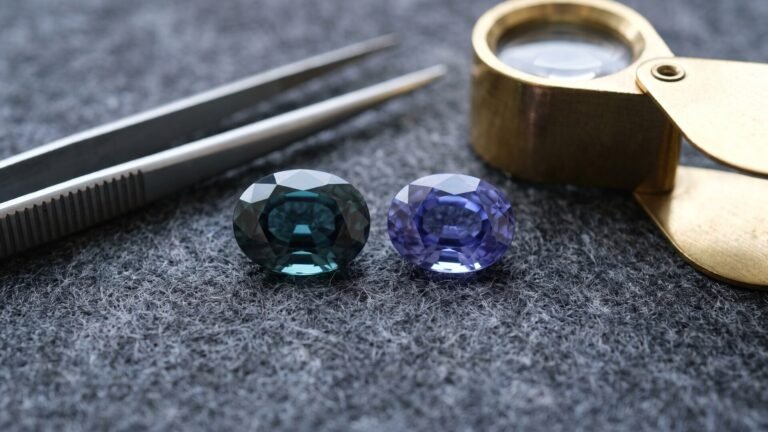
Brazilian alexandrite can show green, bluish-green, teal, red, raspberry, and purplish-red appearances depending on the light. The quality of the transition is what matters. A dramatic, attractive change with good saturation is more desirable than a weak shift between two dull colors.
Photographs exaggerate color change constantly. White balance, background, lighting, and camera processing all bend the result. A stone photographed under a specific lamp against a specific backdrop can look like a different gem than the one that arrives.
Why "Brazilian" does not mean inexpensive
Fine Brazilian alexandrite can be highly priced because natural alexandrite is scarce and exceptional specimens are difficult to replace. Ordinary commercial material and collector-grade material are different products that happen to share a country of origin.
Here is the contrarian point worth carrying into a shop: Brazilian origin may offer better visual value for many buyers, but it is not a bargain in the fine-gem market. Expect to pay for quality. Just do not pay extra for a country name that is doing no work.
Color Change: The Factor That Usually Matters Most
If you remember one section of this comparison, make it this one. Color change is the reason alexandrite exists as a category. Everything else, including origin, is secondary to how the stone actually behaves.
What causes alexandrite’s color change
Alexandrite is the chromium-bearing variety of chrysoberyl, a beryllium aluminum oxide. The chromium absorbs light in a way that makes the stone appear different under daylight and under incandescent or warm light. The effect is optical, not magical, and it is the stone’s defining characteristic.
Color change is not the same as a stone looking slightly different under different lighting. Every gemstone shifts a little. Alexandrite is supposed to shift a lot, and in a specific, saturated, attractive way. For the full mechanism, see why alexandrite changes color.
How to judge a meaningful color change
Evaluate four things. The starting daylight color. The warm-light color. The strength of the transition. The saturation of both appearances.
A desirable change runs green to red, with clear, saturated colors on both ends. Weaker stones shift between grayish, brownish, or washed-out tones, and the change can be technically present while visually unimpressive. A muddy transition is not rescued by drama.
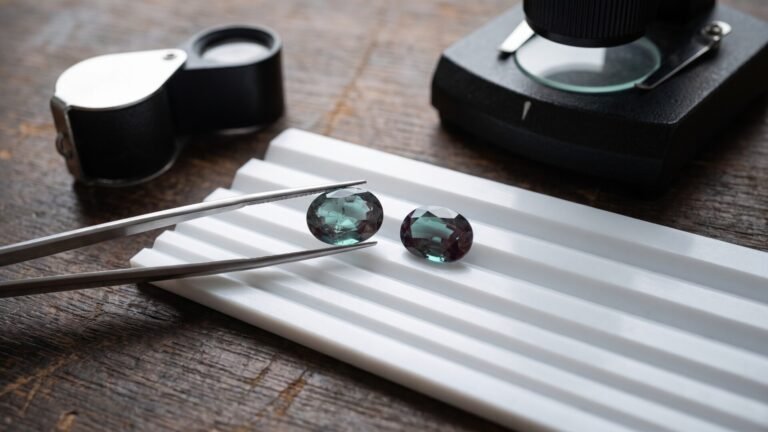
Ask for video or photographs under clearly identified lighting. Then, for anything expensive, get an in-person or independent gemological assessment. A screen is a starting point, not a verdict.
Russian versus Brazilian color-change expectations
No origin wins universally. Quality varies within both sources, and the best Brazilian stones can rival or exceed the visual appeal of many Russian examples.
What the market typically describes is a tendency, not a guarantee. Russian material is often discussed in terms of classic green-to-red change. Brazilian material is often discussed in terms of dramatic change with strong saturation. Both descriptions are true of the best stones and useless for the average one.
A strong color change in a smaller, cleaner stone is frequently more attractive and more wearable than a larger stone with a weak or muddy transition. Buyers chase size. Wearers notice color.
A practical color-change decision rule
Use this sequence every time:
- Reject stones with an unattractive body color in either lighting. If you do not like the stone in daylight, nothing downstream fixes it.
- Compare the strength and quality of the change between the stones you are considering.
- Assess clarity, cut, size, treatment status, documentation, and price.
- Treat origin as a final premium factor, not the first and only filter.
That order protects you. Origin-first shopping is how people end up paying for a story and wearing a disappointment.
Rarity, Value, and the Origin Premium
Alexandrite pricing is built from several components stacked in a rough hierarchy, and origin sits near the bottom of that stack. Understanding the stack is how you tell a fair price from a markup dressed as rarity.
The value hierarchy for natural alexandrite
Work down this list when you evaluate any stone:
- Natural status and credible identification
- Strength and attractiveness of color change
- Daylight and incandescent body colors
- Clarity and the visibility of inclusions
- Carat weight, because fine larger stones are disproportionately scarce
- Cut quality, face-up appearance, and brilliance
- Treatment disclosure and laboratory documentation
- Geographic origin, when independently supported
For detailed pricing context on natural stones, see how much natural alexandrite costs per carat. The short version: price climbs steeply with size and quality, and the top of the market is thin.
When Russian origin justifies a premium
A Russian origin premium is defensible when it is paired with exceptional color change, attractive saturation, good transparency, suitable cutting, and a credible report. All of those together. Not one of them.
An origin label cannot rescue a weak stone. If the color change is dull, the clarity is poor, or the cut is shallow, the country name is decoration. Distinguish collector value, which is based on provenance, from jewelry value, which is based on beauty and wearability. They are different purchases that sometimes overlap.
When Brazilian origin may offer the stronger purchase
A beautiful Brazilian stone with strong color change, good cut, and documentation is a better buy than a mediocre Russian stone for almost every reader. If you plan to wear the piece, visible performance beats historic source.
Future resale depends on the entire quality package and on buyer demand, not on the word "Russian." A thin market for expensive natural alexandrite does not care where the stone was mined if the report is weak.
Approximate market positioning
The table below frames relative market position, not fixed prices. Treat it as a map of tiers.
| Stone profile | Likely market position | What the buyer is paying for |
|---|---|---|
| Commercial natural alexandrite with weak change | Lower tier | Natural identity, but limited visual performance |
| Attractive Brazilian alexandrite with noticeable change | Mid to upper tier | Wearability, color change, and scarcity |
| Fine Brazilian alexandrite with vivid change and strong saturation | High tier | Exceptional visual quality and limited supply |
| Fine Russian alexandrite with documented origin | High to collector tier | Beauty plus historic provenance and rarity |
| Large, clean, strongly changing stone from either source | Very high or collector tier | Extreme scarcity across multiple value factors |
What Most Buyers Get Wrong About Russian and Brazilian Alexandrite
These are the four errors I saw most often behind the counter, and each one costs real money.
Mistake: treating origin as a quality grade
Origin is provenance, not a score. A seller can use a famous source name to distract from weak color change, poor cutting, or visible inclusions, and some do.
Run the sequence in order: identify the stone, evaluate the color change, inspect the condition, verify treatment, then consider origin. Origin comes last because it is the easiest thing to talk about and the hardest thing to verify.
Mistake: believing all color change is equally desirable
A dramatic but muddy transition is less attractive than a balanced, saturated change. Red in warm light ranges from desirable raspberry or purplish-red to brownish and dull, and the difference matters more than the strength of the shift.
Compare stones under controlled lighting rather than trusting one photograph. Ask what the lighting was. Ask for daylight and incandescent shots of the same stone.
Mistake: assuming rarity guarantees investment performance
Rarity does not create liquidity. The buyer pool for expensive natural alexandrite is small, and reselling without strong documentation is difficult. Anyone promising a quick profit on a colored stone is selling you a story.
Jewelry enjoyment and heirloom potential are realistic goals. Short-term profit is not.
Mistake: confusing natural, lab-created, and treated material
Lab-created alexandrite can show attractive color change, and there is nothing wrong with it as a product. It should never be priced or represented as natural material. The confusion runs both ways, and it is expensive in both directions. See natural vs lab-created alexandrite for the inclusions and clarity guide.
Before you buy, require clear disclosure of treatments, synthetics, simulants, and laboratory findings. If a seller cannot tell you what the stone is, that is your answer.
How to Buy Russian or Brazilian Alexandrite Safely
The comparison only becomes useful when it turns into a checklist. Here is the one I would hand a friend.
Documentation and origin verification
Require a report from a respected independent gemological laboratory for any expensive natural alexandrite. The report should clarify natural or laboratory-created identity, species and variety, detectable treatments, and an origin opinion when the laboratory offers one.
A seller’s certificate, an appraisal, or a country label is not equivalent to an independent laboratory report. Appraisals value what the seller says the stone is. They do not establish what it is.
Questions to ask the seller
Ask these directly and write down the answers:
- Is the stone natural or laboratory-created?
- Has it been treated, filled, fracture-filled, irradiated, or otherwise enhanced?
- Does the report state an origin opinion, or is the origin only the seller’s claim?
- Can I inspect the stone under daylight and warm incandescent lighting?
- Is the stone loose or mounted, and can the report be matched to this exact gem?
- What are the return terms if an independent gemologist disagrees with the description?
Warning signs
"Russian quality" used without a Russian origin opinion. A dramatic price premium based only on a printed seller certificate. Stock photographs that do not show the exact stone. "Investment grade" claims that never mention color change, clarity, treatment, size, or liquidity. Pressure to buy before an independent inspection or before a return period expires.
If a jeweler offers to scratch-test your stone, leave. That test belongs to a different era and a different kind of stone.
Jewelry and durability considerations
Alexandrite is suitable for jewelry, but it still needs sensible protection from hard knocks and careless wear. Chrysoberyl is tough, and toughness is not the same as invulnerability.
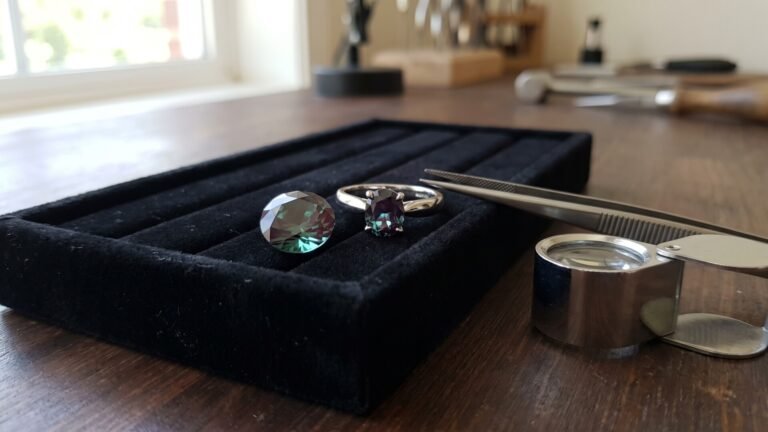
Ring settings expose a stone to more impact than pendants or earrings, so a ring worn daily takes more abuse than the same stone set as a pendant. Check prongs regularly. Avoid harsh chemicals, and skip ultrasonic cleaning unless a professional confirms it is safe for that specific stone and setting. Use a qualified jeweler for inspections. For broader properties and care guidance, see alexandrite meaning, properties, uses and value.
Which Origin Makes Sense for Your Budget and Priorities?
The decision is not "it depends." It depends on which of three buyers you are.
Best choice for a collector
Documented Russian alexandrite, when historic source matters deeply, when you accept a smaller or less readily available stone, when the laboratory report supports the origin claim, and when the premium is justified by provenance and gem quality together. A collector buying provenance should get provenance on paper.
Best choice for a jewelry buyer
Brazilian alexandrite, when you prioritize vivid, attractive color change, when the stone will be worn and admired rather than held for provenance, when the cut is good and the transparency is suitable, and when disclosure is credible. More realistic sourcing does not mean common material. It means a better chance of finding a natural stone you can actually wear.
If you are weighing color-changing gemstones more broadly, alexandrite vs sapphire color change is the honest comparison. And if the purchase is occasion-driven rather than collector-driven, what to buy for a June birthday puts alexandrite alongside pearl and moonstone.
Best choice for an heirloom purchase
The strongest documented stone from either origin. Natural status confirmed. Color change that stays attractive in person. A durable, protective setting. A laboratory report and purchase records preserved for the next owner. A design that can be repaired or reset rather than treated as disposable fashion.
Final decision matrix
| Buyer priority | Preferred direction | Reason |
|---|---|---|
| Historic provenance | Documented Russian alexandrite | The origin story is central to the purchase |
| Strong visual color change | Compare the individual stone, often Brazilian | Color performance varies more than country labels suggest |
| Best balance of beauty and availability | High-quality Brazilian alexandrite | More practical sourcing without dismissing rarity |
| Collector-level rarity | Exceptional documented material from either source | Multiple quality factors matter at once |
| Lower risk purchase | Stone with an independent report, regardless of origin | Verification protects against misrepresentation |
Frequently Asked Questions About Russian Vs Brazilian Alexandrite
Is Russian alexandrite rarer than Brazilian alexandrite?
Fine material from both origins is scarce, and historically important Russian material is particularly limited and prestigious. Rarity depends on quality, size, color change, and documentation as well as source. A large, clean, strongly changing stone is rare no matter which country produced it.
Is Brazilian alexandrite as valuable as Russian alexandrite?
Exceptional Brazilian alexandrite can be highly valuable and will outperform an inferior Russian stone. Russian origin can add a premium when independently documented, but it is not an automatic value guarantee. Value follows quality and evidence.
Which alexandrite has the best color change?
Neither origin wins universally. The best stone has attractive, saturated colors in both lighting conditions and a strong, clearly visible transition. Judge the individual gem, not the country.
How can I tell whether Russian alexandrite is genuine?
Visual inspection cannot reliably establish geographic origin. A respected independent gemological laboratory report is the appropriate safeguard, especially for expensive stones. Anything else is a claim, not a finding.
Is Brazilian alexandrite a good investment?
Fine natural Brazilian alexandrite has scarcity and collector appeal, but resale is specialized and not guaranteed. Buy for documented quality and long-term enjoyment rather than promised profit. Anyone selling certainty about future value is selling something other than a gemstone.
Should I buy a smaller Russian stone or a larger Brazilian stone?
Compare actual color change, saturation, clarity, cut, documentation, and price. A smaller stone with exceptional visual performance may be the better heirloom. A larger stone offers more presence only if it remains attractive and well documented.
Does a Russian origin label add value on its own?
Only when it is independently supported and paired with a genuinely fine stone. An unsupported label adds nothing but risk, and a supported label on a weak stone adds very little.
Is alexandrite a good choice for a daily-wear ring?
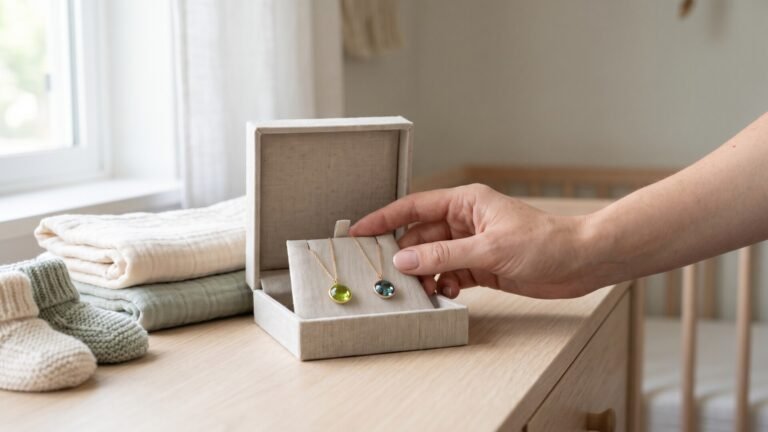
It can be, with a protective setting and regular prong checks. Chrysoberyl is tough, but a ring worn every day takes more impact than a pendant. If you want maximum protection for a stone you love, set it as a pendant or earring.
Conclusion
Russian alexandrite wins for documented historical provenance and collector prestige. Brazilian alexandrite wins for buyers who want exceptional color change and a practical chance of finding a natural stone they can actually wear.
The best purchase is not the stone with the most impressive country name. It is the stone with the strongest combination of color change, saturation, transparency, cut, natural status, disclosure, and credible origin documentation. Get independent verification before you pay a substantial origin premium, and keep the report with the piece.
A properly documented alexandrite carries two things into the next generation: its beauty and its evidence of identity. The beauty is what gets it worn. The paperwork is what lets a grandchild know what they are holding.