Why Does Peridot Sometimes Look Brown or Yellow?
I was behind the counter when a woman slid a ring across the glass and said, quietly, that she thought she had been sold a fake. The stone was a peridot she had bought from me two years earlier. In the store’s spotlight it had been a clean, bright apple green. On her kitchen table, under a warm bulb, it looked like weak olive oil. She had convinced herself the stone had been switched.
It had not been switched. Nothing had happened to it at all. What changed was the light, the background, and the fact that the ring had spent two years collecting hand lotion under the setting.
Peridot looking brown is one of the most common panics I dealt with, and almost every case had an innocent explanation. But not every case. That is the part the trade does not always explain clearly, so here it is straight: color alone cannot tell you whether a stone is genuine, and a brown cast is usually lighting, setting, saturation, dirt, or photography. Sometimes, though, it is the material itself, and that is when you need to slow down and get a proper opinion.
Why Peridot Can Look Brown or Yellow
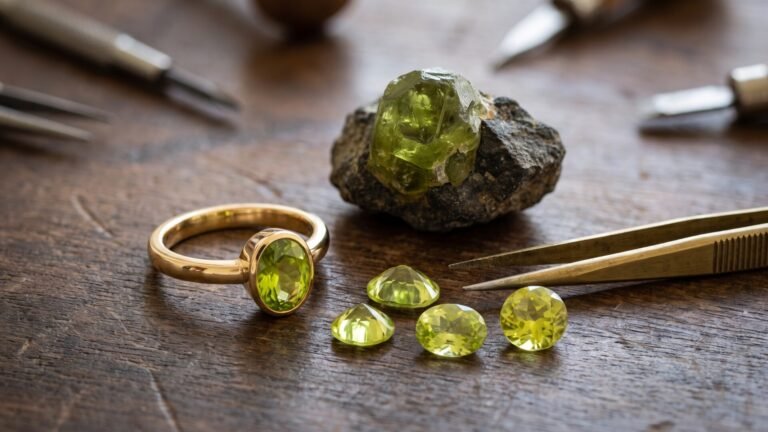
Peridot is one of the few gemstones that forms in only one color family. It is idiochromatic, meaning its color comes from the essential chemistry of the mineral itself, not from trace impurities that might vary wildly. The mineral is olivine, and its color runs from yellowish green through olive green to a green with a distinct yellow undertone. Pure green with no yellow at all is the exception, not the rule.
That yellow component is the root of most of the confusion. A stone with strong saturation and a medium tone reads as vivid green. A stone with the same basic hue but low saturation reads as pale, washed, or distinctly yellow. Push it a little further into gray or brown and you get khaki, olive-brown, or a muddy cast that does not look like the peridot in the magazine.
Three separate things are happening at once, and buyers usually conflate them:
- Body color – the actual hue, tone, and saturation of the material itself.
- Surface and reflected color – what the metal, the skin, the clothing, and the background are throwing back at your eye.
- Light behavior – how the cut returns light, which depends on the cut quality, the setting, and how clean the stone is.
A peridot that looks brown in one context and green in another has not changed. You are seeing different combinations of those three. For the full picture of what peridot is and where it comes from, the [main peridot guide](Peridot: Meaning, Properties, Uses & Value) covers the material properly.
One thing worth clearing up: peridot is not a color-change gemstone in the way alexandrite is. Alexandrite shifts hue because of how its chromium absorbs light differently under different wavelengths. Peridot does not do that. When a peridot shifts from green to brownish green, you are almost always looking at a lighting or environment effect, not a rare optical phenomenon.
Lighting and Viewing Conditions That Change Peridot’s Appearance
Daylight, indoor light, and warm bulbs
The single biggest cause of a peridot looking brown is the light you are viewing it under. Cool, indirect daylight is the most honest light for judging a green stone. It is also the least flattering to a weak one, because it does not flatter anything.
Warm light is the problem. Incandescent bulbs, candlelight, and the warm-toned LEDs in a lot of homes push the yellow and red end of the spectrum. Peridot already carries yellow. Add warm light and the yellow dominates, the green recedes, and a stone that looked lively in the store reads as olive or brownish at home. The reverse happens under cooler light, where the green component gets emphasized and the same stone looks greener.
Jewelry store spotlights are their own trap. They are bright, they are positioned to maximize brilliance, and they make almost everything look better than it will in your living room. A stone that looks slightly dull at home may simply be a stone that was never as bright as the spotlight suggested.
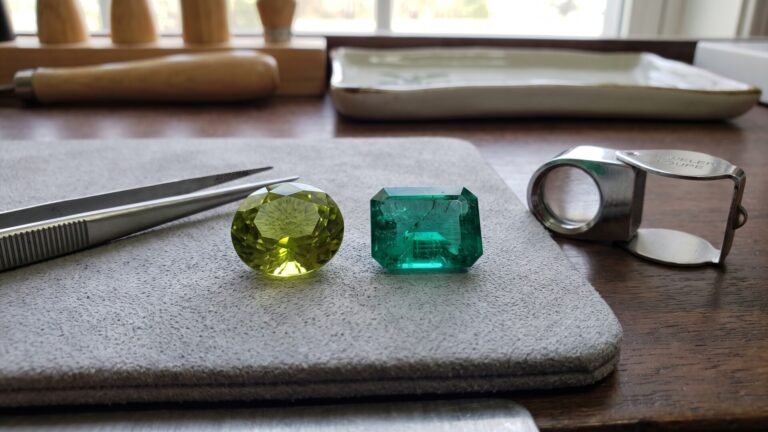
The practical fix is boring and effective: look at the stone under at least three light sources before you decide anything. Indirect daylight near a window. A neutral white LED. A warm household bulb. If the color shift is consistent across all three, that is the stone. If it only looks brown under one, that is the light.
The effect of the setting
Metal color does real work here. Yellow gold warms a pale peridot and can make it read more yellow or brownish. White gold, platinum, and silver tend to cool the stone and push the green forward. Neither is wrong. But if you are judging a loose stone and then setting it in yellow gold, you should expect the final piece to look warmer than the stone did in your hand.
The setting structure matters as much as the metal. A closed-back setting, a thick bezel, or a mounting with a small opening behind the stone restricts light return. Less light through the pavilion means a darker, flatter, sometimes brownish appearance. A dirty pavilion, residue trapped under the stone, or an opaque backing can do the same thing without the gem being touched.
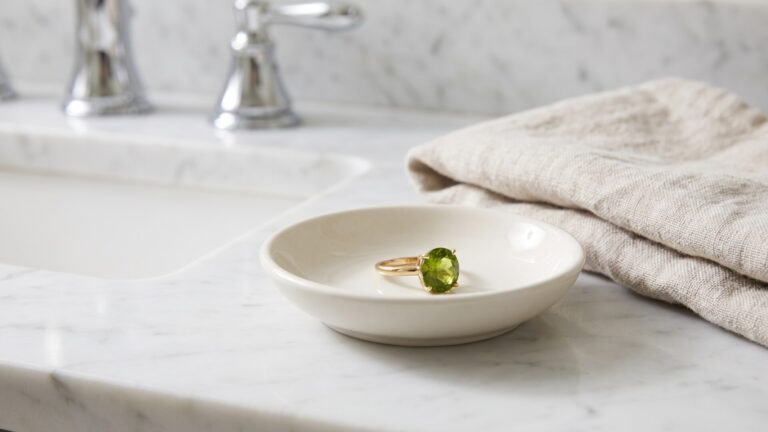
This is why so many "my peridot turned brown" stories end with a cleaning. Lotion, soap film, dust, and hairspray collect under the setting and absorb light before it ever reaches the stone. The gem is fine. The mounting is dirty.
Photography and screens
Phone cameras are not colorimeters. Automatic white balance will happily shift a green stone toward yellow or brown depending on what else is in the frame. A beige background, a warm wood table, a hand with warm undertones, and the camera’s own correction can all push the color. Online product photography is worse, because it is often edited, and heavy editing can hide weak saturation or an unattractive brown modifier entirely.
A practical test: put the stone against plain white paper, view it in indirect daylight, and ignore any single photograph, including your own. If you are shopping online, ask for an image on a neutral background in daylight and compare it with the listing description. If a seller will not provide one, that tells you something.
Is Brown or Yellow Peridot Still Genuine?
Genuine peridot is green to yellowish green. A yellow cast is normal, particularly in lighter or less saturated material. A strongly brown appearance is outside normal peridot expectations and deserves a closer look.
Here is the part that matters, and it is the part buyers most often get wrong: visual color cannot authenticate a stone. It cannot separate natural peridot from green glass, from cubic zirconia, from synthetic corundum, or from another green gemstone sold under a hopeful name. Those materials can all be made to look convincing in the right light.
What a qualified gemologist actually checks is optical and physical, not visual:
- Refractive index – how much the material bends light, which is a fixed property of peridot.
- Birefringence – peridot splits light into two rays, and the strength of that split is diagnostic.
- Specific gravity – how dense the stone is relative to water.
- Magnification – inclusions and internal features that point to natural origin or to a synthetic.
- Optical character – whether the material behaves as peridot should.
That is why a jeweler who offers to scratch-test your stone is not helping you. If someone offers to scratch-test your stone, leave. A scratch test damages the piece, proves almost nothing, and tells you the person holding the loupe does not have the equipment or the training to identify the material properly.
If the stone is valuable, if a purchase is disputed, or if it was sold with unusual claims, get an independent gemological opinion. A retailer’s in-house description is not the same thing as independent identification, and a report from a reputable laboratory is worth more than any sales conversation.
What Most Buyers Get Wrong About Peridot Color
The most persistent myth is that the brightest green peridot is the most authentic. It is not. Natural peridot commonly carries yellow undertones, and color intensity varies with size, clarity, cut, and origin. A stone that is almost pure green is unusual and often expensive, not more "real."
The second myth is the "rare brown peridot." Be careful with this one. Brownish peridot exists, but a seller calling it rare, unusual, untreated, or collectible is making a market claim, not a gemological one. Ask what they mean by brown, how the material was identified, whether it has been treated, and whether an independent report exists. If the answer is a story rather than documentation, the rarity premium is not real.
The third is treatment. Peridot is not normally treated to create a permanent brown-to-green transformation. Vague claims about special color enhancement should prompt direct questions about treatment disclosure, and a seller who cannot answer them clearly is telling you what you need to know.
The fourth is the home test. Do not use a scratch test, a heat test, or a chemical test. They damage the jewelry, they can void a return, and they still will not establish identity.
How Brown or Yellow Color Affects Peridot Value
Value in peridot runs on the same factors as most colored stones: attractive green body color, saturation, evenness, clarity, cut quality, carat weight, origin claims, and the condition of the finished jewelry. Color is the biggest lever, but it is not the only one.
Vivid medium green has the broadest commercial appeal. Pale yellow-green is common and can be lovely, but it usually commands less than a strong green of the same size and clarity. Olive green is a matter of taste. A warm olive tone in the right setting can look deliberate and earthy, and some buyers specifically want it. Grayish green and visibly brownish material have narrower appeal, and a brown modifier that makes the stone look dull or muddy usually reduces demand.
| Appearance | Likely buyer response | Value implication | What to check |
|---|---|---|---|
| Bright medium green | Broadest appeal | Often the strongest commercial choice | Saturation, clarity, cut, treatment disclosure |
| Yellowish green | Normal peridot appearance | Attractive but may command less than vivid green | Whether the yellow is lively or muddy |
| Olive green | Earthy, distinctive | Depends heavily on saturation and setting | How it looks in daylight and against the metal |
| Brownish or grayish green | More limited appeal | Often lower unless unusually attractive or documented | Whether the brown comes from lighting, setting, dirt, or material |
| Strongly brown with little visible green | Does not resemble typical peridot | Treat as a verification concern | Independent gem identification before purchase |
The comparison with a better-known green stone helps put this in perspective. Peridot’s color and price sit in a very different place from emerald, and the [peridot versus emerald comparison](Peridot vs Emerald: A Comprehensive Comparison of Color and Price) lays out that gap honestly.
Do not pay a premium because a seller calls brownish peridot rare, unusual, untreated, or collectible. Require a credible identification report and evidence of actual market demand before you accept a rarity claim. Rarity that only exists in one store’s description is not rarity.
A Simple Diagnostic Process for Peridot Looking Brown
Work through these in order. Most stones resolve at the first or second step.
- Clean the jewelry first. Lotion, soap film, dust, and residue under the stone absorb light and create a dull, dirty color. A soft cloth and a nonabrasive gemstone cleaning kit handle most of it. Do not use harsh chemicals or an ultrasonic cleaner on a stone with fractures or a fragile setting.
- Change the background and the metal context. Put the piece against white paper. Compare it beside neutral-colored jewelry. Do not judge from one phone image.
- Check multiple light sources. Indirect daylight, neutral indoor LED, and warm household lighting. Note whether the shift is consistent or only appears under one.
- Look for wear or damage. Scratches, abrasions, chips, and surface-reaching fractures scatter light and make peridot look less lively. They do not normally turn green material genuinely brown, but they can make it look flat and tired.
- Escalate when appropriate. If the stone remains strongly brown, was sold as unusually rare, carries substantial value, or does not match the seller’s description, take it to an independent gemologist or a reputable laboratory.
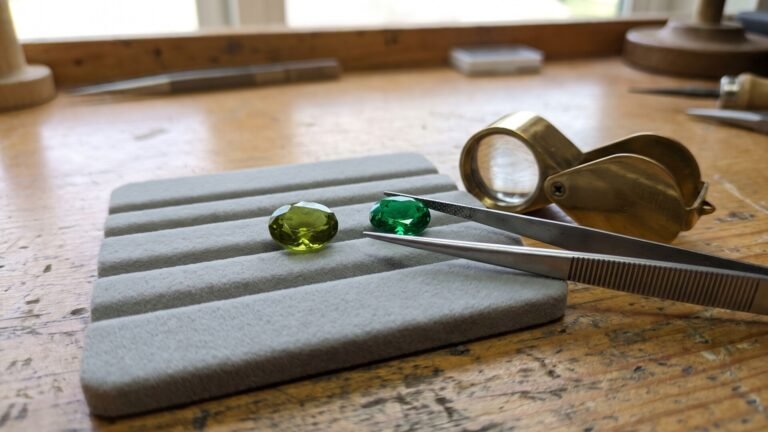
A basic jeweler’s loupe is a genuinely useful tool here, and a soft jewelry cloth costs almost nothing. Neither will identify a stone, but both will tell you whether the problem is dirt and surface wear or something that needs a professional.
The Hidden Cost of Choosing the Wrong Explanation
Both wrong explanations cost money, and they cost it in opposite directions.
Assume the stone is fake when it is not, and you replace a genuine gem unnecessarily. I have watched people spend several hundred dollars on a new stone because a dirty setting and a warm kitchen light convinced them they had been cheated. The original was fine.
Assume a dull brown stone is "rare peridot," and you overpay for an imitation, a misidentified gem, heavily included material, or jewelry described more generously than the facts support. That mistake is more expensive, because you paid a premium for a story.
The protections are unglamorous and they work:
- Return policies in writing, with a clear window.
- Treatment disclosures stated plainly, not implied.
- A written invoice that identifies the stone and the metal.
- Identity documentation for anything of value.
- Preserved listing photographs and descriptions if the stone looks significantly different after delivery.
If the appearance differs materially from the listing, you want that record. Keep it.
A better-cut, well-disclosed stone beats a supposedly rare color with no documentation every time. For an heirloom purchase, stable identification and honest disclosure matter more than an unusual sales phrase. The stone you buy today may be worn by someone not yet born, and they will inherit the paperwork as well as the jewelry.
Choosing Peridot That Will Stay Attractive Over Time
Prioritize medium to vivid green or a lively yellow-green, good transparency, a well-proportioned cut, and a setting that lets light in. Those four things do more for how the stone looks in ten years than any color label.
Peridot has moderate durability. On the Mohs hardness scale, which ranks minerals by scratch resistance, it sits around 6.5 to 7. That is softer than sapphire, ruby, and diamond, and it can be scratched or chipped more easily. For an everyday ring, choose a protective setting and avoid exposed corners. A bezel-set pendant or a pair of earrings takes far more abuse safely than a ring does. If you want to know how it handles real life, the question of [whether peridot is safe to wear while showering or sleeping](Is Peridot safe to wear while showering or sleeping?) is answered properly in its own article.
Match the color to the metal and the use. Yellow-green peridot works especially well in yellow gold. Pale material shows more contrast in white metal. Dark or closed settings can make a low-saturation stone look brown, so if the stone is on the pale side, keep the setting open and bright.
If you are weighing peridot against another August option, the [peridot versus tsavorite garnet comparison](Peridot vs Tsavorite Garnet: Which Green Gem Suits August Better?) is the honest head-to-head. And if the symbolism matters to you as much as the color, the [history and meaning of peridot](Peridot Meaning: History, Symbolism, Spiritual Significance & Modern Uses) covers what the tradition holds, attributed as tradition.
Buy from sellers who disclose treatments, offer clear return terms, identify the stone accurately, and avoid unsupported claims about color rarity or investment value. That combination is rarer than any brown stone.
Frequently Asked Questions About Peridot Looking Brown
Is brown peridot real?
Peridot is normally green to yellowish green, so a slight brownish or olive appearance can come from lighting, low saturation, the setting, or surrounding colors. A stone that is strongly brown should be independently identified before you accept it as genuine peridot.
Why does my peridot look yellow in sunlight?
Peridot naturally contains yellow undertones. Strong daylight reveals that yellow component, especially in pale or lightly saturated stones. It does not necessarily mean damage or a color change.
Can peridot change color?
Peridot can look different under warm and cool lighting, but it is not normally a dramatic color-change gemstone. A noticeable shift from green to brown or yellow is more likely lighting, the setting, photography, or surface residue.
Does brown color mean my peridot is damaged?
Not necessarily. Dirt, scratches, abrasions, poor light entry, and warm metal can make a stone look dull or brownish. Actual damage should be assessed under magnification by a qualified jeweler or gemologist.
Should I buy a peridot advertised as rare brown peridot?
Proceed cautiously. Ask what the seller means by brown, whether the material has been treated, how it was identified, and whether an independent report is available. Do not pay a rarity premium based only on marketing language.
Is yellow-green peridot less valuable than green peridot?
Usually vivid green has broader commercial appeal, but attractive yellow-green and olive-green stones can still be desirable. Value depends on the overall combination of color, saturation, clarity, cut, size, origin claims, and disclosure.
How can I make brown-looking peridot look greener?
Clean the stone, inspect it in indirect daylight, and compare it against different metal colors. Do not attempt chemical, heat, or abrasive treatments. If the color stays unexpectedly brown, seek professional identification rather than trying to alter it.
The caveat that decides it
For most readers, peridot looking brown is a lighting, setting, cleanliness, or photography problem, and the stone is exactly what it was sold as. Clean it, view it in indirect daylight, and check it against white paper before you conclude anything.
The caveat is this: that explanation only holds if the stone is genuinely green underneath. If it stays strongly brown across every light source, if it was sold as a rare color with no documentation, or if the price suggested something special, the reassuring answer stops applying. Then the right move is an independent gemological opinion, not a cleaning cloth and a hopeful thought.
Buy the lively, accurately described stone over the one with an unsupported story. Get the identification in writing. Set it so light can reach it, and be realistic about a stone of moderate hardness on a hand that does real work. Do that, and the peridot you buy now will still be green when someone else is wearing it.